Introduction
Finesse refers to the precise inputs (movement, rotation, soft drop, and hard drop) required to place pieces in their desired location.
A finesse scheme refers to the sum of all individual piece inputs. Every player has their unique finesse scheme.
A 2-step finesse is a finesse scheme that uses no more than 2 rotations or 2 movement presses (move left or right) to place a piece optimally. Simply put, it is the optimal and most efficient finesse scheme.
Finesse training matters because it smooths your inputs and boosts your speed.
My Finesse Training Experience
It took me around 3 months of finesse training before I was accurate enough to move on to more vital tactical and strategic decision-making.
I would train finesse nearly every day using specialized tools.
However, it took about a year for my muscle memory to develop enough that I stopped making mistakes.
If you do not have time to train as much as I did, do not worry; the next section has several shortcuts to help you out.
Finesse Training Shortcuts
There are many ways to train finesse. Here are the key methods to speed it up.
Quick Generations
2-step finesse has more than a hundred finesse movements. This can intimidate most beginners.
However, most of them fall into the following generalizations:
i) Mirrored Moves
Many setups are mirrored:
| Diagram Set 10-1 | |
| 1 | 2 |
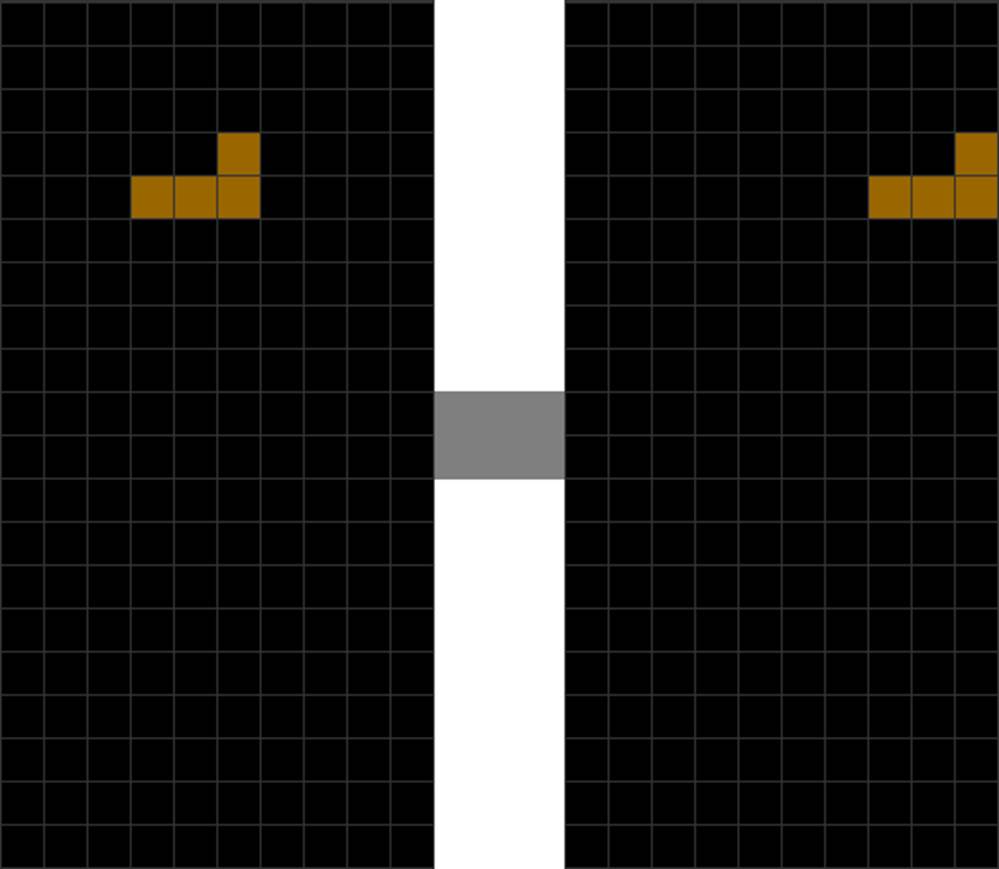
| The L piece spawns. | The player holds “move right” to activate DAS, causing L to rush to the right. |
| 3 | 4 |
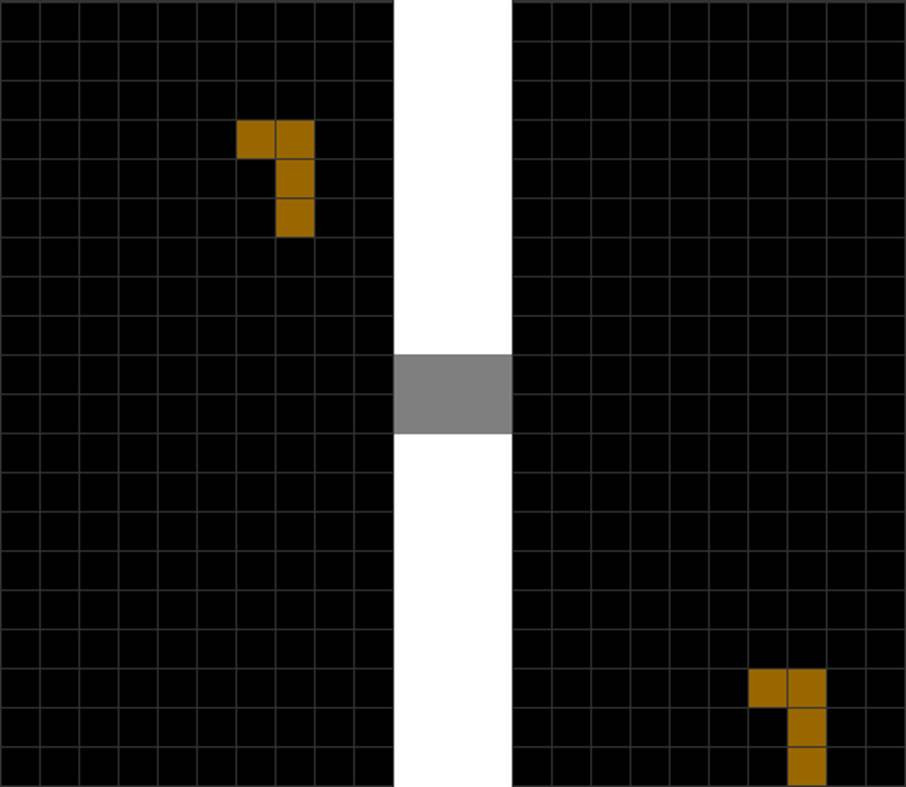
| The player rotates counterclockwise and simultaneously taps “move left.” | They hard drop the L piece. |
| Diagram Set 10-2 | |
| 1 | 2 |
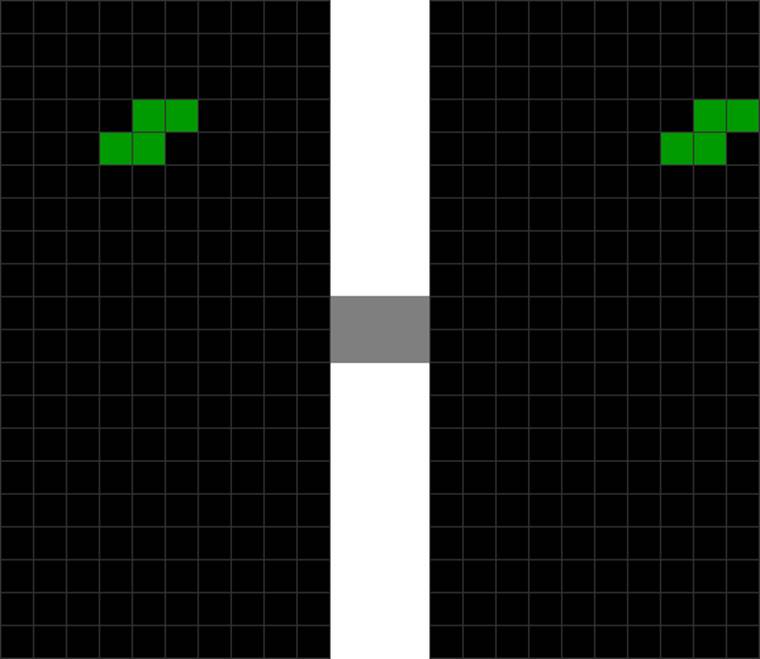
| The S piece spawns. | The player holds “move right” to activate DAS, causing S to rush to the right. |
| 3 | 4 |
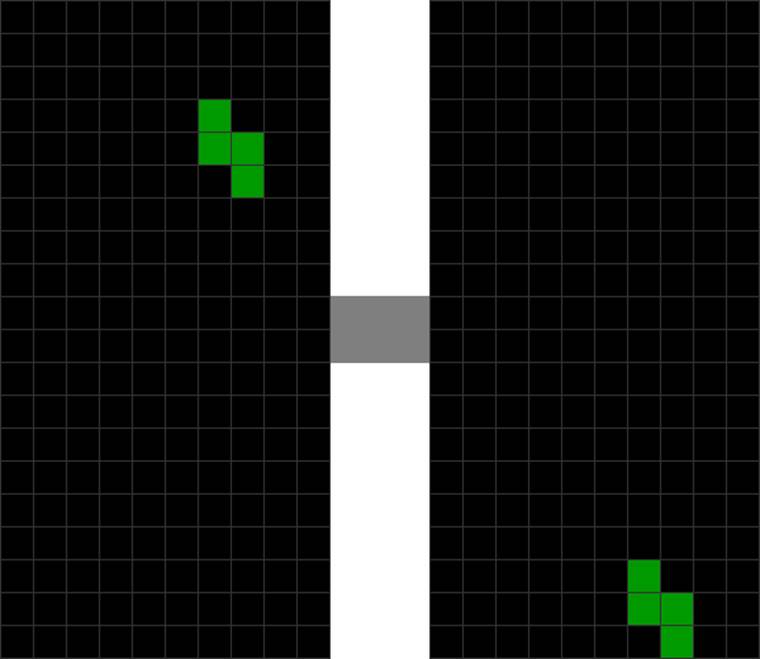
| The player rotates counterclockwise and simultaneously taps “move left.” | They hard drop the S piece. |
For instance, the S and L pieces can be DASed to the right; then you can press “rotate left” and “move left” simultaneously for the piece to reach the above positions.
Knowing just one of such generalizations lets you apply to at least 2 positions on the right side. If you mirror it, they also apply to the left side’s mirrored Z and J pieces:
| Diagram Set 10-3 | |
| A | B |
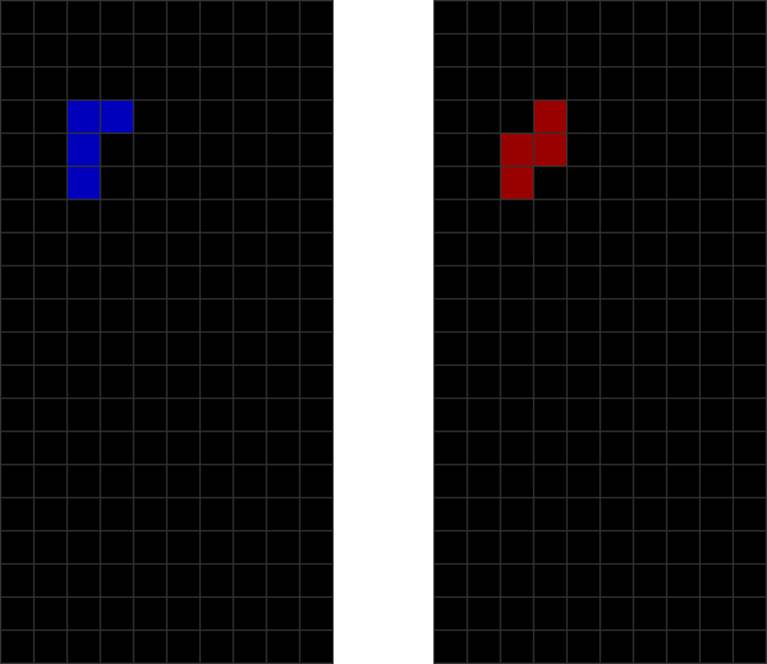
| This mirrored orientation parallels the L piece’s finesse in the last few diagram sets. | This is the same for the mirrored S piece in the last few diagram sets. |
Hence, one generalization lets you cut down memorization substantially!
I cover more of these generalizations in my Books A and 1, which are entirely free on howtotetris.com. Further in-depth coverage is in Book 2 (available on Amazon).
ii) Tap-Back Moves
Many placements on both sides of the field require tap-backs.
This constitutes at least 14 movements, which significantly reduces memorization.
| Diagram Set 10-4 | |
| 1 | 2 |
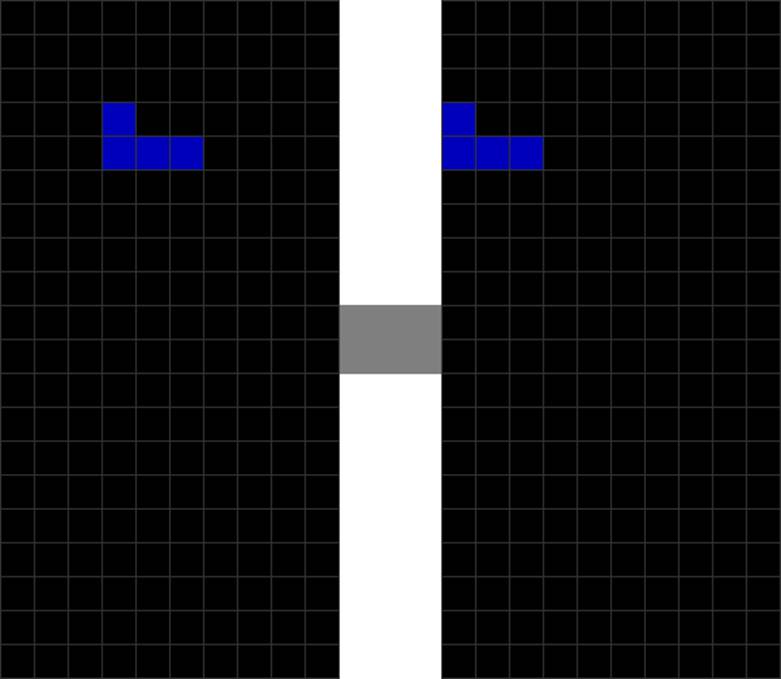
| The J piece spawns. | The player holds down “move left,” causing the J piece to zoom to the left wall quickly. |
| 3 |
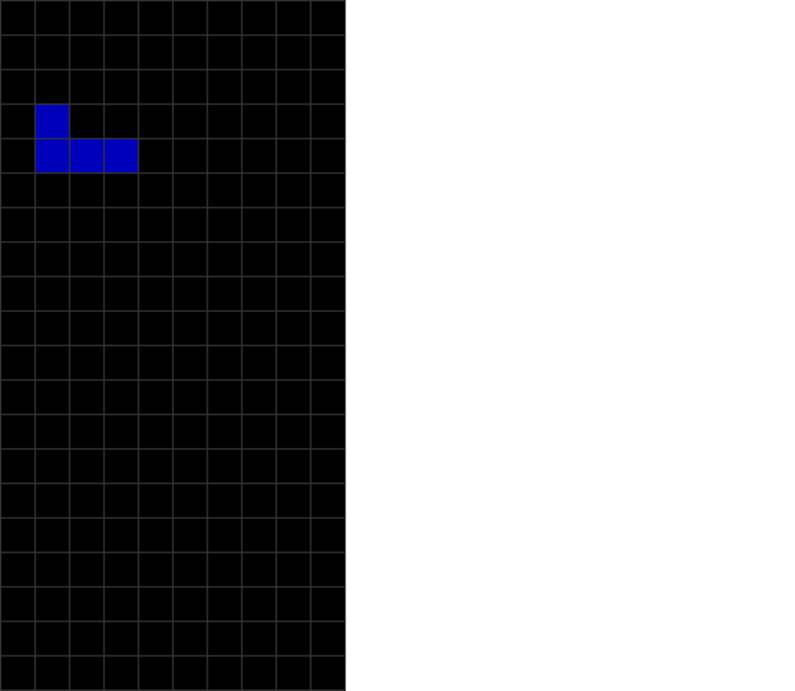
| The player holds “move right” to tap the J piece off the wall by 1 block. |
This means you hold down your “move” key; the piece zaps until it touches the wall. Then tap back by pressing the opposite move button to move it 1 block away from the wall.
iii) Wall-Kick Moves
Some L, J, and T placements require a wall-kick:
| Diagram Set 10-5 | |
| 1 | 2 |
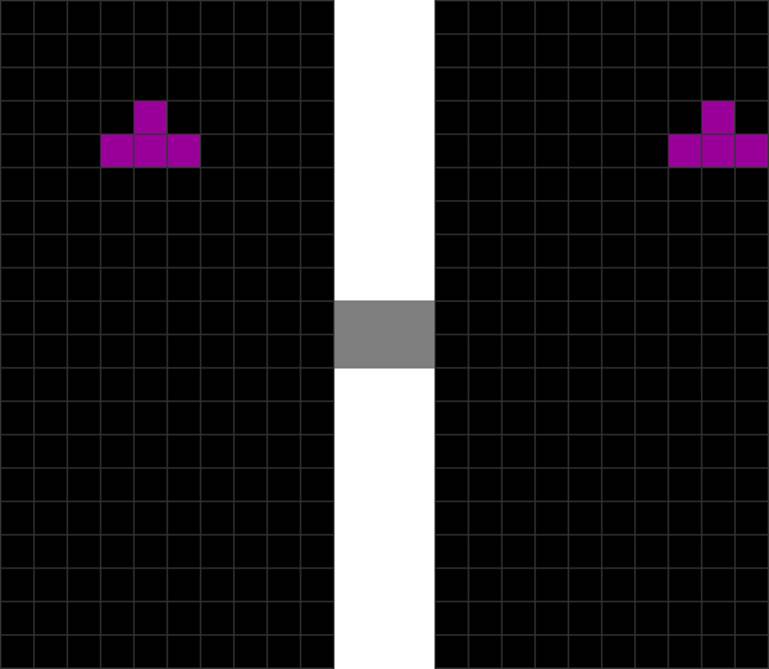
| The T piece spawns. | The player holds down “move right,” which causes the T to zoom to the right wall fast. |
| 3 |
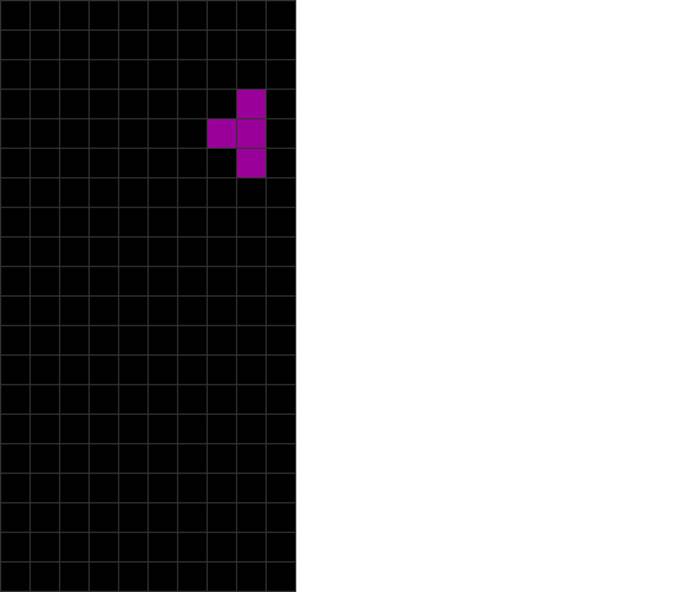
| Rotate the piece anti-clockwise, causing it to “bounce off” the wall and save 1 step. |
Here, when you rotate the pieces, the L, J, and T pieces “kick off” the wall. That is, they automatically move 1 block away from the wall. This works for the S and Z pieces, too.
This saves extra movement presses, because you do not have to pre-rotate, then press “move” to let a piece zoom to the wall, then press “move” to tap off the wall. A wall-kick rotate will do.
Summary
These simple generalizations help you cut down on extra moves, reducing the memorization needed to learn 2-step finesse faster.
One Step (or Mis-Step) at a Time
Some online finesse trainers, such as Tetresse, let you play a “normal match” in single player.
However, the key difference is that these programs recognize when you make a finesse fault. If you then try to place a piece, the software will reset your piece to the original spawn location so you can try again.
Tetresse is particularly useful, and I used it to train.
However, other modes exist, such as random finesse training maps on Jstris and Puyo Puyo Tetris’ Big Bang mode.
You can also use the Four-tris application to make some finesse training maps yourself.
Specific Modes
Training finesse is a general skill set that involves learning more than a hundred individual schemes.
However, certain forms of sprint, such as 6-3 stacking, involve emphasizing specific finesse schemes, such as:
| Diagram Set 10-6 | |
| 1 | 2 |
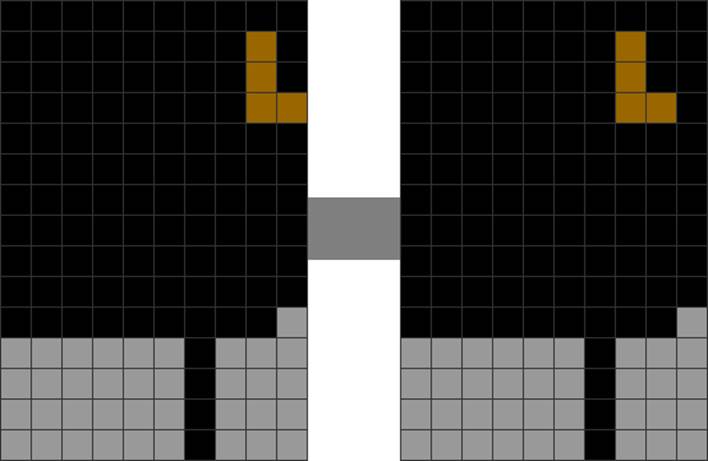
| A player holds “move right” to activate DAS, and the pre-rotated L piece reaches the corner. | The player presses “move left.” |
| 3 | 4 |
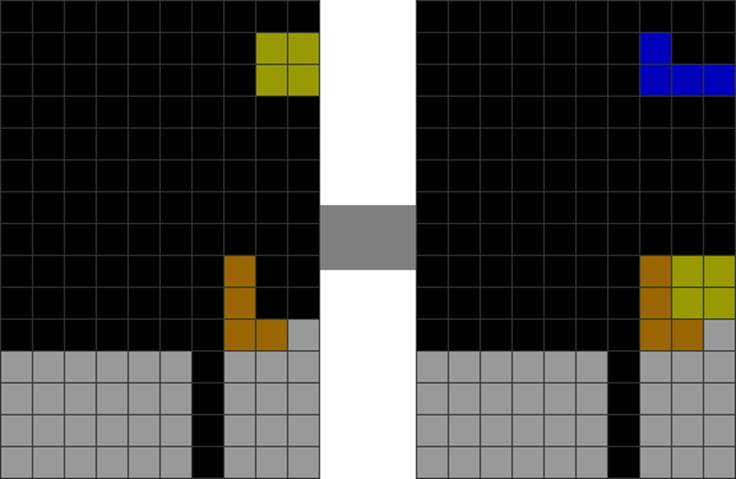
| They hard drop the L piece. He holds “move right” for the O piece to zoom to the right position. | They drop the O piece. The player continues with the J piece. |
Here, the right columns are extremely easy to stack. Most involve DASing right and sometimes with a quick “move left” to tap back.
These training methods let you improve your finesse in specific areas. However, because finesse is a general skill set, you eventually need to move on from localized training methods to more general ones, which involves playing all kinds of Tetris modes.
Mid-Game Automation
Once you have improved enough, you can start real online matches and apply your finesse skills.
Although this chapter offers many generalizations, you still need to keep practicing and reinforcing each finesse movement.
Once you achieve that, you can automate them and get faster and faster with practice.
In a Nutshell
| Key Points |
| 2-step finesse has more than a hundred movements to memorize. However, by knowing a few key generalizations, you can reduce memorization substantially. Finesse takes at least a few months to a few years to fully sink in. Please be patient. Work on other areas while constantly practicing to reinforce your finesse memory. |

