The first few seconds may render in low quality. Please give them a few seconds to render.
The Basics
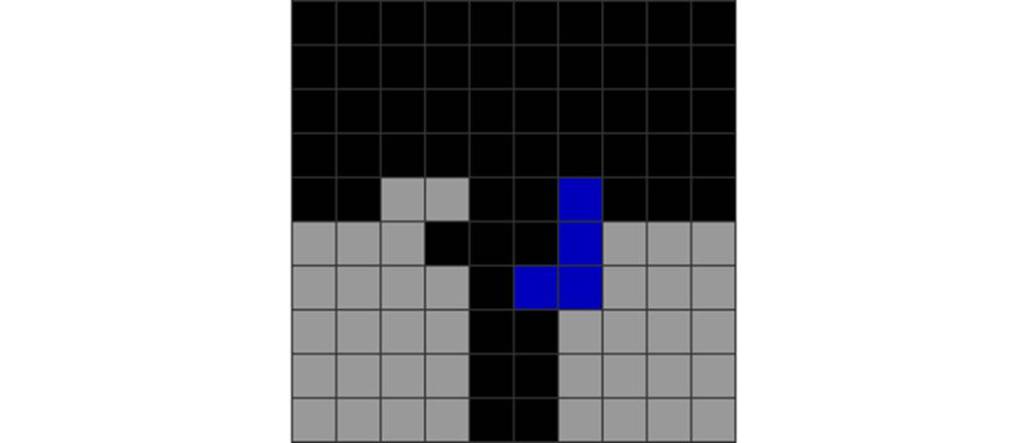
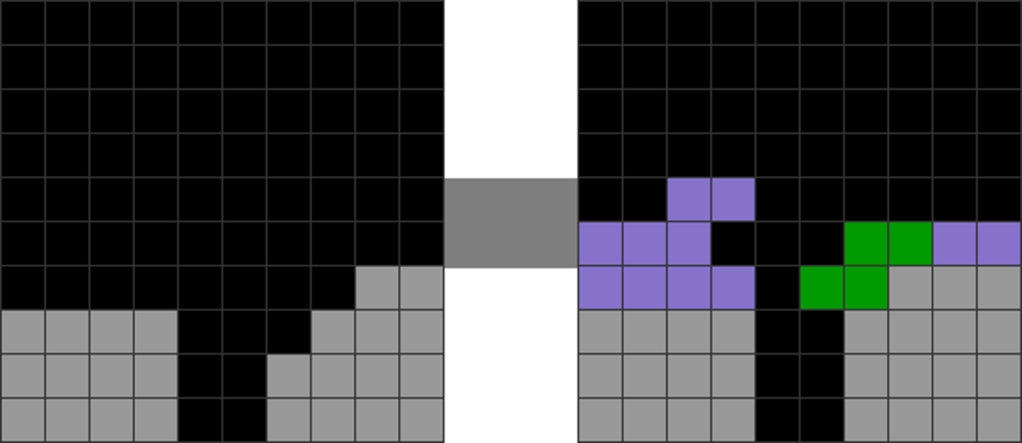
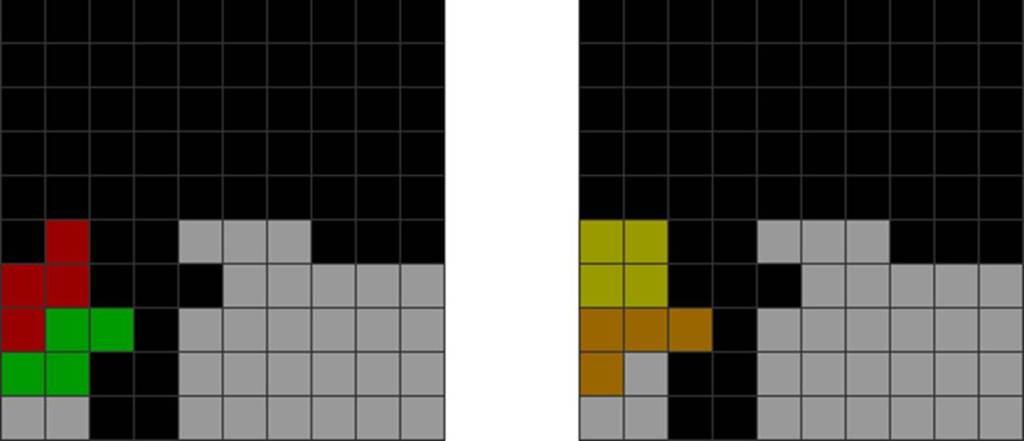
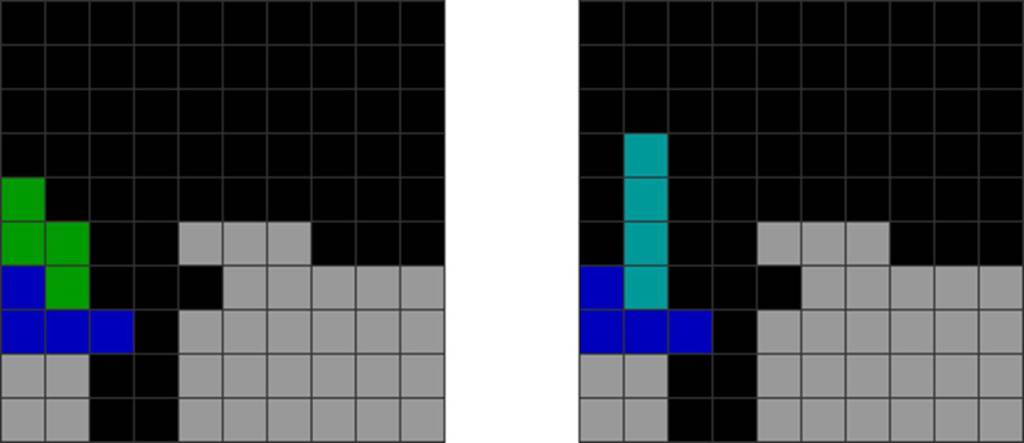
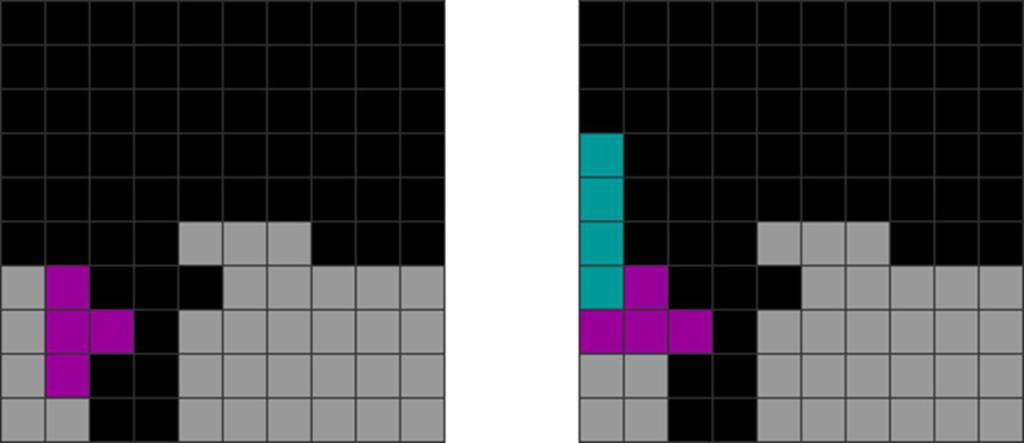
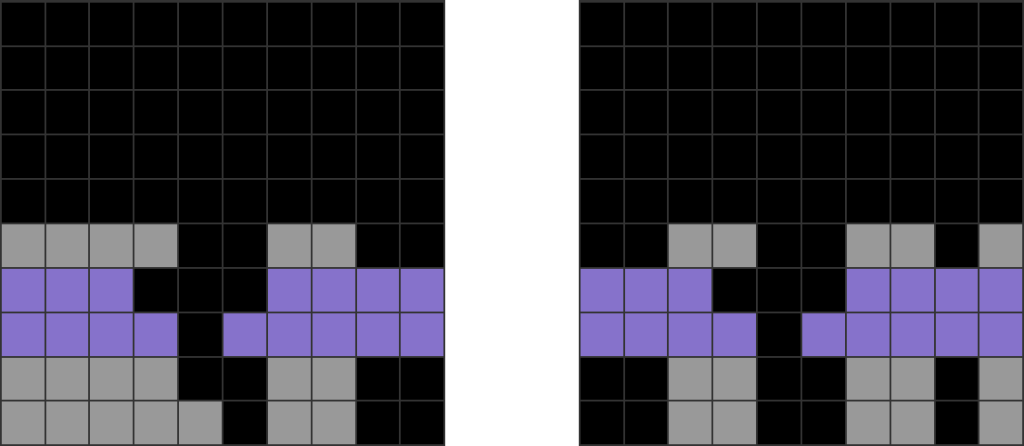
Sky Props use a suspended piece (often a vertical L or J or horizontal S or Z) to create a T-spin double. It is easy to confuse it with STMB Cave, since they are similar.
Diagram Set 10-1
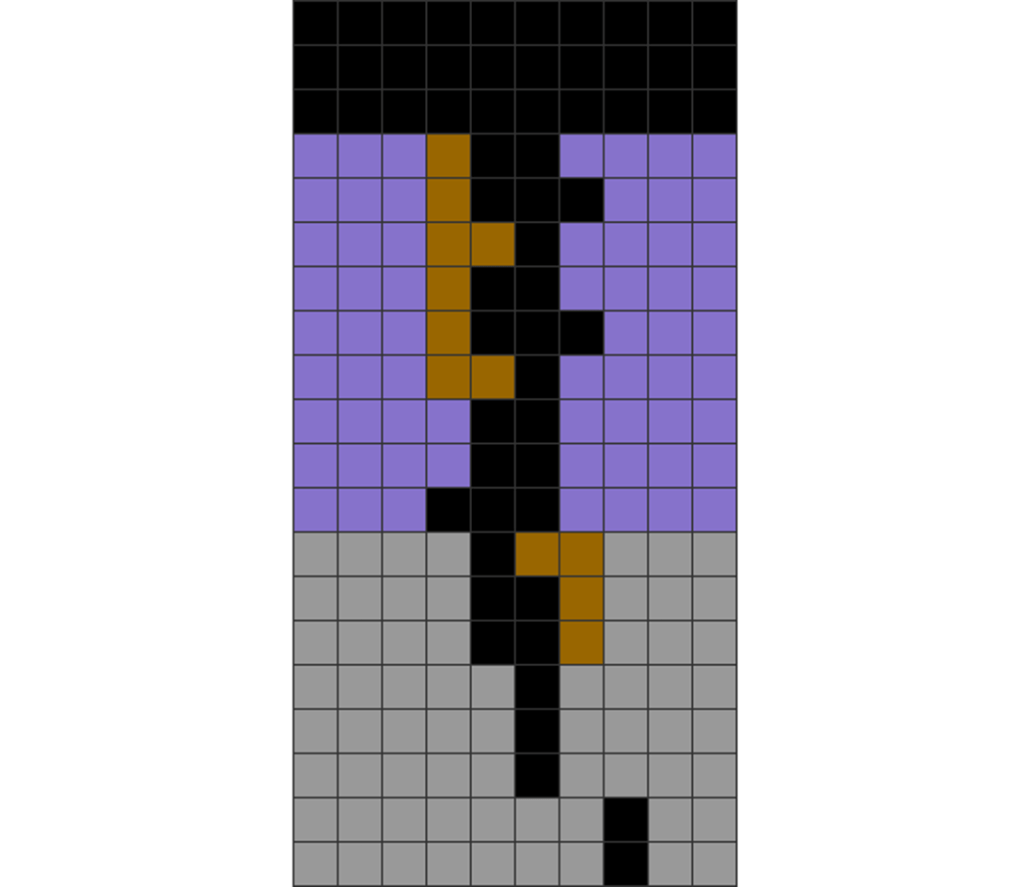
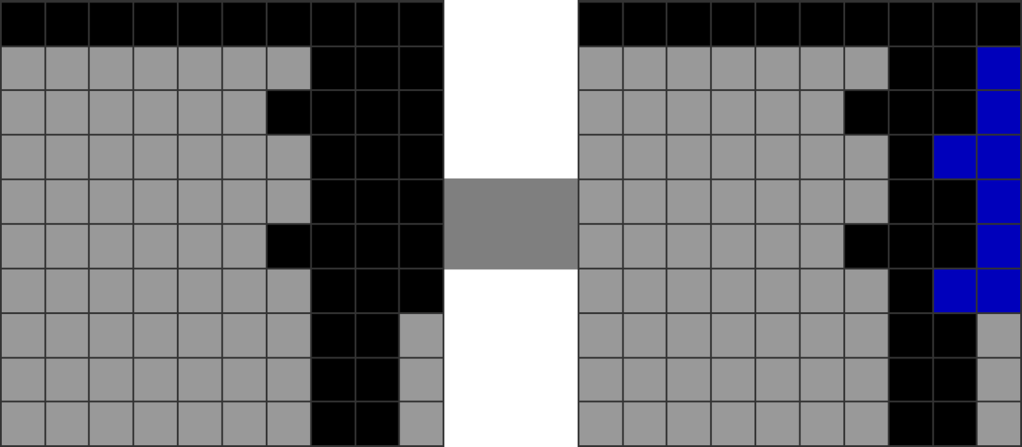
Like STMB Cave, it can sometimes be stacked to create a chain of sudden T-spin damage:
Diagram Set 10-2
You can stack Sky Props.
Common Mid-Game Chances
Sky Props, like STMB Caves, provide many mid-game chances to extend your T-spins.
1. The Most Direct Chances
Here are common mid-game chances to use Sky Prop:
Diagram Set 10-3
1
2
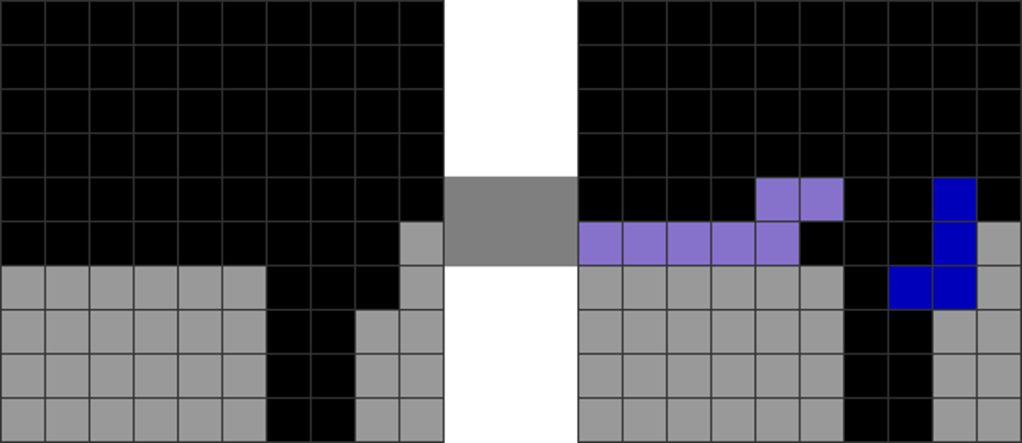
The player makes a Sky Prop.
Diagram Set 10-4
1
2
This T placement forms the same shape as a Sky Prop.
Diagram Set 10-5
1
2
This S placement does the same.
The player can use horizontal T, S, and Z pieces as props to create the Sky Prop. However, the vertical L and J pieces are the most common to make it.
An Important Note
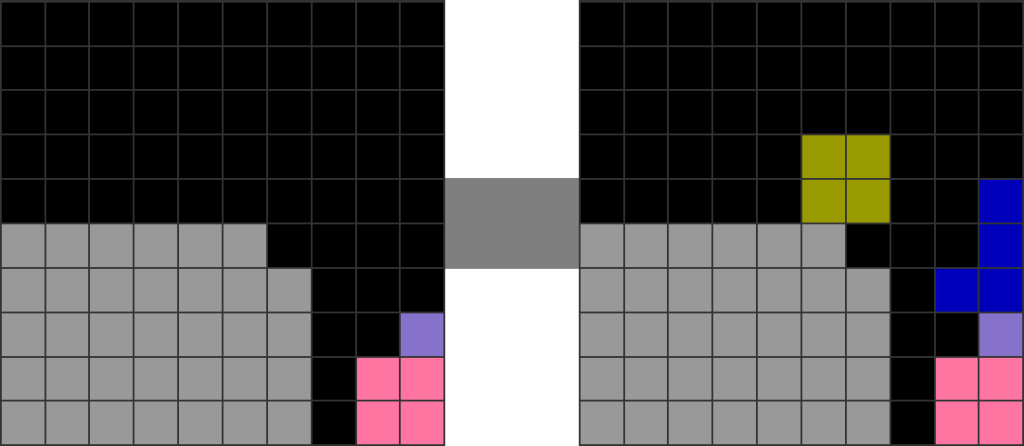
The pink parts need not be empty. They can be filled first in any permutation as long as the lavender block exists.
Diagram Set 10-6
1
2
Spot this general mid-game pattern. The lavender block must be there. The pink blocks can be in any configuration.
Put a vertical J piece like this and build an overhang. A Sky Prop is done, creating a T-spin double.
2. Subtler Ways of Construction
Here are subtler, more advanced situations in which to use them. These often need 2 pieces to create the Sky Prop:
Diagram Set 10-7
A
B
C
D
E
F
Most of the above 6 examples use composite pieces such as SZ, LO, JS, JI, and IT to create Sky Props.
Thus, Sky Prop components can be made from many pieces rather than just one. I encourage the reader to experiment.
The above are the most prevalent composite patterns that appear mid-game. The SZ pattern is very common.
Continuations and Follow-Ups
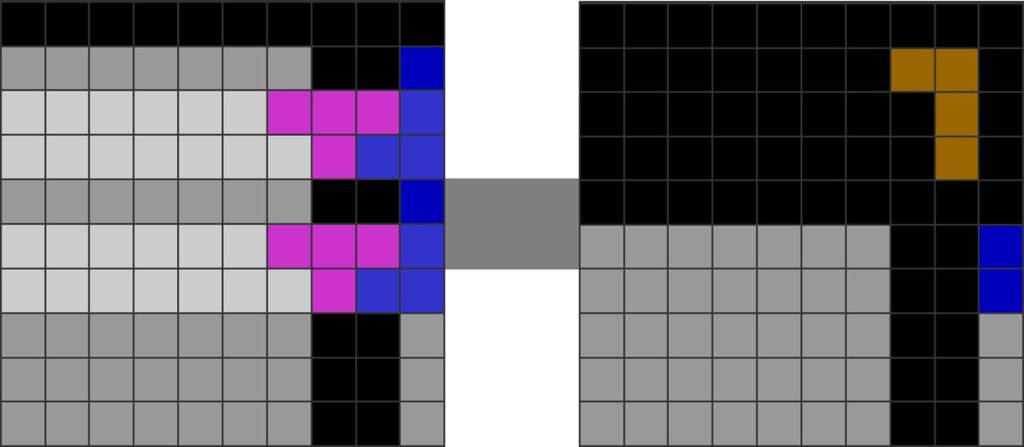
Sky Props operate almost similarly to STMB Caves: you can stack multiple ones for a burst of connected T-spin attacks to catch your adversary off guard.
1. Stacking Sky Props
Sky Props, like STMB Caves, can be stacked:
Diagram Set 10-8
1
2
Sky Props are highly versatile because they can be stacked for a chain of T-spin doubles.
3
4
However, the resulting form creates a tall 2-wide gap that can preclude other efficient T-spin methods, such as LST stacking. You may then have to skim and balance the stack.
Here is a useful trick:
Diagram Set 10-9
1
2
Did I mention? The L or J can also be upside down.
Advanced
1. Suspended and Donated Sky Props
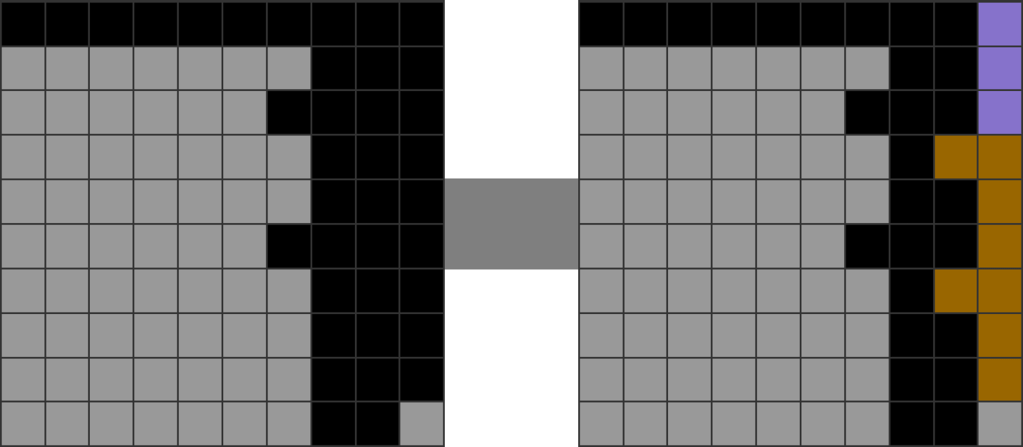
Sky Props can also be suspended and donated:
Diagram Set 10-10
A
B
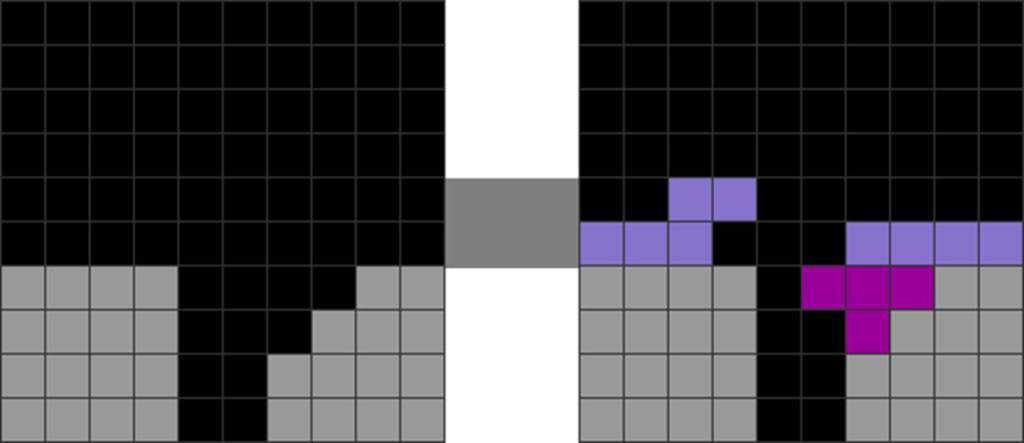
In more advanced cases, Sky Props can be donated and suspended. The lavender parts float over an area. The player should make this as clean as possible.
Here is one example:
Diagram Set 10-11
1
2
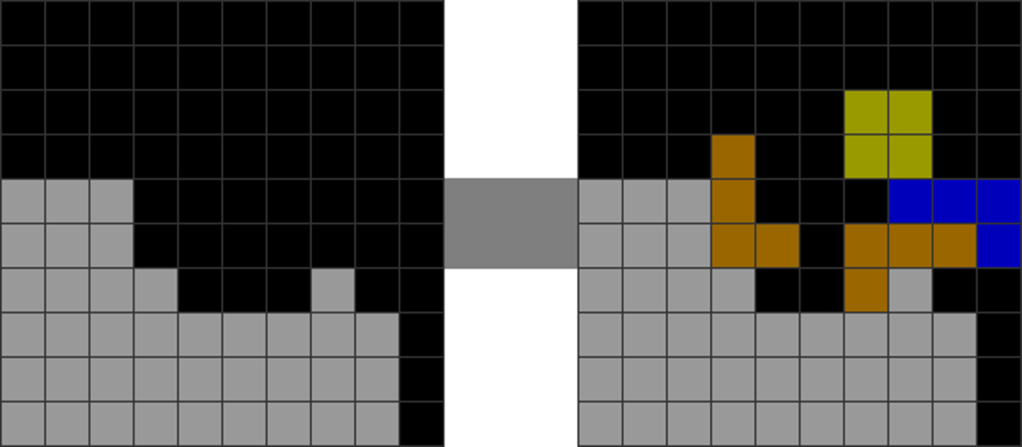
Starting field.
Create a Sky Prop donation.
In a Nutshell
Sky Props can be stacked for quick T-spin bursts. However, overstacking them leads to the same issues as STMB Caves: they destroy T-spin continuations. Hence, many players pass them up in favor of more compact methods such as LST stacking, Fractals, or STSDs.
Pros and Cons
Pros
Good for 2-wide gap situations to squeeze out more T-spin doubles.
You can continue T-spin and Tetris stacking using Ls and Js to fill the sides.