Introduction
Openers are fixed patterns that one can use at the start of an empty field. They typically lead to a quick T-spin.
This is possible only because of the 7-bag (or 7-piece) randomizer, which guarantees all 7 unique tetrominoes spawn once in the first bag of 7 incoming pieces.
Here is an example of a DT Cannon opener:
| Diagram Set 11-1 | |
| A | B |
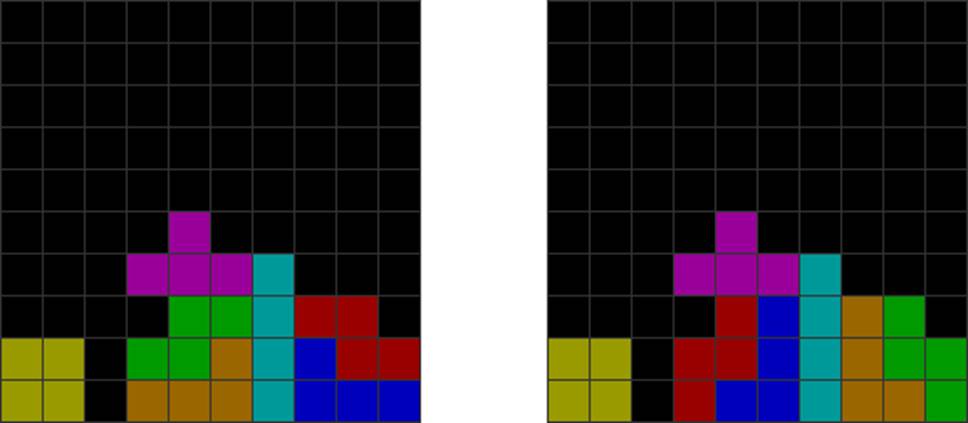
| This is the most common DT Cannon opener pattern if L and J come first. | This is another variation. |
They can then continue to:
| Diagram Set 11-2 | |
| 1 | 2 |
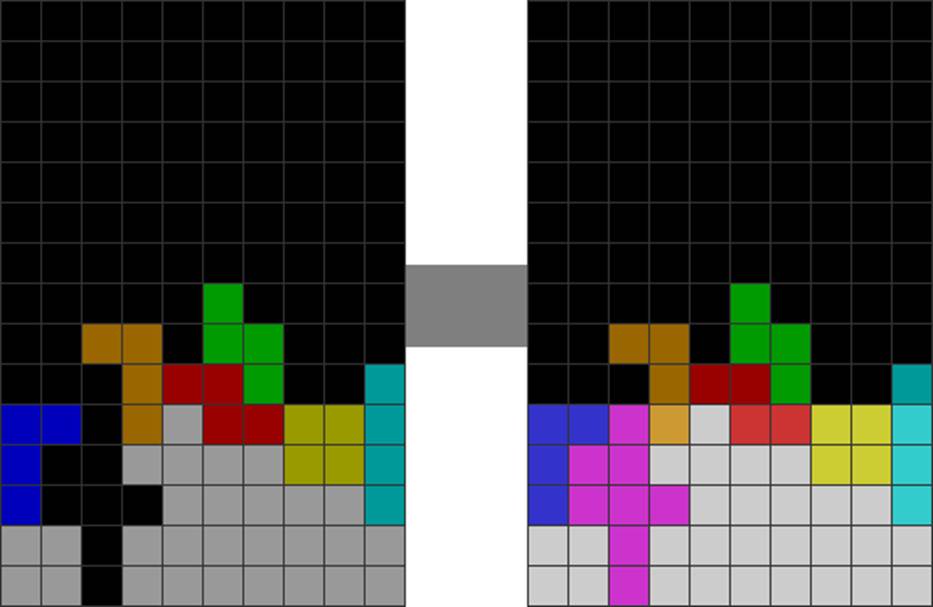
| The gray blocks represent the shape from the first bag’s 7 pieces. You place the second bag’s L, J, S, Z, O, and I this way. | You perform the T-spin double and T-spin triple. |
| 3 | 4 |
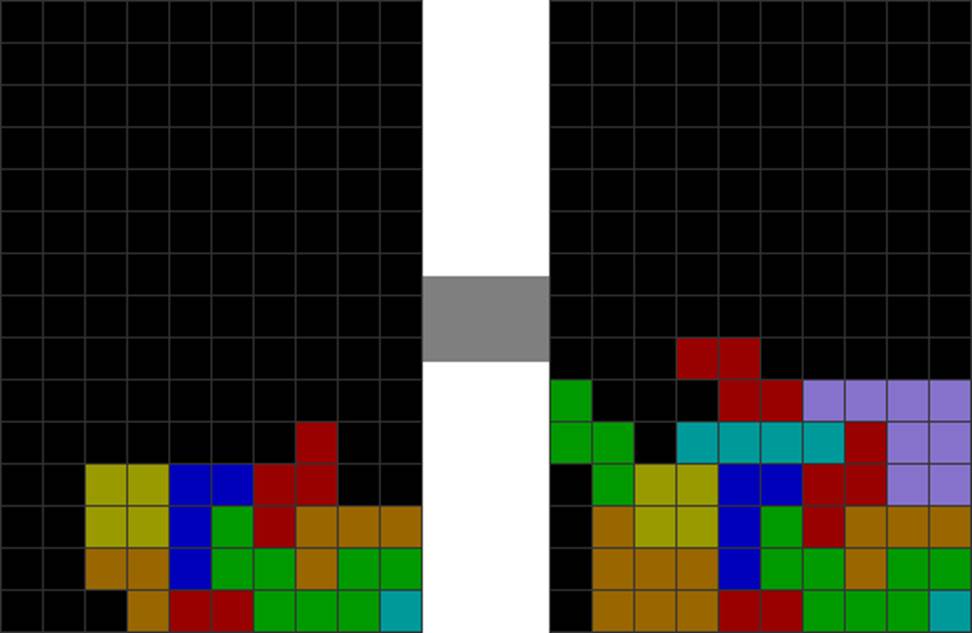
| You make this pattern. | Continue with the Amemiya Cannon continuation: a T-spin double. |
Memorizing and Practicing Openers
Training openers is easy because it relies almost entirely on memorization, with little mid-game tactical or strategic reasoning.
I should warn players not to get into the nasty habit of relying too much on openers. It might seem powerful to spin off a crazy opener that leads to a perfect clear to smite your opponent at 3 PPS. However, this does not train your mid-game proficiency.
Regardless, here is the typical, tested method to train openers:
i) Opening the Opener Diagram
Many websites already have opener sequences mapped out. Open them in a browser. Alternatively, you can make your own Paint application image. Run your Tetris game in windowed mode and have the image next to it like this:
| Diagram Set 11-3 |
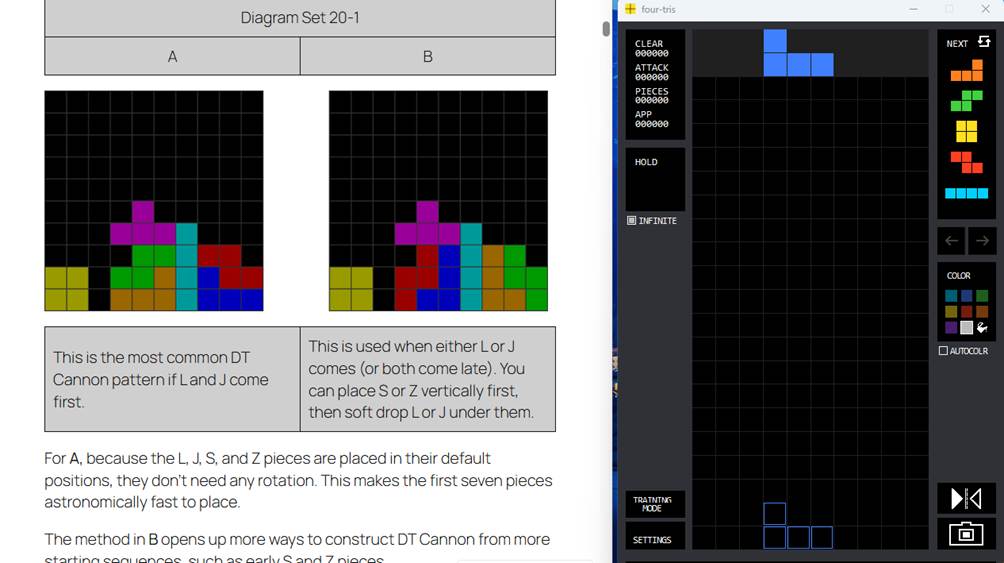
| The player brings up a Tetris guide on how to set up the DT Cannon opener (left screen). They have Four-tris set up on the right screen, ready to copy the former. |
ii) The Brain-Dead Memorization
Yeah, the next step is brain-dead! You just follow the exact sequence and repeat it until your mind bleeds.
iii) Analysis
Make sure you understand which starting pieces allow the opener to be created. Also understand its risks, such as a DT Cannon’s possible aftermath overstacking, and know when to abort their follow-ups.
| Diagram Set 11-4 | |
| 1 | 2 |
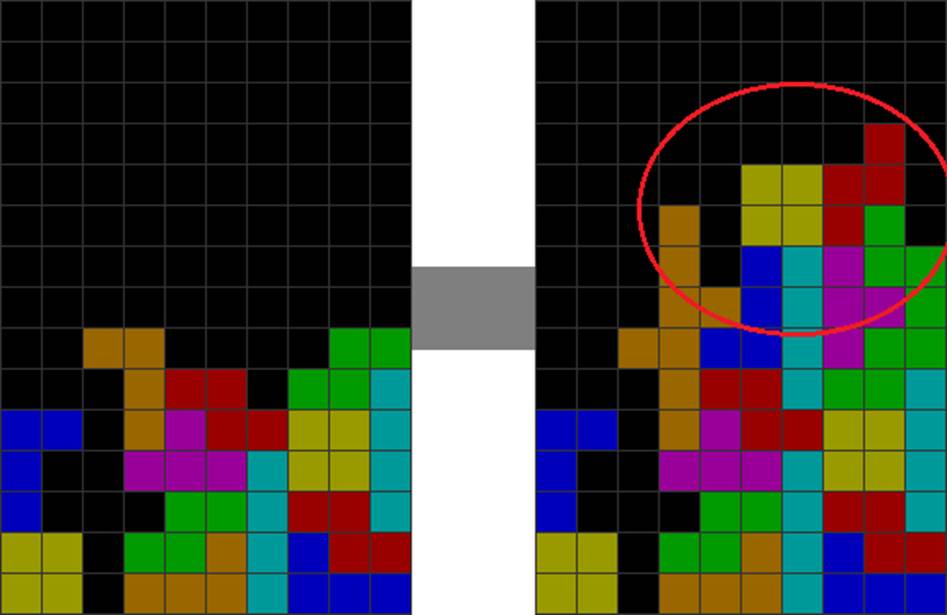
| The player sets up a DT Cannon opener. | The player overstacks the right side (the red circle). It is also cluttered with holes. |
Here, a player stacks the DT Cannon poorly after creating the setup’s initial shape. This is why I cannot recommend this opener to new players: the stacking requirements are difficult.
iv) Removing the Guide
When you think you have memorized the opener, remove the image and create it from memory.
v) Mid-Game Application
Find an opponent and beat’em up. But if you bump into me in Tetris 99, I will kill you without mercy!
That is about it. Mastering openers really just requires memorization.
As a warning, mastering an opener loop does not make you a Tetris master. Eventually, you have to move on from loops, like the infamous Korean BT Cannon perfect clear loop, and into the mid-game to learn real strategy.
It might feel satisfying to blow up your opponent with a 3 PPS perfect clear loop opener, but you eventually have to leave the cradle.
Transitioning to the Mid-Game
The next important thing to train is the transition from the opener into the mid-game.
This is often called the opener’s follow-ups. Here is an example:
| Diagram Set 11-5 | |
| 1 | 2 |
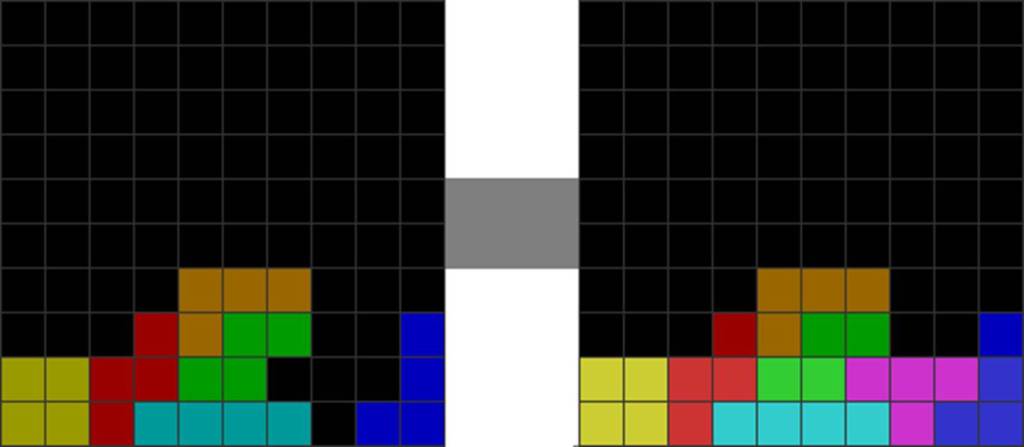
| This is the first bag’s placement. It is the most common TKI Flat Top opener pattern. | You get your first T-spin double. |
Here, the player executes a complete TKI Flat Top opener, which consists of 2 T-spins.
Does a player simply freeze after this and do nothing? Of course not! They should do this:
| 3 | 4 |
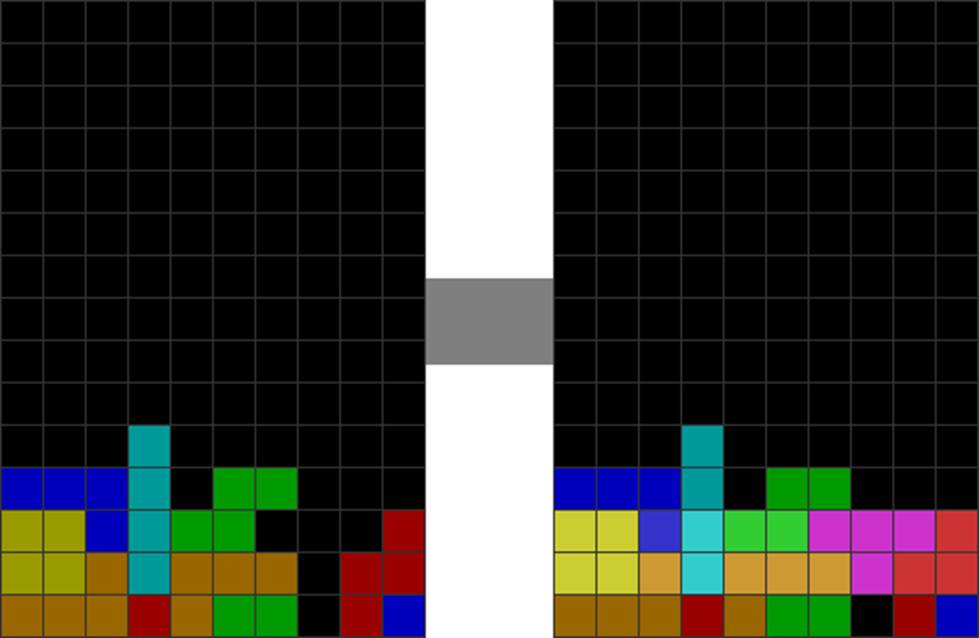
| After the initial bags, you can easily get this pattern. | You get another T-spin double. |
| 5 |
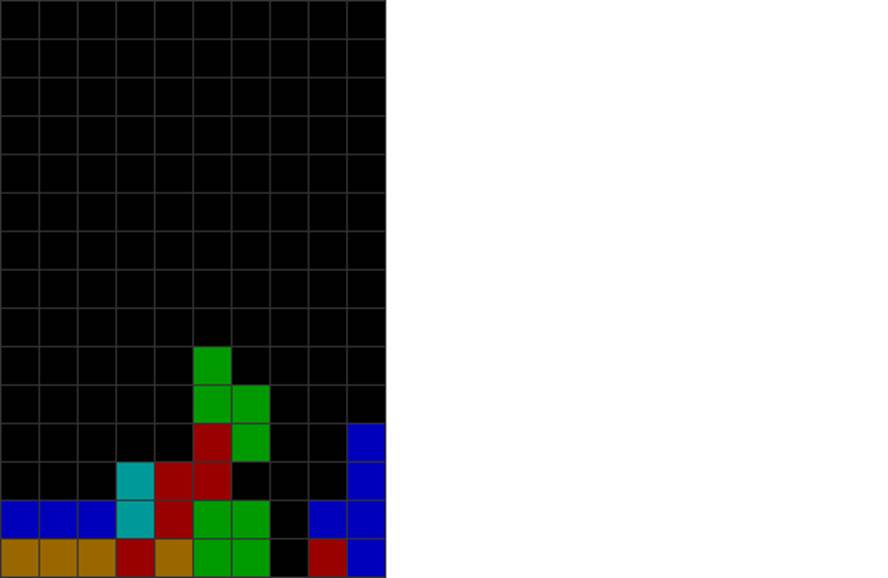
| Then, you transition to mid-game LST stacking. |
Here, the player transitions from the TKI opener into a mid-game stacking pattern called LST stacking. This lets them create a chain of non-stop back-to-back T-spin doubles and Tetrises.
If the player receives too much garbage, they can do this from step 5:
| Diagram Set 11-6 | |
| 6 | 7 |
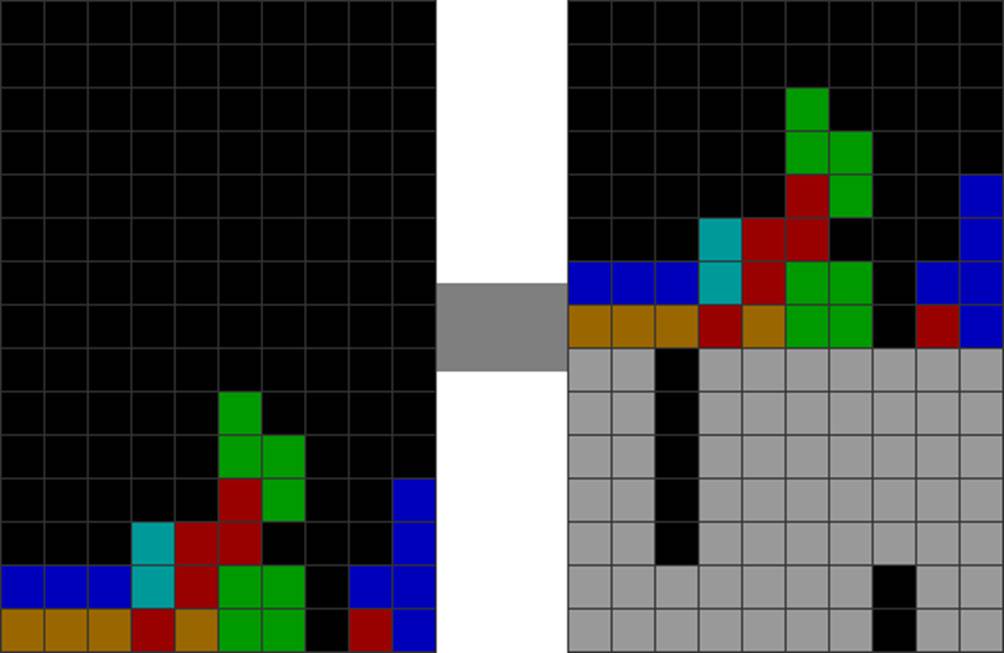
| The player hopes to continue LST stacking to make more T-spin doubles. | However, they receive many garbage lines. |
| 8 | 9 |
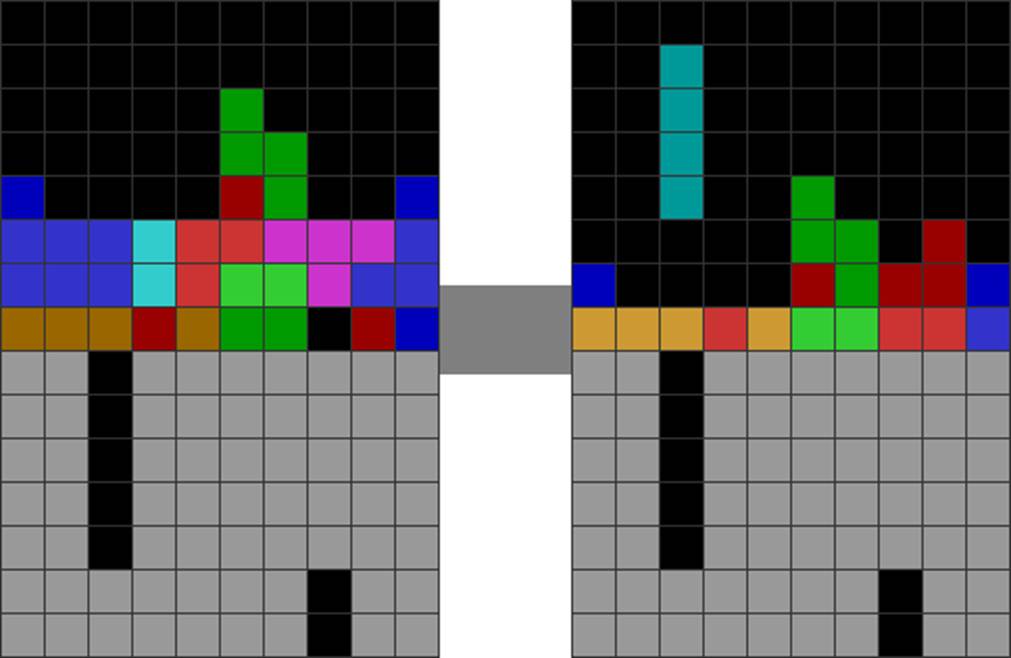
| The player aborts LST stacking. They skim to get down. | After some skimming, the player prepares to counter-spike with an I piece by scoring a Tetris. |
The player skims off the top layers and transitions successfully to the mid-game by reacting to the garbage patterns. They abort the LST stacking as it is too dangerously upstacked. They dig down to the clean garbage and counter-spike with a Tetris.
Every opener eventually ends, forcing the player into the mid-game. This normally happens once you get garbage lines.
The mid-game then involves playing efficiently by maximizing offense and defense using the upcoming garbage lines.
The smoother this transition, the more opportunities the player has to move into the mid-game, where the true test of Tetris mastery begins.
In a Nutshell
| Key Points |
| Openers are easy to train. It involves mostly memorization and recall. However, one should learn to transition from an opener into the mid-game, where true Tetris mastery can show. Tetris mastery comes not from over-focusing on memorizing fixed-pattern openers, but from handling the mid-game’s fluidity and novelty. |

