Introduction
Combo methods largely involve 2-wide, 3-wide, or 4-wide:
| Diagram Set 13-1 | |
| 1 | 2 |
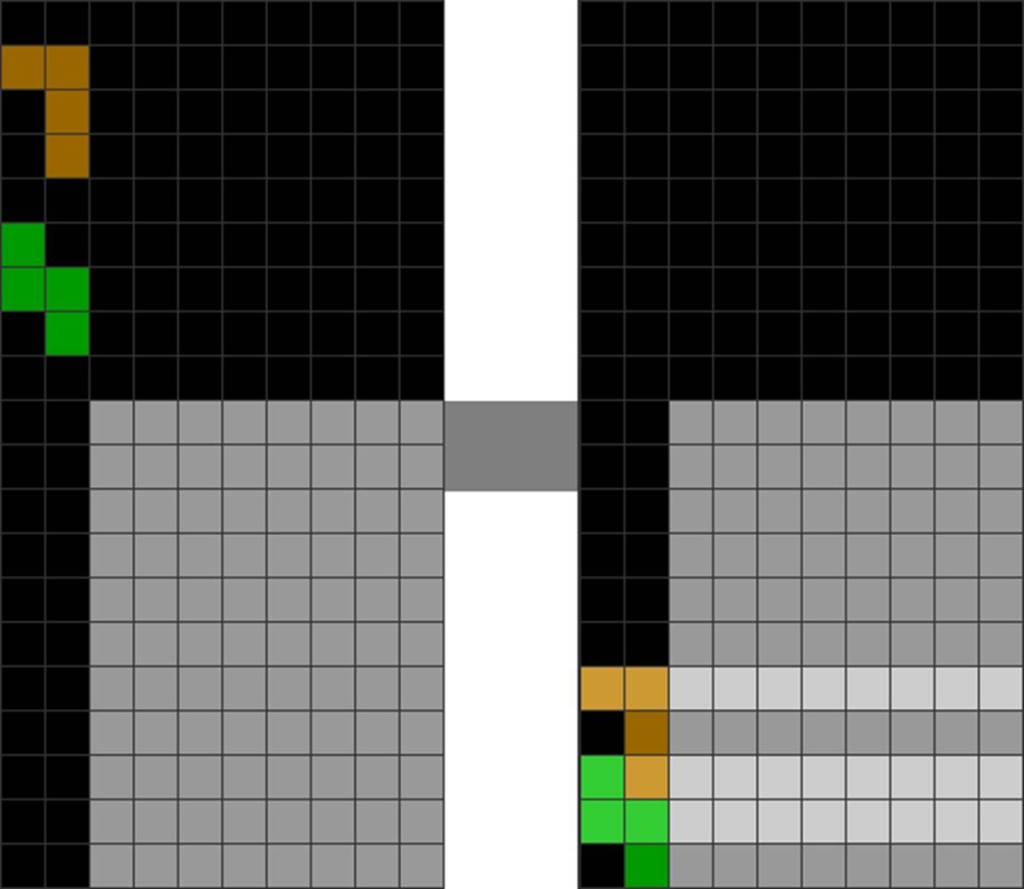
| The player makes a 2-wide well on the left side (columns 1 and 2) while stacking up the right side. This creates a 2-wide combo sequence setup, starting with the S and L pieces’ line clears when they enter the gap. |
2-wide involves creating a 2-block-wide cavity with stacked side towers. You insert pieces into it to sustain a combo sequence.
| Diagram Set 13-2 | |
| 1 | 2 |
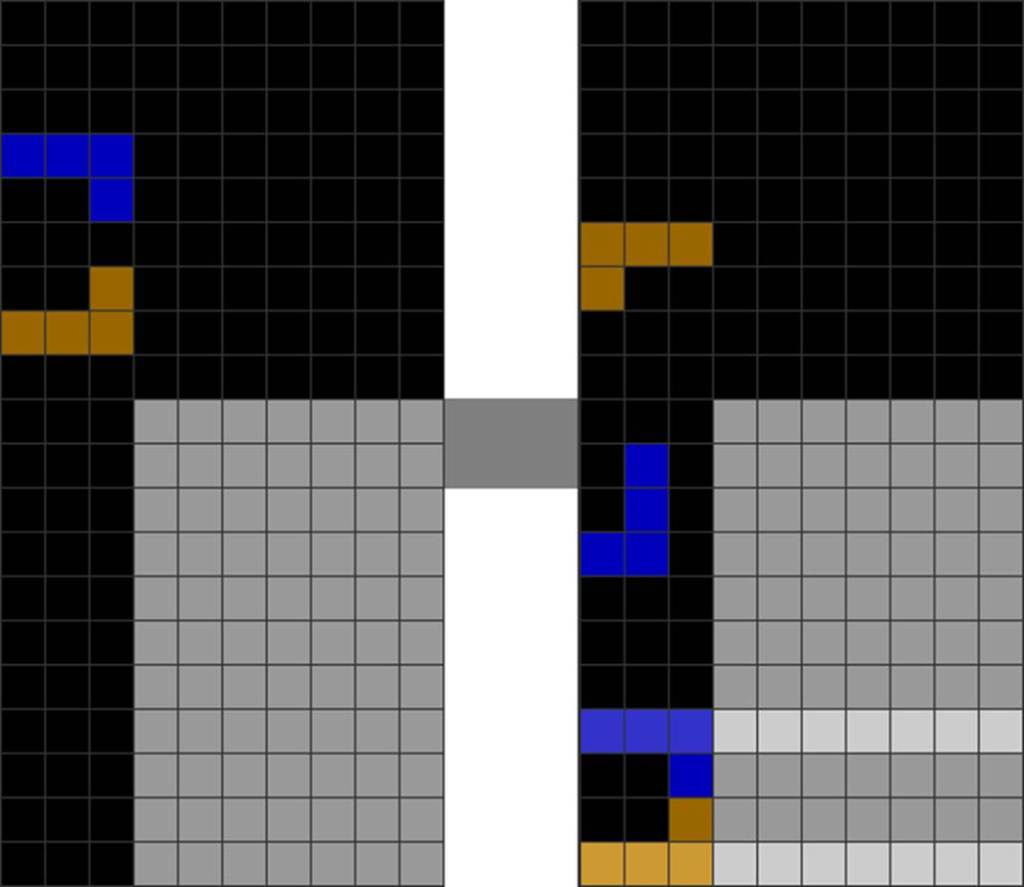
| The player makes a 3-wide well on the left side, then inserts L and J pieces to begin a downstack combo. |
3-wide involves creating a 3-block-wide cavity with side towers. The logic is the same as in 2-wide: insert pieces into the main cavity to sustain a combo sequence.
| Diagram Set 13-3 | |
| 1 | 2 |
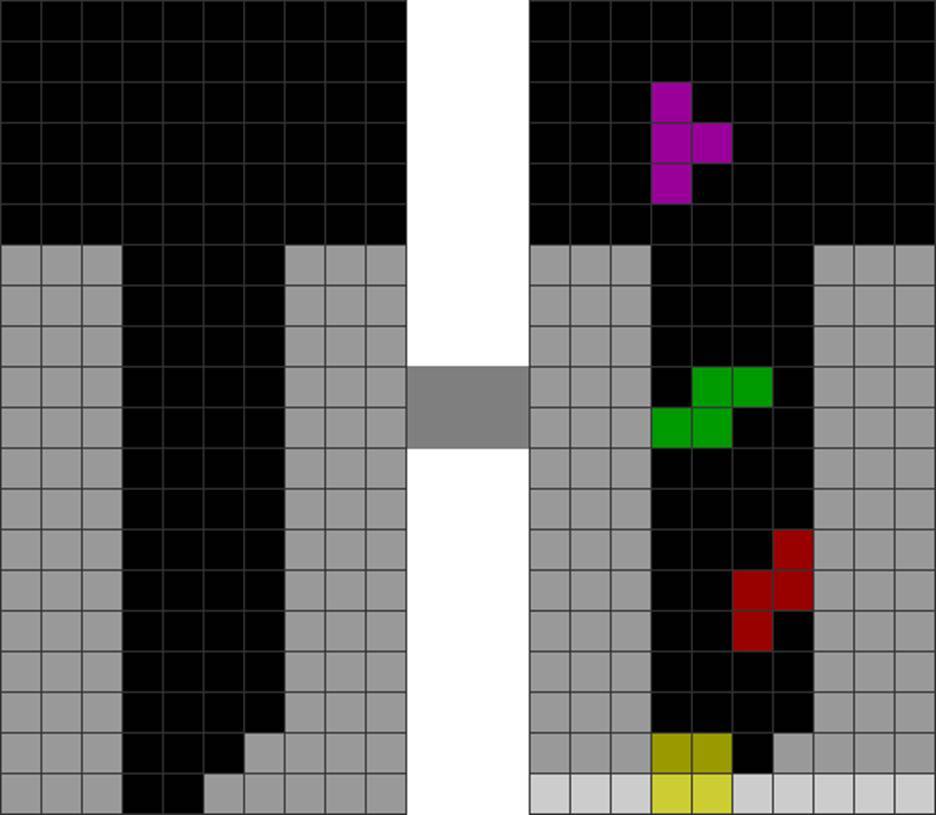
| A starting 4-wide well. | The player commences a 4-wide combo chain by placing the above pieces in order. |
Needless to say, 4-wide follows the same logic and is self-evident: it requires a 4-block-wide main cavity.
Training 2-Wide and 3-Wide
Training 2-wide and 3-wide is extremely easy.
You only have to take out Four-tris to create the following mid-game situations:
| Diagram Set 13-4 |
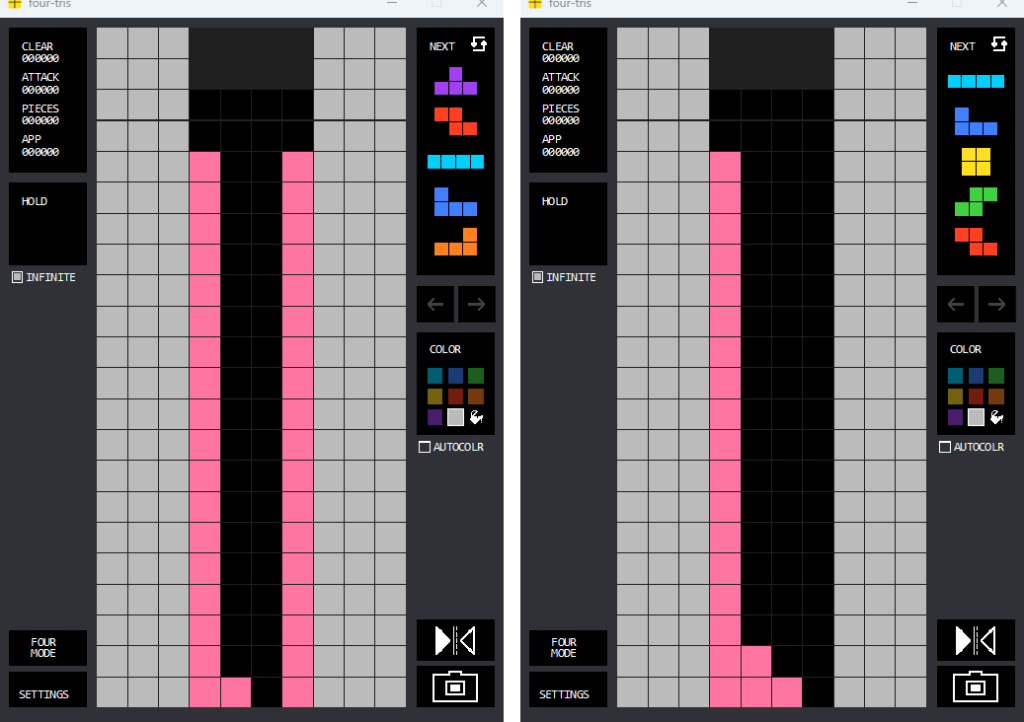
| You can use Four-tris to paint and create 2- and 3-wide training scenarios. |
Alter and randomize the residue patterns (in pink) by manually painting them.
Next, insert any combination of pieces into the central 2-wide or 3-wide cavity to sustain a combo chain as long as possible.
Once you can do this, you can apply it to actual games almost immediately.
No memorization is needed for 2-wide and 3-wide.
This is because of the vast permutation of residues (the pink blocks) within the cavity area. As a result, there are too many solutions to memorize, so you have to freestyle — which means no memorization is needed.
That is, you only have to jump into battle to apply 2-wide and 3-wide.
Training 4-Wide
Training 4-wide is extremely easy with modern Tetris sub-modes.
Some specific training apps, such as Four-tris, already program the field to infinitely generate 2 side towers on the left and right, leaving a central 4-wide cavity, as shown here:
| Diagram Set 13-5 |
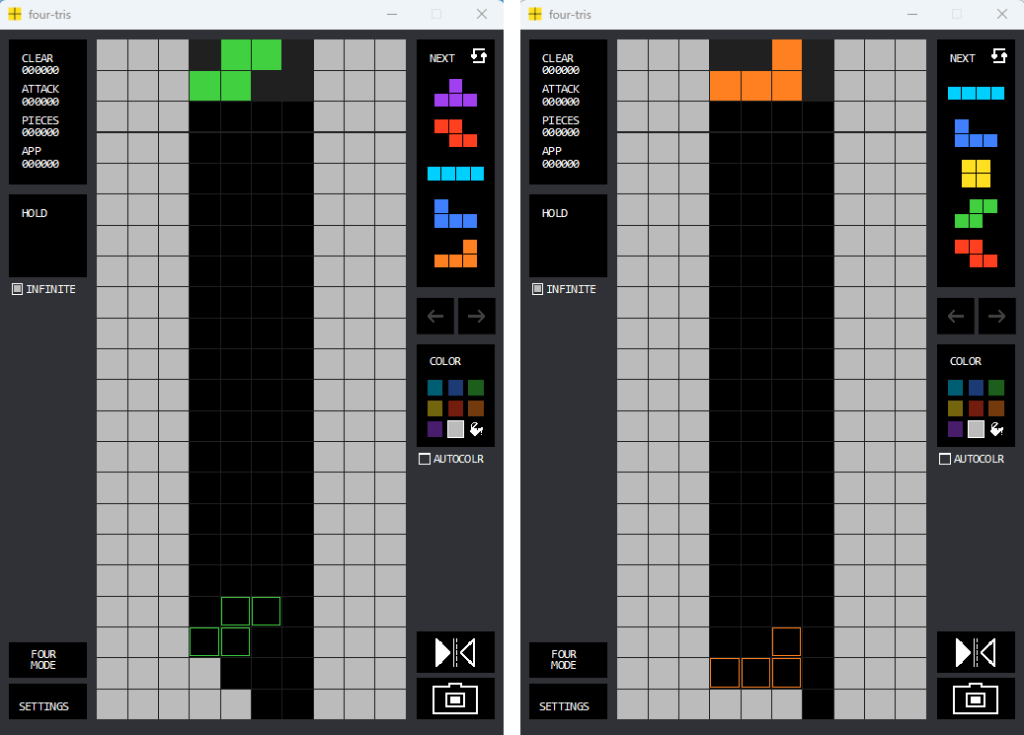
| You can use Four-tris’ 4-wide training mode to instantly create 4-wide training scenarios using randomly created center residue forms. |
This means the player does not have to waste time upstacking the 2 side towers. They simply have to insert the incoming pieces into the central 4-wide cavity.
The player can then keep experimenting and training using the 4-wide patterns.
Some Tetris versions also have specific game modes that emulate this. One such example is TETR.IO’s Zen mode:
| Diagram Set 13-6 |
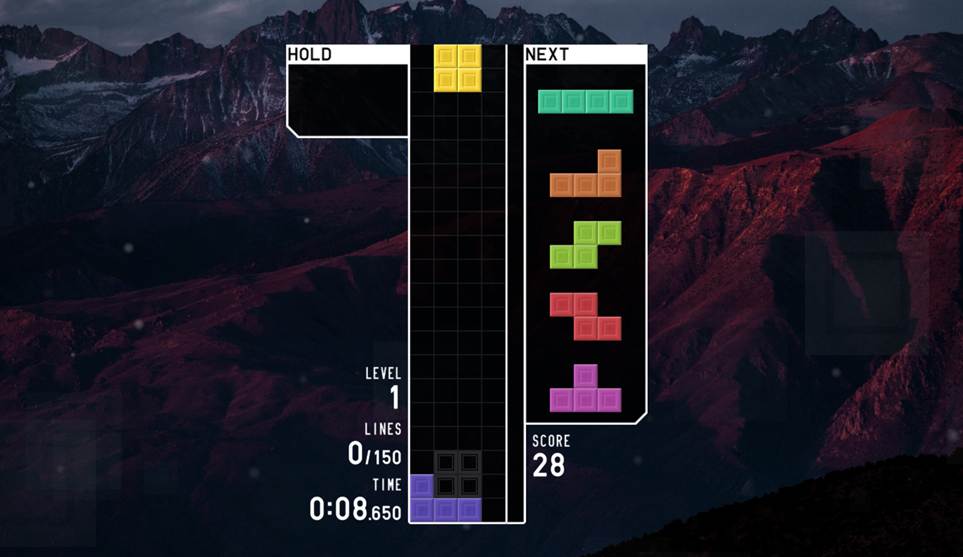
| I set a solo Zen match in TETR.IO by adjusting the field’s width to 4 blocks. This emulates a 4-wide well for training purposes. |
TETR.IO also has a 4-wide versus mode: Players battle each other on a miniaturized 4-wide field, where they must top out opponents using 4-wide methods.
Quick Generalizations for 4-Wide
4-wide has hundreds of patterns to memorize, especially if you include all residue forms, such as 3-, 4-, 5-, and 6-residue. Note the pink blocks:
| Diagram Set 13-7 | |
| A | B |
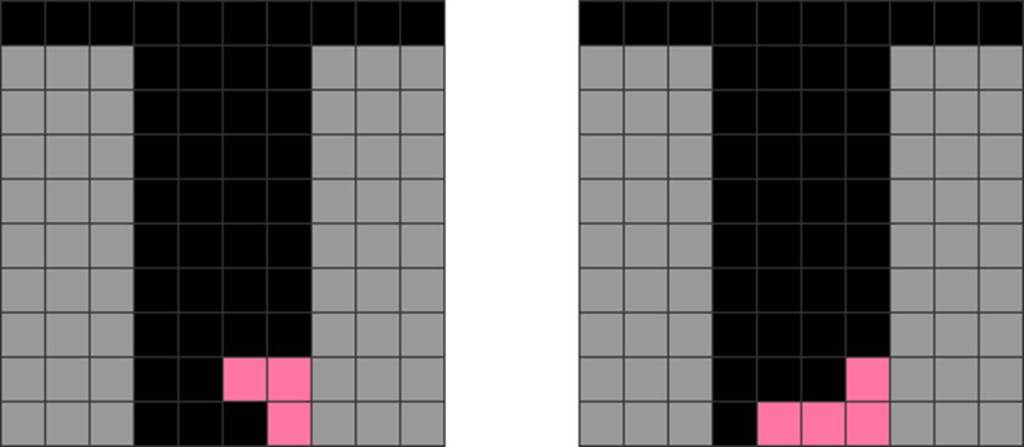
| 3 residue 4-wide. | 4 residue 4-wide. |
| C | D |
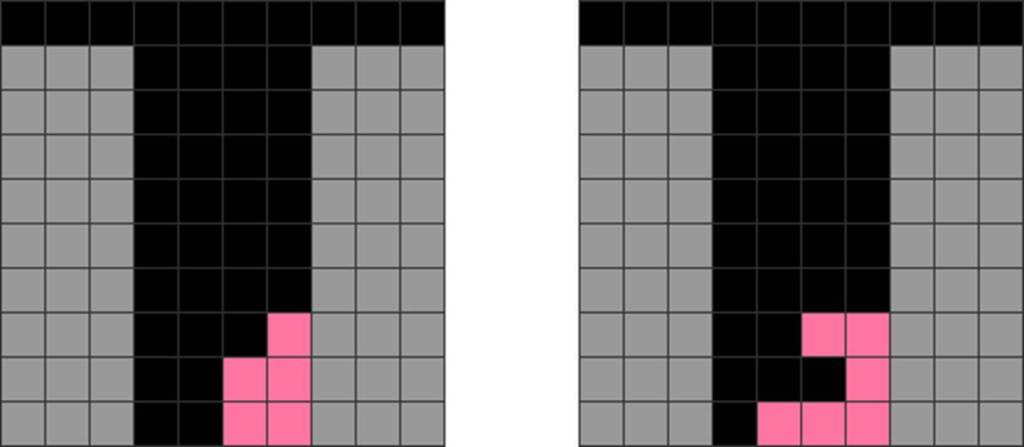
| 5 residue 4-wide. | 6 residue 4-wide. |
This seems overwhelming. However, from my experience, you can use a few generalizations to extend your 4-wide combos easily.
They are just guidelines. However, they apply to many situations. They are not substitutes for memorizing the solution charts. However, they help with impatient players who simply want quick bites:
I Pieces Always Extend a Combo
Because I pieces can be placed horizontally and perfectly into a 4-wide cavity, they will always clear 1 row and extend a 4-wide combo:
| Diagram Set 13-8 | |
| 1 | 2 |
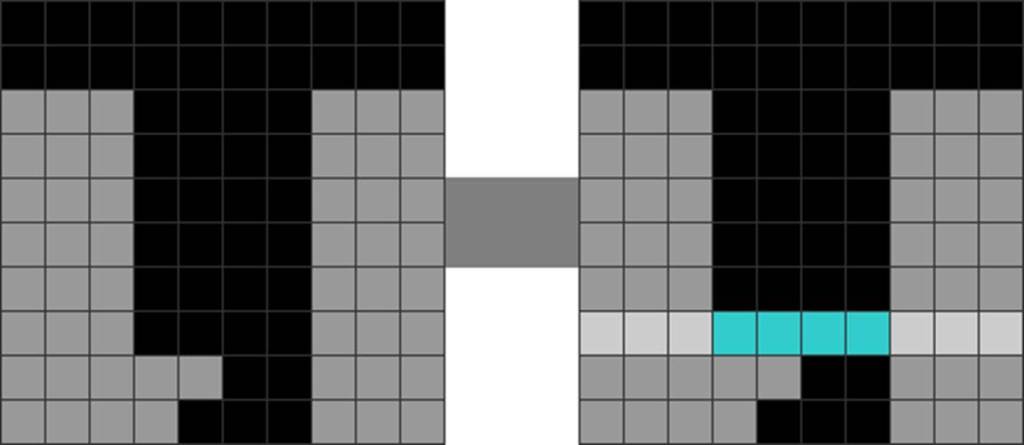
| A starting 4-wide pattern. | The horizontal I piece’s line clear will always extend a combo. |
Hence, the lazy player can just hold an I piece and use it when needed to extend a combo.
L and J Pieces Are the GOAT
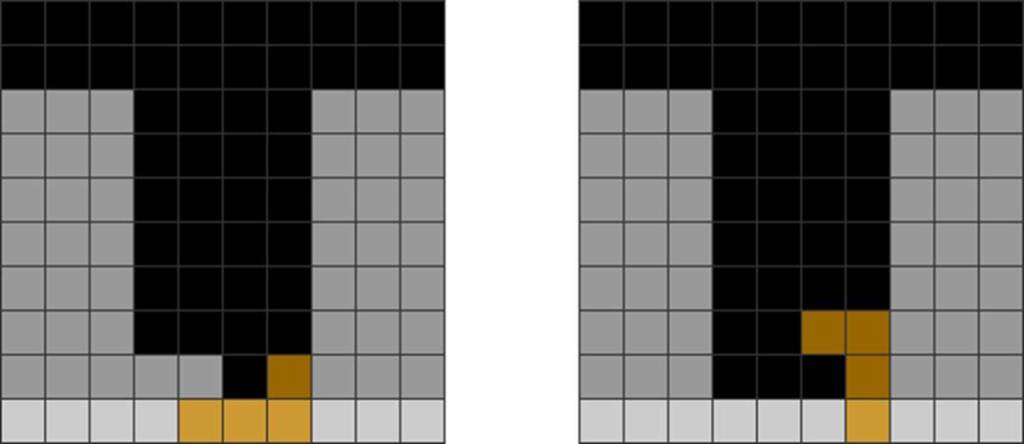
L and J pieces have the most orientations of any tetromino:
| Diagram Set 13-9 | |
| A | B |
| C | D |
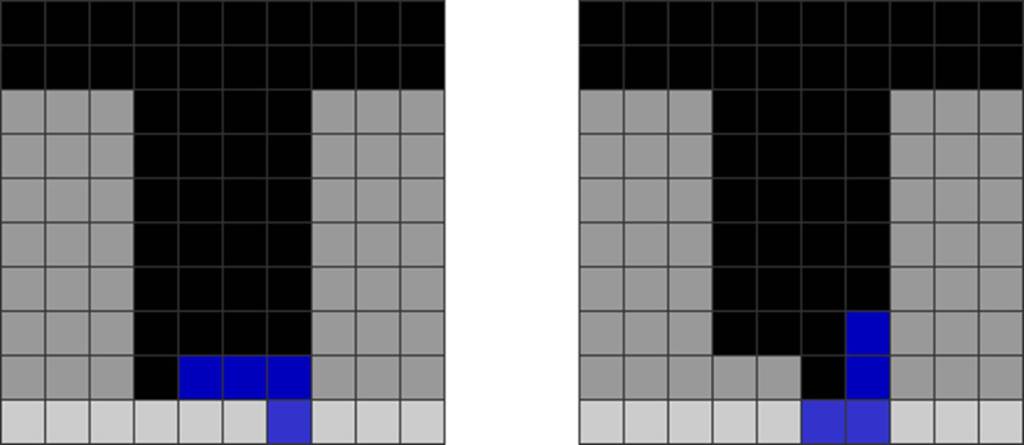
| Notice how the L and J pieces have so many orientations that they can continue a 4-wide combo sequence. |
This means that, unlike the rigid orientation of an O piece (which allows only 1 orientation), you can have many L and J orientations.
Holding onto L and J pieces greatly improves your chances of extending a 4-wide combo because you can use trial and error to find the right rotation that continues it.
T Pieces: Also Great
T pieces can also be oriented in many directions. However, they are not as numerous as L and J pieces:
| Diagram Set 13-10 | |
| A | B |
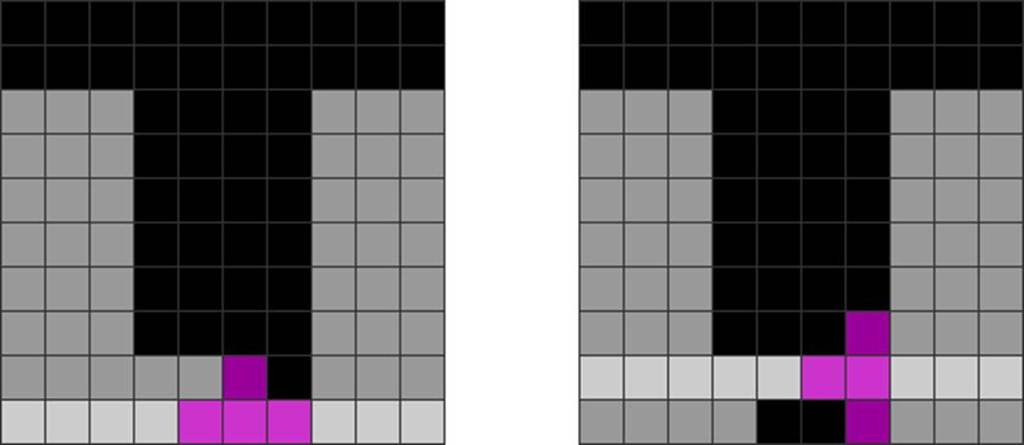
| The T piece can also be oriented in many ways to continue a 4-wide combo sequence. |
Holding on to the T piece is also a great alternative to L and J pieces.
However, their jagged orientations can sometimes break a 4-wide continuation. In the following case, without an upcoming O or I piece, you cannot continue the 4-wide sequence.
| Diagram Set 13-11 | |
| 1 | 2 |
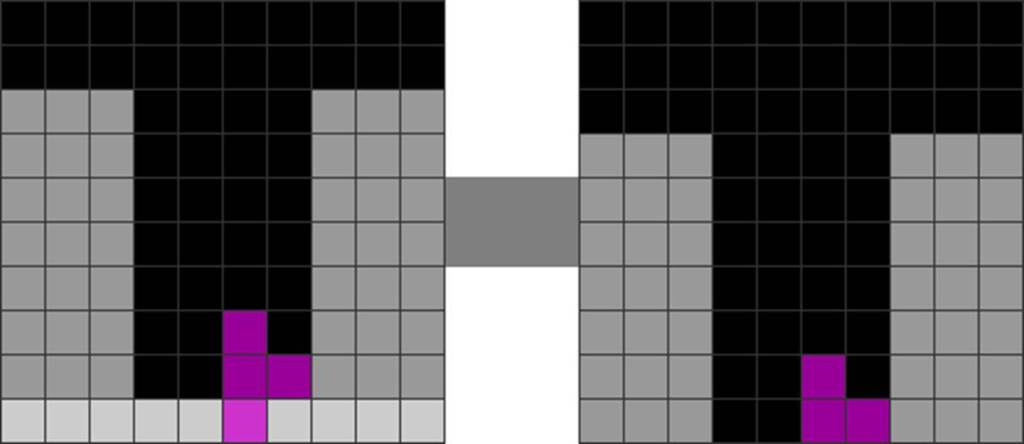
| A vertically placed T piece continues the 4-wide sequence. | This relatively jagged and divided pattern has few combo continuation solutions. |
S and Z Pieces: Yucks
S and Z pieces often leave jagged parts after the line clears:
| Diagram Set 13-12 | |
| A | B |
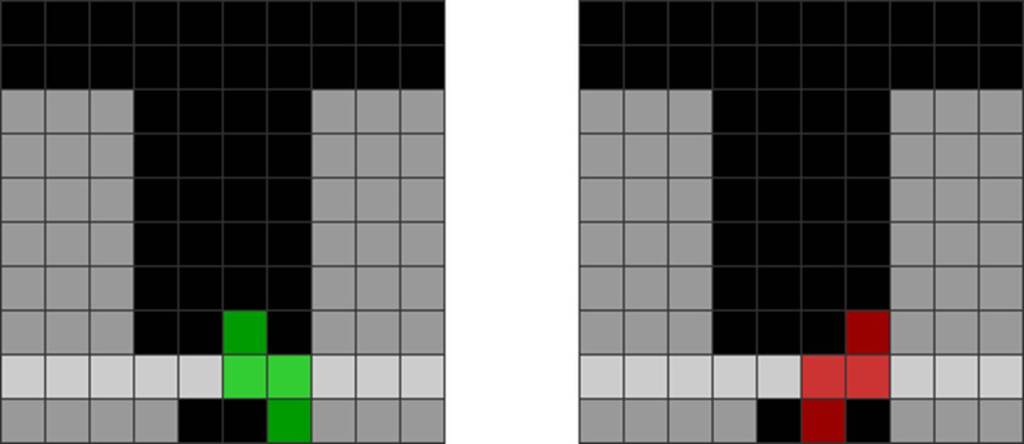
| The S and Z placements leave a jagged, divided stack that can discontinue 4-wide combo solutions. |
They also have fewer orientations than L, J, and T pieces.
So, I suggest minimizing holding onto them.
O Pieces: No Way
O pieces cannot be “rotated.” If you press the rotate buttons, O just remains an O!
| Diagram Set 13-13 | |
| 1 | 2 |
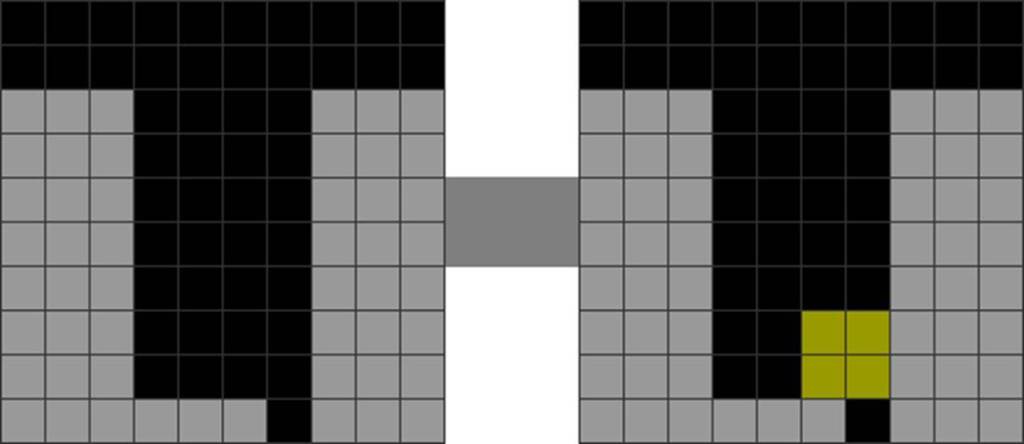
| No matter what you do, you cannot rotate the O piece! This means it only has 1 solution to continue 4-widing. Sadly, there are no solutions here. |
This will most likely lead to a dead end and prevent you from continuing a 4-wide combo.
So, minimize holding onto O pieces as much as possible!
Residue Conversion
Sometimes, you can convert certain 4-wide residue forms into other forms:
| Diagram Set 13-14 | |
| Starting field | |

| 1 | 2 |
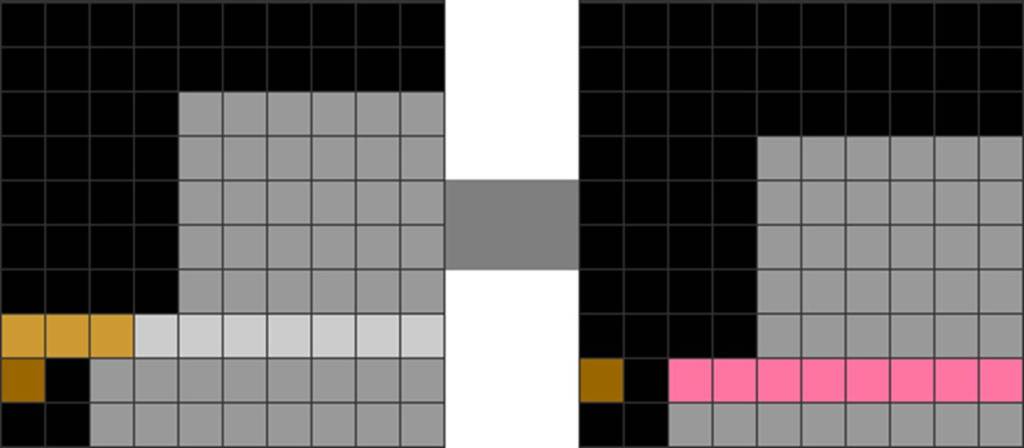
| A 5-residue well is converted with an L skim into a 3-residue, 4-wide (pink layer) stacked on top of the bottom gray layer. |
I will leave it to the reader to use trial and error to figure this out. However, this helps prevent you from hitting a dead end. Converting to a different residue opens more downstack combo options.
Spotting Mid-Game 4-Wides
Spotting mid-game 4-wides can be challenging as you have to spot the residue patterns first:
| Diagram Set 13-15 | |
| 1 | 2 |
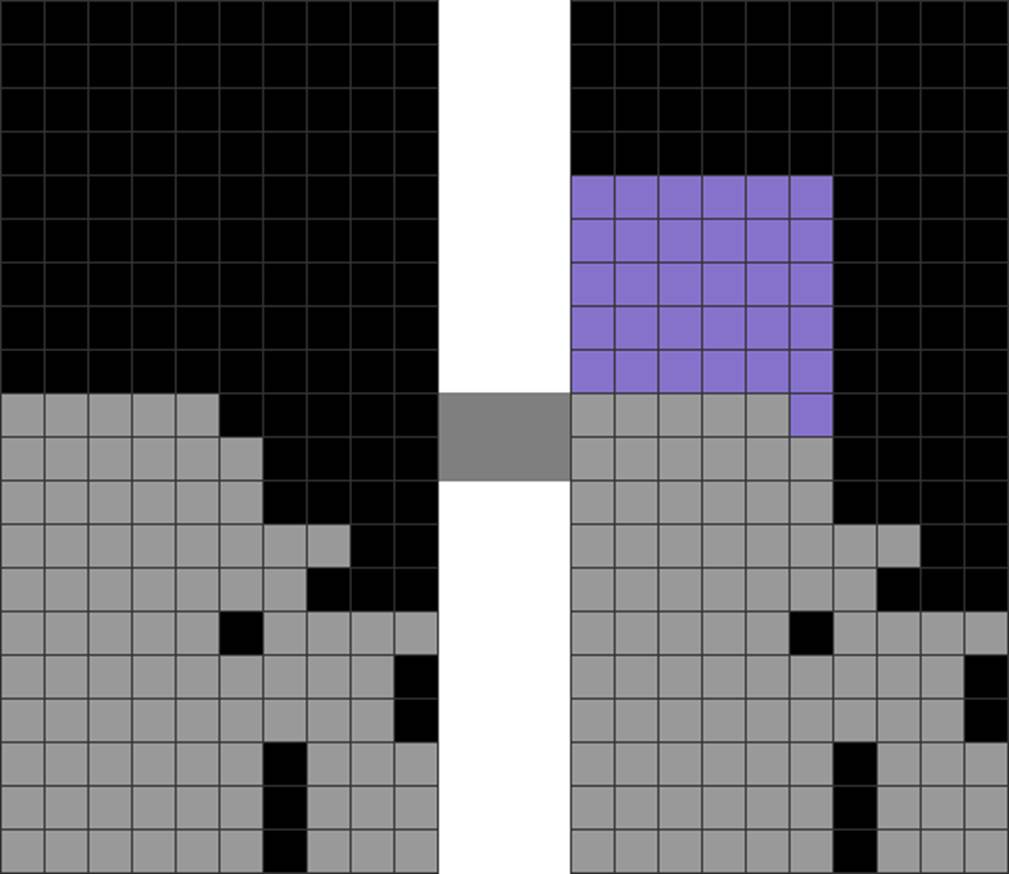
| Columns 7 to 10 make another 3-residue, 4-wide pattern. The player upstacks the lavender area to make a side 4-wide. |
Here, the player spots a 3-block residue needed to create a 3-residue 4-wide pattern.
The player then stacks into a massive tower and begins the 4-wide downstack sequence.
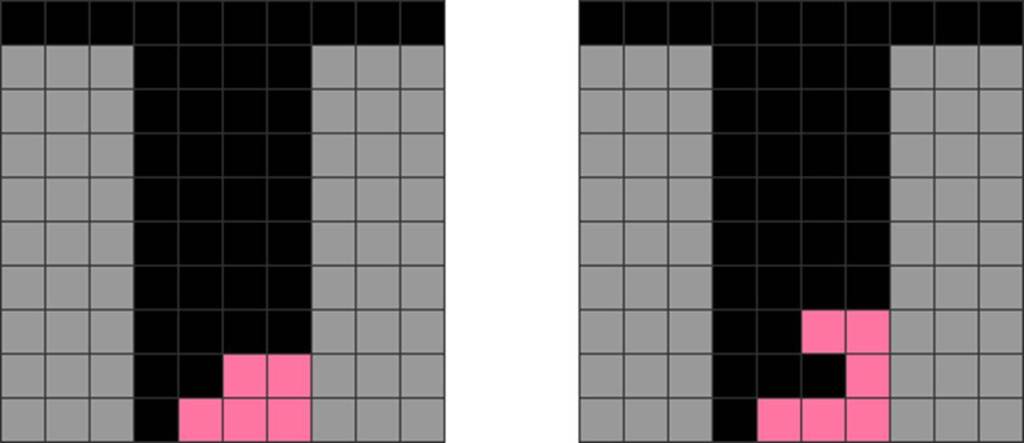
While the player can train to spot these mid-game, it is difficult for me to prescribe an exhaustive list of mid-game residues to spot, such as these:
| Diagram Set 13-16 | |
| A | B |
| C | D |
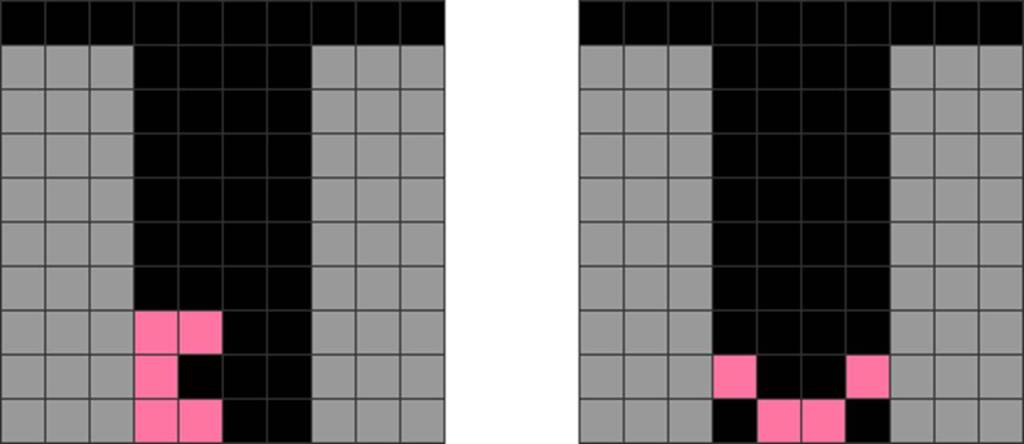
| Several random residue shapes that have 4-wide combo continuation solutions. |
This is because there are tens of thousands of permutations of how blocks can be combined.
Hence, using Four-tris to train their mid-game situations can be difficult.
I can only recommend that the player play real Tetris matches and try to spot them to create mid-game 4-wides.
In a Nutshell
| Key Points |
| 4-wide has many solutions to memorize. However, by applying a few simple, key generalizations, you can reduce memorization significantly. There are many tools to train 4-wide. Use them! |

