The first few seconds may render in low quality. Please give them a few seconds to render.
The Basics
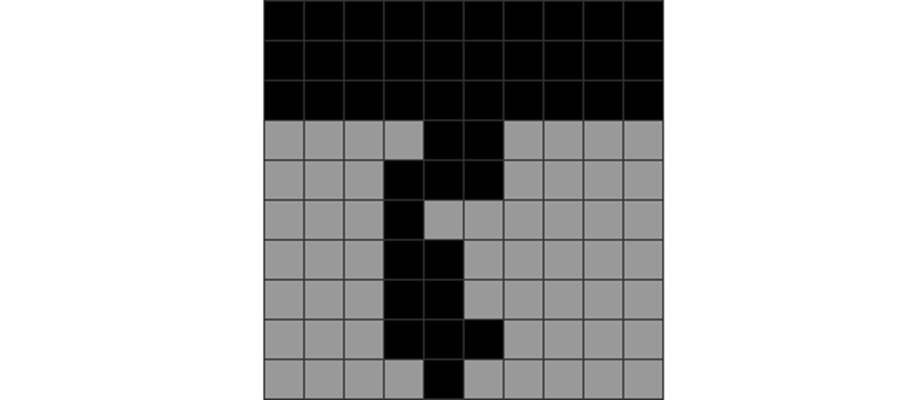
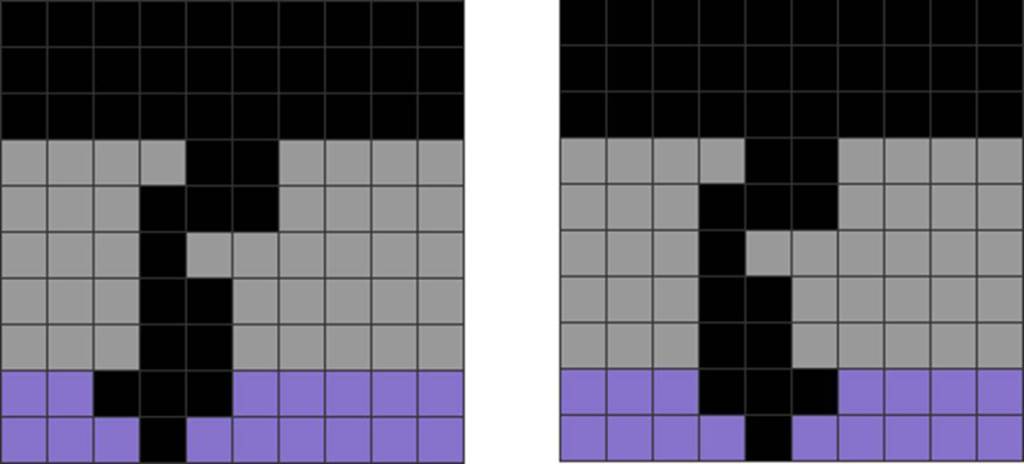
Trinity is a triple T-spin double setup that is relatively clean.
Diagram Set 13-1
It is essentially a spliced STSD with an extra T-spin double inside. But it is risky to create.
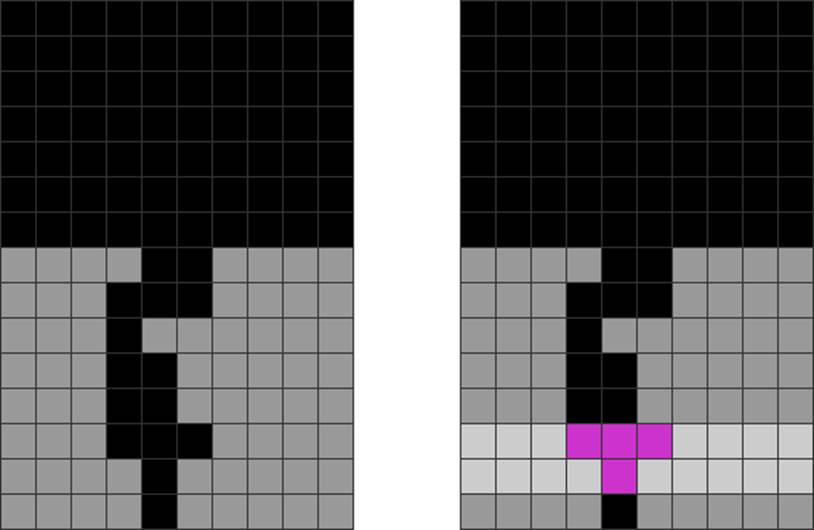
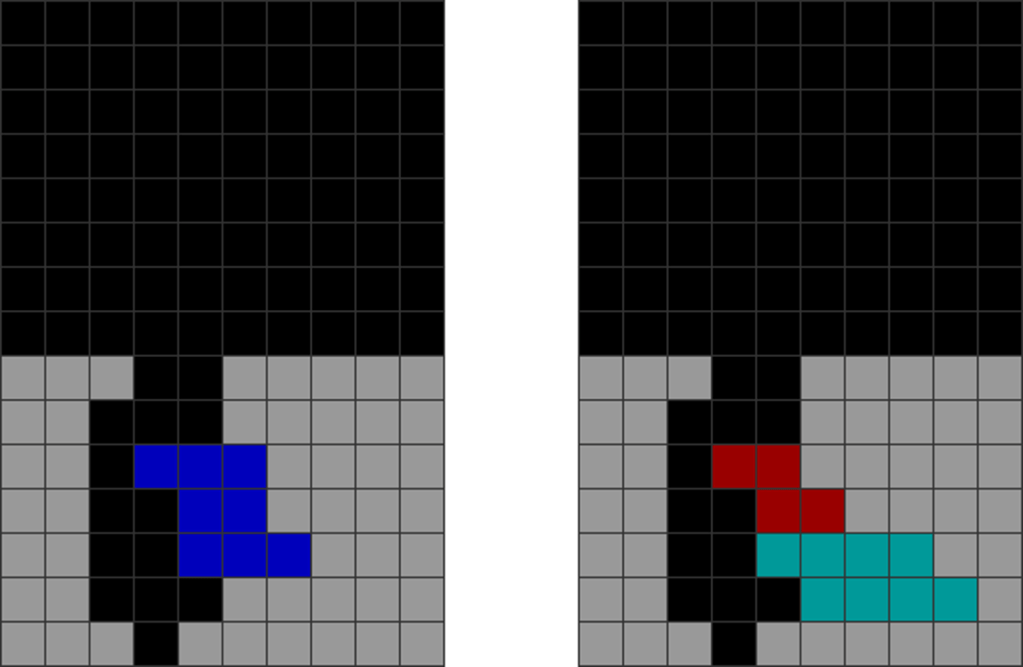
Here is how to complete its sequence. There are 2 ways of achieving the Trinity sequence:
Diagram Set 13-2
1
2
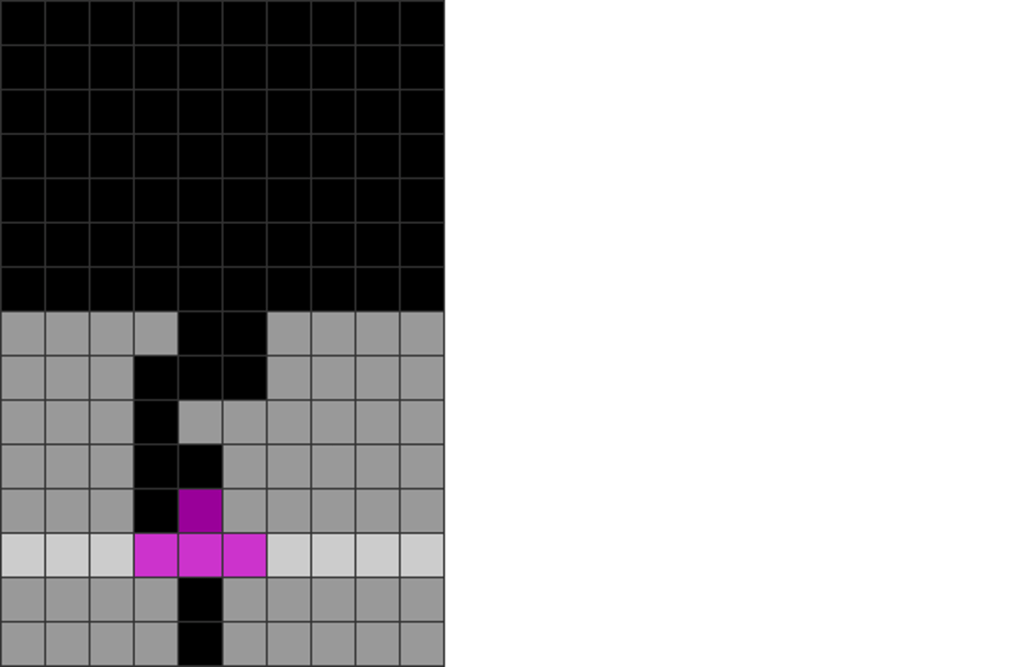
This is a Trinity.
The player spins the T piece in and places it horizontally to create a T-spin double.
Alt. A
The player denies the T-spin double and makes the T upside-down, turning it into a T-spin mini. This leads to a C-spin.
Neither option is wrong. Most go for the former for its consistency. However, the latter’s subsequent T-spin triple can catch some opponents off-guard.
Mid-Game Chances
Trinity offers many mid-game chances. However, it stacks tall and should only be used opportunistically for safety reasons.
1. General Ways
And here are ways to construct it mid-game:
Diagram Set 13-3
A
B
C
D
E
F
The above are ways to construct the ‘short’ side or base of the Trinity method. The overhang is then easily freestyled.
2. L/J Base Opportunity
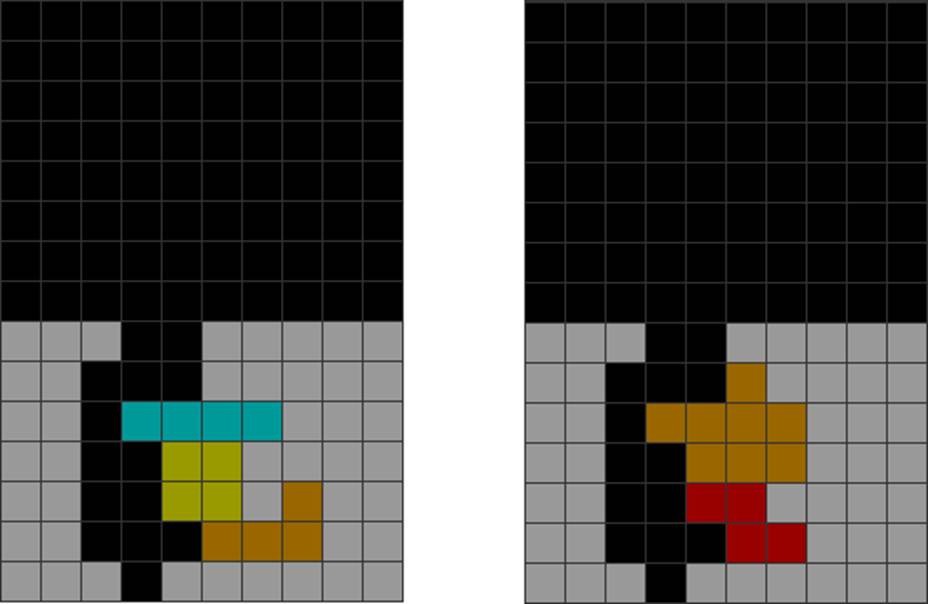
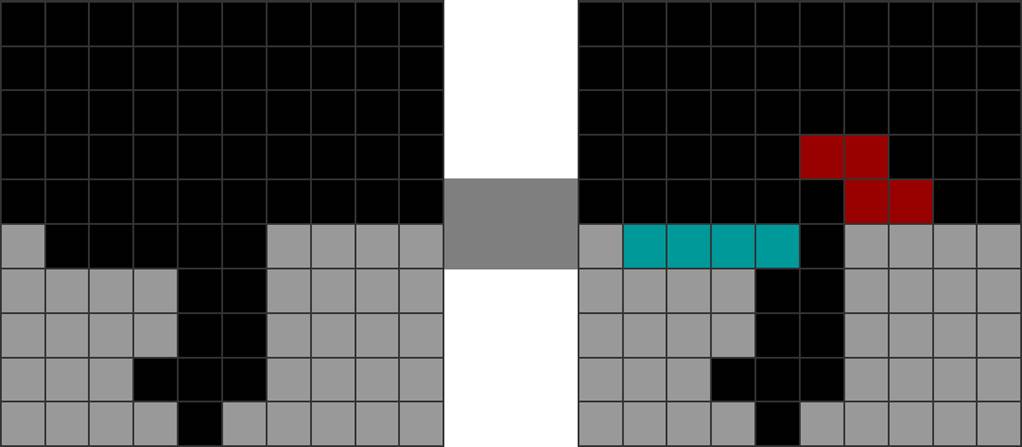
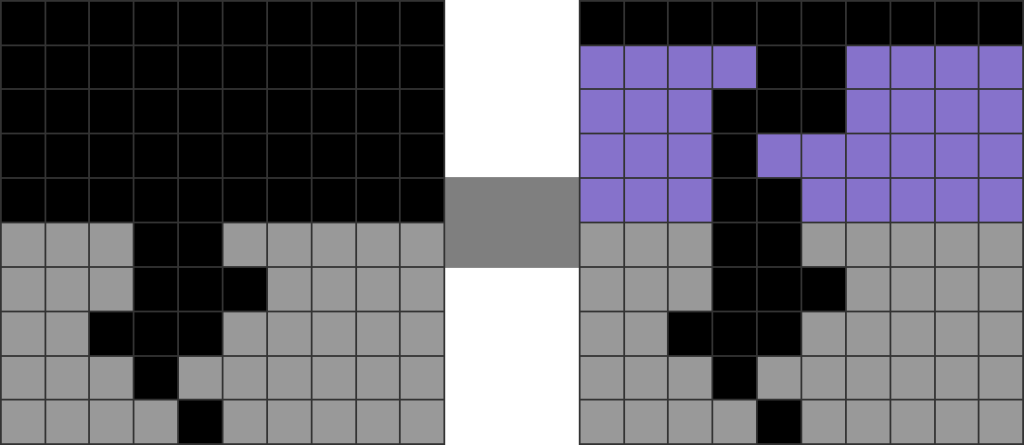
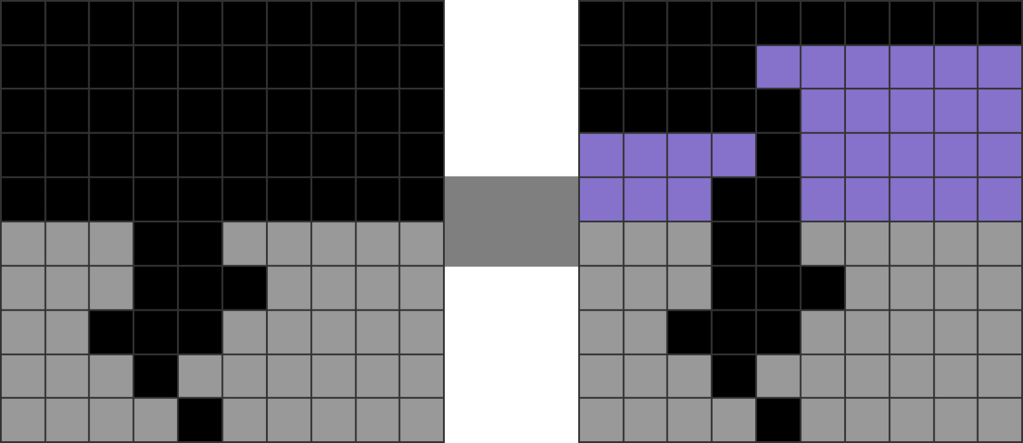
The mid-game opportunity below is the most common situation to create a Trinity:
Diagram Set 13-4
1
2
Spot this mid-game jagged shape, often caused by a vertical S/Z overhang.
Place a J horizontally (L if mirrored) and make an overhang for the Trinity.
3. S/Z Base Opportunity
This is the second-most common mid-game situation for a Trinity:
Diagram Set 13-5
1
2
Spot this highly common mid-game pattern.
Place a horizontal S (Z if mirrored) as the Trinity base. Construct the overhang.
4. I Base Opportunity
This is rare, but it happens more commonly than one thinks:
Diagram Set 13-6
1
2
In rarer situations, you can make the Trinity base by placing a horizontal I-piece.
Continuations and Follow-Ups
Trinity follow-ups are tricky because many of them stack high and should be abandoned if necessary.
1. Stacking Trinities
Trinities can be stacked:
Diagram Set 13-7
1
2
The easiest way to stack Trinities is to use the ZL and SJ prop combinations in step 2.
This lets you chain a series of T-spin doubles.
However, I do not recommend this as it will lead to excessive T-dependencies. The overhang will also block off potential Tetrises, making the setup vulnerable. It is used mainly for 20 T-spin doubles runs in specific Tetris modes.
2. Trinity from Yoshihiro
During 9-0 stacking, you can transition from a Yoshihiro to a Trinity easily:
Diagram Set 13-8
1
2
First, make a Yoshihiro T-spin.
3
4
After Yoshihiro concludes, you get a T-like shape that you can easily stack a vertical L (J if mirrored) on it, with an overhang to make a Trinity.
Variations
Trinity has rarer, yet practical variations.
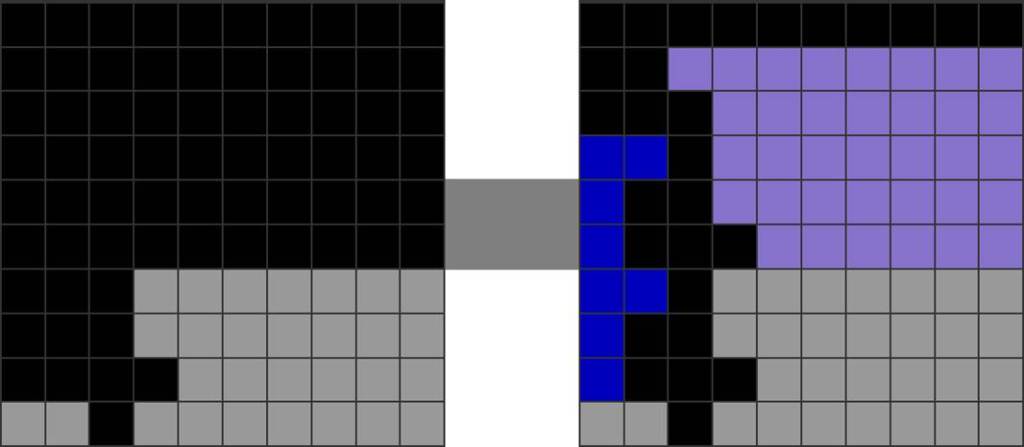
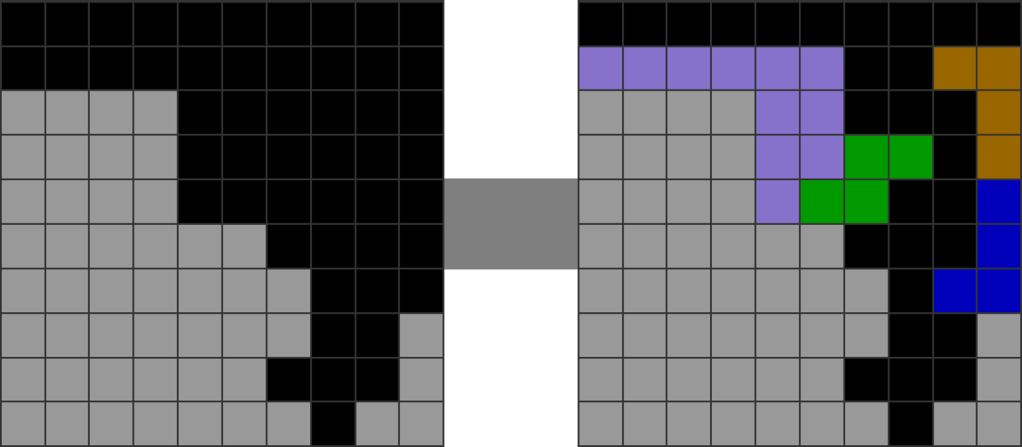
1. Trinity Variant 2
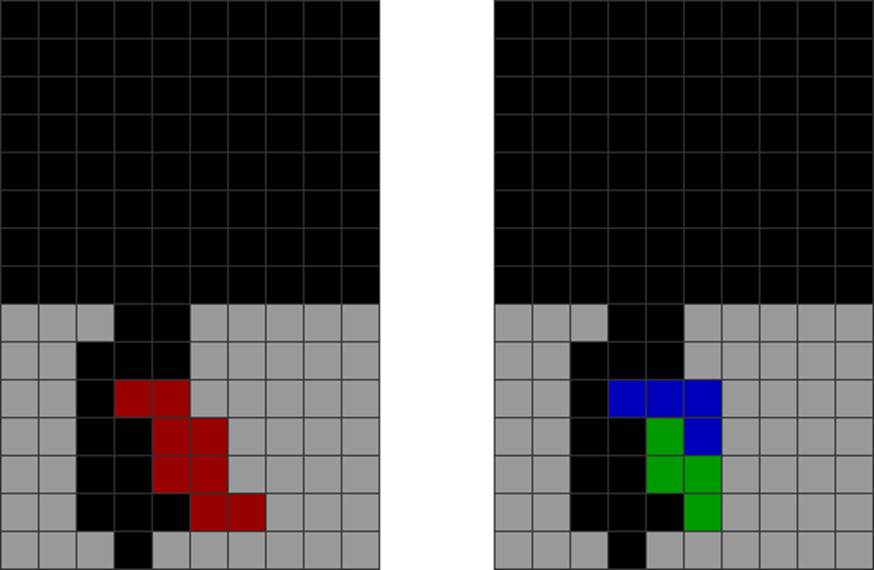
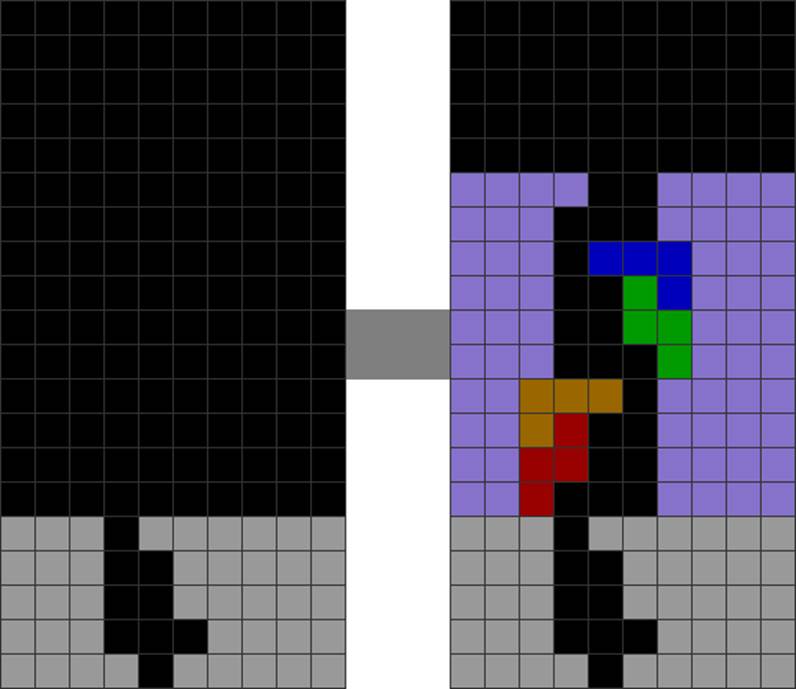
Trinity has a second variant, which involves moving the bottom-most T-spin double by 1 block to the left or right:
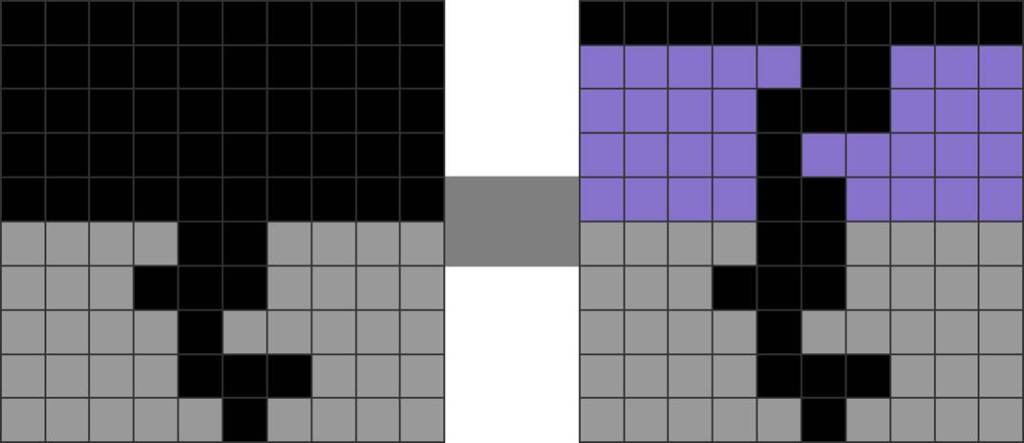
This is the second variant of Trinity. Compare it to B.
This is the original variant of Trinity.
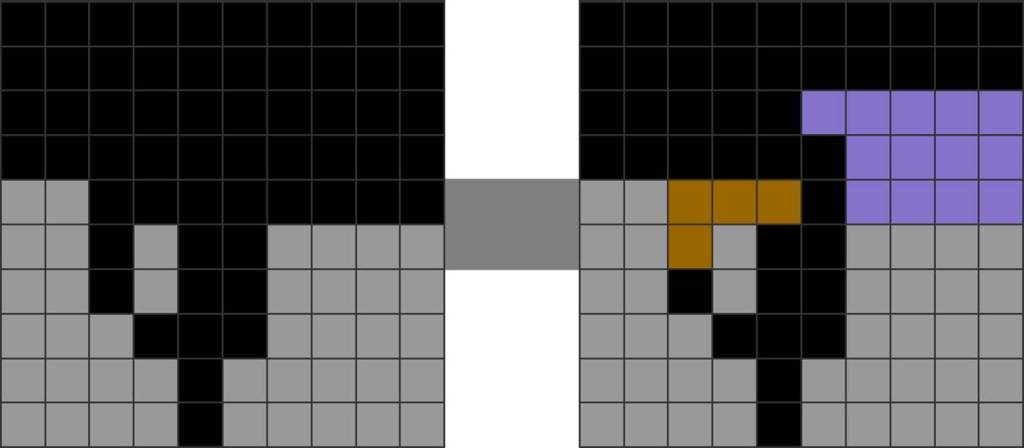
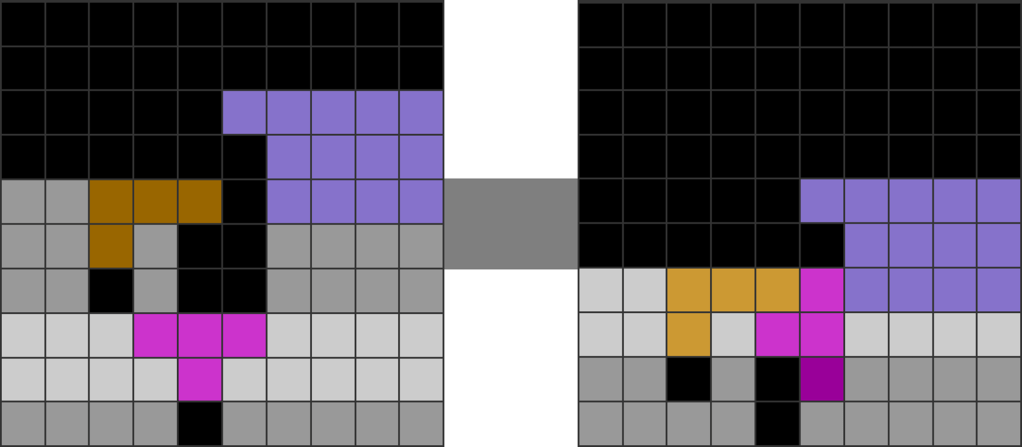
Please observe the lavender-colored area, which is a T-spin double. It is easy to distinguish between the 2 when one realizes they are just STSDs stacked atop a T-spin double, but shifted slightly.
2. Partial (Incomplete) Trinity
Trinities can be partial or incomplete.
Diagram Set 13-10
1
2
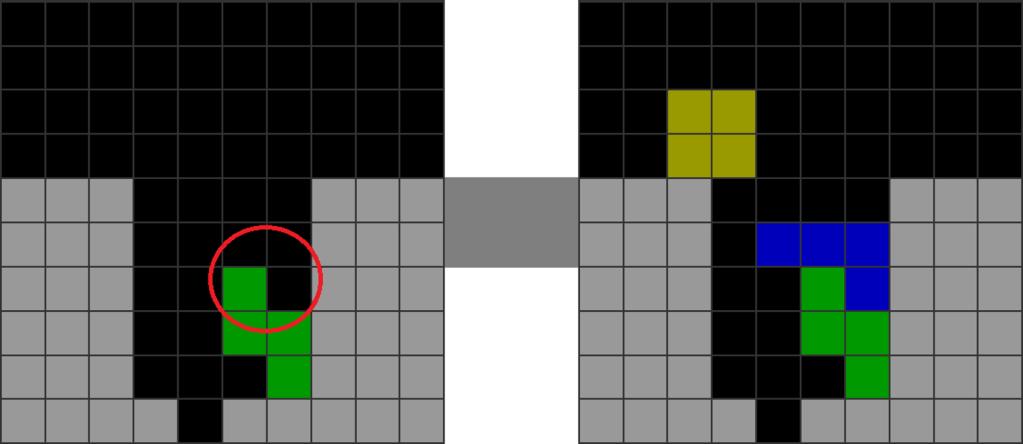
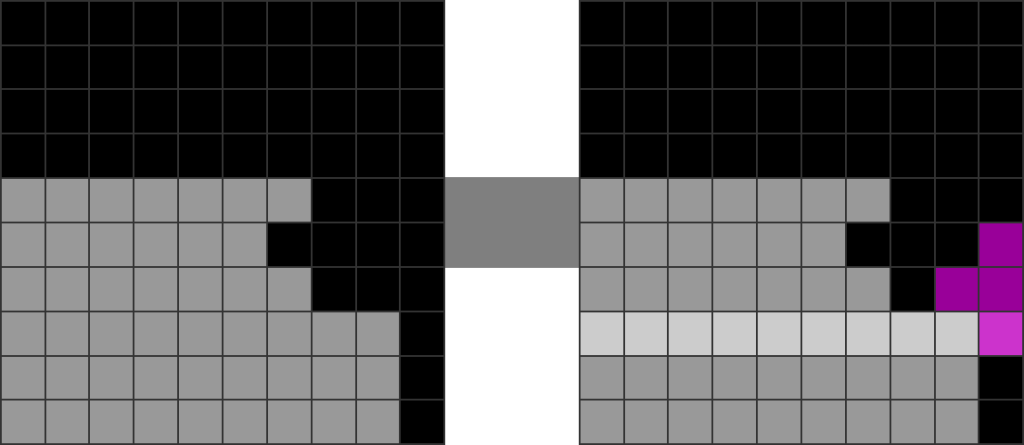
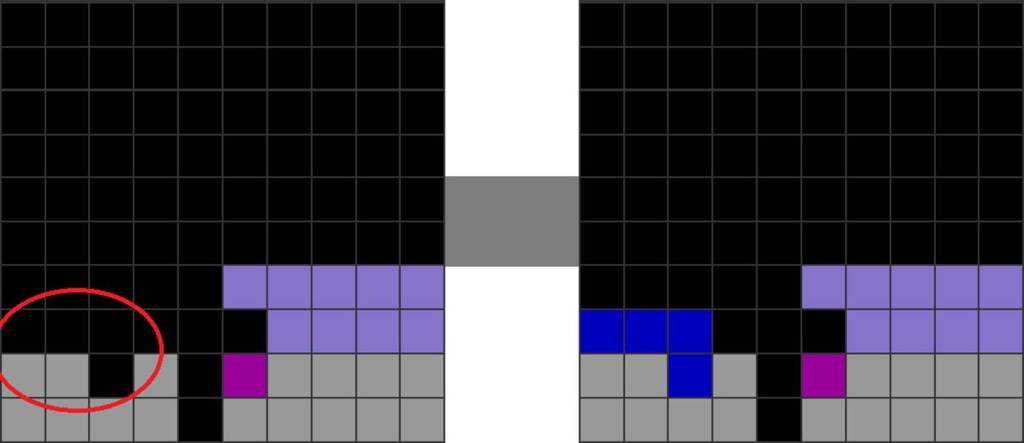
Occasionally, you get this mid-game shape.
By placing the L (J if mirrored) like this, you get a partial Trinity.
3
4
How does it work? The first 2 T-spin doubles are clean.
5
6
However, the third T-spin double requires you to fill up the cavity (red circle) first.
3. Advanced Spliced Trinity
You can insert T-spins into a Trinity. Many variants exist, as covered in my Book 3. Here are some examples and their mid-game situations.
Altair
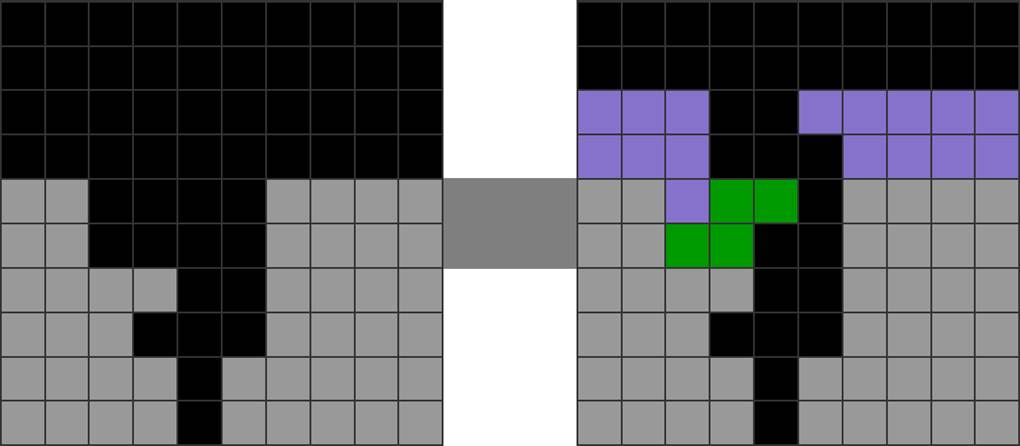
Altair is a T-spin double inserted into a Trinity.
Diagram Set 13-11
1
2
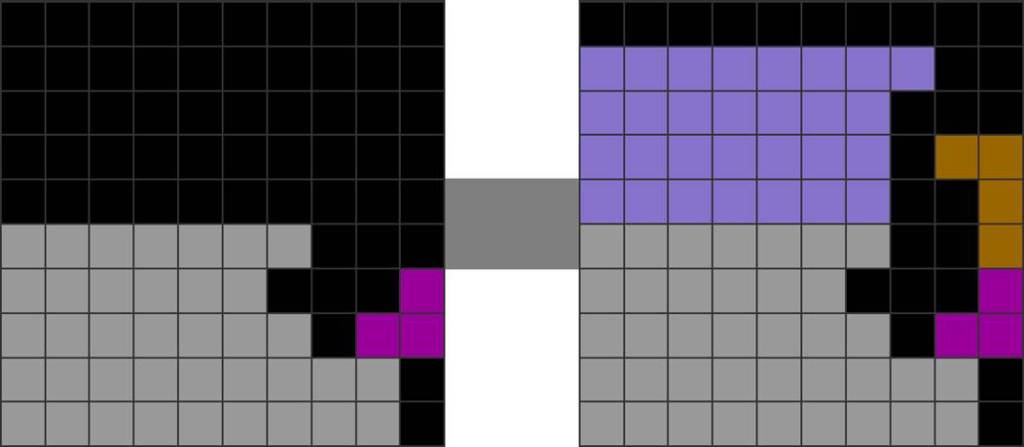
Spot this common mid-game pattern during 7-2 stacking.
Stack 2 Js, upstack the lavender parts, and bam! The Altair is done!
Eta Carinae
Eta Carinae is a T-spin double inserted into a Trinity.
Diagram Set 13-12
1
2
Spot this during 7-2 stacking.
Just top the right side with L and J, and the left side with S. Done!
Antares
Antares is a T-spin double inserted into a Trinity.
Diagram Set 13-13
1
2
Spot a Cut-Copy chance.
Upgrade it to this setup. It grants 4 T-spin doubles.
Betelgeuse
Betelgeuse is a T-spin double inserted into a Trinity. It differs slightly from Antares because its overhang is on the other side.
Diagram Set 13-14
1
2
Spot a Cut-Copy chance.
Upgrade it to this setup. It grants 4 T-spin doubles.
Vega
Vega is a T-spin double inserted into a Trinity.
Diagram Set 13-15
1
2
Spot the second variant of Cut-Copy.
Upgrade it to make a Vega, which grants 4 T-spin doubles.
Scuti
Scuti is a T-spin double inserted into a Trinity. It is most famously associated with and used by Yakine.
Diagram Set 13-16
1
2
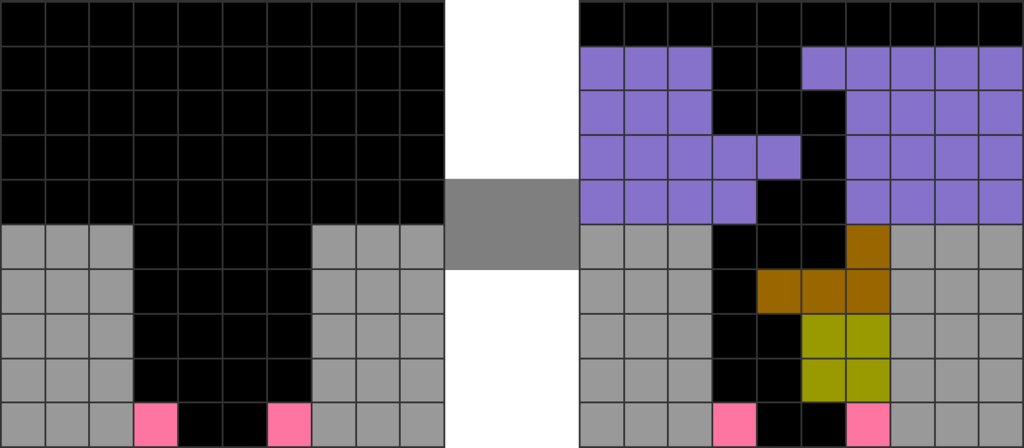
Spot this pattern (pink) over a 4-wide well.
Stack L and O over it, then build up the lavender parts! This has 4 T-spin doubles.
Because of space limitations, I will leave it to the reader to determine how to perform the T-spin sequences for all the above methods.
In a Nutshell
Trinities provide a massive burst of T-spins. They have practical mid-game uses. However, because of their massive T-piece requirements, they could be dangerous during a T-drought.
Pros and Cons
Pros
Excellent for chaining multiple Trinities/stacked STSDs for many back-to-back T-spins.
Has many variations to slightly boost their mid-game chances.
Good for handling T-droughts.
Cons
Has high T-piece requirements.
If you stack too many Trinities, you may run out of Ts.