Tutorial Videos
The first few seconds may render in low quality. Please give them a few seconds to render.
The Basics
King Crimson is a T-spin triple followed by 2 T-spin doubles.
| Diagram Set 14-1 | |
| 1 | 2 |
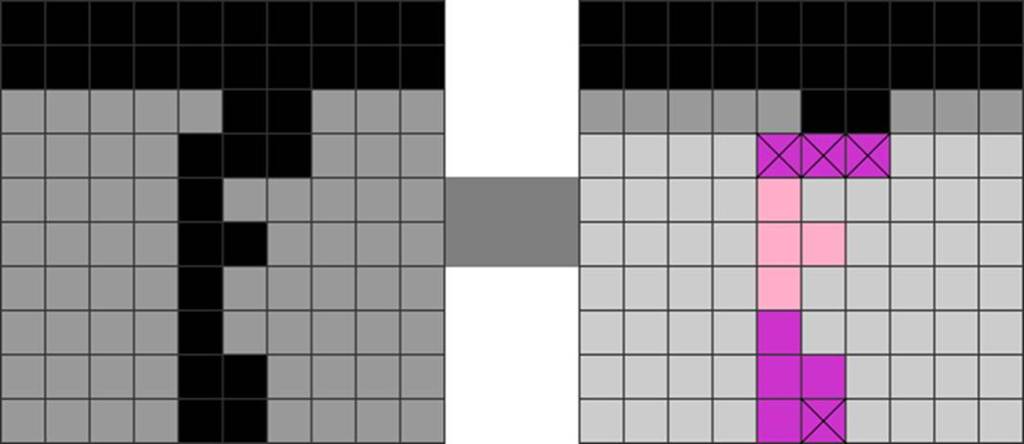
| Each of the slightly varied colored blocks (pink, purple, and crossed purple) represents 3 different T-spin doubles. |
It is essentially a spliced STSD with another T-spin double inserted.
I find it a decent method, but many intermediate players over-rely on it. It requires a large amount of upstacking, which makes you very vulnerable. Only use it when one side is already upstacked.
Mid-Game Chances
Here are situations to use and ways to construct them.
1. The Easiest King Crimson Chance
Creating a mid-game King Crimson is super easy. This is the easiest method:
| Diagram Set 14-2 | |
| 1 | 2 |
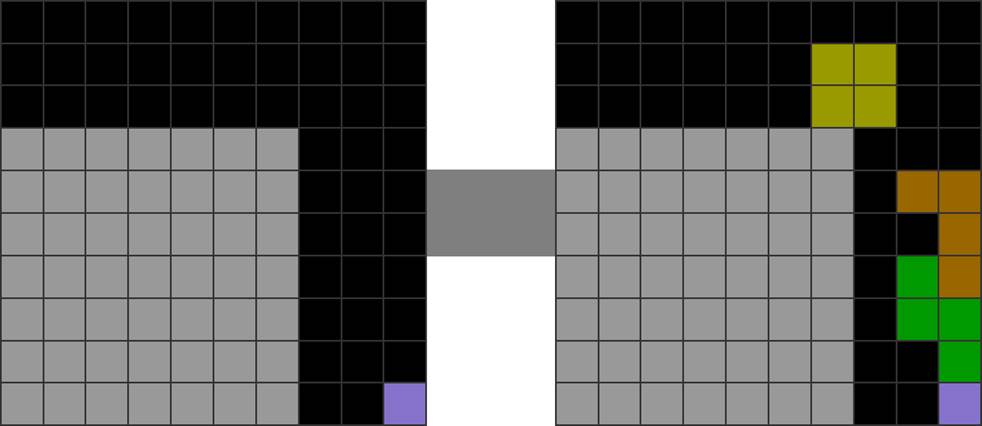
| Spot the lavender mid-game pattern. | Just top it with an S and L (Z and J if mirrored). Make an overhang. Done! |
2. Freestyle King Crimsons
First spot this opportunity:
| Diagram Set 14-3 |
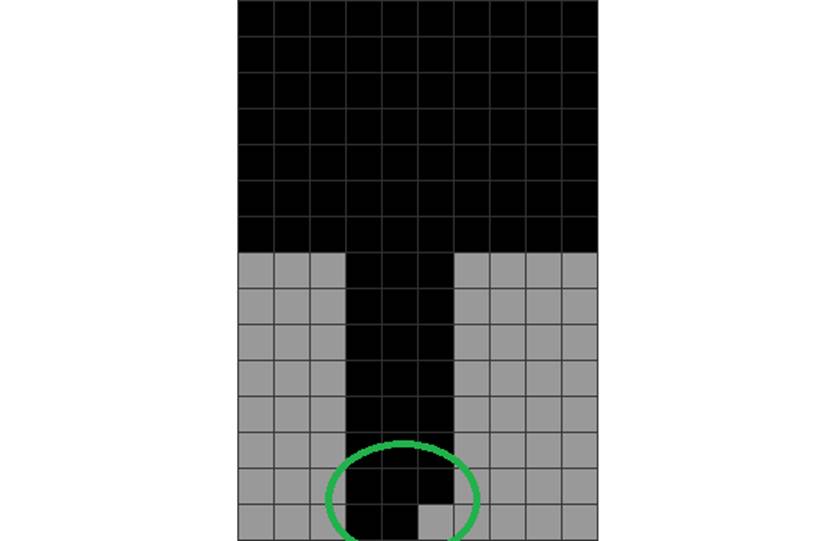
| Note this circled part with a single block. This is the most common mid-game opportunity for King Crimson. |
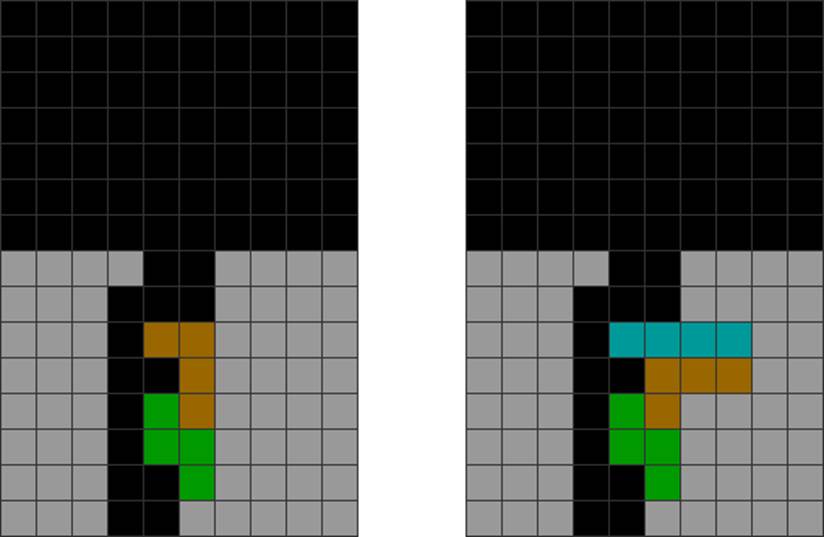
Then do these:
| Diagram Set 14-4 | |
| A | B |
| C | D |
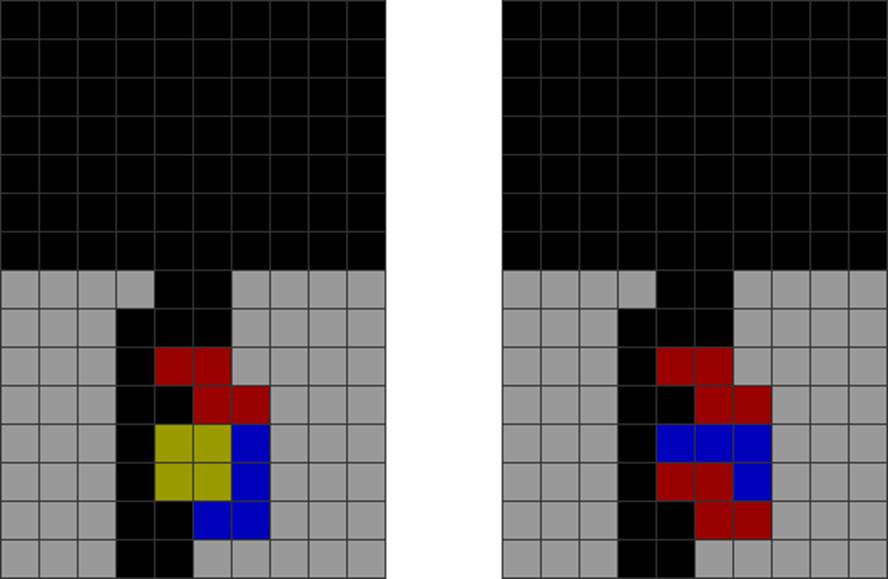
| The first picture, with stacked S and L pieces, shows the most common way to create King Crimson, similar to the back-to-back T-spin triple tower. However, more experienced players know how to freestyle in the other suggested placements. This list is not exhaustive. |
Many beginners obsessively and mindlessly spam this method without caring about the consequences.
However, because it stacks high, it is dangerous and highly likely to waste many Ts in the stack, decreasing efficiency. You may also get a T drought since it needs 3 Ts to complete the setup.
Advanced players typically give it up in favor of simpler, lower-risk T-spins.
3. Using it Opportunistically and Safely
King Crimsons should mainly be used opportunistically for safety:
| Diagram Set 14-5 | |
| 1 | 2 |
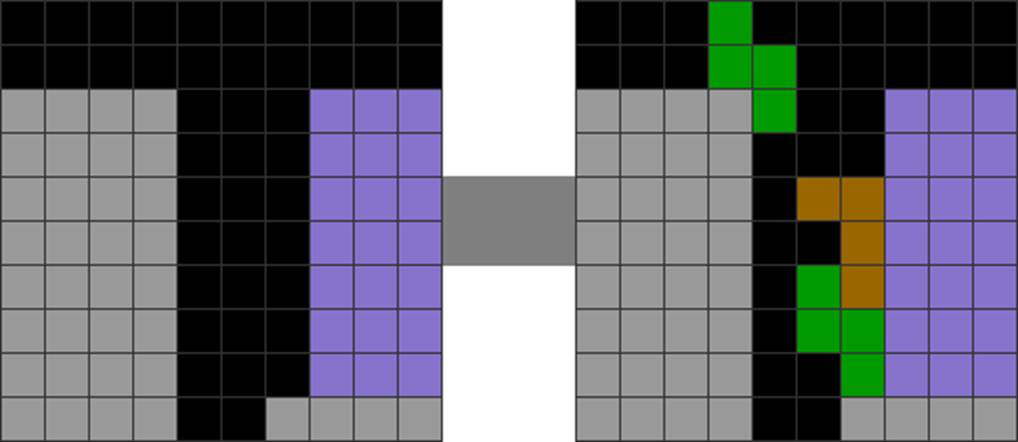
| The lavender areas should be almost entirely stacked first before making a King Crimson. When it is, you only have to put a few pieces (S and L) here to make the setup easily. |
Suppose you see the above step 1’s opportunity, but the lavender areas are not pre-stacked. In that case, you must spend an excessive amount of time upstacking them before setting the King Crimson up. You may also waste many Ts in the stack.
Continuations and Follow-Ups
In a more advanced manner, you can use the SL or ZJ props that form part of a King Crimson to extend a setup. This adds a T-spin triple within it. However, this is a very risky move.
1. Adding King Crimsons to T-Spin Doubles
You can extend T-spin doubles by topping it with a King Crimson LS (JZ if mirrored) prop:
| Diagram Set 14-6 | |
| 1 | 2 |
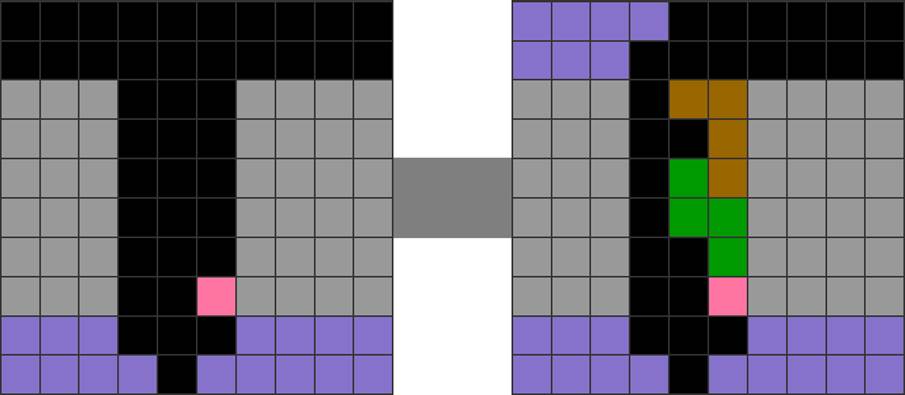
| Spot this mid-game T-spin double pattern with the pink overhang block. | Top the pink block with S and L, creating an overhang. You have added many T-spins! |
2. Adding King Crimsons to T-Spin Minis
It is the same for a T-spin mini:
| Diagram Set 14-7 | |
| 1 | 2 |
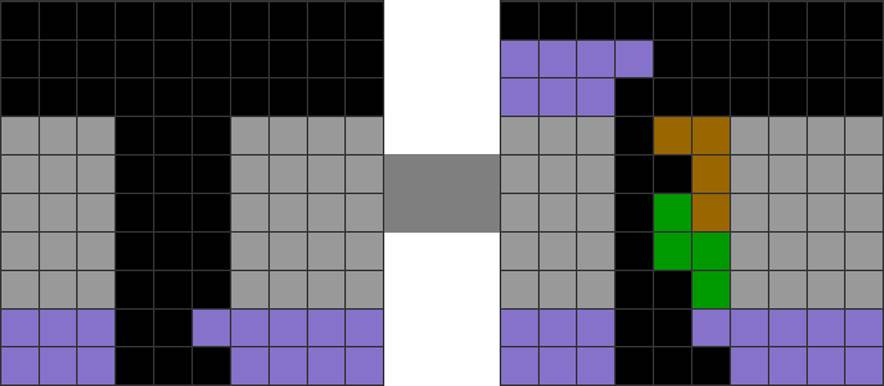
| Spot this T-spin mini mid-game chance. | Add S and L and an overhang. It is now a spliced Mini-Triple! |
3. Other Advanced Examples
In more advanced forms, you can make the following advanced setups, as covered in Book 3. However, these are almost completely impractical, and I do not recommend making them, except in casual settings.
| Diagram Set 14-8 | |
| A | B |
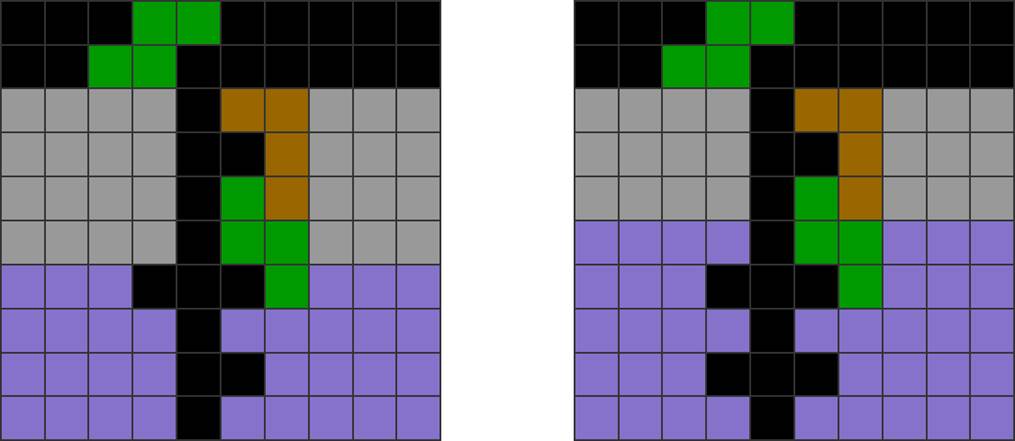
| There are many examples. The above are just some, showing a lavender area, where you can top it with L and S King Crimson props to add more T-spins (such as a triple) to augment the setup. |
In a Nutshell
King Crimsons, like Trinities, upstack heavily. While powerful, they are dangerous because of their excessive T-piece dependencies. They are best created opportunistically when one side of the stack has been pre-upstacked, requiring only the LS or JZ props to be placed to quickly create one.
| Pros and Cons | |
| Pros | Easy to set up with an easily recognizable pattern. Bursty. Is clean. |
| Cons | Stacks high, rendering one vulnerable. Blocks the main garbage or Tetris hole for defense. Has a high dependency on Ts, so you may not get Ts fast enough to execute all 3 T-spins. |

