The Basics
Downstacking involves digging downwards using line clears to lower your stack’s height.
This often involves digging through garbage patterns smoothly and cleanly with minimal pieces:
| Diagram Set 14-1 | |
| 1 | 2 |
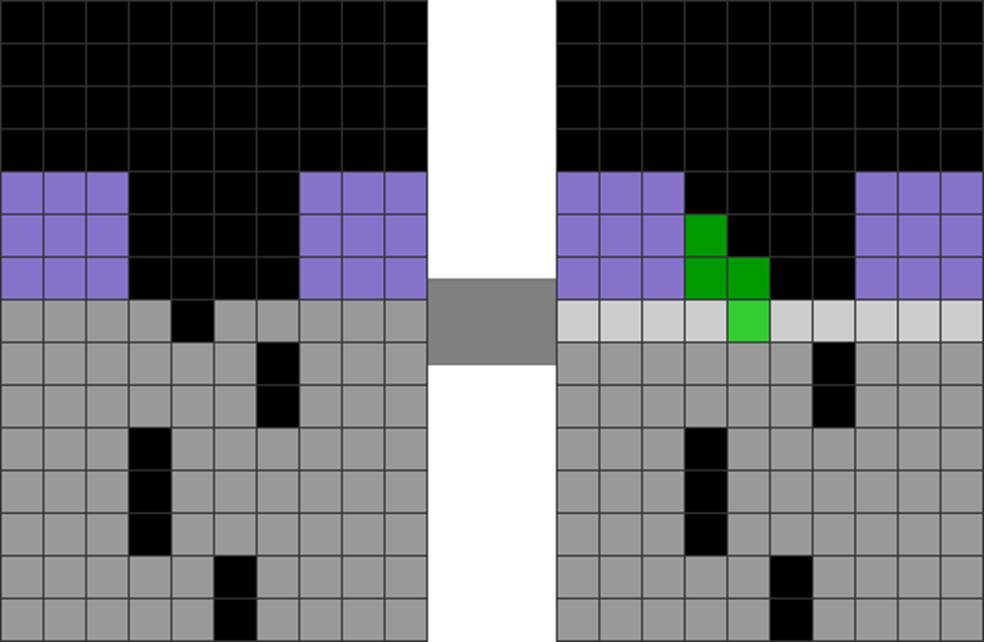
| The starting field. | The player begins a downstack combo sequence with an S piece. |
| 3 | 4 |
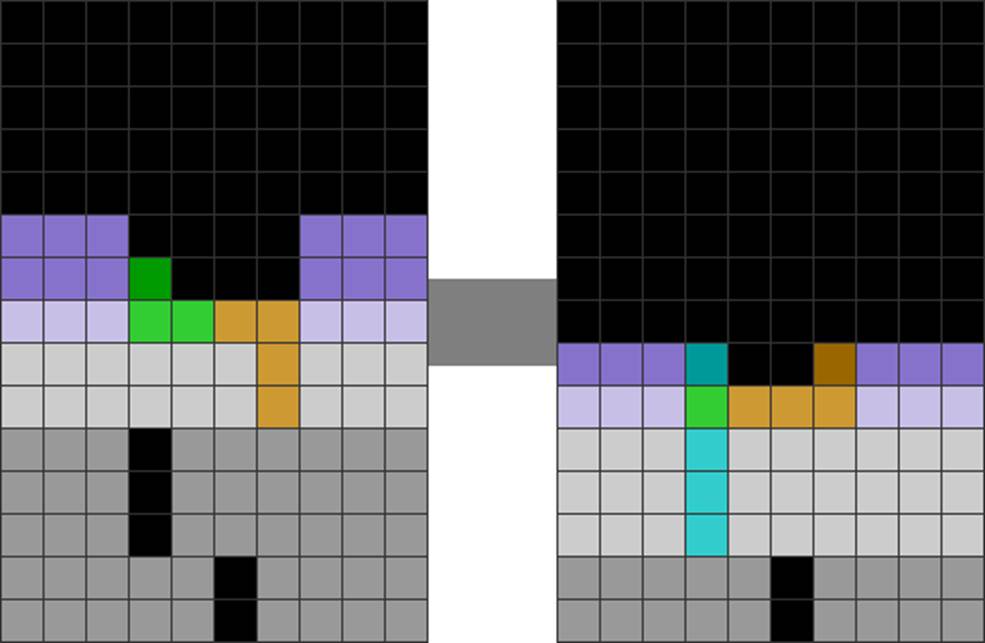
| They then continue with an L piece. | Then, another L and I piece. |
Just beneath stacking, downstacking ranks second in importance in the Tetris sub-skills to master.
In my first year of playing Tetris, I could create many fancy T-spins, such as these:
| Diagram Set 14-2 | |
| 1 | 2 |
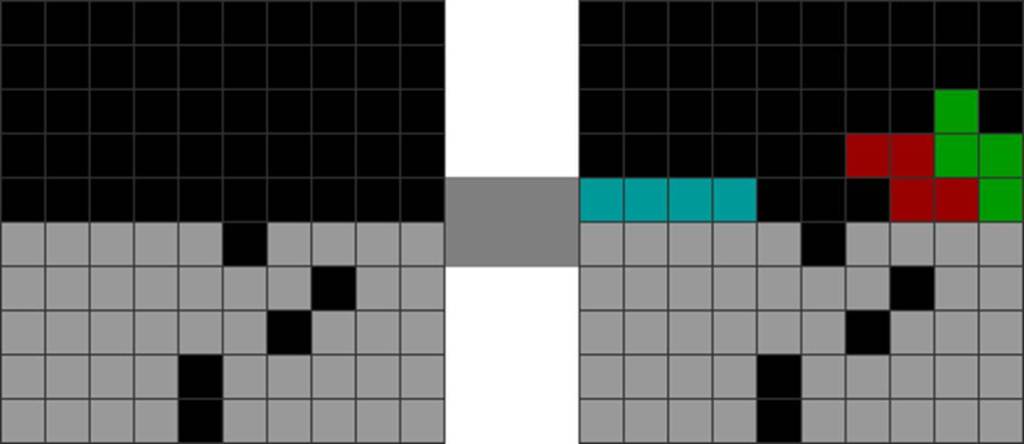
| Starting field. | The player makes a T-spin double. |
| 3 | 4 |
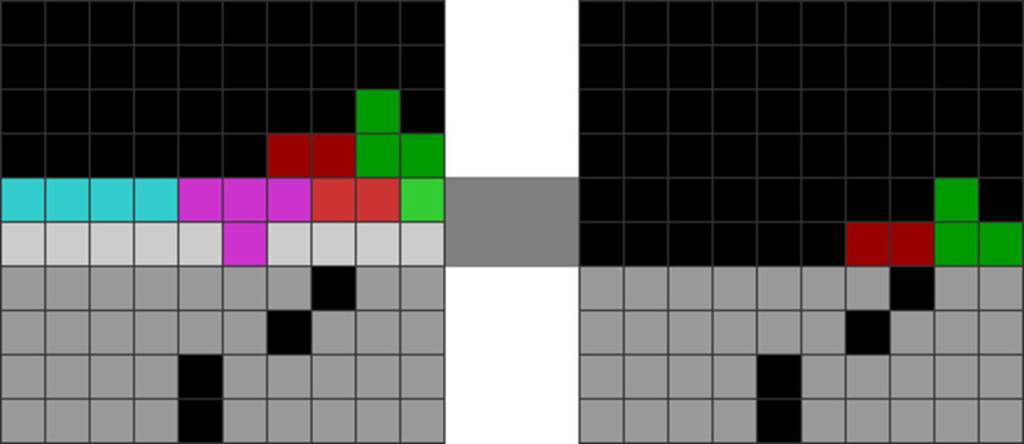
| The T-spin double line clear concludes. | The T-spin’s overhang blocks (the red blocks) obstruct the next garbage hole at column 8. |
Noticed something? While the T-spin seems impeccable, the problem was that they were dirty and blocked the upcoming garbage holes (in step 2).
Here, after the line clear, the overhang leaves a residue that blocks the garbage hole. I then had to skim through them, wasting valuable line clear delay periods.
This reduces efficiency and survivability, which is why stacking cleanly to enable smooth downstacking matters so much.
Why Training Downstacking is So Difficult
Downstacking is one of the hardest skill sets to master.
Although I have covered this extensively across many chapters in my books, downstacking cannot be easily reduced to an exhaustive list of concrete, memorizable methods. Consider T-spins:
| Diagram Set 14-3 | |
| A | B |
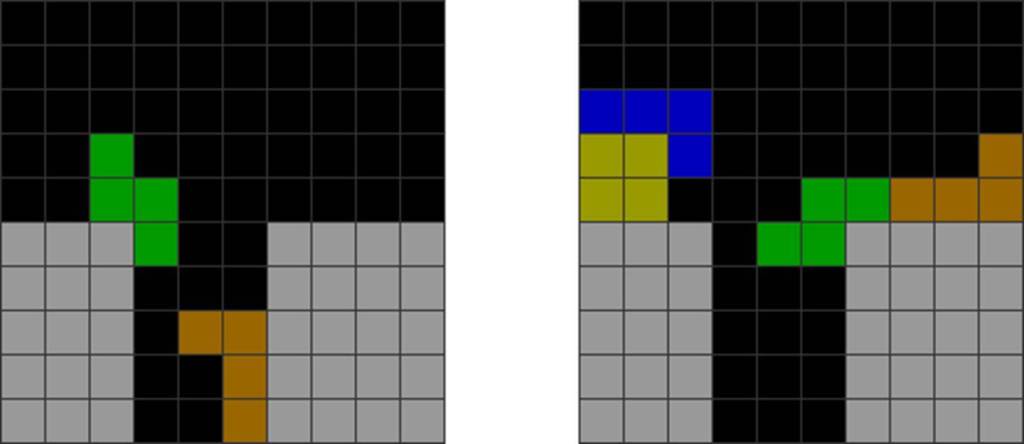
| A simple STSD. Placing the L piece vertically this way is an easy-to-memorize, common way to make an STSD mid-game. | A simple STMB Cave. Placing the S piece horizontally this way is a common, easy-to-memorize way to make an STMB Cave mid-game. |
Here, T-spin methods fall into several memorable configurations.
However, it is not the case for downstacking:
| Diagram Set 14-4 | |
| A | B |
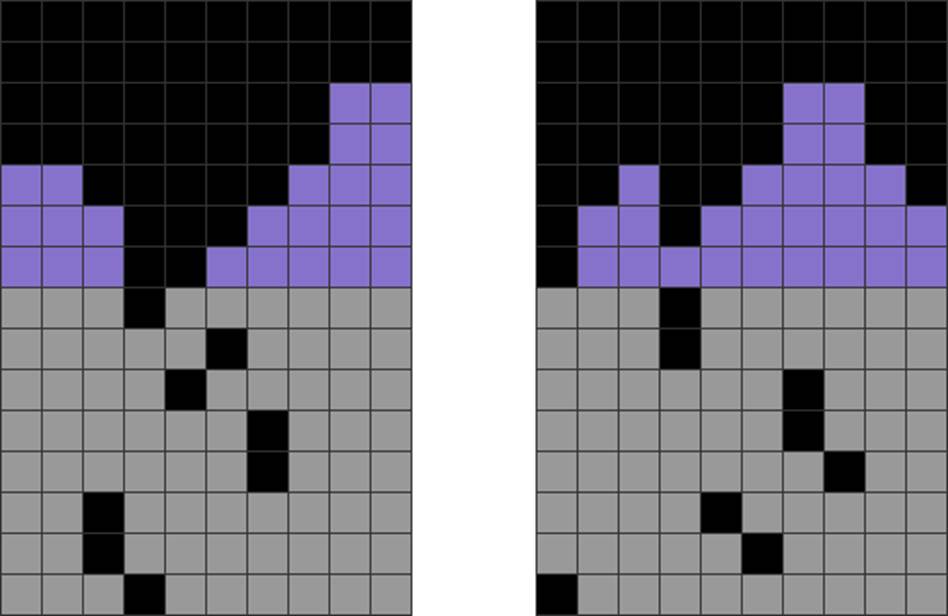
| The garbage holes permute in uncountable and unpredictable ways, making every mid-game situation different. No fixed solutions exist to downstack every possibility. |
This is because each garbage row has a single hole. The next row then has a chance to align with, or not align with, the previous hole. This continues with the next row, and so forth.
Simply put, even in a simple 5-garbage-row scenario, there are 10 x 10 x 10 x 10 x 10 = 100,000 permutations. With 10 garbage rows, you get 100,000 x 100,000 = 10,000,000,000 permutations!
This is why no human can map out all concrete cases.
To make matters worse, there are colored, upstacked blocks over the garbage hole:
| Diagram Set 14-5 | |
| A | B |
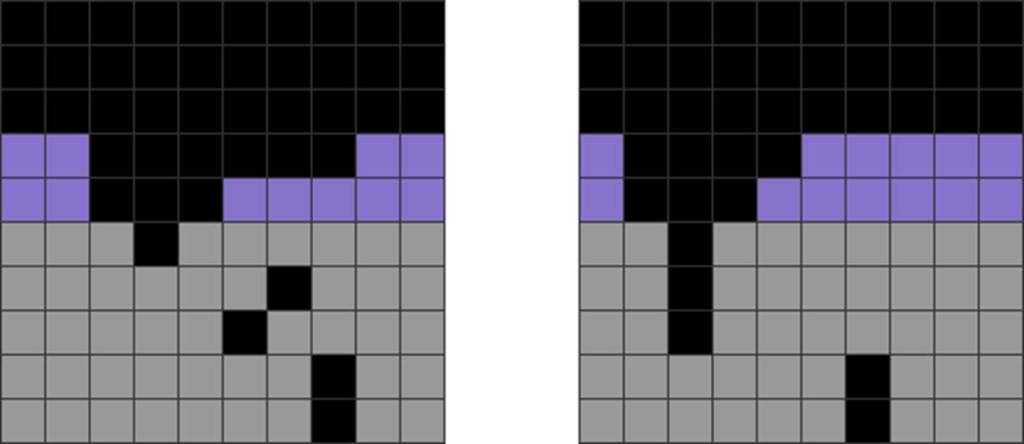
| The lavender, upstacked blocks and the gray garbage blocks permute into trillions of combinations, making downstacking patterns hard to memorize and generalize. |
Together, these create many possibilities that are hard to memorize.
This is why downstacking is difficult to master: you have to adapt to the garbage holes like water and stay as flexible as possible.
Training Downstacking
Four-tris provides a cheese downstacking mode that uses a randomized algorithm to create various garbage hole patterns.
| Diagram Set 14-6 |
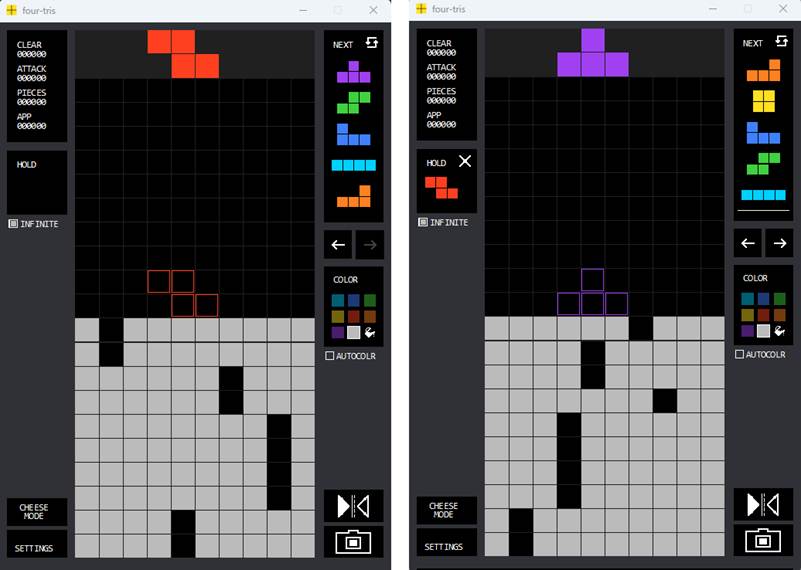
| Four-tris’ downstack combo training mode. |
Farter’s mod also does the same with Dig Zen mode:
| Diagram Set 14-7 |
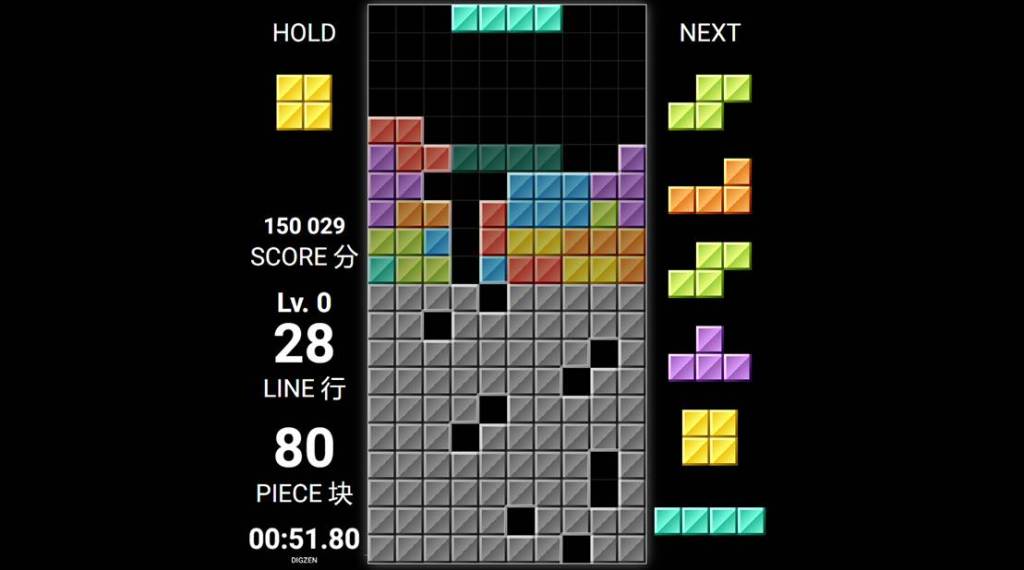
| Farter’s mod’s Dig Zen mode. It emulates mid-game dirty garbage, which provides ample opportunities for high-level decision-making. |
In Jstris, you have various cheese modes, such as a 100-line cheese mode. For instance, you have to clear 100 lines of “cheesy” (dirty, non-overlapping) garbage with as few pieces and as quickly as possible:
| Diagram Set 14-8 |
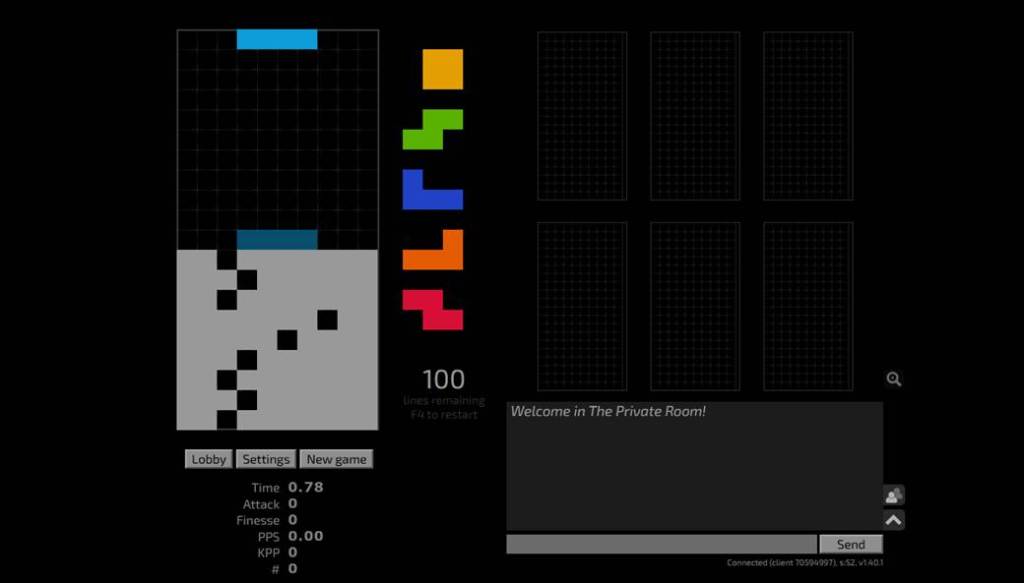
| Jstris’ 100-line cheese mode. |
Jstris also offers 10- and 18-line cheese race modes for those who prefer a sprint over a marathon.
Using these applications, you can train downstacking.
Various Kinds of Downstacking
From inexperienced players’ perspective, downstacking is just downstacking. They believe that there is only one homogeneous form of downstacking to train.
Unfortunately, life is never that simple: there are many kinds of downstacking to train:
Stacking Cleanly to Create Smooth Downstacking Chances and Combos
A severely underrated playstyle is stacking in a relatively flat, joined manner to make downstacking easier.
Let us consider a severely jagged and uneven stack:
| Diagram Set 14-9 | |
| 1 | 2 |
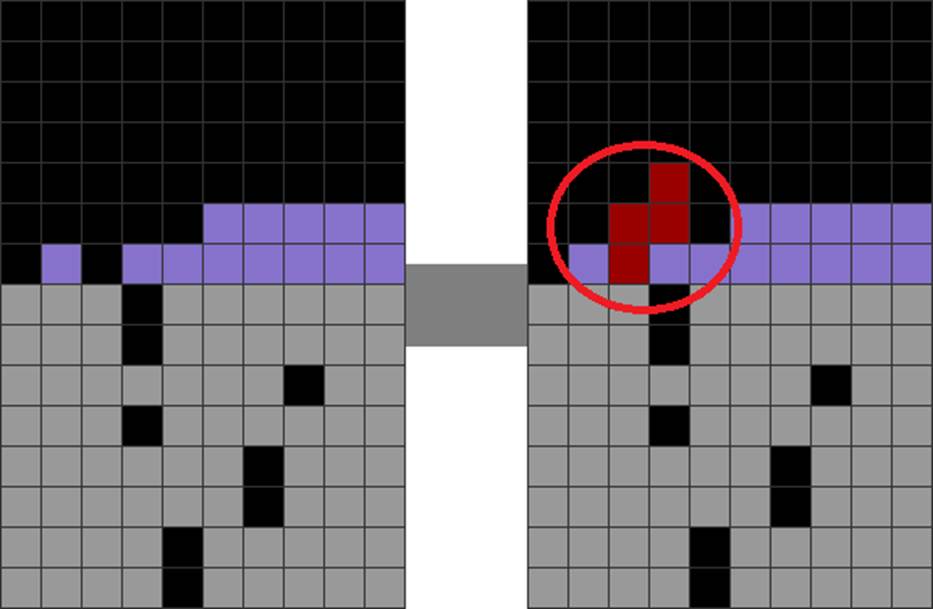
| Starting field. | The player places a vertical Z piece. At least 2 red blocks fill the cavity in column 3. |
Because of each tetromino’s mathematical properties, filling a hole (cavity) often requires extra lines of upstack (see the red circle).
Here is another example, using an L piece to fill a cavity:
| Diagram Set 14-10 | |
| 1 | 2 |
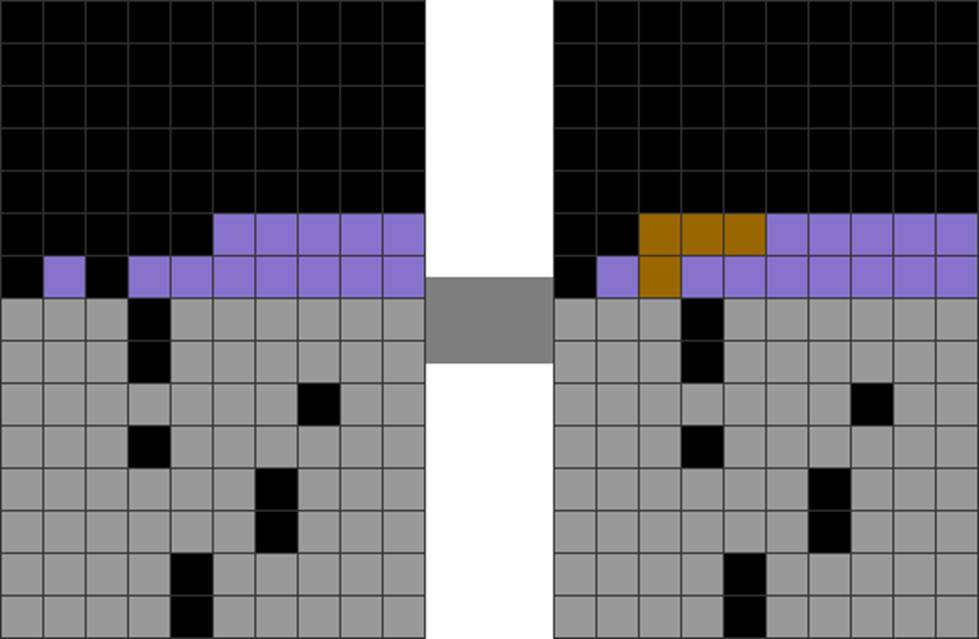
| The same starting field as diagram set 14-9. | The player puts an L piece flatly. At least 2 orange blocks fill the cavity in column 3. |
The more your colored, upstacked blocks are in relation to the garbage lines, the more rows you must skim off before you can get down.
Divided fields also tend to disrupt downstack combos:
| Diagram Set 14-11 | |
| 1 | 2 |
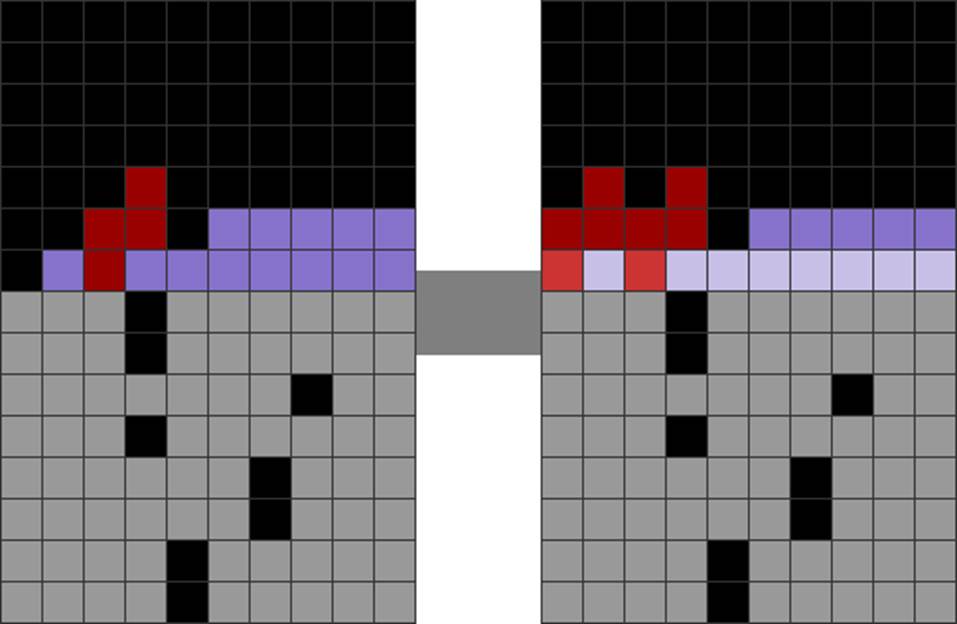
| Continues from the starting field of diagram set 14-9. | The player skims with a Z piece. |
| 3 | 4 |
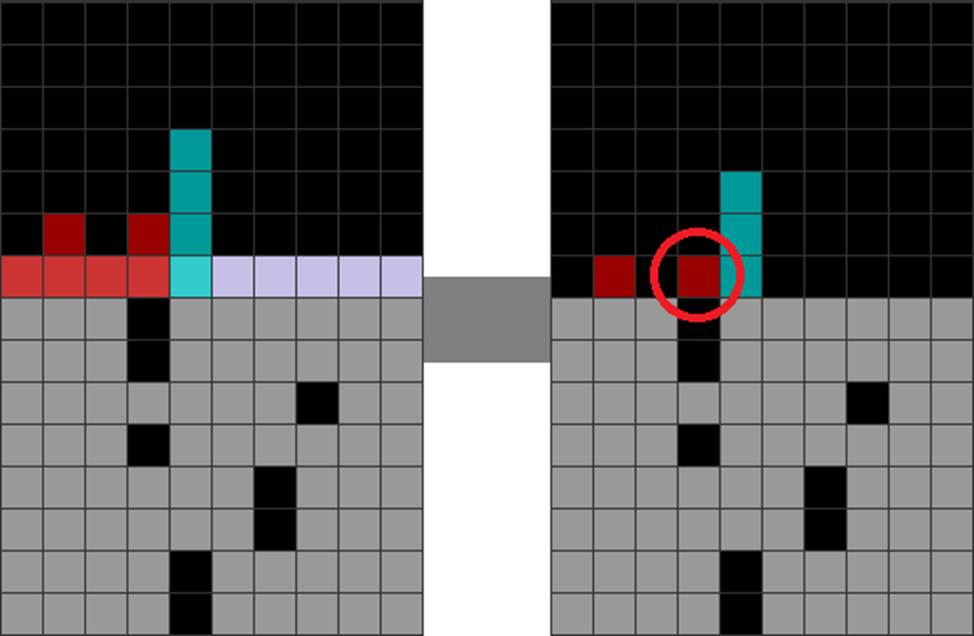
| Then, with an I piece. | However, the remaining red block (in the red circle) obstructs the next garbage hole beneath. |
However, the player can get around this through proper parity management:
| 5 | 6 |
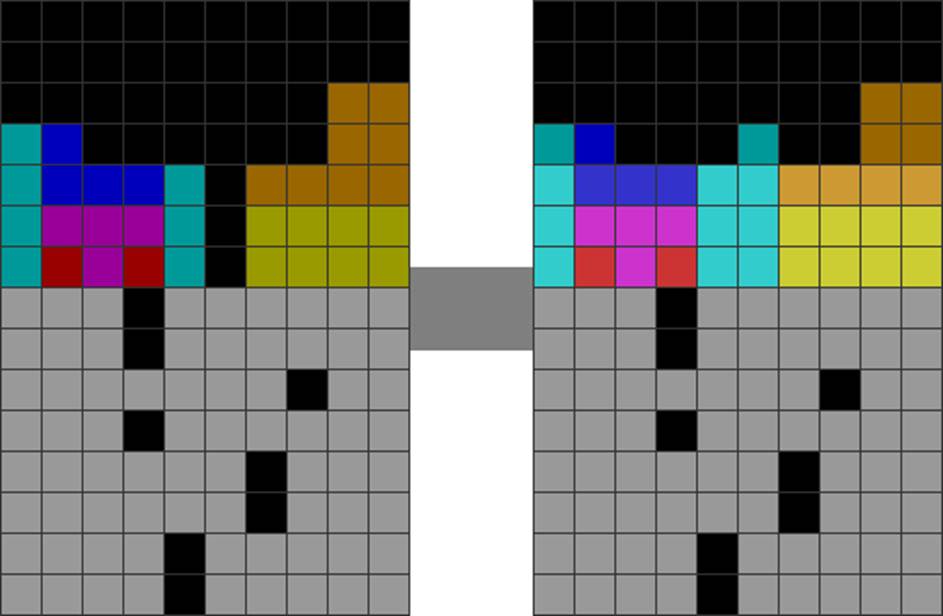
| The player flattens the field with a T placement to balance parity, then upstacks. | They finally skim with an I piece, exposing the garbage hole in column 4. |
Here, the player fills jagged areas with holes using T pieces to flatten them.
This typically increases your downstacking smoothness, as there are no jagged areas that can disrupt a combo sequence:
| 7 | 8 |
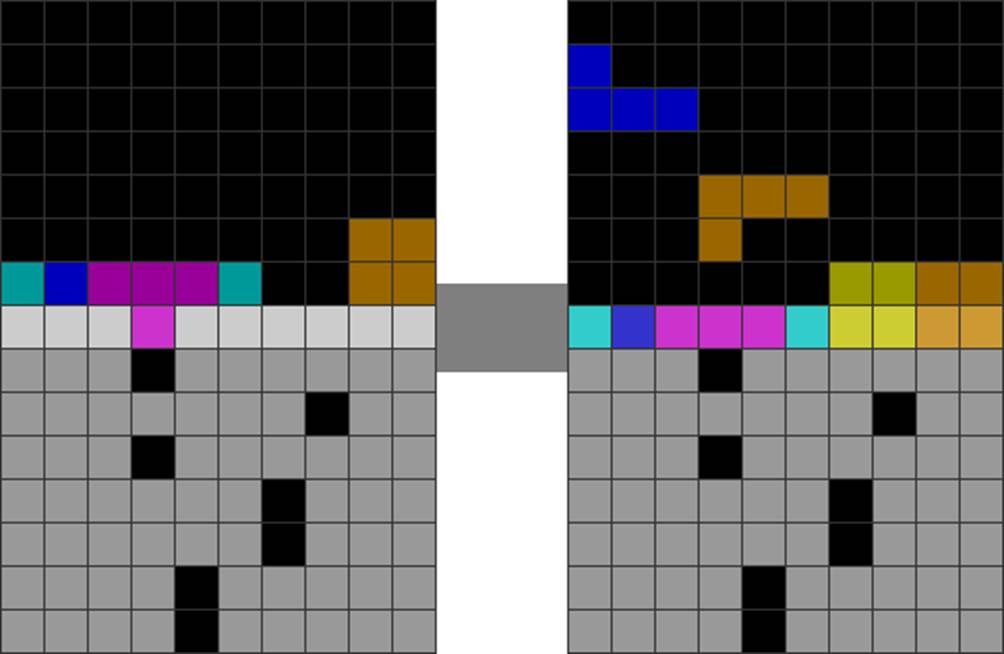
| This continues from step 6. The player continues downstacking. | The player can continue with a series of smooth placements to extend their downstack combos while keeping their stack’s surface stable, flat, and clean. |
See how much smoother and more potent your downstack combos are? You also need fewer pieces to get down.
Thus, just by stacking flatly, you vastly boost your downstacking smoothness and combo length.
Maximizing Firepower While Downstacking
Players should not mindlessly downstack using skims like singles, doubles, or triples.
Versus games are not purely 100-line cheese modes. Your goal is also to maximize firepower through T-spins, all-spins, Tetrises, combos, and back-to-backs.
So, a Tetris master uses all these methods while downstacking.
i) T-Spins
T-spins provide some of the most powerful damage per line in the game. Therefore, prioritize them to maximize damage.
However, they can be tricky to use because their overhangs can sometimes leave a dirty residue that covers the upcoming garbage holes:
| Diagram Set 14-12 | |
| 1 | 2 |
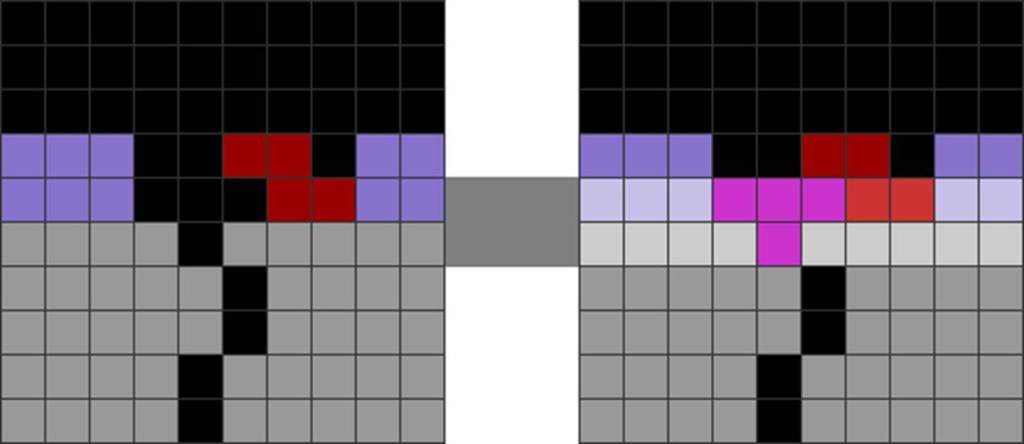
| A T-spin double is ready. | The T-spin double line clear concludes. |
| 3 |
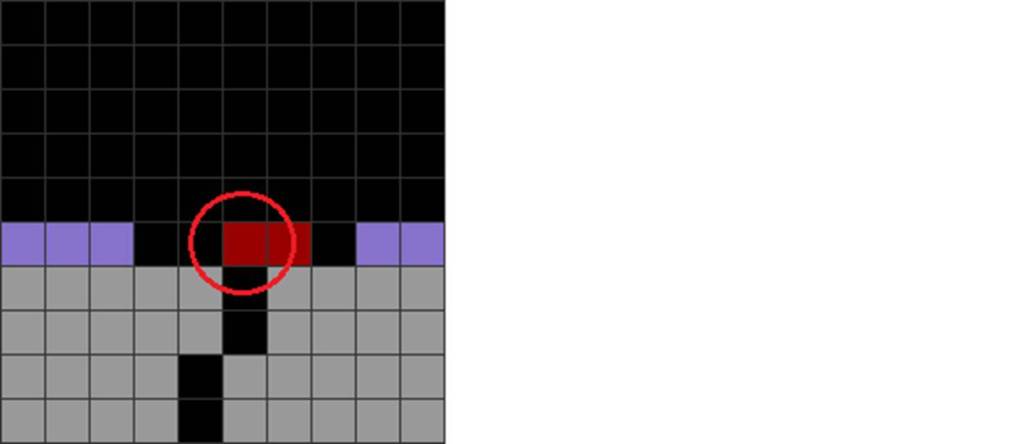
| The T-spin overhang’s red blocks (red circle) obstruct the next garbage hole. It is hence dirty. |
Hence, you should prioritize clean T-spins while downstacking:
| Diagram Set 14-13 | |
| A | B |
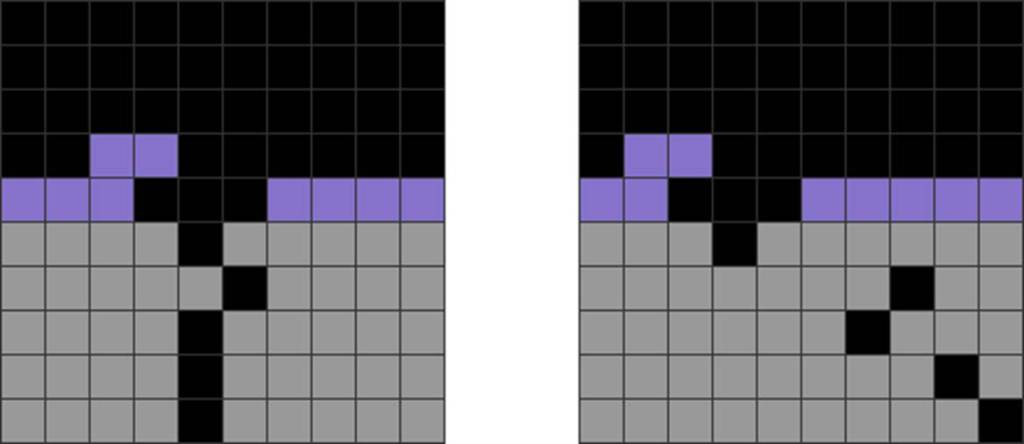
| These 2 T-spin doubles are clean. After the T-spin double line clears, no blocks stack over the most immediate garbage hole. |
If possible, sustain back-to-back bonuses. This should be easier with clean T-spins, since you do not have to skim off residues and break back-to-back bonuses.
ii) All-Spins
In some unofficial games, such as TETR.IO, all-spin setups sustain back-to-backs and sustain surge.
However, they are not as powerful as T-spins. Regardless, you can use them occasionally to sustain back-to-backs while downstacking:
| Diagram Set 14-14 | |
| 1 | 2 |
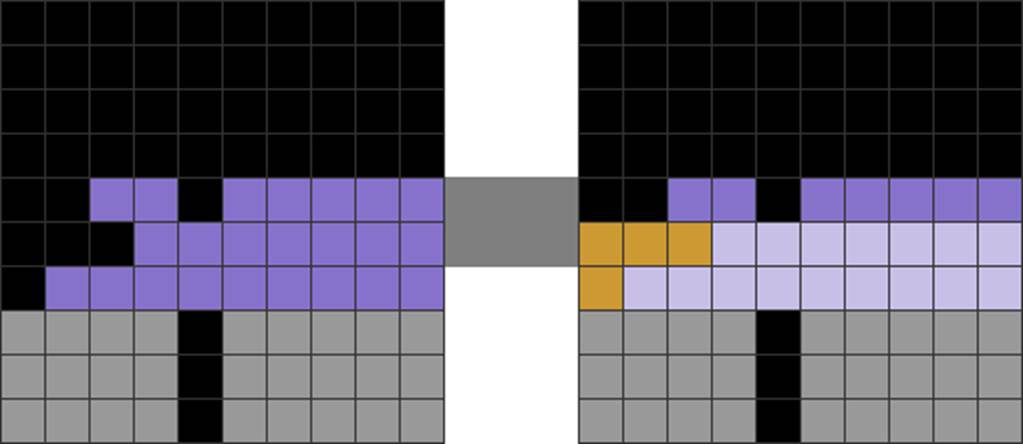
| An L-spin double is ready. | The L-spin double line clear concludes. |
| 3 |
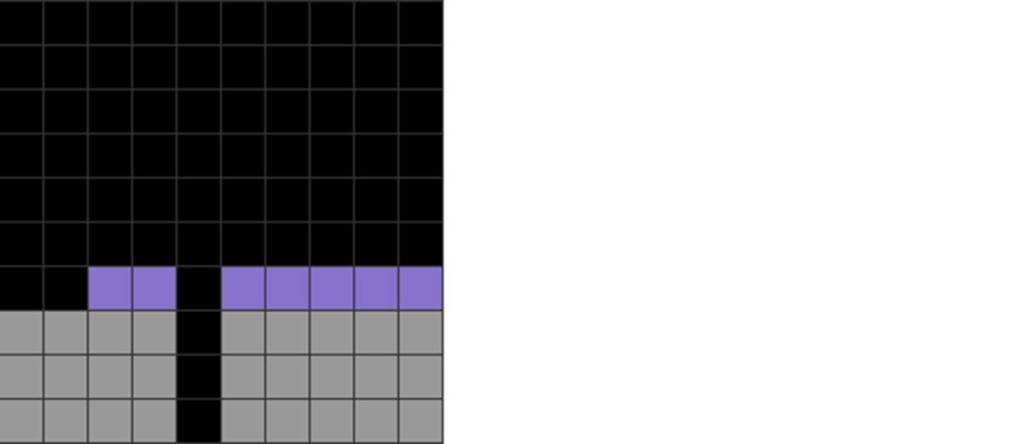
| The aftermath field is clean; the L-spin double’s overhangs do not block any garbage hole. |
Just like T-spins, it helps to minimize dirty all-spin setups whereby their overhangs may block the next garbage hole:
| Diagram Set 14-15 | |
| A | B |
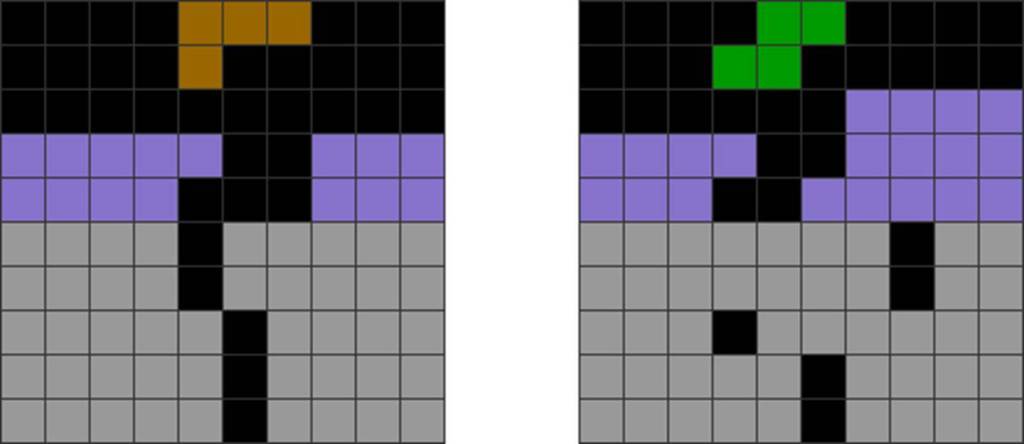
| This L-spin double is unclean. | This S-spin double is unclean. |
After the line clears, both A and B will stack their lavender blocks over the nearest garbage hole.
iii) Tetrises
Tetrises are less efficient than T-spins and take longer to build. However, they provide another powerful filler to sustain back-to-backs while downstacking:
| Diagram Set 14-16 | |
| 1 | 2 |
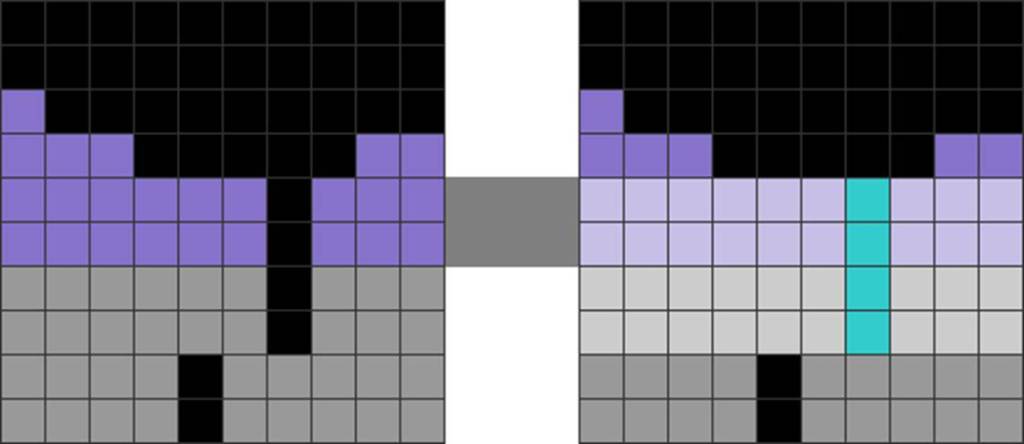
| A player upgrades the 2-block-tall garbage hole in column 7 into a Tetris by stacking the lavender parts. | The player makes a clean Tetris line clear. After it finishes, no lavender blocks cover the most immediate garbage hole. |
Tetrises should also be clean, just like T-spins, unless there is no other option.
iv) Combos
Most players do not do enough combos while downstacking.
Several easy guidelines to extend your combos include: (i) choosing placements that join and flatten the stack, and (ii) choosing those that prioritize single line clears while downstacking:
| Diagram Set 14-17 | |
| 1 | 2 |
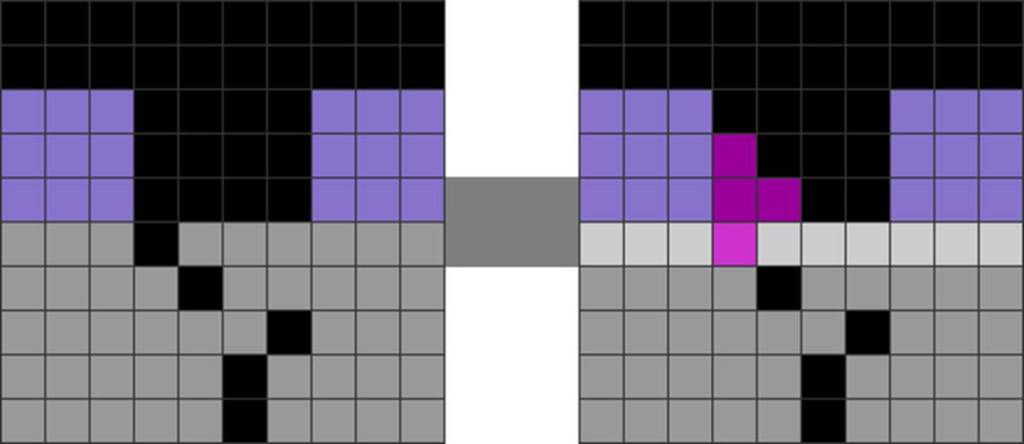
| Starting field. | The player skims with a T piece through a single line clear. The field is relatively joined. |
| 3 | 4 |
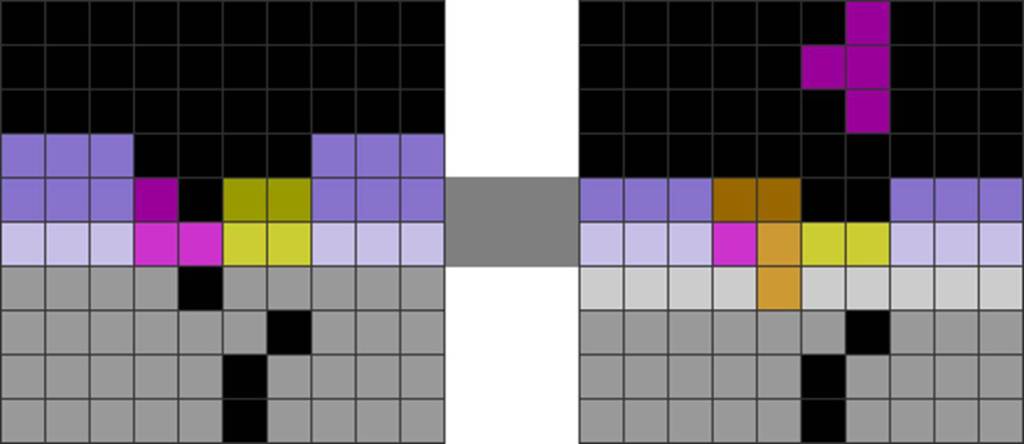
| They continue with an O piece to make another single, extending the combo. | The player places L and T to extend the combo again twice. The aftermath field’s surface is relatively flat and smooth. |
Here, a player follows these 2 simple guidelines. Note how smooth the downstack is and how high the combo meter goes while downstacking!
Downstacking choices with singles, doubles, and triples should be as clean as possible. Minimize placements that leave an overhang that blocks the upcoming garbage holes:
| Diagram Set 14-18 | |
| 1 | 2 |
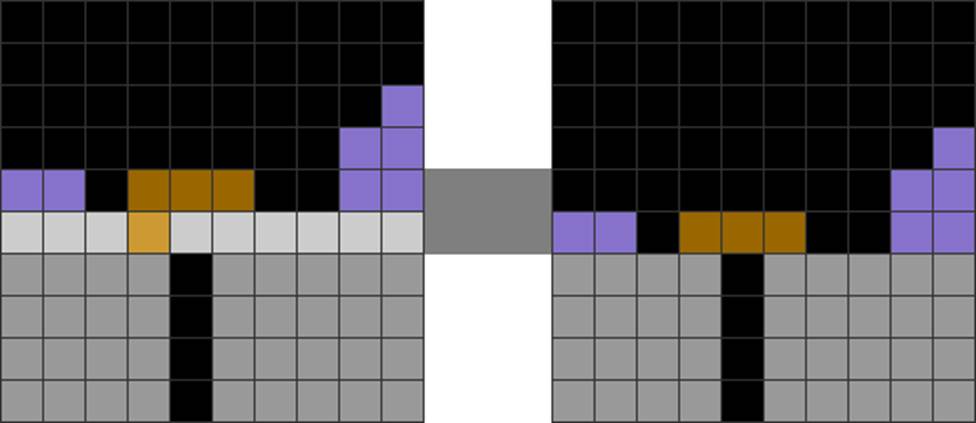
| The player skims with an L piece, making a single line clear. | After the single line clear, the L piece’s orange blocks stack over the garbage hole at column 5. |
Downstacking According to Garbage Types
The Executing the Mid-Game chapter later will cover how to downstack based on the garbage pattern: dirty, semi-clean, or fully clean. It will also cover prophecy setups created from garbage.
In a Nutshell
| Key Points |
| Downstacking cannot be as easily trained through memorization as other Tetris sub-domains, such as T-spins. This is because the vast permutations of garbage patterns make fixed, memorizable patterns hard to map and apply. One is hence forced to freestyle. However, stacking flat and smoothly creates the conditions for smoother downstacking and more combo options. Downstacking well is not just about getting a good 100-line cheese race through singles, doubles, or triples. You also have to downstack properly with maximum firepower using T-spins, combos, back-to-backs, all-spins, and Tetrises. |

