“The cosmos is within us. We are made of star-stuff. We are a way for the universe to know itself.”
— Carl Sagan
Introduction
The Infiniteness of the Cosmos
My mystical experiences and scholastic research have led me to what I consider a compelling possibility:
The all-that-there-is, or the broader cosmos that contains all multiverses and spiritual and physical dimensions, is likely to be truly infinite.
Everything that can be imagined or is unimaginable could have happened in other dimensions.
Within every moment could lie an infinite number of universes, each with its distinct laws of physics, biology, psychology, morality, and spirituality.
This includes even universes with concepts beyond space and time. It may also include universes with different topologies, such as having a hundred spatial dimensions or non-linear temporal causal systems.
The broader all-that-there-is seems to have no linear space and time. To me, everything seems to exist simultaneously across an infinite number of parallel realities.
Sounds far-fetched? I have evidence to suggest why this may be true:
Reputable modern physicists have proposed that this universe may not be the only one.[1]
Quantum physics theorizes that an infinite number of parallel realities could exist, each branching from a moment when we make a conscious choice or observation and exploring every possible option.[2]
The Conformal Cyclic Cosmology model proposes that our universe is one of an infinite sequence of universes, each Big Bang emerging from the heat death of the previous one.[3]
Modern physics predicts that black holes spawn a new universe. Universes that are more fertile, with more black holes that create more of them, are more likely to exist in the grand cosmic evolutionary scheme.[4]
These new universes may have mathematical or physical laws that differ from ours.[5]
Spiritual studies and NDE research have also found that many human souls have experienced previous “grand cycles” by being other sentient beings on other planets, dimensions, or universes.[6]
Many of us are hybrid souls who began life in other physical or mental dimensions, governed by different laws of physics.[7] My OBEs showed me some of these realities.[8]
My mystical experiences also suggest this. By some unusual recollection, perhaps, of past existences, I am reasonably certain of this.
All of this collectively suggests the infinite variation of realities and universes.
Are there universes where the laws of morality are reversed, where evil is good and good is evil?
Are there universes where atoms are made of small microwave ovens or whales?
Are there universes with concepts beyond space and time that humans cannot imagine?
Are there laws of time that allow one to experience multiple dimensions of time simultaneously in some universes?
It could be.
After all, the One seeks to realize all forms to complete itself and become the infinite. It does it to manifest all choices. Logically, it would manifest and create all possibilities.
It is the same logic as video game developers who have created the explosion of games on Steam.
It is also the same logic that explains why fantasy authors like me explore imagined worlds. It is to realize the impossible.
Why would the One be any different in this shared fundamental?
This is the law of infiniteness, where the One creates, manifests, and participates in an infinite range of creation to be whole and complete.
And the One does this through us, each exploring and expressing our distinct timelines and realities.[9]
That is why we are all so important to the cosmos: we are cosmic atoms that the whole cannot make do without.
And that is why we all have cosmic and spiritual significance, no matter how small.
You are infinitely valuable to the cosmos.
Tetris as an Analogy
What does this mean for our lives? I illustrate this using Tetris as an analogy.
Many high-level Tetris players like myself encourage the use of simple T-spin setups, such as the following:
| Diagram Set 15-1 | |
| A | B |
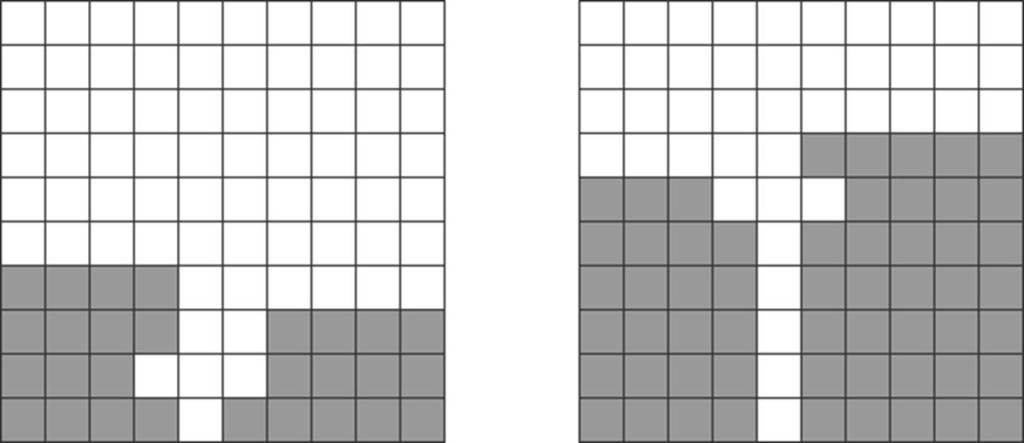
| The simplest possible T-spin. | A slightly trickier T-spin that you stack over a column of clean, empty blocks. |
The above setups are simple and safe to build, requiring only a few pieces. So you can build them quickly with minimal thought and maximum speed.
However, I sometimes create the following higher-level T-spin setups mid-game:
| Diagram Set 15-2 | |
| A | B |
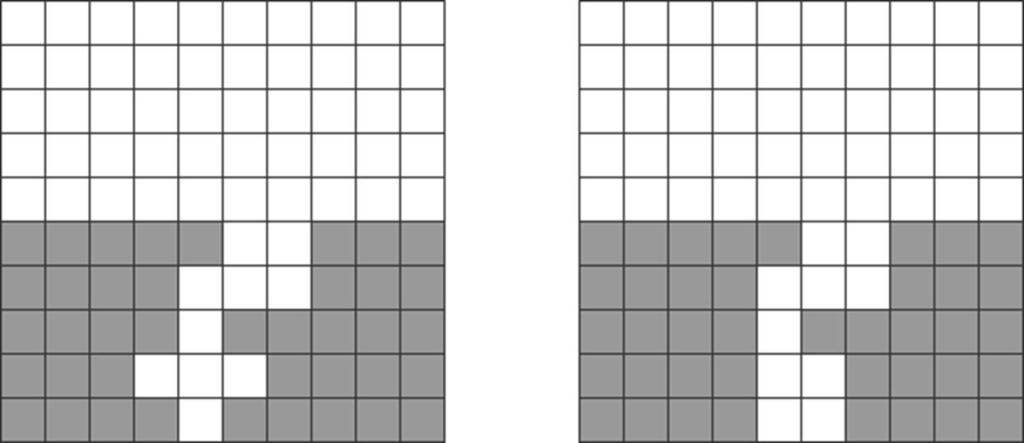
| An Imperial Cross. | A Super T-Spin Double. |
I do not want to scare my non-Tetris-playing audience. Hence, these are just quick sneak peeks into high-level Tetris.
These are advanced, hyper-powerful setups that many high-level players consider risky to create in the mid-game. While I do not use them often nowadays, I still do occasionally.
Many high-level Tetris players can be quite elitist in the sense that they will not merely critique the use of such setups, but sometimes even look down on those who do.
I sometimes call this Tetris chauvinism.
However, as one sheds the vestiges of one’s ego and beholds the bigger (Tetris) cosmic picture, one realizes something. There is truly no right or wrong way to play the game.
The fervent desire for many to “win” traditionally through match-ups is simply a result of societal convention and agreement.
There are many ways to express Tetris, and to cling to just one way firmly is a limited way to manifest its infinite permutations and combinations.
No matter how many players view these dangerous and complex T-spin setups, they are integral to the whole. They contribute to the entire spectrum of Tetris knowledge.
Without people using such techniques, Tetris would be a far duller game with little variety.
It is the same with life as well: everyone and everything in the cosmos has a reason, value, and purpose for being. They complete the One. If one person is excluded, the One would be incomplete.
Personal and Social Applications
Everyone and Everything Has Value
Remember the garden analogy I used earlier in The Law of Love chapter? It is needed here again.
The application of the law of infiniteness could not be more easily conveyed using this metaphor.
The garden metaphor holds that all creatures and plants, whether microbes, ferns, fungi, weeds, or “pests,” are vital to the garden’s holistic functioning.
The whole garden cannot make do without its individual parts.
The same is true for humans. We cannot exist without our unique strengths and flaws.
Once we realize this, something transcendental occurs. We no longer pride ourselves on our individual gifts to the point of arrogance. We no longer begrudge others for what we lack.
Such pride and resentment can only exist from an ego-based perspective. There is no judgment in the afterlife except for one’s own.
Instead, we see others as part of an integral whole. We see them as unique, individualized expressions of an absolute reality that is One and undivided.
This means we should embrace every person as part of the whole. We should include people of all kinds of expression as far as possible: people of various genders, ethnic groups, beliefs, religions, philosophies, neurodiversity, nationality, and so forth.
We are each individual cosmic atoms that the One cherishes.
Altogether, we make up the cosmic canvas that is the unitary, complete, and infinite One.
Every Religious, Scientific, Philosophical, and Spiritual System is Valid in Some Way
When you put two people with extremely diametrically opposed beliefs in a room, be it a hardcore Democrat or Republican, or a scientist like Richard Dawkins and a religious fundamentalist, you will just get an argument.
You will likely get an argument where neither side will bow, agree, or reach any reasonable conclusion.
This is because they hold fundamentally incompatible perspectives or beliefs.
Yet each belief is valid in some way. Why is it so? Let us consider:
Many people have different logical frameworks or fundamental beliefs. This means that two belief systems may have no common ground for reaching consensus.
Imagine a Christian creationist and a biologist. One does not believe in evolution, but the other does. They will never agree on anything!
However, when we look at things from a panoramic point of view, we are all limited human beings who perceive reality through a limited human framework.
A being from another planet or dimension may have cognitive faculties so different that we may not even understand them. They may even deem us as only semi-conscious.
Simply put, our beliefs and paradigms simplify a grand, infinite reality, streamlining the world’s vast complexity into forms we can apply.
Furthermore, Karl Popper suggests that reality comprises many spheres: the physical, mental, and cultural. You cannot reduce one to the others, yet they coexist, each with distinct material manifestations.[10]
Hence, while scientists may debate creationism, this Christian belief creates a complex social and cultural church life integral to human civilization.
The same is true of many cultural structures, such as creative fiction. Even if they are not real, fans flock to manga, anime, and novels, dressing like Harry Potter.
Ultimately, many beliefs are subjective internalizations and not physical reality.
They are sometimes inaccurate and fall into Popper’s three spheres, making it hard for people with different perspectives to fully resonate.
As such, I sometimes find it pointless to engage in protracted debates between two debaters with extremely different worldviews.
Despite this, each view is valid in its own manifestation, as in the earlier example of Christian faith manifesting as a complex and meaningful church life.
A scientist may not agree with a Christian fundamentalist’s idea of creationism. However, if a Christian goes to church and prays, and this helps them cope with life better while increasing their generosity, then this physical manifestation is positive and valid.
A Native American shaman may create a dream catcher on the belief that its web filters out nightmares, and people might find this unscientific. However, if the dream catcher’s user believes in it, the resulting placebo effect can sometimes soothe the mind enough to reduce nightmares.
This is William James’ pragmatic perspective. He believed an idea is true only if it works and makes a positive, noticeable difference in your daily life.[11]
Hence, if a belief very largely leads to positive effects, what harm is there in believing in benevolent angels or guardian spirits?
Each belief system expresses cosmic free will. Their physical manifestation expresses that belief. Without this variation, the cosmos would indeed be uniform and boring.
That is why a planet with so many religions, philosophies, and cultural systems makes Earth so lively and interesting, and we should embrace it.
[1] Sean Carroll, Something Deeply Hidden (2019); Hugh Everett III, “Relative State Formulation of Quantum Mechanics,” Reviews of Modern Physics (1957); Max Tegmark, Our Mathematical Universe (2014); Roger Penrose, Cycles of Time (2010).
[2] Hugh Everett III’s many-worlds interpretation is accessible in Bryce DeWitt and Neill Graham (eds.), The Many-Worlds Interpretation of Quantum Mechanics (1973), which compiles Everett’s original papers alongside commentary.
[3] Roger Penrose, Cycles of Time: An Extraordinary New View of the Universe (2010). Penrose proposes that the geometry of a universe’s far future — its heat death — is conformally equivalent to a new Big Bang, creating an infinite sequence of cosmic cycles without requiring a physical collapse. It is like how a Mercator projection remaps a sphere onto a flat plane.
[4] Lee Smolin, The Life of the Cosmos (1997).
[5] Max Tegmark, Our Mathematical Universe (2014).
[6] Chelsea Quinn Yarbro, Messages from Michael (1979); Shepherd Hoodwin, Journey of Your Soul (1995); Michael Newton, Journey of Souls (1994); Brian Weiss, Many Lives, Many Masters (1988).
[7] Michael Newton, Journey of Souls (1994); Brian Weiss, Many Lives, Many Masters (1988)
[8] My OBEs can be terrifying: suddenly floating above my body on other planets with blue vegetation, green skies, and other terrains, then seeing alien beings appear before me. It really gets spooky sometimes when strange blue humanoids appear.
[9] I entered a deep state of mystical meditation many times, and this seems to be the awareness I gained.
[10] Karl Popper, Objective Knowledge: An Evolutionary Approach (Oxford University Press, 1972). Popper argues that reality comprises three distinct but interacting worlds: the physical (World 1), the mental (World 2), and the world of objective knowledge and cultural products (World 3), none of which can be reduced to the others.
[11] William James, Pragmatism: A New Name for Some Old Ways of Thinking (1907).

