“Do unto others as you would have them do unto you.”
— Jesus Christ
We now transition to chapters that focus more on applied human practices rather than abstractions.
Introduction
Harmony Between Matter and Spirit
Spirit without form is pure abstraction. The One without finiteness is untapped and infinite potential. Form without spirit is lifeless matter.
The human form without spirit is mere crass matter driven by the instincts of hunger, thirst, sex, survival, fear, and dominance.
When spirit marries human form, the abstract spirit can manifest concretely and experience spiritual reality through a human lens.
It gives the person a chance to ascend to godhood and for the Tao to descend into a person.
In Rosicrucianism, angelic beings descend from a luminous and divine realm into crass physical matter.
They do this to continuously master and refine their choices in the physical world, bringing the spiritual into the latter.[1]
Likewise, many NDE accounts have stated the same thing: that we are here to master the physical.
The human form, given its neural and physical capacities, is veiled by Maya and duality, expressing a limited perspective and fostering growth.
However, this is not a limitation.
Without this veil, the spirit would behold the all-that-there-is on the other side. It would be blasted with infinite love and knowledge to the point where no individual actions or thoughts could occur.[2]
This state of “blissing out” is not enlightenment.
Instead, enlightenment arises when we harmonize the spiritual with our lifestyles.
This is the law of humanity, in which we translate abstract spiritual ideals into tangible human thoughts, intentions, and actions.
Translating the Spiritual into Human Terms
The human form may only peer into an infinitesimal fraction of an infinite existence.
According to near-death experiences (NDEs), the experience on the other side is so overwhelming that one is bombarded with lights trillions of times more radiant than the sun’s combined luminosity.
People who have undergone a life review in the afterlife report experiencing everything in their lives up to the moment of death, instantly.
I have had an out-of-body experience in which golden, luminous souls showed me my past lives across many other non-human realms. I drew it out:
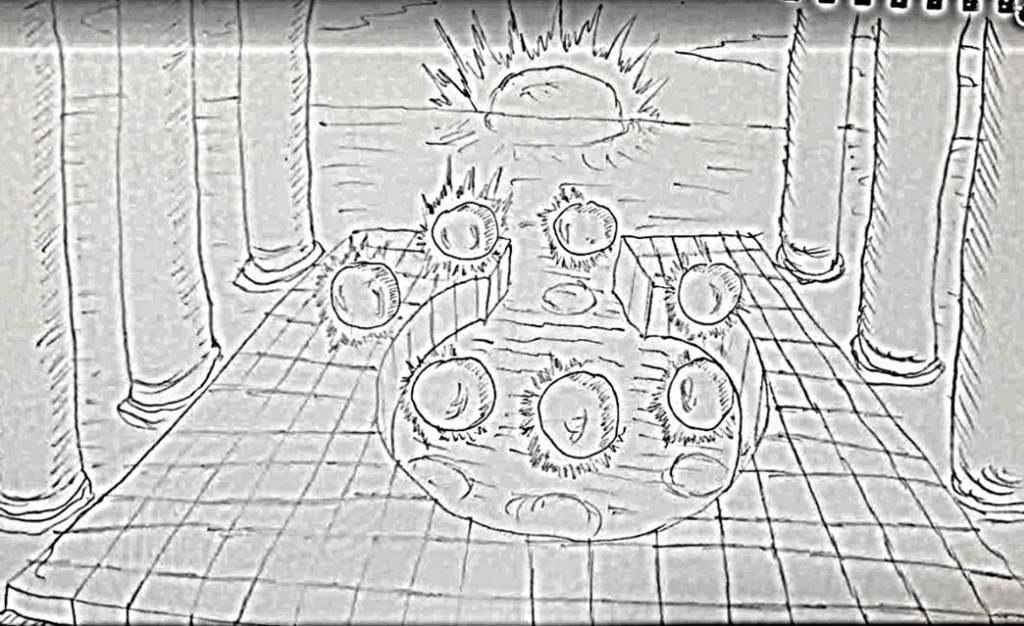
The experience was beyond anything my brain could handle in physical form. It involved thousands of past lives (as a human and non-humans) flashing before me in an instant. My mind was also hyper-alert, clearer than any moment in physical life.
In another out-of-body experience, I saw objects as they were, in high-resolution, three-dimensional images instead of the mere two-dimensional imprints on one’s retina.
Many near-death experiencers report a form of divine love that is more complete and intense than anything the human form can experience.[3]
Others report having up to fifty integrated senses, providing a form of synaesthesia, in spirit form.
Hence, all of this alludes to transcendental perceptions of a broader spiritual reality that would make no sense in human terms.
As such, our understanding and experience of divine spiritual concepts, such as oneness, love, truth, or beauty, are muted in human form compared to what they are on the other side.
Higher spiritual principles and concepts must then be translated into forms humans can understand and apply.
For instance, the universal love (agape) that NDErs experience can be translated into physical actions such as giving and listening in the human realm. It can also mean being inclusive of people of all beliefs and traits.
Tetris as an Analogy
To get a rough idea of how real human experiences compare to what it is like to feel in spirit form, compare Tetris to our current lives.
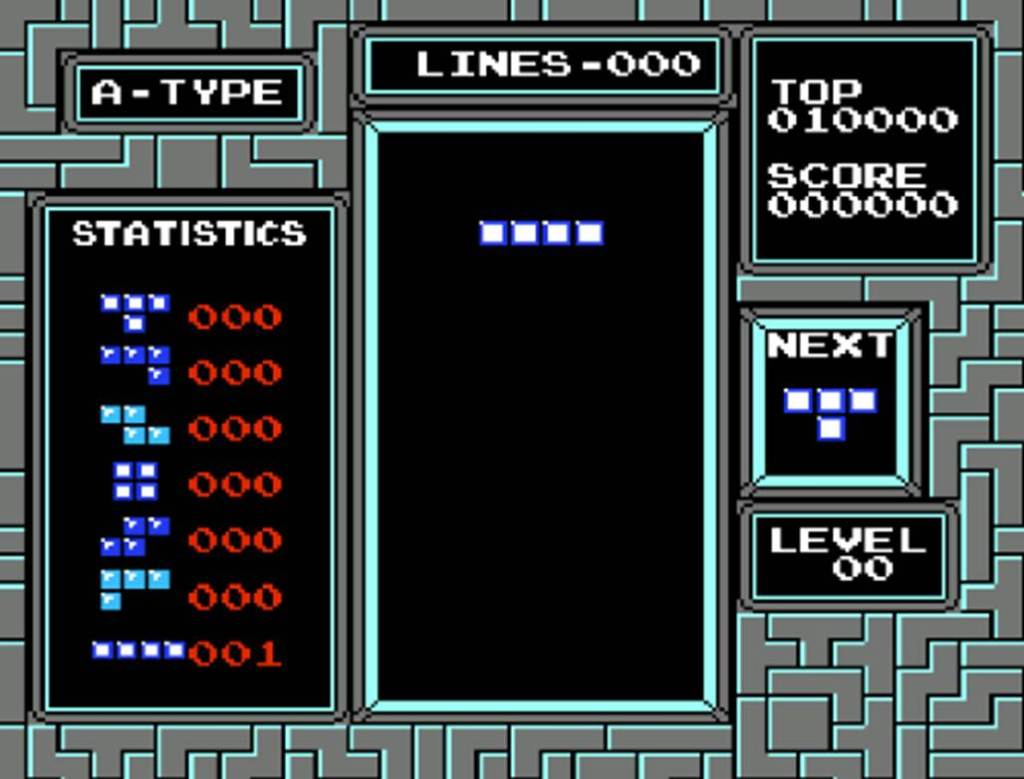
Tetris is fundamentally an extremely simple two-dimensional game with a bounded 10×20 field:
Classic Tetris:
Modern Tetris:
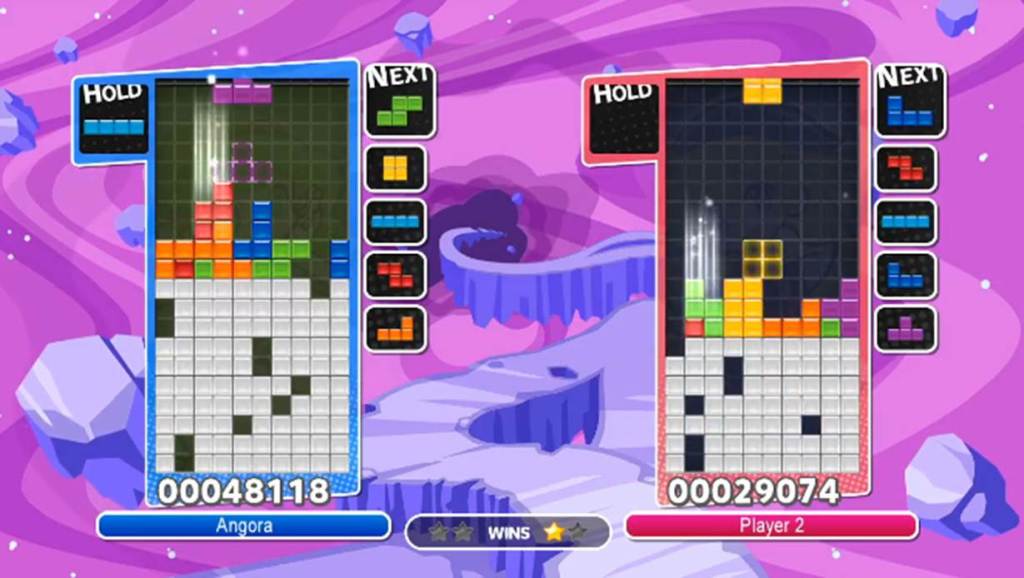
The above shows Tetris gameplay illustrations from NES Classic Tetris and the more modern Puyo Puyo Tetris, respectively.
Compare them to illustrations of three-dimensional existences, such as the illustration of my The Eternal Reflection novel series’ book one’s cover:
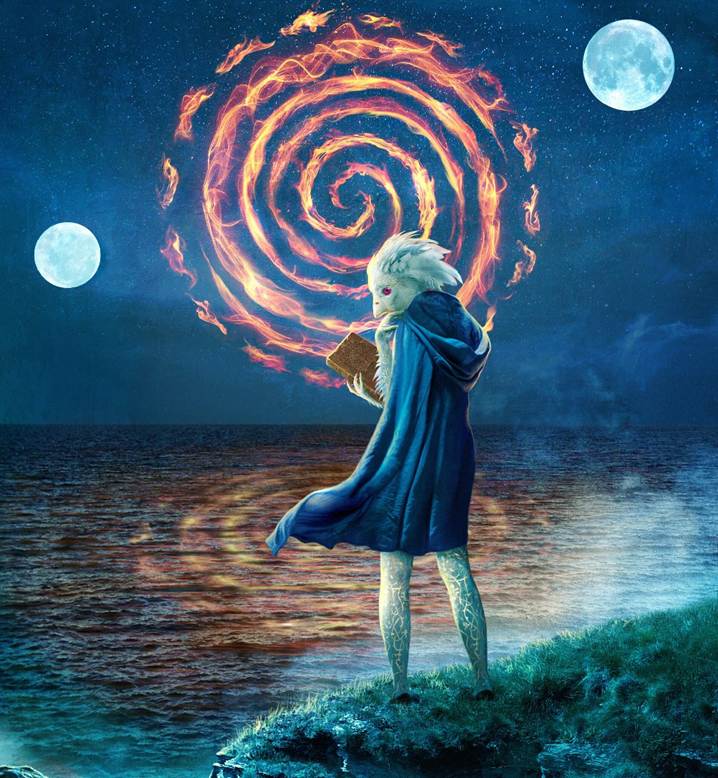
Illustrated by Alejandro Colucci
Behold the differences in the number of colored shades and hues. Now behold the much heightened resolution and an extra third dimension of movement.
Also, observe the size of the planet that the above avian figure (Ni’vim, my book’s core protagonist) can freely roam about.
Hence, Tetris is only a small sliver of existence compared to this three-dimensionality.
That is the difference between perceiving the cosmos from the finite human plane and the heavily expanded spiritual dimensions.
However, people still play Tetris because, despite its limitations, it has manageable, predictable gameplay rules and guidelines.
Tetris balances simplicity and complexity, allowing mastery without feeling overwhelming.
This has allowed me to create eight Tetris guidebooks that map out nearly all practical mid-game tactics and strategies.
Human concepts, such as “defending,” do not initially make sense in Tetris.
Hence, we must translate what we mean by “defending” into concrete Tetris concepts, such as “downstacking,” “vulnerability,” and “counterspiking.”
Non-Tetris players need not fear, for I am here to guide you! These terms simply describe defensive strategies that let one absorb an opponent’s attacks and survive.
The same could be said for life: it may be a mere sliver compared to the afterlife’s vaster complexity, but this book translates the latter’s broader spiritual laws into human terms to make sense.
To make abstract spiritual concepts understandable in human terms, I have translated many of them into concrete actions and applications in the following section.
Personal, Social, and Global Applications
Spiritual Concepts in Human Terms
We can now translate higher-order spiritual concepts into human terms and see how to apply them in our lives:
i. Agape
Agape is the universal love one experiences in the higher realms.[4]
Its muted, human equivalent is love.
To apply love in one’s life, simply begin with self-love by living your passions to the highest excitement.
To apply love to the social fabric, turn your love for your hobbies into a mission that benefits others or society, uplifting their free will.
ii. Samadhi
Samadhi is the dissolution of the ego, in which one experiences complete absorption into the divine or infinite consciousness.[5]
Its lesser, human equivalence is ego transcendence or high degrees of selflessness or altruism.
To apply ego transcendence in your current life, just be humble and realize that everyone is a unique expression of the whole.
To apply it socially, see others as yourself and apply the golden rule: help them as you would help yourself.
iii. Sat-Chit-Ananda
Sat-Chit-Ananda is the experience of pure existence (Sat), pure consciousness (Chit), and extreme bliss (Ananda) of merely being.[6]
Its human equivalent is joy.
To apply it in your life, apply the ancient Stoics’ doctrine of going with the flow and simply accepting matters as they are.
Cultivate and master a skill to the point that matches the challenges it provides, so that you can enter a flow state. For me, it is Tetris and creative writing.
To apply it to others, manifest joy such that it uplifts and mends them of their inner afflictions.
iv. Ataraxia
Ataraxia is the deep calm and timeless peace one feels on the other side.[7]
Its human equivalent is peace.
To apply it to yourself, know that you do not need anyone’s permission to feel peace. Abide by the mantra that you are what you are, and that is enough.
To apply it to others, simply find peace within yourself, and it will spread to them.
v. Gnosis
Gnosis is the experience of absolute knowledge, where nothing is left out, on the other side.[8]
Its human equivalent is insight, knowing, or understanding.
To apply it to one’s life, engage in learning for the sake of learning, but not to the point of failing to balance learning with experience and intuition.
To apply it to others, make your knowledge and insights free without asking for anything in return.
vi. Aion
Aion, in its classical Greek sense, means eternal timelessness. In the spiritual experience I describe, this extends to the feeling of infiniteness and timelessness when one is on the other side.
One experiences the all-that-there-is’ past and future timelines of all universes simultaneously.[9]
Its human equivalent is existing in the now, fully mindful of the present.
To apply it to your life, cultivate mindfulness through any meditative practice (even walking meditation, zazen, listening to music, or creating art) until you forget that time has passed.
To apply it to others, understand that others are experiencing parallel timelines on top of your own, each manifesting their individual realities and, as a whole, making up the cosmos. Just accept them and let them be.
vii. Advaita
Advaita is the experience of a truly unified absolute all-that-there-is. It is the ultimate stage of spiritual evolution, involving a reunion with the One.[10]
Its human equivalent is simply enlightenment.
This is, by far, the hardest to obtain, and there are many roads to the same mountain. Scholarly souls like myself may rely on knowledge to reach it.
In my personal case, where I had a three-and-a-half-week mystical experience of oneness and love at around thirty, it occurred as follows:
- I was thinking about how to design artificial intelligence circuitry that could self-reflect and have true volition.
- As I designed hundreds of pages of complex circuitry in my head while walking, I suddenly realized that everything in the cosmos is connected.
- Then, memories of the thousands of books that I had read in my life flowed through my mind, conceptually.
- For nearly a month, I was in this heightened state of being, experiencing the unity and timelessness of the cosmos.
- I penned an unpublished 1,300-page book called Thus Spake Oneness containing all its insights. I never shared it publicly because I felt it was poorly edited. However, its lessons were reflected in my novel series The Eternal Reflection, many Galactoid Tetris WordPress blog posts on spirituality and philosophy, and this current book.
- Throughout the period, I had spontaneous insights about the nature of spiritual existence and many forms of knowledge.
- I also saw others as myself and manifested absolute love and immersion in all of reality.
This happened a few times in my thirties, but each lasted at most a few days to less than a week.
The means to reach this experience vary by personality and soul type.
My hunch is that, depending on one’s soul type, per the Michael Teaching’s seven roles, one can partake in activities that activate the higher self per each role.
This means manifesting in one’s higher intellectual, emotional, or moving centers.
Hence, an artisan role may engage in higher forms of art. A priest role type may engage in humanistic movements and orations. A server type may assist many individuals and show love. A scholar role may discover new physics theories to support our technological growth.
Doing these might potentially trigger such spiritual experiences. However, I cannot guarantee it.
Your mileage may vary.
Enlightenment: The Biggest Misconception
The greatest misconception is to confuse enlightenment with spiritually heightened states such as satori, nirvana, moksha, or other blissful states.
The other is to equate knowing with enlightenment.
The physical realm is the plane of action. Actions are the language of the physical and the expression of spirit. It is here, on a roiling planet, that we have the opportunity to apply our ideals into action in human form.
Hence, enlightenment that exists merely as an ideal in one’s mind, not applied to life, is just an abstraction.
Let us use Tetris as an analogy.
Metaphorically, in Tetris, the players who are “enlightened ascended masters” are those who have played Tetris so much that they no longer need any further matches to improve.
Many of them graduate from the Tetris realm by moving on to other aspects of life.
This includes a famous top player, Yakine, known for his extremely exotic T-spin setups, who inspired me in my earlier development. He has not been seen in the Tetris Discord groups for over five years.
Having enlightenment experiences in Tetris is like seeing the big picture of how everything fits for the first time.
For me, it was my realization of two core Tetris concepts: (i) parity management and (ii) field harmony. Almost all high-level Tetris boils down to applying these two primary concepts.
For the non-Tetris player, they are just ways to maximize consistency and efficiency.
If you master these two, you can vastly improve your offense, defense, and speed.
Imagine the eureka moment of bliss and rapture I had when I realized this!
However, realizing and knowing this alone is not true enlightenment. It does not mean you can immediately translate it into strategic or tactical moves that make you a Tetris god.
Instead, it still requires plenty of practice to translate this abstract idea into gameplay over many years.
Only when one has fully internalized and embodied this can one become a fully enlightened “Tao of Tetris,” realizing the Tao through one’s actions in the game.
In everyday language, this means that in real life, enlightenment is not merely knowing, but applying it.
It means harmonizing your enlightened perspective with life.
Artificial Intelligence and a Human-Centric Economy
Civilization cannot exist without humans.
However, AI threatens humans’ innate rights and authentic expression.
As a creative writer, my fully human-written The Eternal Reflection and How-to-Tetris series have to compete against completely AI-generated works.
Some AI writers apparently earn six-digit salaries from merely generating and self-publishing hundreds of poorly written AI-generated romance books.
Unfortunately, this does not affect just me; it also affects book cover designers, whose Fiverr accounts now have to compete against artists who use only AI-generated images.
At the broader sociological level, the practices of many Western AI companies, such as OpenAI, Anthropic, and Palantir, have lasting ramifications for us as individuals.
My hunch is that OpenAI originally planned to release ChatGPT for free.
This is the same practice companies such as Uber have used.
However, this is not charity. People would eventually come to depend so much on these AI models that they could not do without them.
It is when OpenAI charges consumers exorbitant prices and makes massive profits.
This money would then go into the hands of several billionaire oligarchs at the expense of the populace.
Greek finance minister Yanis Varoufakis calls this phenomenon techno-feudalism.[11]
It is where a capitalist society degenerates into a system where tech billionaires act as feudal lords, owning digital platforms and extracting rent from ordinary users who serve as unpaid data workers.
And these big companies, like Meta and Google, can eventually fire and replace their human workers with cheap, efficient AI bots.
The result is that human beings will just become pure, passive consumers who feed the coffers of these techno-feudal lords.
And because AI can produce artistic products far better than humans at a cheaper cost, human artists will lose their jobs and be forced into the secondary market to pay for AI services.
However, the problem is that saying an AI can think is like saying a submarine can swim: it can only mimic thinking, not truly express it.
Only a human being can feel and experience consciousness, emotions, and inner thoughts. An AI cannot (as of the publication of this book).
It can only manipulate symbols and give the impression of understanding or feeling.[12]
An AI likewise cannot express or feel satisfaction.
Because of this, an AI-centric world, where humans are completely replaced by AI and turned into “techno-serfs” exploited by techno-feudal lords, will be an alienating one without a soul.[13]
I will not dispute AI’s power to make our lives easier by automating unfulfilling work.
However, humans are still central to the world’s consciousness. It is because of the law of humanity:
The One’s cosmic consciousness can only be manifested through a sentient race, such as humans.
If humans are replaced by an AI that only gives the impression of consciousness, without any real consciousness, our civilization will be a thin, empty shell.
This is why it is important to regulate AI so that it does not take the rice bowls of true human artists, engineers, scientists, or service workers.
Perhaps a harmonious synergy can arise between authentic human expression and the convenience of AI in automating unfulfilling, repetitive tasks.
In my case, I wrote my The Eternal Reflection core novels and Tetris guidebooks without AI text generation.
However, I use AI to automate the laborious parts, such as fact-checking, identifying grammatical errors or spelling errors, and finding logical inconsistencies.
I also use AI to double-check intricate calculations in my third Tetris guidebook, How to Master Tetris, so I do not have to repeat twenty pages of tedious mathematics.
This has freed up more time and energy for the actual creative work.
On a broader societal scale, AI can automate laborious, unfulfilling tasks, letting us fully self-actualize.
[1] Max Heindel, The Rosicrucian Cosmo-Conception (1909).
[2] Kenneth Ring, Heading Toward Omega (1984); Raymond Moody, Life After Life (1975). NDE accounts describe overwhelming encounters with infinite love and knowledge through a tunnel of light.
[3] Kevin Williams, Near-Death Experiences and the Afterlife, http://www.near-death.com. Williams has compiled firsthand NDE accounts that describe a divine love far surpassing anything experienced in physical form.
[4] The concept of agape as unconditional divine love originates in ancient Greek philosophy and early Christian theology; see Anders Nygren, Agape and Eros (1930). For its parallel in NDE accounts of higher realm love, see Kenneth Ring, Heading Toward Omega (1984).
[5] Patanjali, Yoga Sutras (c. 400 CE), Book III; see also Sri Aurobindo, The Life Divine (1939) on the progressive stages of samadhi leading toward union with the Absolute.
[6] Adi Shankaracharya, Vivekachudamani (8th century CE); see also Swami Vivekananda, Raja Yoga (1896) on Sat-Chit-Ananda as the ultimate nature of Brahman.
[7] The concept of ataraxia — profound tranquility and freedom from mental disturbance — originates with the ancient Greek Epicureans and Pyrrhonian skeptics; see Epicurus, Letter to Menoeceus (c. 300 BCE). For its parallel in NDE accounts of profound peace in the afterlife, see Raymond Moody, Life After Life (1975).
[8] Elaine Pagels, The Gnostic Gospels (1979). In Gnostic tradition, gnosis refers not to intellectual knowledge but direct experience of divine reality; for its parallel in NDE accounts of omniscient awareness, see Kenneth Ring, Heading Toward Omega (1984).
[9] For the concept of Aion as eternal timelessness, see ancient Greek philosophy, particularly Plato’s Timaeus (c. 360 BCE). Because physical reality cannot be completely eternal, the creator made an imitation of eternity using Chronos. Plato famously defines Chronos as “a moving image of Aion (eternity).”
[10] Adi Shankaracharya, Vivekachudamani (8th century CE). Advaita Vedanta — meaning “non-duality” — holds that the individual self and the universal consciousness are identical; see also Swami Vivekananda, Jnana Yoga (1899).
[11] Yanis Varoufakis, Technofeudalism: What Killed Capitalism (2023).
[12] John Searle, “Minds, Brains, and Programs,” Behavioral and Brain Sciences (1980). Searle’s Chinese Room argument shows that AI can manipulate symbols without genuine understanding or consciousness.
[13] Karl Marx, Economic and Philosophic Manuscripts of 1844.

