Introduction
Learning to perfect clear can be easy or difficult, depending on the type of perfect clear you want to master.
Perfect clears are typically made from clearing 4-block-high rectangles:
| Diagram Set 17-1 | |
| 1 | 2 |
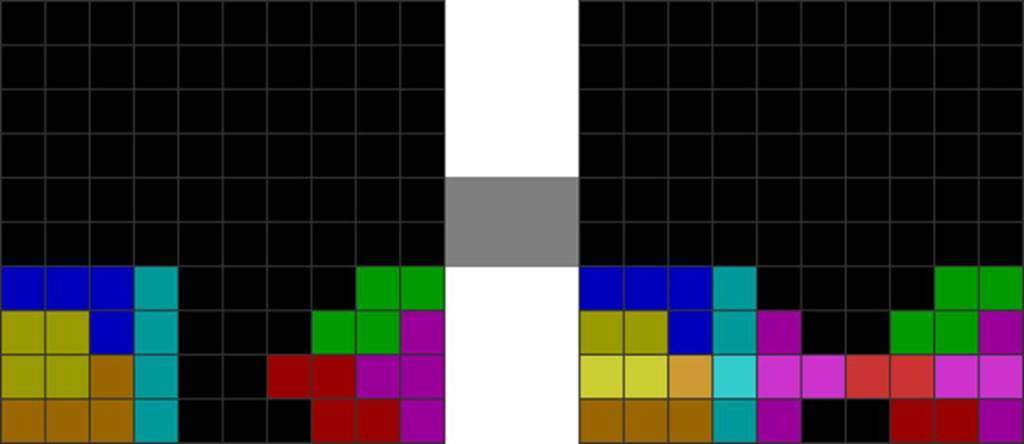
| Place the first 7 pieces in this shape’s form. | Skim with a T piece. |
| 3 | 4 |
| Fill in the remaining cavity with S and Z pieces. | After the final line clear, you get an empty field. This is a perfect clear. |
Many players mainly loop 4-block-high perfect clear patterns, such that every perfect clear begins a new empty field.
As I explain in Book 3’s Advanced Perfect Clear Rules of Thumb chapter, every 4-block-high rectangle cleared leads you to a new perfect clear bag. There are typically 7 bags: Bag 1, 2, 3, 4, 5, 6, and 7.
Every 4-block-high perfect clear you make advances you to the next bag. Hence, Bag 1 proceeds to Bag 2. Once you complete all 7 bags, you reset to Bag 1.
Every perfect clear bag has optimal patterns and solutions. This is Bag 2:
| Diagram Set 17-2 | |
| 1 | 2 |

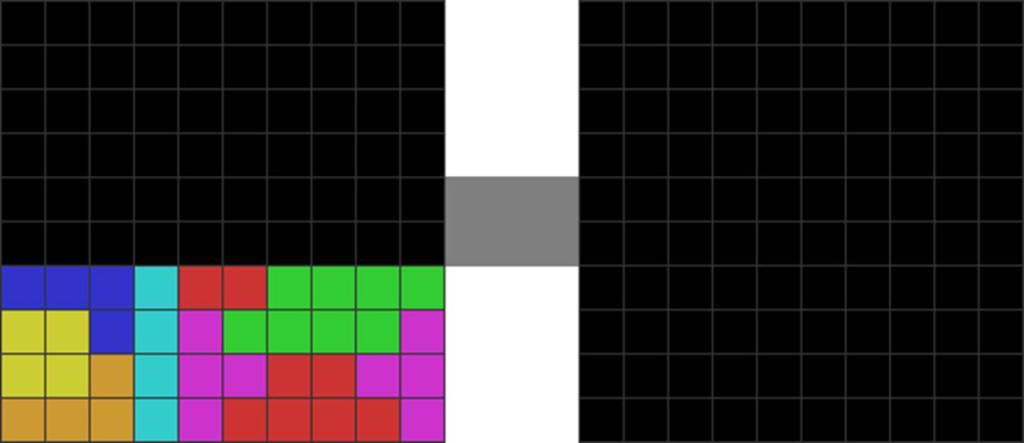
| The last 4 pieces of the previous bag have been placed. This is perfect clear Bag 2. | All 7 tetrominoes will appear. This lets you choose a high-chance perfect clear solution. |
Here, Bag 2 lets you place 4 initial pieces, which typically leaves you with one of each of the 7 tetrominoes. This lets you make easy, high-chance perfect clear patterns.
However, Bag 4 is harder because of its residues, so it requires more freestyling. This makes memorizing patterns much harder, so many players freestyle instead.
Some bags require more memorization than others. Some bags also need more freestyling than others.
As a result, the difficulty depends on which bag you are trying to master.
Perfect Clear Training Methods
The best way to train perfect clears is to use the Four-tris app:
| Diagram Set 17-3 |
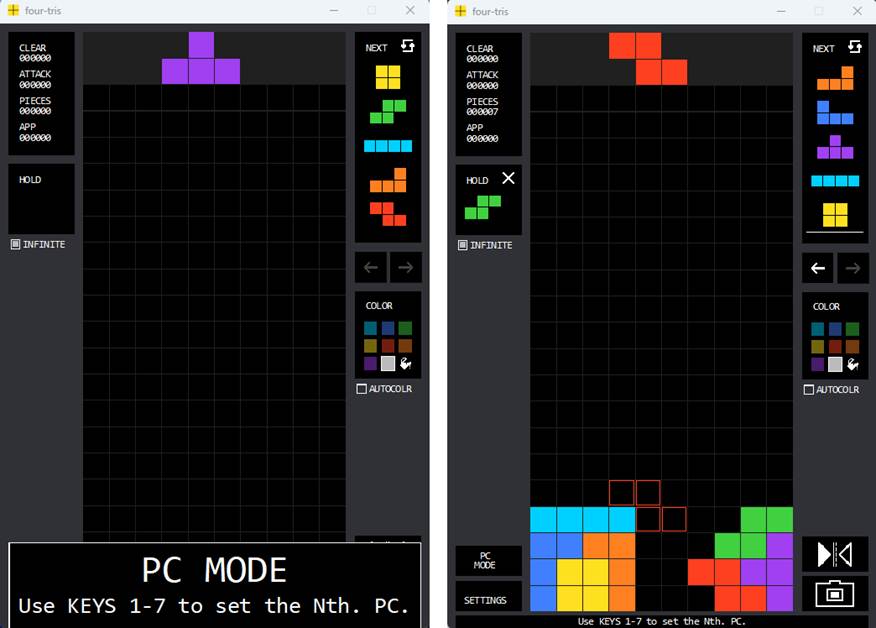
| Fourtris’ PC mode. You choose the PC bag and then solve the perfect clear. |
Four-tris allows you to use its specialized perfect clear mode.
You can set a number to jump straight to a specific perfect clear bag (1 to 7). You can then try to solve each bag, based on the optimal starting patterns and solutions for that bag. I illustrate with Bag 7:
| Diagram Set 17-4 | |
| A | B |

| C | D |

| E |

| Several ways to place Bag 7’s first 3 pieces together. |
Here are their perfect clear solutions:
| Diagram Set 17-5 | |
| A | B |

| C |

| With just these 3 solutions, you can easily perfect clear the field. |
For instance, in Bag 7 you only have to place 3 starting pieces. After that, you have many easy-to-memorize, easy-to-apply solutions with a near 100% chance of a perfect clear.
Four-tris is great because you do not have to do 6 perfect clears in a row to reach bag 7. You can just input a number and jump straight to it and train it.
Do this for Bags 1 to 7, based on the patterns and solutions I worked out in the perfect clear chapters of Books 2 and 3. I uploaded some of them for free on my website.
Once you have mastered all 7 bags, go for the real deal by starting from a perfectly empty and normal field without jumping ahead to any specific bag. Then, try to chain them for as long as possible.
If you can chain 10 perfect clears or more, then you are a perfect clear master.
Perfect Clear Looping Openers
Many openers incorporate perfect clears, allowing you to loop them.
| Diagram Set 17-6 | |
| 1 | 2 |
| 3 | 4 |
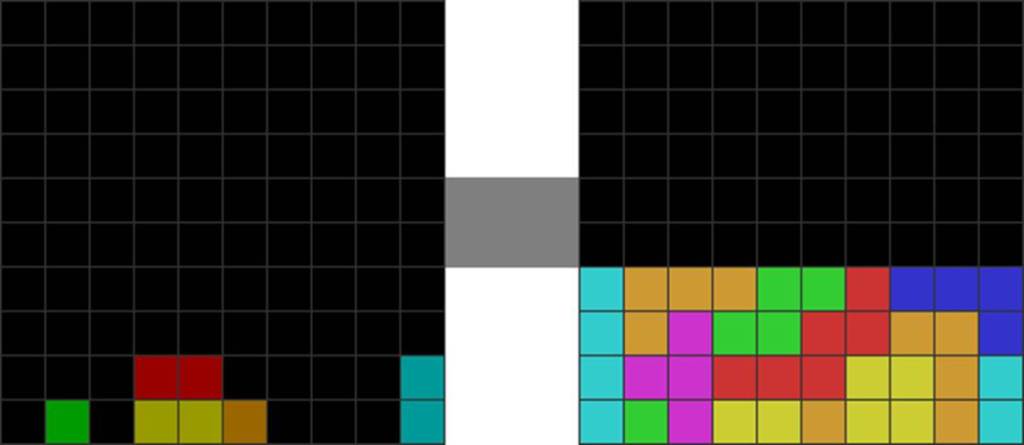
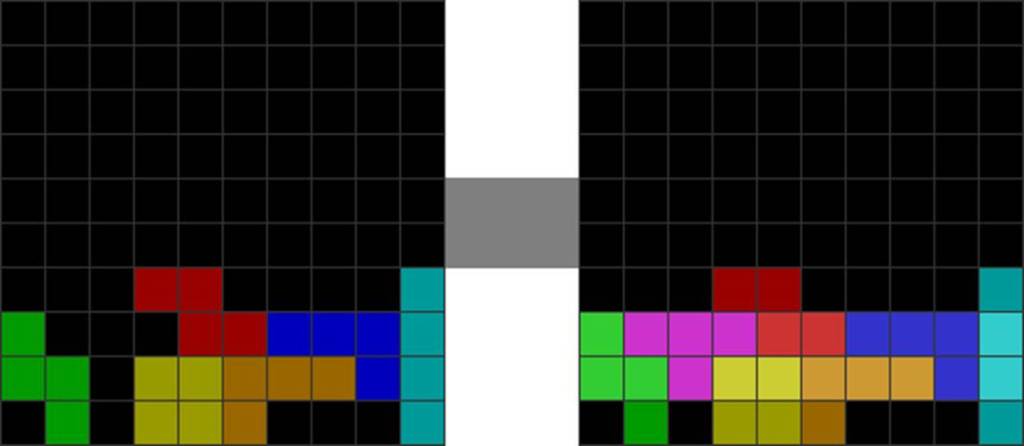
| Make a 4-block-high perfect clear from step 3. |
This is an Albatross Perfect Clear opener from my Book 4. The player completes the initial T-spin. After some stacking, you get a perfect clear.
This then creates an empty field, looping back to a fresh bag of 7 pieces. You can then use certain perfect clear bags with the proper traits to continue it, ultimately looping back to the opener.
These extra steps are too long and irrelevant to show here.
The way to learn them is the same as normal openers, as covered in the Mastering Openers chapter:
| Diagram Set 17-7 |
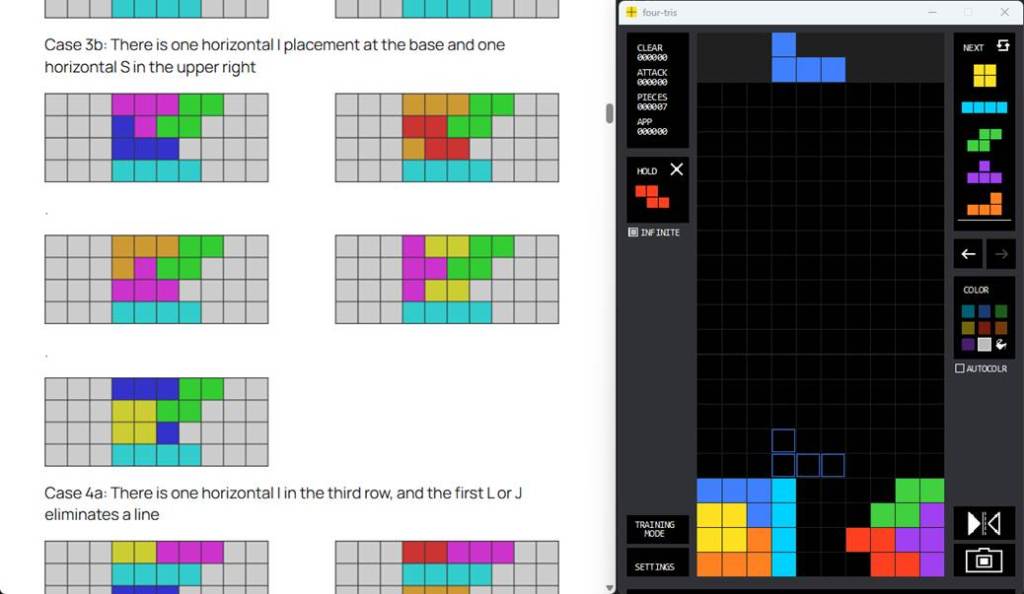
| The player opens up a Tetris guide’s perfect clear patterns on the left field. They then open Four-tris in the right field to practice. |
Simply open the image or website with the opener next to your Tetris game window.
Then, memorize and apply.
In a Nutshell
| Key Points |
| Learning perfect clears is very easy now with modern tools, such as Four-tris, as you can skip to any PC bag to focus-train that specific bag. You simply have to memorize the starting patterns and solutions from PC bags 1 to 7 to master perfect clears. Perfect clear looping openers also exist. Learning them is largely memorization-based. |

