The first few seconds may render in low quality. Please give them a few seconds to render.
The Basics
Diagram Set 19-1
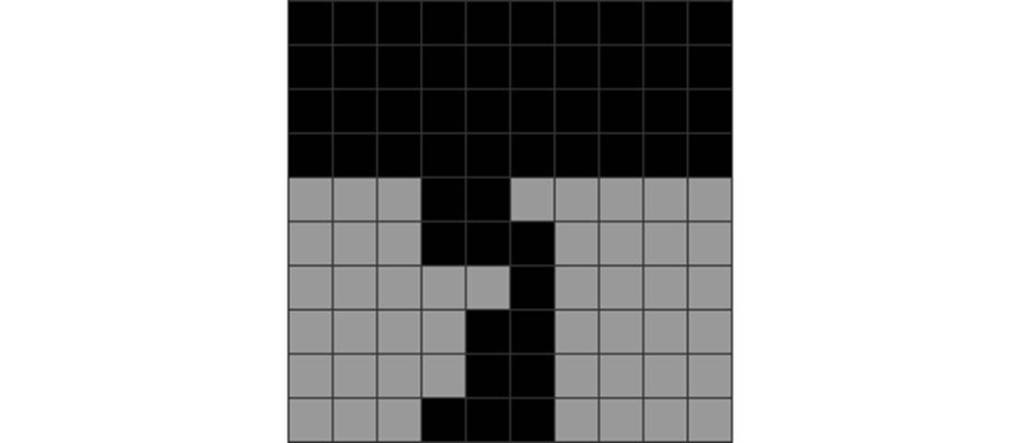
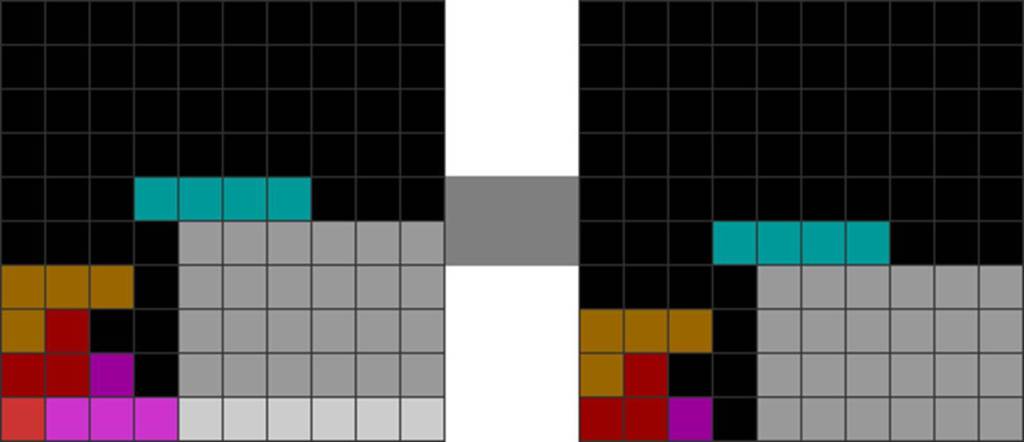
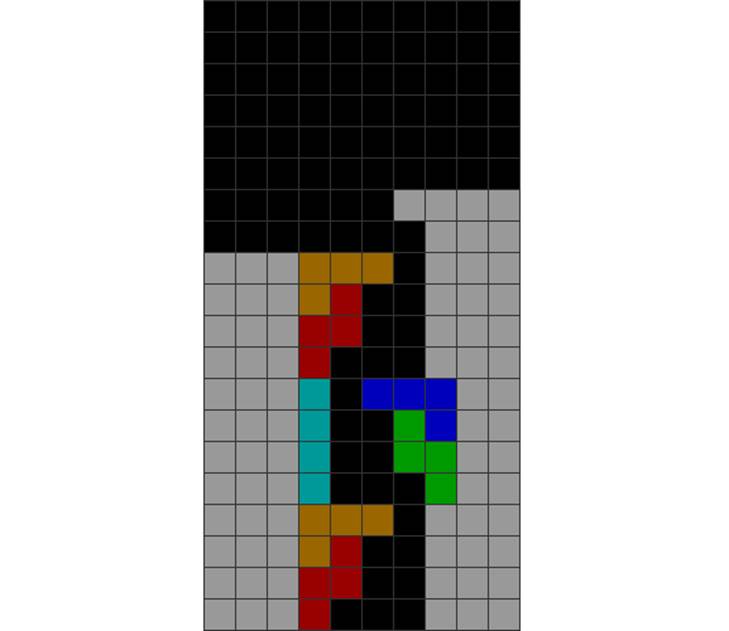
The Mini-Triple is a T-spin mini leading to a T-spin triple. Here is how to complete the sequence:
Diagram Set 19-2
1
2
Starting field.
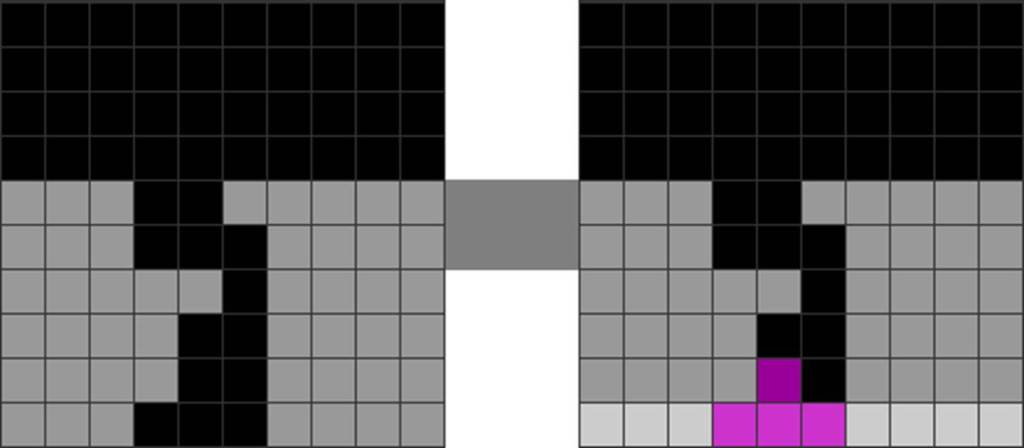
Make a T-spin mini.
3
4
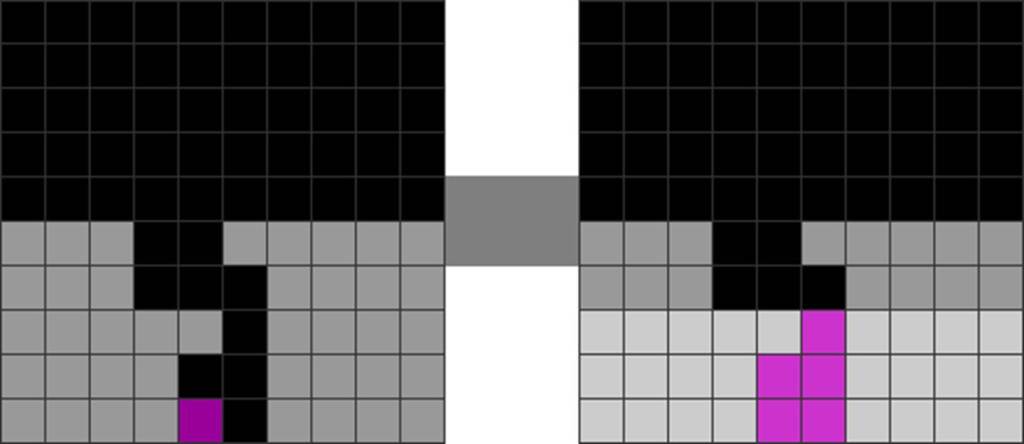
You get a T-spin triple.
Complete it.
It is a situational mid-game method.
Common Mid-Game Chances
Mini-Triples may seem complex, but you can easily create them in common mid-game situations.
1. 4-Wide Gaps
You can create Mini-Triples during 4-wide gap situations:
Diagram Set 19-3
1
2
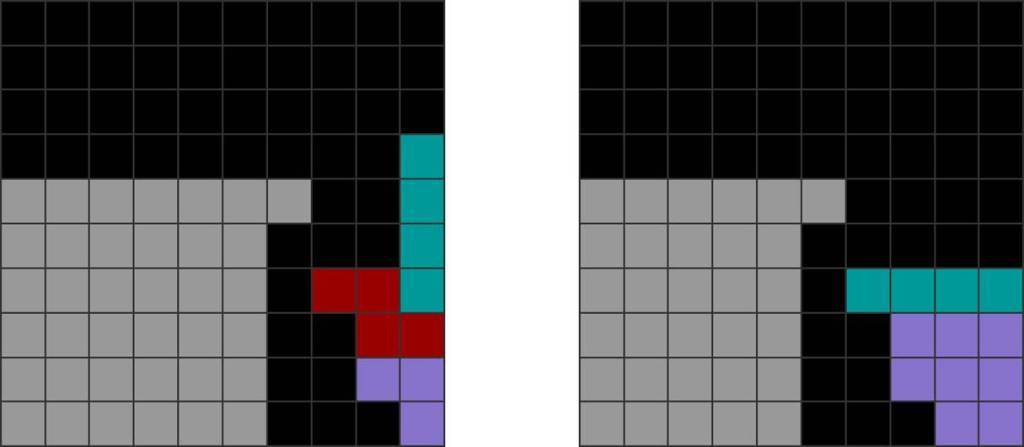
A 4-wide Mini-Triple opportunity.
The player puts an L and Z to make the base. He uses an I overhang. This makes the Mini-Triple.
3
4
The first T-spin mini concludes.
The next T-spin triple is ready.
2. Common Base Creation Combinations
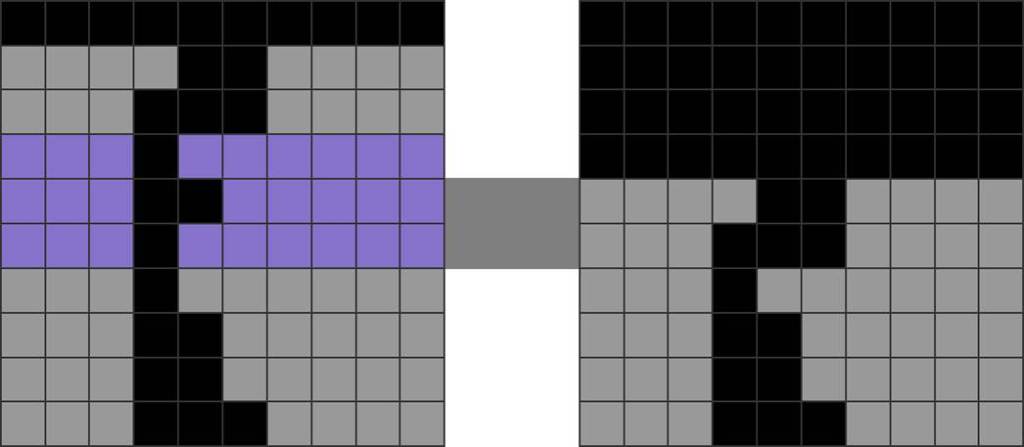
A common piece combination exists to easily create Mini-Triples mid-game. It involves recognizing the below lavender patterns, then placing a Z (S if mirrored) or I over them to form the base:
Diagram Set 19-4
A
B
Spot the lavender base shapes as the mid-game chance. Put a Z (S if mirrored) or I over them to make the right side of the Mini-Triple, then make an overhang.
Continuations and Follow-Ups
Mini-Triples can be used to follow up many T-spin triple setups:
1. T-Spin Triple Follow-up
T-spin triples often leave a dangling residue that requires a skim or soft-dropped piece to fix. However, Mini-Triples can sometimes follow them up effectively:
Diagram Set 19-5
1
2
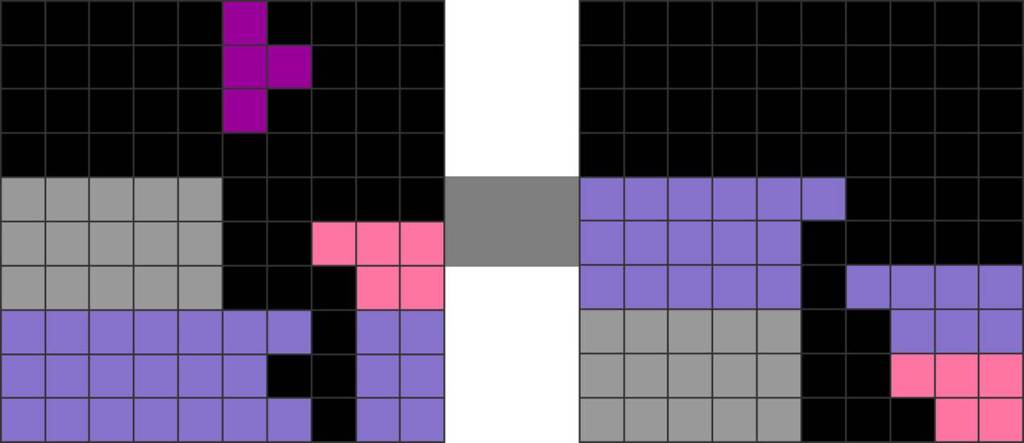
Complete the first T-spin triple. Observe the pink overhang shape. Some allow for Mini-Triples.
After the T-spin triple, you can sometimes make a Mini-Triple follow-up.
The Mini-Triple follow-up now grants 2 T-spins, helping you to sustain pressure.
Advanced
Mini-Triples have advanced applications.
1. Non-Linear Mini-Triples
You can construct Mini-Triples in an out-of-order manner. This opens up more opportunities to create it mid-game:
Diagram Set 19-6
1
2
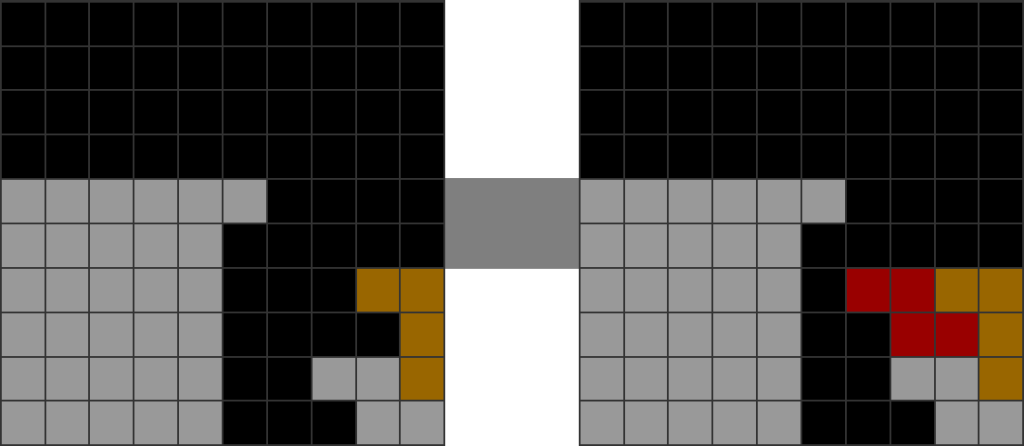
You can form some parts of the Mini-Triple non-linearly.
Soft drop the Z under the cavity. This is not exhaustive.
2. Stacking Mini-Triples
Mini-Triples can be stacked, as shown below. However, this is not recommended because of severe T-piece dependencies:
Diagram Set 19-7
The player stacks Mini-Triples. Using JS and LZ props is the easiest way to do this.
This creates a chain of many T-spin minis and T-spin triples.
3. Spliced Mini-Triples
You can insert T-spins into Mini-Triples, such as:
Diagram Set 19-8
1
2
Insert a T-spin triple into the setup (lavender parts).
After the T-spin triple line clear, you get a Mini-Triple.
This is advanced and risky because of its dangerous upstacking, which makes you vulnerable to spikes (since you cannot make a T-spin sometimes when building it).
In a Nutshell
Mini-Triples are more of a gimmick and are often passed up by high-level players. However, it has some situational cases where it is useful.
Pros and Cons
Pros
Mini-Triple is useful sometimes and has a powerful T-spin triple burst.
Can follow up T-spin triples cleanly.
Cons
The first T-spin mini is weak and leaves you vulnerable.
Its wide structure limits stacking options.
The T-spin triple overhang leads to poor follow-ups because of the soft drop penalty. Most experts avoid using it.