Tutorial Video
Please give the video a few seconds to render. The first few seconds may render in low quality.
The Basics
Yoshihiro T-spins involve using a T-spin mini to create a cavity for a T-spin double:
| Diagram Set 2-1 | |
| 1 | 2 |
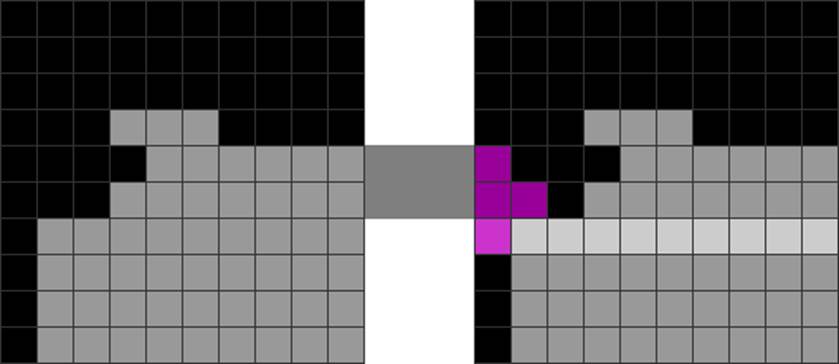
| Starting field. | A T-spin mini shapes the field into a T-spin double. |
This method is best used when there are 2 consecutive Ts. I sometimes give up this method if there are few Ts, as blocking out a hole with a donation can be dangerous. While waiting for a second T piece, you might have no way to defend yourself against attacks.
Yoshihiro’s first T-spin mini is highly inefficient. Even though it starts and sustains a back-to-back bonus, its long soft-drop duration reduces its efficiency. I often give it up and upstack it to a Tetris instead.
Common Mid-Game Chances
These are the 2 most common ways to construct Yoshihiros mid-game:
1. 9-0 Stacking Situations
First, familiarize yourself with Yoshihiros by spotting their opportunities during 9-0 stacking:
| Diagram Set 2-2 | |
| 1 | 2 |
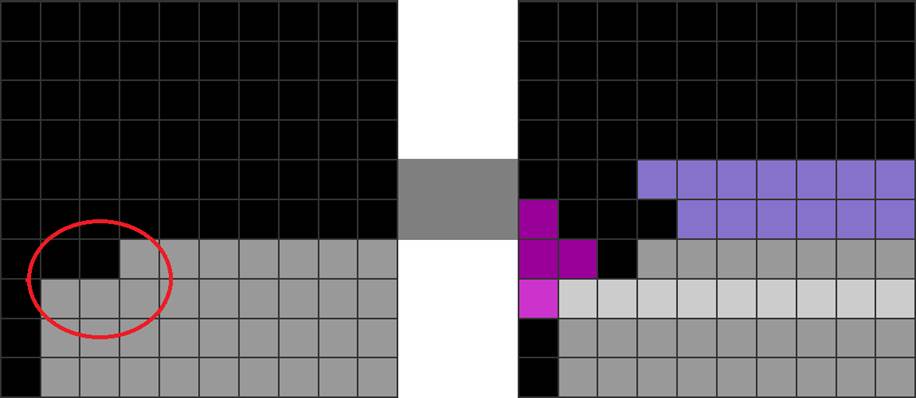
| Spot this common pattern during 9-0 stacking. | Make a T-spin mini. This creates a T-spin double. |
This is Yoshihiro’s most common mid-game opportunity.
2. Mid-Lane Situations
When you have familiarized yourself with the method, transition to spotting it when the central garbage hole is in the mid-lane:
| Diagram Set 2-3 | |
| 1 | 2 |
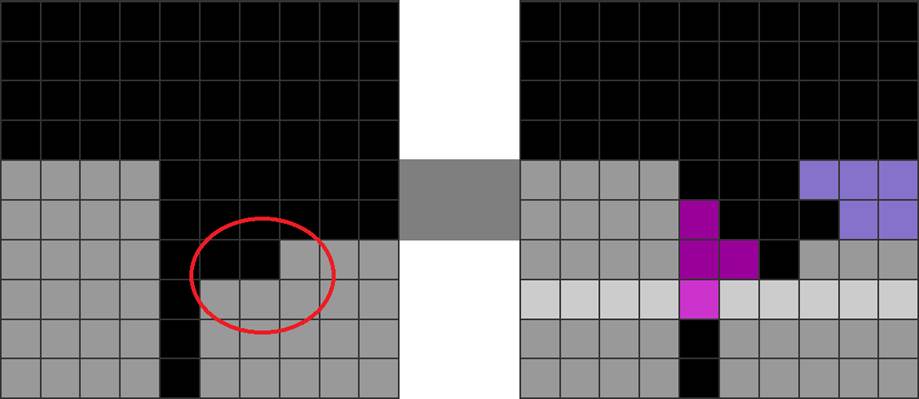
| Spot this L-shaped mid-game pattern during the mid-lane. | Make a T-spin mini. You get a T-spin double ready. |
Continuations and Follow-Ups
You can stack in a way that maximizes continuations or follow-ups after the Yoshihiro T-spin double.
1. ST Stacking or Hamburger
First, create the Yoshihiro. You now have 2 options to follow up on the former. The first is the Hamburger stacking continuation, which leads to a barrage of T-spin doubles and Tetrises:
| Diagram Set 2-4 | |
| 1 | 2 |
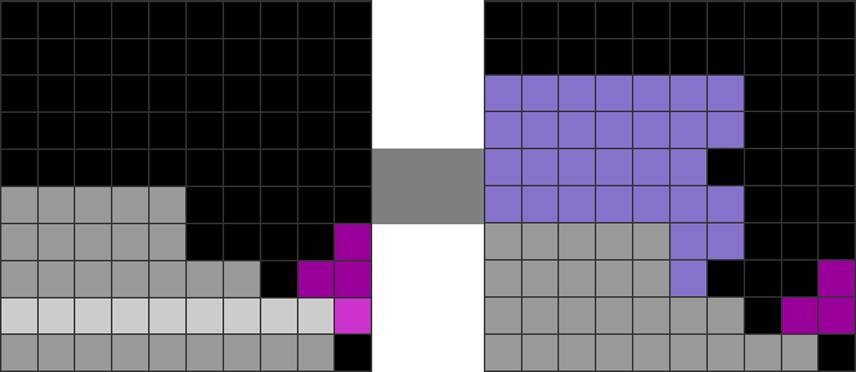
| Make a T-spin mini. | Forecast the lavender overhangs. This leads to 2 follow-up options. |
| 3 | 4 |
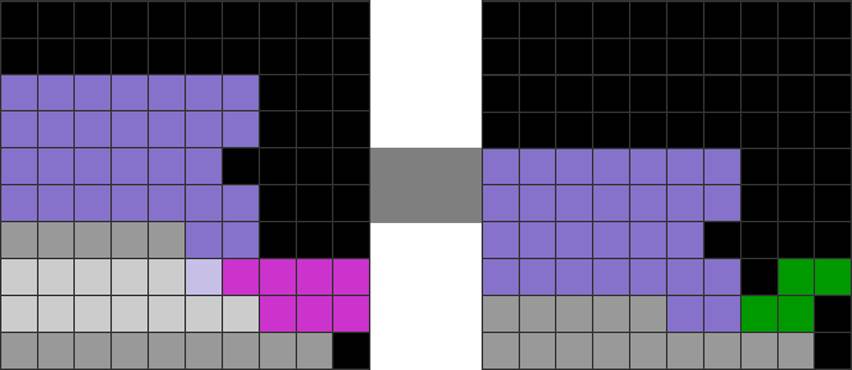
| Option 1: After the first T-spin double line clear, you place S horizontally for a Hamburger stacking continuation. This creates a series of T-spin singles and Tetrises. |
The next is standard ST stacking, leading to a string of T-spin doubles and Tetrises:
| Diagram Set 2-5 | |
| 1 | 2 |
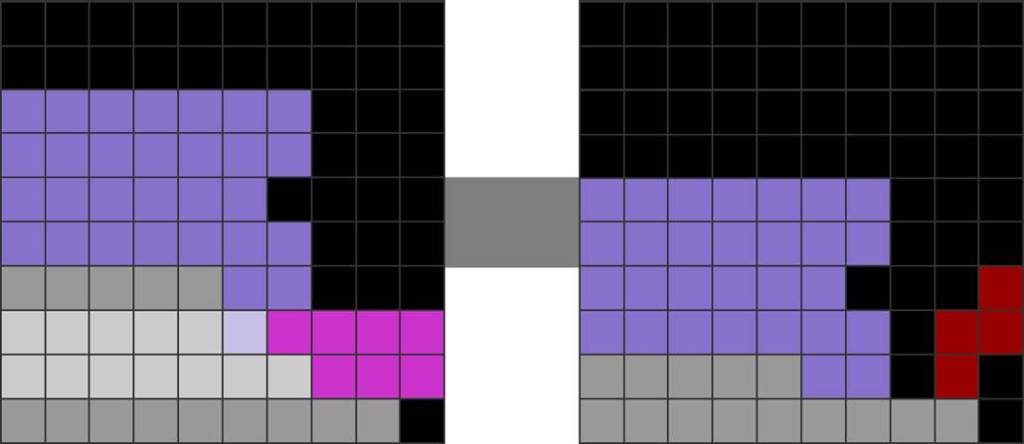
| Option 2: After the first T-spin double line clear, you place Z vertically for an ST stacking continuation. This continues from diagram set 2-4’s step 2. |
2. Trinity
If you are bold enough, you can follow up Yoshihiro with a Trinity:
| Diagram Set 2-6 | |
| 1 | 2 |
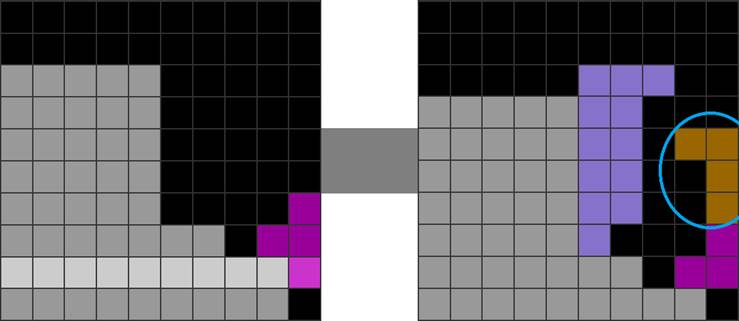
| Make a T-spin mini. | Memorize this L placement. Stack into a Trinity follow-up. |
This can be dangerous because of the heavy upstacking required, making you vulnerable to spikes.
3. LST Stacking
Below is a suggestion on converting Yoshihiro to mid-game LST stacking. This happens often:
| Diagram Set 2-7 | |
| 1 | 2 |
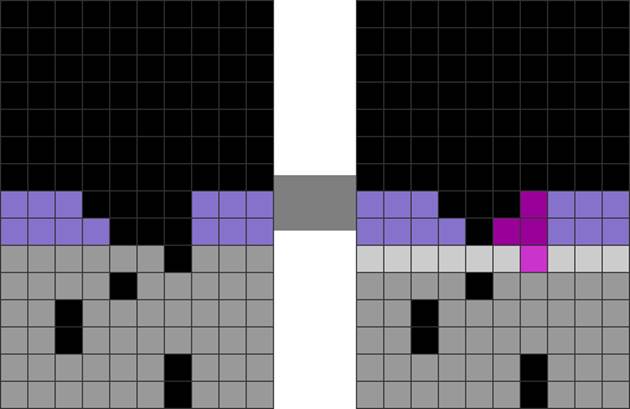
| This is a Yoshihiro mid-game opportunity. | The player does a T-spin mini, creating a T-like cavity. |
| 3 |
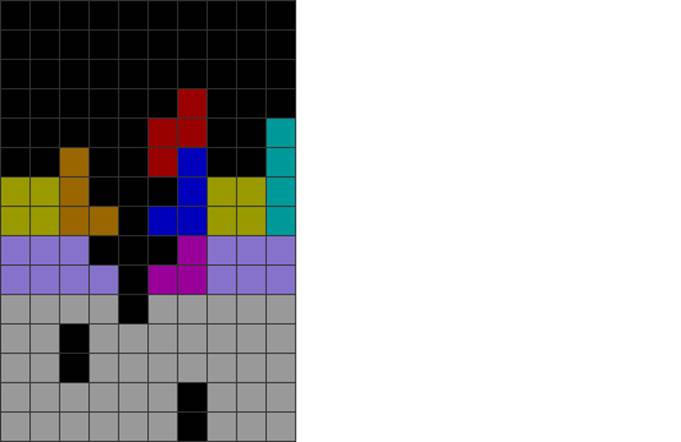
| The player creates an LST stacking continuation with a Fractal over step 2’s pattern. |
LST stacking is among the game’s most efficient methods. Transitioning to this can vastly boost your efficiency. I cover LST stacking more deeply in Book 2.
Advanced Techniques
Yoshihiro can be performed in many advanced ways. However, some of them are not practical.
1. Air Yoshihiro
| Diagram Set 2-8 |
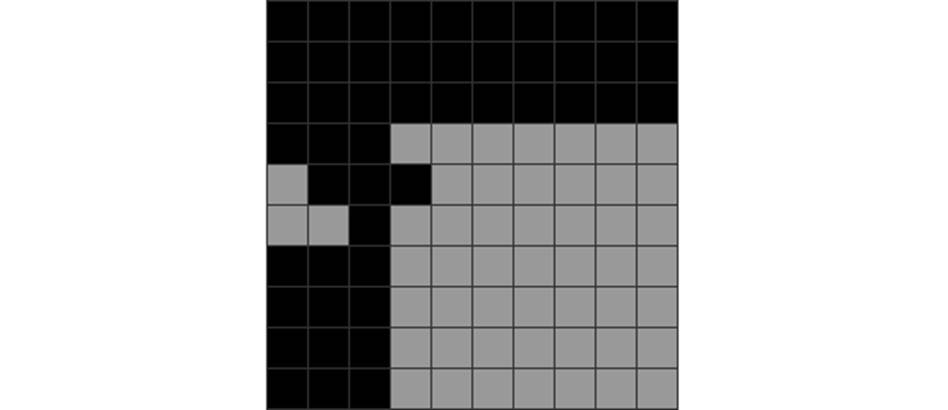
It is a hazardous method that I do not recommend. However, it can sometimes fill a niche situation.
Here is how to create and use it:
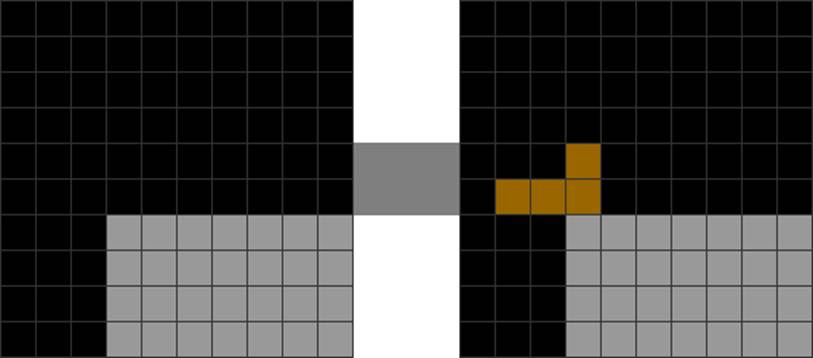
| 3 | 4 |
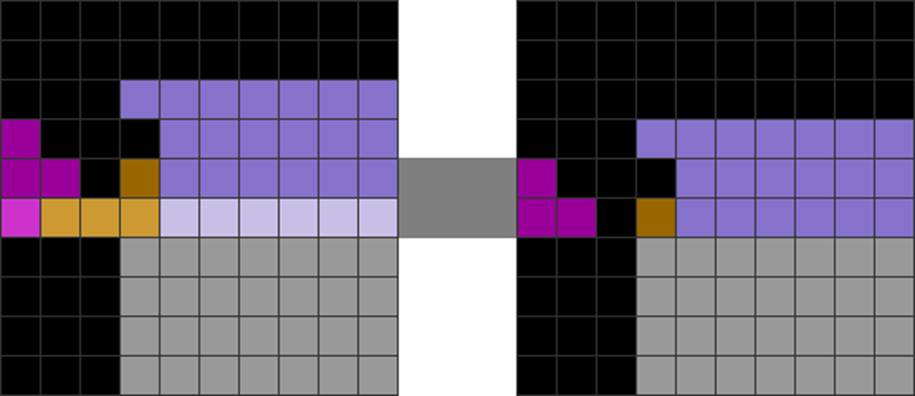
| The player floats a horizontal L and uses a regular Yoshihiro with a T-spin mini line clear. This makes a floating T-spin double. |
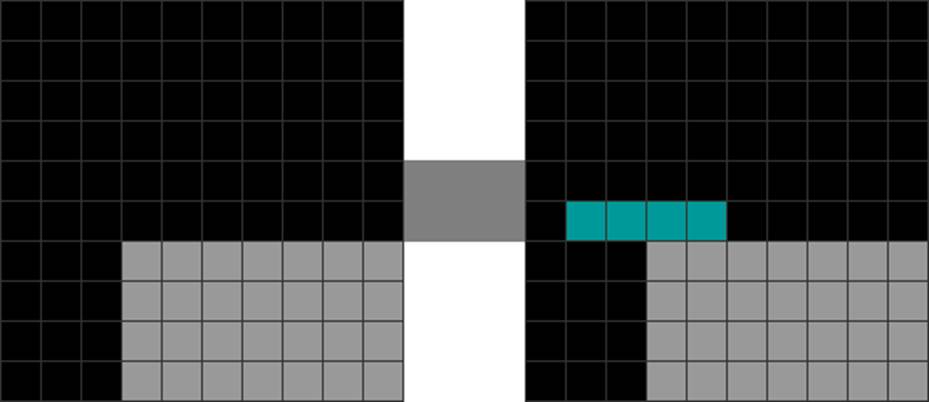
Here is another scenario:
| Diagram Set 2-10 | |
| 1 | 2 |
| 3 | 4 |
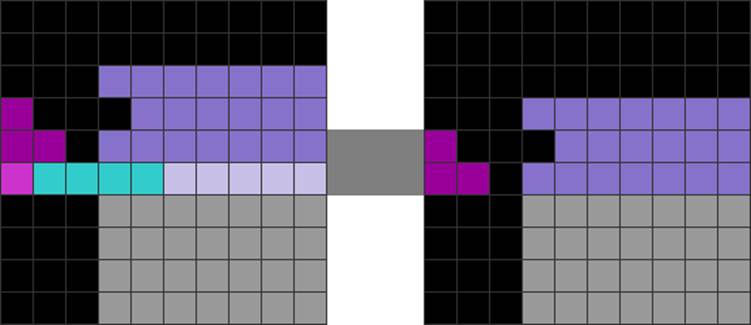
| Same, but with an I piece as its base. |
I do not recommend this setup. It is a method that I have completely abandoned, as it is far safer to stack fast than to make a suspended T-spin like this. Usual non-Air-Yoshihiro T-spin doubles are always better.
Air Yoshihiros are sometimes useful as the surplus T pieces can be used for a T-spin double, and Yoshihiro creates more T-spin options with strong follow-ups like ST-stacking for T-spin doubles and Tetrises if stacked low.
However, the first T-spin mini is weak and risky unless the second T arrives quickly. It also blocks the Tetris or garbage hole.
In a Nutshell
Yoshihiros, like Kaidans, are among the easiest and most common mid-game methods to master. Learning this alone significantly boosts your mid-game T-spin prowess. However, its initial T-spin mini is weak.
| Pros and Cons | |
| Pros | Potentially turns a T-flood into a golden opportunity for 2 T-spins (the mini and double) instead of having to waste some Ts in the stack. Handy for stacking T-spins to burst down an opponent. Can transition to LST, Hamburger, and ST stacking. Resolves unevenly-balanced stacks over a garbage hole to squeeze out a T-spin. |
| Cons | It breaks T-spin chaining sometimes and has poorer follow-ups than purely LST or ST stacking. The first T-spin mini is weak. |

