The first few seconds may render in low quality. Please give them a few seconds to render.
The Basics
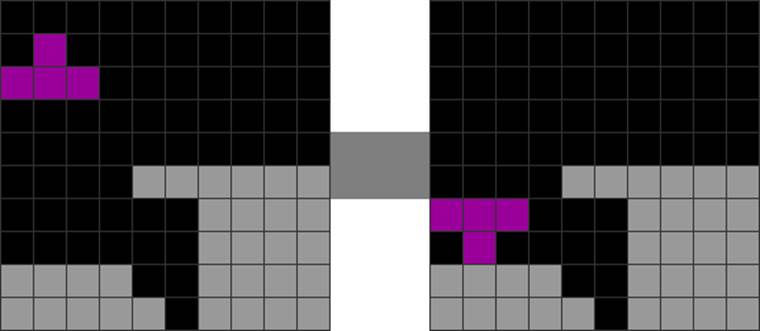
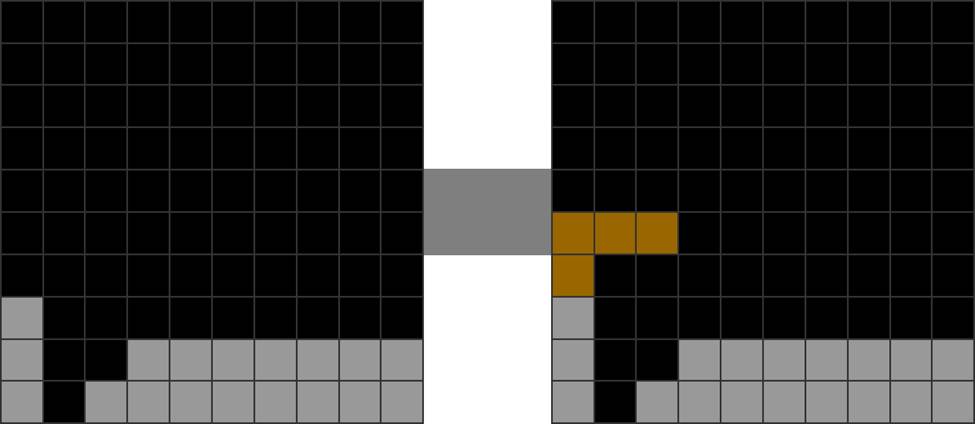
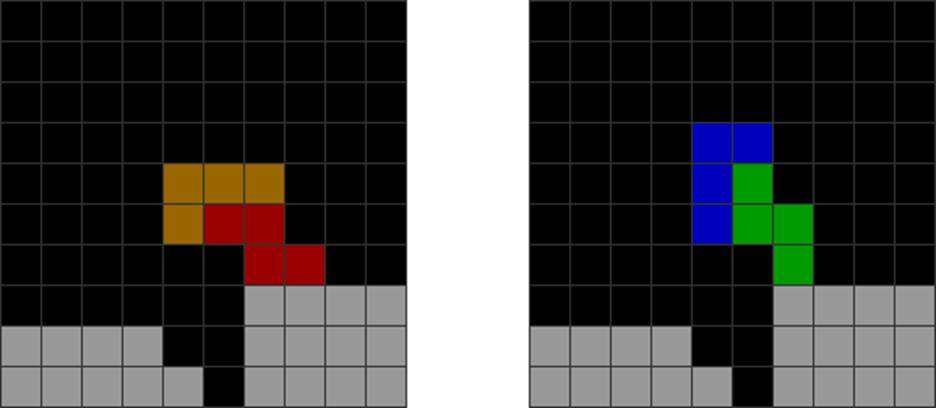
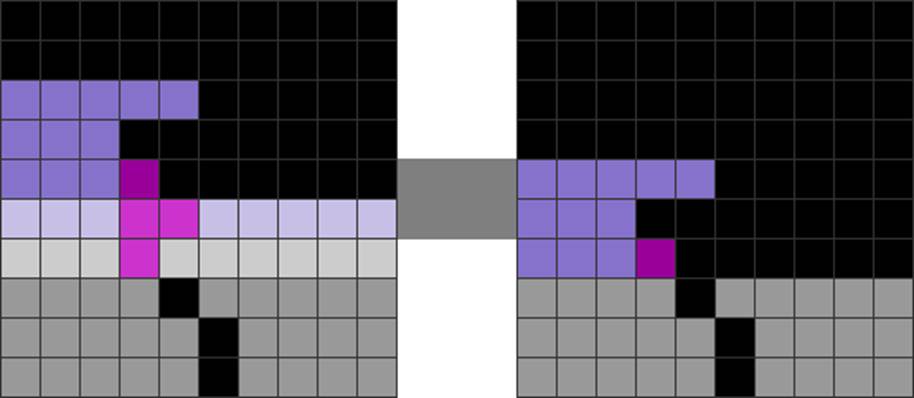
A Fin T-spin double is a polymer T-spin. It has the following shape. To create the T-spin, you slide in an upside-down T piece beneath the roof and rotate in the right direction. This kicks it into the cavity and creates a T-spin double:
Diagram Set 27-1
1
2
The player soft drops the T.
3
4
He rotates it upside down, getting it beneath the Fin T-spin double’s “ceiling.”
He rotates the T clockwise, kicking it into the cavity to make a T-spin double.
Steps 3 and 4 will fail if gravity is too high. It will pull the T piece under the ceiling and prevent a ceiling “kick.” Even in low gravity situations, you should rotate the T in step 3 as soon as possible.
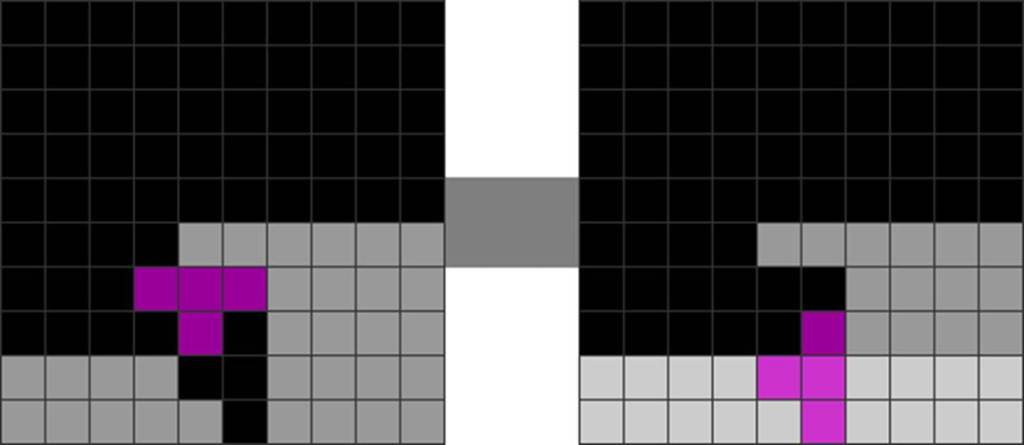
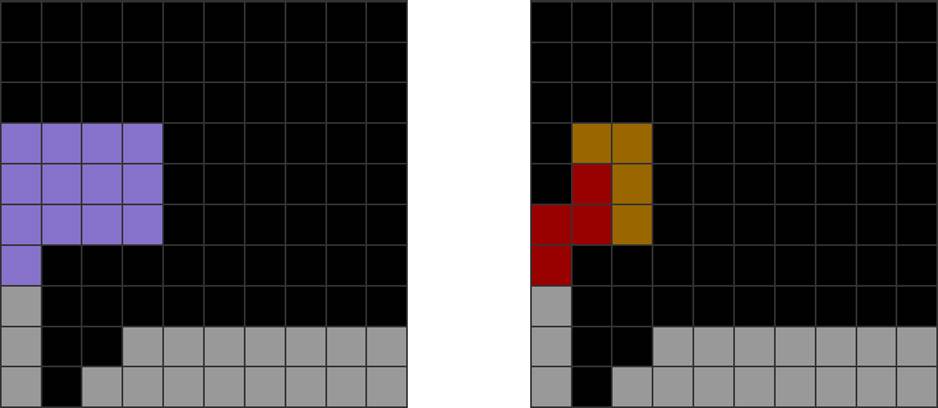
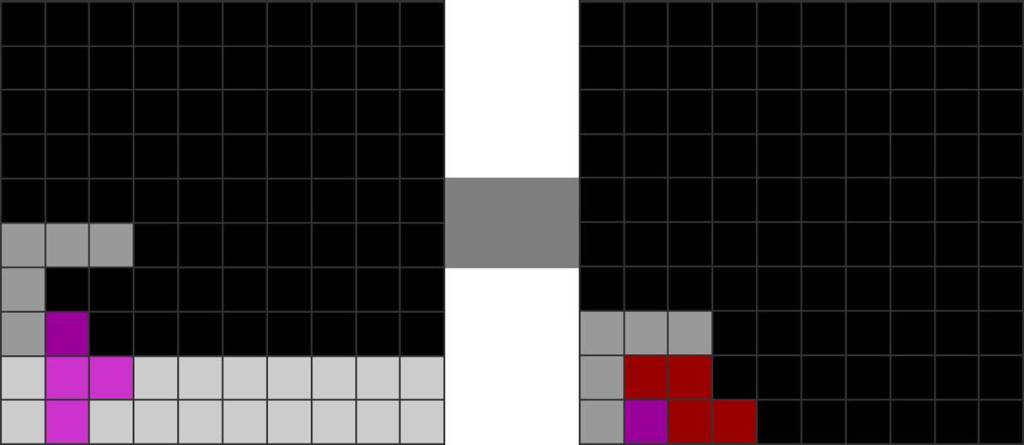
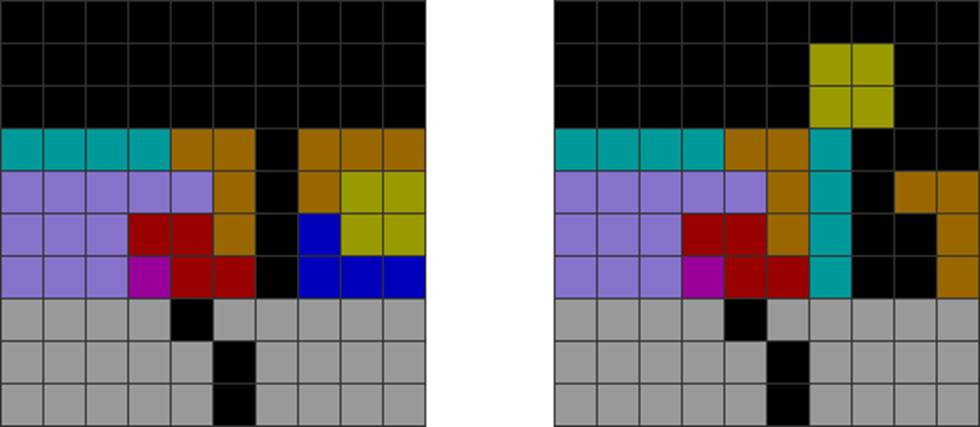
Fin T-spin doubles should be clean and leave no residue upstack over the garbage hole (except for the roof). Doing so leads to better downstacking options. Thus, if you see situations like the one below, avoid using them unless you need the garbage output fast.
Diagram Set 27-2
1
2
3
4
This Fin T-spin double is unclean because, in step 4, the resultant shape’s “ceiling” from the J overhang and the remaining purple block obstruct the next garbage hole in column 7.
Among all of the polymer T-spins, I consider this to be the most viable and cleanest. Prioritize learning and spotting this.
Common Mid-Game Chances
Fin T-spin doubles have many mid-game situations. However, one should not mindlessly create them if a cleaner alternative T-spin method exists.
1. The Easiest Mid-Game Chance
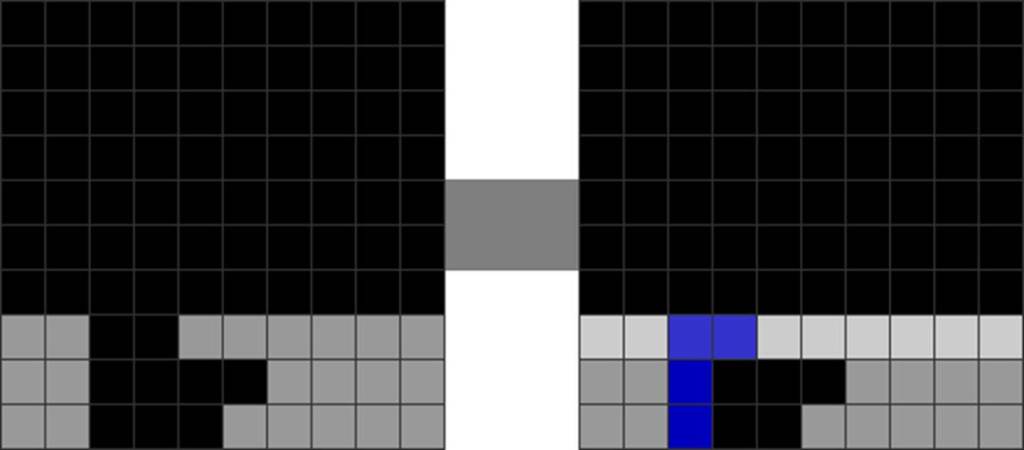
This is the easiest mid-game opportunity to spot to create a Fin T-spin double:
Diagram Set 27-3
1
2
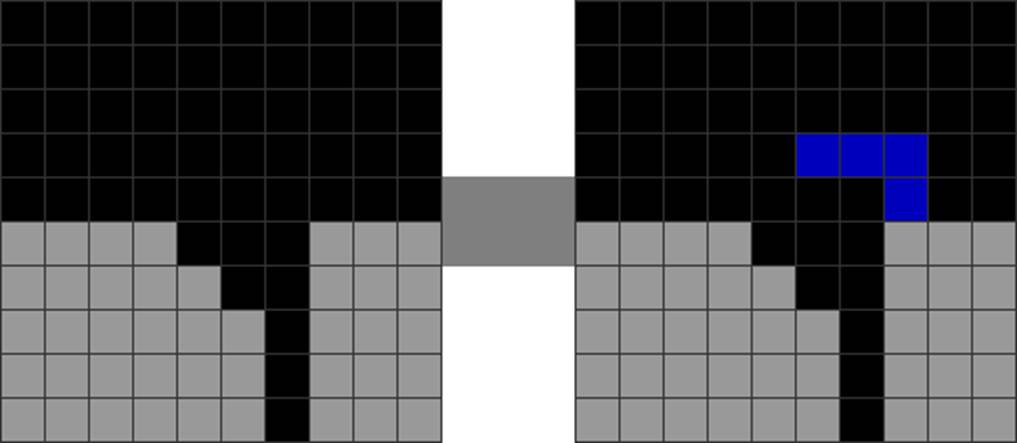
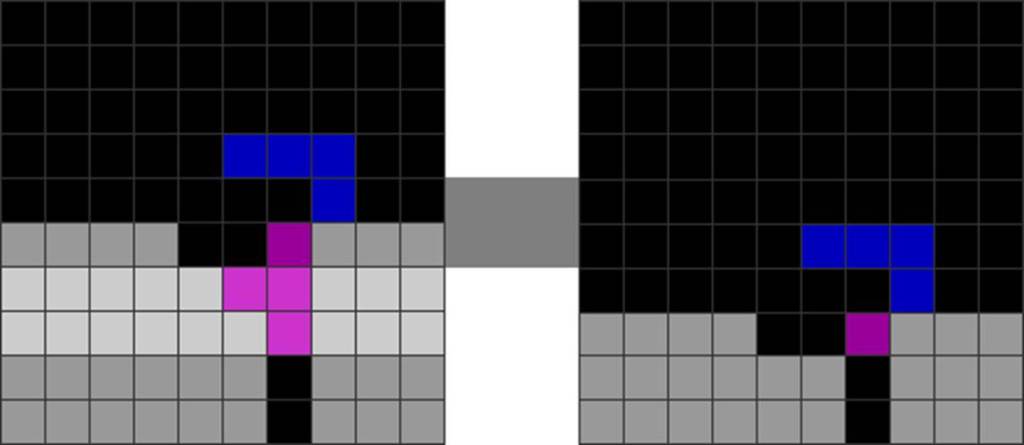
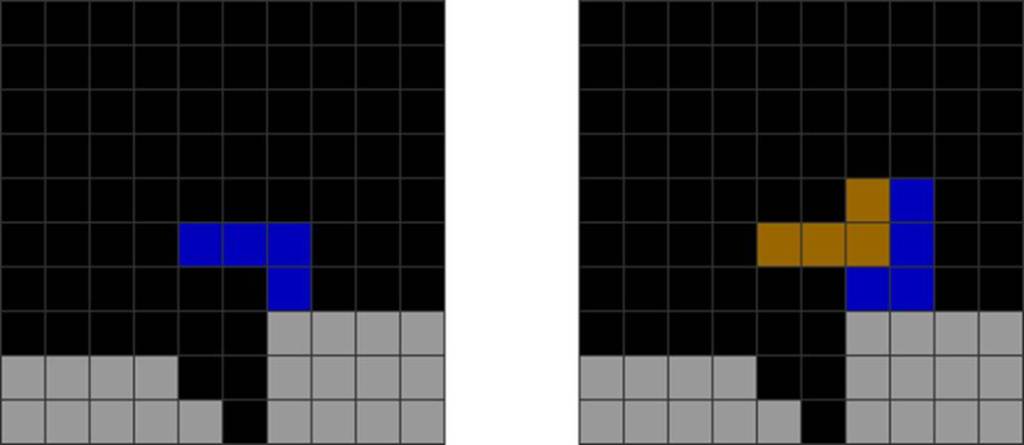
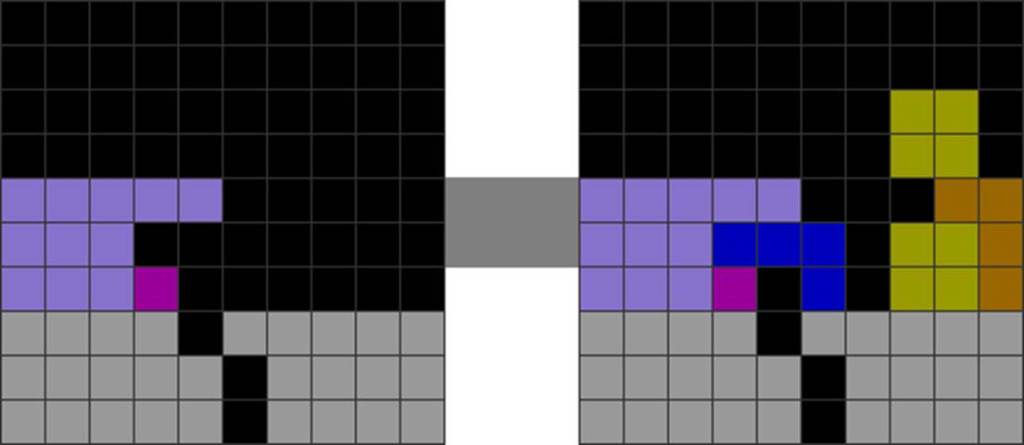
This is the simplest mid-game chance. Spot the stair-like pattern.
Put an L overhang. Done!
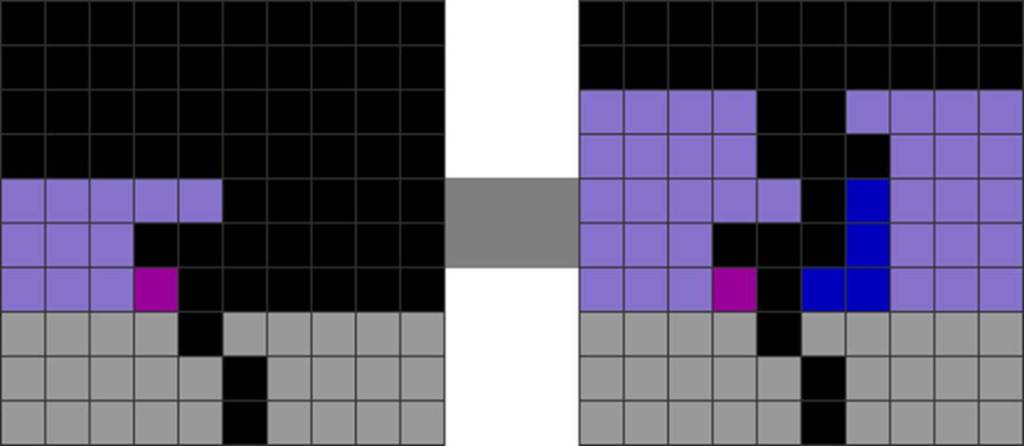
The “ceiling” part can be freestyled with common overhang shapes like these:
Diagram Set 27-4
A
B
The lavender parts can be of any combination. Be creative!
Here is a subtler overhang construction configuration.
2. Constructing the Ceiling
The “ceiling” can be constructed using the following piece combinations to make a Fin T-spin double:
Diagram Set 27-5
A
B
C
D
E
F
Continuations and Follow-Ups
Polymer T-spins have many follow-ups.
I have streamlined everything to just 4 general kinds of follow-ups that exist for Fin T-spin doubles:
1. Tuck a Piece Under the Cavity
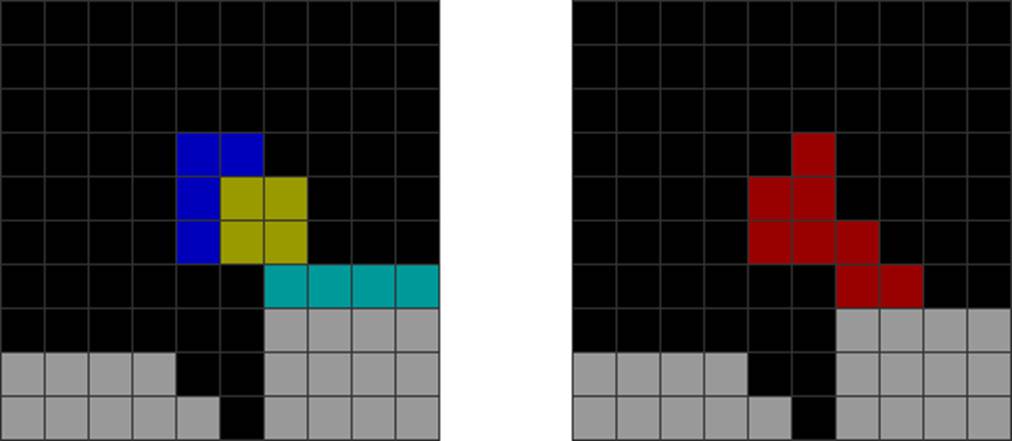
The most viable way to follow up Fin T-spins is to tuck an S or Z piece into the cavity:
Diagram Set 27-6
1
2
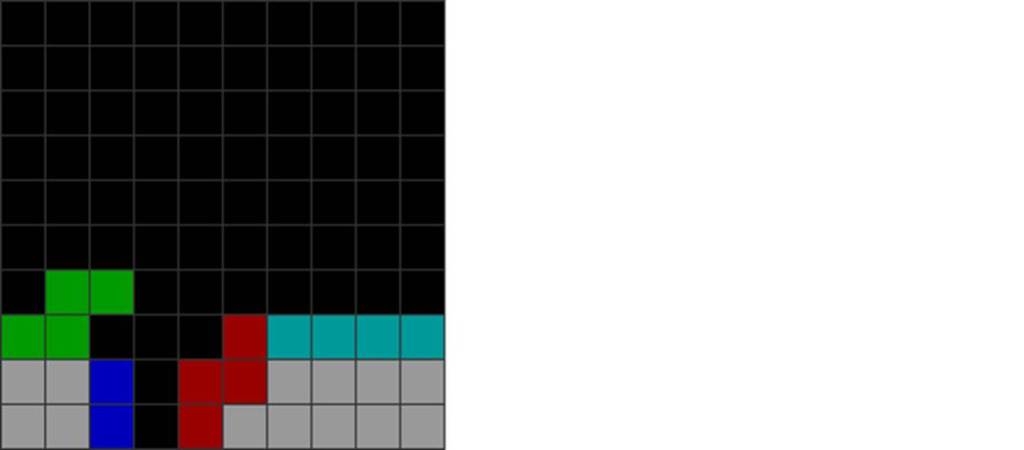
The Fin T-spin double finishes.
The most consistent follow-up is to just fill the cavity with an S or Z. T-spin follow-ups are too inconsistent.
2. Skim Off the Overhang
Sometimes, a clean and safe way is to skim off the overhang, then continue to build quick, normal T-spins:
Diagram Set 27-7
1
2
A Fin T-spin double’s aftermath pattern.
The player skims with a vertical J to remove the “ceiling.”
3
He continues stacking for regular, non-polymer T-spins.
3. Upgrading to a Tetris
The other most practical way, per my experience, is to freestyle to sustain back-to-backs cleanly with Tetrises:
Diagram Set 27-8
1
2
The Fin T-spin double concludes.
You get this shape, which leads to Alt. A or B.
Alt. A
Alt. B
The player fills the cavity and upstacks to a clean Tetris follow-up.
The player fills the cavity and instead makes an STSD follow-up.
Alt.B is a great alternative, too.
Tetrises are the second-most common follow-up after tucking an S or Z under the cavity.
4. Freestyle T-Spins
Sometimes, a clean and safe way is to continue to build quick, normal T-spins:
Diagram Set 27-9
1
2
This is the last diagram set’s step 2, a Fin T-spin double aftermath.
The player makes a freestyle T-spin double.
Another way is this:
Diagram Set 27-10
1
2
Note the J’s location. This creates 2 T-spin doubles.
However, from my experience, following up on Fin T-spin doubles with more T-spins is difficult because of the chaotic nature of the leftover pattern.
There are no easily memorizable and applicable follow-up T-spins for this polymer method. One can only freestyle. The above 2 examples are just some possible, non-general illustrations.
In a Nutshell
Fin T-spin doubles are the most practical Polymer T-spins. If you are using any other type of Polymer T-spin (such as Iso T-spin doubles), you are likely trolling.
Pros and Cons
Pros
Provides some T-spin pressure in cases where cleaner T-spin setups are not possible.
Cons
Challenging to follow up properly: it leaves a terrible overhang that needs experience to manage cleanly.
Often, there are far better and cleaner T-spin alternatives.