Introduction
Many Tetris players go into rapid overdrive by trying to master the game too quickly and learning too many setups at once.
Some burn out or develop permanent carpal tunnel syndrome, then quit the game for good.
Mastering Tetris is a marathon, not a sprint. To become a Tetris expert, you must train sustainably without burning out.
Slow and Steady Wins the Race
If there is anything I have learned about Tetris training in all my 7 years of experience, it is simply a line attributed to Aesop’s Fables:
Slow and steady wins the race.
You may remember the story of The Tortoise and the Hare. The tortoise won the race against the hare because the hare got too casual, took a long nap, and let the tortoise win.
In Tetris, I have seen many players who take the game so seriously that they rage over their Twitch streams, suffer from mental health issues, and burn out from trying to out-compete others.
Many of these players, whom I once knew, were more skilled at Tetris than I am. However, they no longer play, and I have caught up with them.
That is, Tetris is not a game to take too seriously. Instead of burning out from overstressing over the game, play it for what it is — for fun.
If you are not playing Tetris for fun and feel burned out, take a break and, when you have recovered, return to training.
When and How to Take Tetris Breaks
In my case, every long Tetris session over several days or weeks follows a typical response curve:
| Diagram Set 3-1 |
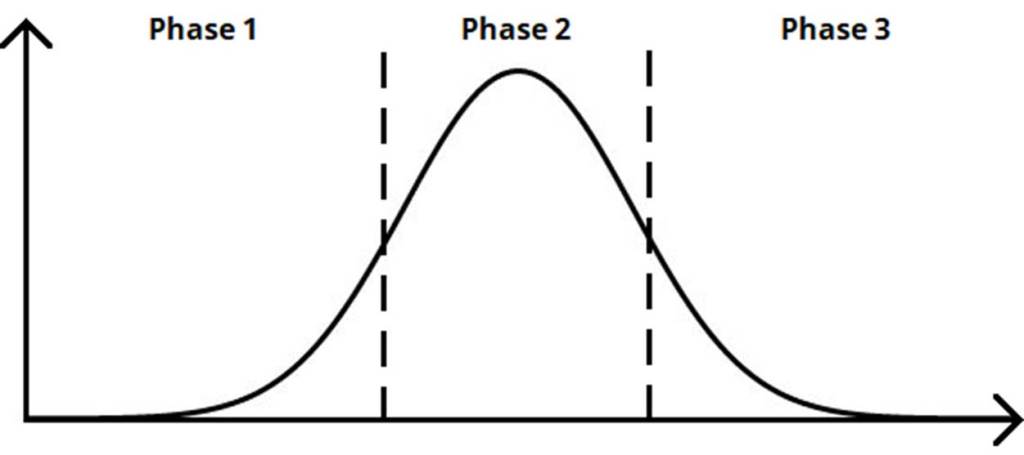
| A performance phase response curve to Tetris. The vertical axis shows one’s Tetris performance and enthusiasm. The horizontal axis is time. |
It has three phases:
- Phase 1: Warm-Up: I would first warm up my memories and hand-eye coordination. My brain is still warming up, and I often need a few days to get in the groove and play at my best.
- Phase 2: The Flow: Once I have warmed up, I engage in the game and make optimal strategic and tactical decisions. This is when I enjoy the game the most.
- Phase 3: The Descent: However, I reach the point where my mind no longer finds Tetris fun, and it becomes more and more demanding and exhausting to make proper tactical decisions.
When I reach the third phase, I will know it is a signal for my brain to take a break.
According to Dr. Sanil Rege, a psychiatrist, burnout feels like pain because it activates the same brain areas that process pain.
Hence, once you feel that mental numbness, fatigue, and grogginess, it is a signal from your brain to avoid pain, and that means resting to avoid long-term neurological damage.
For me, because I am already tired of Tetris, my breaks are getting longer and longer — sometimes 2 or more months.
However, when I return, I always feel rejuvenated and ready to play Tetris again, beginning the 3-stage cycle.
When you are taking Tetris breaks, my theory is this:
Tetris is a rather cognitively demanding, fast, and high-input game. This can drain your frontal-lobe dopamine reserves.
Typically, I get around it by resting with something opposite to Tetris: something that involves creation, stillness, and less cognitive input.
It can involve playing chill games like Sim City 3000 or Heroes of Might and Magic 3. These are very old games, but I still play them!
Or you can go to the beach, let your mind wander, and do nothing.
After a few days to a few weeks or months, my brain typically recovers, and I can play Tetris well again.
Ergonomics
Many Tetris players develop Repetitive Strain Injury (RSI) after playing for too long.
I myself had some degrees of RSI, where my pinky on both hands would occasionally become numb. Once I got it, I had to stop playing, which limited how long I could actually play Tetris — very ironic for a Tetris master.
This same condition also afflicted someone I knew quite well.
However, the situation improved once we both got a dedicated wrist rest on our keyboards:
| Diagram Set 3-2 |
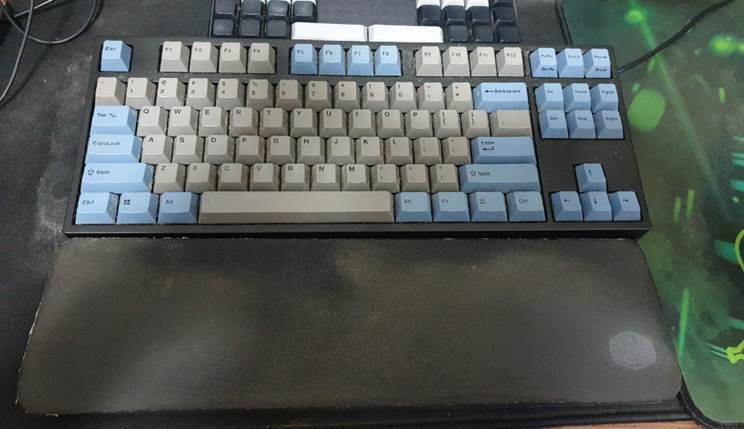
| My trusty Leopold keyboard with a wrist rest. The latter is mandatory to reduce the chances of getting RSI. |
This reduces the amount of bending (pronation) of the wrist, which prevents the nerves from being pinched — a typical cause of carpal tunnel syndrome.
I also encourage readers to use an ergonomic chair with armrests to support the elbows and minimize long-term strain on the shoulders and arms.
In a Nutshell
| Key Points |
| Tetris takes a while to warm up before you can play at peak capacity. Do not be disheartened by poor performance in the first few matches. Once you start feeling exhausted and no longer entertained by Tetris, it is best to rest to minimize burnout. Ensure proper ergonomics while playing to prevent or minimize RSI. |

