“Surrender to what is. Let go of what was. Have faith in what will be.”
— Sonia Ricotti
Introduction
Surrendering to the Cosmos’ Natural Flow and Rhythm
You are not your thoughts, intentions, feelings, emotions, or beliefs that you experience.[1]
You are the cosmic consciousness that experiences, observes, and is aware of those thoughts and feelings.
Even your cognitive and psychological aspects are not the actual reality.
Your physical body is the product of billions of years of evolution, perfectly adapted to life on this planet and in this universe.
Its limited faculties of being able to imagine three dimensions, see three primary colors of light, experience one dimension of time, or reason in human logic are adapted to simply this plane of existence.
If you had been a dolphin, your brain would perceive more octaves and frequencies of sound and less of light. You would be more emotionally than intellectually driven.
Suppose you had been on another planet as another intelligent being. In that case, your brain may have evolved to reason beyond binary logic or think in ways unimaginable to humans.
Suppose you are incarnate in another physical or mental universe. In that case, you may take on forms that humans may not even consider sentient or sapient.
Hence, your intellectual and emotional faculties are mere biological and psychological constructs.
The same goes for your ideas and theories about the world or physics. They are the finger pointing at the moon, but they are not the moon itself.
The same is true of all your ascribed social and cultural conditioning given to you since birth. You are not your rank, career, salary, status, job, race, caste, grades, looks, class, gender, or any other artificial distinctions.
An even greater illusion is that of the ego. That which you currently embody in this limited physical life is just a temporary personality, not the cosmic consciousness.[2]
You are just you, forgetting your original oneness, taking on a Mayavic veil to observe and experience duality and limitation. You have taken a vow to experience yourself as you are in this life to manifest your choices about yourself.
Spirit is eternal, and nothing can ever harm the spirit. The physical form may be damaged or destroyed, but never the light that radiates from within.
When you realize that all ideas, feelings, and ego are mere constructs, you can more easily detach yourself from your difficulties, attachments, and identifications.
With that, you realize that you are just the looker, the homunculus, looking through the windows of your physical vessel to experience the world.
Observe what passes, but realize you do not need to cling to it stubbornly when its merit to you has passed.
And when you realize that the cosmos has had everything planned and that all beings are loved, can you truly surrender.
With this realization, it is far easier to surrender many attachments and assume the role of the cosmic creator gazing through you in this life to manifest a finite aspect of its infiniteness.
This is the law of surrender: we can detach and willingly avoid over-identifying with specific identities when we realize they are merely temporary constructs. This lets us transcend their limits and be a free spirit.
Tetris as an Analogy
My advice, as a high-level Tetris guidebook series author, to all Tetris players is not to worry or question learning Tetris too much.
If you question Tetris too much, you will not flow with Tetris. If you over-identify with or over-attach to it, you will get stuck in Tetris. Let go of all attachments and surrender to the process. Become Tetris. Enjoy the ride.
When you are young and developing in Tetris, you aspire to master its basic rules and survive.
The following diagram shows what a person first learns in Tetris: simple, concrete finger inputs to move pieces to the right places:
| Diagram Set 30-1 | |
| 1 | 2 |
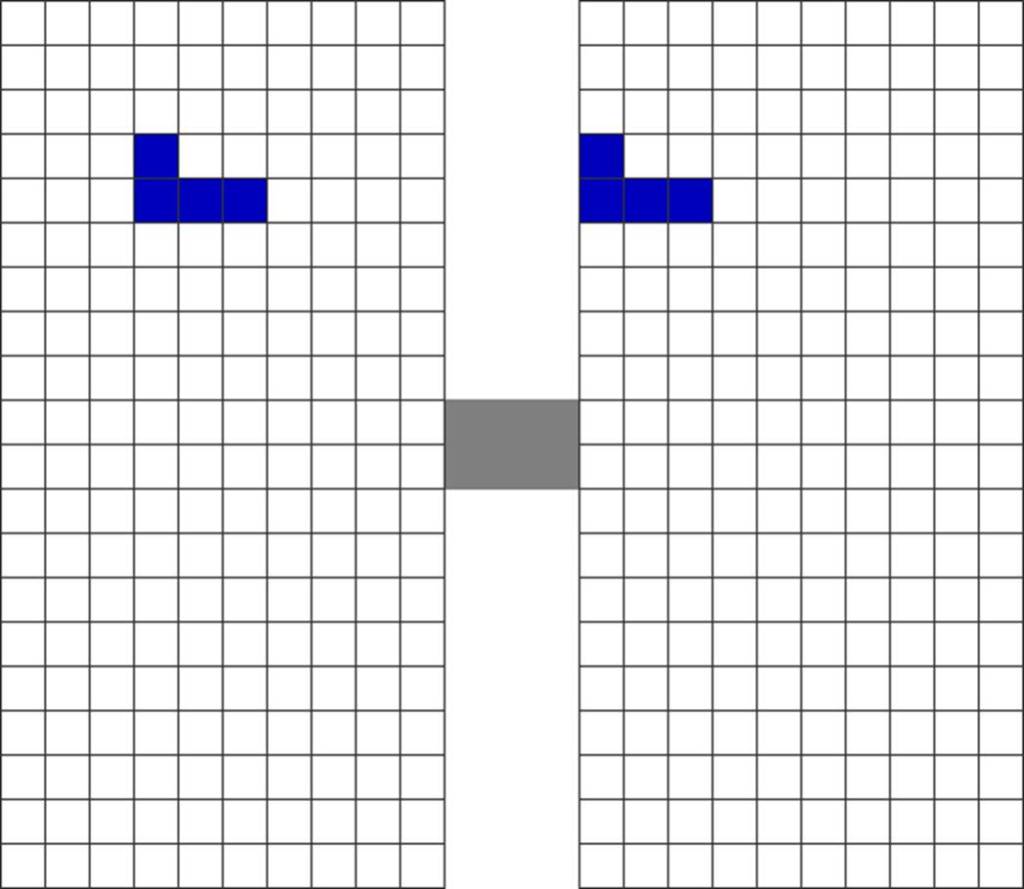
| The J piece spawns (appears). | The player holds down “move left,” causing the J piece to zap to the left. |
| 3 |
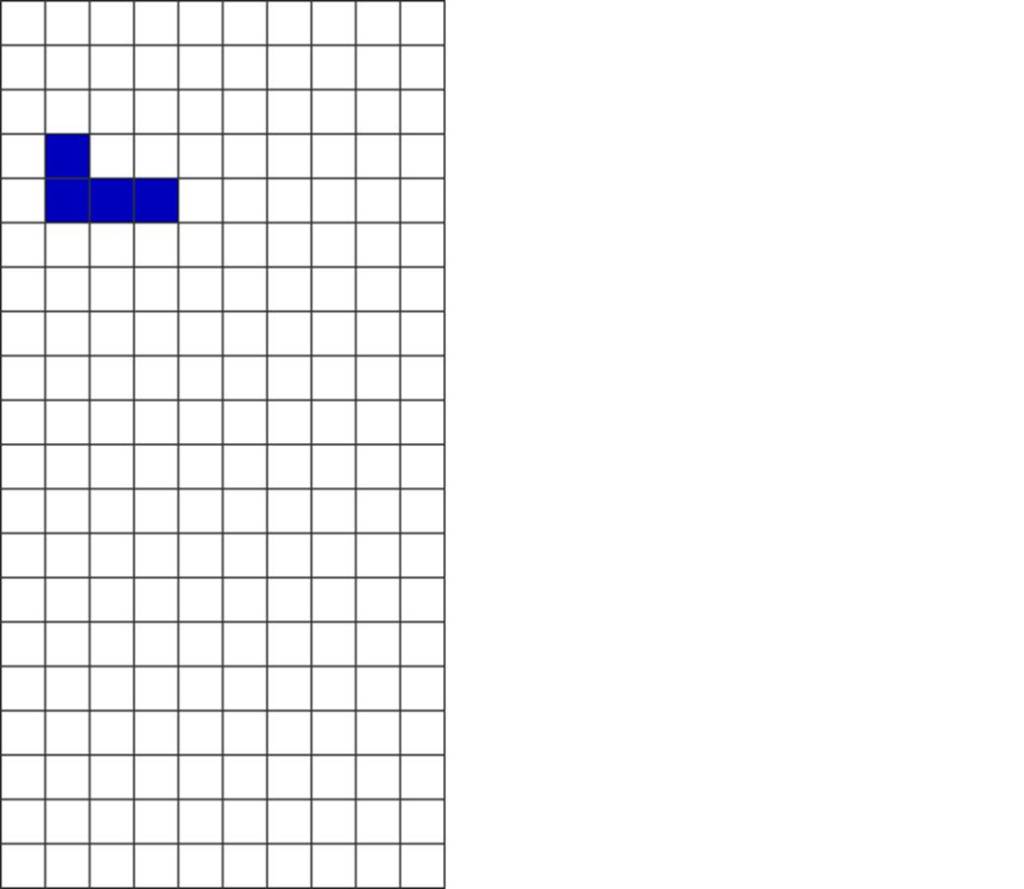
| The player presses “move right.” The J piece then taps 1 block to the right of the left wall. |
Once you have gained independence and security, you aspire to control and dominate, mastering the game.
The following shows the concept of field harmony, one of the most crucial Tetris fundamentals. It just means how well pieces combine into favorable, less jagged, and flatter forms for easier survival and more stacking consistency:
| Diagram Set 30-2 | |
| A | B |
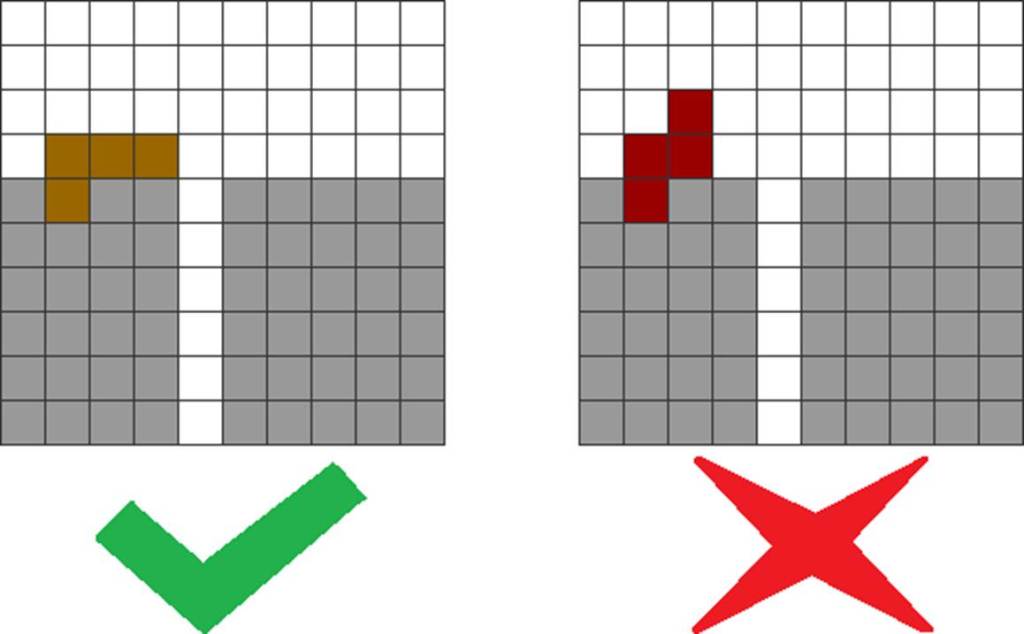
| This is a field-harmonized pattern, as the L placement flattens the field. | This is not field-harmonized, as the Z placement makes the field jagged. |
Excellent players who master this can create field-harmonized shapes, which are flatter and more stable. These indirectly improve all aspects of Tetris.
It makes digging down, stacking, T-spins, survival, and defenses smoother.
Players at this level subscribe to tested ways of playing, rarely venturing out of the orthodox.
But when one has matured and is old, one plays the game in one’s own way, without becoming attached to the outcomes.
The mature player takes pride in playing Tetris in one’s own way, such as the following.
As a reminder, a Fractal setup is simply two stacked T-spins, as explained in The Law of Oneness chapter:
| Diagram Set 30-3 | |
| A | B |
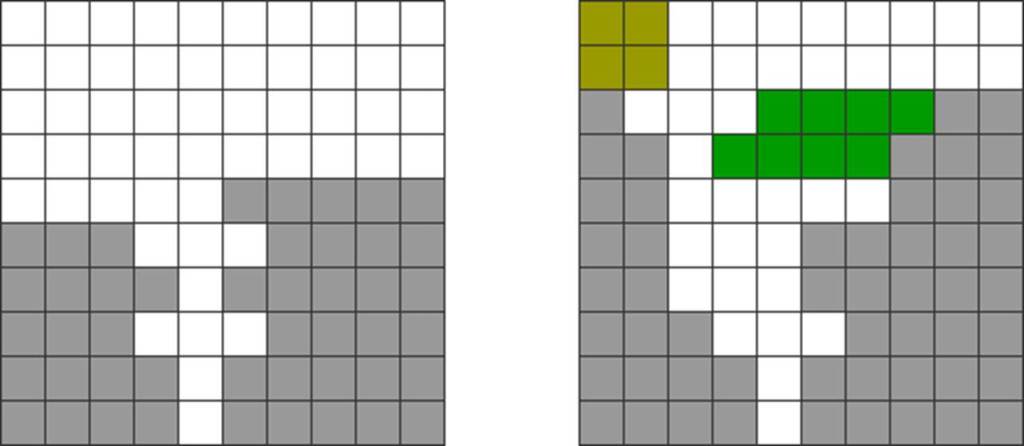
| This is a simple, compact, and efficient Fractal setup. Hence, one should typically use it. | This is a loosely packed T-spin setup with a second floating T-spin suspended over the bottom T-spin. This can be dangerous. |
A is what many high-level younger Tetris players strive for. However, those who have experienced the full breadth of Tetris no longer care about tradition.
They break the rules, playing Tetris in their own way by making complex, fancy setups like B if it makes them happy.
When one retires from the game, one uses one’s experiences to reflect on life and pass on one’s teachings to others.
The cycle is complete, and one surrenders to the natural flow and rhythm of the cosmos.
In the end, Tetris is not a puzzle to be studied. It is a game to be played and experienced.
Once you outgrow it, you can detach yourself from Tetris.
It is also true of life. Sometimes, people take life way too seriously. They over-identify with Maya and forget our unitary, timeless roots. Then they become attached to outcomes and get angry about them.
However, like Tetris, life is a game and should not be taken too seriously. When you take it too seriously and mainly aim for external achievements, the latter becomes a proxy for life itself.
However, achievements and material possessions are not life itself. They are distractions.
Avid video gamers often realize that games are just games. They can immerse themselves fully in the experience while still recognizing that the game is not their identity or their life.
This is like letting go of your ego in a state of flow while doing something you enjoy.
That is genuine enjoyment: being fully present without becoming attached to the experience.
Only when you surrender to the cosmos can you become the Tao.
Personal Applications
Being Over Becoming
In life, you can only flow with experience, surrendering to its currents. To pause and analyze life is to stop the natural flow.
To become life, you must surrender your ego and flow with life.
Be attached to as few things as possible. Do not identify with the pain that comes after an initial pain. Be the witness of the One gazing at the cosmos to experience and realize itself.
I invite you to immerse yourself in life, flow with it, and never resist it. Be life, instead of becoming life.
Only when you surrender yourself to the flow of existence can you fully manifest the One.
Does this sound too abstract? Here is a more relatable idea:
If you perform something and forget yourself entirely, like playing a musical instrument without dividing your attention (like worrying about other matters or whether people like it), then you are manifesting being over becoming.
But when you play the instrument just to rush your music class, it is the opposite.
That is my last lesson.
Social and Global Applications
Civilization Development Cannot Be Rushed
It might be tempting for one to wish that humanity’s development could be rushed.
It is that we may aspire and advance to some utopia, where universal love empowers everything, and where there is equality, prosperity, and understanding.
I once held this view as well, believing humanity could be shepherded into such a state.
I believe that many people share this view, which I once held. Perhaps many readers who are social activists may think this way.
However, I do not feel any need to rush humanity’s advancement. Nor is there a pressing urgency to do so.
I illustrate this with an analogy.
As a novelist, I wrote the upcoming spiritual and philosophical novel The Tao of Tetris: A Novel. Right now, I am still looking for a publisher, but I might end up self-publishing it instead.[3]
In the book, I purposely gave its main protagonist, Ling-Tao, many losses and setbacks. The goal of these tribulations is to provide the external circumstances to evoke the realization that she has reached a limit.
This then propels her towards deep reflection, expanding her worldview, and assimilating new skills to break out of her prior limitations.
If these character development chapters were left out, the resolution, where she uses her newfound spiritual awareness to resolve the main villain (no spoilers!), would be too sudden.
In creative writing, character-driven novels need enough precedent before their final resolution.
The same can be said of humanity: it is currently in its darkest moment, choosing between many polar opposites.
Let us have a brief thought experiment: what if an advanced alien civilization suddenly arrives and imposes a utopian ideal on Earth?
Then its citizens may have many loose ends that were neither fully concluded nor even started.
Our civilization would not have been given the opportunity to sort out its many dire situations on its own.
Likewise, at the individual level, souls here might miss opportunities to cultivate spiritual growth because of hardships such as poverty, trauma, grief, or loss.
What you will have is a farce: a civilization glimmering with technological marvels, yet with only immature minds that have not fully internalized their answers and wisdom to many unresolved issues, such as overcoming inequality, warfare, or poverty.
Many of these problems cannot be rushed. Rushing them before their natural culmination would force a premature resolution.
However, the great perk is that humanity is undergoing a planned metamorphosis, one that requires it to go through this chaotic age of heightened polarization to refine its free will.
It is a perfectly conceived plan, in which any change would disturb its slow yet eventual emergence and blossoming.
Perhaps it is true to some extent that everything is perfect as it is.
[1] Eckhart Tolle, The Power of Now (1997); see also A New Earth (2005), in which Tolle distinguishes between the observing I-am presence and the thoughts, emotions, and the world it witnesses.
[2] Susan Cook-Greuter, “Postautonomous Ego Development” (1999). At the highest stages of ego development, the self recognizes the ego as a constructed fiction rather than an absolute identity.
[3] It is not to be confused with this book, which likewise shares the same name (because it is too good and relevant for a name!). I will likely change the novel’s name as well to avoid confusion.

