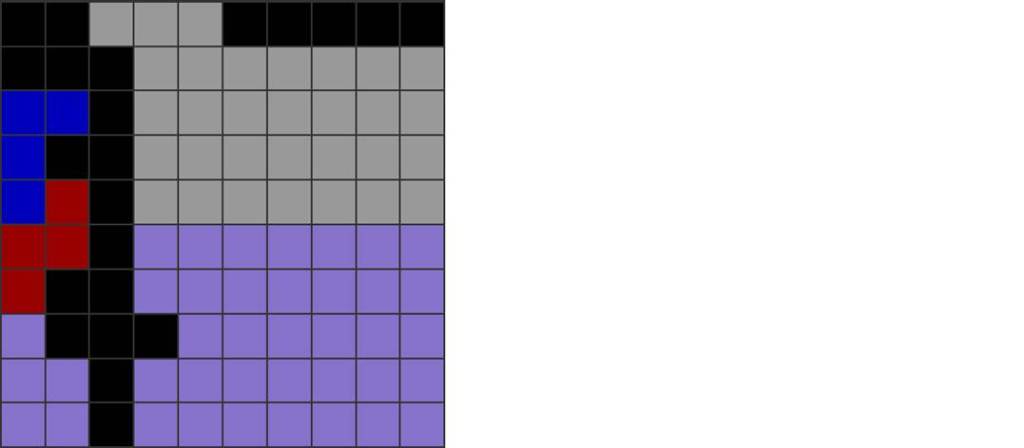
The first few seconds may render in low quality. Please give them a few seconds to render.
The Basics
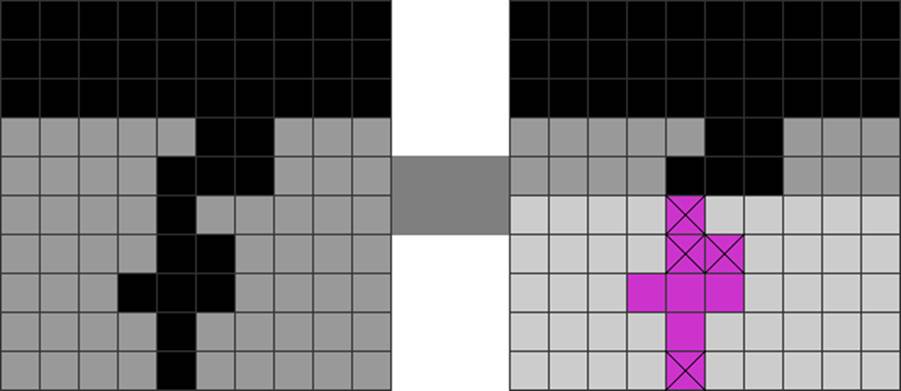
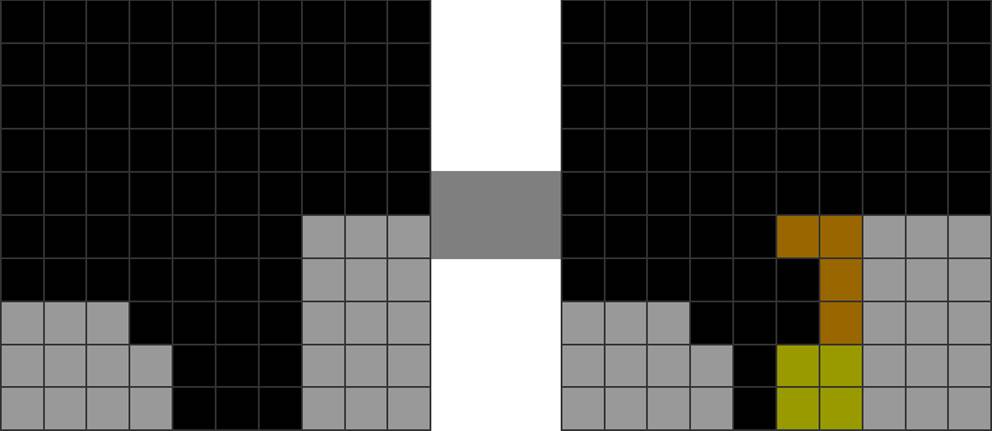
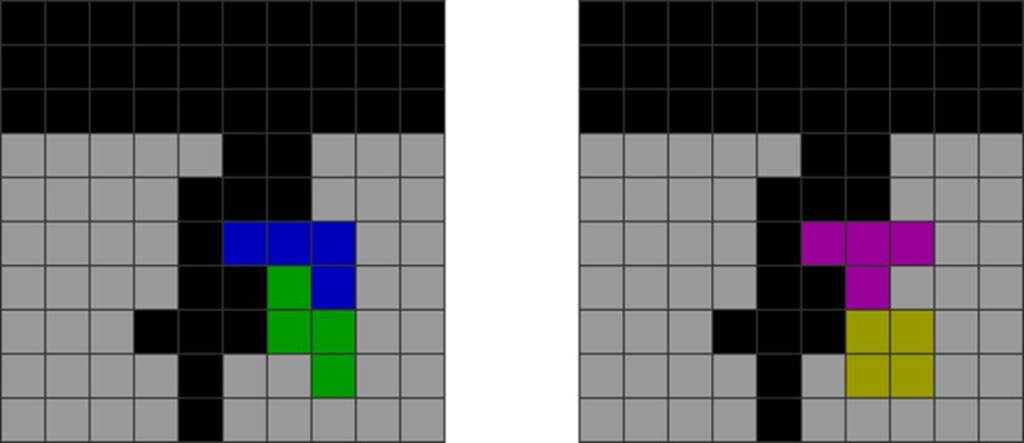
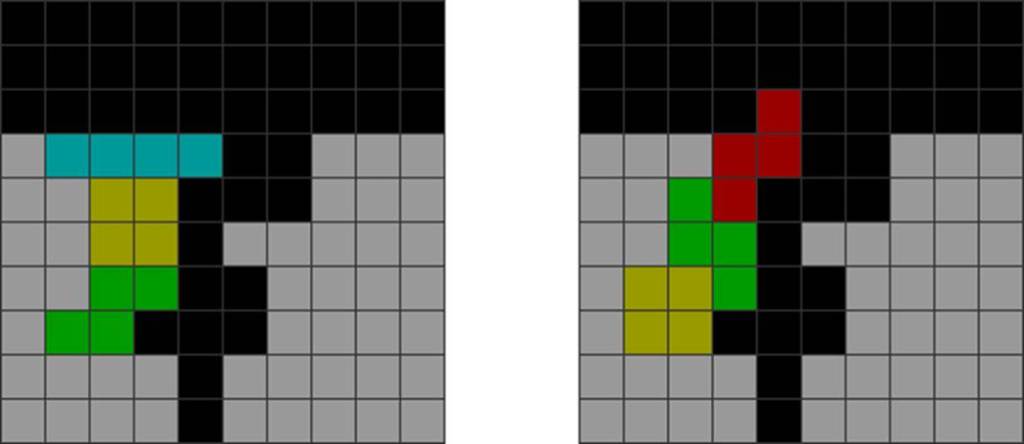
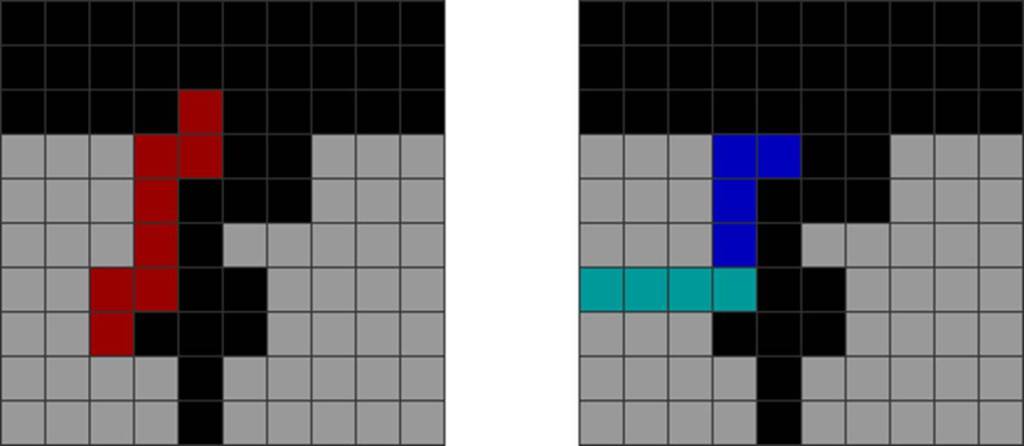
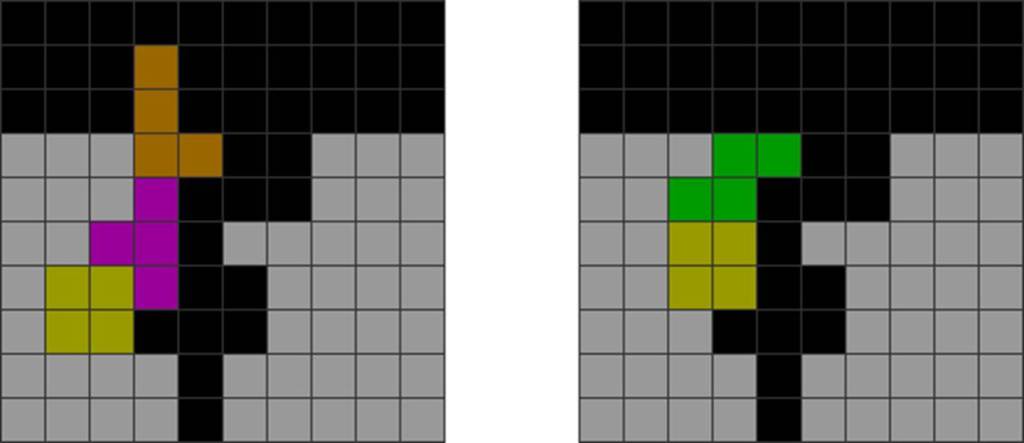
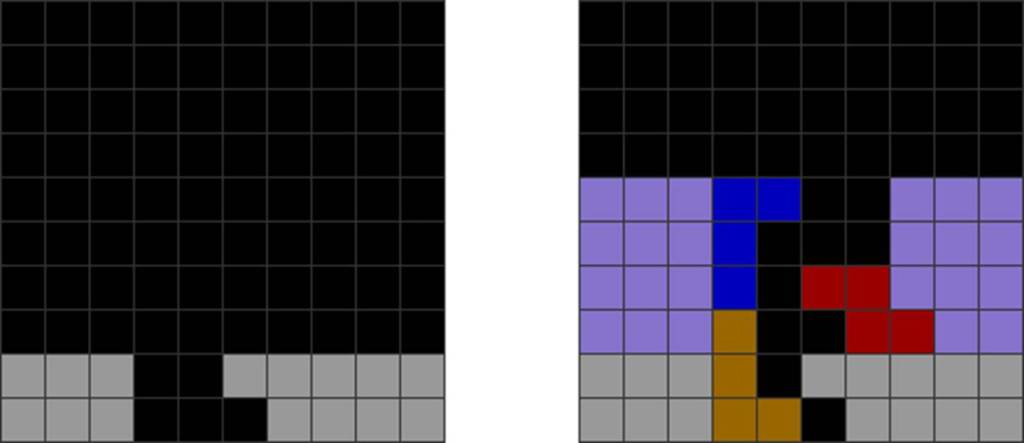
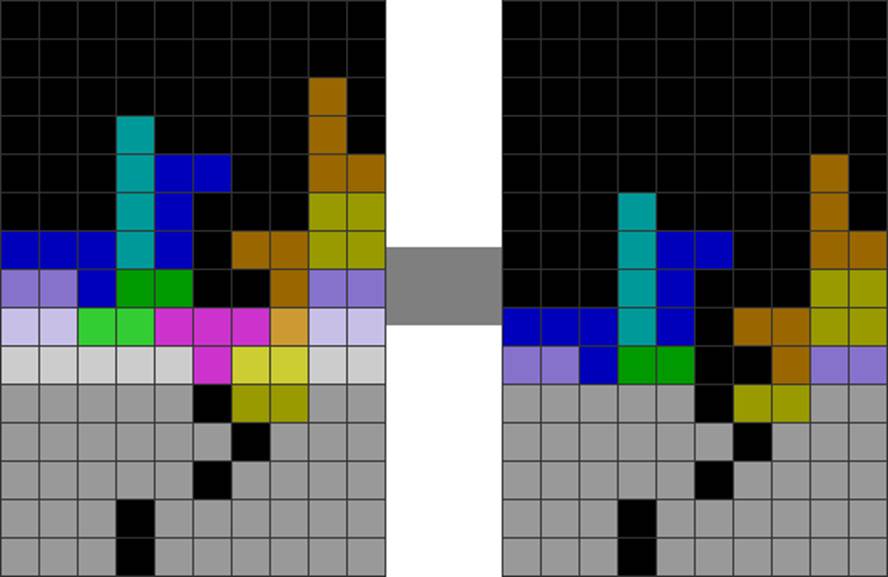
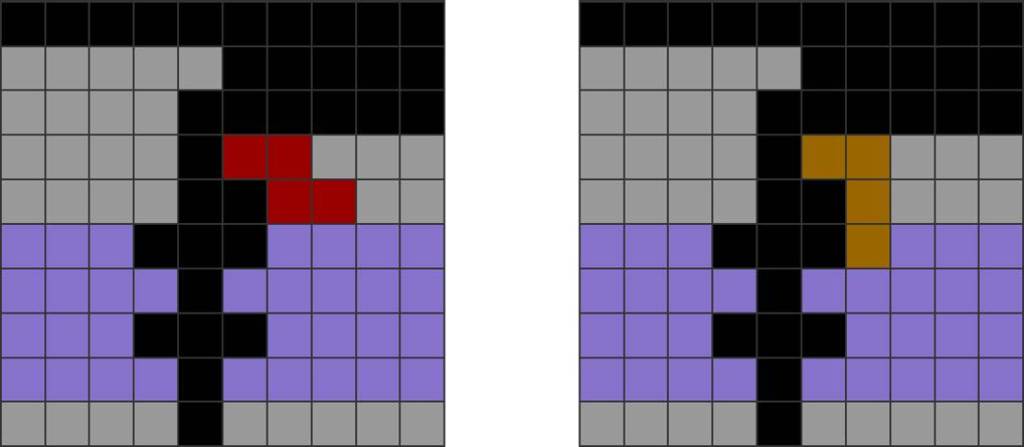
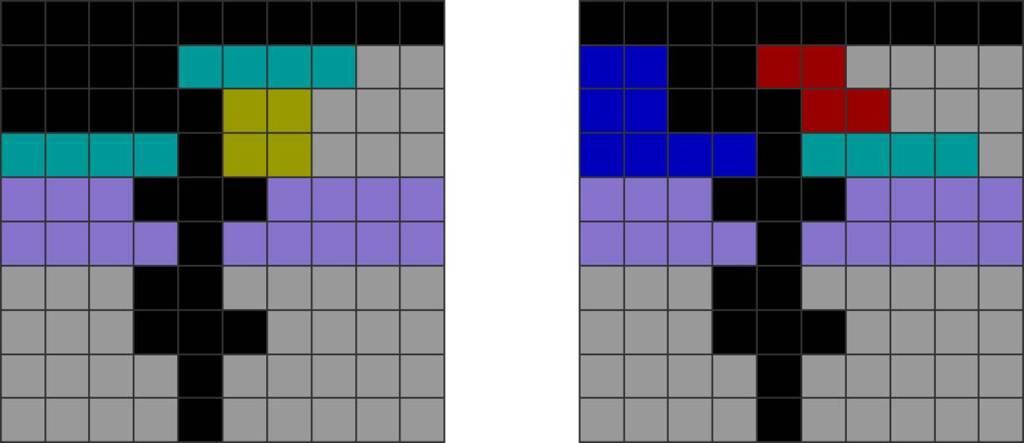
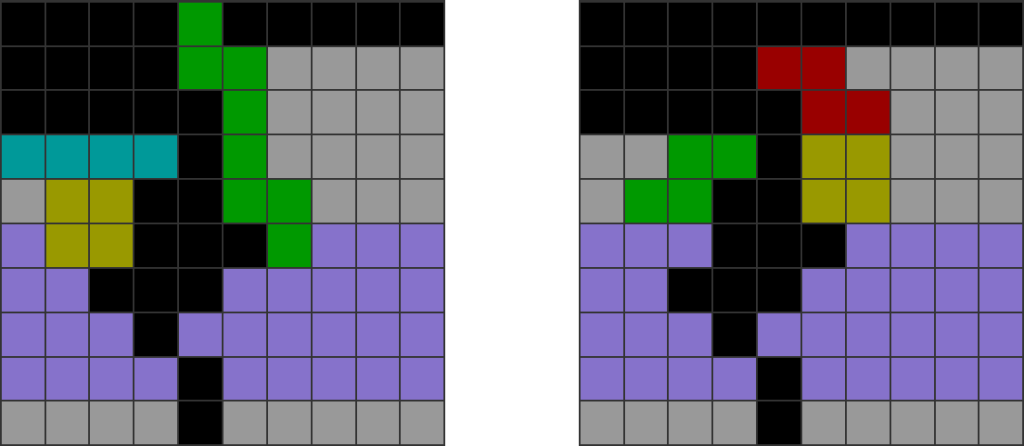
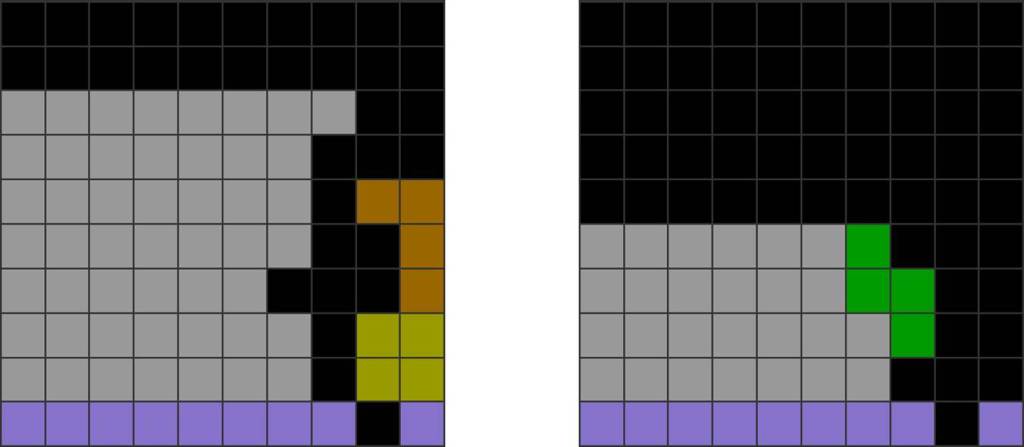
DT Cannon, or Double-Triple Cannon, is a T-spin double to T-spin triple method.
Diagram Set 5-1
1
2
DT Cannon leads to 2 T-spins, as shown in the uncrossed purple boxes (the T-spin double) and the crossed purple boxes (the subsequent T-spin triple).
It produces the same garbage output as a C-spin (another similar setup covered later in this book), but it is more dangerous and less clean.
However, when used wisely, it opens up many mid-game opportunities that boost one’s damage output.
Not all DT Cannons are created equally. Some are more unclean than others and could be mostly avoided:
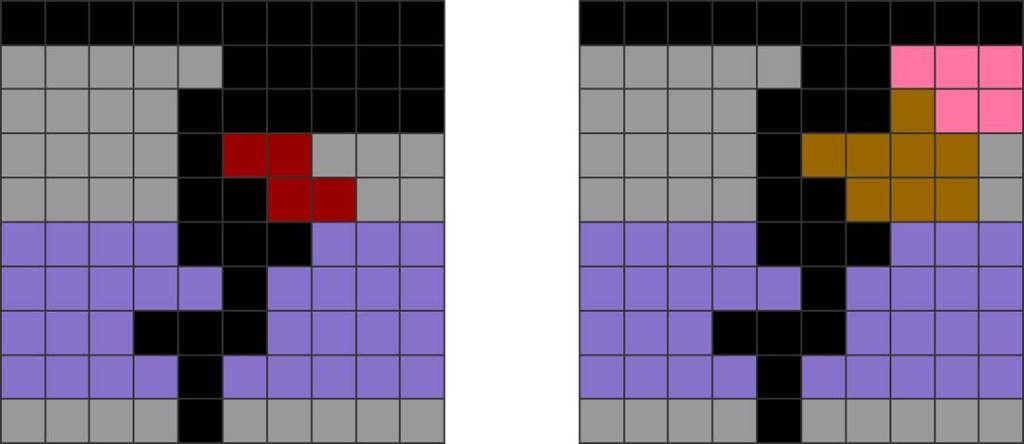
Diagram Set 5-2
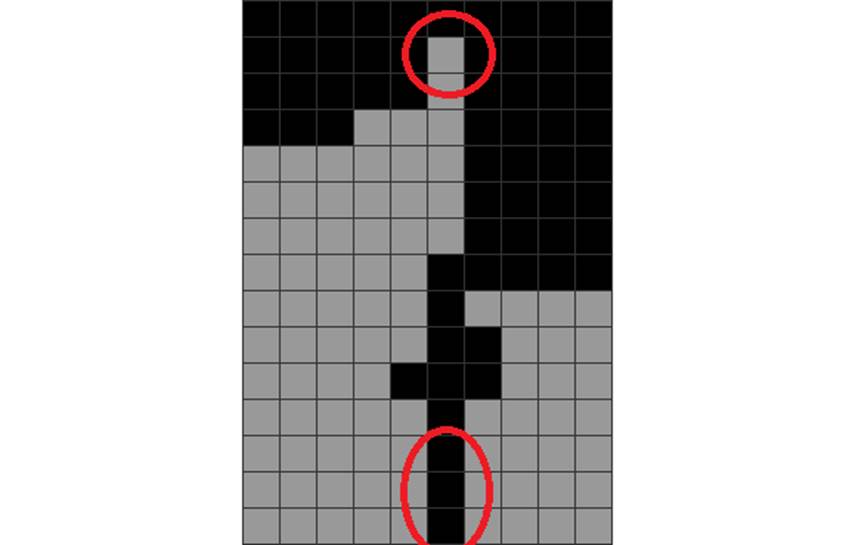
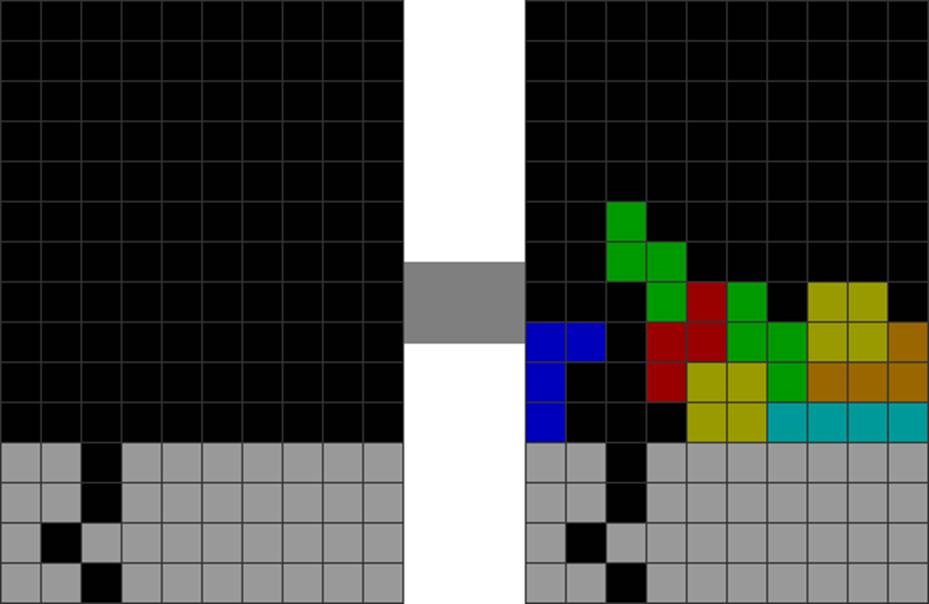
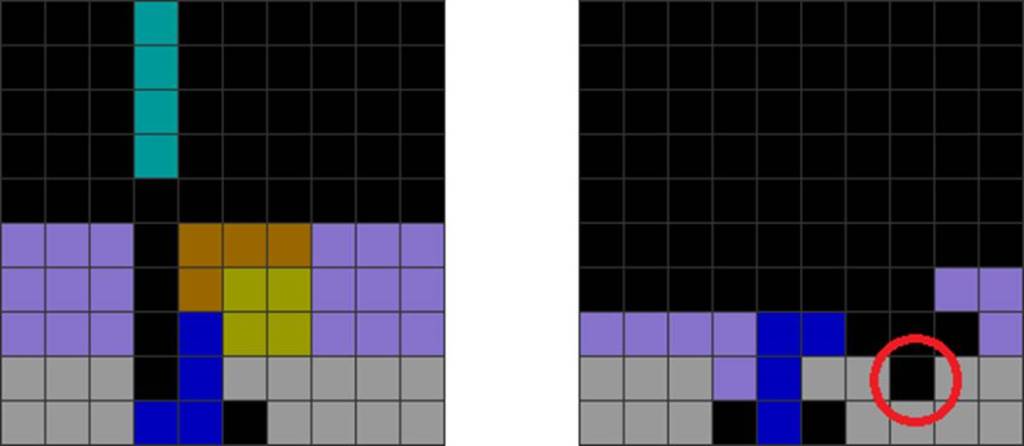
This example shows an unclean DT Cannon. After both its T-spins conclude, the top red-circled overhang will upstack over the red-circled garbage hole below.
I recommend avoiding such unclean DT Cannons. However, I would sometimes make them as the burst damage is worthwhile.
Exotic (Neo) Overhangs
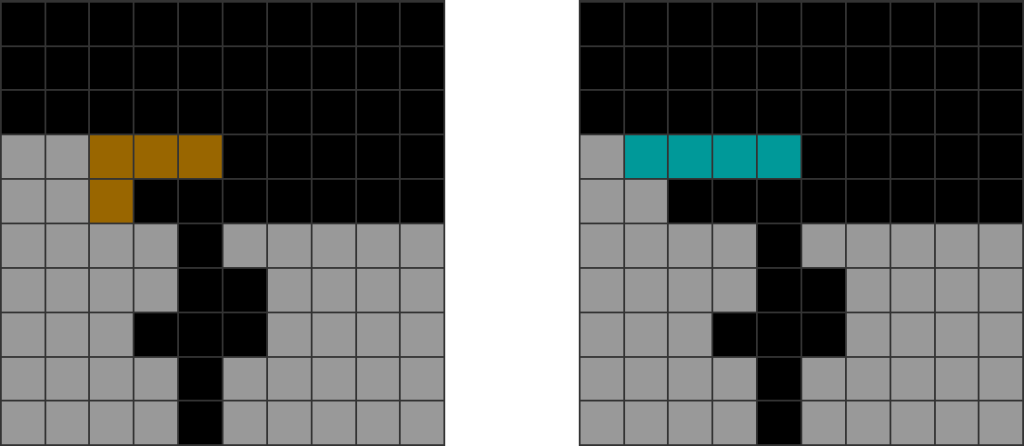
DT Cannon overhangs can also be exotic (unconventional). These are often called Neo forms:
Diagram Set 5-3
A
B
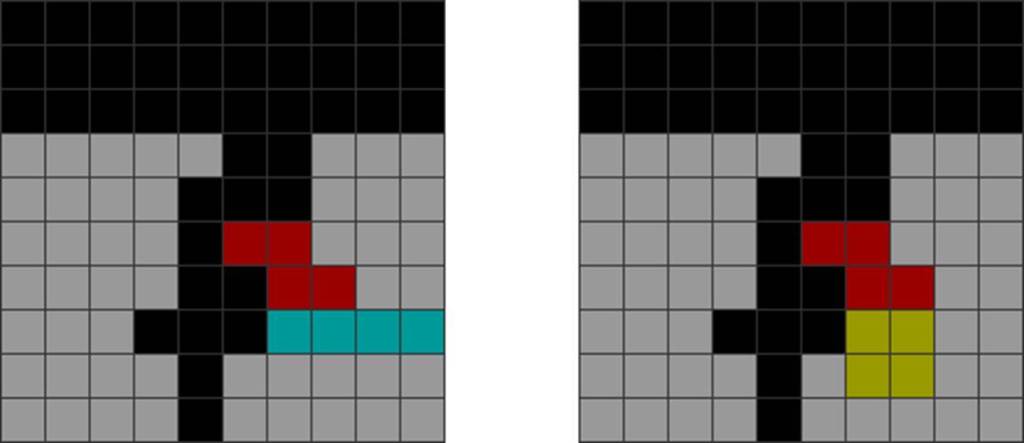
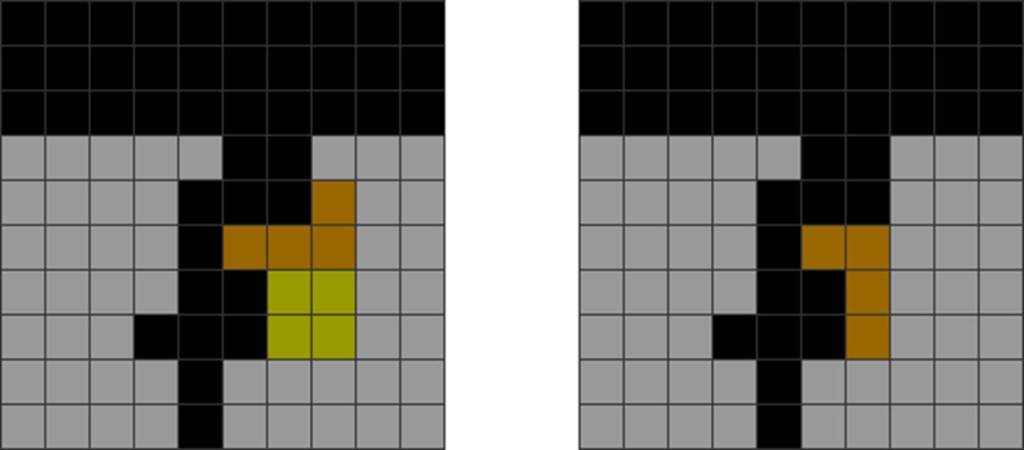
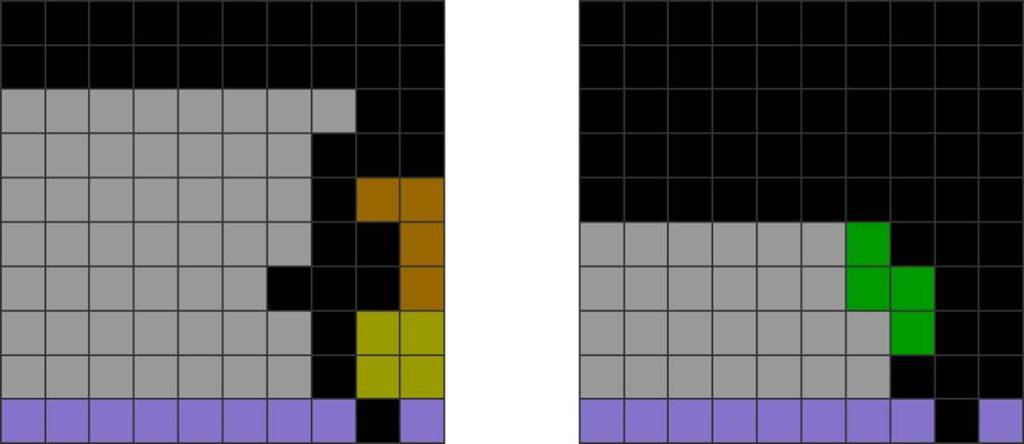
Occasionally, you might be forced to make unusual Neo overhangs like these.
Memorizing them opens up more options that might not otherwise be possible.
Common Mid-Game Chances
Here are some common situations to use DT Cannons:
1. 9-0 Stacking Opportunity
This is the easiest, brain-dead, mid-game 9-0 stacking chance to make a DT Cannon:
Diagram Set 5-4
1
2
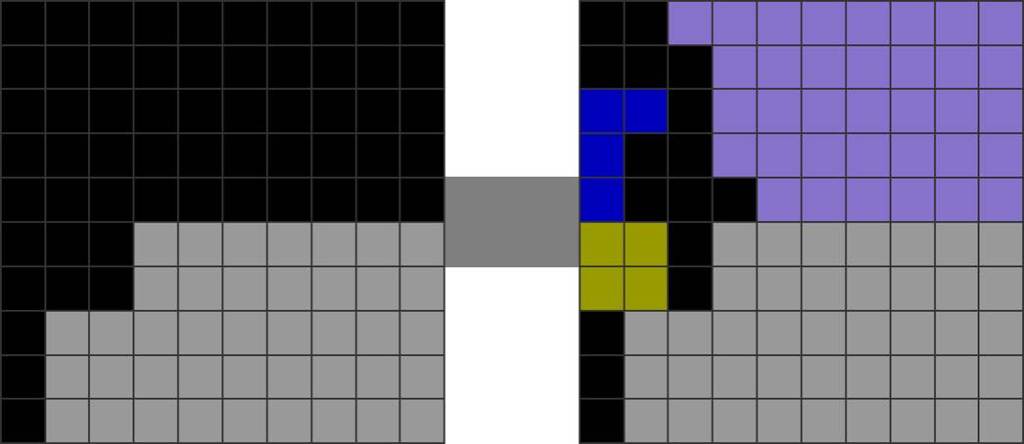
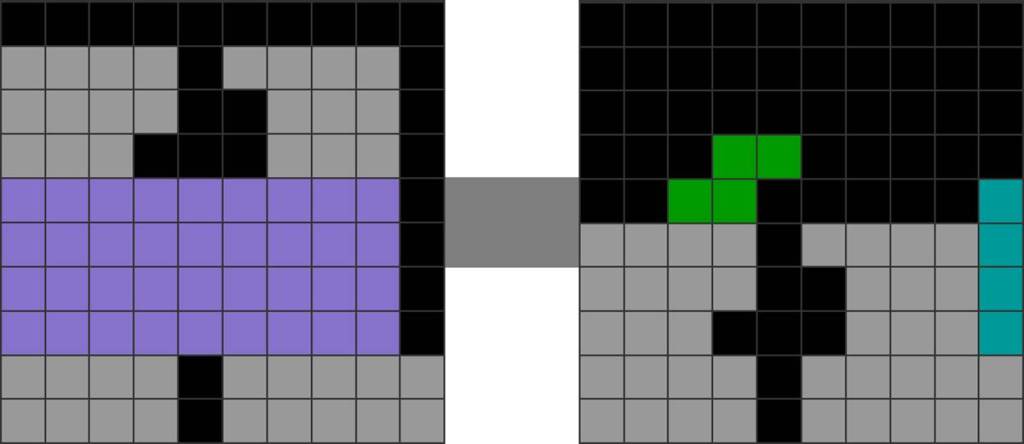
Spot this common mid-game pattern during 9-0 stacking.
Put O and J over it. Then upstack the lavender side to make a DT Cannon.
Doing so is safe and potent. This is the most common way to create a mid-game DT Cannon, per my experience.
2. Most Common Base: OL/OJ Combo
This is the second-most common mid-game DT Cannon construction chance:
Diagram Set 5-5
1
2
Spot a mid-game DT Cannon chance.
Putting L and O (J and O if mirrored) this way is the most common pattern for the base.
You can then fill up step 2’s left side and make the DT Cannon overhang.
In a similar vein, you can also construct it out of this common garbage situation like this:
Diagram Set 5-6
1
2
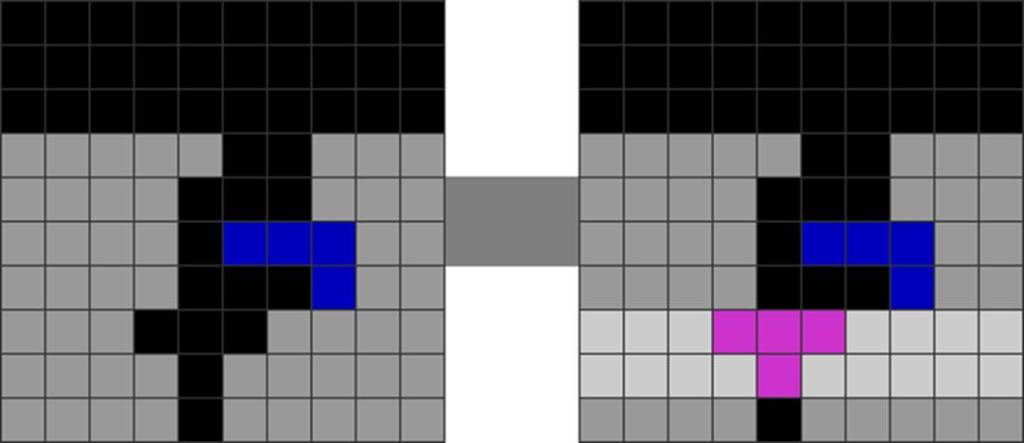
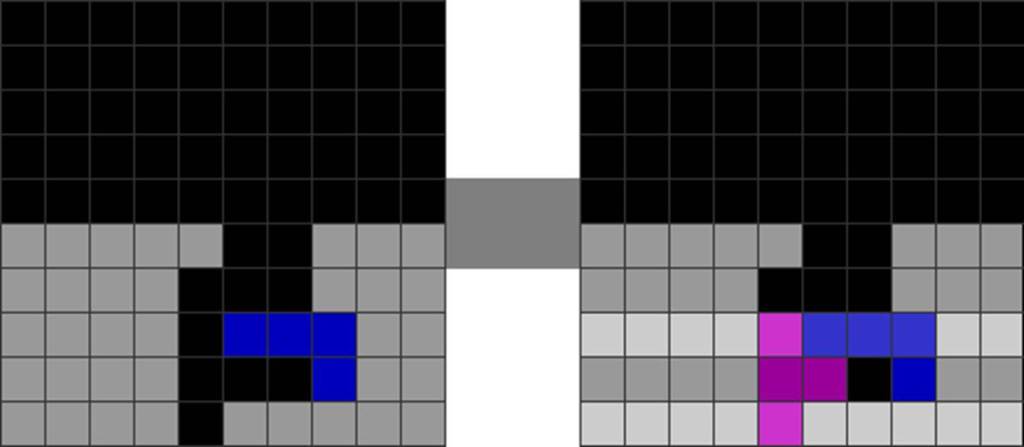
You get this common mid-game pattern. The gray blocks are garbage.
Put the J on the left side and make the overhang on the right to get a DT Cannon augmented with an extra third T-spin double inside.
This is the most common way to construct a DT Cannon from a 2-block-tall garbage line using garbage patterns.
3. General Ways
Here is how to construct parts of the DT Cannon. These suggestions are not exhaustive:
Constructing the “Bottom” Side
Here are common, memorizable permutations to form the “bottom” part of the DT Cannon (right side here):
Diagram Set 5-7
A
B
C
D
E
F
Here are ways to construct the bottom or base of the DT Cannon.
Constructing the “Tall” Side
Here are common, memorizable permutations to form the “tall” part of the DT Cannon (left side here):
Diagram Set 5-8
A
B
C
D
E
F
Here are ways to construct the overhangs of the DT Cannon.
Continuations and Follow-Ups
3 methods to follow up DT Cannons are C-spin, Anchor Set, and Shachiku Train, which I briefly show here. More details are in Book 3.
1. 3 Common Follow-Ups
These are the most direct and common ways to follow up on DT Cannons:
Diagram Set 5-9
1
Alt. A
This is the aftermath pattern following the DT Cannon’s T-spin triple and T-spin double.
You can construct a C-spin afterward.
Alt. B
Alt. C
You can also use the Anchor Set method to follow up with a clean back-to-back Tetris.
Last, you can use Shachiku Train to make a T-spin double. We assume an extra hole in the red circle.
Alt. A’s C-spin follow-up is the most common and easiest way to follow up on DT Cannons mid-game.
Alt. B and C are great as they do not invoke any extra soft drops to sustain back-to-backs. However, they are difficult and less consistent to create mid-game, and I typically give them up.
2. Upgrading Your DT Cannons
Incorporating a C-spin inside a DT Cannon is the cleanest way to resolve its T-spin triple overhang issue. This setup is called Whirlpool, an augmented DT Cannon.
The last T-spin becomes a T-spin double, which is clean, as opposed to a standard DT Cannon’s final T-spin being a triple.
While I will cover C-spin later, a C-spin is a T-spin triple to a T-spin double setup.
Diagram Set 5-10
A
B
Creating this is very easy. Spot the lavender mid-game pattern, and put O and L like this.
If you can spot this mid-game situation, you can make A’s setup.
When you are familiar with the method, you can perform it in the mid-lane:
Diagram Set 5-11
1
2
You get this cavity.
The player upgrades the cavity in step 1 by putting an O in it, creating a DT Cannon Whirlpool variant.
3
4
The first T-spin double concludes.
This leads to a C-spin.
The last T-spin is a T-spin double instead of a T-spin triple. It thus leaves no dirty overhangs and is clean.
Advanced
Here are more advanced DT Cannon methods.
1. Partial DT Cannons
DT Cannons can be partial, such as:
Diagram Set 5-12
1
2
Please observe the J placement. There is a hole directly under it. Thus, this DT Cannon is partial.
The first T-spin double concludes.
3
4
You get an incomplete T-spin triple shape.
This leads to a T-spin double instead of a triple.
Partial DT Cannons are best used as a last resort to rush out emergency T-spins because of the shape they leave behind, which makes it difficult to follow up cleanly.
2. Prophecy DT Cannons
Occasionally, you can make prophecy DT Cannons:
Diagram Set 5-13
1
2
Once the lavender part clears with a Tetris line clear, you get a DT Cannon.
This is an expert method and requires considerable foresight before attempting it.
3. Advanced Spliced DT Cannons
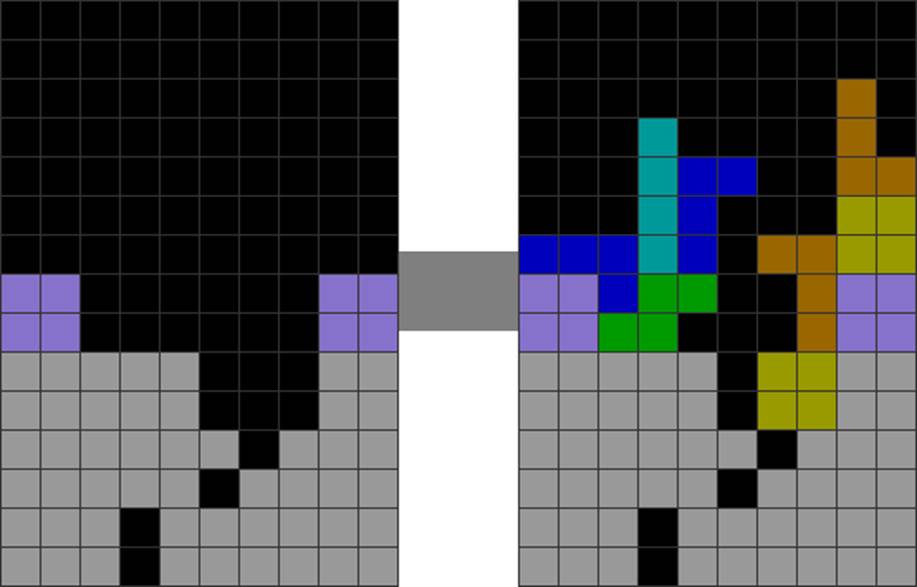
DT Cannons can be spliced. This means you can insert more T-spins inside one.
I have covered this extensively in Book 3. However, in this introductory book on popular canonical methods, I will cover them only briefly below.
Magellan
Magellan is a T-spin double to DT Cannon setup:
Diagram Set 5-14
A
B
Spot a Fractal’s base. Instead of completing a normal Fractal, upstack the top with the above-suggested pieces to make this T-spin double to a DT Cannon setup.
Sombrero
Sombrero is a T-spin double to the DT Cannon setup:
Diagram Set 5-15
A
B
Insert the lavender lines into this setup. Then, upstack with the above-suggested pieces to make this T-spin double to DT Cannon setup.
Milky Way
Milky Way is a T-spin double to DT Cannon setup. It is extremely tricky to create one:
Diagram Set 5-16
A
B
This is tricky. Observe a Cut-Copy base (the lavender parts), then upstack with the suggested pieces to make this T-spin double to a DT Cannon setup.
Whirlpool
Whirlpool is a T-spin double to the DT Cannon setup, as briefly covered earlier. It is essentially an augmented C-spin.
Diagram Set 5-17
A
B
Creating this is very easy. Spot the lavender mid-game pattern, and put O and L like this.
If you can spot this mid-game situation, you can make A’s Whirlpool.
Cartwheel
Cartwheel is a T-spin triple to DT Cannon setup. Kazu sometimes uses this:
Diagram Set 5-18
A
You can insert T-spin triples inside DT Cannons. The above are suggested easy upgrades using Z and J pieces (S and L if mirrored). Be creative and experiment!
Andromeda
Andromeda is a T-spin double to the DT Cannon setup. Good luck carrying this out: it is extremely difficult to spot!
Diagram Set 5-19
A
B
Spotting this is extremely difficult. Spot a Cut-Copy variant 2 (in lavender) and upstack using the suggested placements to make this T-spin double to the DT Cannon setup.
This list of spliced DT Cannons is not exhaustive. Book 3 covers more.
In a Nutshell
DT Cannons are highly powerful mid-game methods. However, they are not as safe as STSDs. Regardless, they are practical mid-game.
Pros and Cons
Pros
Good burst damage.
It is very efficient if formed out of 2-block-high garbage.
DT Cannon can also be followed up with a C-spin if the top is stacked flat.
Many situations allow you to set it up.
Cons
The method’s T-spin triple overhang shifts the garbage hole and blocks it.