“To every action there is an equal and opposite reaction.”
— Isaac Newton
Introduction
Why the One Became Many
The One that is completely unitary cannot know itself because there is no ‘other’ or ‘not-this’ to compare itself to.
Therefore, to understand itself and find another to love and cherish, the formless One fragments itself into the many.[1]
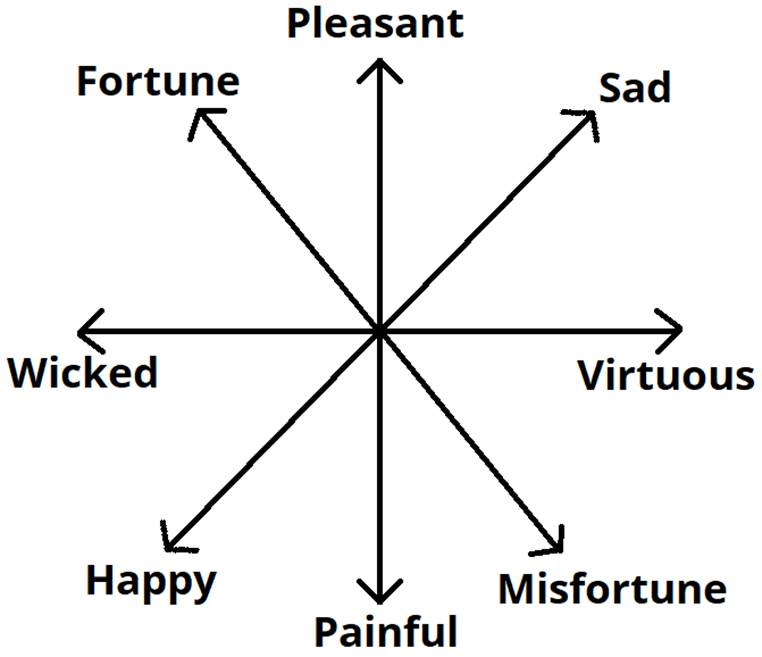
| Polarization lets us choose between the two poles, making free will and diversity possible. |
The One that becomes many creates the veil of multiplicity, which becomes the basis for polarity.
In many concrete and specific forms, the One can then polarize its original oneness into various opposites.
These include self and non-self, pain and pleasure, love and hatred, good and evil, light and darkness, being and non-being, fear and courage, sadness and joy, lack and fulfillment, and many more.
Because in doing so, the One can fragment itself into infinite souls, each being able to choose between the polarities and, from them, learn and grow.
Without polarity, a person can be both themselves and not themselves at once. They can take on contradictory states like being ultra-rich and ultra-poor.
This prevents free will and choices. By introducing polarity, the One can explore each distinct path.
Only then can the One become complete and know itself.
The Purpose of Polarity
All polarities on the physical planes are illusions. When all soul fragments unite, there is only the One that experiences all opposites, such as the yin and the yang.
However, this veil of polarity is necessary for free will and soul evolution. Without it, the soul may not choose, and the soul may not grow from an individual perspective and ignorance.
For instance, a soul who does not experience suffering or pain will not appreciate the value of joy.
A soul that was born “evil,” but conquered its vicious nature through decades of meditation and discipline, understands “good” better than one simply born “good.”
As a result, souls experiencing polar opposite experiences are simply the One exploring different parts of itself.
They are to be cherished, rich and poor, old and young, capable or incapable.
Tetris as an Analogy
Tetris is a finite game that is full of multiplicity and polarity.
Before you start a Tetris game, all forms belonged to an undivided digital plane called the absolute, governed by 0s and 1s.
There were no tetrominoes, no garbage lines, no opponents, and no specific Tetris versions.
There was only an undivided oneness with no winning or losing, no progress or stagnation, no pleasure or pain, no fear or courage, no knowledge or ignorance, and many more.
However, a divine spark arose, and the One became many. From a single, formless and shapeless realm were birthed the seven tetrominoes:
| Diagram Set 5-1 |

| The above shows the I (cyan piece), L (orange piece), J (blue piece), S (green piece), Z (red piece), O (yellow piece), and T (purple piece) pieces. |
These pieces can combine to form many setups. From the parts, the whole emerges, giving rise to both positive and negative events.
Here is a demonstration of polarity, seen through Tetris.
In Tetris, you almost always want wonderful situations like these:
| Diagram Set 5-2 | |
| 1 | 2 |
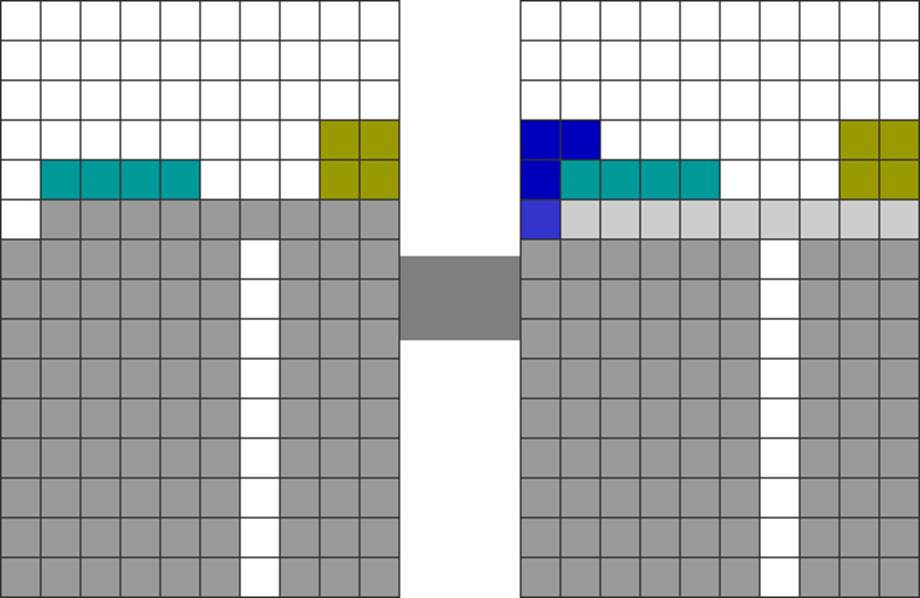
| A huge column of super-clean garbage sits in column 7. This means the entire column is connected in a single line. | To access it, the player makes just one simple skim with the J piece. This clears 1 line. |
| 3 | 4 |
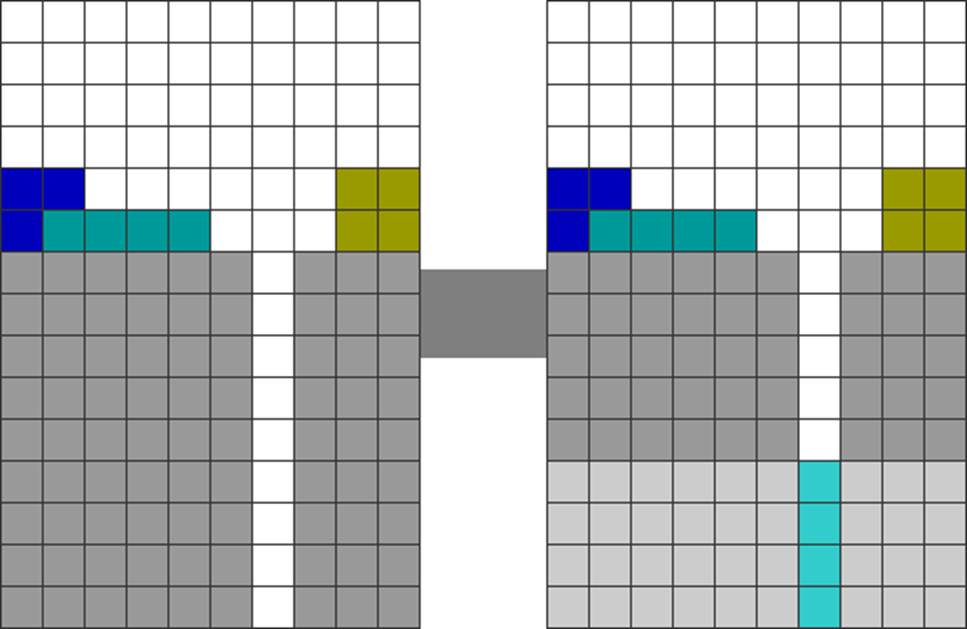
| The clean garbage row is exposed! | The player inserts an I piece into it, scoring a Tetris. |
The above situation is awesome, as you can use the clean garbage as fuel to attack your opponent.
When you insert I pieces into them, you score Tetrises, lowering your stack and sending a massive attack to your foes!
However, you can conversely get very bad situations like the one below, where you have very messy garbage formations:
| Diagram Set 5-3 | |
| 1 | 2 |
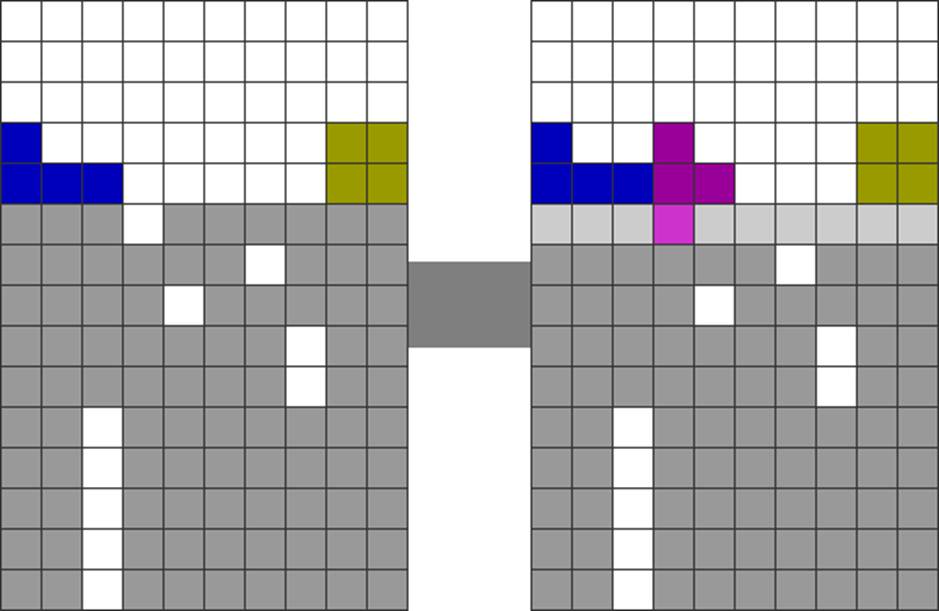
| The gray areas represent garbage. The holes mostly do not align into a single column and are, hence, dirty. | The player tries to dig down with a T piece, resulting in a single line clear. |
| 3 | 4 |
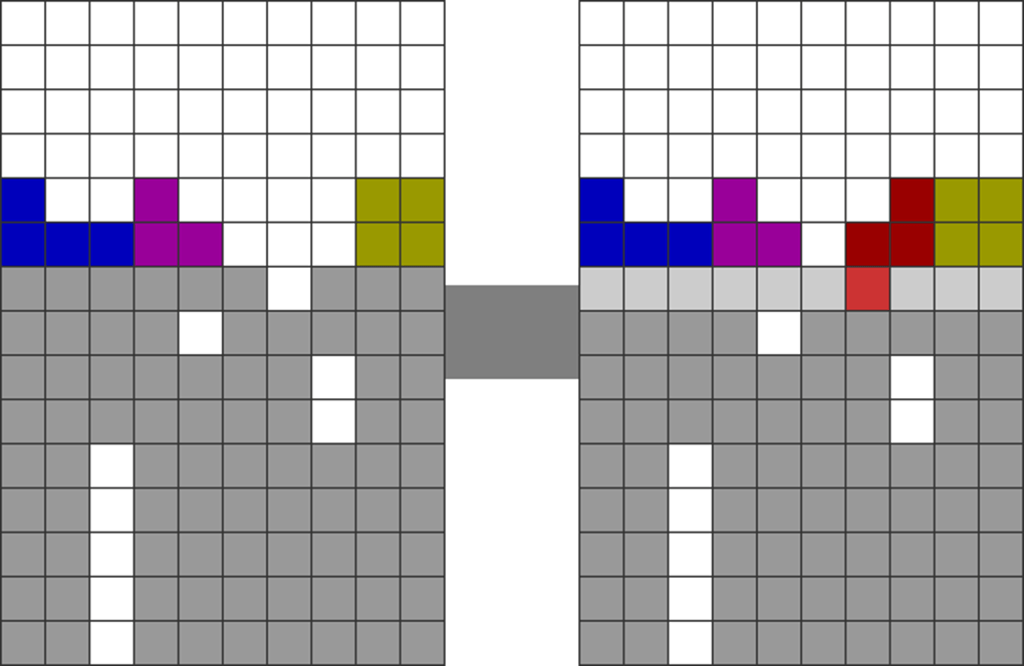
| He gets this potted, terrible shape. | He digs down again, using a Z piece. |
| 5 |

| The resulting field is still messy! There are no free, clean, vertical columns to insert I pieces into to score Tetrises. |
Hence, in Tetris, when there is “good,” there is “bad.” Good and bad are both sides of a coin. If you make a coin, you must necessarily have both sides.
This is perhaps most similar to how the Big Bang gave rise to the entire physical universe.
It was from a singularity — a point of infinite density and zero space — that the many arose.
The Big Bang may have created a pair of universes: one based on matter, running forward in time, and another based on antimatter, running backward in time. The overall net energy is, hence, zero.[2]
This is hence an effective example of polarization.
From it came the dozens of elementary particles that merged to form nebulae, planets, asteroids, stars, and entire galaxies.
And from them came amino acids, the building blocks of life, from which entire clades or species of creatures and plants emerged.
From it came humans, who can experience the inherent polarities of many kinds: joy and sadness, peace and anger, fear and courage, ignorance and wisdom, selfishness and altruism, and many more.
This is the whole reason polarity exists: it is to provide the cosmos with opposing particulars so that it may experience them and, once again, integrate our experiences into the whole, to complete the cosmic cycle of spiritual evolution.
You may ask, if the all-that-there-is is already omniscient, why it would do this.
I suspect that the Tao wants to be whole by experiencing being and becoming.
Personal Applications
The Twin Halves of Yin and Yang
The cosmos can be viewed through the Taoist duality of yin and yang.
However, I present this in a far more encompassing and abstract manner than their traditional connotations.
For instance, yin may not always represent the feminine, nocturnal, or emotional aspect.
I am using yin and yang simply to show how the cosmos can be divided into halves, or even pluralized into many diametrically opposed categories that do not merely fall into a dichotomy.
It is often very simplistic and tempting to fall into the mere dogma that some facets are “good” or “bad.”
Many spiritual beliefs often champion certain tenets or concepts as desirable, such as love, beauty, joy, or truth.
This is not wrong, but the problem arises when these virtues are exalted to the absolute zenith of spiritual achievement.
Let me illustrate with a famous painting by Kazimir Malevich, a Suprematist painter, the Black Square:
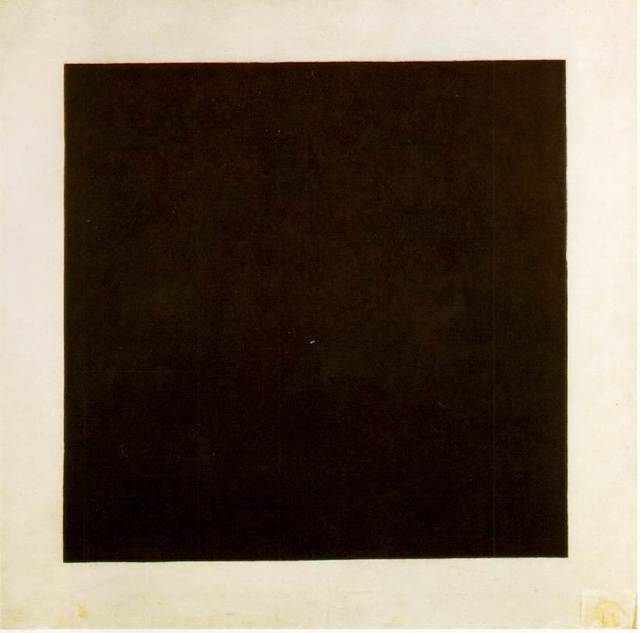
| Kazimir Malevich, Black Square, 1915. Oil on canvas. State Russian Museum, St. Petersburg. The photograph is in the public domain. |
There is no single right way to interpret this painting.
For me, the dark square represents certain negative or destructive societal structures. The white background contrasts with it, suggesting an opposing reality: one can escape the former’s darkness.
One can view the blackness as emptiness or nothingness. However, it is still something, a void; without it, the surrounding whiteness would not make sense.
Metaphorically, many dark events and tragedies in life can provide vital life lessons or the impetus that pushes us toward growth.
We are all familiar with the cultural trope of Peter Parker losing Uncle Ben, which compelled him to assume the heroic identity of Spider-Man.
Sometimes, a life entirely replete with perfection, such as absolute love, would have no chance of making choices that lean towards such.
The earth is a roiling pandemonium filled with wars and conflicts. This is not to invalidate the traumas of war victims, but if our civilization had known only peace, we would not have seminal works such as Leo Tolstoy’s War and Peace or Dostoevsky’s Crime and Punishment.
A candle, no matter how faint, is of infinite brightness when placed in utter darkness.
Both halves of any polarity are needed for the whole to be whole.
Choosing the Polarity
Once we have realized that the cosmos conspires to complete itself through the exploration of all dualities, life becomes far easier.
Every experience, be it positive or negative, is an integral part of a functioning whole.
From this panoramic, cosmic perspective, we need not over-identify with or over-attach to any pleasure or suffering.
We can simply detach, watching them rise and fall, and dissolve ourselves into the natural flow and rhythm of the cosmos.
Observe your neighbor who is experiencing the lows of his life, including financial woes, family problems, and health issues.
Is this person any less than your other neighbor, who has climbed the corporate ladder to reach the top and now owns dozens of properties?
One may also wonder why there is such a vast variation of people at varying stages of spiritual development.
Some younger souls are materialistic and competitive. To older souls, this may seem unpleasant, but their innovation and drive power technological growth.[3]
We may also wonder why some souls have many negative traits, such as arrogance, greed, or impatience.[4]
Their presence contrasts with their opposites: humility, temperance, and patience. Without this contrast, growth can be difficult.
Observing someone with traits opposite to yours provides contrast to reflect upon more easily.
A person learning to be humble can hence observe the consequences of someone else who is extremely arrogant, then choose to discard excessive pride.
From the perspective of the One, all these souls with opposing experiences are all necessary to complete itself.
Without either, life would be bland, dissolved into a homogeneous unity where no diversity or freedom would arise.
The Illusory and Temporary Nature of “Good” and “Bad”
When I play Tetris, I sometimes get spiked by a barrage of seven incoming garbage lines like this (from a real match):
| Diagram Set 5-4 | |
| 1 | 2 |

| The starting field. | I receive 7 lines of garbage. The field rises by 7 rows. |
This sounds like “bad” news, right? I am near the top, and a spike of twelve garbage lines could quickly end me.
However, I did the following:
| Diagram Set 5-5 | |
| 3 | 4 |
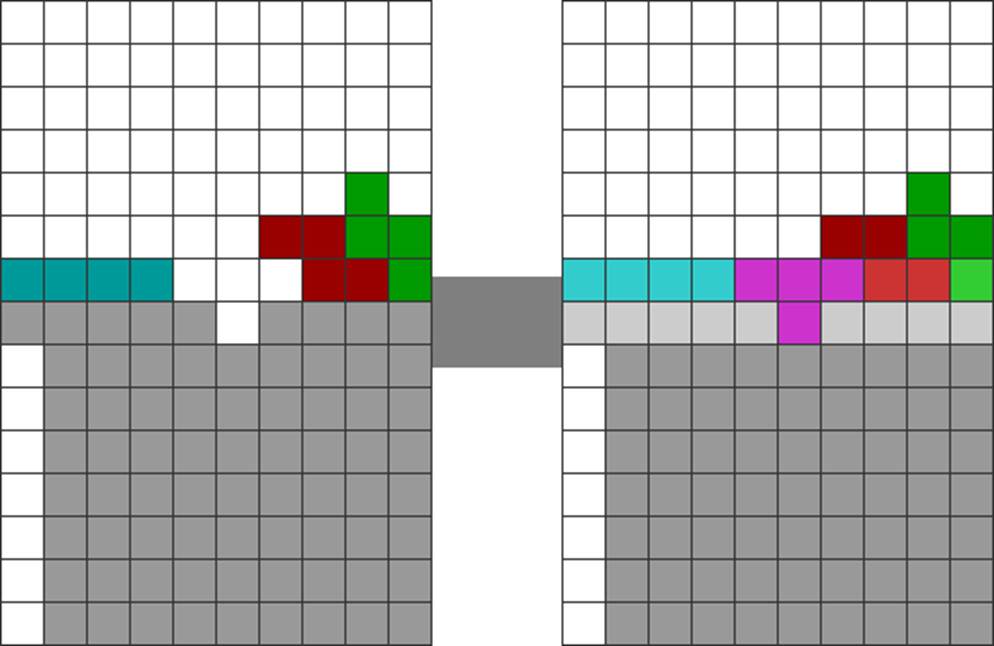
| I built a T-spin. | I complete the T-spin by inserting the T piece into the T-shaped cavity. |
| 5 | 6 |
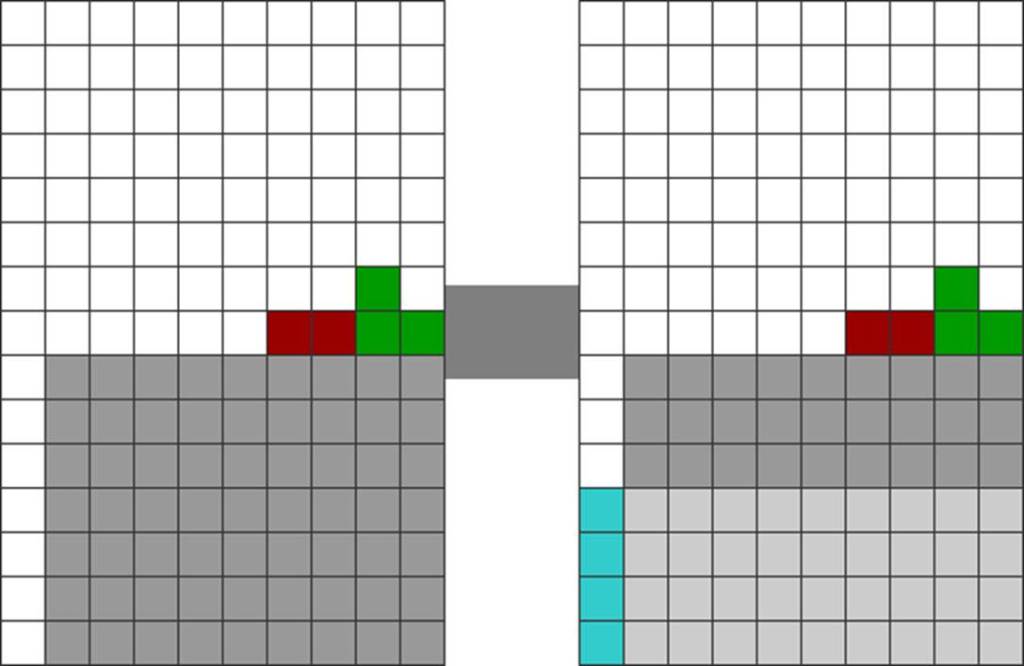
| The clean garbage column on the far left is exposed! | I insert an I piece into it, scoring a Tetris. |
Here, I counter-spiked, which means turning the incoming garbage lines into fuel for a counter-attack.
I skimmed off the top lines with a T-spin and dug into the clean garbage lines, sending back a massive amount of garbage to my opponent.
Hence, what was once a “bad” Tetris event became a “good” opportunity.
Sometimes in life, we categorize events as polarized within a “good-bad” dichotomy. However, that distinction is sometimes illusory.
Taoist mythology often talks about the five elements of wood, fire, water, earth, and metal.
Water extinguishes fire. Fire melts metal. Metal cuts wood. Wood parts earth. Earth dams water.
This creates a cycle in which no single element is truly dominant. They are all subject to change.
The same is true with life. Imagine the following situation:
- John is hit by a truck and has to be hospitalized for many months.
- In the hospital, he met a doctor who, over many months, fell for him. This person became his future wife.
- He returned home and won a $1,000,000 lottery and paid off his debt.
- However, his friends constantly pester him for money. He gave away about two-thirds of it.
- His house is struck by lightning and burns down. He is left homeless.
- However, during the demolition, geologists found oil beneath his former home.
- He sells the land, making a profit of $10,000,000.
At any point in time, we can classify some of John’s experiences as “good” or “bad.”
We can classify his accident and the lightning event as “bad” news. We can also categorize his wife and the oil incident as “good” news.
However, the human brain is a relatively recent evolution on the grand geographic and bio-evolutionary scale.
Before life on Earth, most of the time, the Earth was lifeless and, at most, comprised single-celled prokaryotes.
The faculty to judge something as “good” or “bad” was, hence, a recent evolutionary anomaly.
Before that, the cosmos was neutral. “Good” or “bad” events did not truly exist. Only consequences did. Only a chain of causes leading to effects and more effects leading to more consequences did.
When thought in this light, “good” and “bad” are subjective and temporary states of the human mind.
Sometimes, we cannot assess an event as “bad” until many years later. What seems negative might ironically become a vital push factor that leads to certain outcomes.
When I was a Tetris novice, the Tetris community, known as the Hard Drop Discord group, treated me poorly and ostracized me.
I originally wanted to edit the Hard Drop Tetris Wiki pages and contribute many articles.
Instead, the severance caused me to want to be heard even more. I then created my own Tetris guide websites and eight full-fledged Tetris books without the Hard Drop label.
Talk about a twist of fate.
Social and Global Applications
The Necessity of the Earth’s Current Polarization
Earth is undergoing a stormy shift as people mature into the next spiritual age.
Countries and social groups explore and express reality’s dual nature through many actions and institutions.
On the one hand, some nations still cling to the age-old tradition of viewing the world as a simple zero-sum game. As a result, some nations use military force to extract resources or control oil at others’ expense.
However, some groups are slowly renouncing negativity and polarization.
Thich Nhat Hanh’s meditation practices, rooted in his Plum Village community in France, seek to dismantle divisions between people through the philosophy of Interbeing — the recognition that all things are fundamentally interconnected.[5]
This heightened polarization provides an ideal opportunity to observe the consequences of each choice and choose the positive for a new Earth.
It is one in which the old vestiges of hatred, prejudice, racism, bigotry, jealousy, spite, revenge, selfishness, egoism, and negativity can be cast aside in favor of the positive: love, courage, peace, harmony, altruism, and authenticity.
During this transition, many wars and conflicts are likely to transpire.[6]
However, just as a life without challenges is dull to behold, our planet’s evolution will be empty if we have not experienced negativity.
The old world that we now behold is full of strife and wars, but these negative experiences are necessary to the whole, for without darkness, one may not appreciate the light.
The two World Wars, no matter how terrible, gave birth to something vital: they taught countries like Italy, Japan, and Germany never to repeat the bitterness of fascism. It also contributed to the United Nations’ birth.[7]
Without such tribulations, human civilization would not develop a super-culture or historical identity. If it had been perpetually peaceful, peace would not feel as sweet, because it would not have been earned.
More importantly, humanity would have no wisdom or evolution.
Therefore, turmoil arising from polarization is a natural part of its spiritual evolution, and things will unfold naturally into the light to complete the cosmic curriculum.
The Current Planetary Shift
The current planetary shift, at the broad sociological level, is characterized by polarization in three domains: (i) climate change, (ii) world conflicts, and (iii) Artificial Intelligence (AI).
On climate change, many developed countries are increasingly dominated by a free-market system that has led to the rise of wealthy oligarchs.
These individuals do not care about resolving the climate change problem. They continue to prioritize corporate expansion and fossil fuel extraction, contaminating the surrounding environment to protect profits.[8]
At the other end of the spectrum are state-led economies such as China and Vietnam. The former has consistently built vertically and horizontally integrated supply chains to make electric vehicles (EVs) and renewable energy sustainable and affordable.
Conflict-wise, many developed countries are governed by politicians and governments subordinated to the military-industrial complex and wealthy CEOs.[9]
Wealthy corporations and investors have a vested interest in boosting their companies’ or the military-industrial complex’s stocks. They do not care about improving the lives of ordinary people.
Hence, they influence elections, putting people aligned with their political worldview in power.
This leads to many right-wing agendas that continue perpetuating endless wars worldwide, such as in the Middle East.
On the other hand, some countries advocate a shift from unipolarity to multipolarity, where power is democratized and shared among countries rather than concentrated in a few colonizing nations.
Some BRICS countries, such as Brazil and South Africa, engage more in win-win trade relations in which every country benefits from mutual trade and cooperation.
AI-wise, big AI firms such as OpenAI and Anthropic are charging very high prices for their premium models.
Without the release of China’s open-source, free DeepSeek, these big companies would monopolize AI and keep charging extravagant prices.[10]
The money will go to a handful of “techno-feudalists” at the expense of the common people.
The next fifty years, as of this book’s publication, will most likely see a continued polarization of these three spheres.
How humanity evolves will depend on its choices in these three arenas.
The current polarization provides a stark contrast that ironically allows us to choose more clearly.
[1] Lao Tzu, Tao Te Ching, Chapter 2 (c. 6th century BCE); Hegel, Phenomenology of Spirit (1807); José Stevens and Simon Warwick-Smith, The Michael Handbook (1990).
[2] Latham Boyle, Kieran Finn, and Neil Turok, “CPT-Symmetric Universe,” Physical Review Letters (2018). The model proposes a mirror anti-universe extending backward from the Big Bang to preserve fundamental cosmic symmetry.
[3] José Stevens and Simon Warwick-Smith, The Michael Handbook (1990). Young Souls are achievement-oriented and materially driven — traits explained in detail in this book’s Law of Perspective chapter.
[4] Michael Teachings, http://www.michaelteachings.com. The site describes seven negative chief features: arrogance, self-deprecation, impatience, martyrdom, greed, self-destruction, and stubbornness.
[5] Thich Nhat Hanh, Interbeing: Fourteen Guidelines for Engaged Buddhism (1987); see also http://www.plumvillage.org.
[6] Ray Dalio, Principles for Dealing with the Changing World Order (2021). Dalio identifies war as a feature of major civilizational transitions, during the decline of dominant powers and the rise of challengers.
[7] Honestly, I think the United Nations is a paper tiger without enforcement power. The veto system prevents the democratization of power.
[8] On climate change and fossil fuel interests: Naomi Klein, This Changes Everything: Capitalism vs. the Climate (2014). Klein documents how free-market ideology obstructs climate action while profiting from fossil fuel dependency.
[9] C. Wright Mills, The Power Elite (1956); Ray Dalio, Principles for Dealing with the Changing World Order (2021).
[10] See reporting on DeepSeek’s January 2025 release and its impact on US AI company valuations, including coverage by The Financial Times, Bloomberg, and The Wall Street Journal (January 2025).

