Introduction
In many Tetris groups, some players have very fixed ideas about the “right” way to play.
I have seen this in a few places, but I will not name anyone.
Some will watch your videos (even if you did not ask them to) and nitpick every detail without understanding the context (like one may just be relaxing and experimenting rather than playing seriously during the clip).
The pattern I find most unhelpful is when feedback focuses only on mistakes and comes across as harsh or judgmental.
I recommend being cautious about groups with these kinds of cultures as much as possible, as they discourage experimentation.
More difficult still are groups that reinforce traditional playstyles and discourage other experimental forms. That can limit both fun and growth.
My philosophy, the opposite of such groups, strongly encourages players to make as many mistakes as possible.
You cannot play Tetris well if you do not know how to play it badly.
In my Book 4, I have an entire chapter dedicated to how not to play Tetris.
The next section shows you why this is relevant.
Not Playing Tetris Well: An Example
I illustrate why knowing how not to play Tetris well is important in improving your decision-making with an example:
| Diagram Set 6-1 | |
| 1 | 2 |
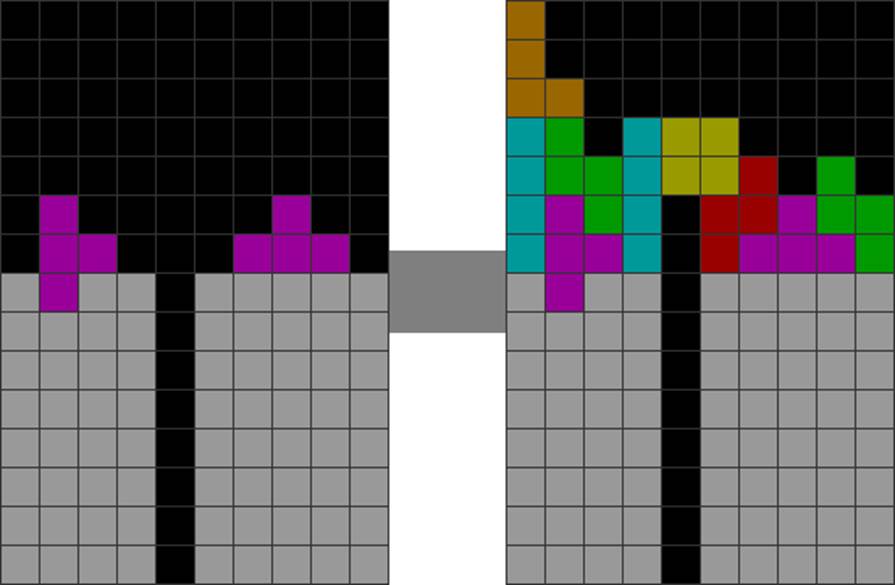
| The player creates 2 parity imbalances on the left and right stacks (is jagged). | This field division forces one to place flat pieces, such as Os, dirtily over the holes. |
Here, the player stacks too jaggedly. This disrupts the field’s parity (jaggedness), preventing the player from placing flat pieces (like L, J, and O) cleanly.
This scenario shows how jagged stacking forces you to place L, J, and O pieces over holes, making the field dirty.
Being forced into this downward spiral leads to many issues, such as increased difficulty in downstacking:
| Diagram Set 6-2 | |
| 1 | 2 |
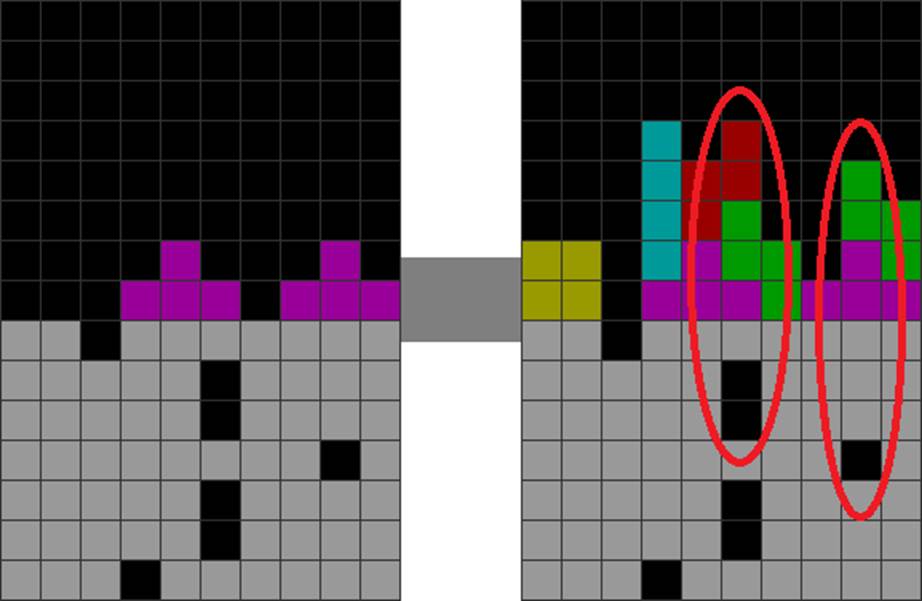
| The player creates 2 local parity imbalances using poorly placed Ts. This means the field is super jagged. | This jagged pattern causes tall S, Z, and I pieces to be placed. They upstack over future garbage holes (note the red circles). |
Here, jagged stacking creates more vertical stacking, increasing the number of layers you must skim off before reaching the clean garbage layers.
Making such mistakes is important, as it emotionally conveys to you the emotions of anxiety, fear, and dread when you create them. They culminate in frustrating losses.
However, this is precisely the point: knowing these devastating consequences reminds you to avoid them. You hence alter your playstyle in the following manner:
| Diagram Set 6-3 | |
| 1 | 2 |
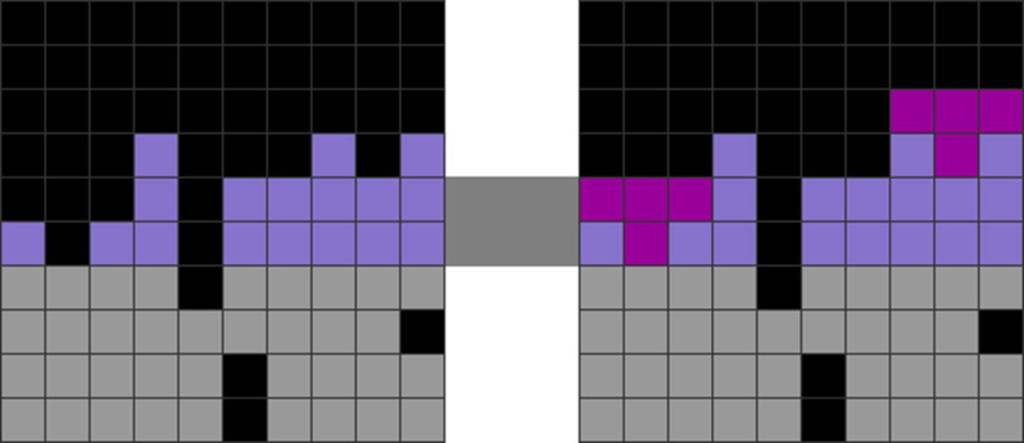
| The starting field is very jagged (parity-imbalanced). | The player stabilizes and flattens the stack using 2 T pieces. |
| 3 | 4 |
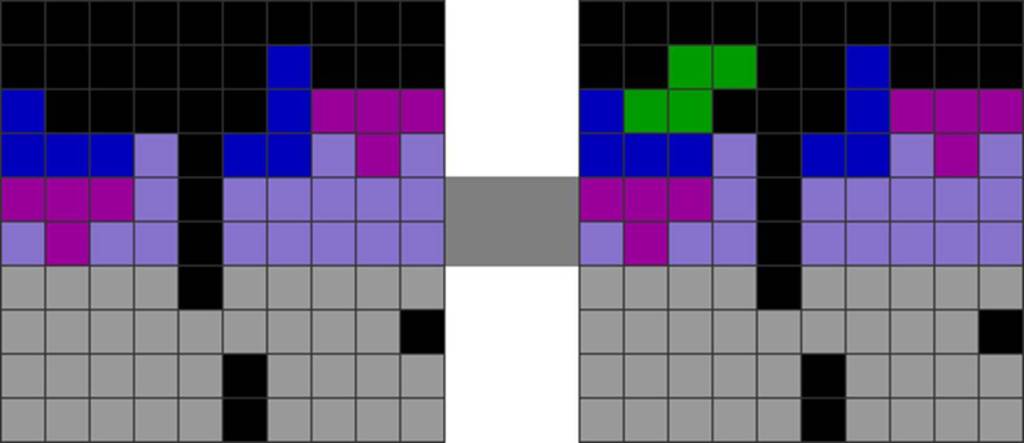
| They can now stack more easily and flatly with the upcoming pieces. | This makes T-spin creation far easier and smoother. |
Here, the player stacks smoothly and resolves local parity imbalances (i.e., makes a jagged field flat by putting T pieces to even out the bumpy areas).
This results in smoother stacking, which makes the field easier to manage. This creates more T-spin opportunities and lets you downstack more easily.
Through plenty of mistakes like these, I learned how to play Tetris.
Hence, a good Tetris coach should never judge a player’s worth by their mistakes. Instead, they should encourage the player rather than using mistakes to make themselves look better.
If you see this positive trait in a Tetris coach, they are likely a good choice to give feedback on your gameplay.
Making Fancy Experimental Setups on Purpose
Another common unhealthy aspect of Tetris culture is that some Tetris Discord groups tend to gatekeep and discourage others who use fancy experimental setups such as these:
| Diagram Set 6-4 | |
| 1 | 2 |
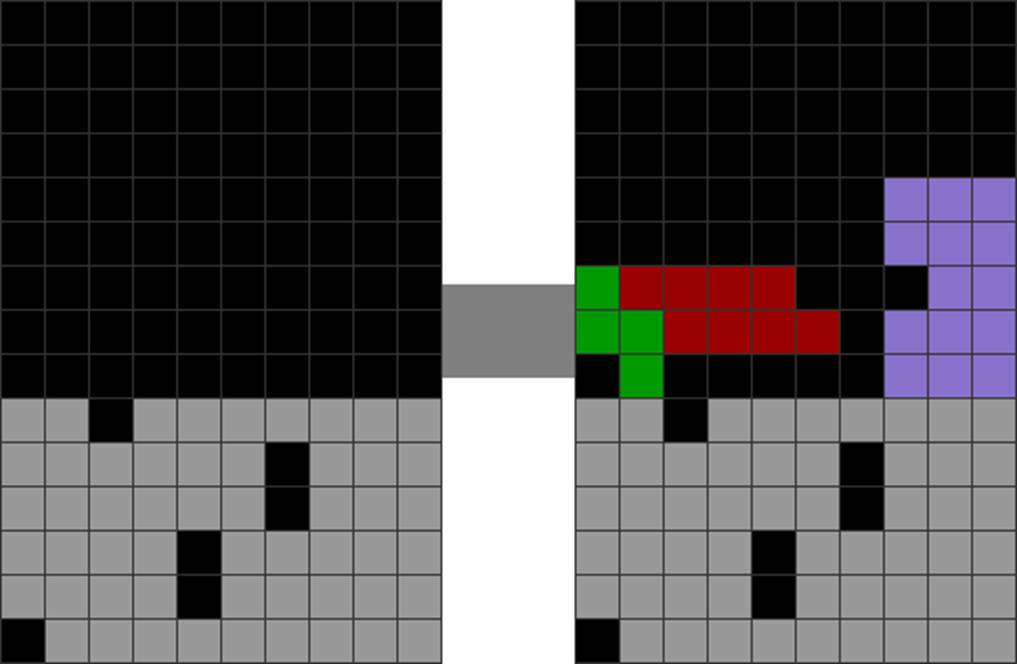
| Starting field with an easy T-spin double opportunity using the hole in column 3. Can you spot it? | Instead, the player makes a fancy, dangerous T-spin. |
Their critiques are sometimes valid: using these over-the-top methods can sometimes lead to overstacking and excessive risk-taking. This can then leave one vulnerable to being spiked.
However, some Tetris groups may insist these methods are absolutely “wrong” and outright dismiss players who create them.
Despite this, I strongly suggest that players experiment by creating these setups as much as possible during training.
This is because if a player does not push themselves to create new setups, they will not gain experience.
This was the path I took: in my earlier years, I purposely forced myself to make many experimental setups. By doing so, I would know how not to set some methods up:
| 3 | 4 |
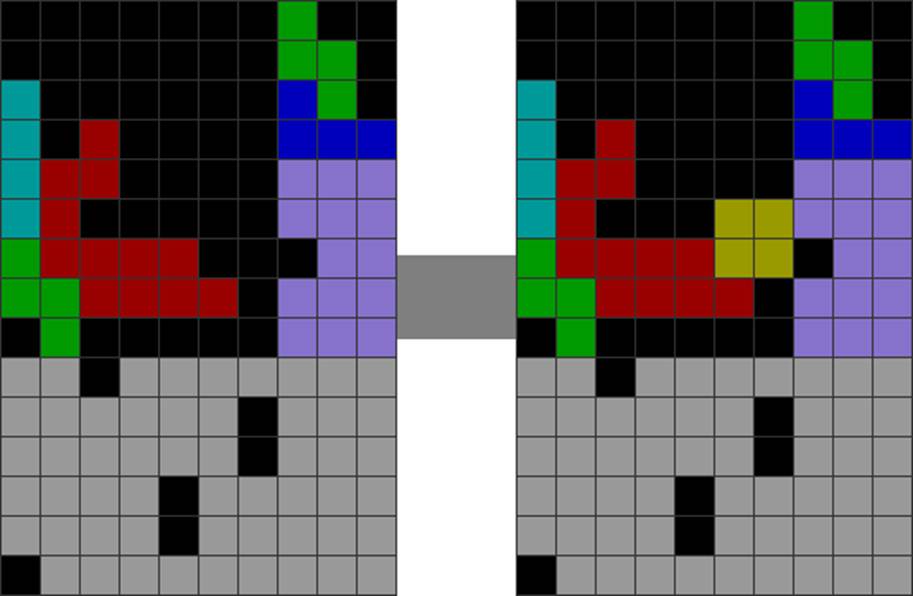
| This continues from step 2. The T does not arrive: the player is forced to put all incoming pieces dirtily. | The T still does not arrive. The player is forced to abort the setup by putting O in the T-spin cavity dirtily. |
Here, I created some methods but completely made them dirty (stacking over holes). From these mistakes, I learned how to avoid poor stacking in the future.
Right now, after experimenting with thousands of setups, I can create the following setups cleanly, quickly, and practically:
| Diagram Set 6-5 | |
| A | B |
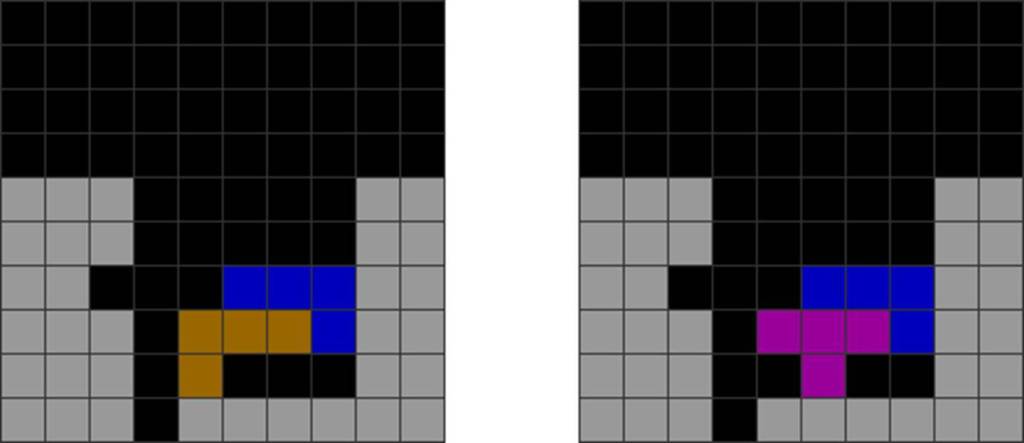
| 2 fancy mid-game T-spin setups. |
Another encouragement: you can only gain experience by stepping outside your comfort zone.
Hence, I recommend not letting the naysayers discourage you from using overly fancy setups. While their critiques are sometimes valid, experimentation is necessary to gain experience.
In a Nutshell
| Key Points |
| Make deliberate mistakes in Tetris to learn how not to play the game. Do not be discouraged by the naysayers: just keep experimenting and make fancy mid-game T-spin setups so you will learn their pros, cons, and risks. Mastery in Tetris comes from knowing how to play the game and how not to. |

