The first few seconds may render in low quality. Please give them a few seconds to render.
The Basics
Diagram Set 6-1
1
2
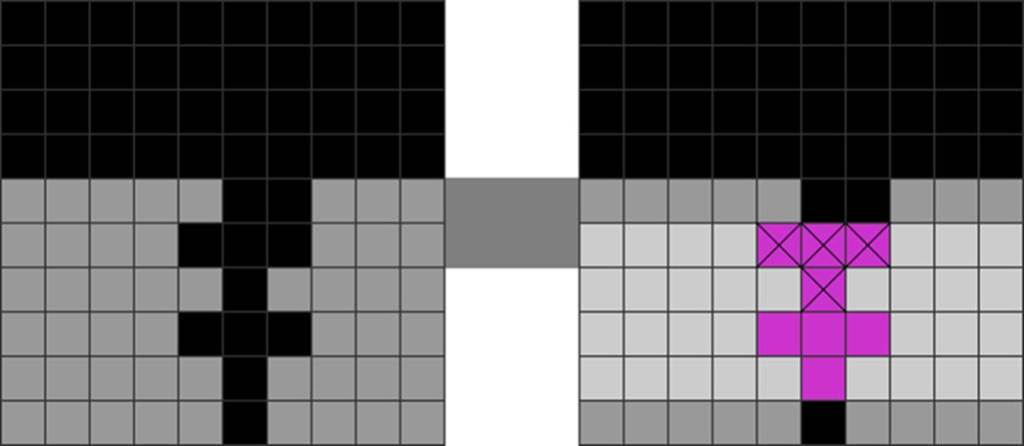
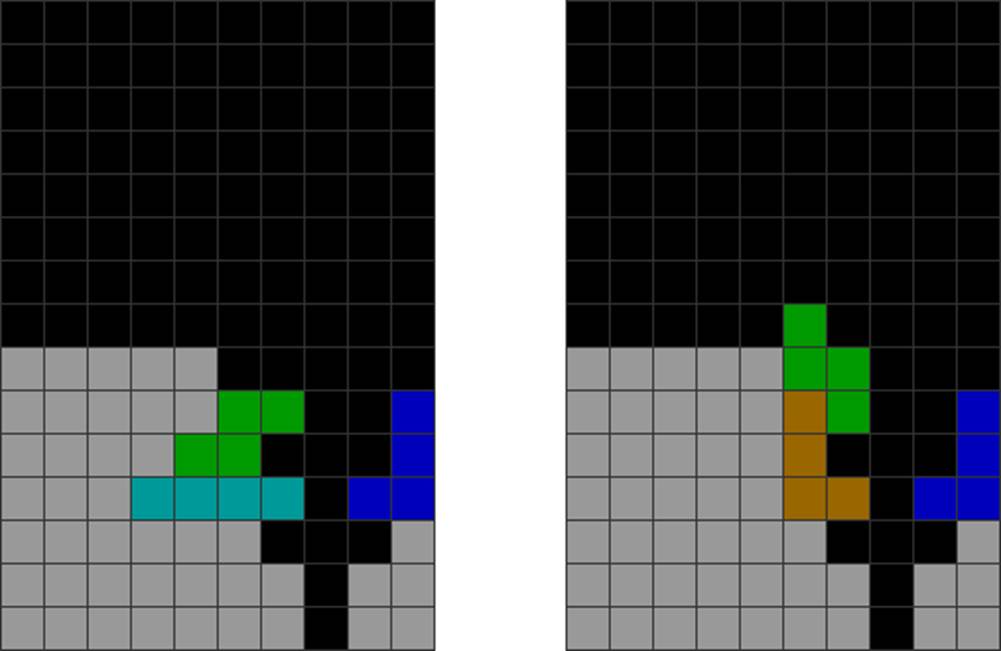
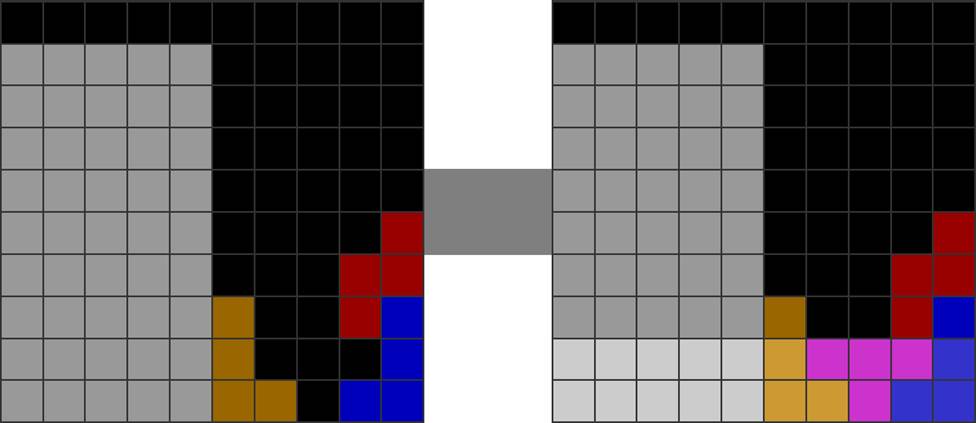
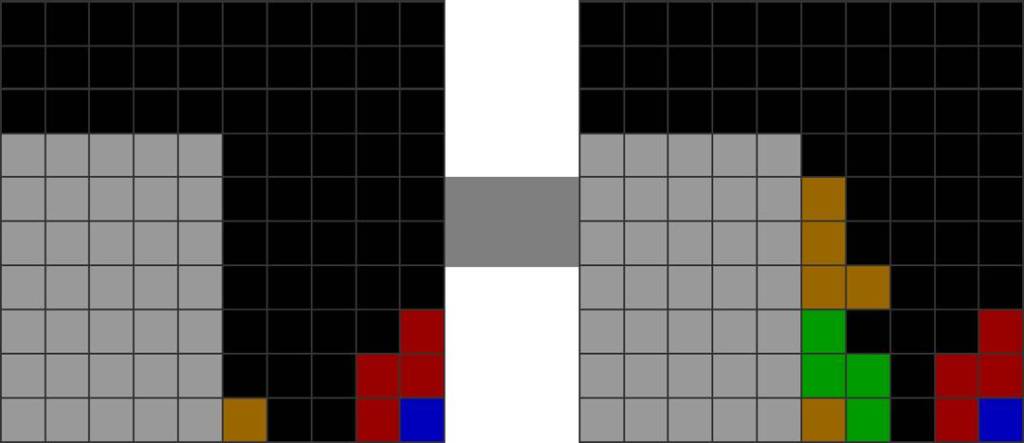
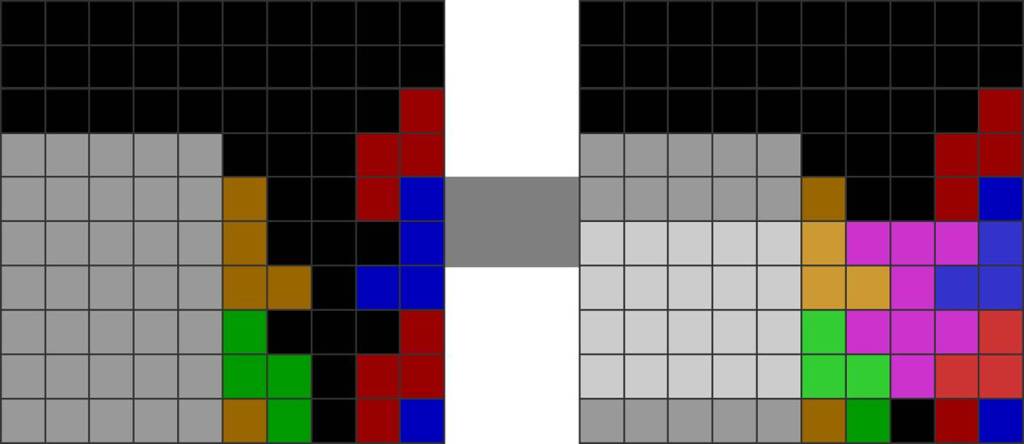
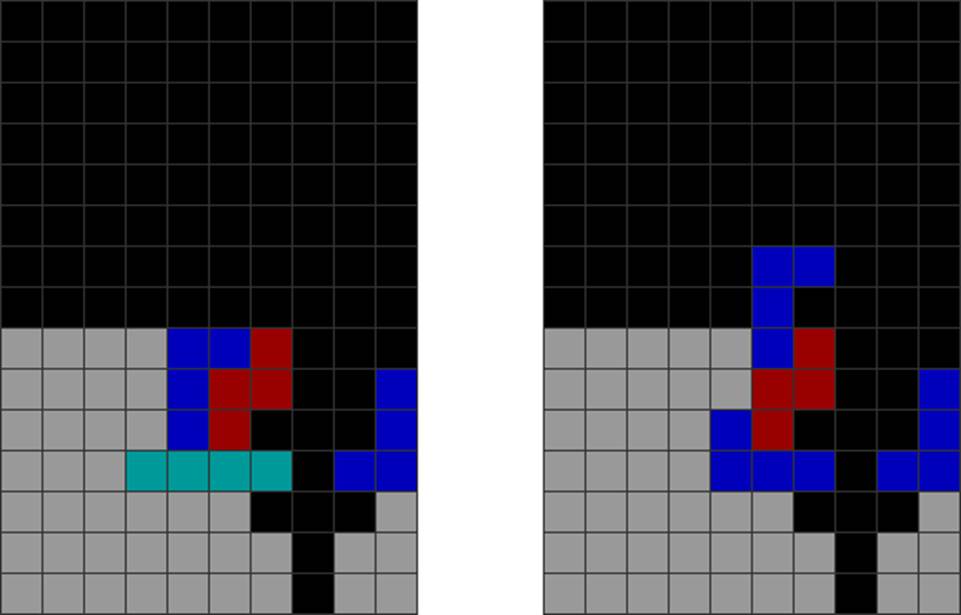
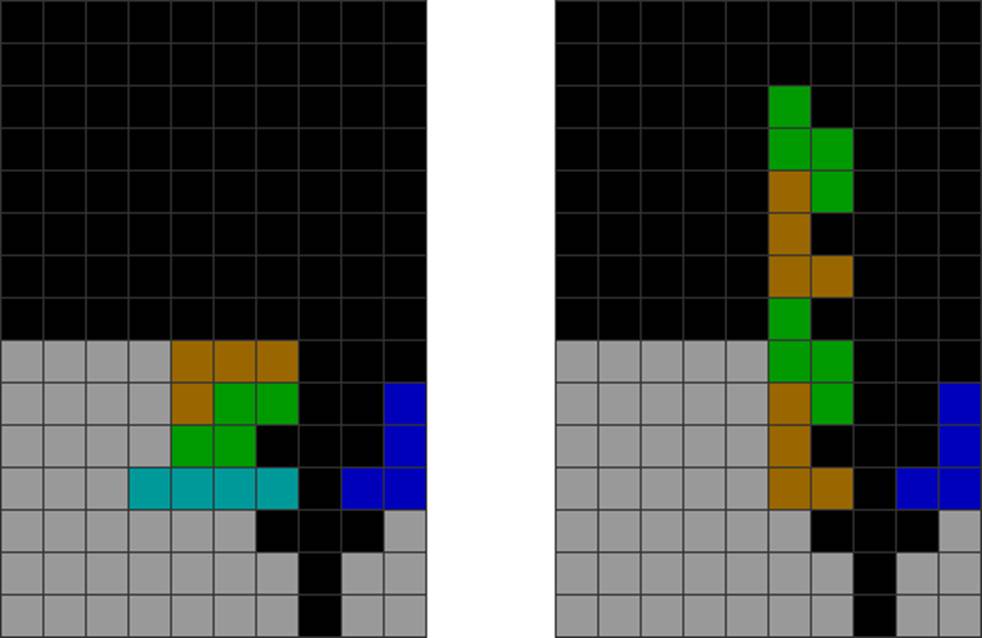
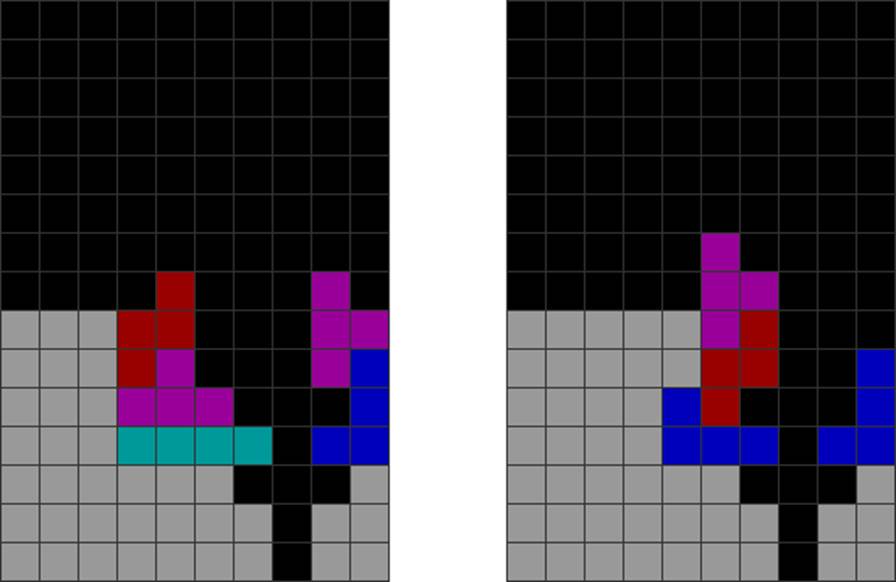
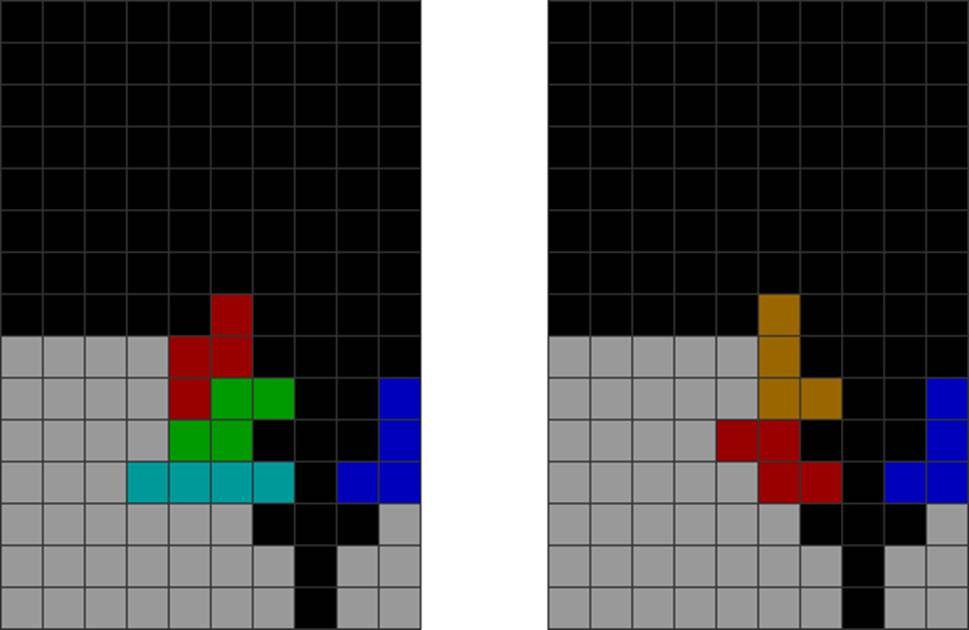
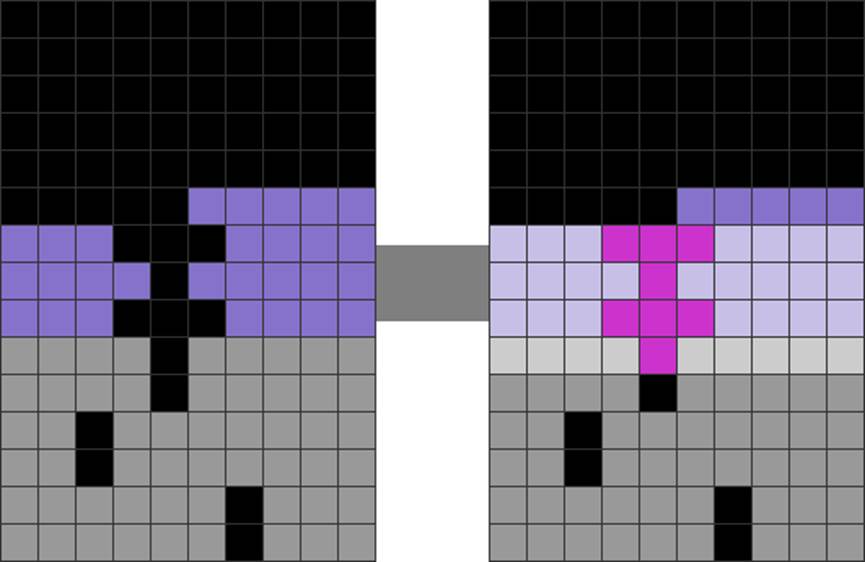
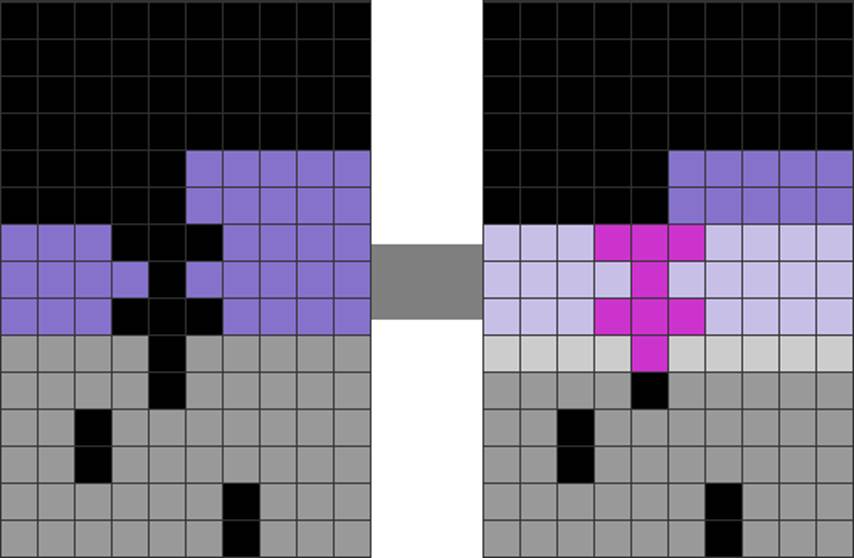
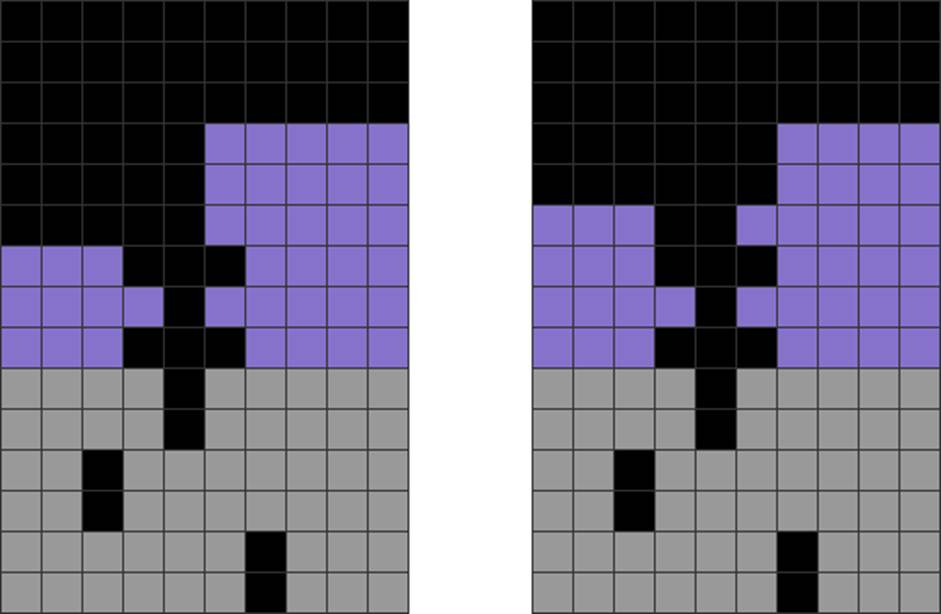
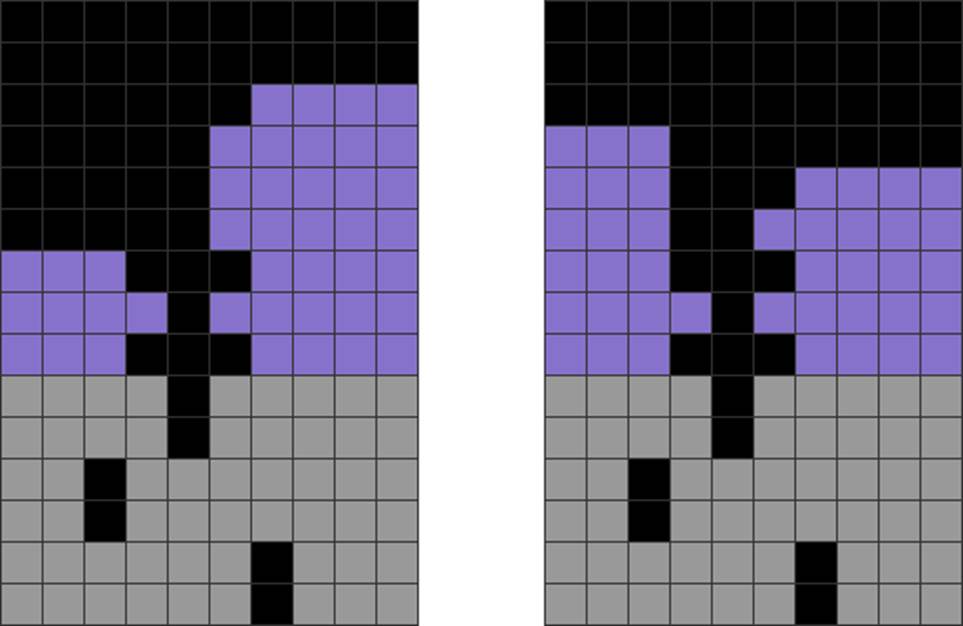
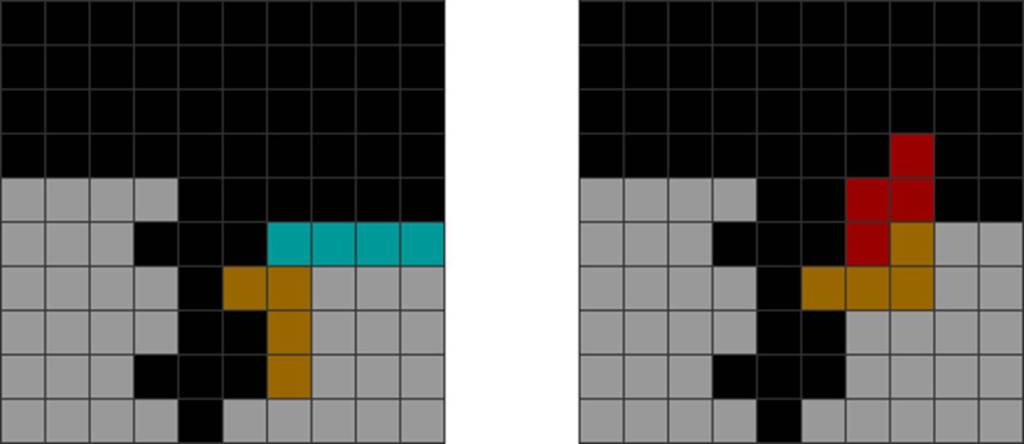
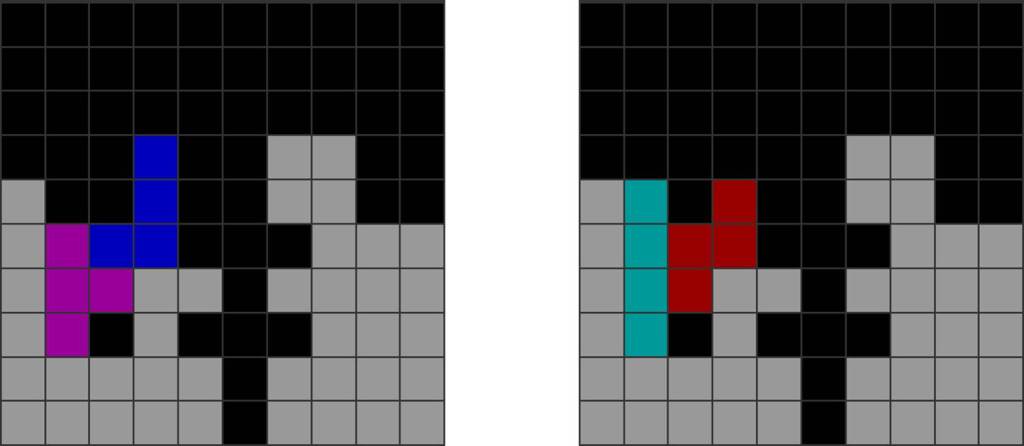
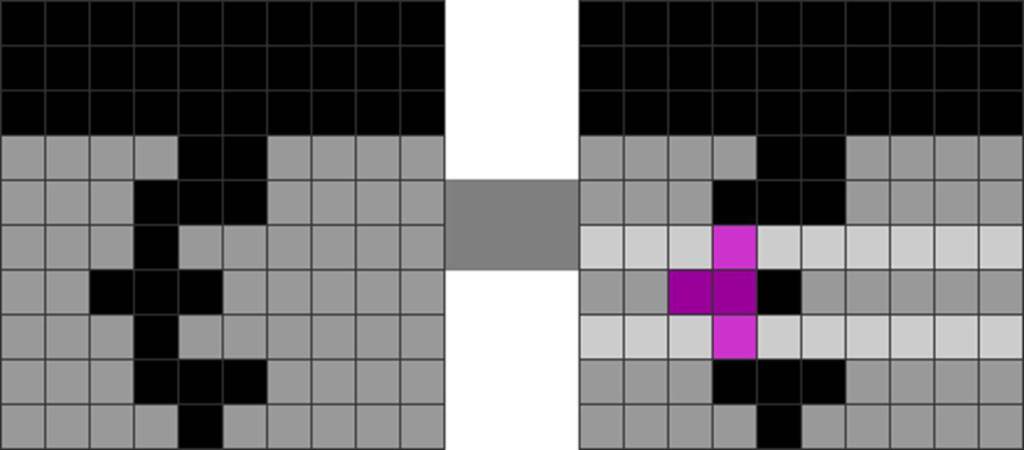
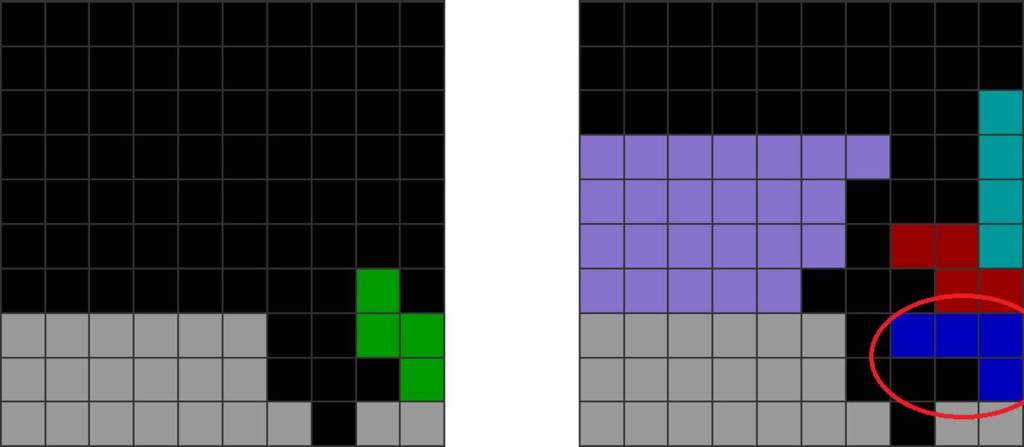
Fractal leads to 2 T-spin doubles: the top one with crossed purple boxes, and the non-crossed one below.
Fractal is a double T-spin double setup.
It is one of the most compact, cleanest, and most efficient T-spin methods to learn. It is far safer compared to methods such as STSD or DT Cannon. This is because the method does not block off the garbage hole, letting you defend yourself with a Tetris.
Likewise, one can spike offensively with T-spins, followed by a back-to-back Tetris.
Mastering Fractals is vital, as it yields the best possible follow-ups across almost all methods. It often transitions to mid-game LST stacking.
Among all the named T-spin methods, I consider Fractal the most practical. I highly recommend mastering it for any serious player.
Common Mid-Game Chances
Fractals have many mid-game situations:
1. The Easiest Fractal Opportunity: LJ Base
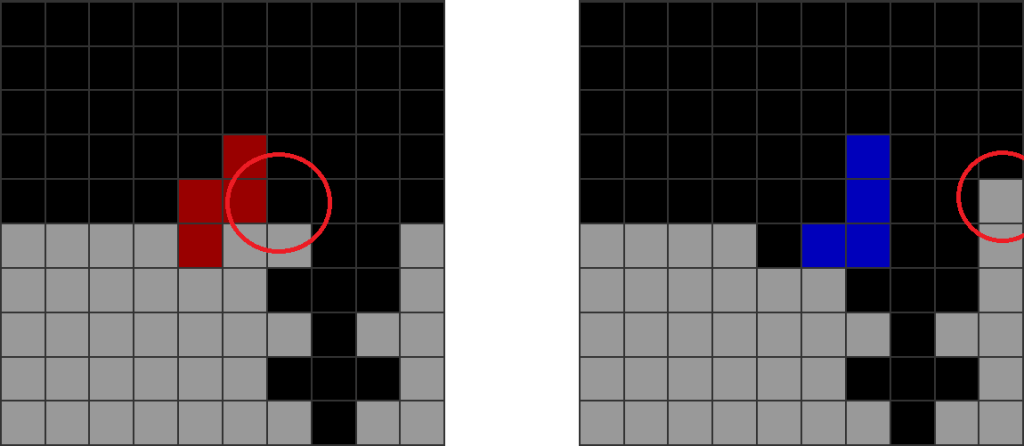
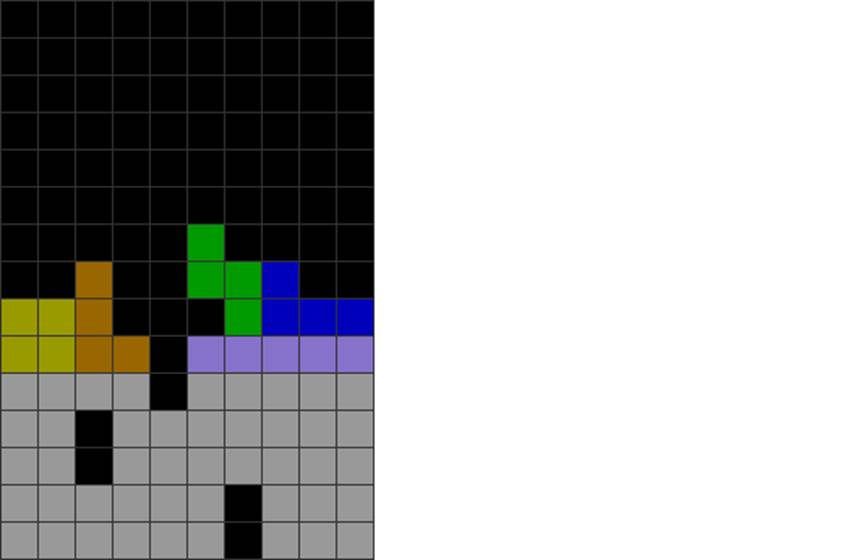
The most common mid-game chance is to place L and J together like this below and place a simple overhang:
Diagram Set 6-2
1
2
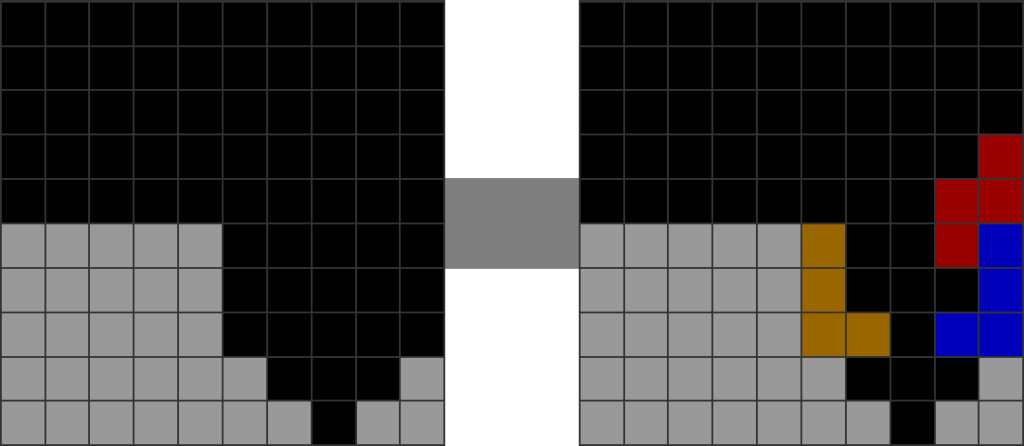
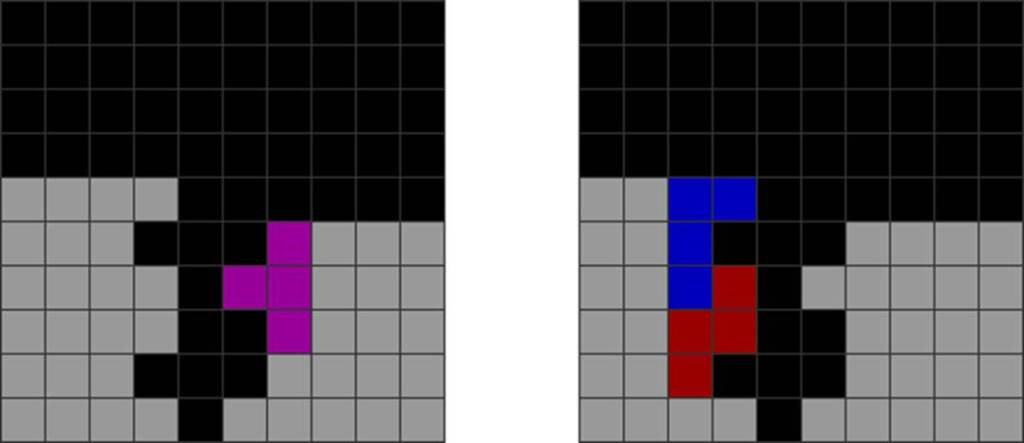
Spot this common mid-game pattern.
Put L and J vertically, then make an overhang. The Fractal is done!
However, more often than not, one cannot use the ideal form above. Hence, one has to freestyle a bit:
Diagram Set 6-3
A
B
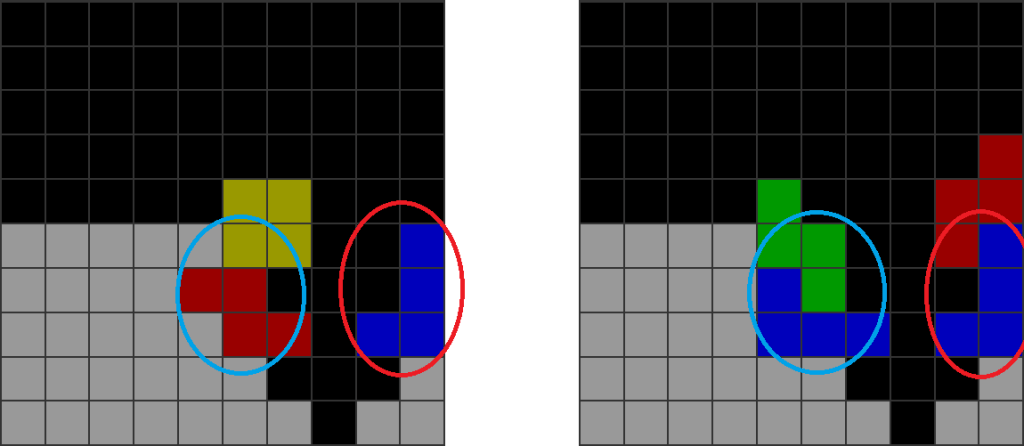
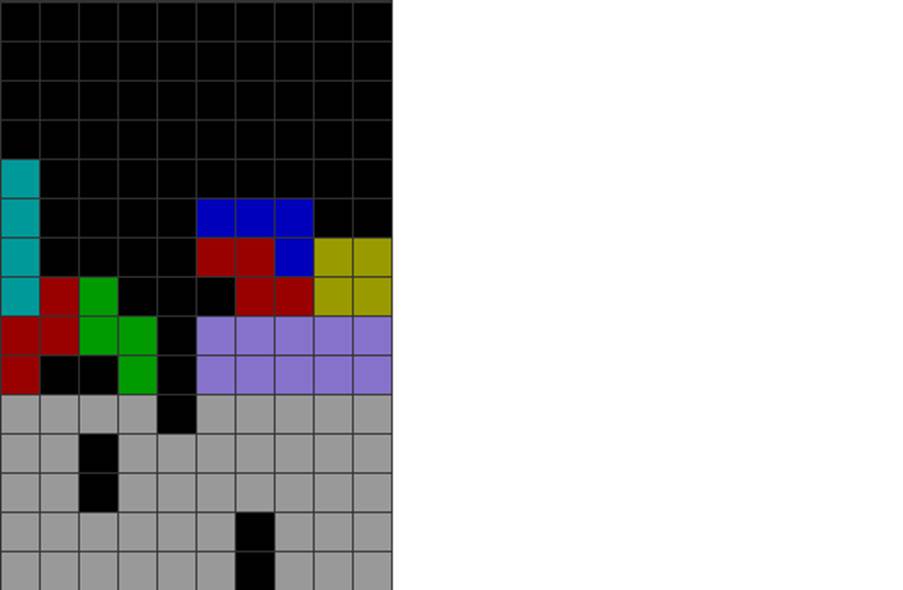
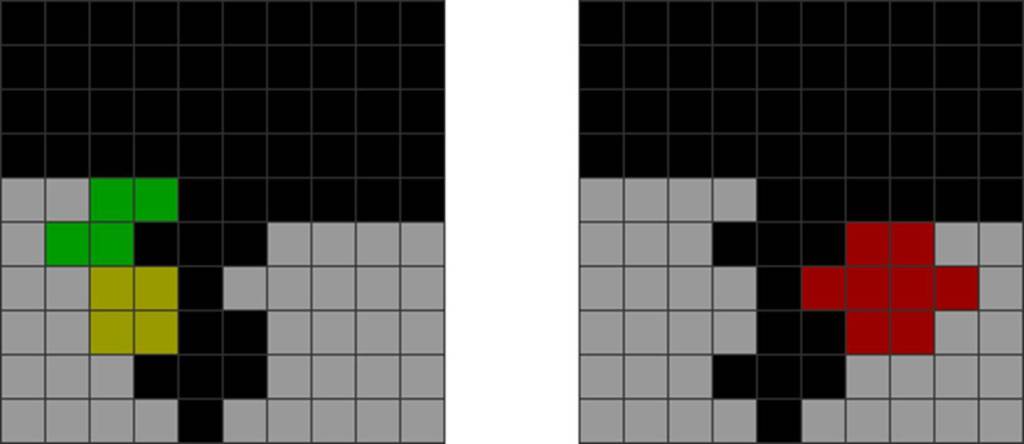
More often than not, only one side allows for a vertical L or J base (red circles). The other side (blue circles) has to be freestyled.
2. Constructing the Fractal’s Parts
Here are common freestyle ways to make parts of the Fractal:
Diagram Set 6-4
A
B
C
D
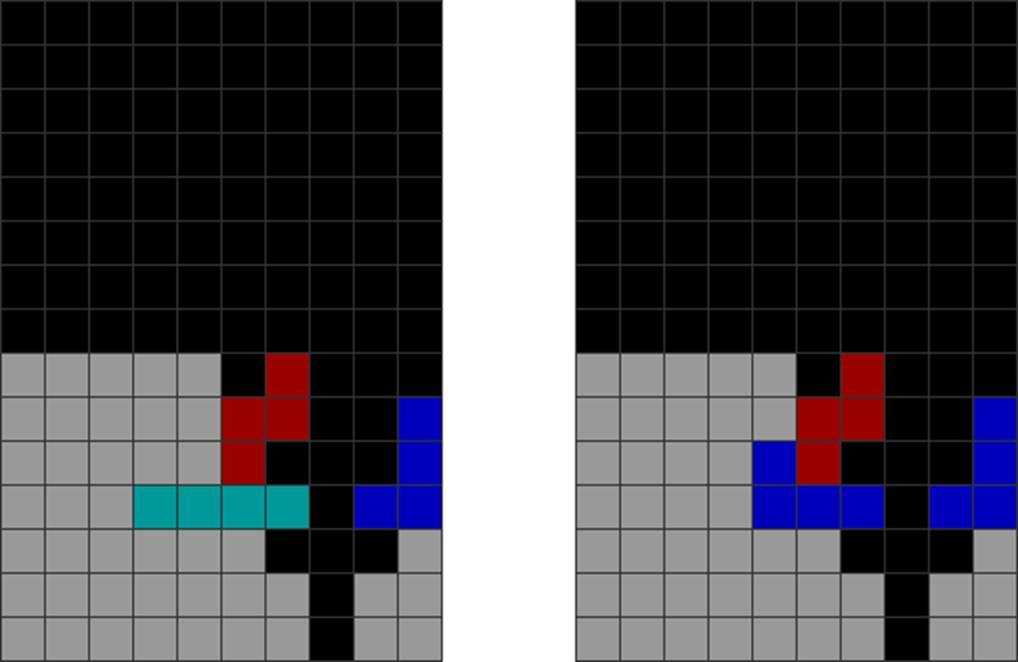
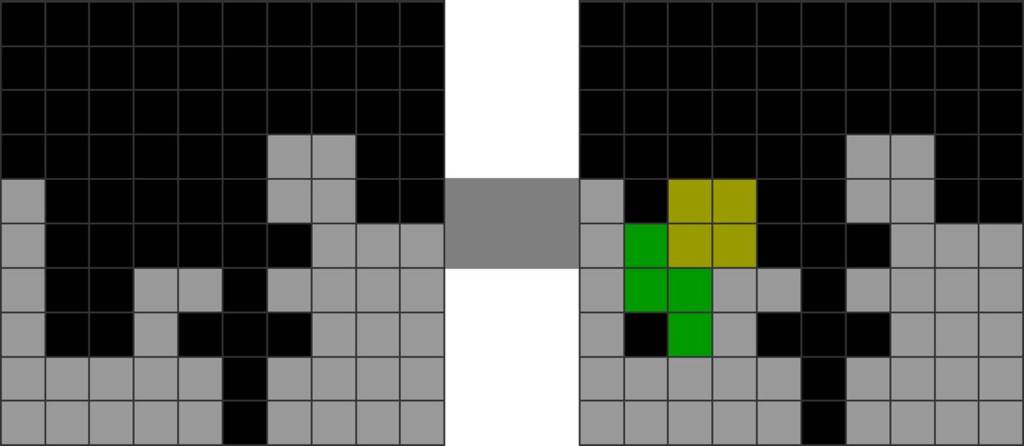
Fractals involve creating the above patterns. Note how some pieces combine well with others to make clean Fractals.
Continuations and Follow-Ups
Fractals can be stacked and followed up quickly with good continuations, such as ST, LST, and LT stacking:
1. Transitioning to the Dreaded LST Stacking
Fractals can be continued into LST stacking by stacking for continuations. The following diagram shows this mechanism:
Diagram Set 6-5
1
2
The basic LST stacking shape involves the above L, J, and S or Z pieces. This repeated shape gives infinite T-spin doubles and Tetrises. However, perfect LST stacking is impossible.
3
4
This continues from the last step, after the T-spin double.
You continue repeating the pattern with L, S, and Z pieces.
5
6
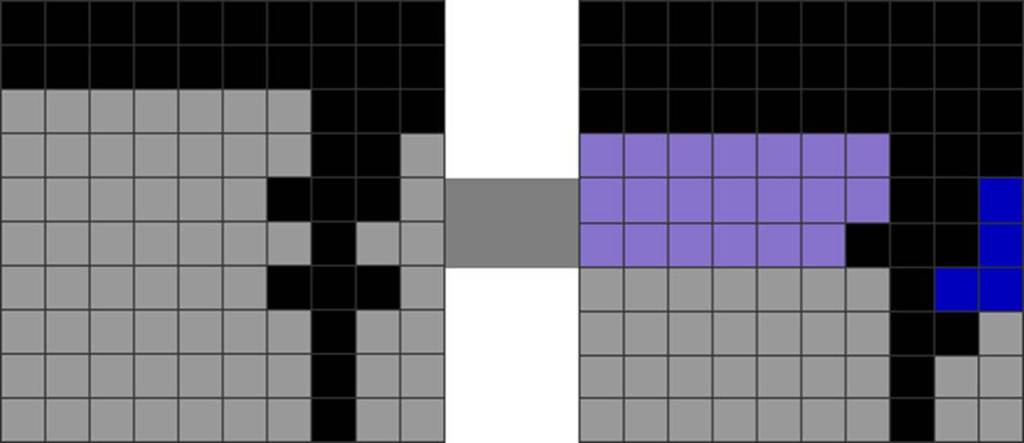
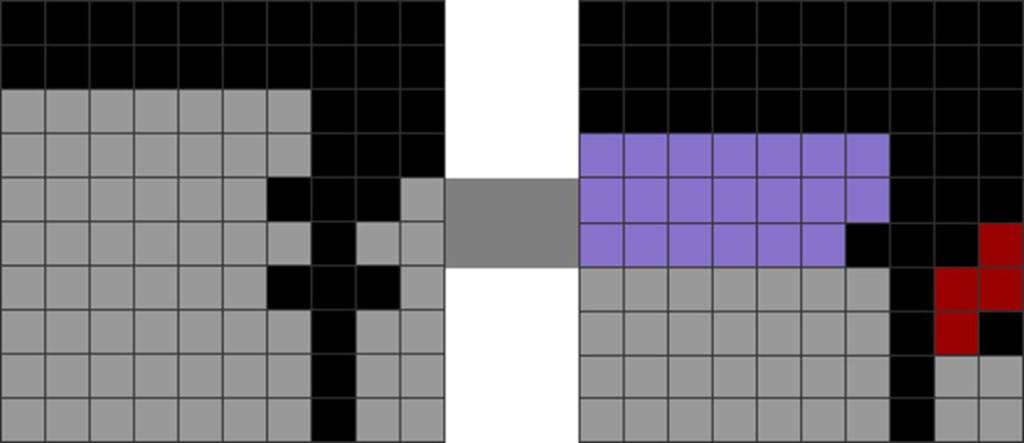
You can sometimes stack Fractals, like this, to give 2 T-spin doubles.
After the 2 T-spins, you can continue LST stacking.
I have covered LST stacking in greater depth in Book 2.
The patterns below make LST stacking easy, left as an exercise for the reader:
Diagram Set 6-6
A
B
C
D
You can stack pieces flatly in the above to continue making even more Fractals.
See how the player stacks the next overhangs in some diagrams to prepare for even more T-spin doubles?
These stacking forms break LST stacking continuations from Fractal. They are to be minimized:
Diagram Set 6-7
A
B
C
D
Some overhang heights (often a height of 3) can break Fractal continuations as they uneven the heights of either side.
Short-Cuts to LST Stacking
The key is to spot the red-circled structures below. These are the more common ones that break LST stacking continuations:
Diagram Set 6-8
A
B
Stacking the top part of the Fractal in the manner above can break LST stacking continuations at the red-circled parts.
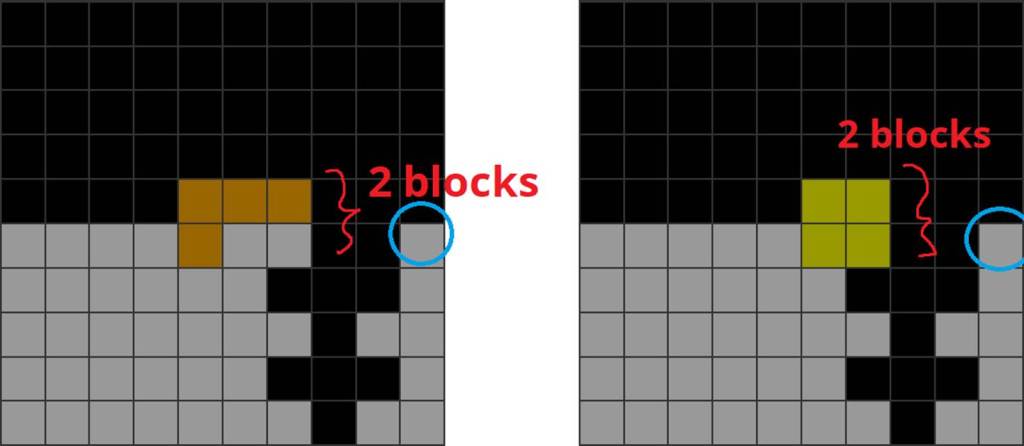
The other shortcut below shows a consistent pattern for sustaining LST stacking continuations. Note the 2-block-tall overhangs:
Diagram Set 6-9
A
B
For maximal LST stacking continuations, stack the Fractal’s top parts in the above manner with 2-block-thick overhangs. Do not over-extend the blue-circled block in terms of height. For some (very long) reasons, the above patterns maximize this.
Learning what patterns break Fractal continuations comes mainly from experience. I advise the player to practice to find out what continuations break it.
The astute reader may notice how Fractals lead into LST stacking continuations, which will be covered in upcoming sub-sections.
2. Transitioning to Other Forms: LT and ST Stacking
Fractals can be built to transition to LST, ST, or LT stacking. Here is how:
Diagram Set 6-10
1
2
This shows Fractal leading to LT stacking after step 1’s 2 T-spins.
Diagram Set 6-11
1
2
This shows Fractal leading to ST stacking after step 1’s 2 T-spins.
With proper stacking, you can convert LST stacking into ST or LT stacking (or vice versa).
Below are actual mid-game examples:
Diagram Set 6-12
1
2
3
This sequence leads to LST stacking.
Diagram Set 6-13
1
2
3
This sequence leads to ST stacking.
Note how the stack height differences in columns 4 and 6 (around column 5’s hole) are separated by 1 or 2 blocks for the last 2 sets. This further makes it easier to chain T-spins later. Conversely:
Diagram Set 6-14
A
B
C
D
The 4 images show overhangs with unusual jaggedness, some with a height of 3.
These typically break LST and ST stacking continuations and are, thus, best avoided.
Outstanding players can recognize what stacking continuations make or break subsequent ST, LT, or LST stacking continuations. This can mainly be picked up from experience.
Choosing stacking continuations that easily lead from a Fractal to cleaner T-spins vastly improves one’s firepower and consistency.
Advanced
Other unconventional Fractal variants exist.
1. Fractal Variant 2
This is another variant of Fractal. It involves stacking like this:
Diagram Set 6-15
This pattern deviates slightly from the former variant. It still involves 2 stacked T-spin doubles.
Here are several ways to construct it:
Diagram Set 6-16
A
B
C
D
E
F
G
H
These are the most straightforward methods to create Fractal 2.
2. Partly Suspended Fractals
Fractals can be partly suspended or donated:
Diagram Set 6-17
1
2
Alt. A
Alt. B
The Fractal’s top T-spin double can be donated or suspended partially. This is an advanced method that some top players, like Kazu, can use, and it opens up more options.
This list is not exhaustive.
Knowing how to partly donate or suspend Fractals slightly boosts your mid-game T-spin foresight.
3. Advanced Spliced Fractals
You can insert T-spin doubles into a Fractal. This method is called Aquila (Impeldown), which I have covered in Book 3:
The first T-spin double is tricky. To complete it, do this:
Diagram Set 6-18
1
2
An Impeldown is ready.
The first T must be spun vertically to create a T-spin double.
This then leads to a normal Fractal with 2 T-spin doubles.
To create it, spot these shared mid-game opportunities:
Diagram Set 6-19
A
B
Spot this simple T-spin mid-game.
Then, instead of it, just put a horizontal J piece and build up the rest like this.
In a Nutshell
Fractals are cleaner than STSDs and most other setups. Among all the spliced setups, Fractals are the most important, practical, and cleanest, in my view.
Pros and Cons
Pros
It does not block out the Tetris or garbage hole.
This leads to the LST stacking method for a string of back-to-back T-spin doubles with maximal efficiency.
Also transitions to LT and ST stacking, and back, with proper stacking.
Clean.
Cons
While constructing the incomplete second, top T-spin double shape, you may not use the T-spin, which makes you vulnerable.