Introduction
You do not grow in Tetris from merely having experiences.
Instead, you grow by reflecting on experiences.
As a Tetris 99 main, I have seen too many level 99 double-star (the maximum level) players who simply “play” without reflecting.
Many of them have far more playtime than I do. Some have had 10,000 hours of playtime, which is absolutely crazy.
However, as I watched their gameplay, they fell into the pitfalls of poor strategic and tactical decision-making. They may not even grasp the fundamentals of parity management and field harmony.
And they do not improve despite playing more and more and more.
This is because many of them have never reviewed their mid-game choices to identify mistakes and weaknesses, and to improve with better placements.
To do so, I recommend journaling your progress.
My Journaling Experience
I now share my experience of how I matured into a Tetris expert:
- Playing: I would play many Tetris matches off-stream for my usual practice.
- Streaming: However, the breakthrough came when I learned to stream my Tetris matches on Twitch. I could then clip my gameplay and matches post-stream (note that Twitch now only allows 100 hours of stored videos!).
- Recording: Some Tetris games, such as Puyo Puyo Tetris, allow you to save and store your matches for future viewing.
- Self-Analysis: I would then watch my past gameplay clips and VODs repeatedly, identifying mistakes and thinking of more optimal placements.
- Mentorship: In my earlier days, I had a Tetris mentor called Captivate, who reviewed my past matches to provide important optimizations.
I repeated this 5-step process and reflected on my experiences. With enough repetition, this lets me refine my tactical and strategic choices and grow far faster than a player who “merely plays.”
What to Note During Journaling and Reviewing
I use a specific list of dimensions when I review my own gameplay or give feedback on someone else’s.
When reviewing your gameplay, you can grade each dimension on a scale of 1 (worst) to 5 (best):
Stacking Proficiency
Stacking is the most important indicator of one’s Tetris skill and consistency. Without stacking well, you cannot execute other sub-skills with a high success rate.
In terms of stacking, I look at 3 sub-dimensions:
i) Parity Management
Parity management is loosely defined as how well one manages a field’s jaggedness:
| Diagram Set 7-1 | |
| 1 | 2 |
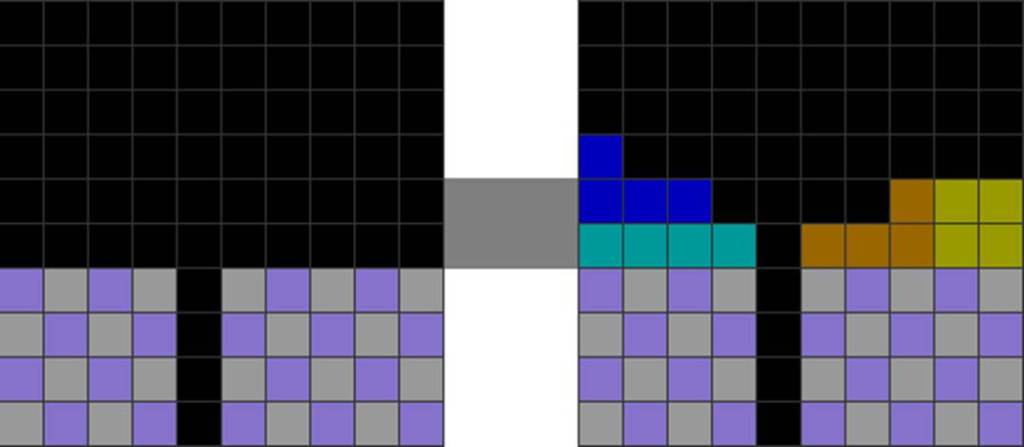
| The field here is parity-balanced, enabling placing flat pieces like L, J, O, and Is horizontally. This further keeps the stacks level, preventing unclean stacking over holes. |
Here, parity is balanced, roughly meaning that the field is relatively flat and connected. This is great because it lets flat orientations of pieces, such as L, J, and O, be placed horizontally without covering holes.
If I see a student stacking this way in set 7-1, I would rate their parity management as around 4 to 5.
A player can sometimes manage parity poorly:
| Diagram Set 7-2 | |
| 1 | 2 |
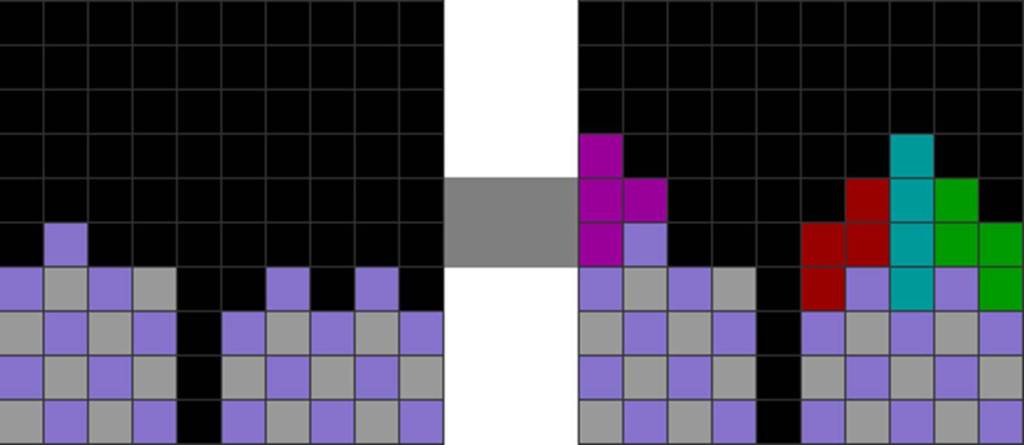
| Only the vertical S, Z, T, and I minoes can be placed vertically and cleanly on the parity-imbalanced stack in step 1. |
Here, parity is imbalanced, creating a jagged field full of divisions. Many flat-oriented pieces do not fit well. This leads to overstacking, as only vertical S, Z, T, and I pieces fit in most areas.
I would score this as around 2.
ii) Field Cleanliness
The next vital detail is how clean the stacking is.
| Diagram Set 7-3 | |
| 1 | 2 |
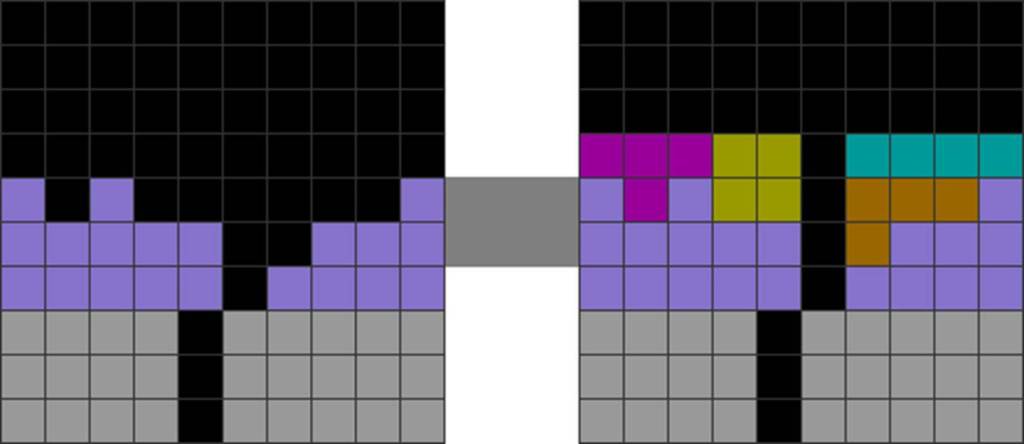
| A relatively jagged field. | The player flawlessly stacks the upcoming pieces over the jagged areas and flattens them smoothly and cleanly. |
Here, the player stacks rather cleanly. The player maintains a balanced, flat stack (no parts are overstacked).
More importantly, the player does not stack over holes dirtily, as shown in the next diagram set.
In the above case, cleanliness scores a 5.
| Diagram Set 7-4 | |
| 1 | 2 |
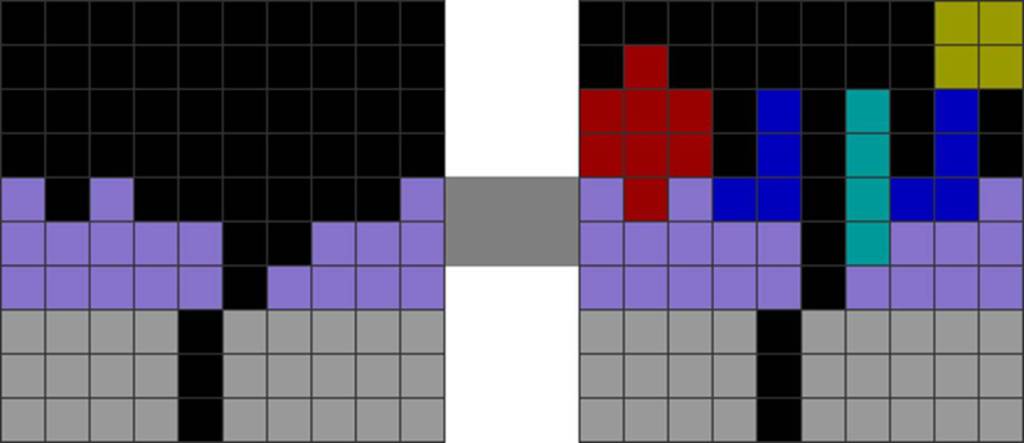
| The same starting field as the last diagram set’s step 1. | Oh no! The player overstacks into dead-ends, resulting in a field that cannot accommodate the flat O piece! |
However, here, the player overstacks many parts. Worse, they stack over holes in a messy way.
I would rate this as a 2.
iii) Field Harmony
Field harmony is loosely defined as how well pieces combine to form a relatively joined, clean, and smooth stack.
| Diagram Set 7-5 | |
| A | B |
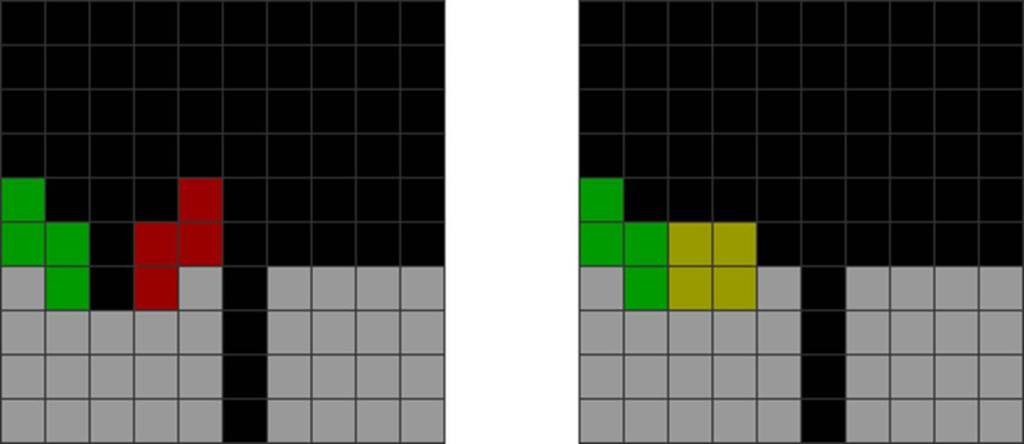
| A less field-harmonized stack. | A more field-harmonized field. |
In B, the pieces join to create a relatively flat, smooth field with few divisions.
This is ideal as it leads to easier stacking and downstacking follow-ups. I would rate this a 4 or 5.
However, in A, the pieces join to create a disharmonious pattern: many jagged areas disrupt the field’s smoothness. It is difficult to follow up with smooth stacking.
Hence, I would rate this as a 2.
Setup Proficiency
Setup proficiency refers to how well you can quickly, cleanly, and effectively create certain mid-game setups.
There are a few non-exhaustive sub-dimensions:
i) Overall Setup Vision
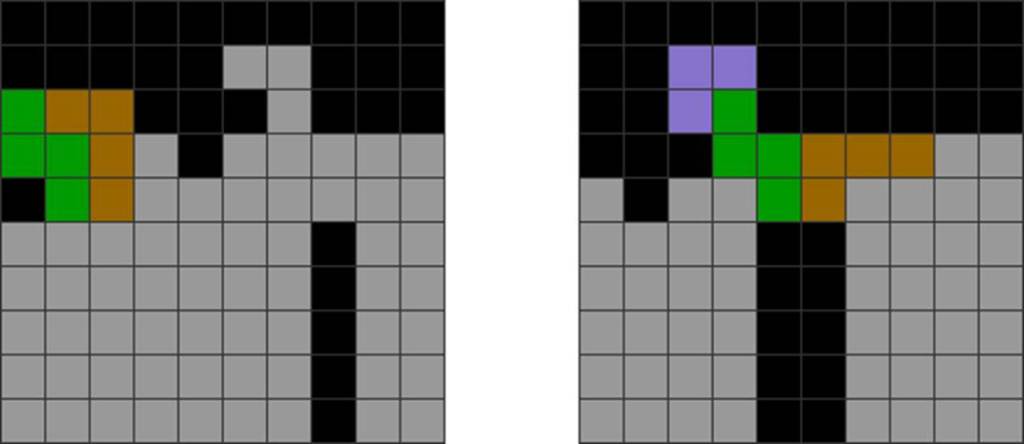
This can involve T-spin, Tetris, all-spin, or downstacking vision:
| Diagram Set 7-6 | |
| A | B |
| C | D |
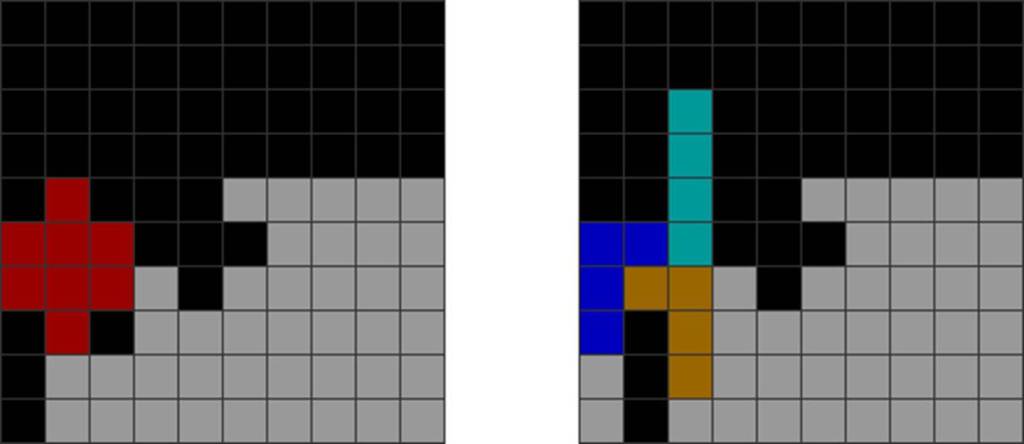
| Some difficult-to-spot mid-game T-spin setups. |
Here, the player spots many extremely complex T-spin donations and sets them up quickly and practically.
I would rate them as a 4 to 5.
| Diagram Set 7-7 | |
| 1 | 2 |
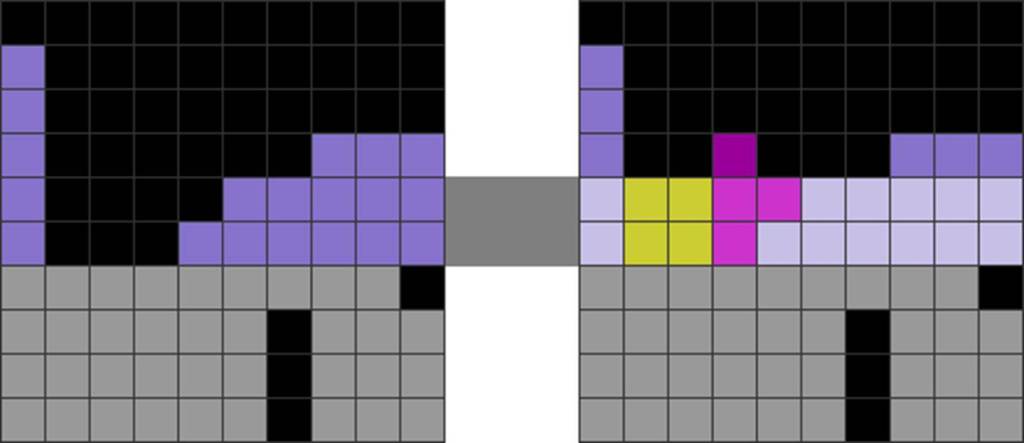
| Starting field with many T-spin chances. | The player misses them and instead skims inefficiently. |
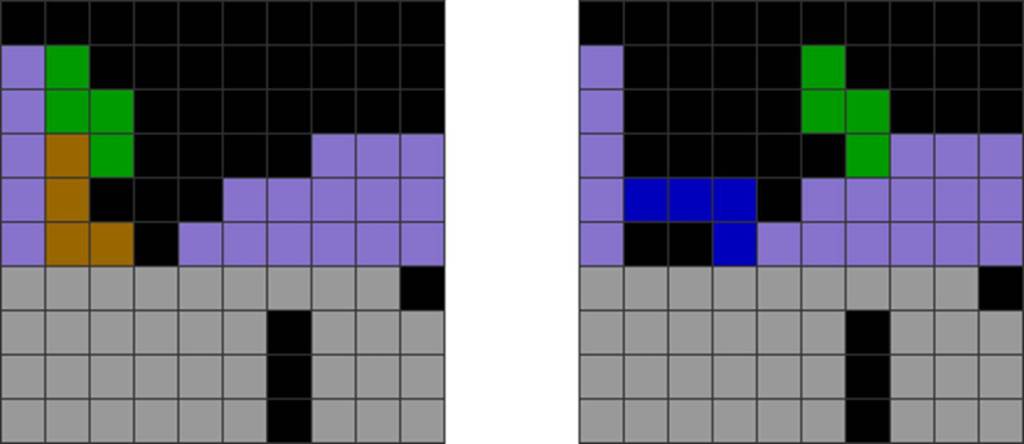
Sadly, here the player misses too many T-spin setups and instead goes for inefficient skims.
I would rate it as a 1 or 2.
Here are the missed T-spins:
| Diagram Set 7-8 | |
| A | B |
| C | D |
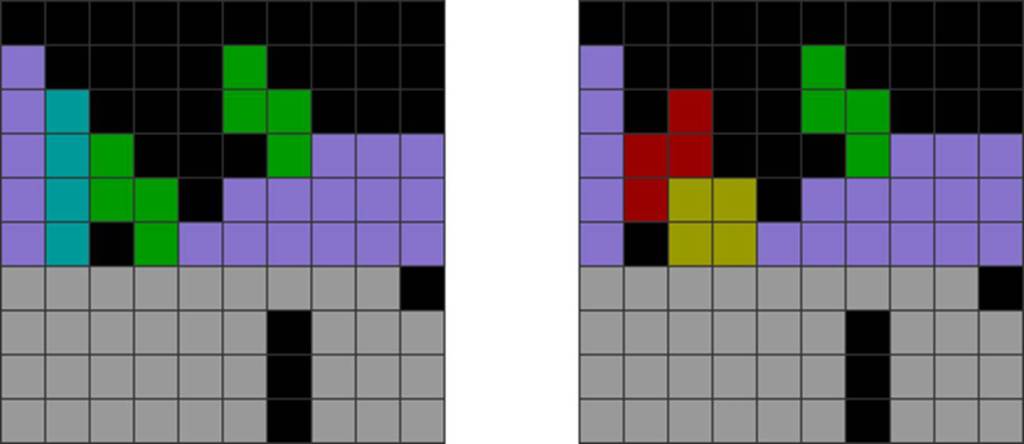
| Here are 4 possible T-spins for the last diagram set’s step 1. |
The complexity of one’s setups must be balanced with cleanliness and safety, which brings us to the next sub-metric.
ii) Setup Cleanliness and Safety
A successful setup, such as a T-spin, should compromise the stack’s cleanliness and smoothness as little as possible.
| Diagram Set 7-9 | |
| 1 | 2 |
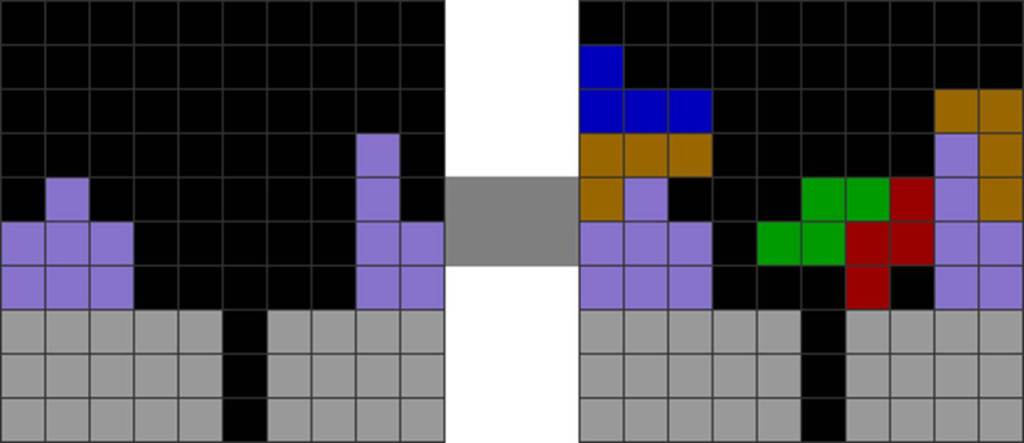
| Starting field. | The player makes a fancy T-spin. However, they flawlessly stabilize the left and right stacks flatly and cleanly. |
Here, the player makes a fancy T-spin. However, the left and right sides of the stack are rather field-harmonized, flat, and joined. This maximizes safety and stacking follow-ups.
I would rate it as a 4 or 5.
| Diagram Set 7-10 | |
| 1 | 2 |
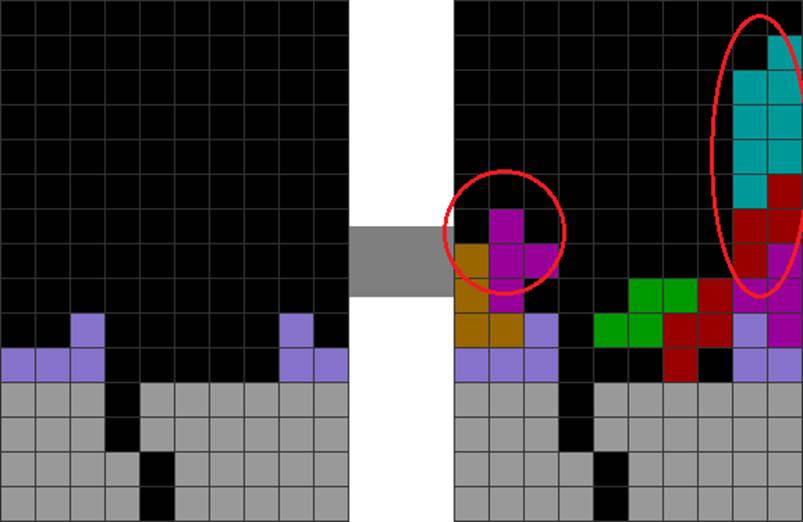
| Starting field. | An inexperienced player sees the fancy T-spin setup. However, they poorly stack the red-circled areas in a jagged way that cannot accommodate the flat orientations of some pieces. |
Here, the player makes an elaborate T-spin that completely defaces the stack. They stack over holes in a jagged manner and overstack many parts.
I rated it a 1 or 2.
Downstacking and Survival Proficiency
Beyond offense, a player should also watch how well they defend with downstacks and well-timed garbage cancels to survive.
| Diagram Set 7-11 | |
| 1 | 2 |
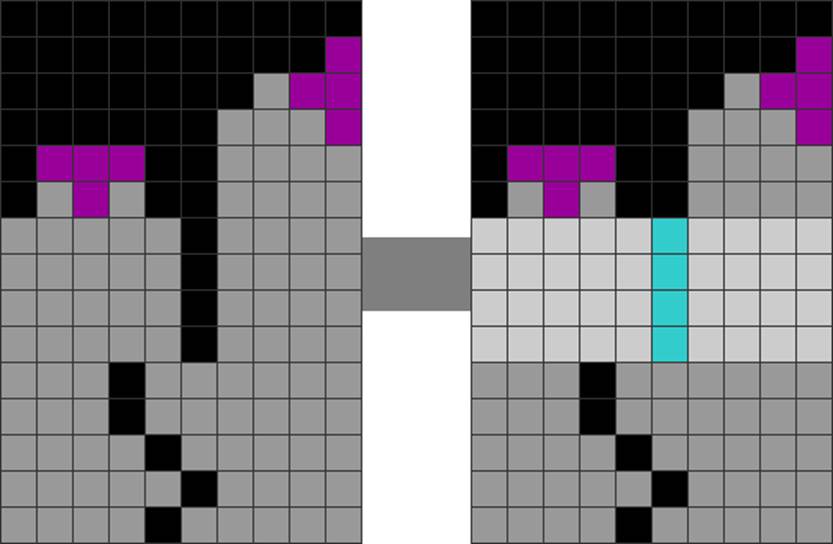
| The player puts 2 Ts to flatten the field. | They score a Tetris. |
| 3 | 4 |
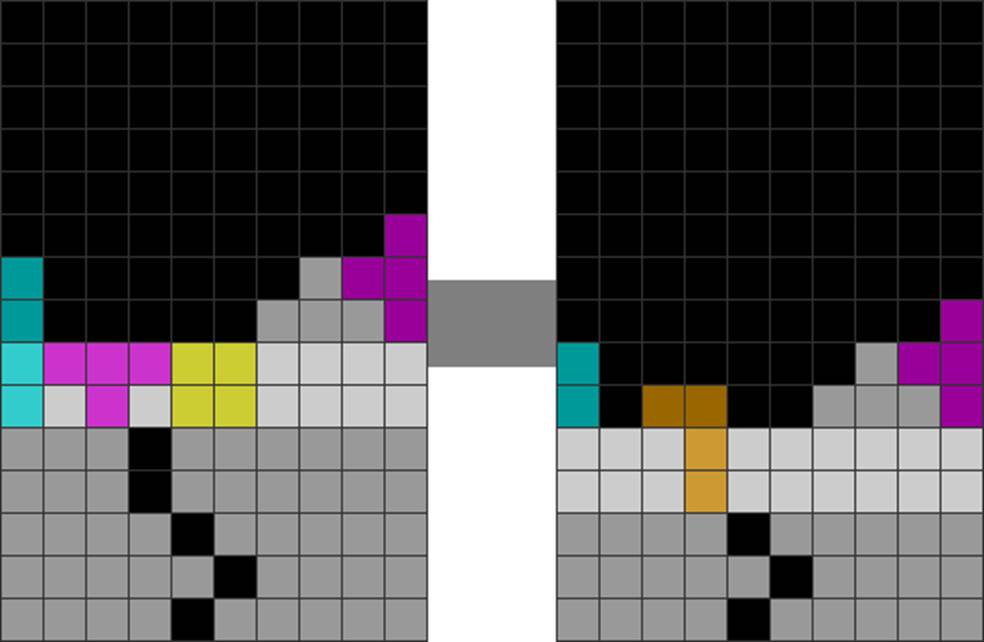
| They use an O to do a double. | They continue with an L-skim without breaking combos. |
| 5 | 6 |
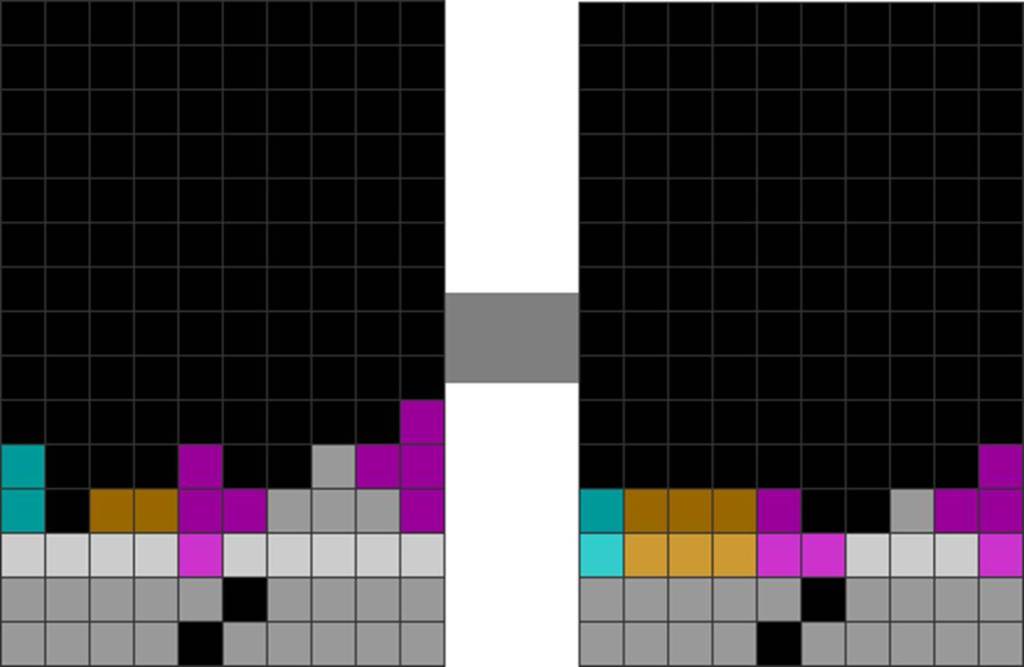
| They continue the combo with a T single line clear. | A final L line clear continues the combo. |
Here, the player is almost topped out. However, just before they receive garbage, they use a precise series of downstacks to maximize combos, dig down, and counterspike using the clean garbage.
I rate this as a 5.
Let us now consider:
| Diagram Set 7-12 | |
| 1 | 2 |
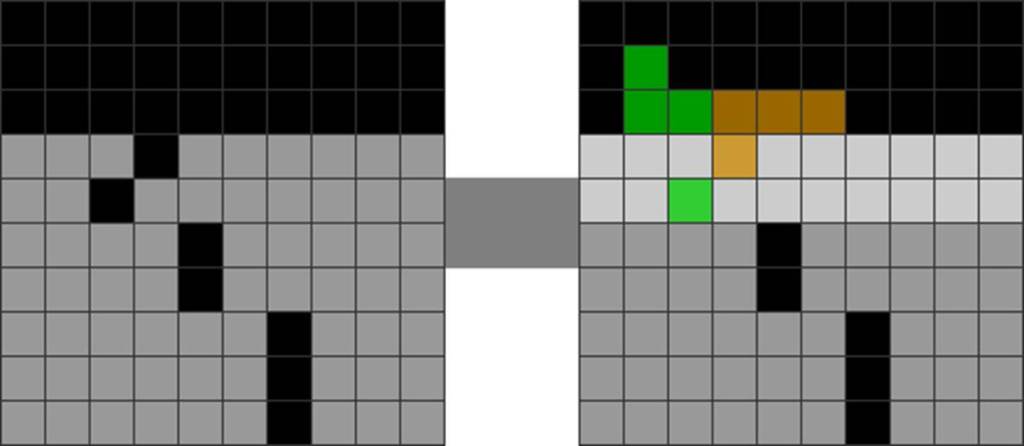
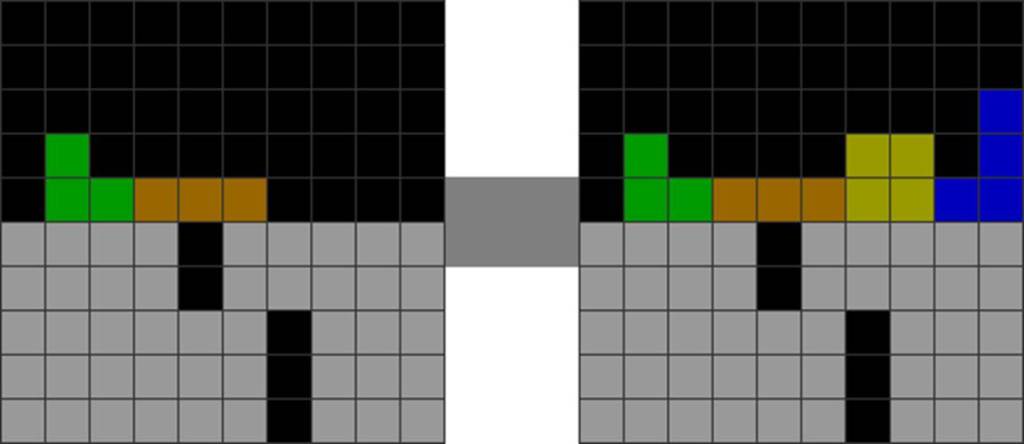
| The garbage is scattered and dirty. | The player skims and incurs 2 line clear delays with L and S. |
| 3 | 4 |
| This causes the orange blocks from the L to upstack and block the garbage hole. | The player upstacks a bit more with O and J. |
| 5 | 6 |
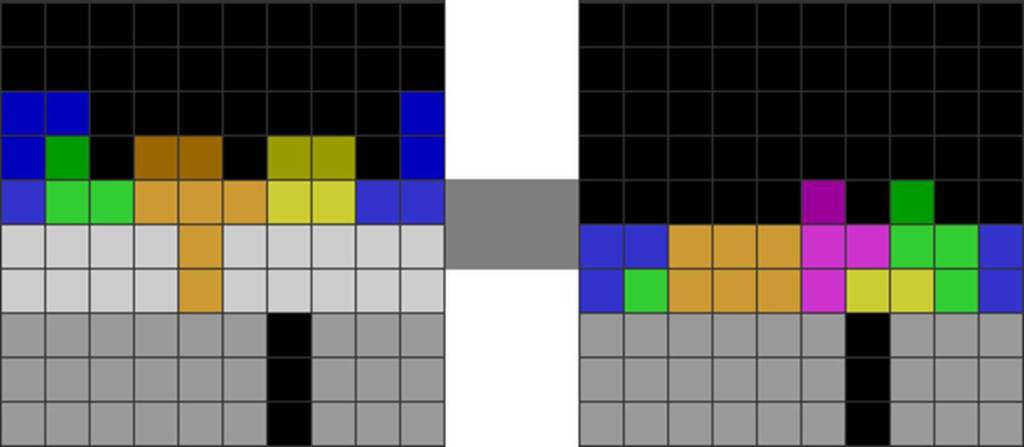
| They then excessively and inefficiently skim with J and L pieces. | They finally skim with T and S to clear the colored blocks and reach the garbage hole. |
Unfortunately, here, the player takes too many pieces to downstack and reach the clean garbage line below. They make the tragic mistake of upstacking a bit, skimming, then repeating.
This scores a 1 or 2.
Summary
More metrics can exist, and readers can create their own sub-dimensions to analyze gameplay.
Generally, I use the ones covered to assess a player’s offensive and defensive skill.
If a player scores too many 1s and 2s, they need to improve in those specific sub-dimensions.
This provides a panoramic view of one’s strengths and weaknesses, so they can more easily focus on the latter.
In a Nutshell
| Key Points |
| Review and journal your gameplay constantly to reflect upon your experiences and grow tactically and strategically. While reviewing your gameplay (or that of others), focus on spotting stacking, downstacking, and setup proficiency. Spot your weaknesses and train those weak areas. |

