The first few seconds may render in low quality. Please give them a few seconds to render.
The Basics
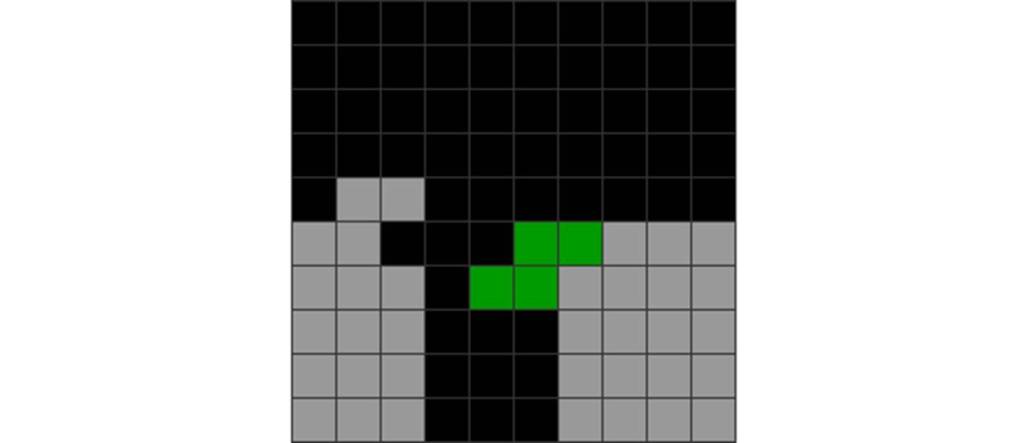
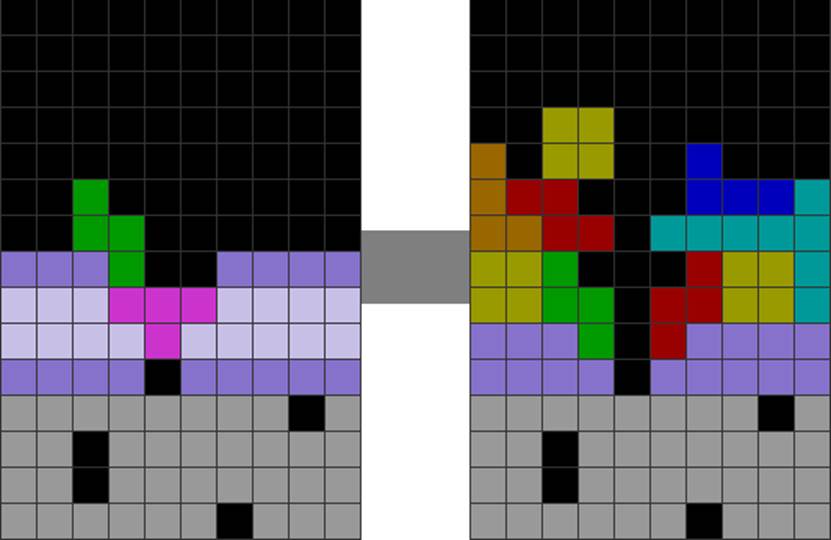
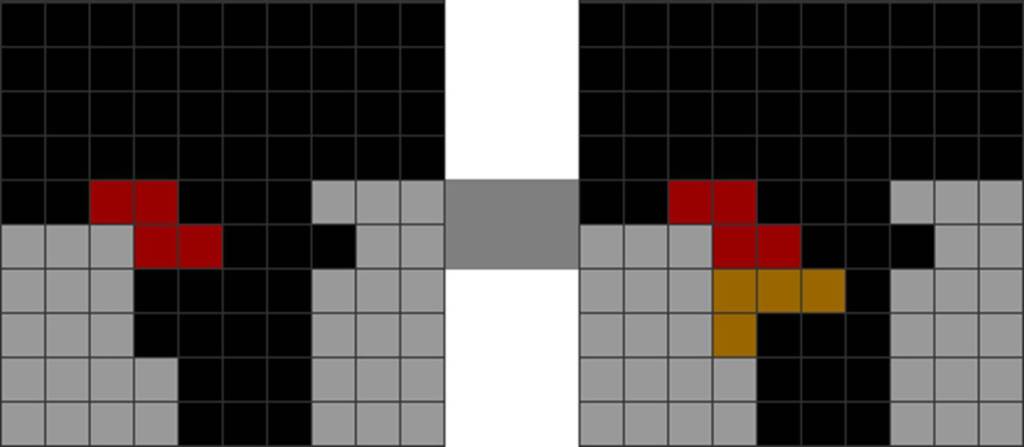
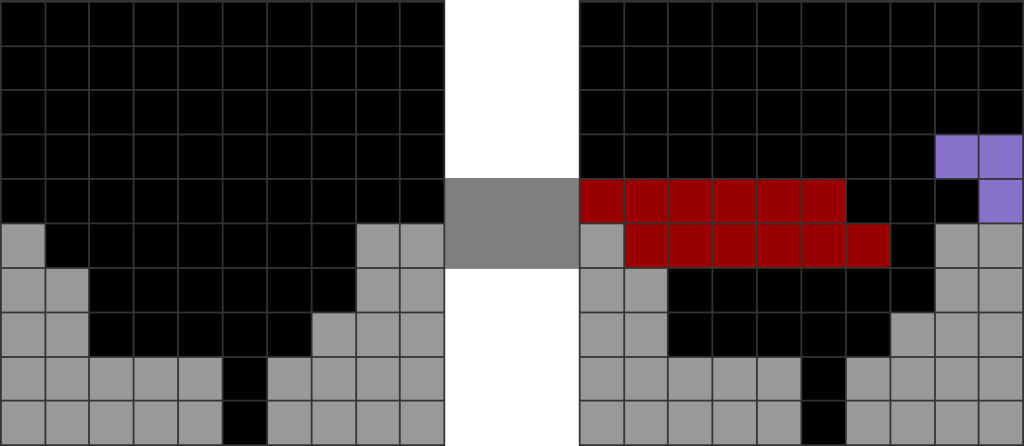
STMB Cave is a floating T-spin (often a T-spin double), as the T-spin is suspended above empty blocks.
Diagram Set 7-1
It is a widespread T-spin double method with many mid-game opportunities. Learning this method significantly increases one’s T-spin continuations. This is because it can be stacked many times.
Common Mid-Game Chances
STMB Caves are mainly used to extend T-spin chaining for a quick, connected burst of T-spin attacks.
1. 3-Wide Situation
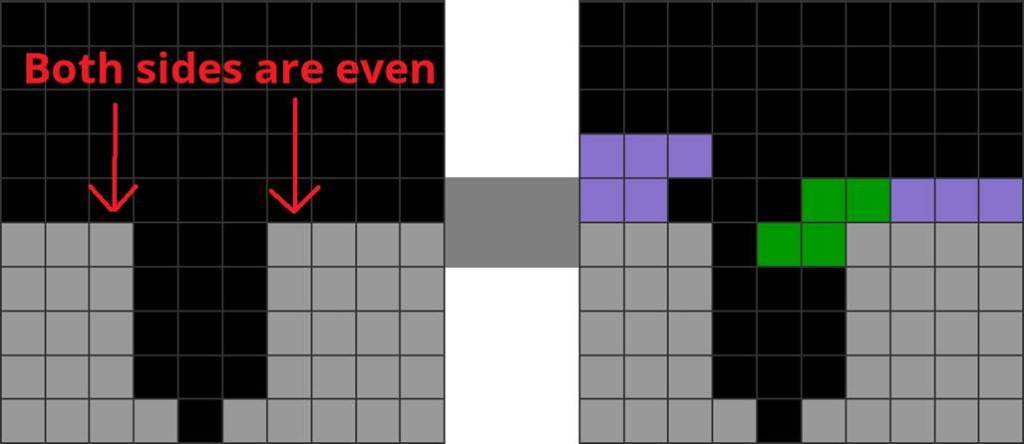
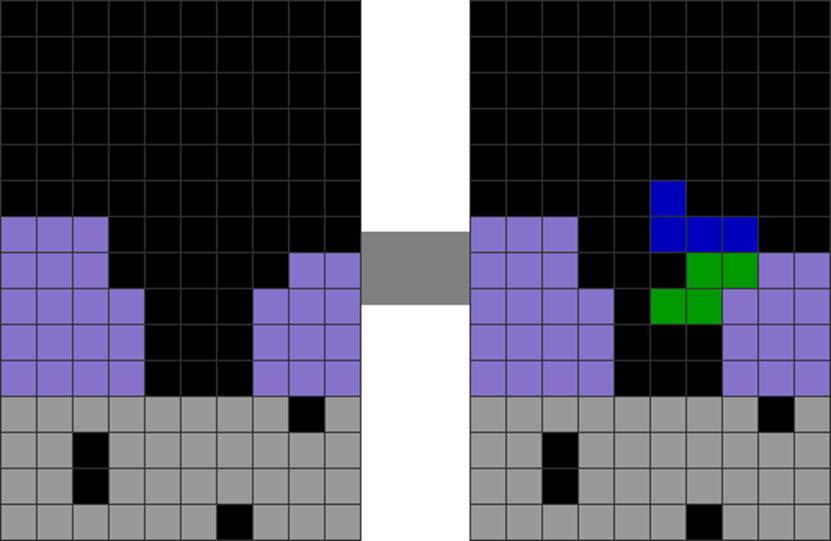
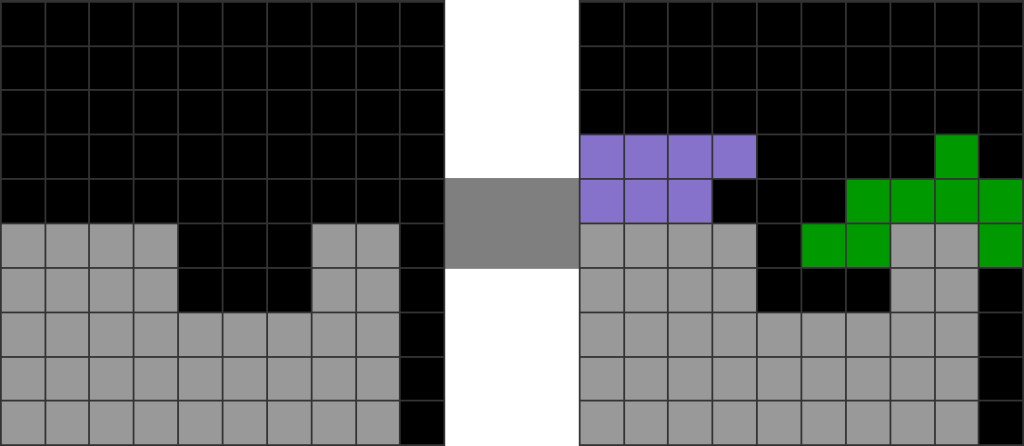
This is the most common mid-game STMB Cave opportunity, by spotting a 3-wide gap:
Diagram Set 7-2
1
2
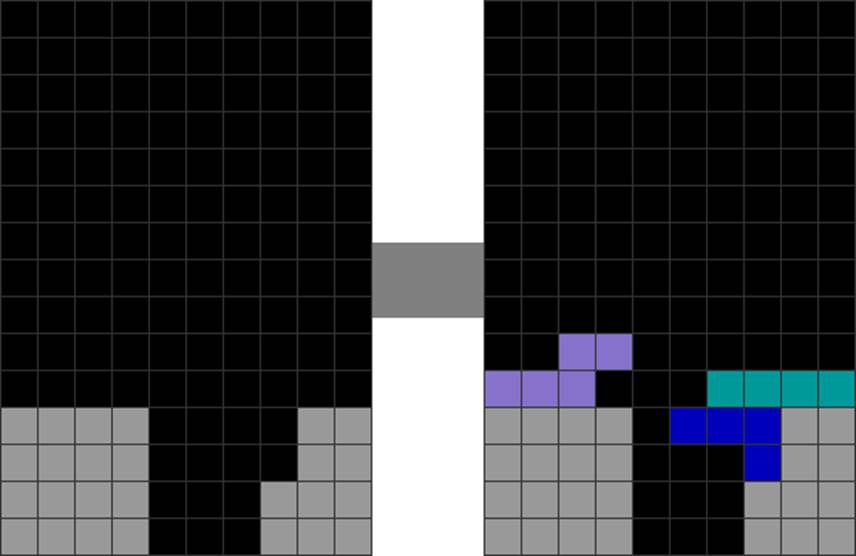
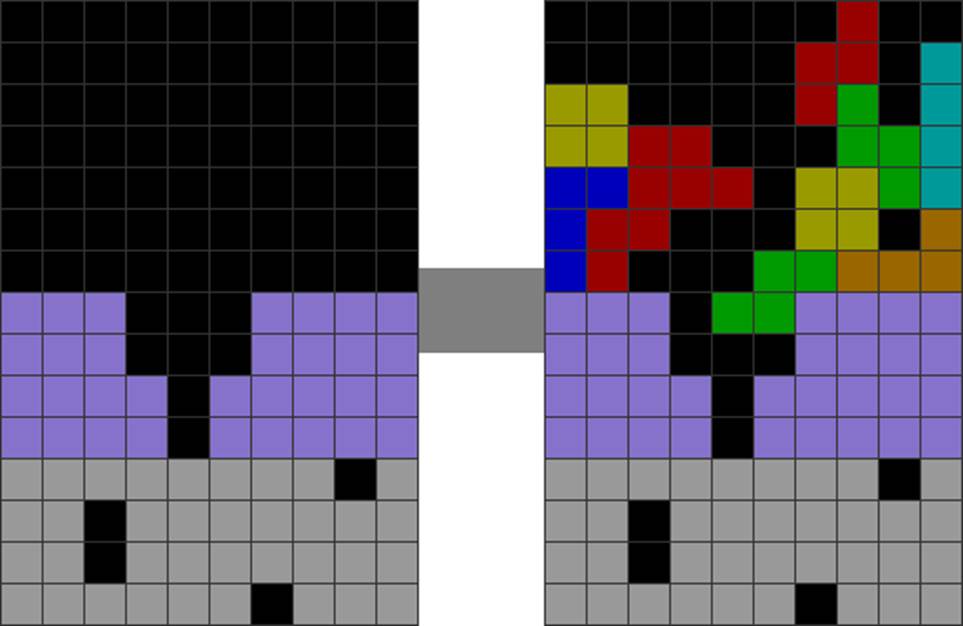
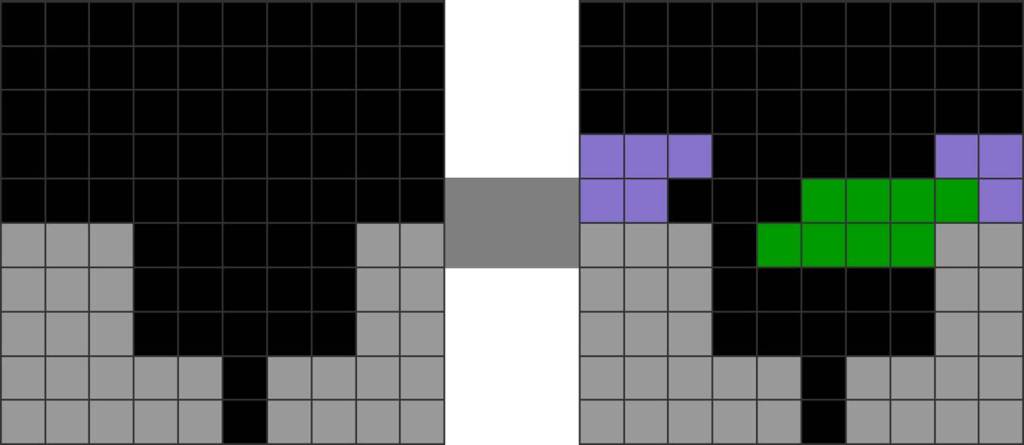
Spot a balanced 3-block-wide gap mid-game. It is the most common mid-game chance.
Just put an S over it and construct the overhang. The first STMB Cave is done!
The primary STMB Cave form uses S and Z as a floating base.
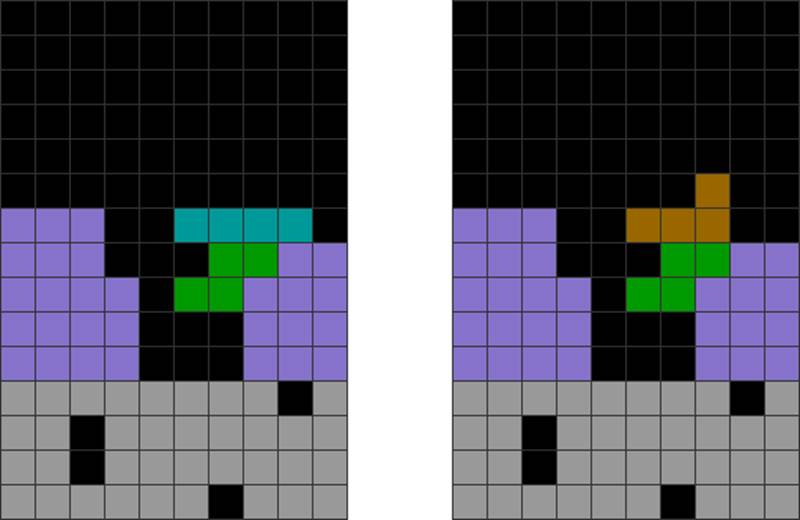
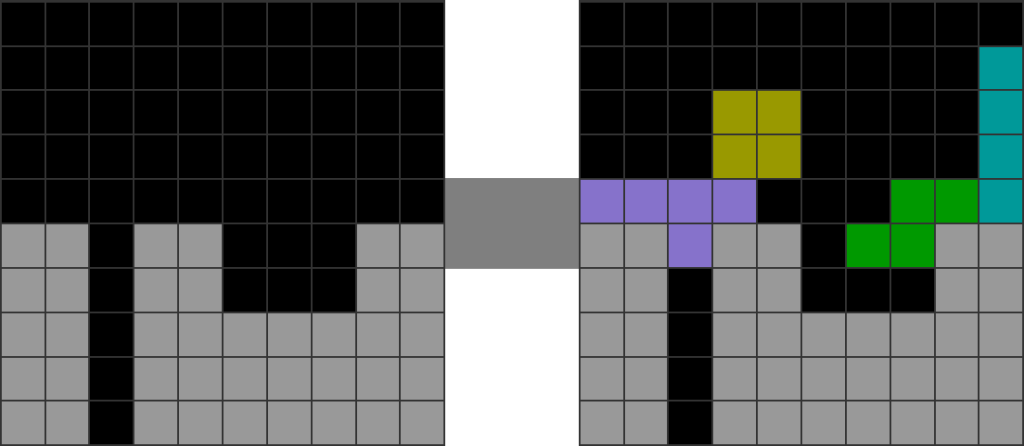
Besides the S or Z pieces, you can also make an STMB Cave using a horizontal T piece:
Diagram Set 7-3
1
2
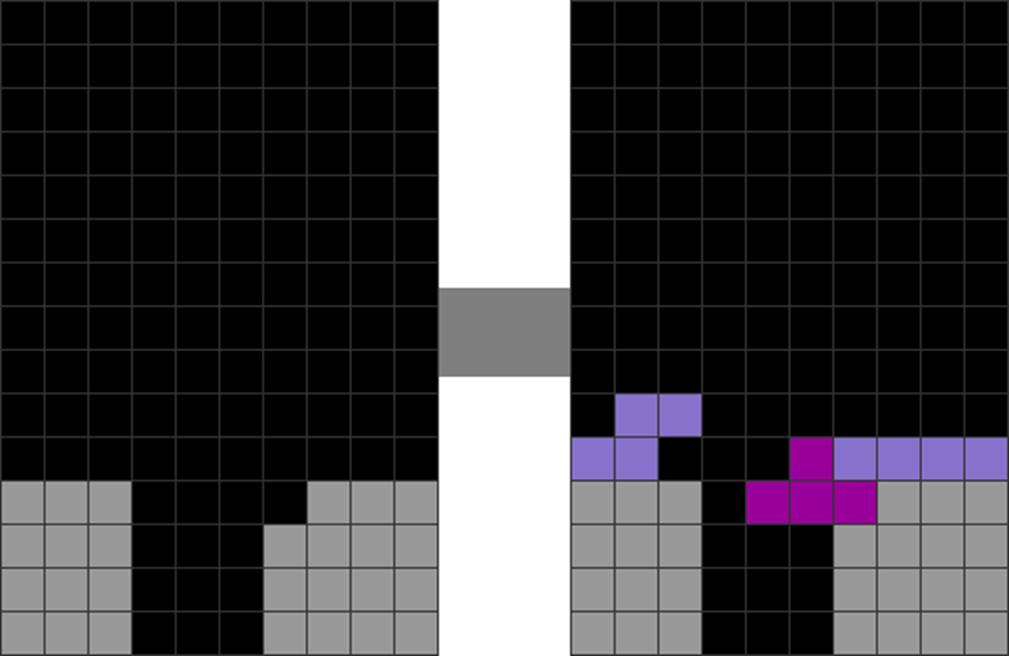
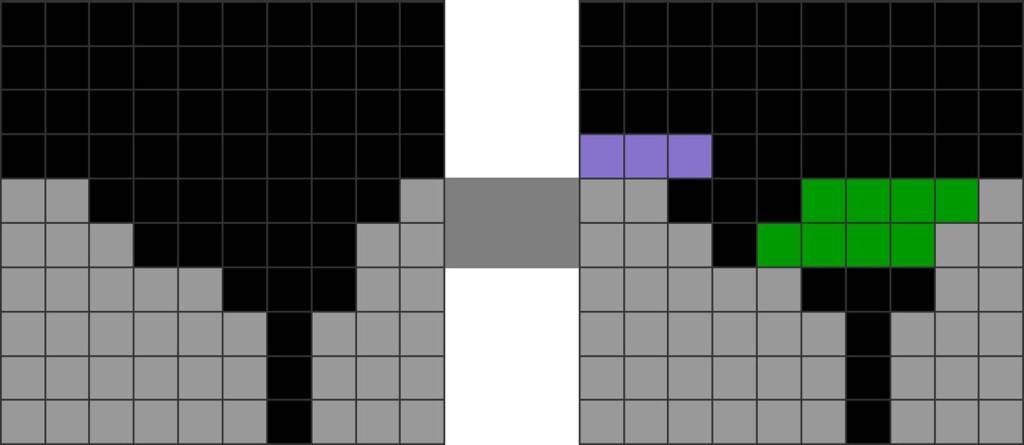
You can also do so with a T piece.
Creating the 3-Wide Gap Situation Purposely
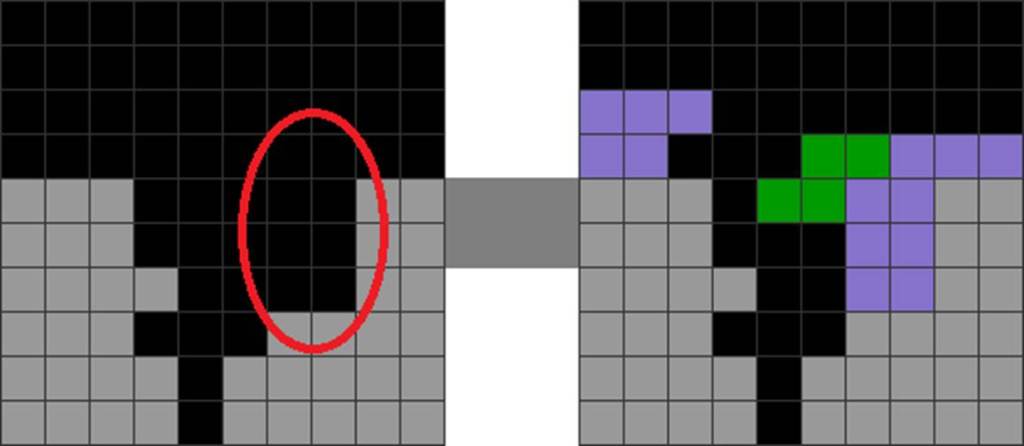
If a 3-wide gap is not apparent, you can proactively create one to eventually make an STMB Cave:
Diagram Set 7-4
1
2
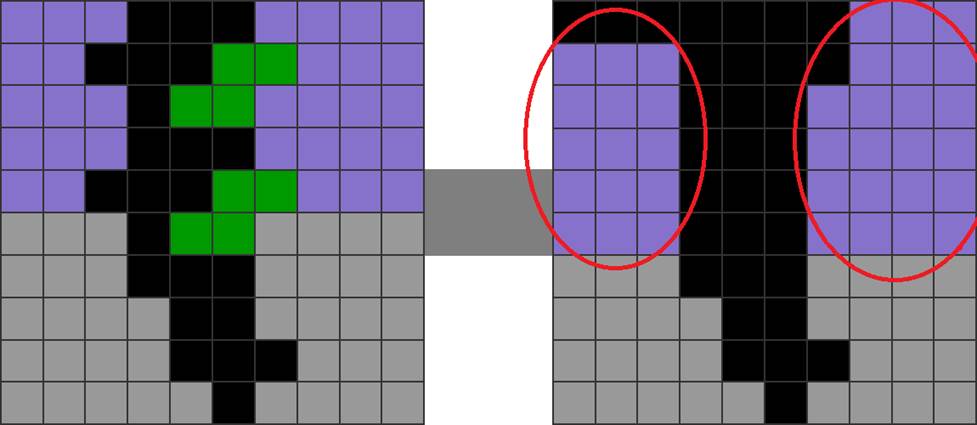
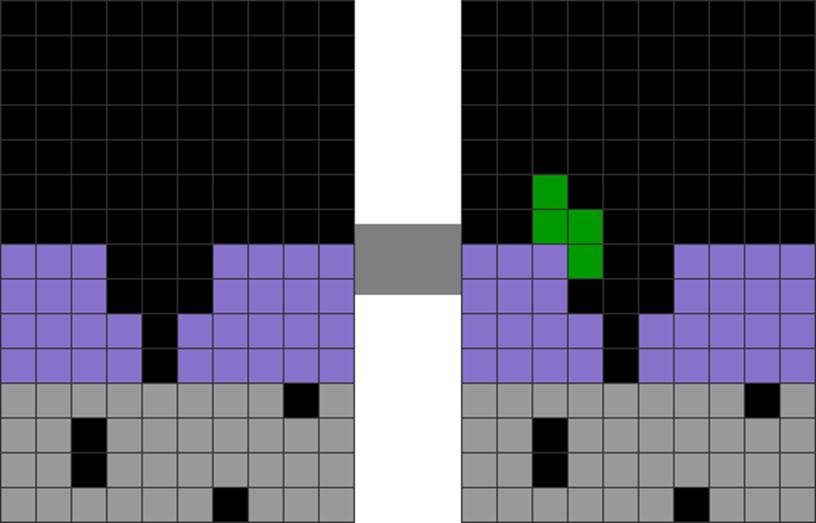
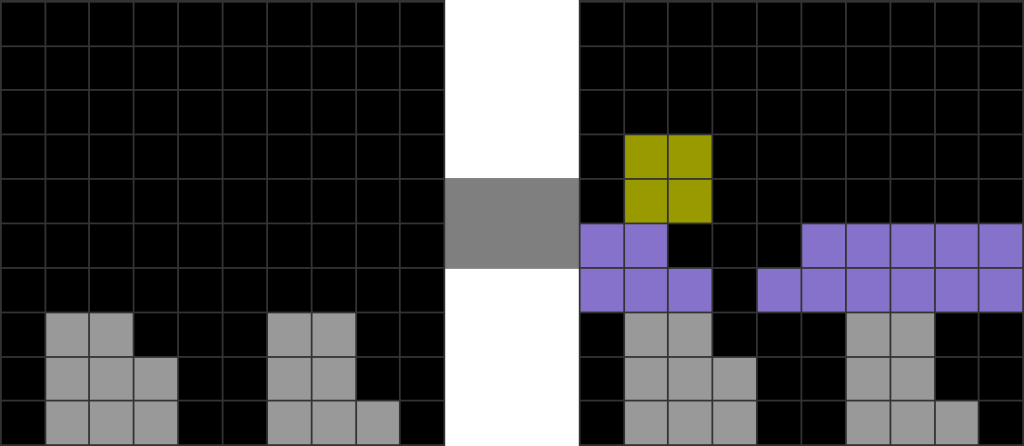
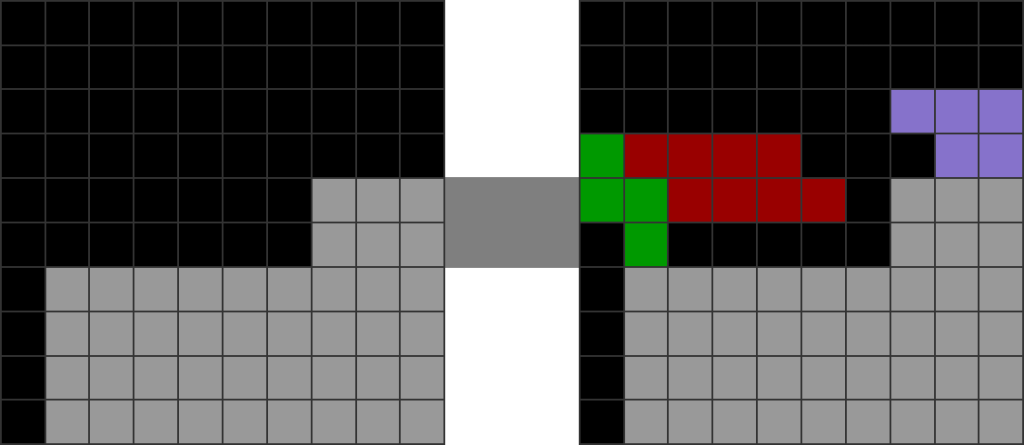
Sometimes, you want to stack the red-circled parts to create an STMB Cave chance.
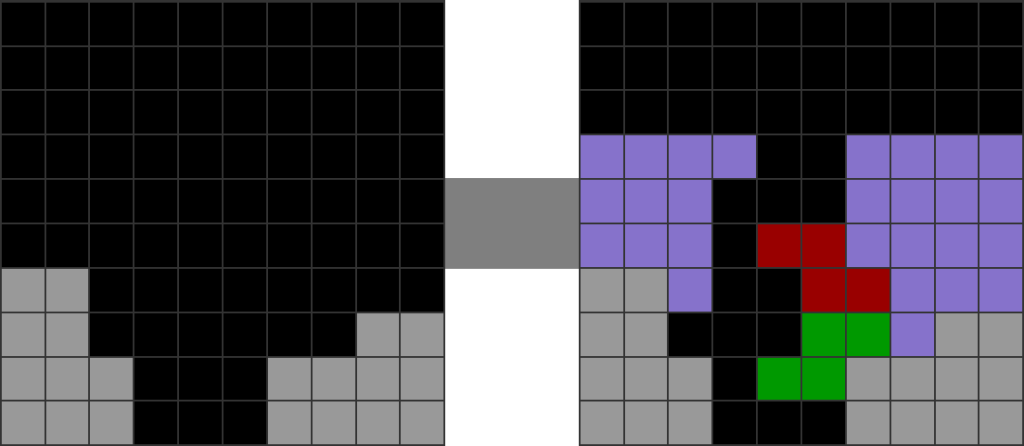
By stacking the lavender parts correctly into a 3-block-wide gap, you can make STMB Caves.
STMB Cave works best over 3-wide gaps. However, more advanced variants are possible below:
Diagram Set 7-5
1
2
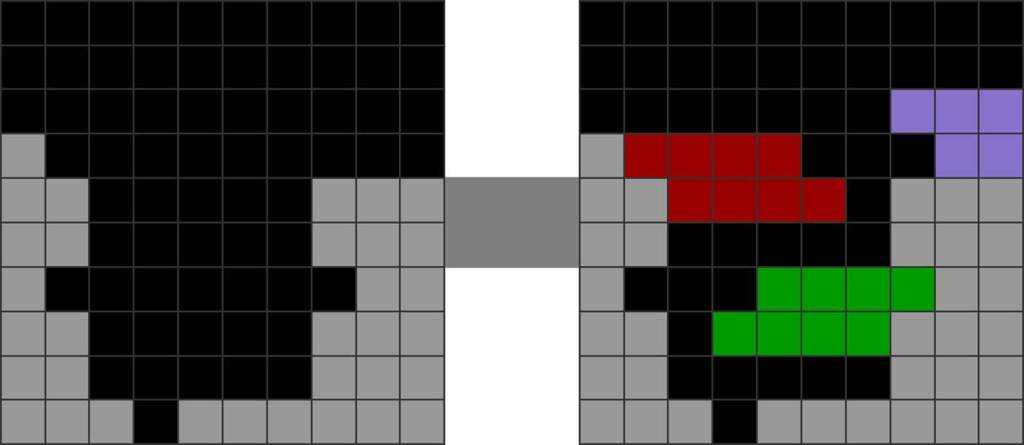
The player uses a J and I prop to make the base of an STMB Cave.
Here, it is possible to use composite forms to create the same STMB Cave pattern. I advise the reader to experiment instead of memorizing by rote.
2. Stacking STMB Caves
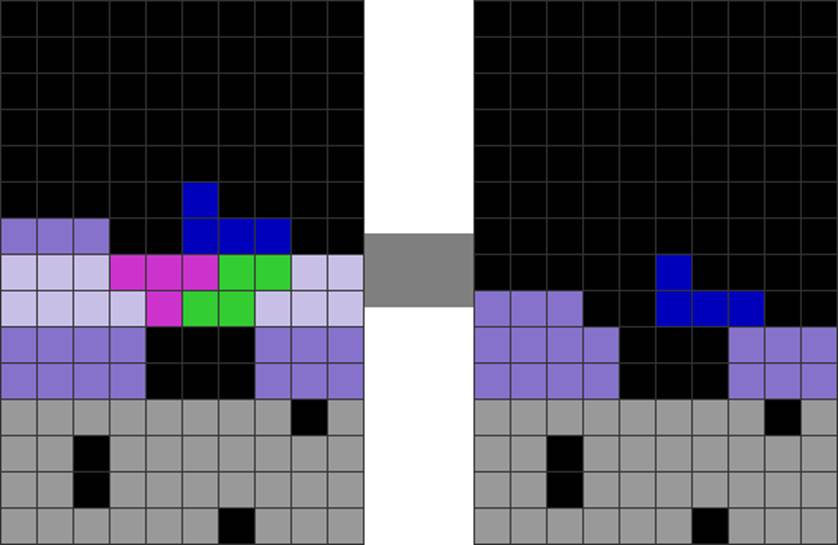
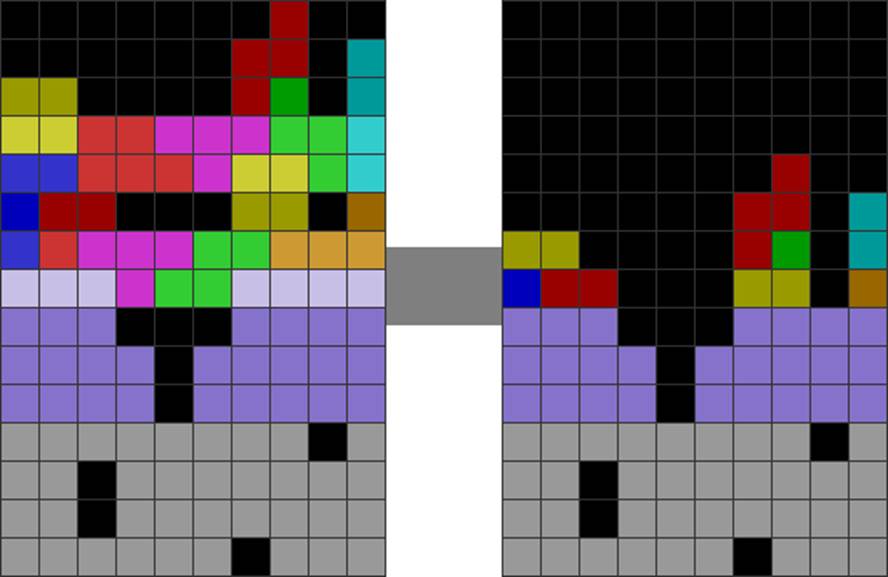
You can stack many STMB Caves. Doing so lets you send forth a burst of 2 to 3 T-spin doubles in a continuous attack spike that can catch your opponent off-guard:
Diagram Set 7-6
1
2
With proper stacking, you can stack or chain many consecutive STMB Caves. However, this may lead to overstacked towers, ultimately ending the chain.
However, stacking too many simultaneously is risky as it may lead to a T drought, forcing you to stack dirtily over holes.
Diagram Set 7-7
A
B
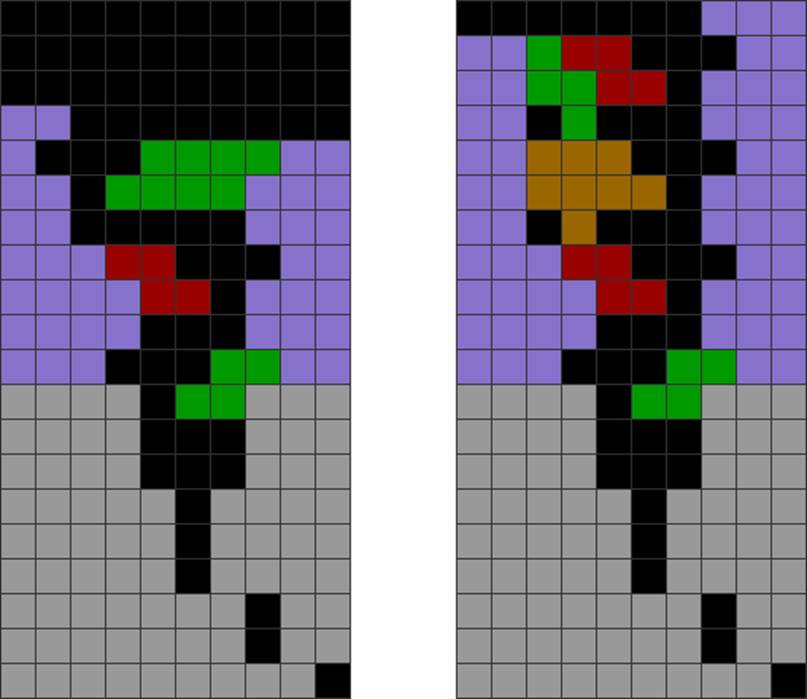
These 2 examples show many stacked STMB Caves.
The above is an extreme example — be careful not to go overboard! You will likely run out of Ts and get into a T drought before completing A or B’s sequences.
Stacking STMB Caves Over Other Setups
STMB Caves let you extend T-spin barrages by stacking them over other setups:
Diagram Set 7-8
1
2
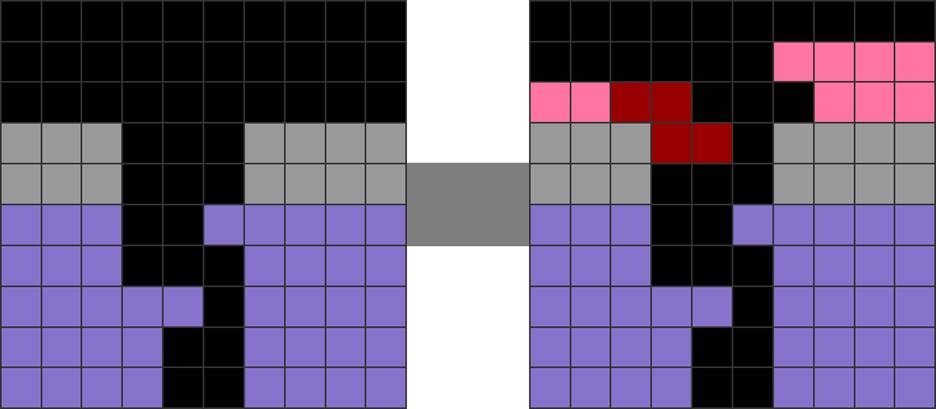
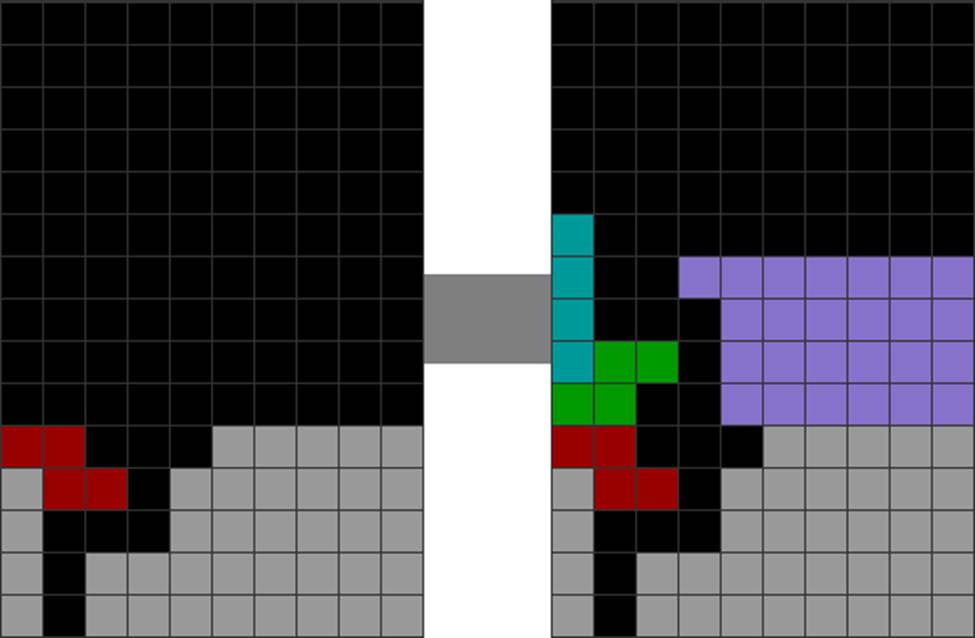
STMB Caves are best used to strengthen existing setups (the lavender parts can be any T-spin or Tetris setup) with more floating T-spins. Doing this augments your firepower.
This stacking is sometimes best used during a T-drought to prevent the wasteful placements of Ts in the stack. Hence, when the T pieces finally arrive, you can launch a powerful attack.
Continuations and Follow-Ups
Beginners often mess up STMB Caves, such as by placing the overhangs on the wrong side. By minimizing these errors, you can follow up STMB Caves more cleanly.
1. Common Mistakes
Beginner players often make the STMB Cave mistakes below:
Diagram Set 7-9
1
2
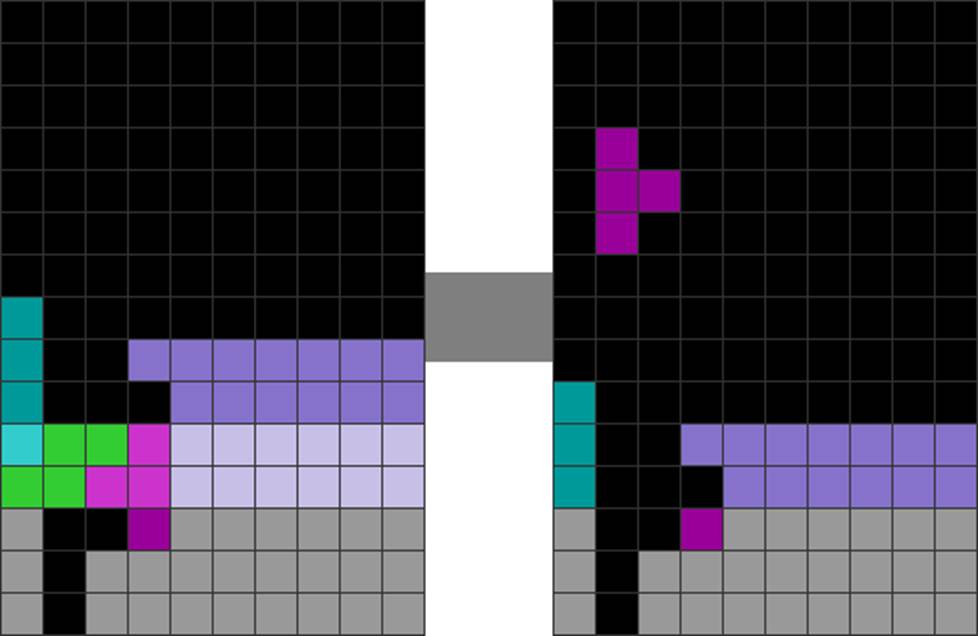
Starting field.
The player places the overhang (J piece) on the wrong side.
3
4
The T-spin double finishes.
The J overhang dangles over the cavity below.
This is an unclean STMB Cave and should be avoided.
Other mistakes include:
Diagram Set 7-10
A
B
The player places the I and L pieces (or others) as overhangs on the wrong side. This causes the subsequent pattern to stack messily over the holes or cavities below, requiring expensive skims to clean up.
Avoiding dirty STMB Caves is preferred, as cleanup is often tricky. This buys the opponent time to attack you and, thus, makes you vulnerable.
2. Not Destroying T-Spin Continuations
Be careful when using too many STMB Caves! While they look fantastic and fancy, set 7-12 happens when you use too many.
Diagram Set 7-11
1
2
Starting field with a 3-wide gap for an STMB Cave.
Instead of going for the STMB Cave, the player makes an S overhang, creating a regular T-spin double.
3
4
The T-spin double concludes.
The player makes a Fractal, transitioning into LST stacking.
The above option is more compact and efficient. Compare to the below STMB Cave stacking:
Diagram Set 7-12
1
2
Same starting field as the last diagram set.
The player goes crazy and makes too many exotic and complex floating T-spins.
3
4
The 2 T-spin doubles conclude.
You are left with a field that is hard to follow up with LST stacking.
Overusing stacking STMB Caves thus leads to the field becoming less tight and potted with cavities, and it destroys LST or ST stacking continuations.
Advanced
STMB Caves have many advanced and uncommon forms.
1. Non-Linear STMB Cave Construction
You can construct STMB Caves non-linearly:
Diagram Set 7-13
1
2
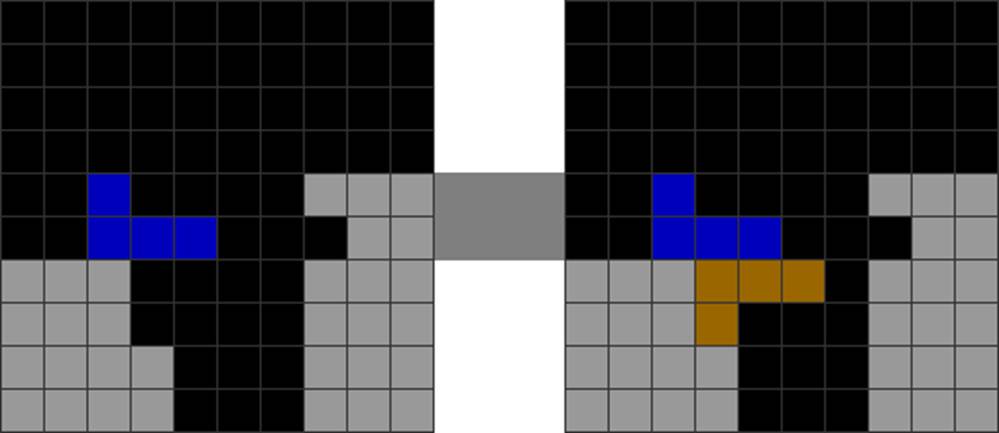
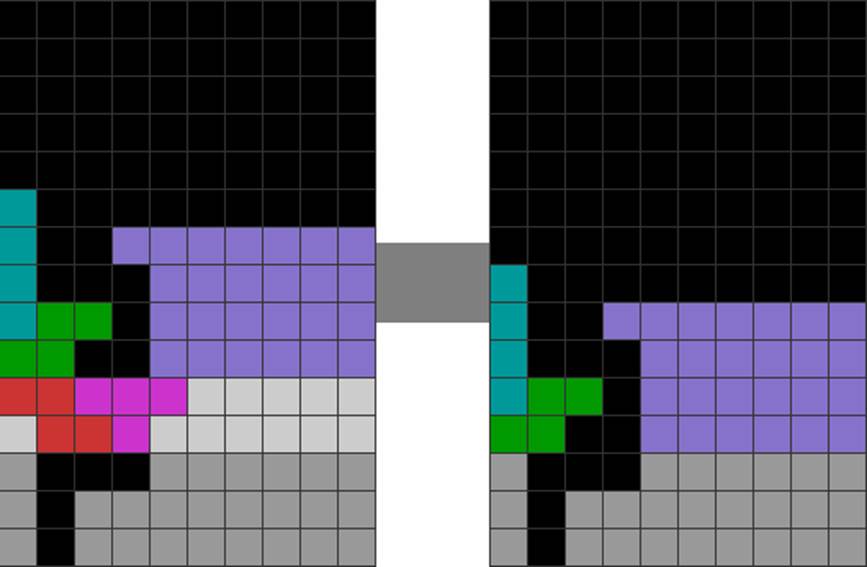
The player puts a J in step 1. He then soft drops and spins an L under the J to make the STMB Cave.
Diagram Set 7-14
1
2
Same as the last diagram set, except with a soft dropped L-spin under the Z.
Using these methods opens up more STMB Cave mid-game opportunities.
2. STMB Cave Donations
While rarely heard or used, STMB Caves can be donated.
Diagram Set 7-15
1
2
Spot a 3-wide cavity during 9-0 stacking.
Just make an STMB Cave and fill up 2 clean rows. Easy!
Subtler STMB Cave donations include:
Diagram Set 7-16
1
2
Spot a 3-wide gap when the hole is between columns 2 and 9.
This can be tricky and difficult to spot. Be creative and experiment!
3. Wider STMB Caves
STMB Caves can be 5-blocks wide:
Diagram Set 7-18
1
2
Spot a balanced gap that is 5 blocks wide.
Place 2 S or 2 Z pieces to make the T-spin.
Subtler mid-game situations include:
Diagram Set 7-19
1
2
Some situations are subtler, without a fully formed well at the bottom, like this.
5-wides can also be donated. However, this can be dangerous:
Diagram Set 7-20
1
2
This is extremely difficult to spot.
Many consecutive 5-wides can be stacked. However, this risks stacking pieces over the suspended parts, rendering them dirty:
Diagram Set 7-21
1
2
Just look for 2 5-wide gaps and stack them together or consecutively.
You can also make a 7-wide T-spin using 3 S or 3 Z pieces:
Diagram Set 7-22
1
2
To make this, spot a 7-wide even gap and place 3 S or Z pieces.
These advanced, broader forms of STMB Caves are typically just gimmicks. However, 5-wides that use 2 S or 2 Z pieces are sometimes useful, as they prune excess S or Z pieces by forming a T-spin rather than just skimming them.
4. Advanced Spliced STMB Cave
You can insert a T-spin double inside an STMB Cave. This method is called Lalande, as covered in my Book 3:
Diagram Set 7-23
1
2
Spot a 3-wide STMB Cave mid-game chance.
Upgrade the STMB Cave by stacking Z on top and filling up the lavender parts.
This is how to carry it out:
Diagram Set 7-24
1
2
An STMB cave opportunity.
The player instead stacks an S over it and constructs the rest to make a Lalande.
3
4
The first T-spin double is horizontal.
You get this aftermath pattern.
5
6
The second T-spin double is vertical.
You then tuck a T underneath the cavity to make it clean.
In a Nutshell
Stacking STMB Caves can grant more burst damage in the short run, but less consistency and damage in the long run because of the harder follow-ups.
Neither choice is wrong; it depends on the player’s playstyle and situational analysis. If he feels confident, a player may stack STMB Caves to quickly burst down an opponent.
Pros and Cons
Pros
Can stack many floating T-spins for more burst.
Can be used for 3-wide gaps.
Can augment existing setups.
Very good for Tetris versus Puyo in Puyo Puyo Tetris when you are less likely to get attacked quickly.
Cons
Sometimes risky, as it blocks off the Tetris hole.
 How to Tetris