The first few seconds may render in low quality. Please give them a few seconds to render.
The Basics
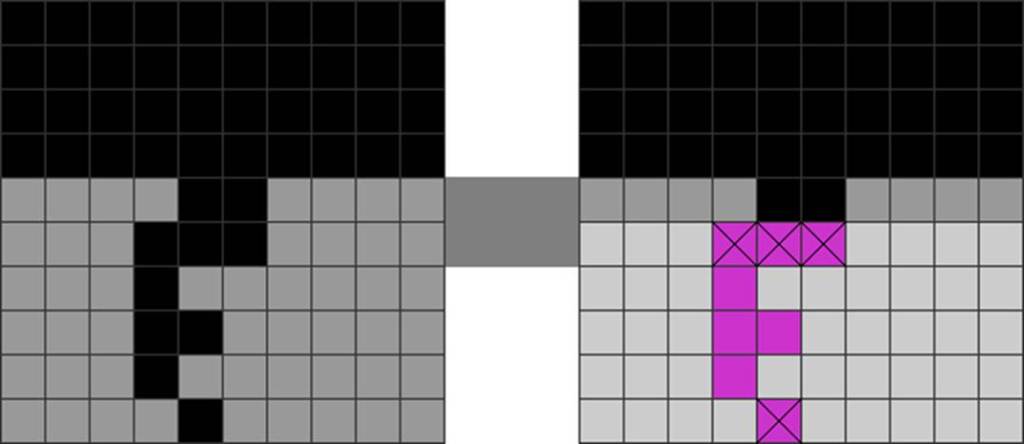
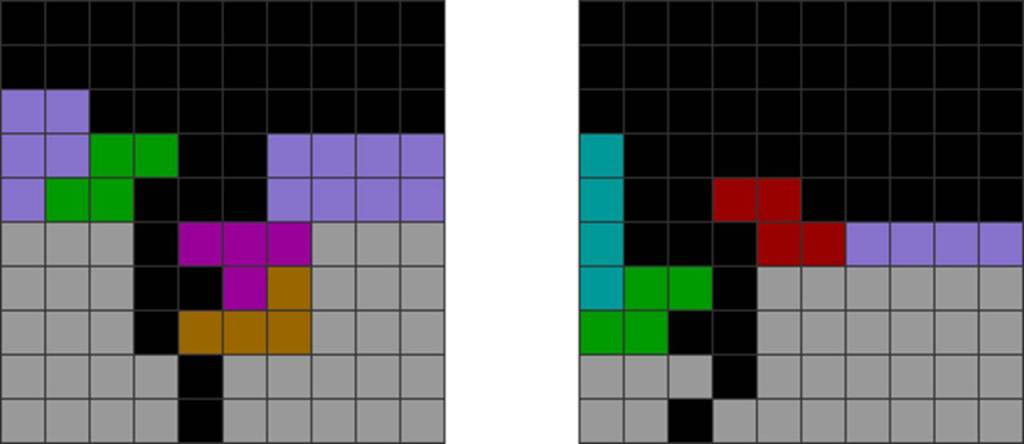
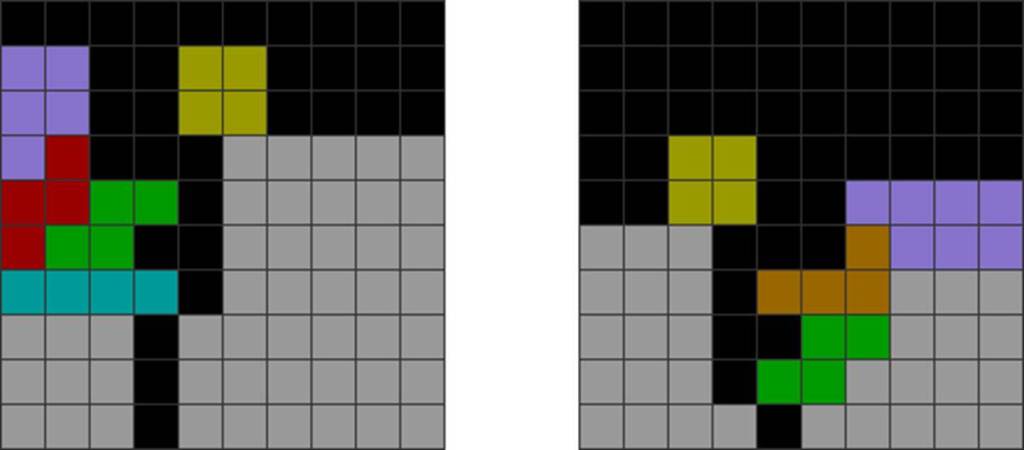
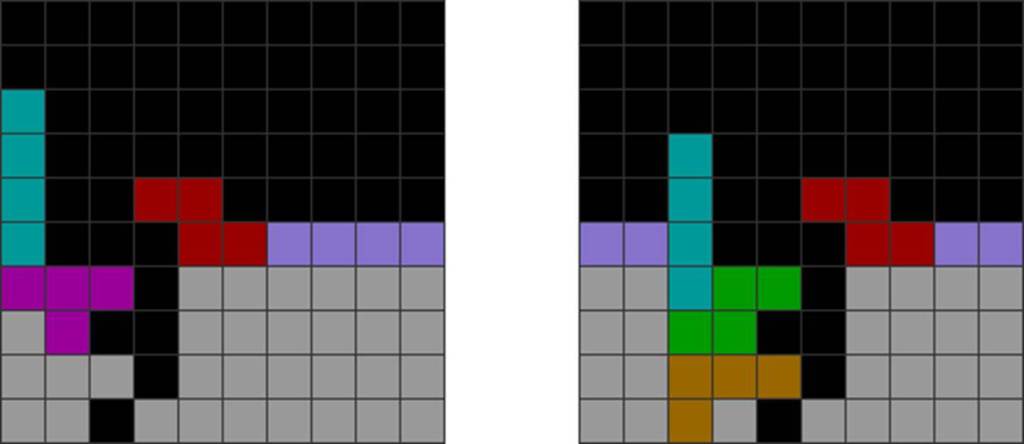
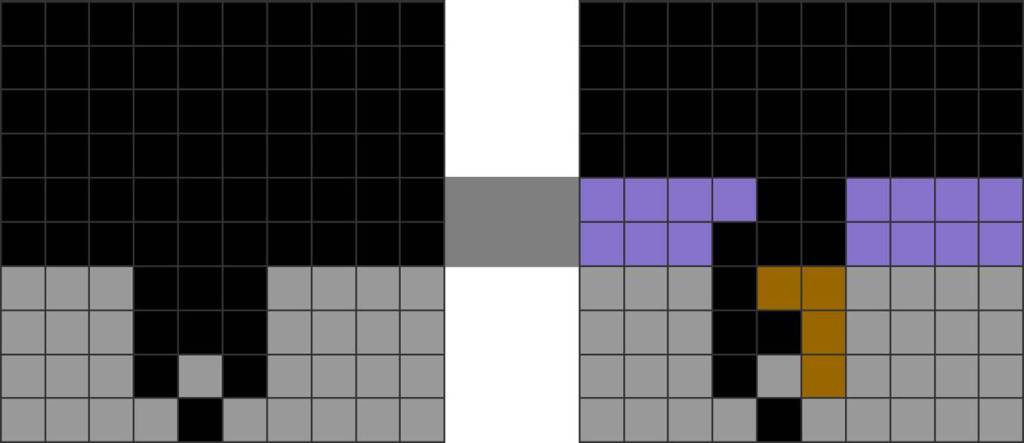
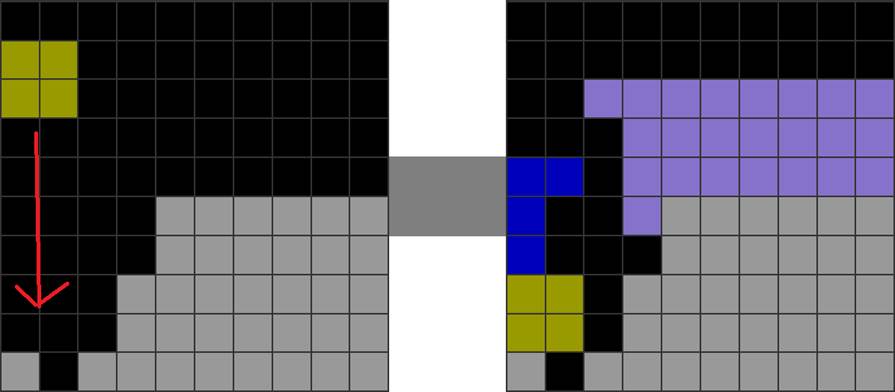
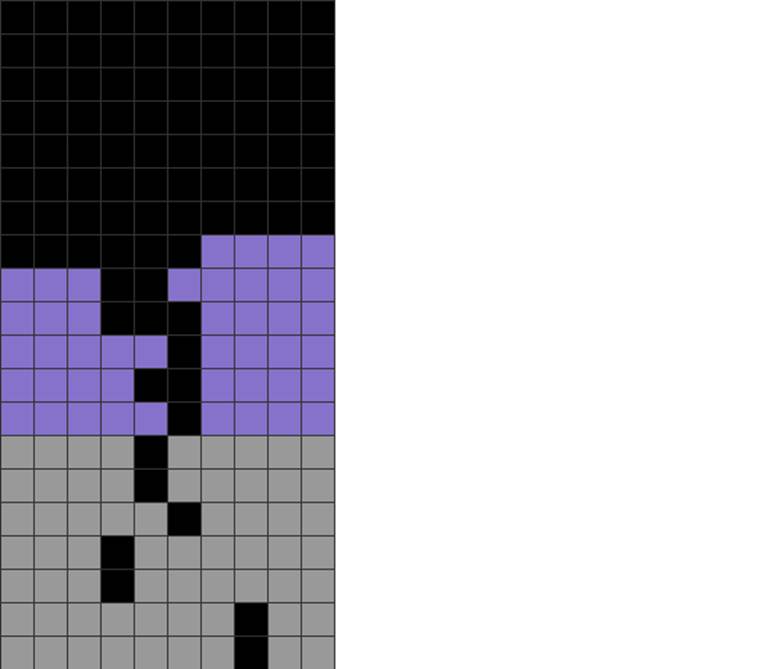
C-spin is a splicing method with a T-spin triple followed by a T-spin double.
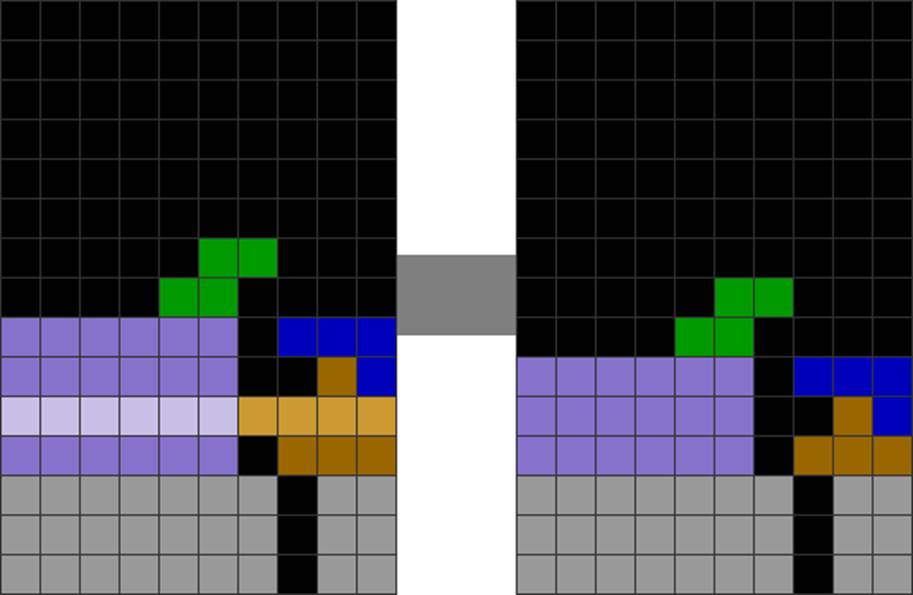
Diagram Set 8-1
1
2
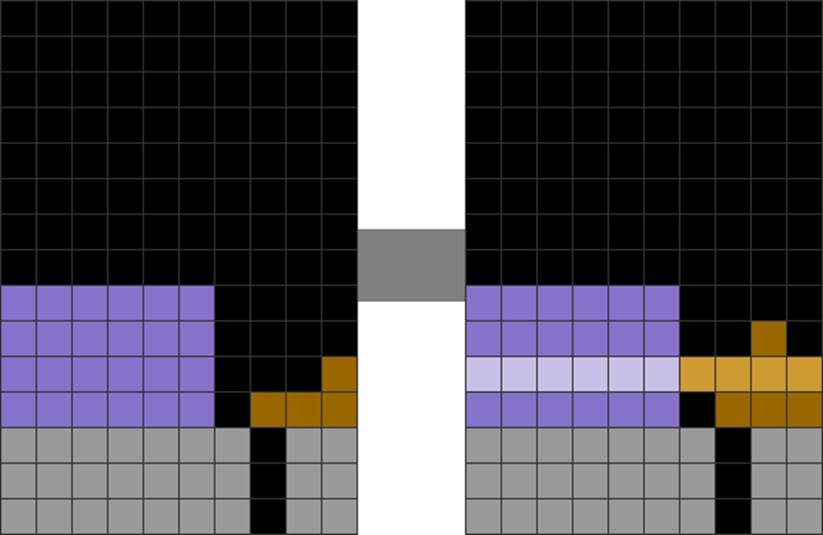
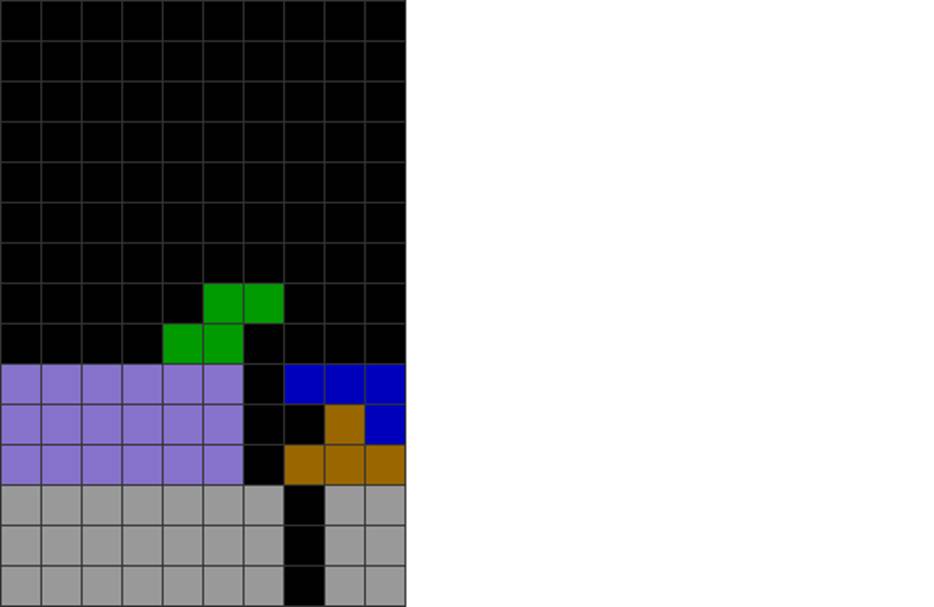
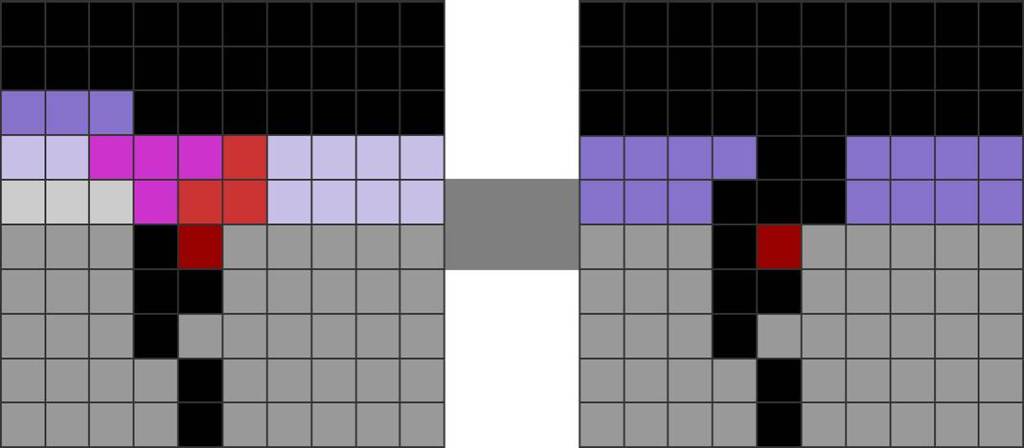
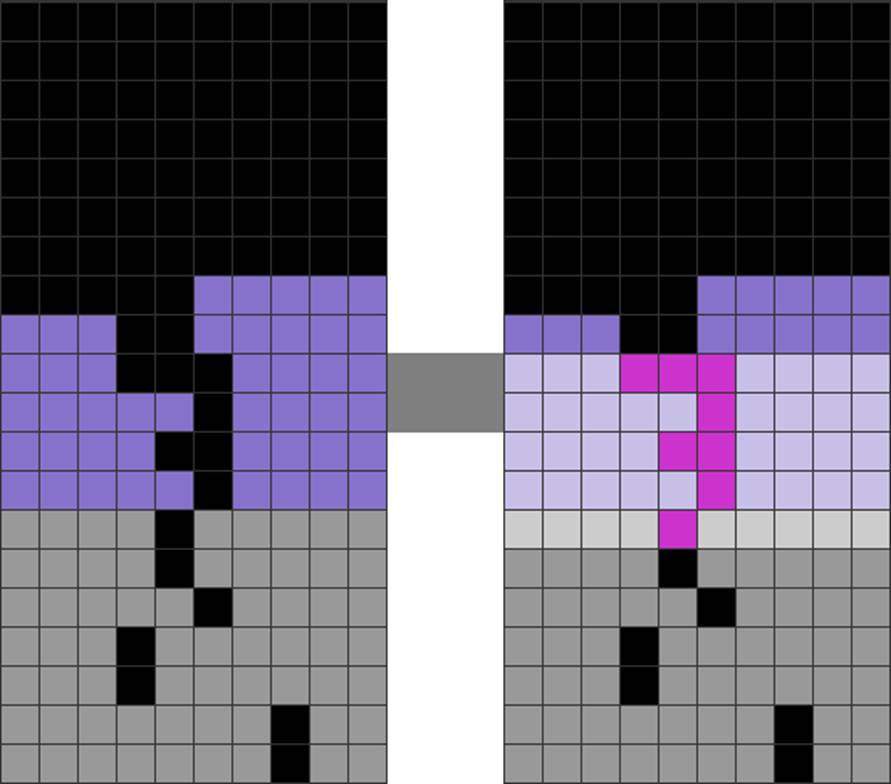
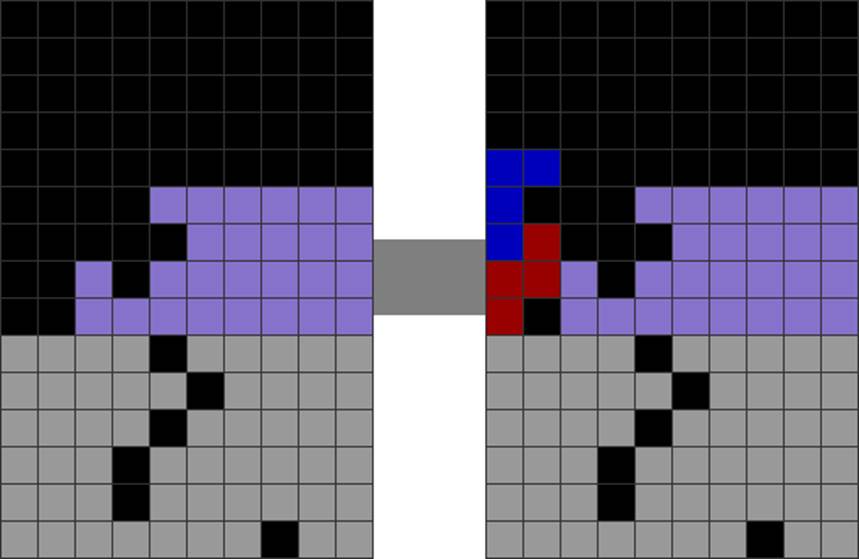
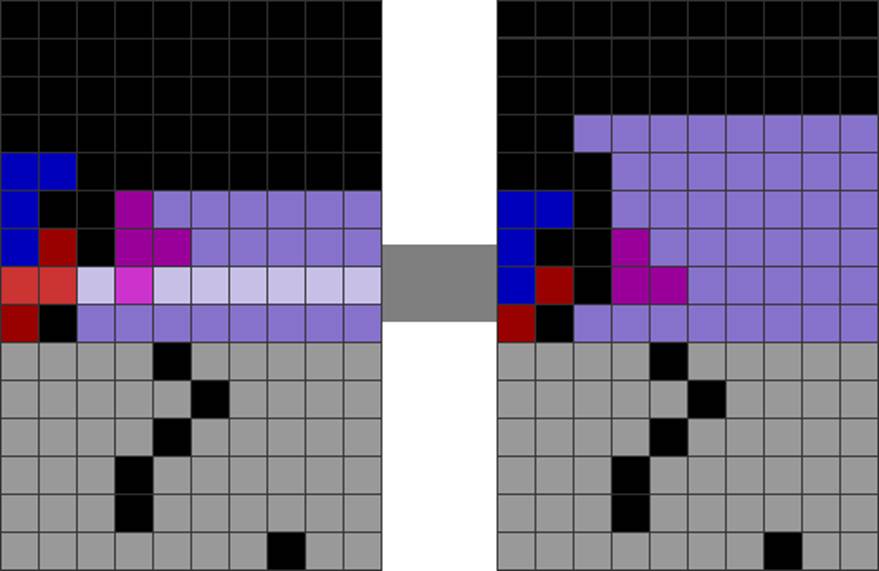
The crossed and uncrossed purple boxes represent the T-spin double and T-spin triple, respectively.
It differs from DT Cannon because the T-spin double and triple orders are reversed. However, it deals the same damage.
It is the cleanest way to make a T-spin triple. This is because, unlike pure T-spin triples, it leaves no unclean overhangs since the last T-spin is a double. It is also better than the DT cannon because the latter leaves an unclean overhang, while C-spins do not.
Damage-wise, it is also higher than a Fractal. However, it can lead to vulnerabilities because it blocks the Tetris or garbage hole. You cannot protect yourself with a Tetris while building it.
This method is also helpful because it is one of the cleanest ways to downstack and sustain back-to-backs.
Common Mid-Game Chances
There are many mid-game opportunities for C-spin, making it one of the most practical setups.
1. General Ways
Here are some situations to use C-spin:
Diagram Set 8-2
A
B
C
D
E
F
These situations for C-spin happen most often in the mid-game.
Here is how to make C-spins:
Diagram Set 8-3
A
B
C
D
E
F
And here is how to make them. These follow from set 8-2’s opportunities.
2. Jagged Corner Mid-Game Chance
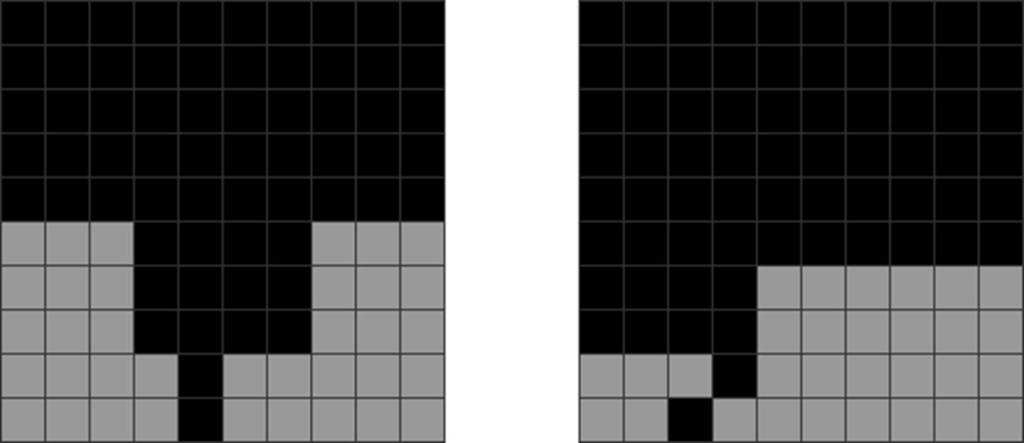
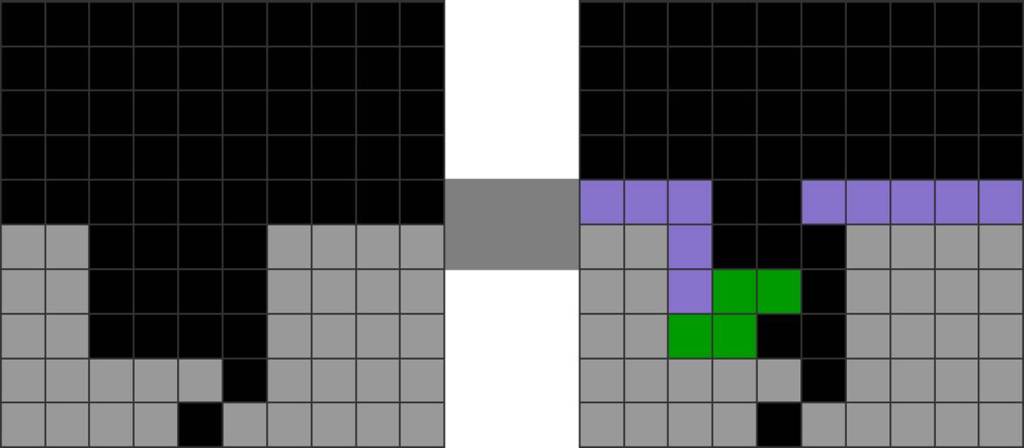
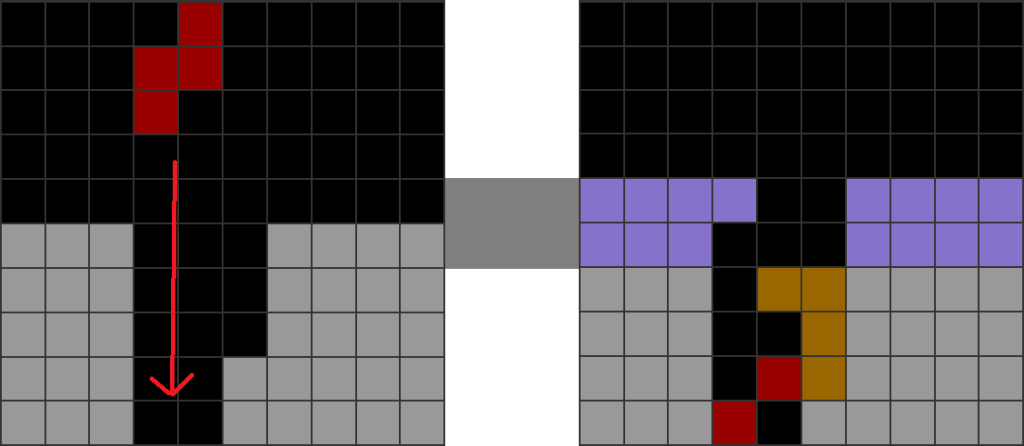
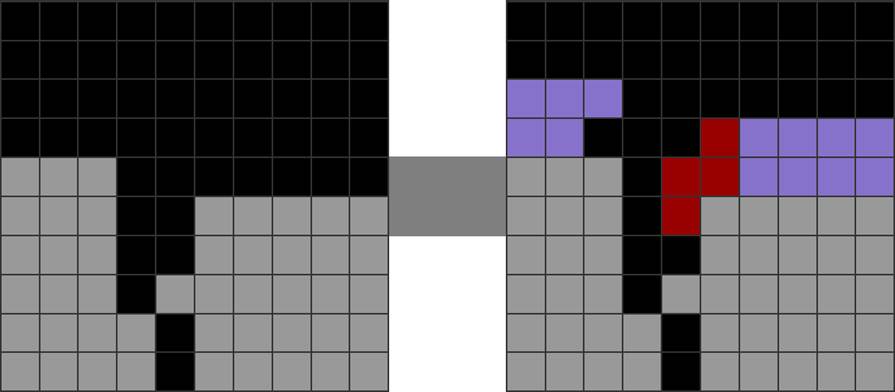
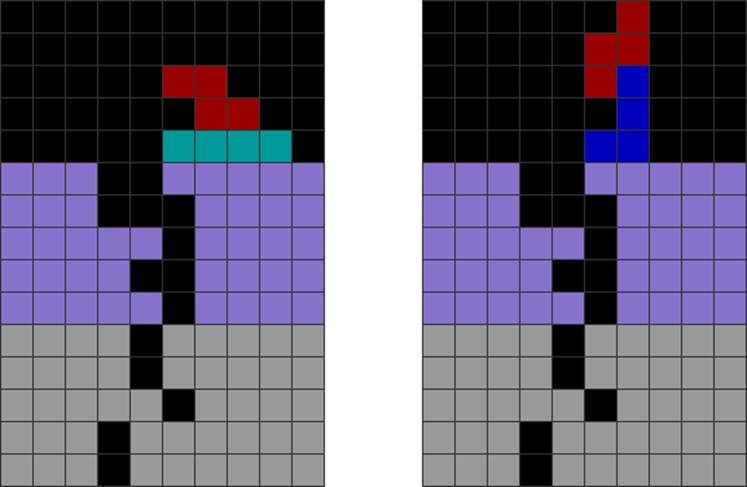
This jagged shape below in step 1 occurs often as a recurring garbage hole pattern:
Diagram Set 8-4
1
2
Spot this common jagged pattern mid-game while downstacking.
Just put an L over it and construct the lavender parts. C-spin done!
This is the easiest and most common way to make a C-spin.
3. Flat Base Mid-Game Chance
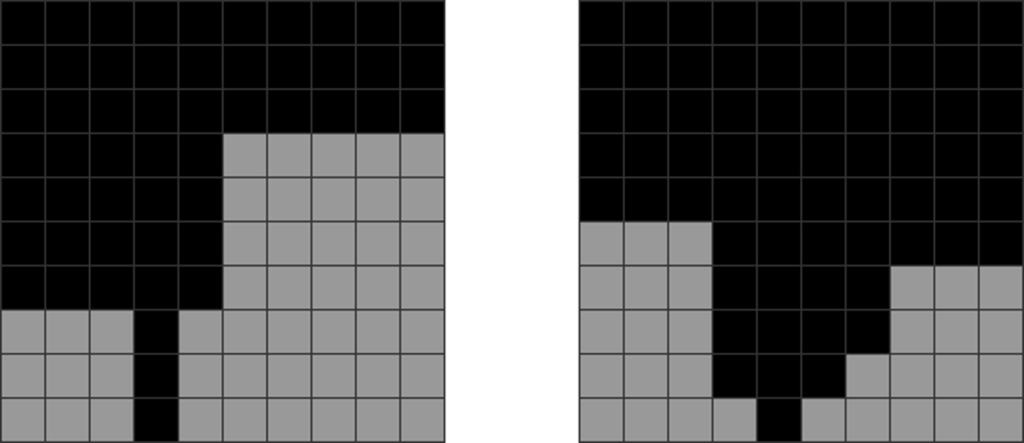
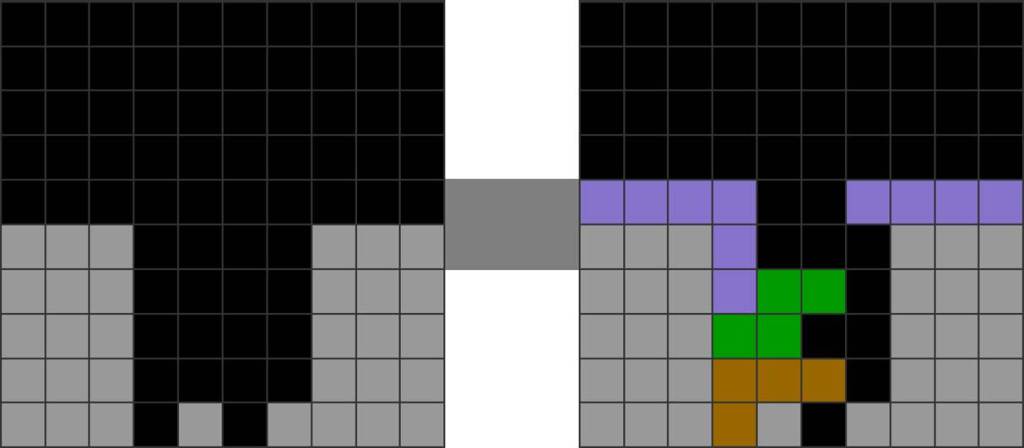
This is the second-most common way to create a C-spin:
Diagram Set 8-5
1
2
Spot this common mid-game pattern while downstacking.
Use the flat base to put an S piece. Stack the lavender parts. Done!
4. Flat L Base Mid-Game Chance
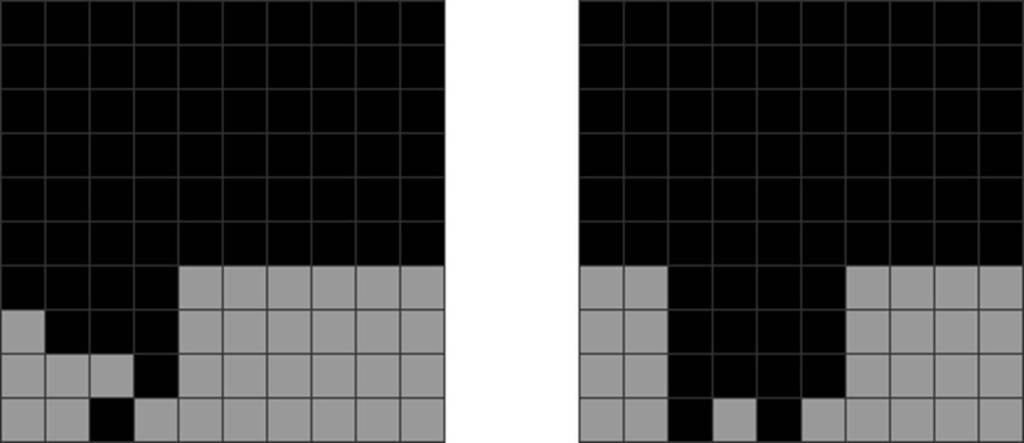
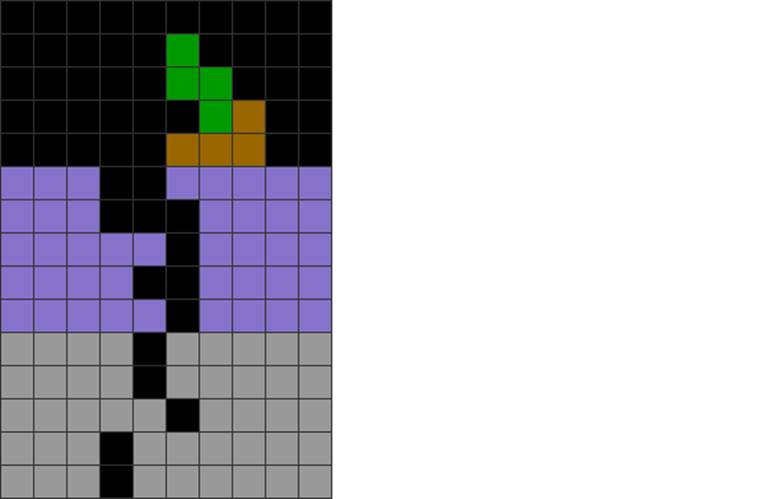
This is uncommon, but learning it opens up a new option:
Diagram Set 8-6
1
2
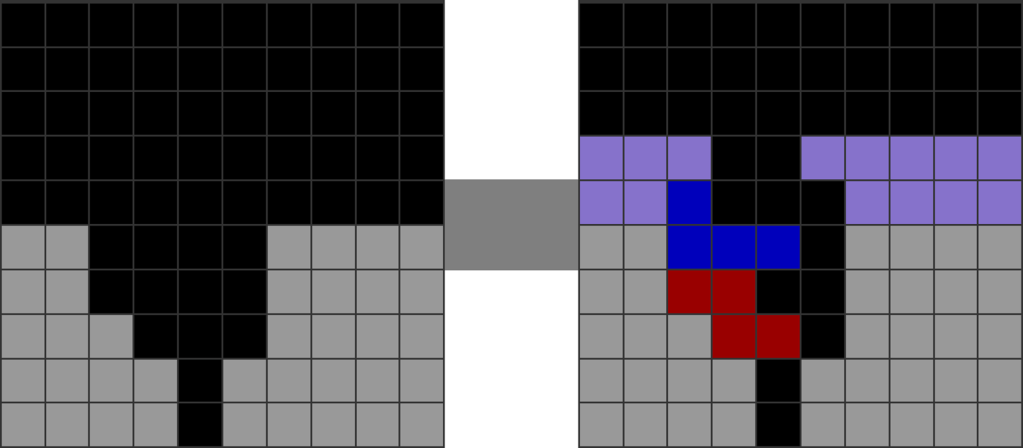
Spot this common mid-game pattern.
Put a horizontal L over it and stack with an S. Build the overhang. Done!
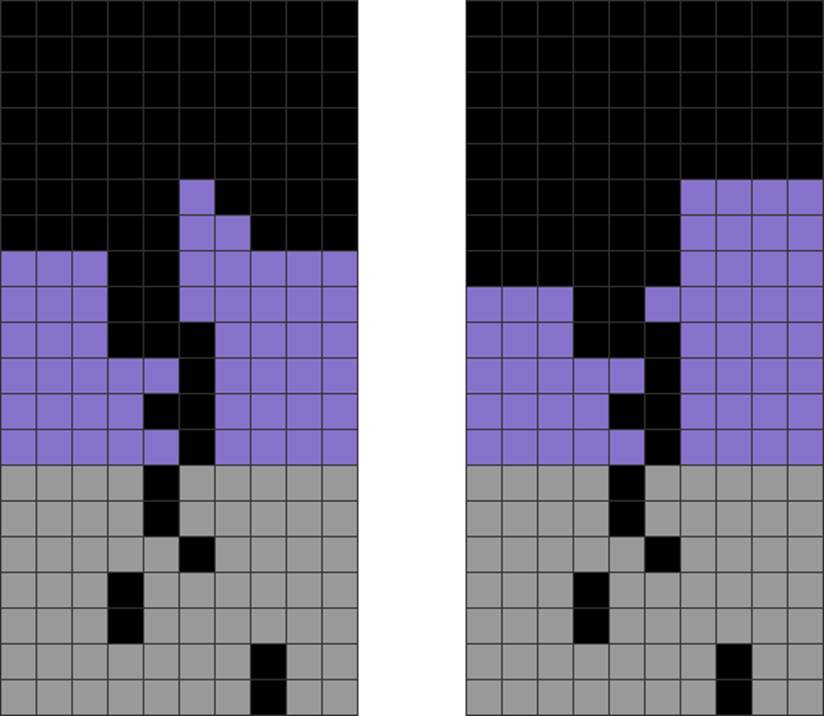
5. JZ Base Mid-Game Chance
This is semi-common and is worth memorizing:
Diagram Set 8-7
1
2
Spot this common mid-game pattern.
Put Z and J over it. Construct the lavender parts. C-spin done!
6. Super Spiral
C-spin can be constructed using the following unorthodox method below. It is called a Super Spiral or Ajanba Special. Trust me, these situations happen often!
Diagram Set 8-8
1
2
Place L this way.
Stack J on top to make a massive C-like shape. Add an overhang.
3
4
Spin an L into the C-like shape to make a single line clear.
This creates a C-spin!
This may seem exotic, but I found it highly practical in the right circumstances.
This method can be constructed out of order:
Diagram Set 8-9
1
2
Put an L this way when you see the mid-game opportunity.
Skim with a second L.
3
Top it with a J to make a T-spin triple. Then, add an S overhang.
The result is the same C-spin setup.
7. Grim Grotto Skim Mid-Game Chance
Grim Grotto is a prophecy method that uses a skim to shape the field into a shape conducive to making a C-spin:
Diagram Set 8-10
1
2
Spot this common mid-game pattern. Skim with a vertical Z piece.
The following jagged shape makes it easy to create a C-spin.
8. The Whirlpool Method
The Whirlpool, as covered in Book 3, is an advanced spliced T-spin method that inserts a T-spin double into a DT Cannon. The result is that, after the first T-spin double, you get a C-spin:
Diagram Set 8-11
1
2
Spot this common mid-game pattern. Put an O into it.
Construct the rest. You get a DT Cannon augmented by a C-spin!
9. Magic Key C-Spin
The Magic Key is a method that uses a prop, typically a vertical S or Z piece, to suspend a T-spin double over a pattern. After the first T-spin double, you get a shape conducive for a C-spin:
Diagram Set 8-12
1
2
Spot this common mid-game pattern.
Put the Z vertically this way for the first T-spin double.
3
4
Make the T-spin double.
The following shape can be filled in to make a C-spin!
Continuations and Follow-Ups
C-spins have many practical follow-ups.
1. General Continuations
Many C-spins with overhang heights of 1, 2, and 4 lead to good continuations:
Diagram Set 8-13
1
2
3
This C-spin’s overhang of 2 blocks leads easily to an immediate T-spin double in step 3.
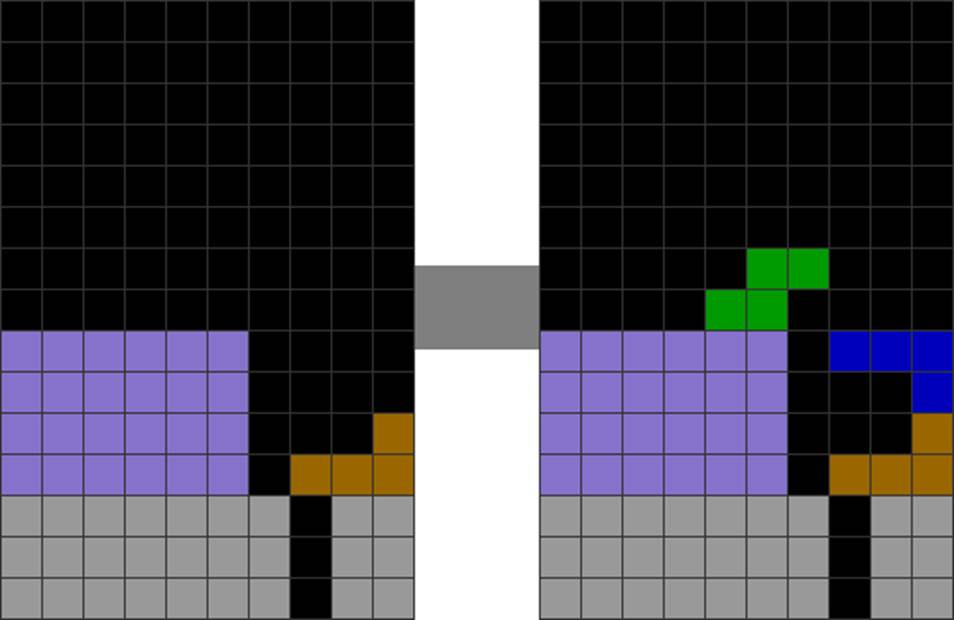
Here are some ways to convert a one-block-tall C-spin overhang into mid-game LST or ST continuations:
Diagram Set 8-14
A
B
C
Stack the I and Z, Z and J, or L and S pieces like these, respectively.
This will make it easy to continue into LST or ST stacking.
However, the patterns below reduce efficient T-spin continuations:
Diagram Set 8-15
A
B
C
By now, the player should recognize such patterns and infer why they can likely ruin smooth T-spin continuations.
2. T-Spin Single to C-Spin
Here is an elegant trick to make a C-spin from the situation below:
Diagram Set 8-16
1
2
First, see this opportunity.
Stack Z and J like this.
3
4
Make a T-spin single instead of a T-spin double.
Upstack the overhang. You should get a C-spin.
This sometimes happens mid-game and is therefore a viable method.
In a Nutshell
In this entire book, I have not encountered a method that has as many mid-game situations as C-spins. They are among the few rare T-spin triple setups that are clean, as the final T-spin is a T-spin double. This makes C-spins one of the most practical, cleanest, and safest T-spin methods to learn.
Pros and Cons
Pros
Bursty.
Perfect for T-spin double and Tetris continuations as they do not leave an overhang or shift the garbage hole after the first T-spin is fired off.
Lots of mid-game situations.
Cleaner than DT Cannon.
Cons
Not ideal if you are upstacking from non-garbage entirely, as it takes too long to set up.