We have now reached a point where I have taught you everything there is to know about Tetris move sets for a super-casual player.
However, there remains something critical: something that puts together everything I have taught you.
That would be the core tactical habits that one should always, always, always apply to one’s gameplay.
Manners Define a Player
I will instill in you the core fundamentals of any great Tetris player.
Without these essential habits, a Tetris player would, at best, merely spam setups without proper timing or an understanding of tactics.
1. Avoid an Eiffel Tower
Many casual Tetris beginners commit the game-breaking habit of stacking some parts of their field way too high, like this:
| Diagram Set 12-1 | |
| A | |
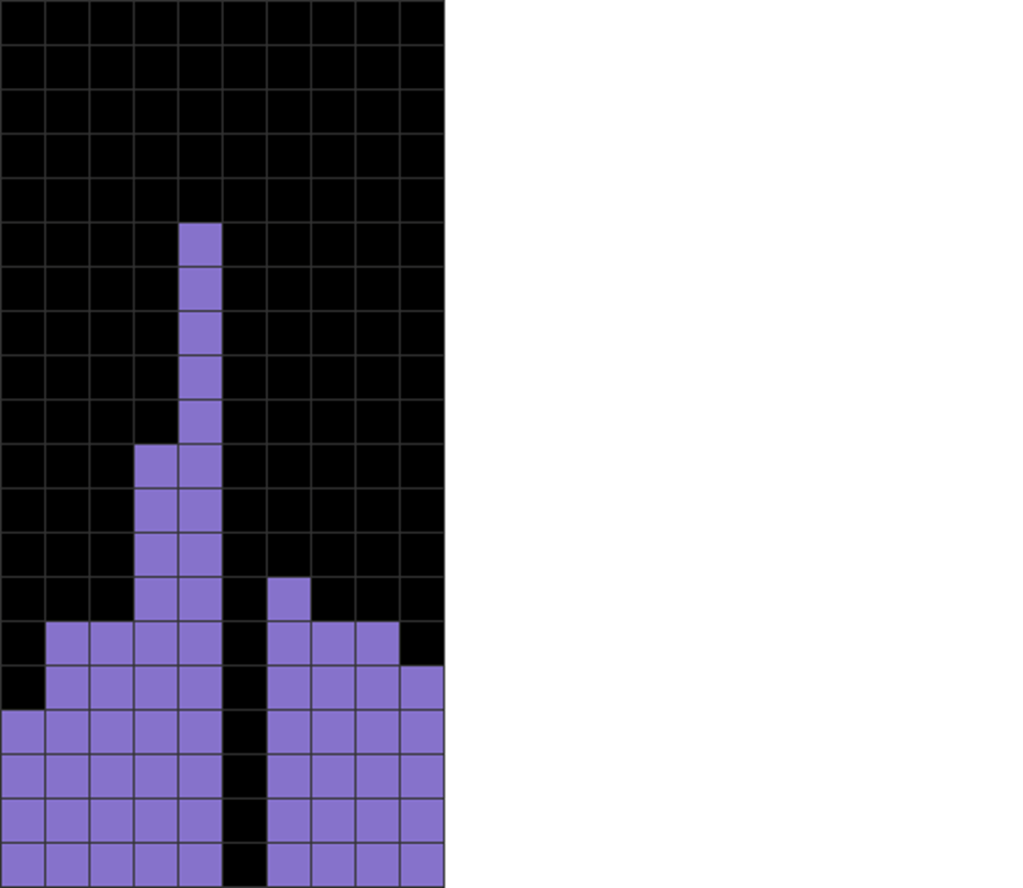
| A severely imbalanced field. The left stack is overstacked. |
The problem with this overstacking is that it makes the field uneven. Tetris’ garbage system is random.
Hence, by stacking one part of the stack so high, you could suddenly get garbage rows right beneath it, like this:
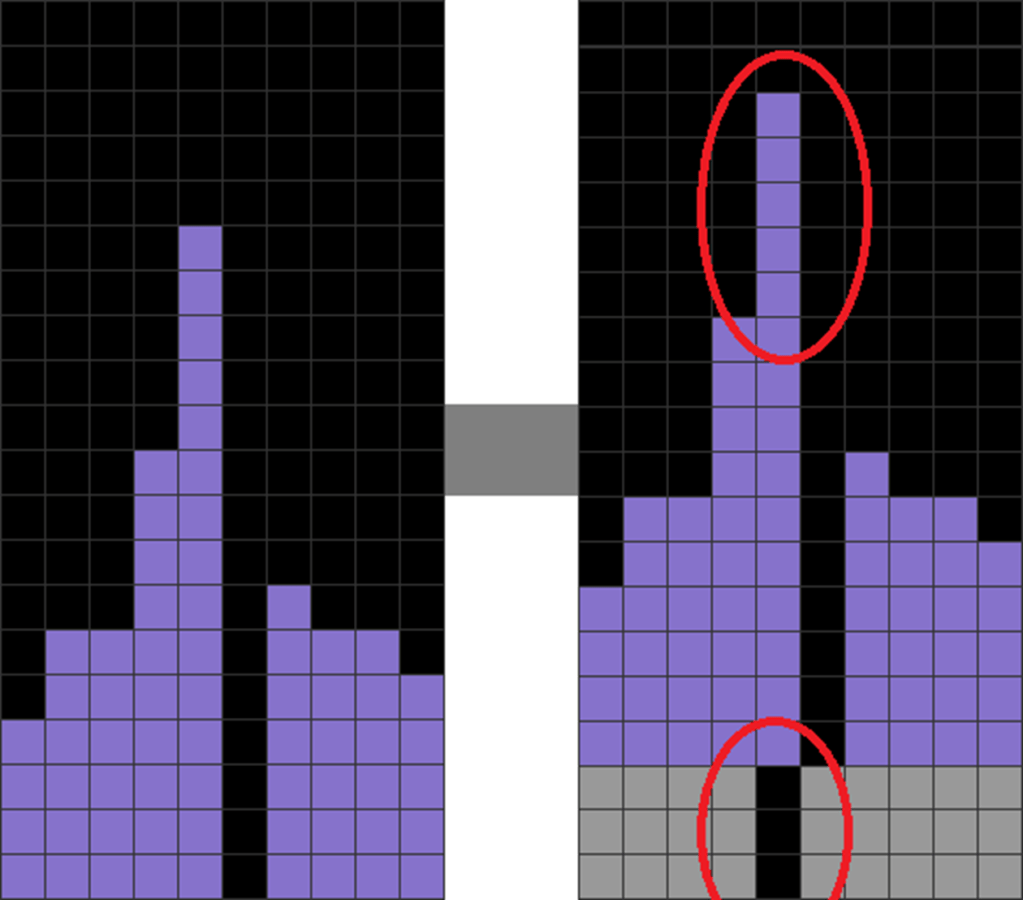
| The player overstacks, leading to an overstacked center. | He then receives 3 lines of garbage (bottom red circle). The top red circle’s jutting part is dangerously close to the spawn zone. |
In this unfortunate circumstance, the player is caught in a dire situation. To get down to the next, clean garbage lines, they would have to skim off everything on top!
Conversely, if the player had stacked low, this smoother circumstance happens:
| Diagram Set 12-3 | |
| 1 | 2 |
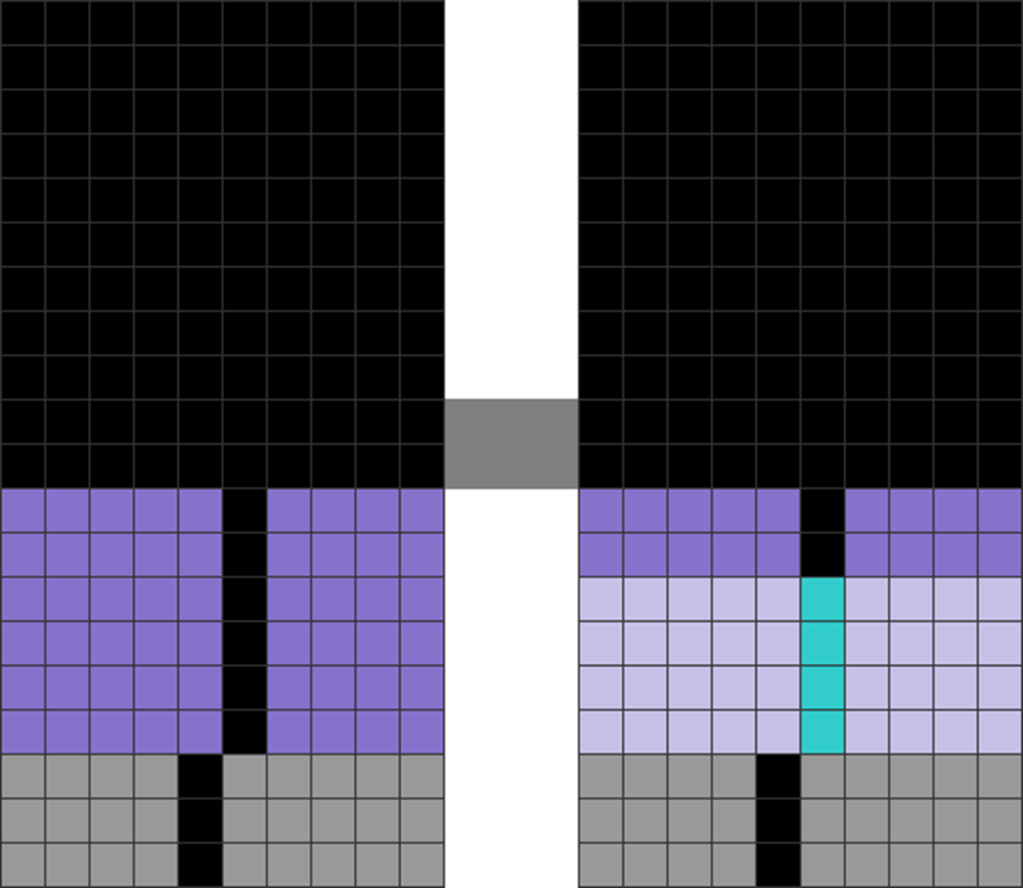
| The player stacks very flatly. He receives 3 lines of garbage from the bottom. | He then uses a Tetris line clear. |
| 3 | 4 |
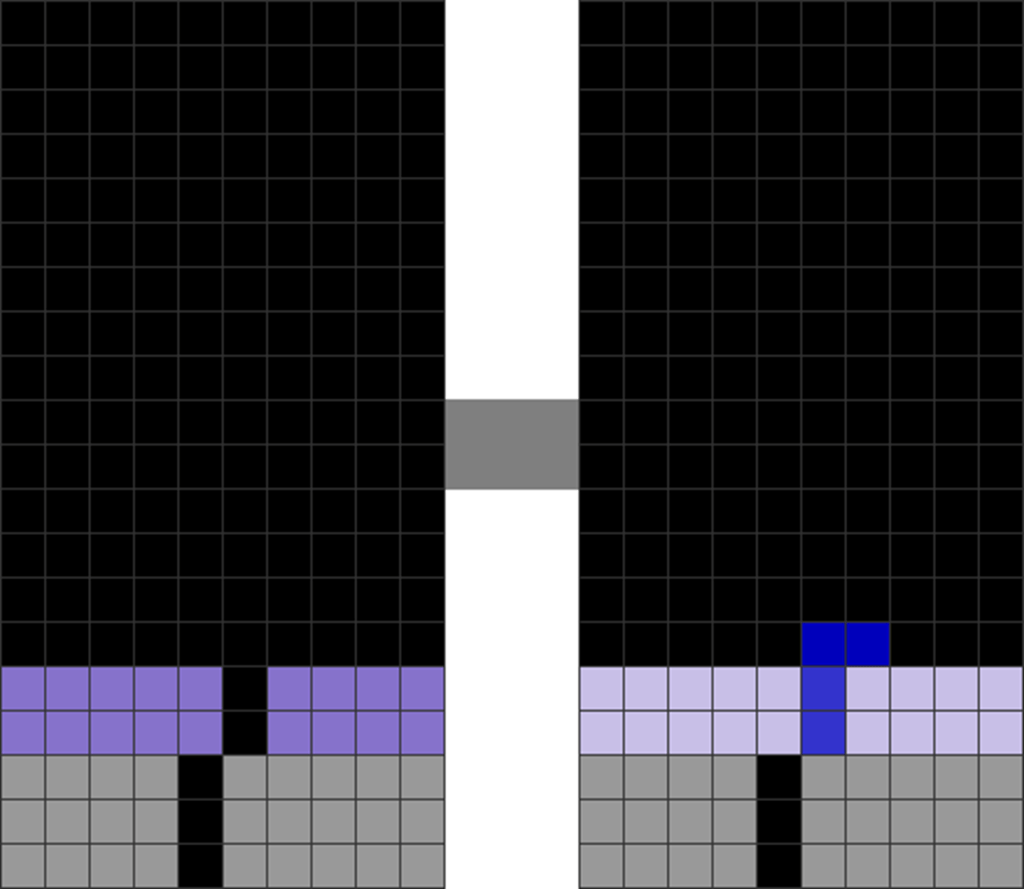
| He gets this field. | He then easily skims with a J piece. He quickly gets down to the garbage lines. |
Here, the player can dig down to the cleaner garbage far more easily, increasing their survivability.
If you have to remember one thing from this book, remember the mantra: Stack flatter!
2. Do Not Go for the Impossible
Sometimes, it may seem as if there is an ideal setup that you can create, given a mid-game situation, like this:
| Diagram Set 12-4 | |
| A | |
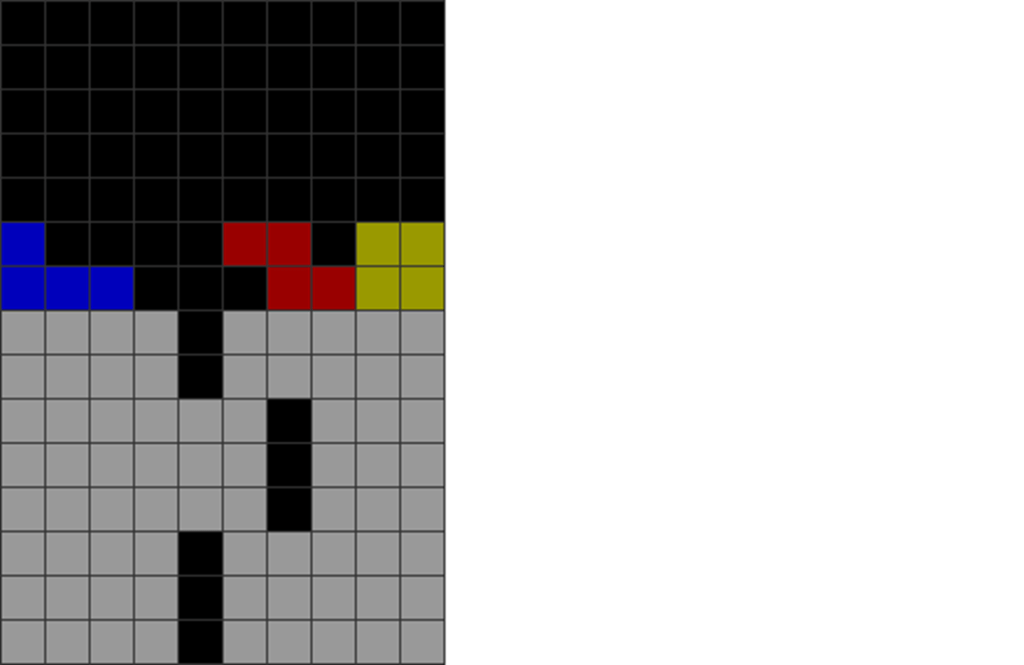
| A player tries to make a powerful T-spin. |
Sure, making this T-spin sounds fancy and powerful.
However, what if you do not get the right pieces to make the T-spin? This can happen:
| Diagram Set 12-5 | |
| 1 | 2 |
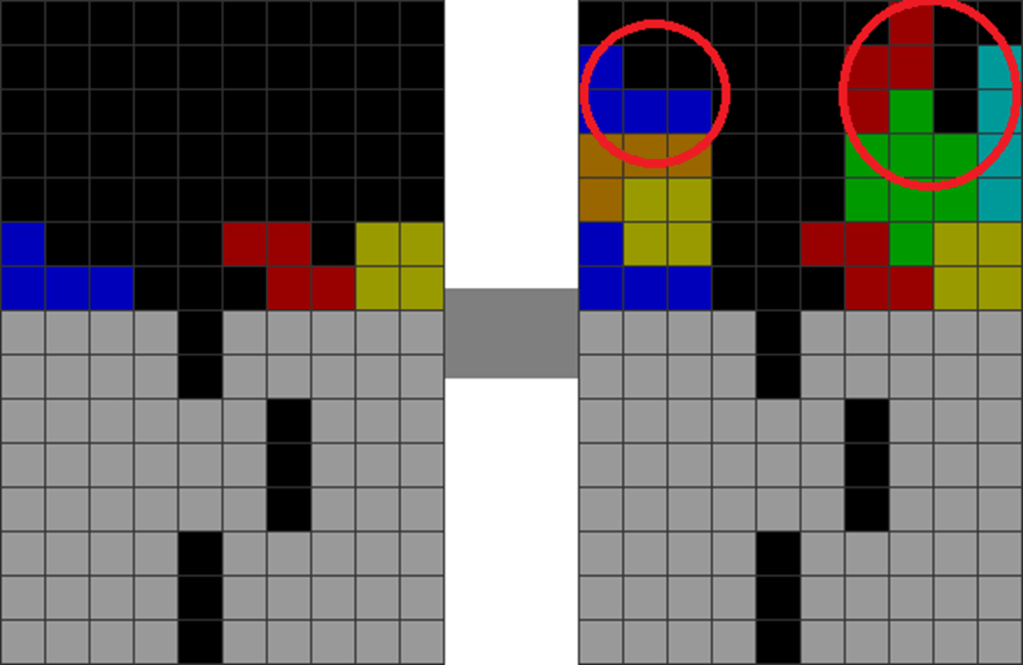
| This continues from the last diagram set. A player tries to force a T-spin with J, Z, and O, using Z as an overhang. | The Ts are not in the previews. While waiting for the T piece to arrive, he puts all incoming pieces on the left and right sides (red circles). |
Here, the player waits for the right pieces to come. However, it does not arrive. During this time of waiting, the player must then place all incoming pieces at the available spaces.
This then leads to an imbalanced stack on one side. In worse situations, it could lead to dirty stacking, like this:
| Diagram Set 12-6 | |
| 1 | 2 |
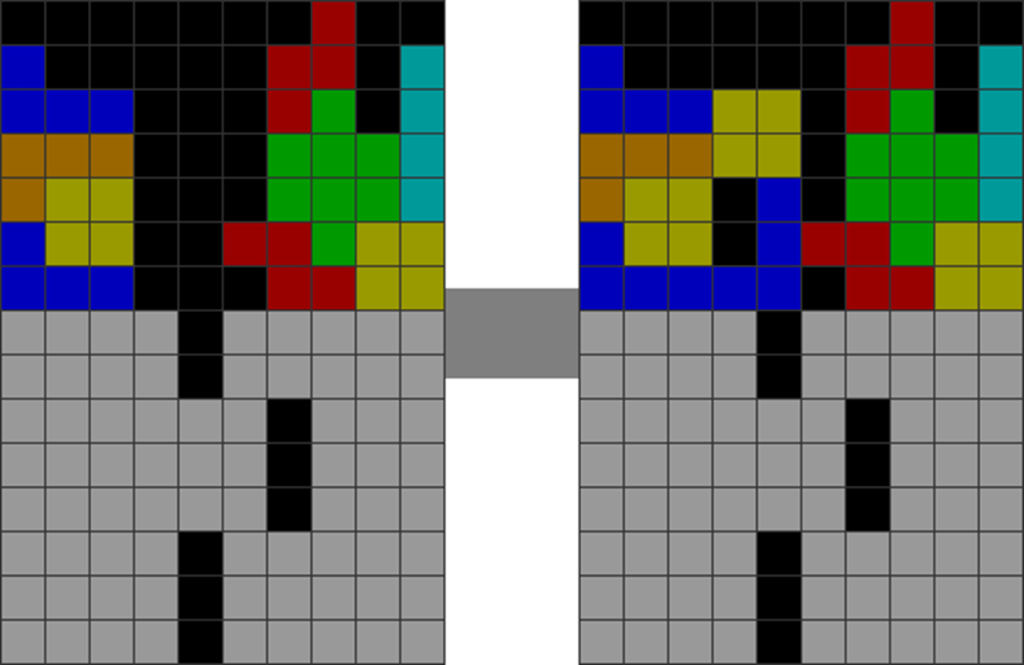
| This continues from the last diagram set. | The T piece does not come. The player messes up the entire stack as there is nowhere to place them. |
Hence, given that the previews do not allow for the right pieces, one should instead turn to safer and possible alternatives like this:
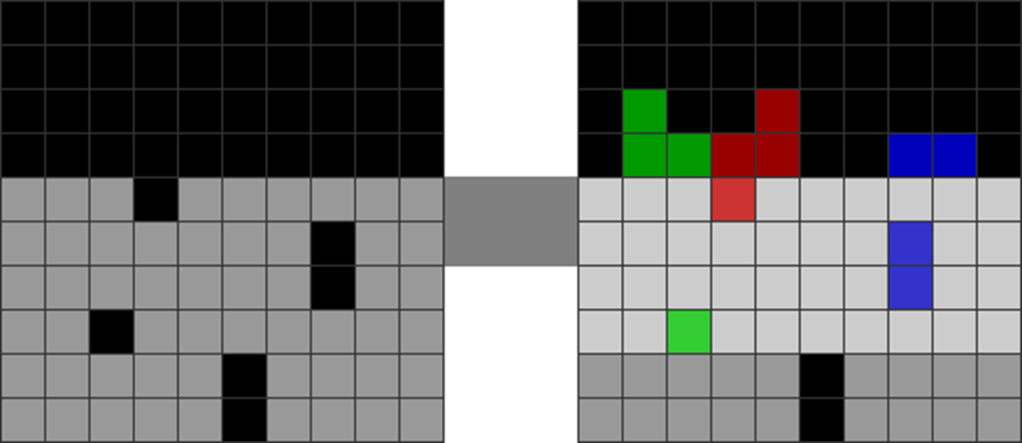
| The player chooses the most immediate pieces available, such as S, Z, and J, to downstack, as there may not be other more efficient setups. |
Even though it is less efficient, this ensures that every piece is used.
Go with the flow. Be like water, my friend.
3. Minimize Excessive Skimming
While I have taught you the perks of skimming in an earlier chapter, another deadly sin that casuals get into is the art of excessive skimming.
Please observe:
| Diagram Set 12-8 | |
| 1 | 2 |
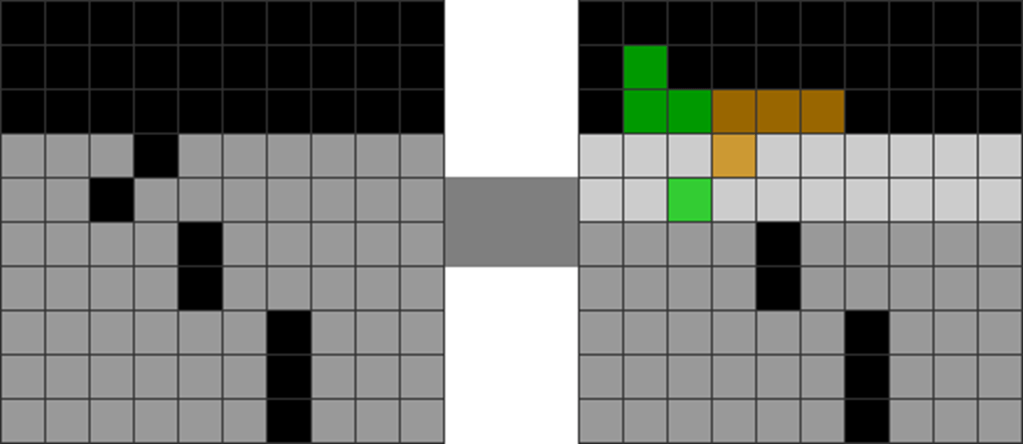
| The garbage is scattered and dirty. | The player skims and incurs 2 line clear delays with L and S. |
| 3 | 4 |
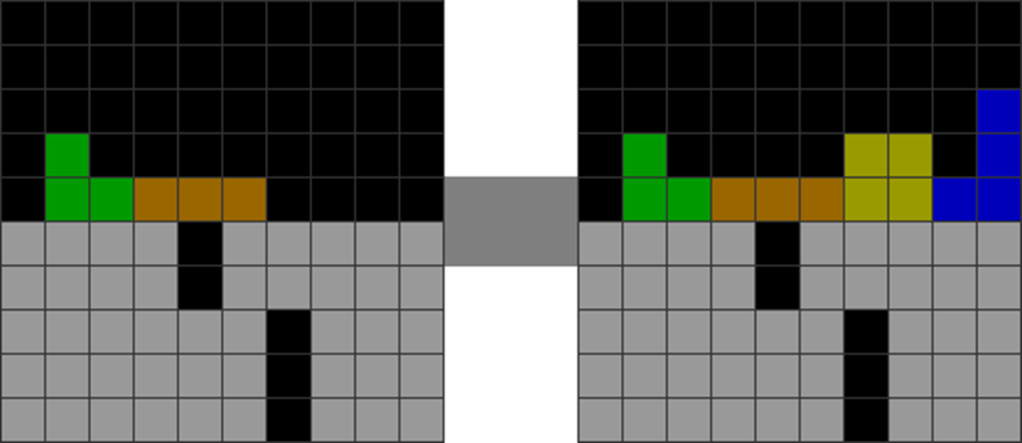
| This causes the orange blocks from the L piece to upstack and block the garbage hole. | The player upstacks a bit more with O and J. |
| 5 | 6 |
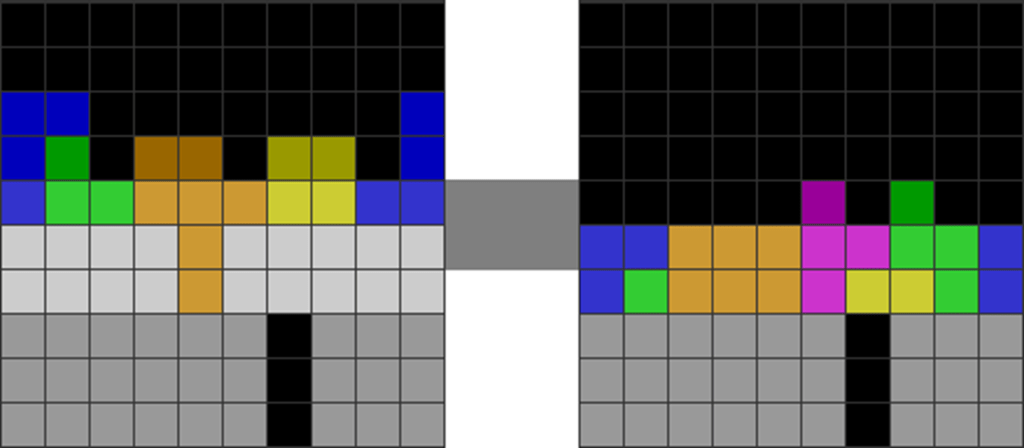
| He then excessively and inefficiently skims with J and L pieces. | He finally skims with L, T, and S to clear the colored blocks and reach the garbage hole. |
Here, the player upstacks a bit. The situation is safe, and the player is nowhere near being topped out. Hence, he should have upstacked to a Tetris or T-spin.
However, he instead skims.
To make the deal worse, he upstacks again briefly, not to an offensive setup like a 2-wide, 3-wide, T-spin, or Tetris. He then commits the mortal sin of skimming again and again and again and again.
I have seen this error so many times while watching casual Tetris players stream on Twitch.
Why is it wasteful?
Here is a metaphor: imagine driving your car to the nearest mall, which is at the end of a straight 5-mile road. Then, at every 1 mile, you reverse and backtrack by 0.5 miles. You then repeat this over and over and over again.
Surely, every driver would realize that this is an inefficient use of petroleum!
Hence, instead, here is a far less wasteful method:
| Diagram Set 12-9 | |
| 1 | 2 |
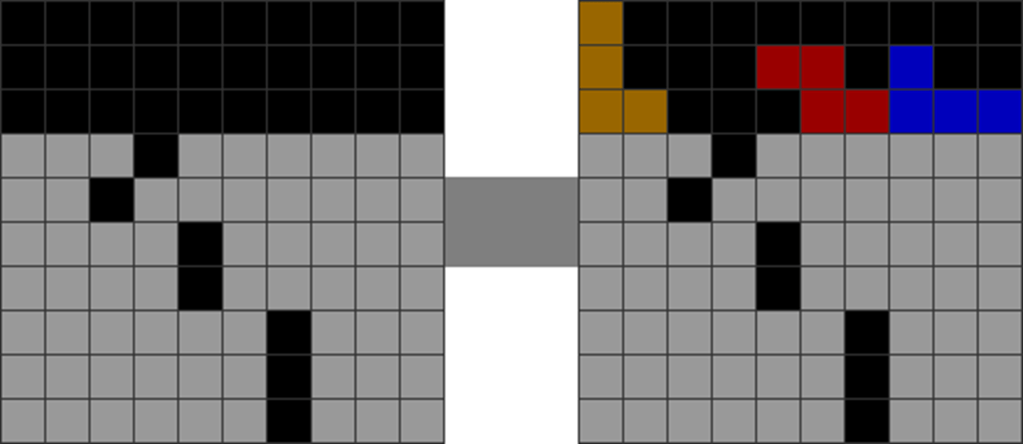
| The same starting field as the last diagram set. | The player makes a T-spin instead. |
Here, the player upstacks to an offensive setup. It can be any of the setups that I named several paragraphs ago. I am testing your memory here!
Doing this ensures nothing is wasted and that everything advances, keeping the pressure up.
In a Nutshell
Always remember to review this chapter’s core Tetris habits. I consider this chapter to be one of the most important ones, alongside proper stacking.
Without mastering these core essentials, one can know a thousand methods, but they are likely to be used inappropriately.
| Summary |
| Stack flat! Avoid overstacking! This is the number one rule! Do not force setups that your previews do not allow. Minimize excessive and redundant skimming as it wastes time and effort. |
 How to Tetris