This guide builds upon the last book’s basic downstacking guide by showing subtler and more complex ways to downstack. Here’s a list of methods:
A)Using Unorthodox Piece Placements
The key to high-level downstacking comes from seeing the less obvious placements. This opens up more efficient downstacking options.
1) Non-linear or Unconventional Downstacking Using Piece Combinations
In the last book, I taught you how to downstack by being aware of each mino’s orientations. In this section, I will show you that you can combine two or more minos to downstack even better. You will also learn how to downstack non-linearly.
i) Non-linear Downstacking
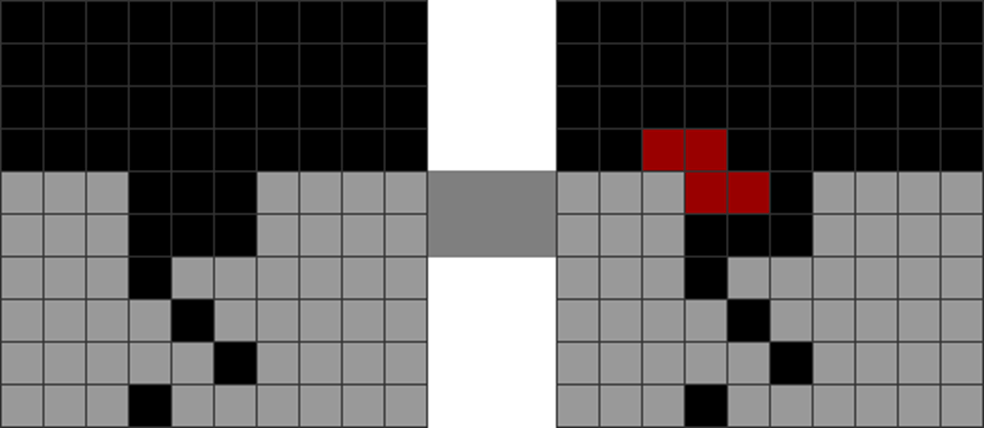
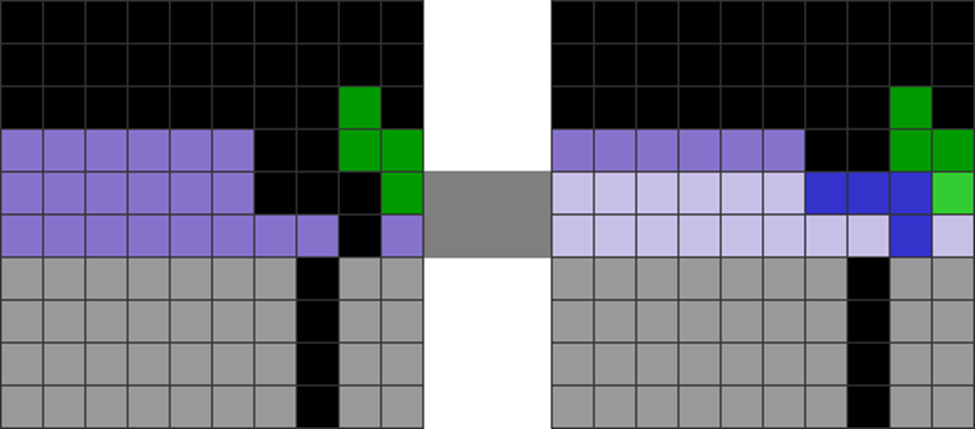
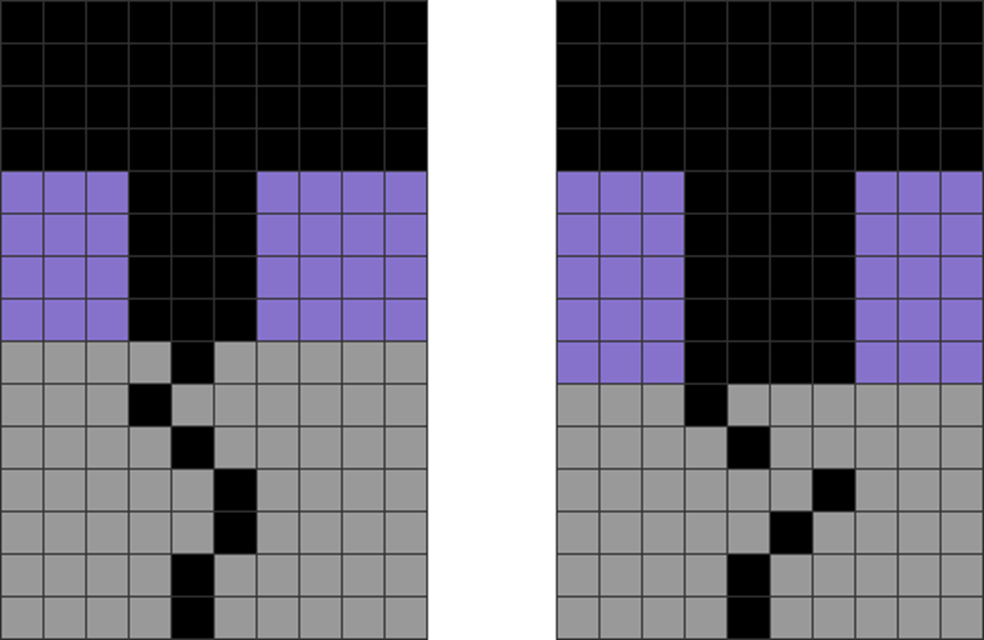
Sometimes, you can downstack pieces non-linearly, such as:
Diagram Set 11-1
1
2
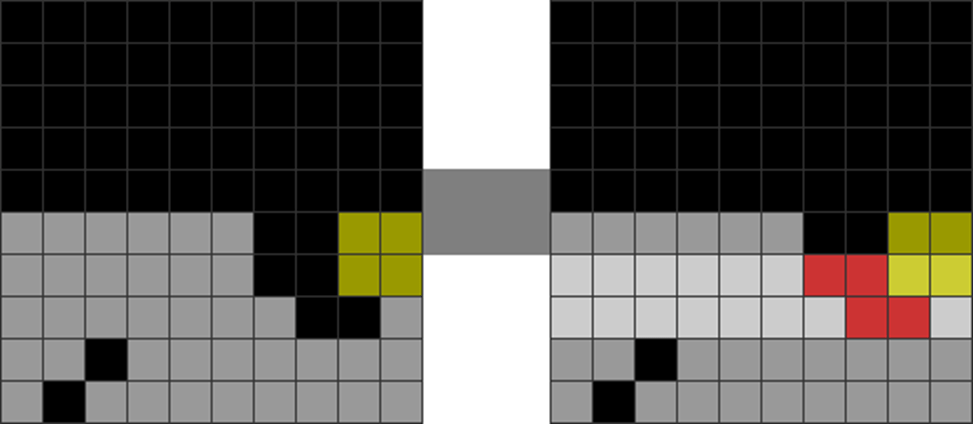
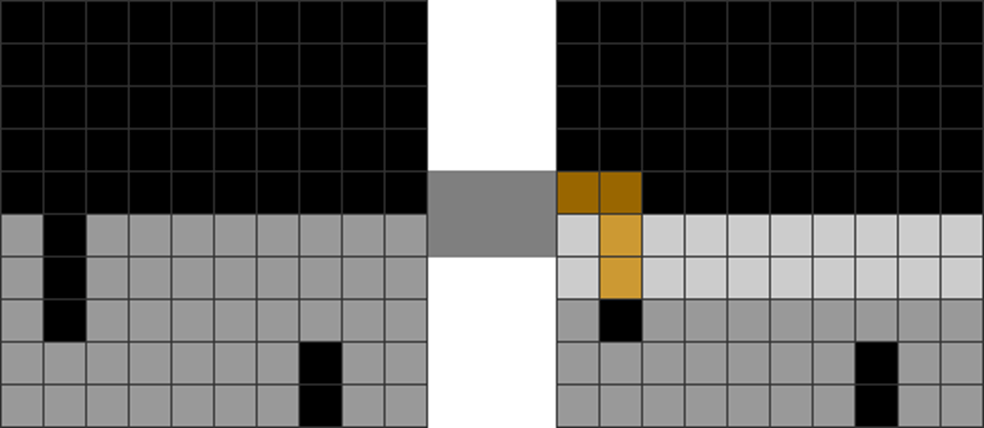
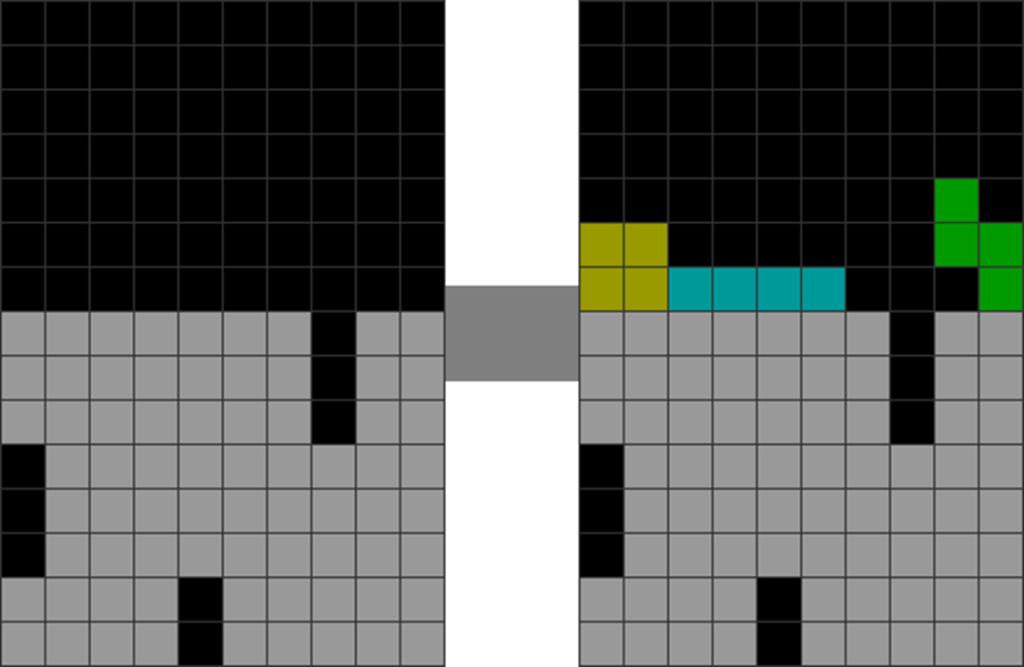
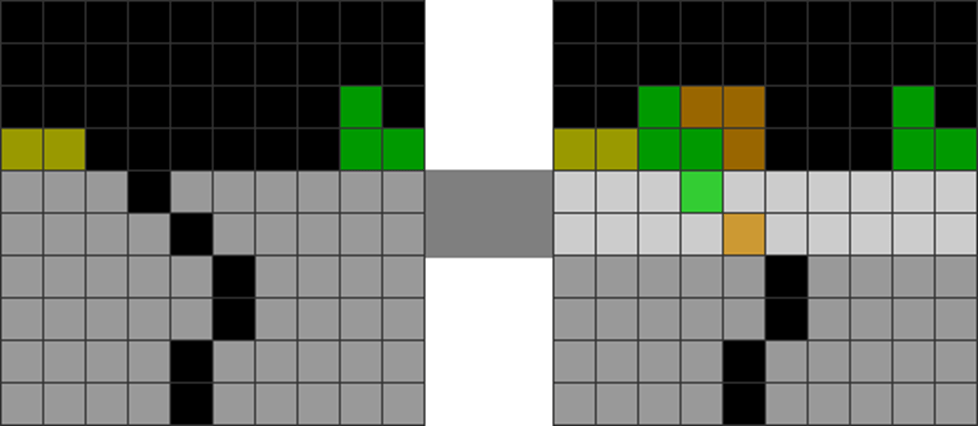
A J to Z downstack.
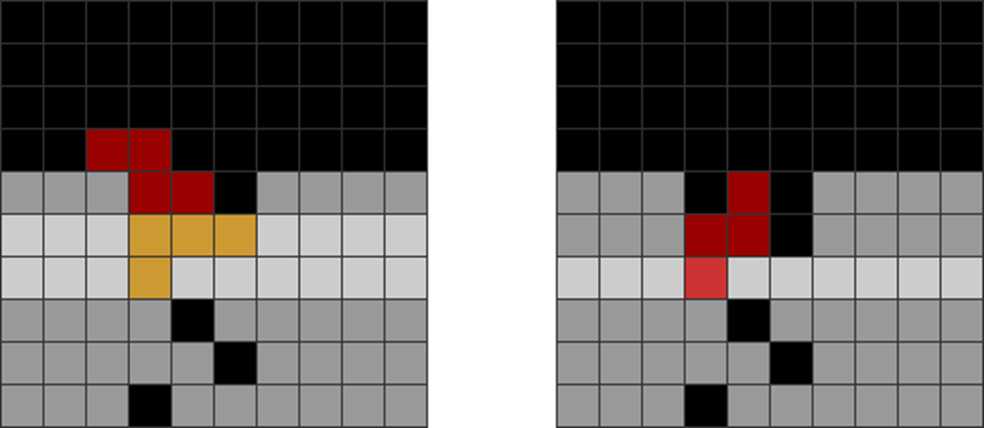
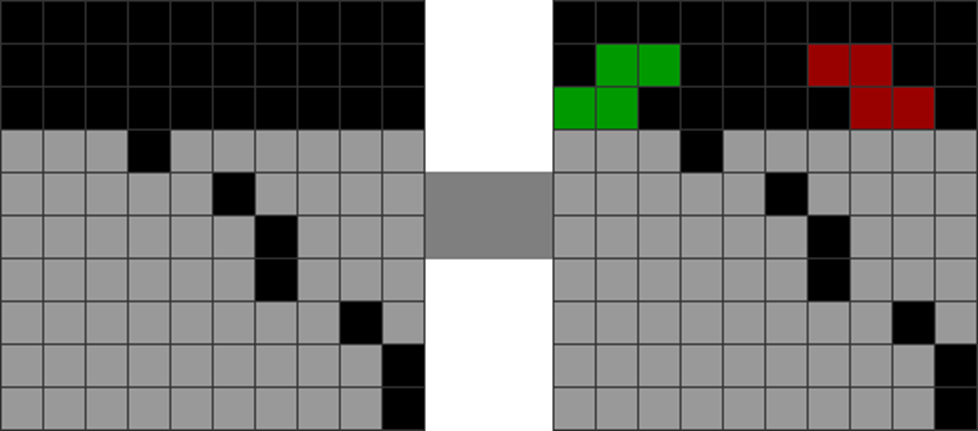
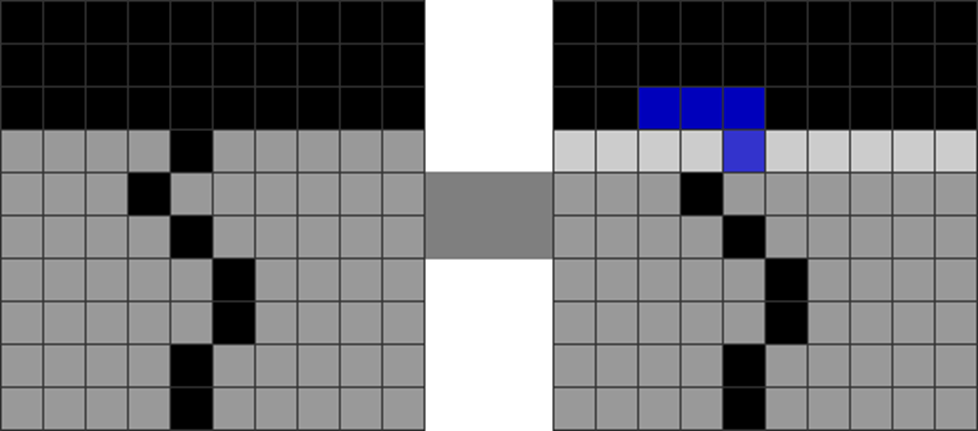
Diagram Set 11-2
1
2
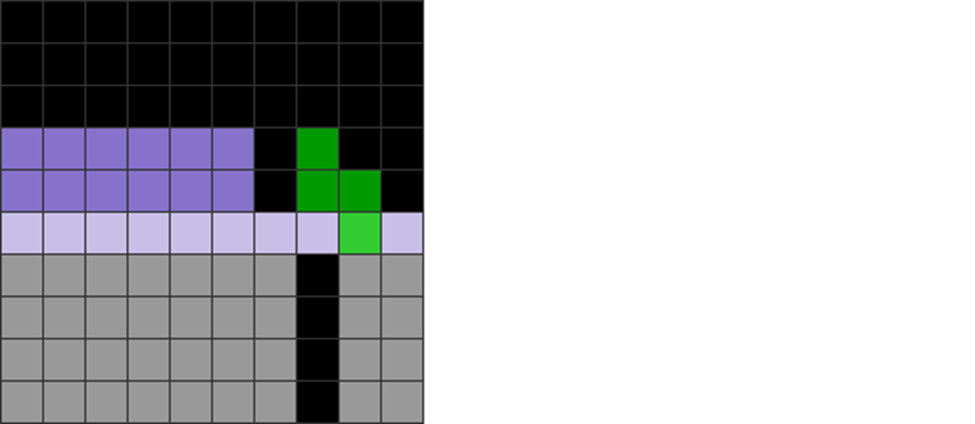
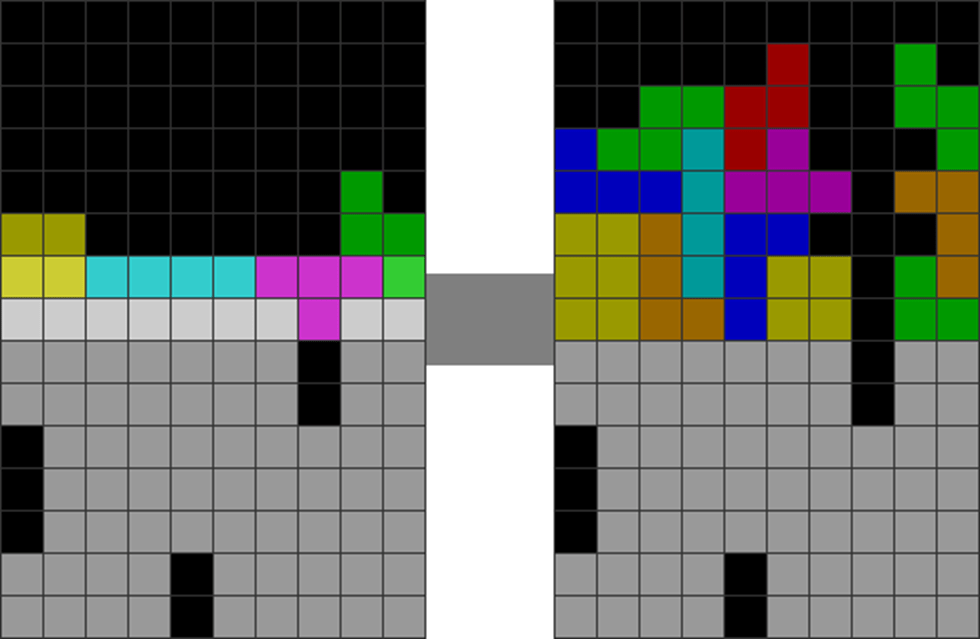
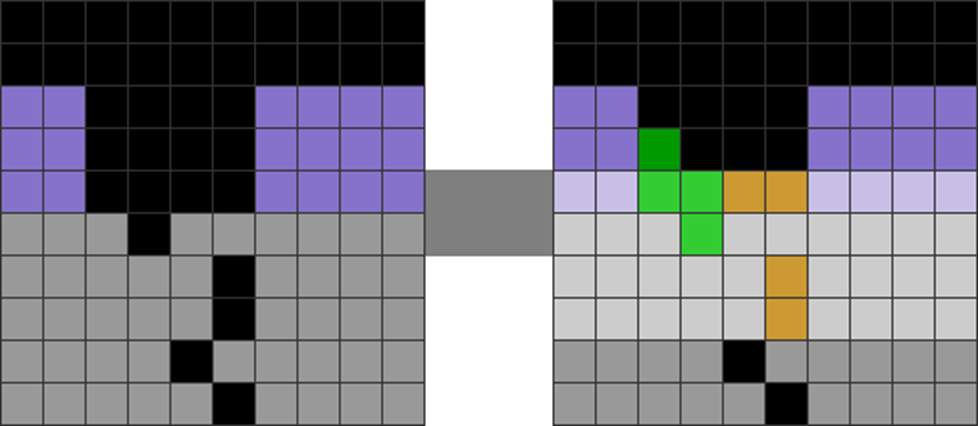
An O to S downstack.
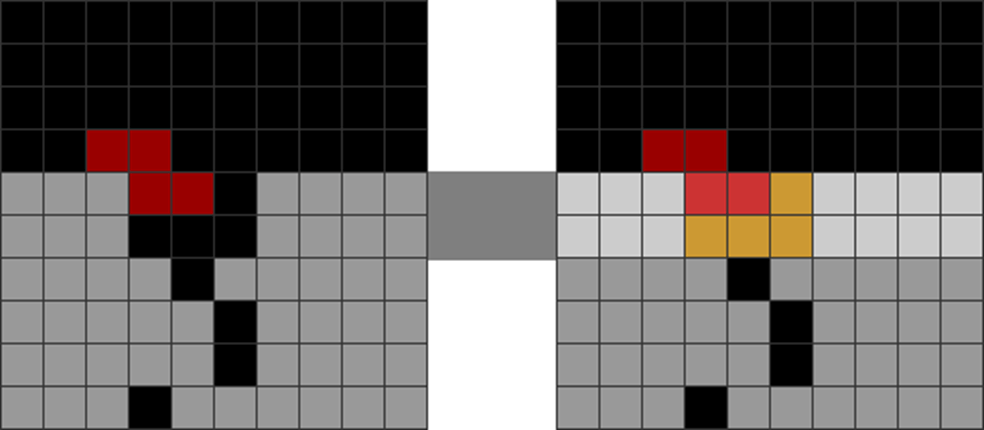
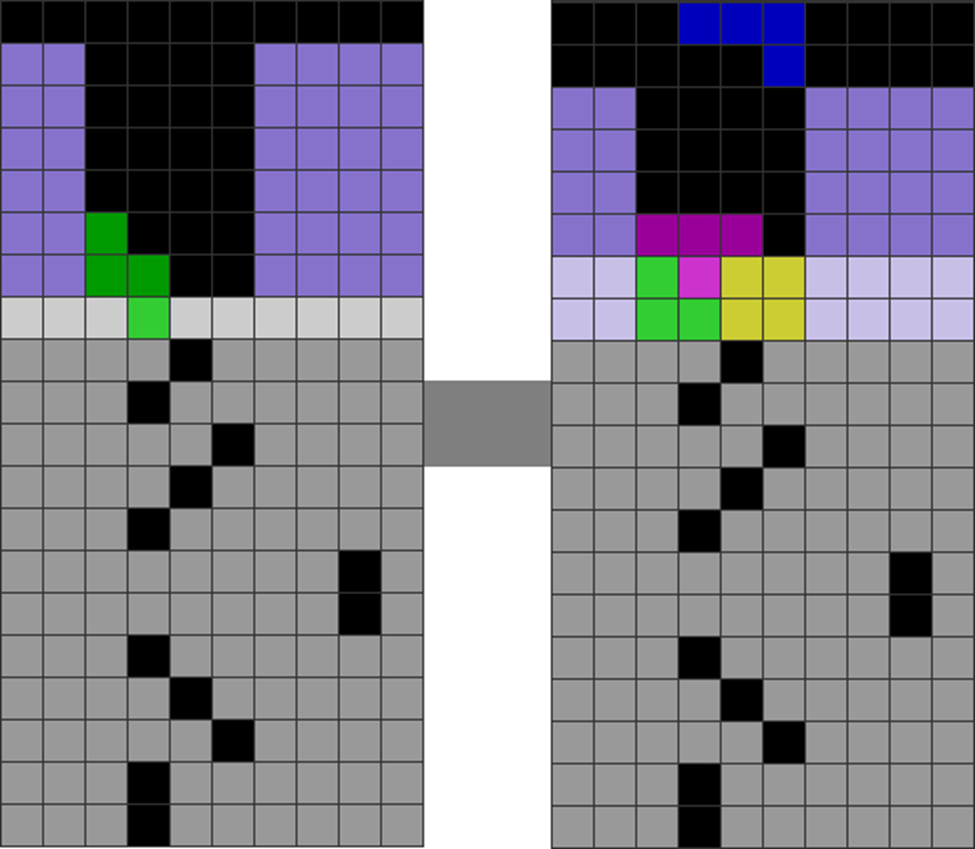
Diagram Set 11-3
1
2
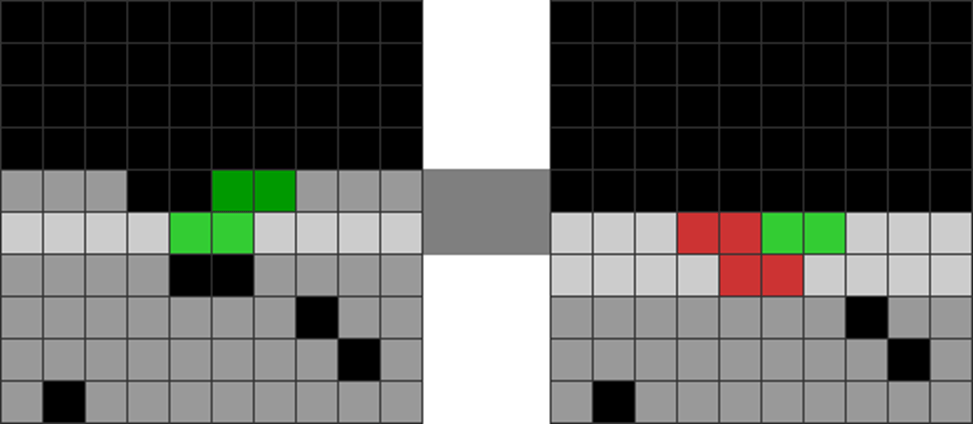
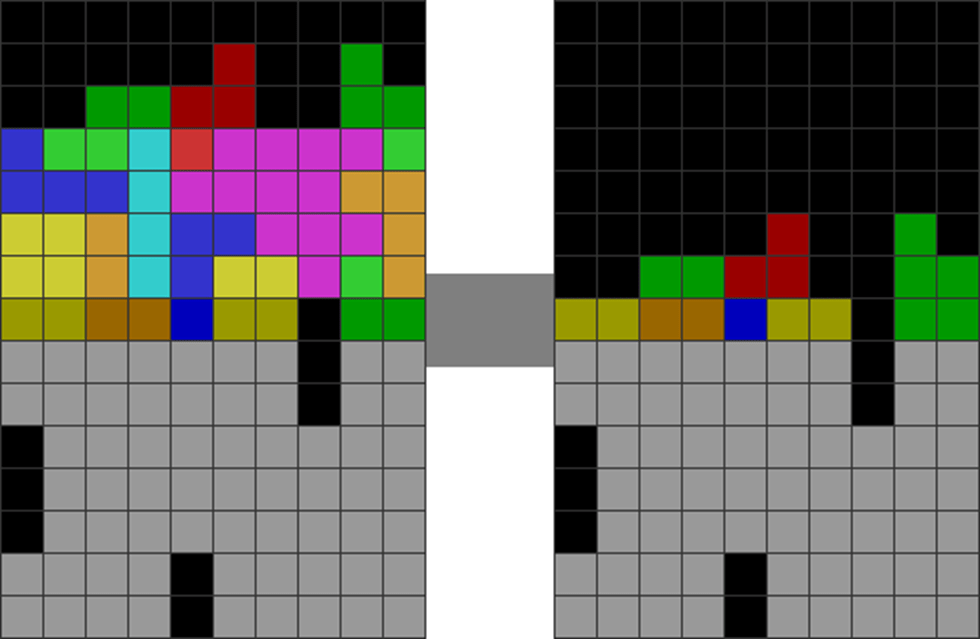
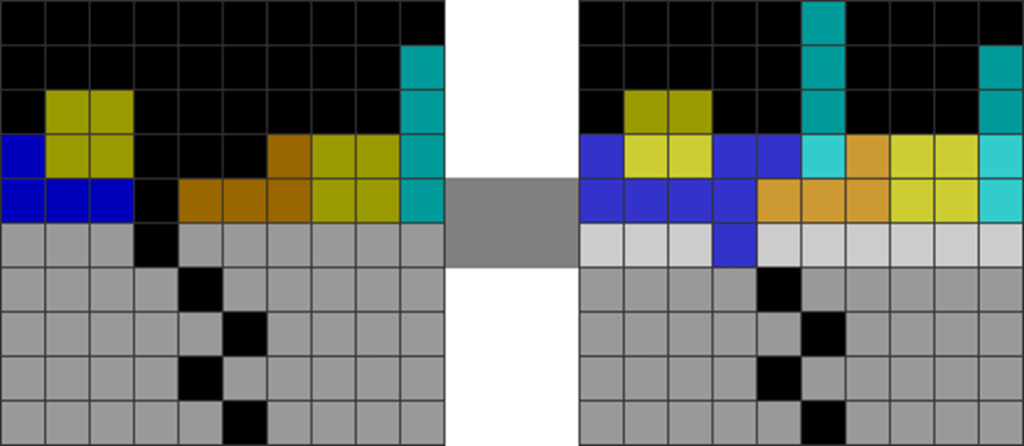
A J to L downstack.
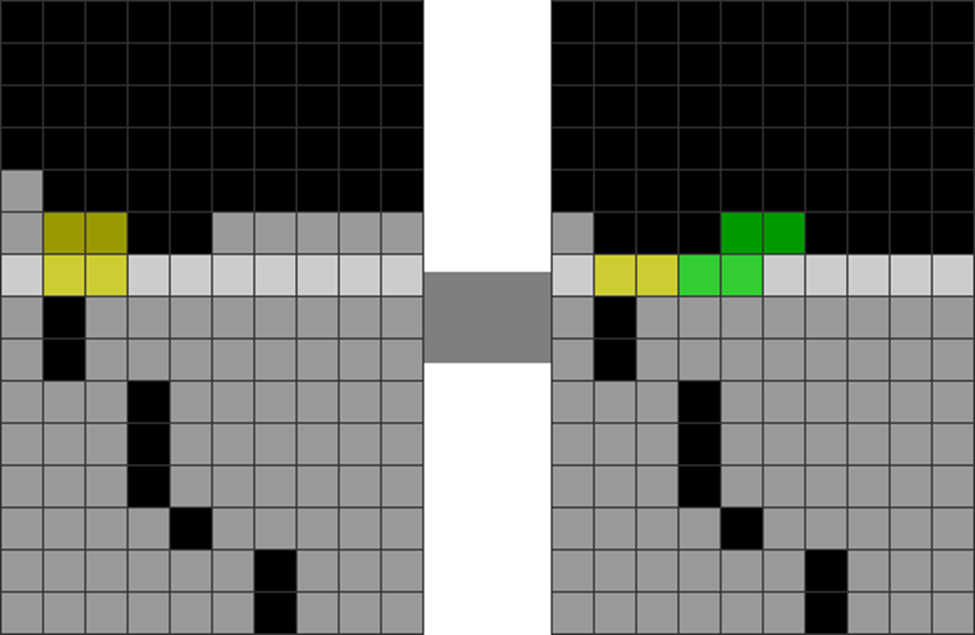
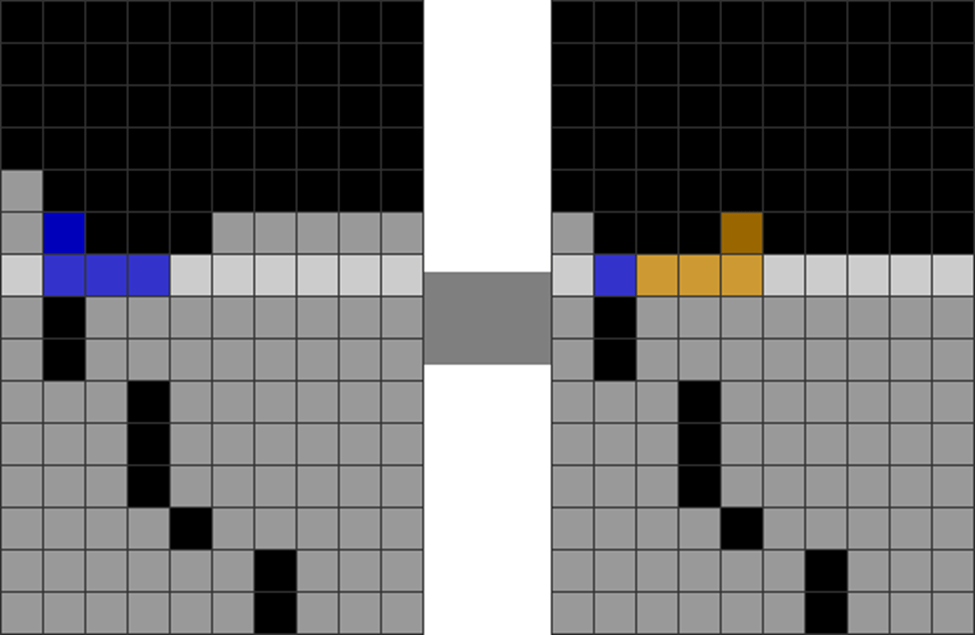
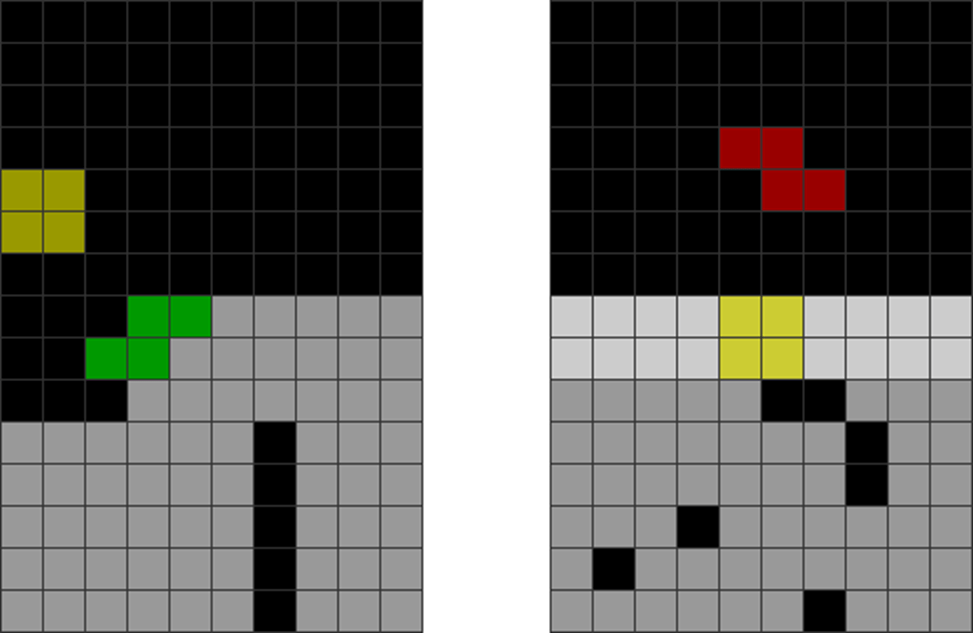
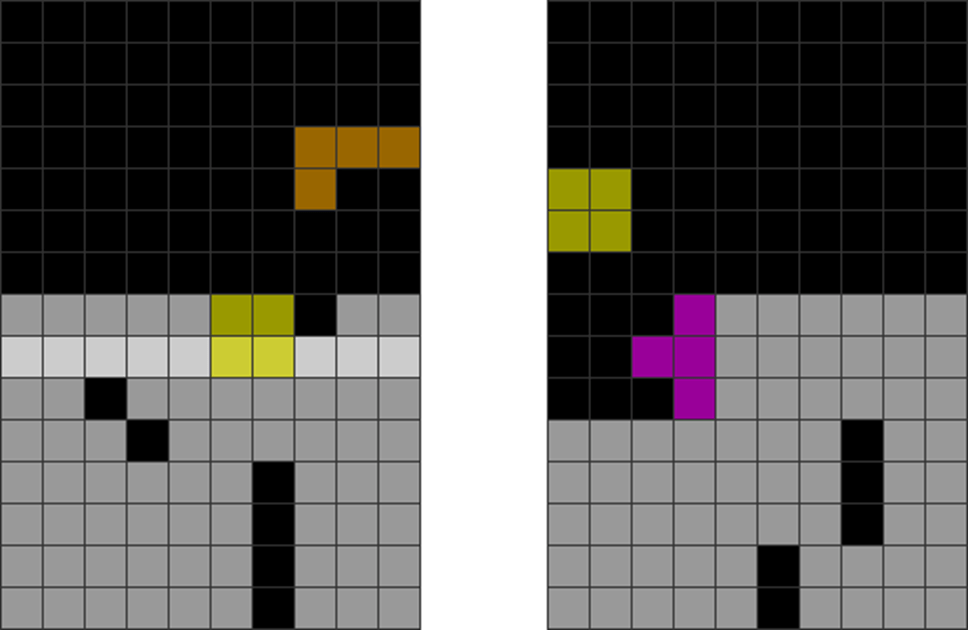
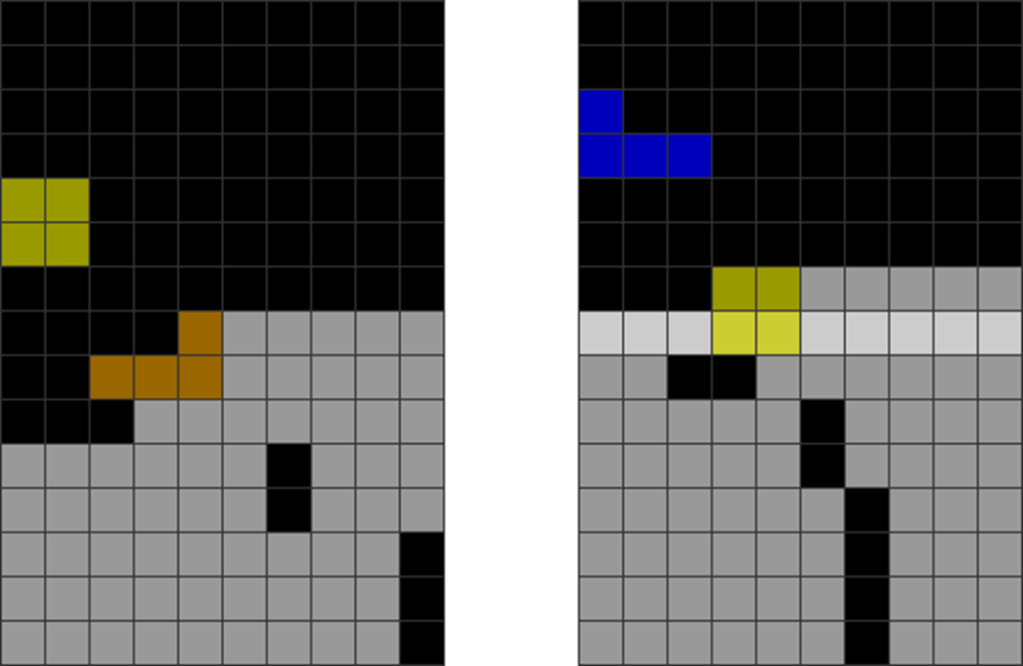
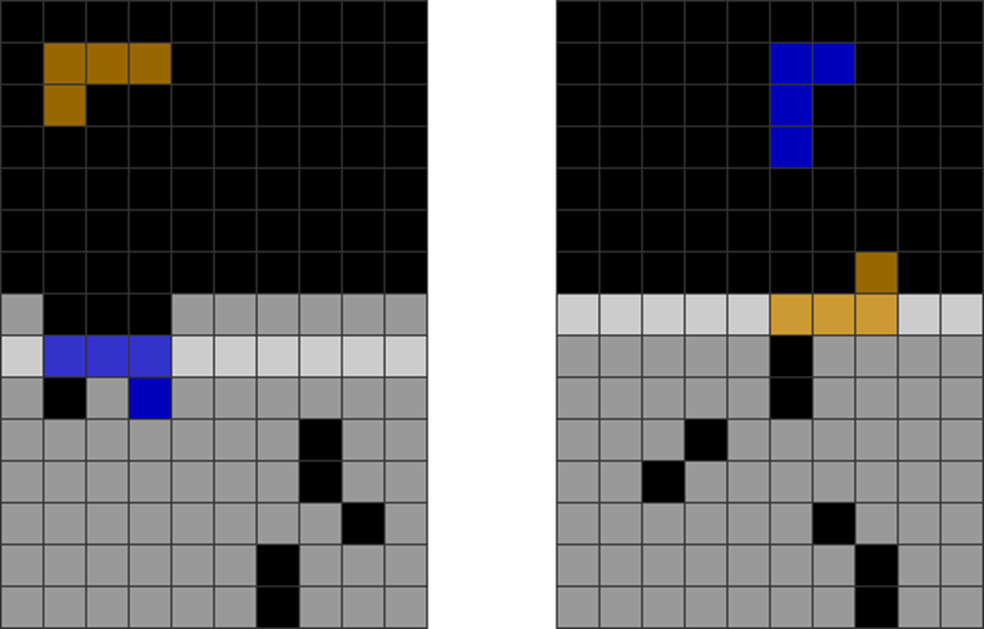
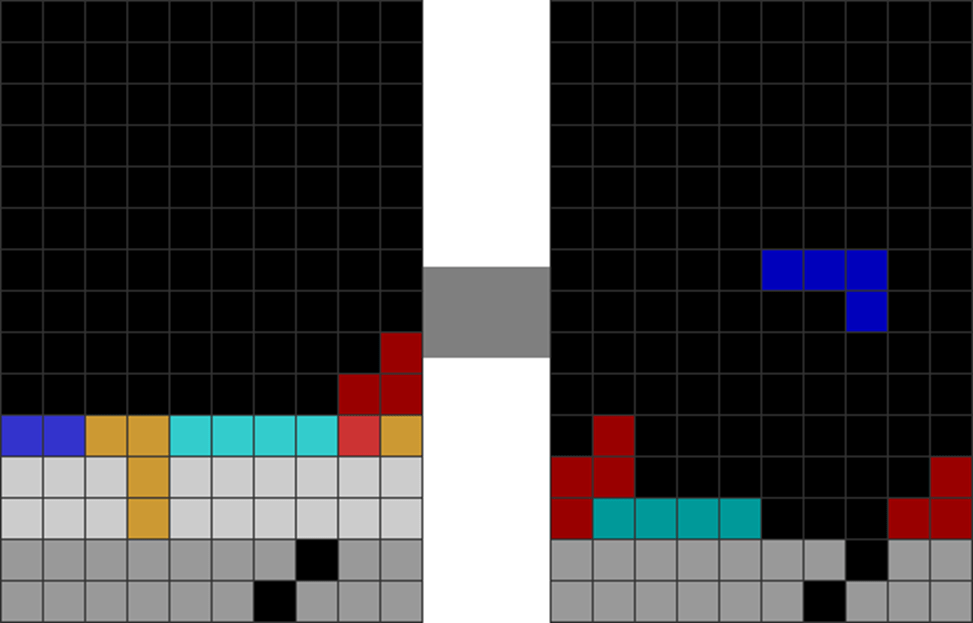
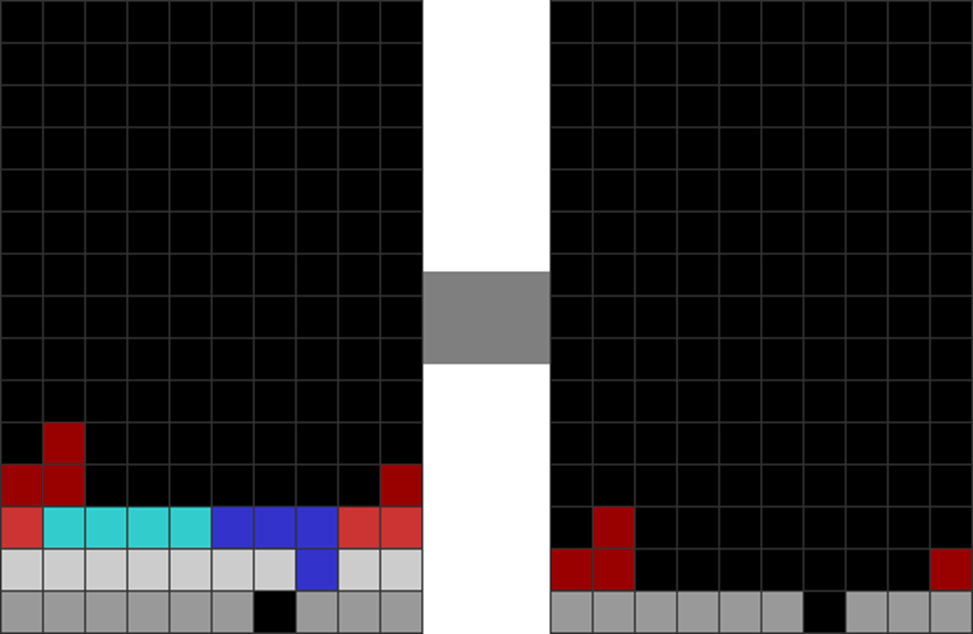
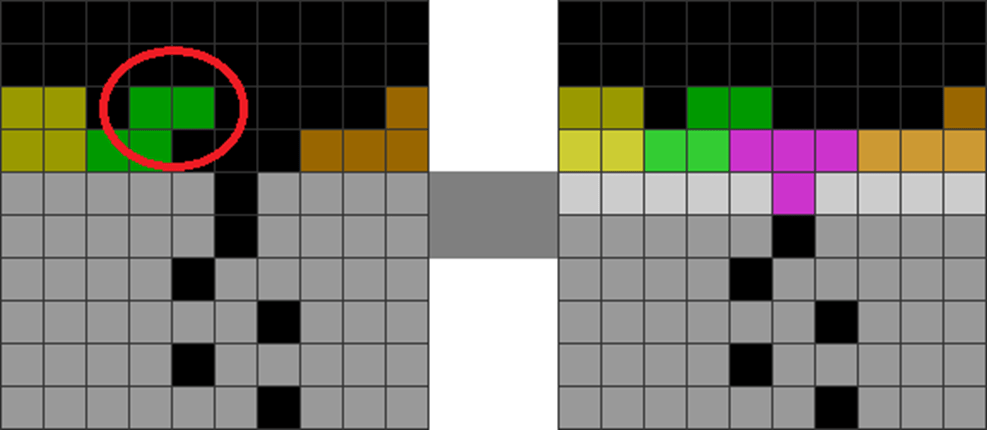
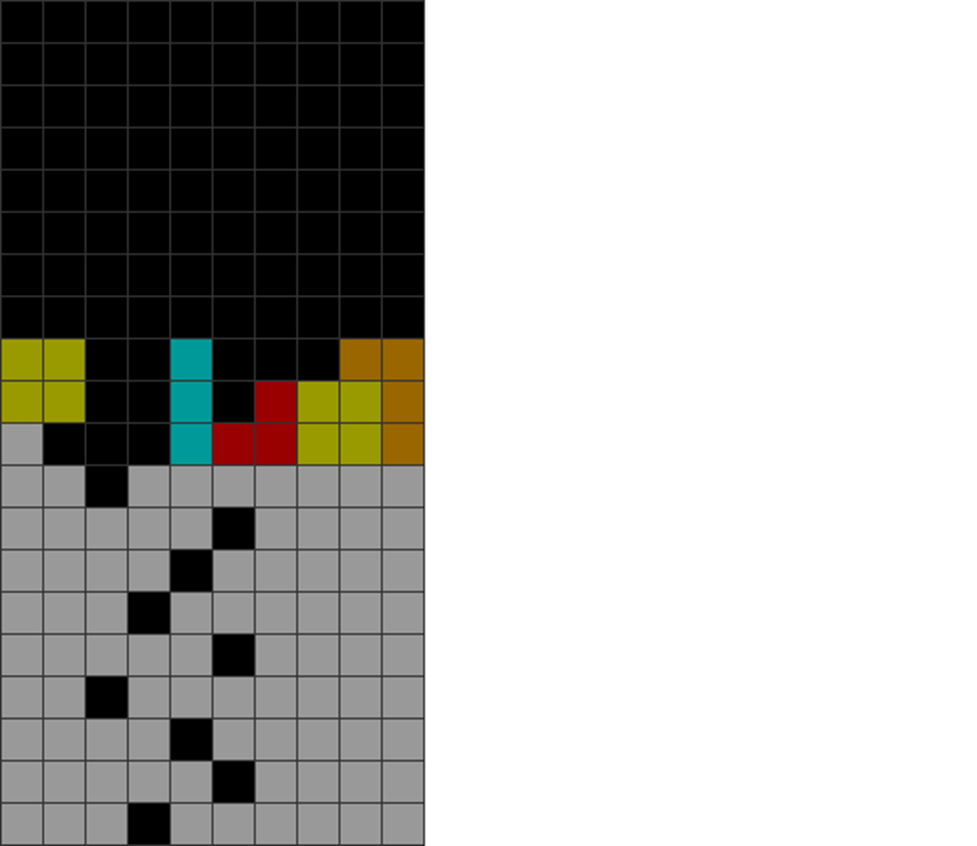
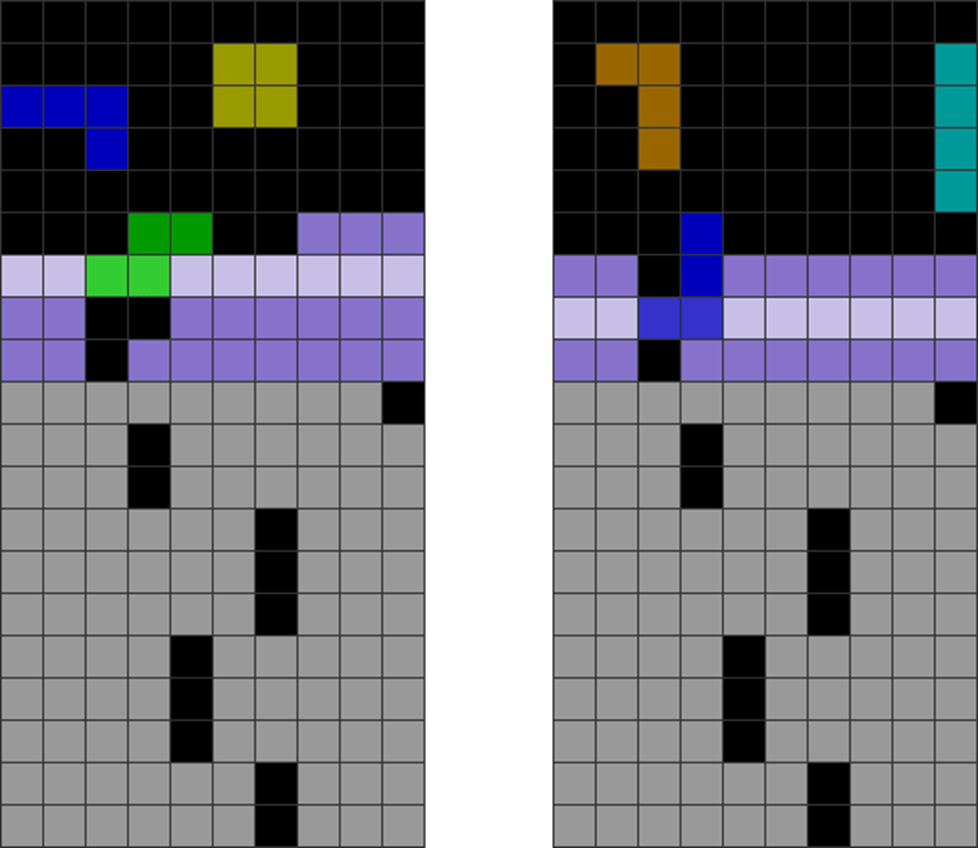
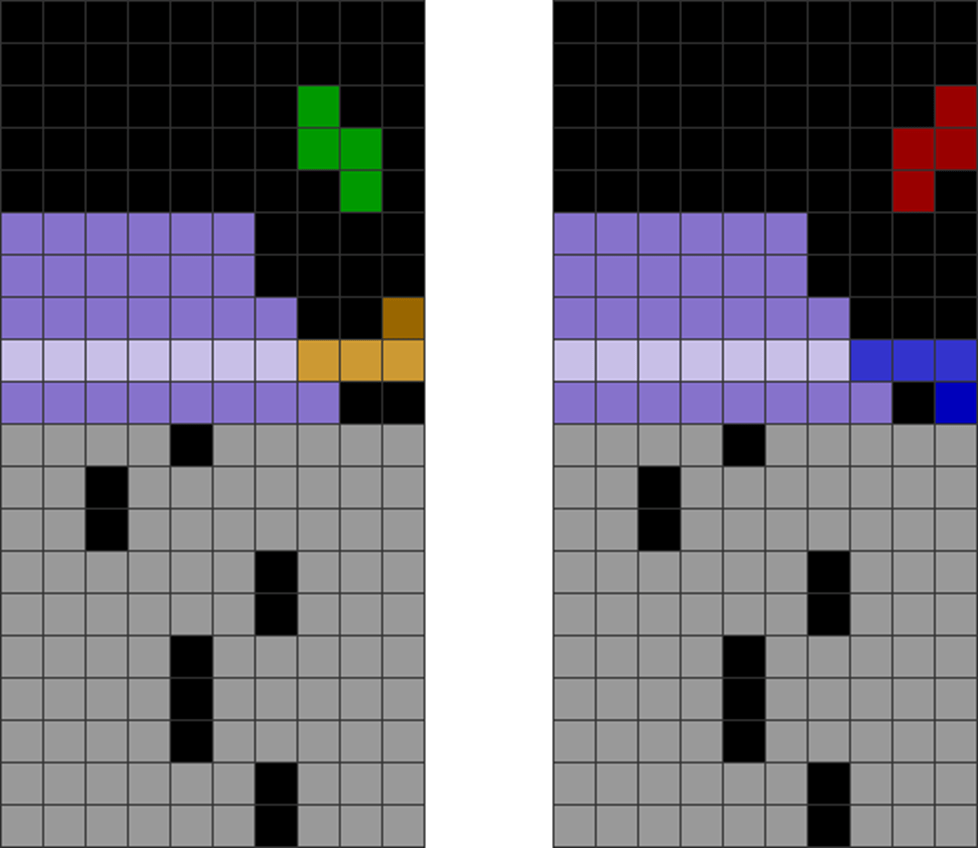
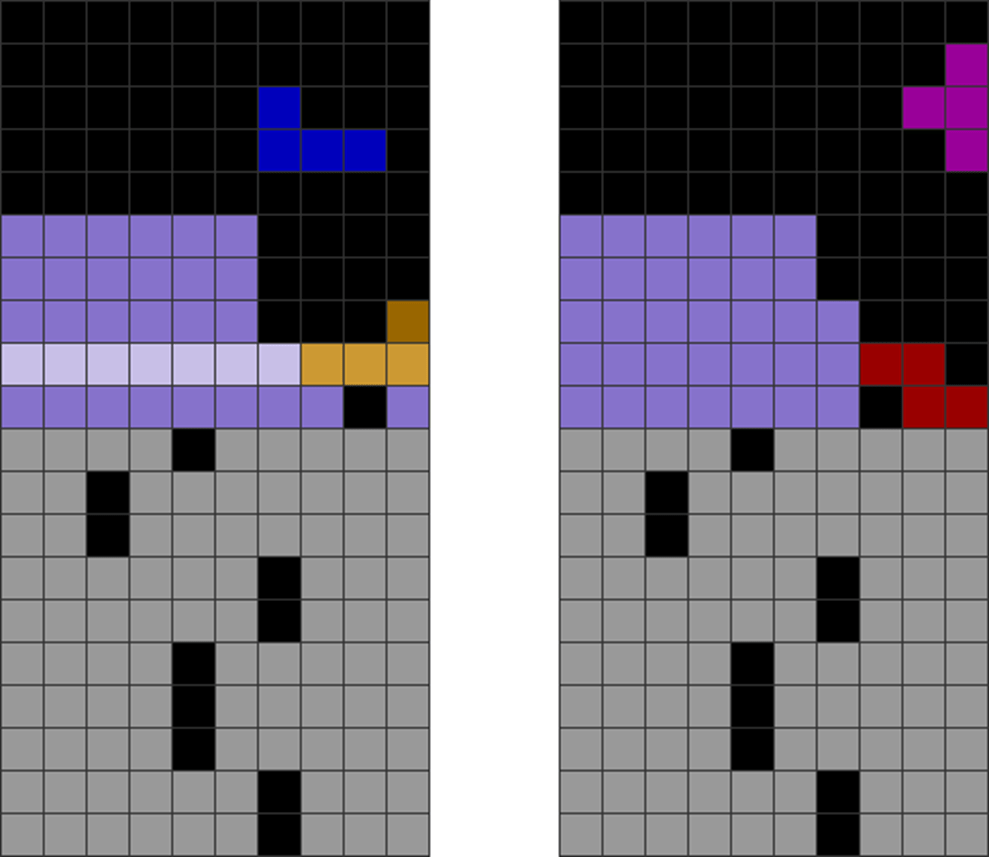
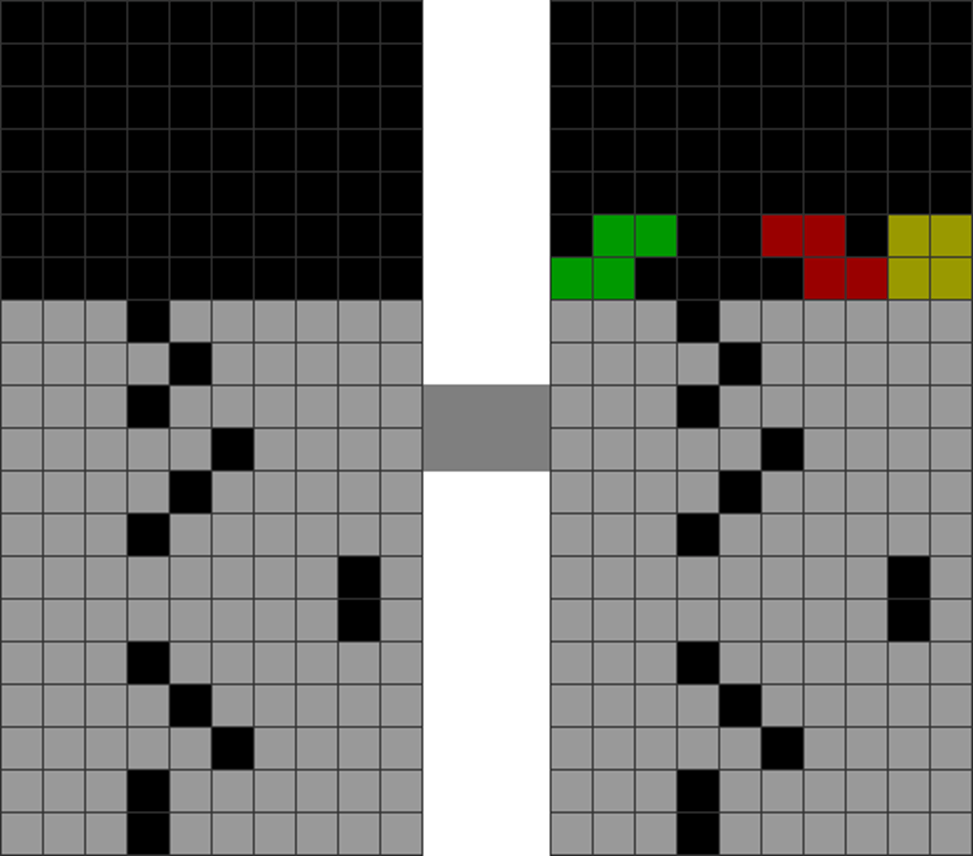
Notice how the initial J (diagrams 11-1 and 11-3) and O (diagram 11-2)pieces above make the first skim seem dirty, only for a second piece to skim off the excesses cleanly? That’s right: you can downstack with pieces out of order!
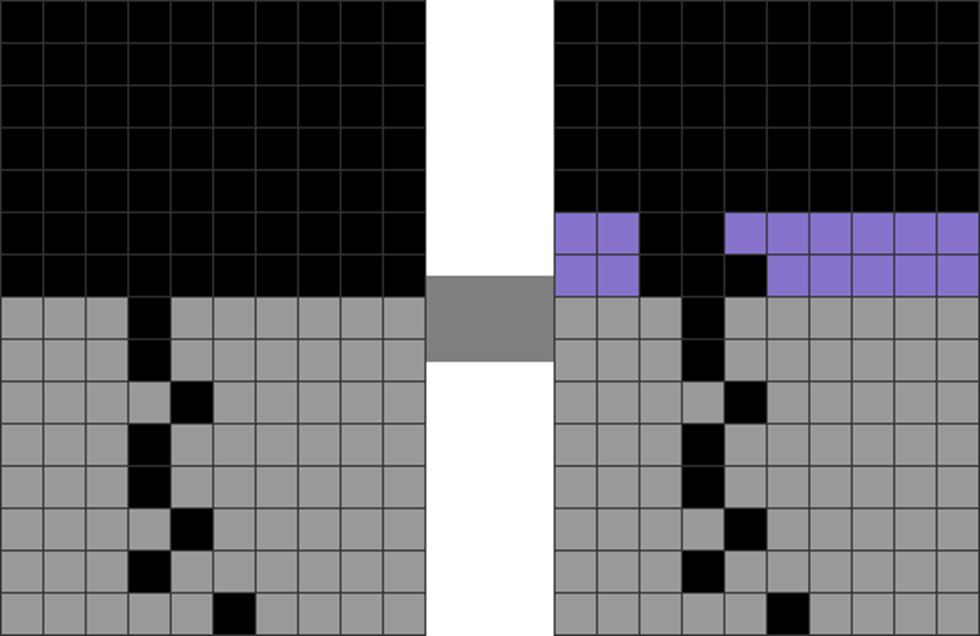
This is advanced downstacking. Knowing how to skim off layers non-linearly increases your repertoire of downstacking options and opportunities. In short – be flexible! This lets you use composite pieces to downstack, where the first placement is dirty.
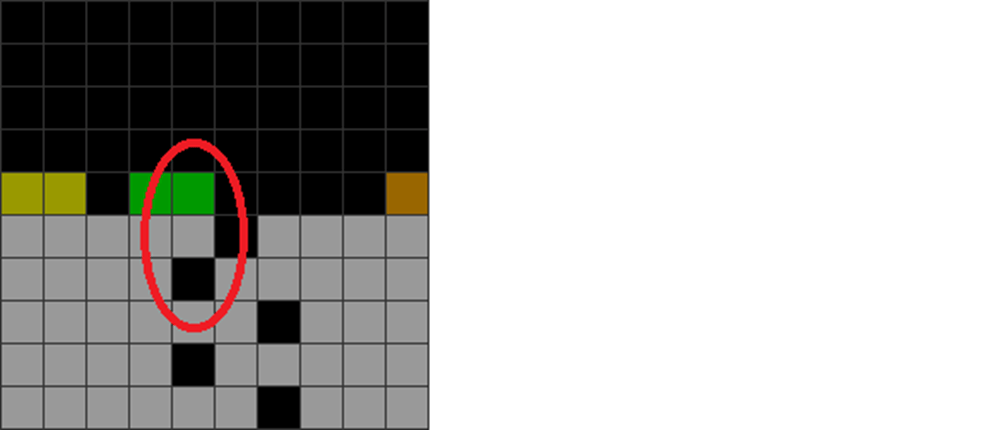
One can upstack seemingly dirtily before downstacking. In the situation below, Alt. A may seem proper because people keep saying: “Don’t upstack over the garbage hole.”
Diagram Set 11-4
1
2
A jagged field. The player downstacks with a horizontal T.
3
Alt. A
O follows to expose the garbage hole in column 4. The resultant field is flat.
This alternative (from step 1) of downstacking with a vertical T creates a parity bump that makes the resultant field jagged.
It is true, but Alt. A may lead to jaggedness. A better alternative is to do step 2 and then downstack with an O. This leads to more cleanliness and less jaggedness.
Remember: downstacking cannot be reduced to global, generalized rules like “never cover the holes while downstacking.” Optimally, choosing the options that lead to cleaner downstacking in the long run, not the short run, is ideal.
Steps 1 to 3 prioritize cleanliness in the long run, but the alternative option only does it for the short run.
Initial dirtiness is okay if it minimizes wastage in the long run versus the alternatives, such that the entire downstack sequence is clean and has high combos.
ii) Platform Stacking
Platform stacking involves purposely stacking over holes sometimes to improve downstacking options:
Diagram Set 11-5
1
2
Starting field.
Horizontal, dirty I placement.
3
Alt. A
The player skims off I with an O, rendering subsequent downstacking easy.
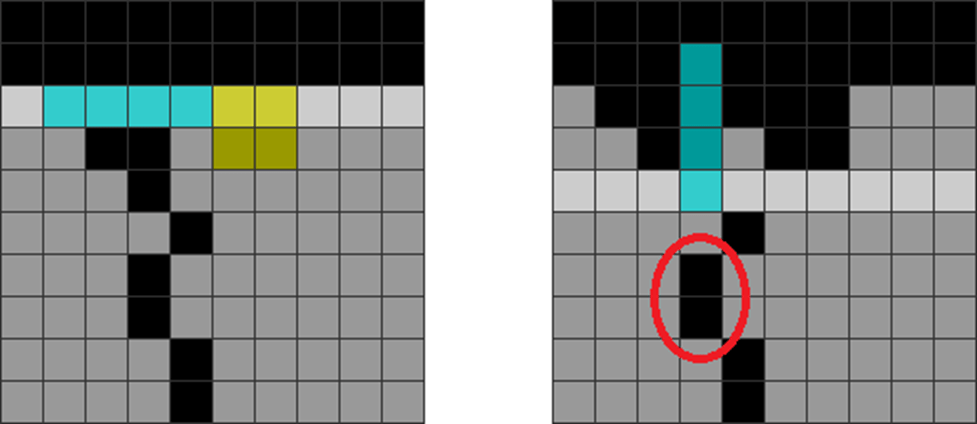
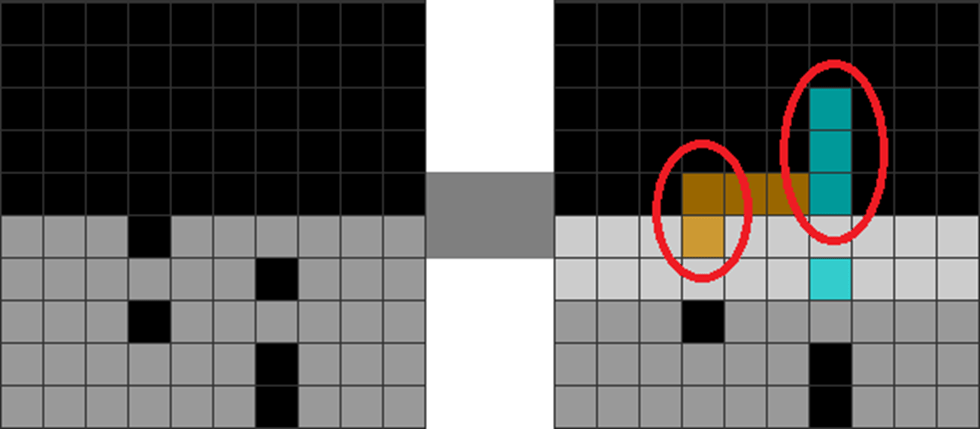
From step 1, if I is placed vertically, it will cover the red-circled holes later.
Here, the player stacks dirtily over holes, but it is only temporary. He skims off the top ‘dirty’ layers to expose the garbage holes below.
This method lets one skim off excess pieces and ensure the stack is flatter. Compare it to Alt. A’s stacking using tall mino orientations. See how much cleaner, flatter, and safer platform stacking is?
iii) Combining Two or More Minos for Better Downstacking
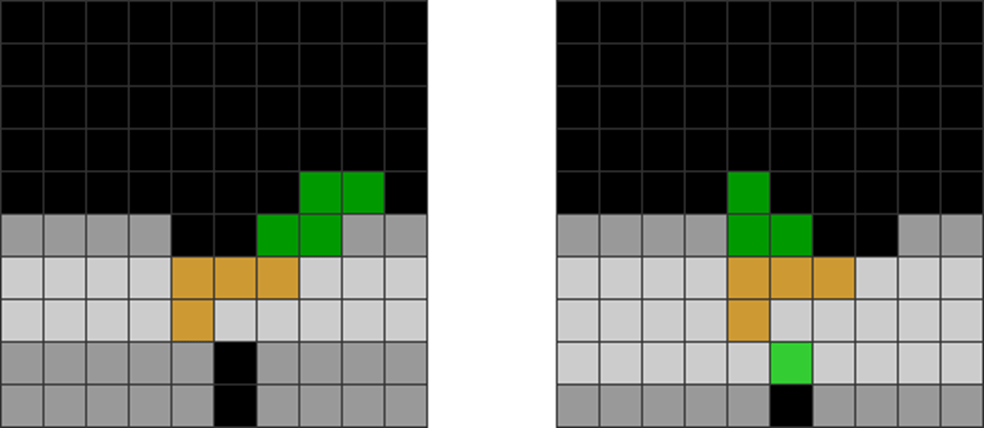
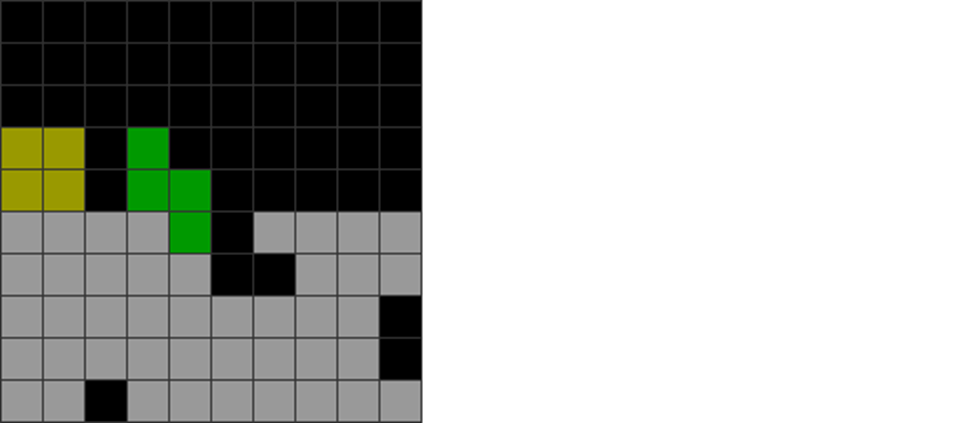
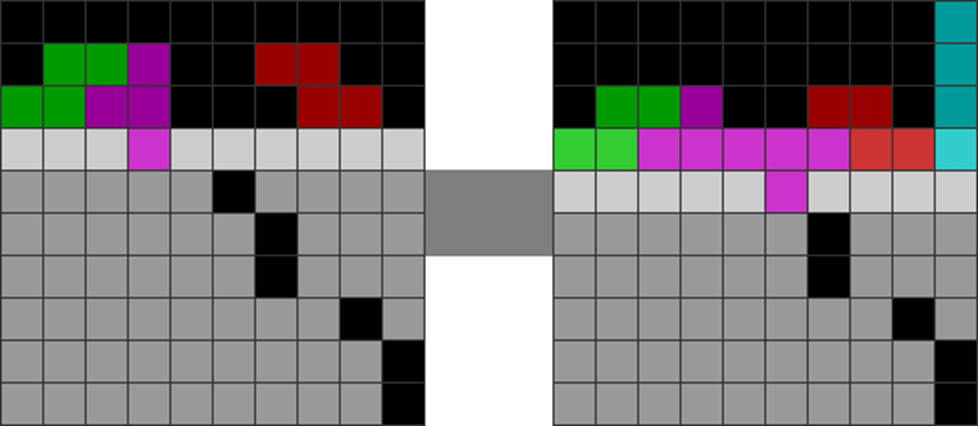
Here is a list of non-exhaustive yet detailed combinations of minos to achieve better downstacking through cavities. Some involve non-linear order:
I and Other Minos
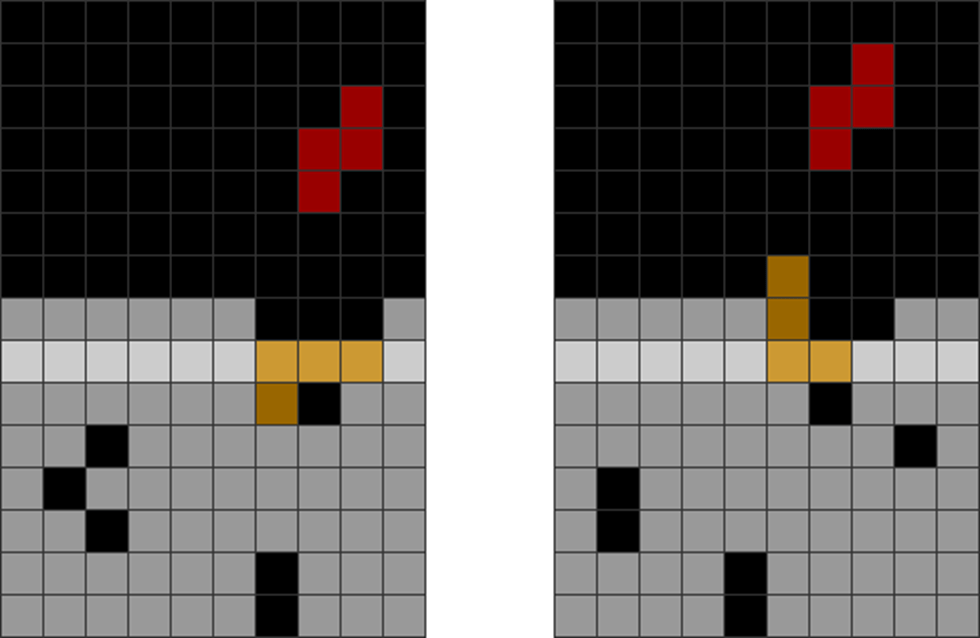
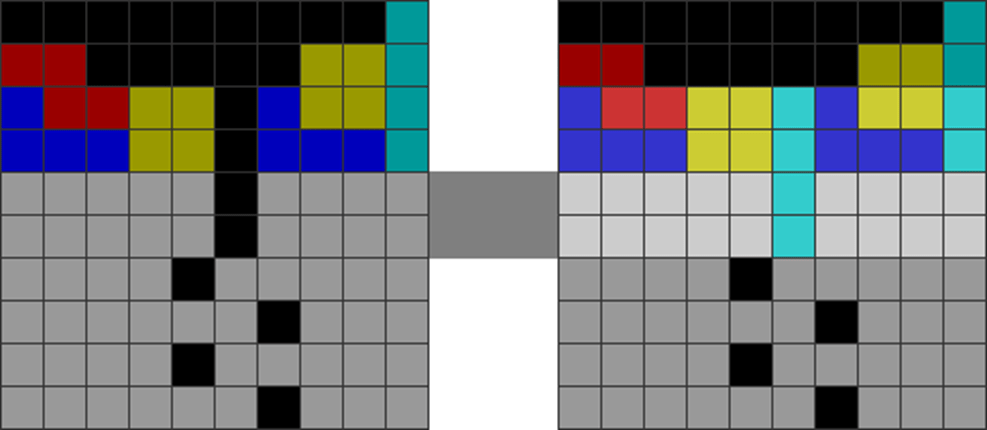
Is can combine with other minos to create very subtle downstacking methods:
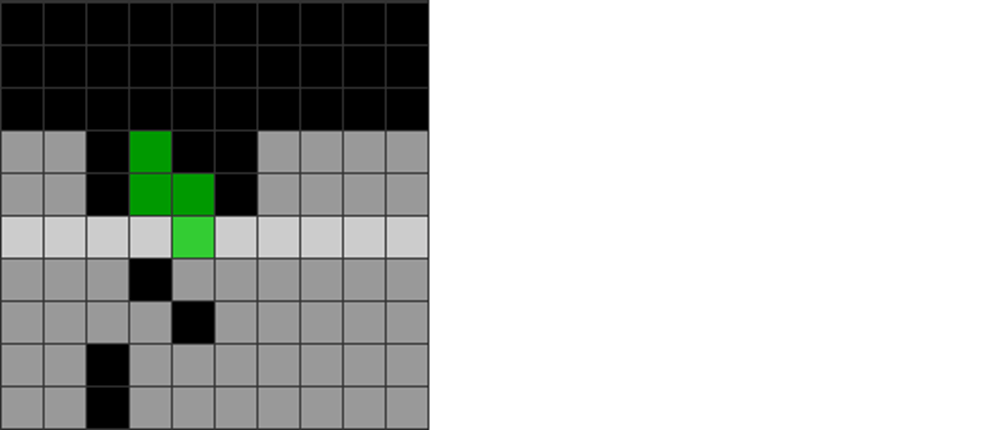
Note how you can place the pieces non-linearly before skimming?
For instance, in picture 1, you can put the L horizontally and suspend it this way before downstacking it with an I piece.
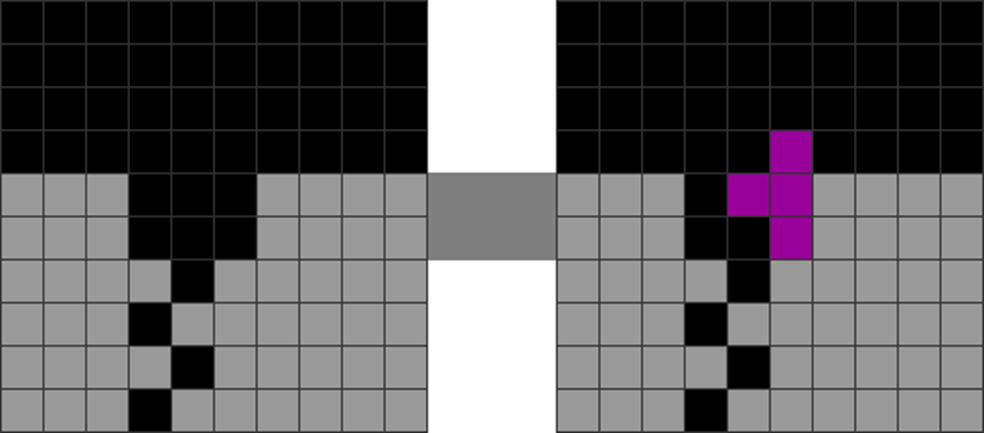
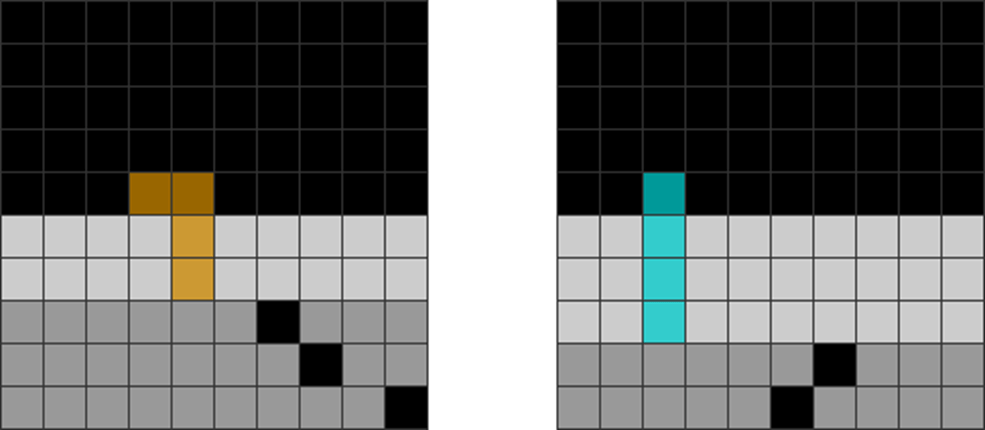
O and Other Minos
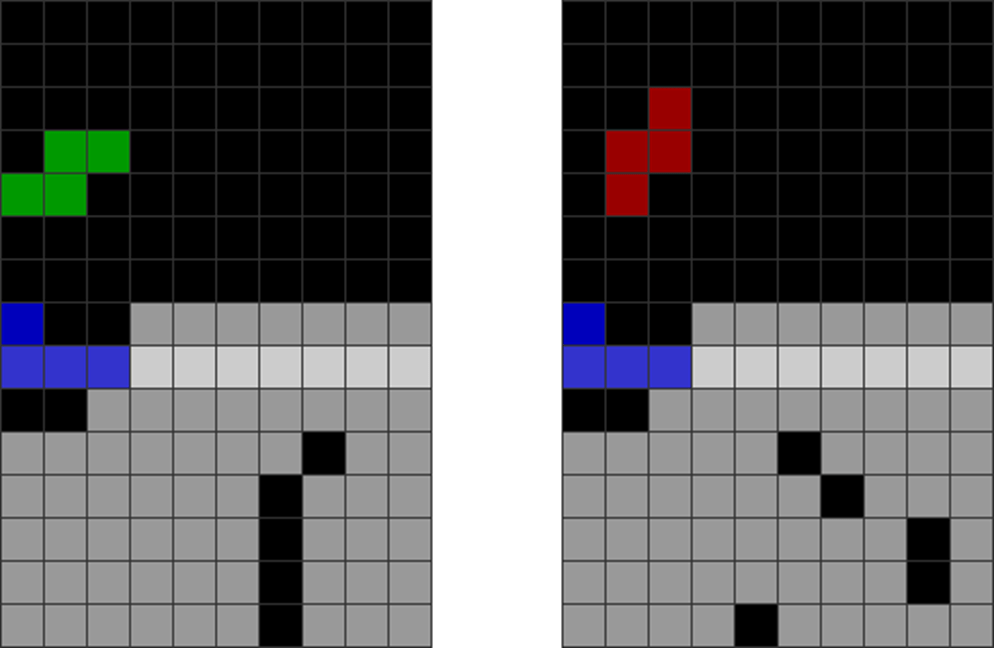
Os by themselves are inflexible, but when combined with other pieces to downstack, one can reduce their inflexibility:
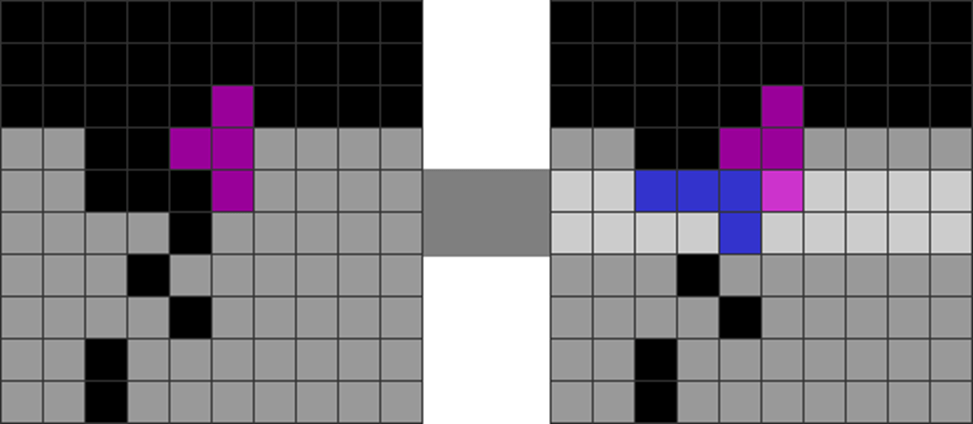
You can place these pieces out of order to downstack.
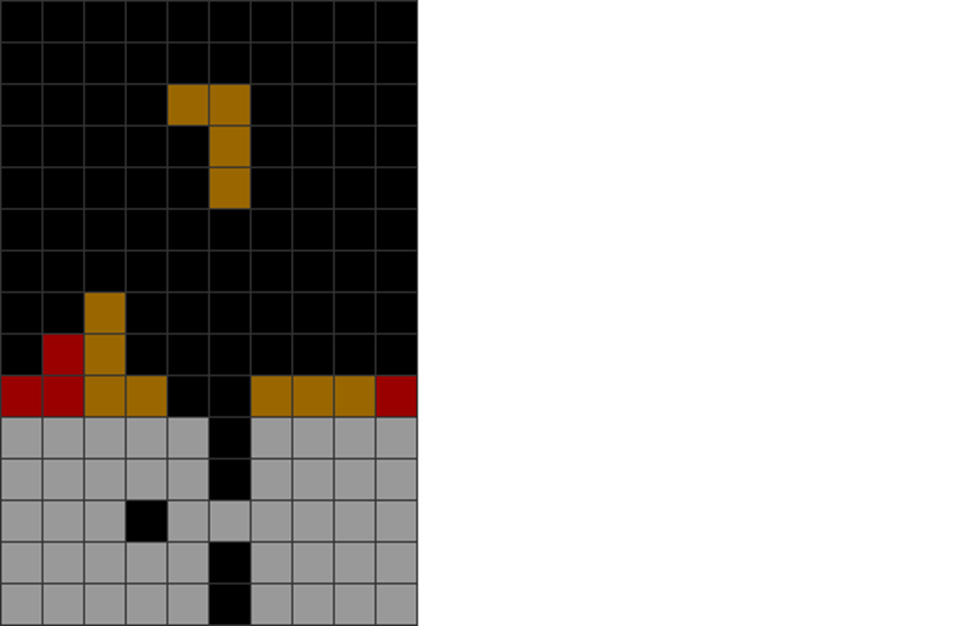
For instance, the second picture with L and O shows the first L skim, which may seem dirty. However, the subsequent O piece cleans off the resultant pattern and leads to a clean field.
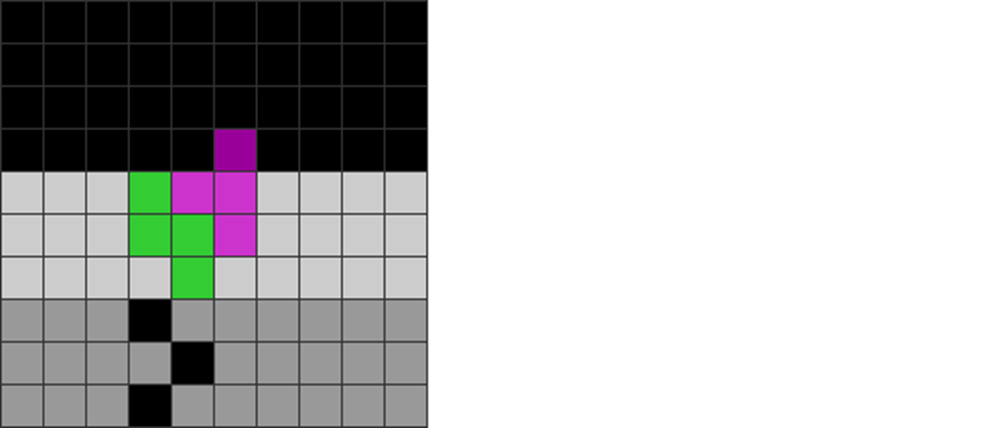
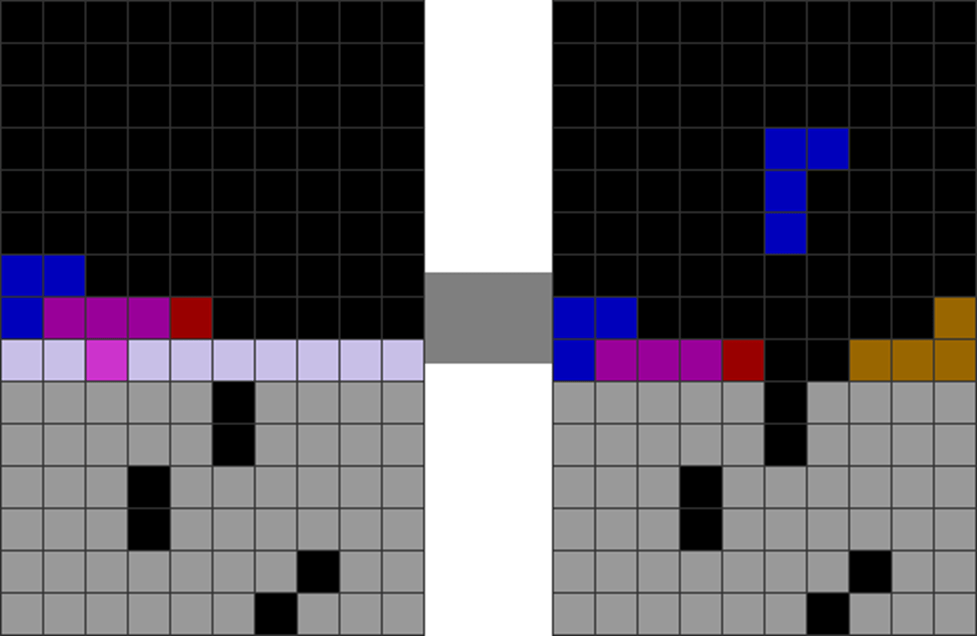
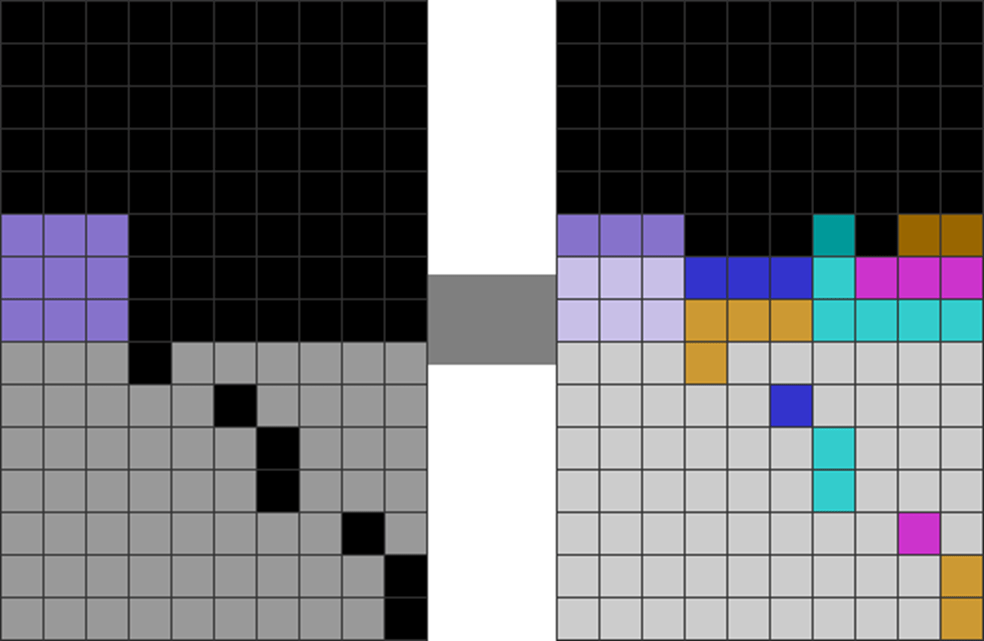
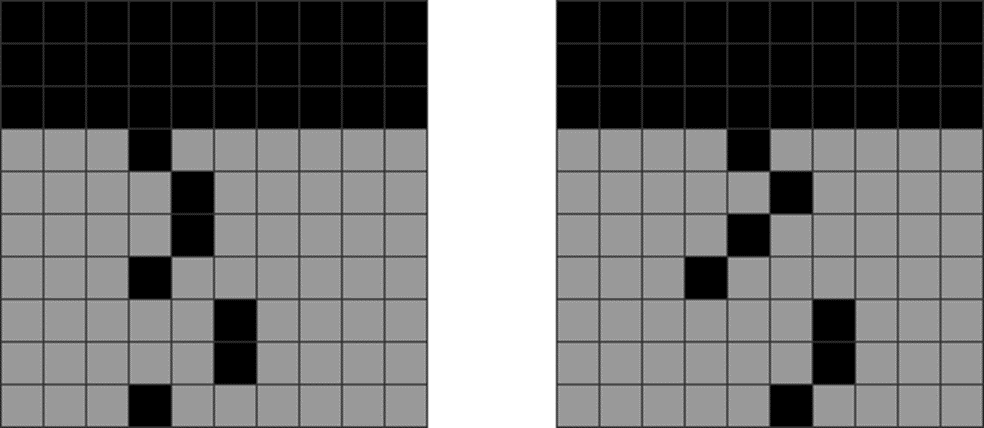
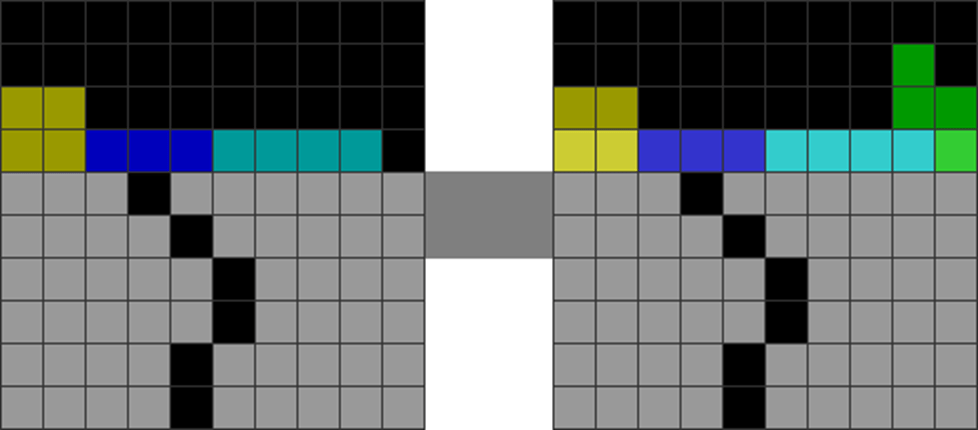
L/J and S/Z
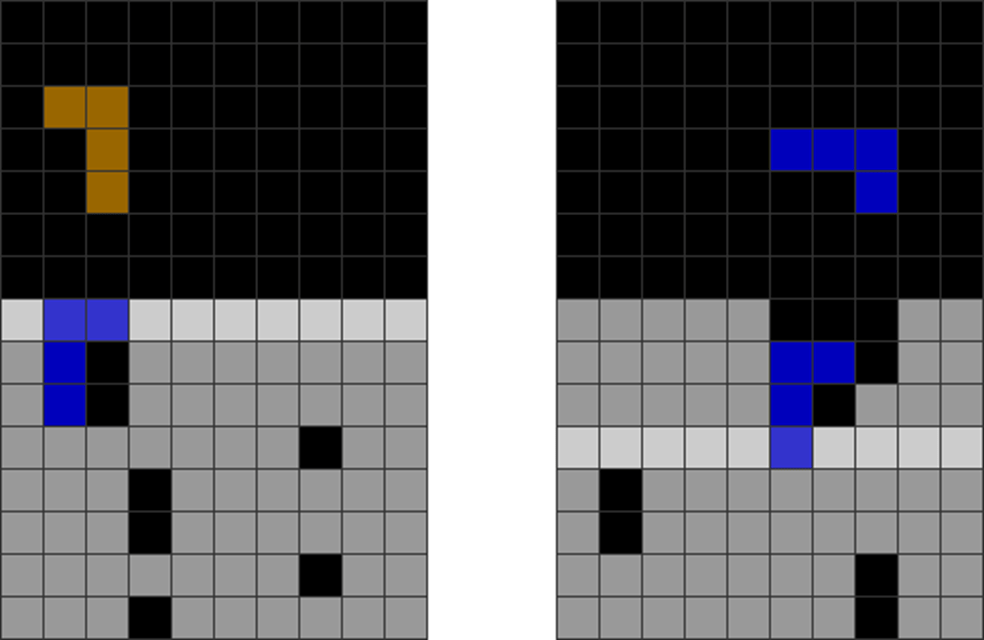
L/J and S/Z can combine in many ways, leading to optimal downstacking:
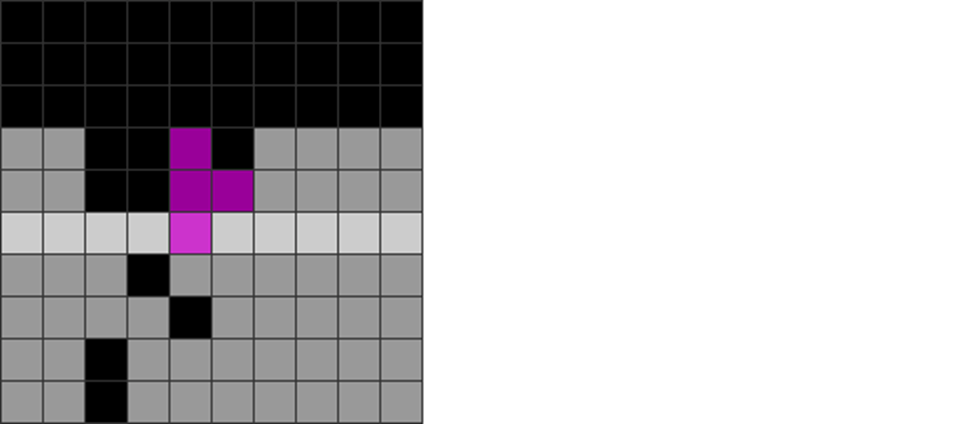
They may seem dirty initially, but they lead to a clean aftermath. Memorizing these patterns is crucial.
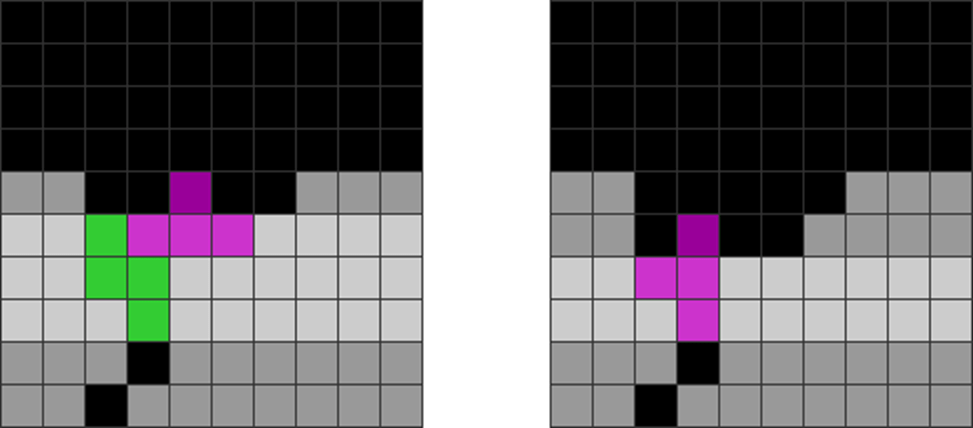
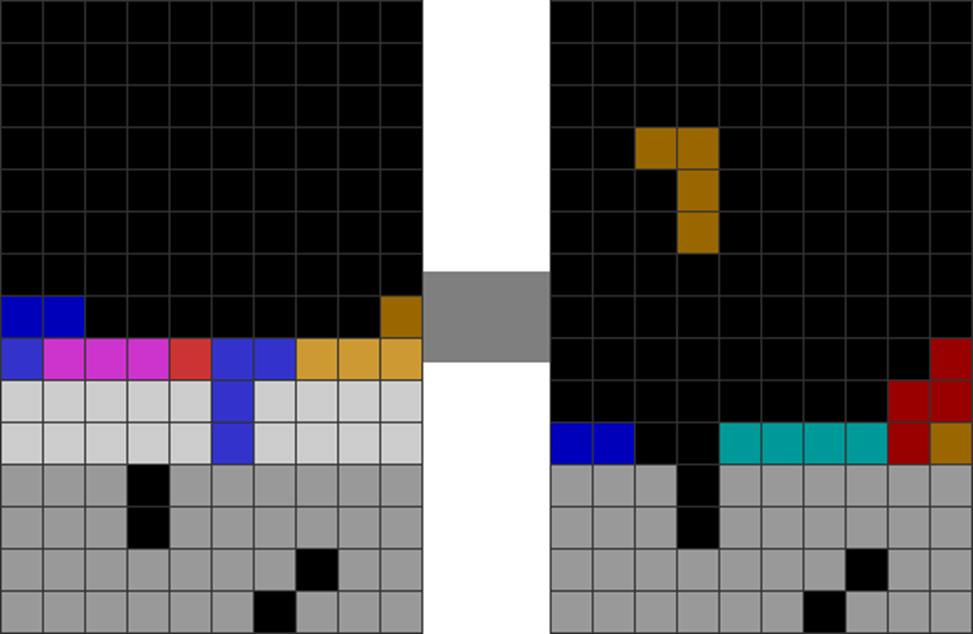
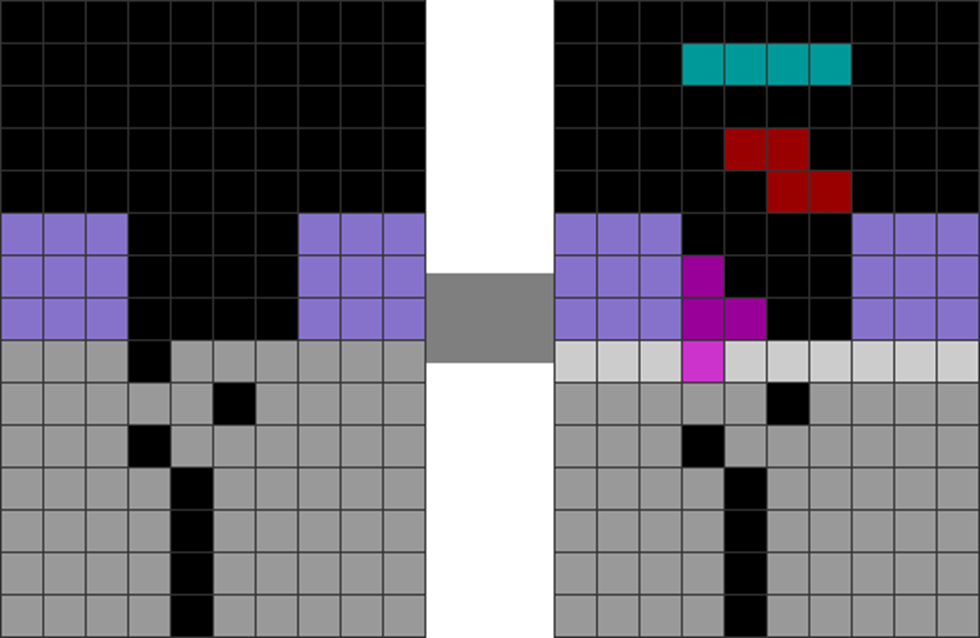
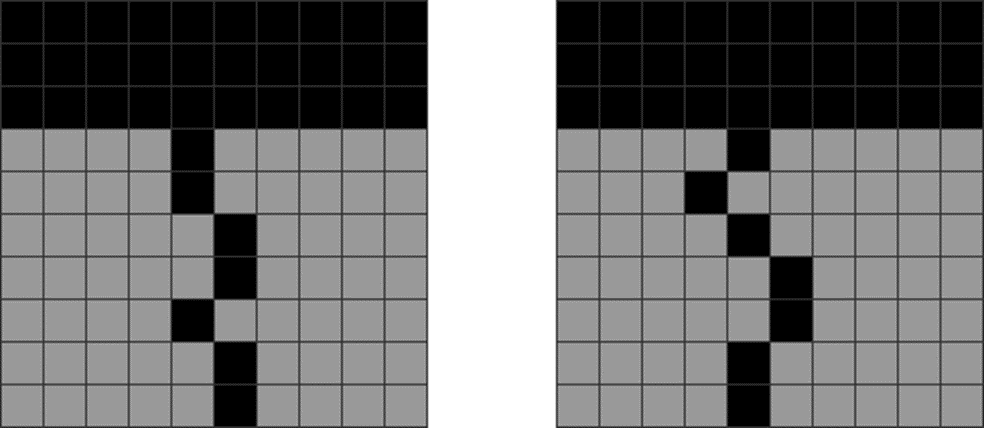
L and J
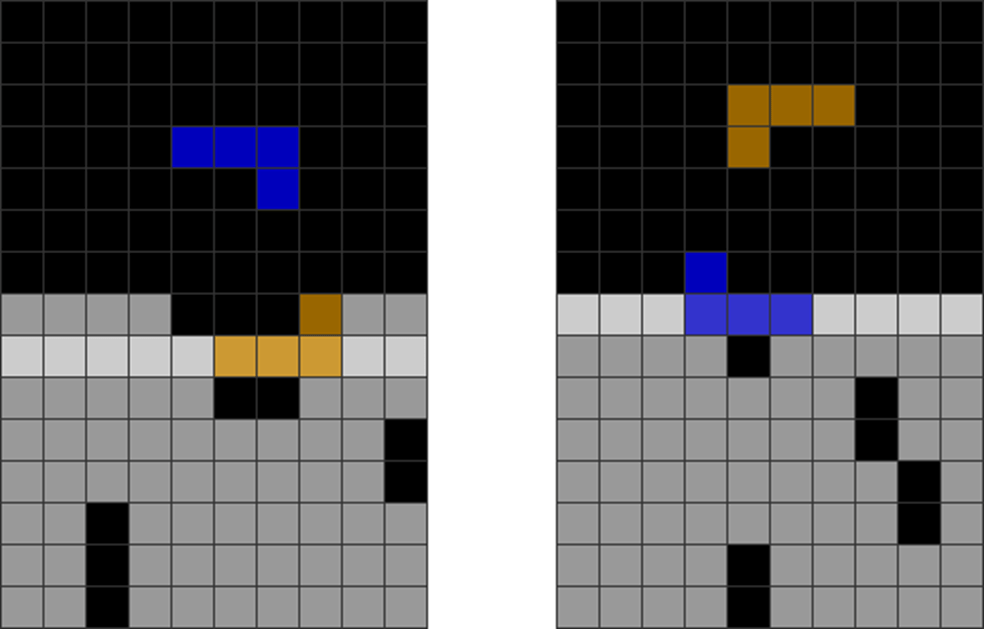
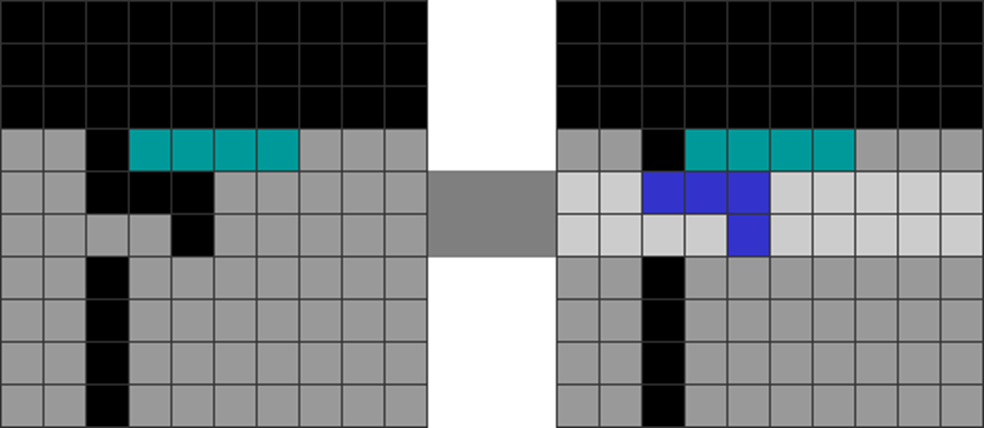
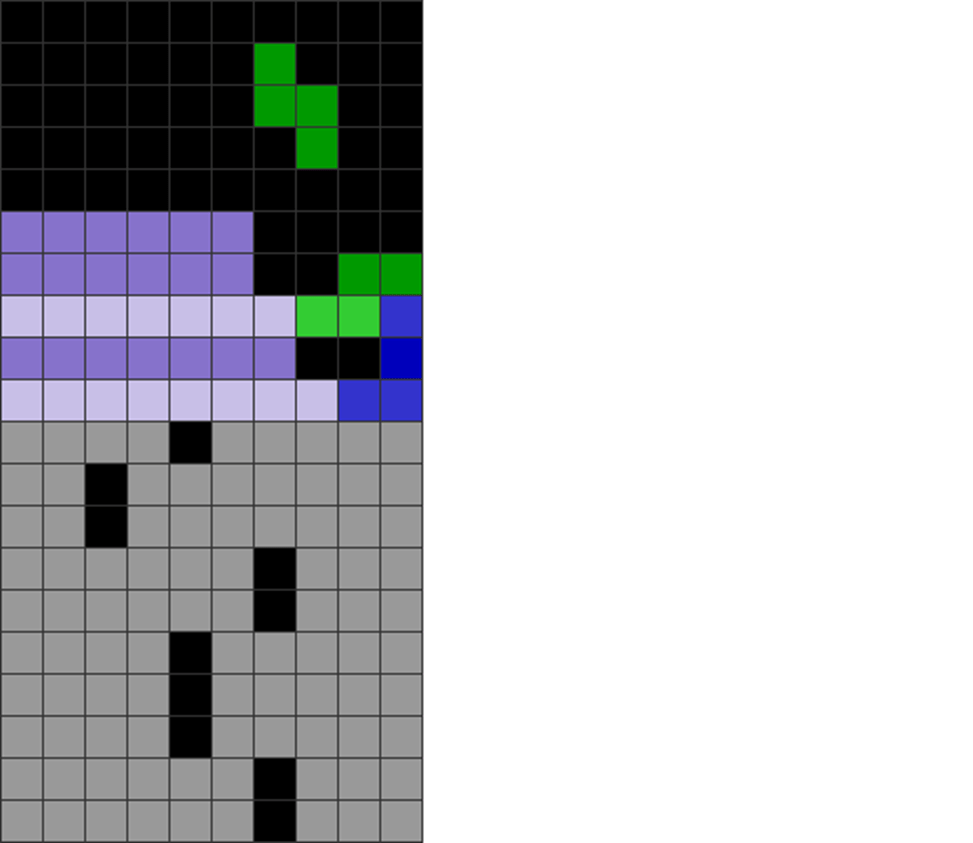
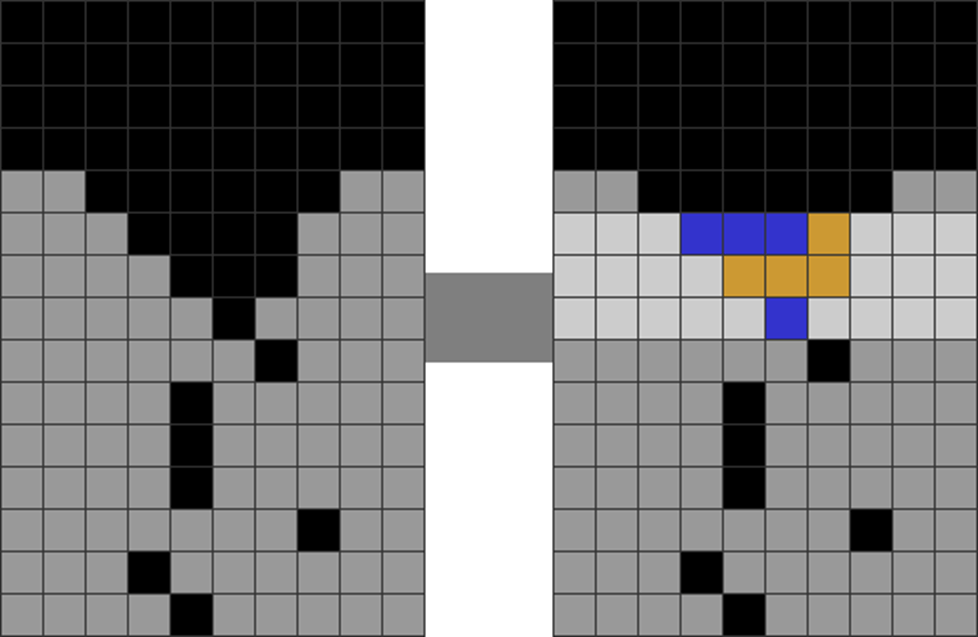
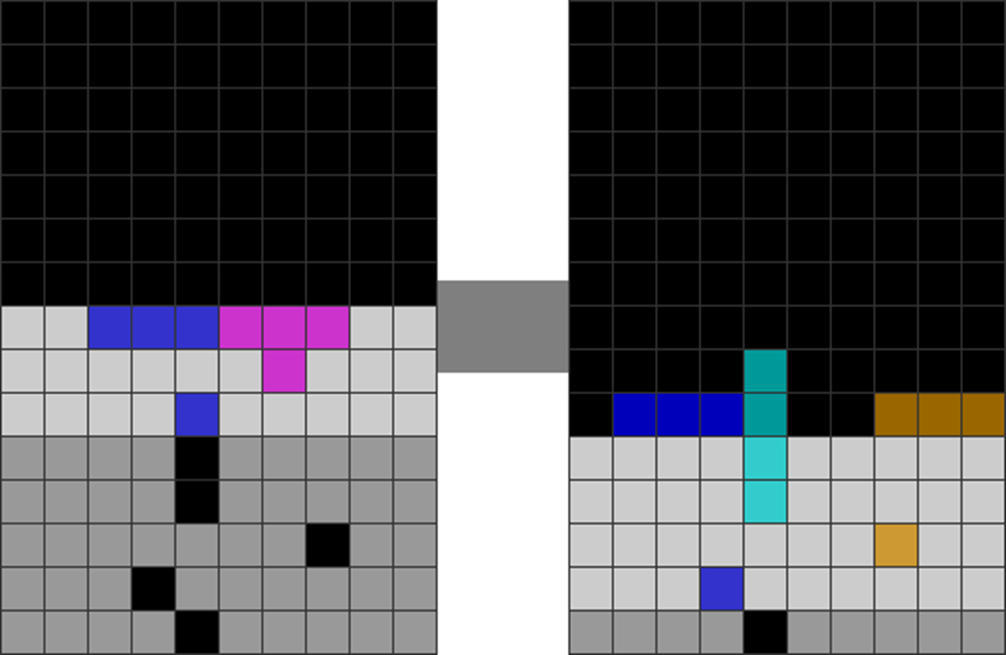
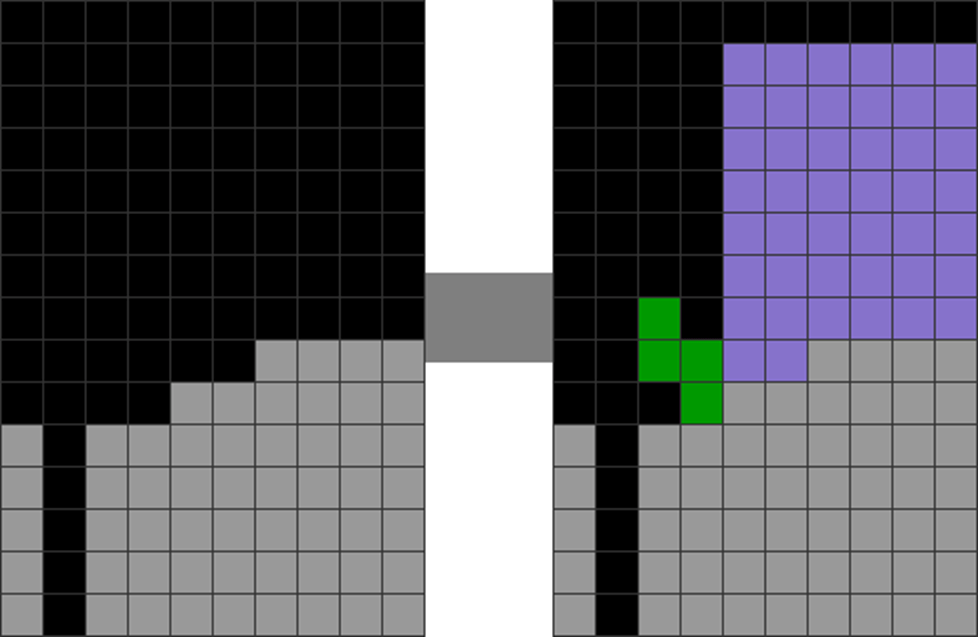
L and J have one of the most flexible interactions among all mino combinations. The common cavities below can be downstacked through L and J pieces.
Knowing the combined orientations of Tetris pieces opens up more downstack and combo continuations as you can see more possibilities. You can also skim with composite pieces instead of waiting for one specific piece to skim through a cavity.
2) Use All-spins Generously to Improve Stacking
A player who learns all-spins has an incredible edge over one who doesn’t. However, I suggest not abusing too many spins as they mandate many soft drops, which are slow and reduce time-based efficiency.
Sometimes, all-spins allow you to make more optimized options. It is better if an all-spin situation enables you to make the stack cleaner and flatter. Here’s an example:
Diagram Set 11-6
1
2
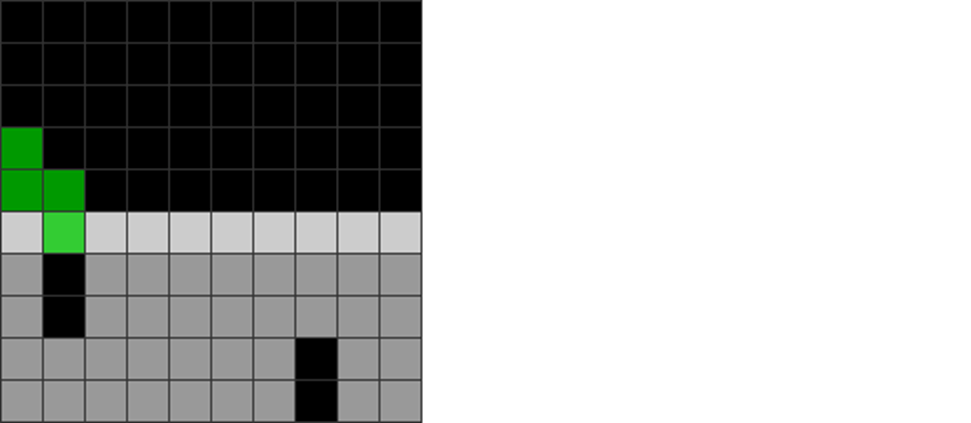
A jagged starting field.
The player puts the first J this way.
3
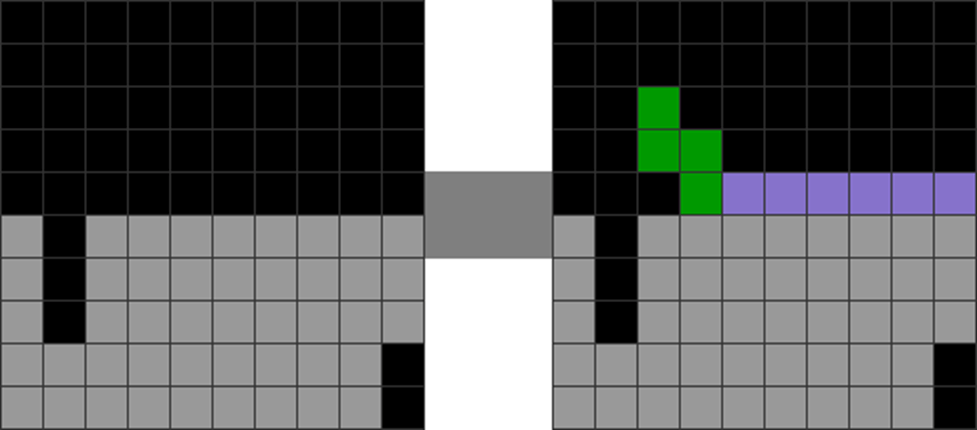
Then, he soft drops and spins the Z in to line clear. The resultant field is flatter.
See how soft drops and all-spins improve stacking continuations? It creates cleaner alternatives. Here are specific examples:
L and J Spins
Using L and J spins can be helpful in the following situations:
Diagram Set 11-7
1
2
Alt. A
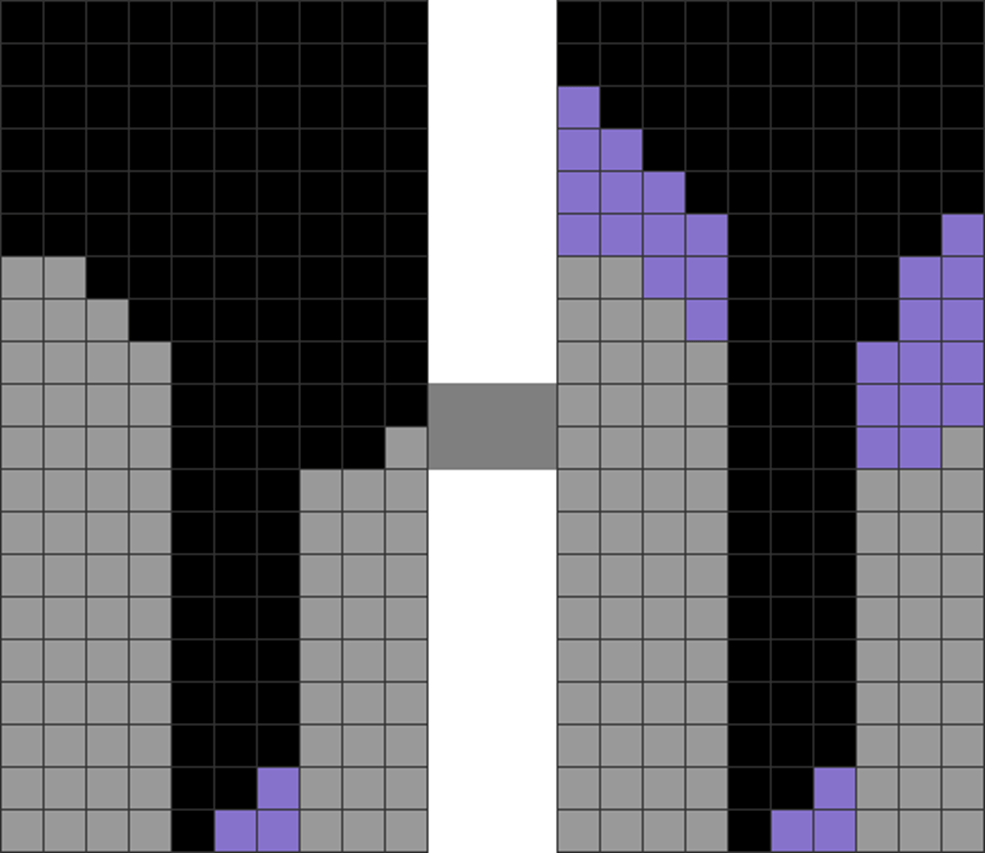
The player spins the J under the S. The line clear exposes the next garbage hole, unlike the alternative vertical S skim, which blocks the next hole.
Diagram Set 11-8
1
2
Alt. A
The player spins the J under the T, exposing the next garbage hole. The alternative will lead to less smooth downstacking as the top purple block will later obstruct column 5’s garbage hole.
Diagram Set 11-9
1
2
Alt. A
The player spins the J under the I. The resultant field exposes the garbage hole in column 3. Alt. A does a skim but results in tall overstacking.
See how much cleaner it allows for subsequent downstacks? The alternate placements for the last two diagram sets would block the most immediate garbage holes.
Here are more optimized examples to downstack using L and J spins:
Diagram Set 11-10
1
2
3
Alt. A
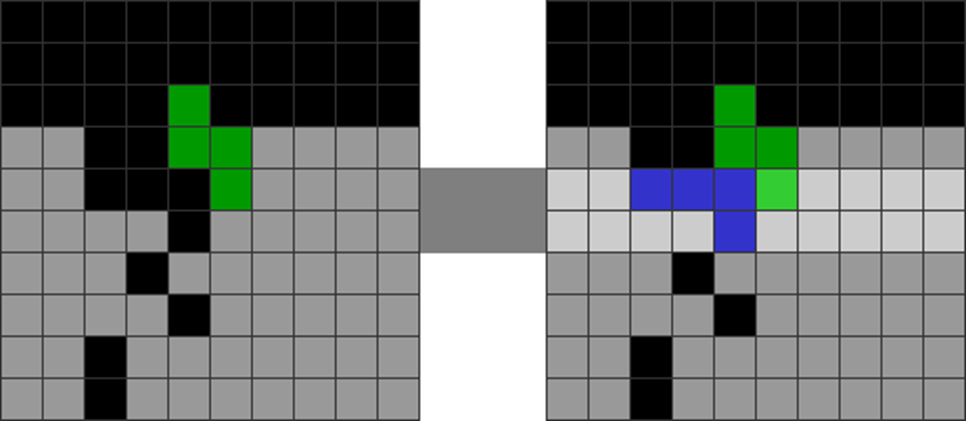
Unlike Alt. A, the player spins L under the Z, resulting in a smoother downstack.
Diagram Set 11-11
1
2
The L can be spun with this orientation, too.
Diagram Set 11-12
1
2
3
Alt. A
The player spins L under S, quickly exposing the next garbage hole with just one line clear delay. Alt. A needs several and is less quick.
S and Z Spins
The same goes for S and Z spin triples:
Diagram Set 11-13
1
2
3
The player uses an S-spin triple to downstack through the cavity. The aftermath pattern is clean.
Diagram Set 11-14
1
2
3
Alt. A
You can also use this to downstack cleanly. The alternative, Alt. A, with a vertical T, is bumpy and dirty.
In the diagram below, players like Flare sometimes use this L or J spin double under a vertical S (Z if mirrored) because it is much better than the alternative, which covers the garbage hole:
Diagram Set 11-15
1
2
Alt. A
Unlike the alternative, this J spin under the S leads to a clean downstack.
S, Z, and O have specific downstacking combinations that involve all-spins, which are highly important to memorize mid-game. Here are some:
Diagram Set 11-16
1
2
This pattern is easily downstacked with a composite S and Z crisscrossing to skim it off.
Diagram Set 11-17
1
2
You can lower the Z under the O for a smoother downstack.
Diagram Set 11-18
1
2
This O orientation is less common but should be memorized.
Compare these to the below alternate placements with the same pieces for the same above 3 situations, all less optimized:
Diagram Set 11-19
These are diagram sets 11-16 to 11-18’s alternate placements. They are more blocky and unclean, and the downstacks are less smooth.
B) Advanced Decision-making
On an advanced level, downstacking requires many split-second decisions between T-spins, Tetrises, skims, and downstack combos. This chapter shows the most common decisions based on thousands of hours of experience.
1)Cultivate your Doubles and Triples Vision
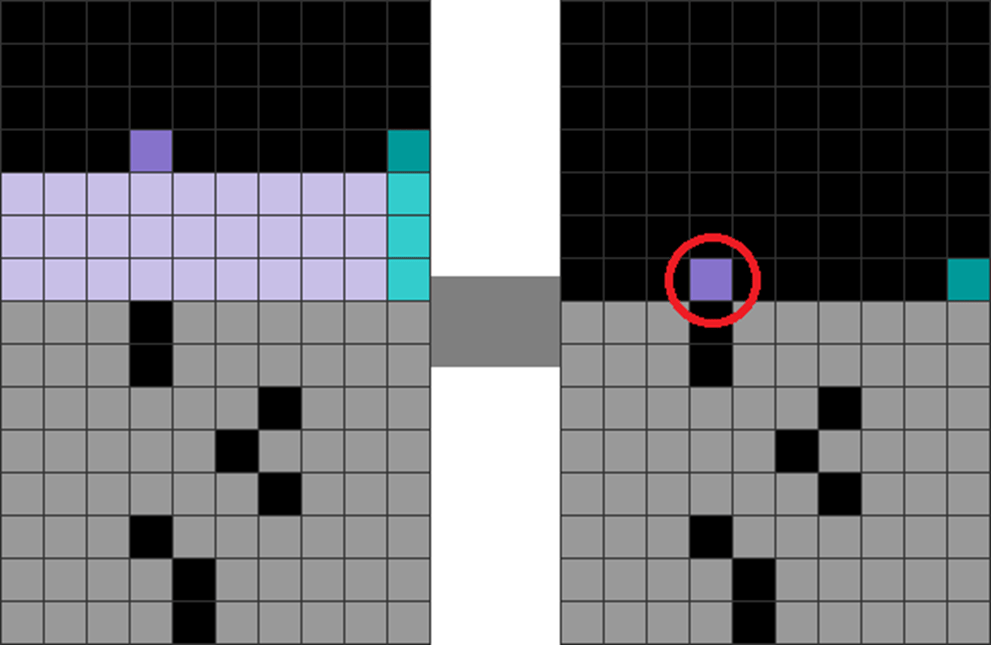
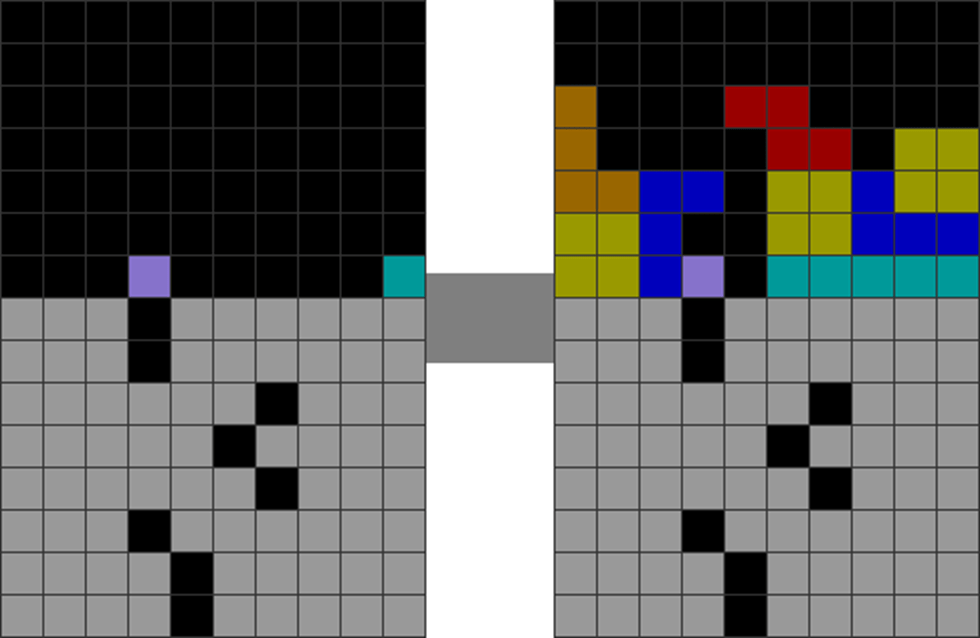
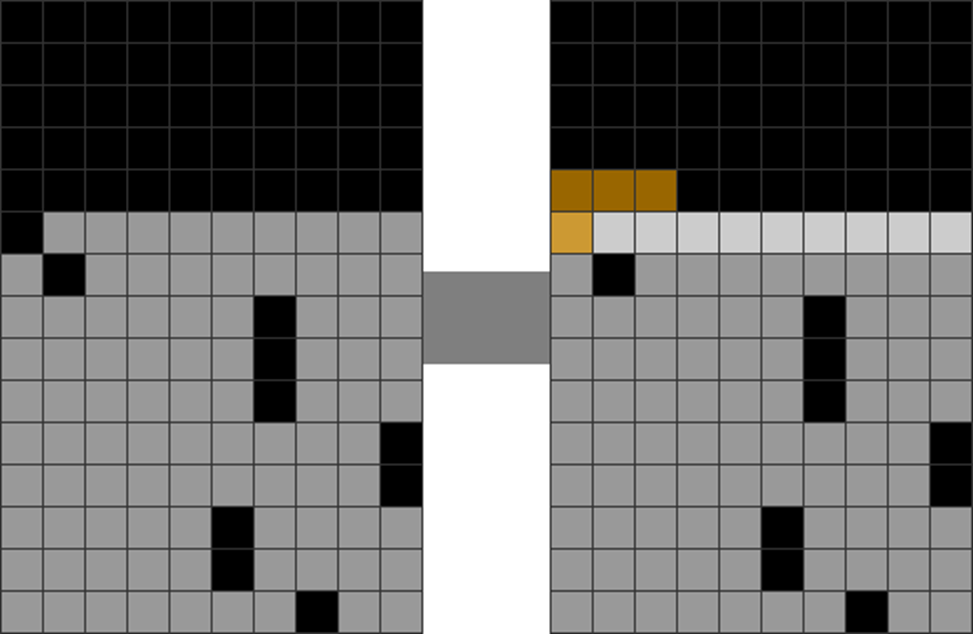
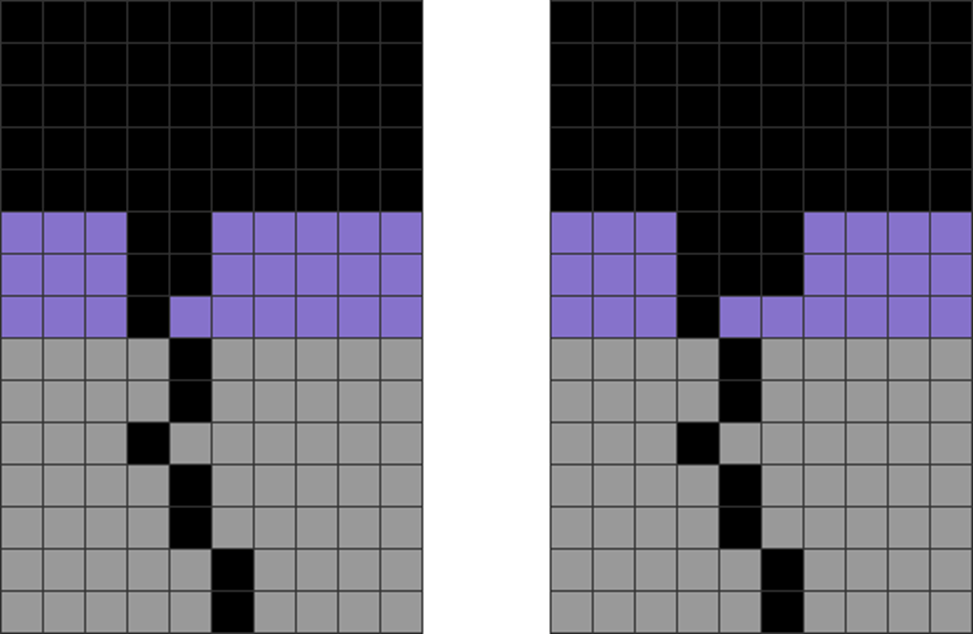
One critical practice that many good downstackers have is to stack their field to easily fit in T, S, Z, O, L, and J pieces to make perfect doubles and triples easily.
While my Tetris books have taught people how to recognize T-spins and Tetrises, even many advanced players forget to cultivate their vision for doubles and triples made with the above pieces:
Diagram Set 11-20
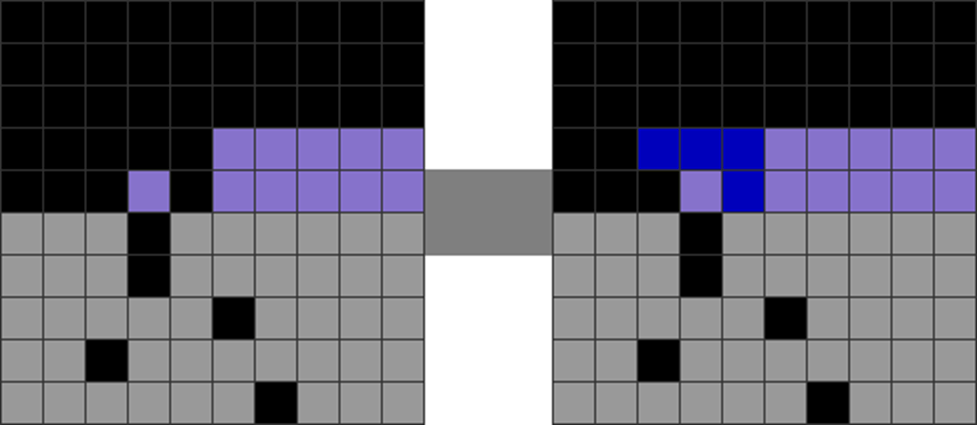
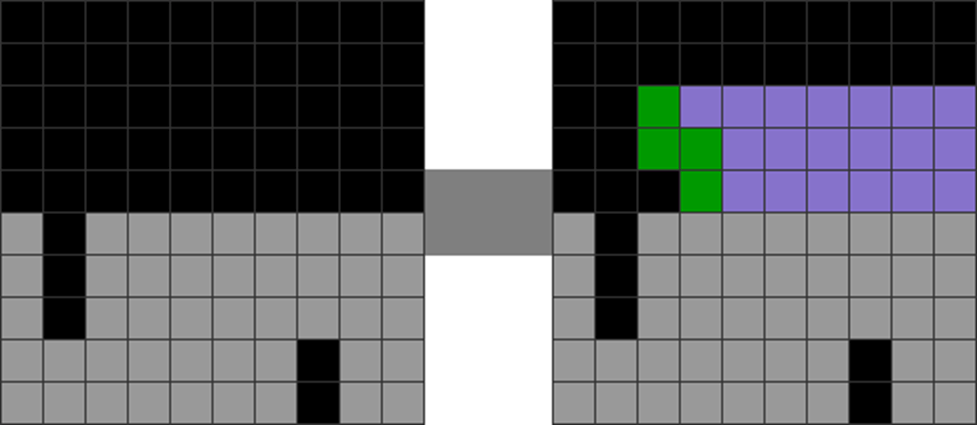
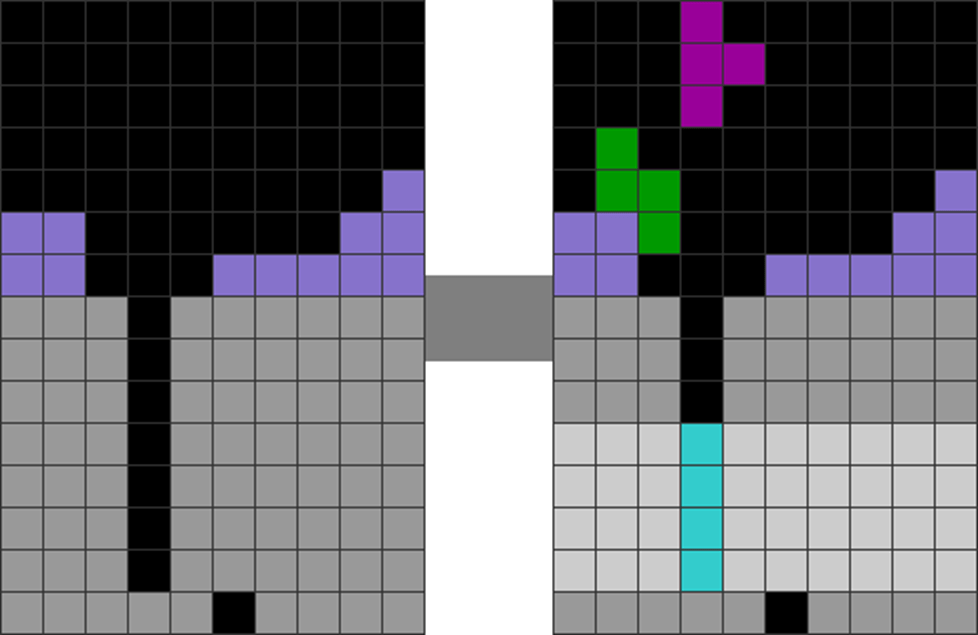
The player uses an L double, J triple, and O double to cleanly skim off the lavender blocks.
Why are doubles typically the most efficient way to downstack by minimizing the upstacked (lavender lines) to gray garbage lines? Observe:
Every 7 minoes must upstack at least two lines over the gray garbage hole in most cases. The upstacked (colored) parts must have their row upstacked and skimmed off. There are no one-block minos that fit perfectly into the one garbage hole to skim the row off without needing any upstack.
However, when garbage is cleaner, the L, J, and I placements are the most efficient ways to skim off garbage lines while minimizing the upstacked (colored) parts. If unavailable, the player must skim off the top layers using Platform Stacking.
Efficient downstacking comes from using the available pieces to minimize upstacked rows versus the gray, downstacked rows.
Below is an 8-stage sequence:
Diagram Set 11-21
1
2
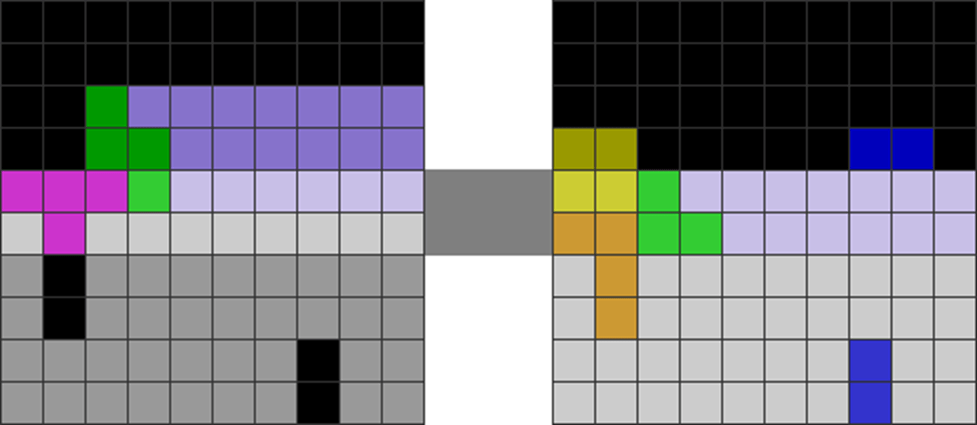
A T-spin single concludes. The player upstacks a bit and prepares to use J as a double line clear.
3
4
After the J double line clear, the player upstacks a bit and prepares to use L as a double line clear.
5
6
After the clean double, the player upstacks for a J double line clear.
7
8
The resultant field is clean.
Throughout the entire sequence above, all double line clears are clean.
However, throughout the eight steps, there could have been possible optimizations to sustain T-spins, Tetrises, and back-to-backs like these:
Diagram Set 11-22
A
B
Follows from the last diagram set’s step 1: a Tetris. However, the preview pieces do not allow this.
Follows from the last diagram set’s step 3: a T-spin double. However, it is unclean.
C
Follows from the last set’s step 5: a T-spin triple. However, the incoming pieces may not allow.
The above may seem better in terms of firepower. However, some are unclean, and the previews may not allow them. Thus, the original diagram set’s double line clears are cleaner and more efficient.
Another to note is this:
Diagram Set 11-23
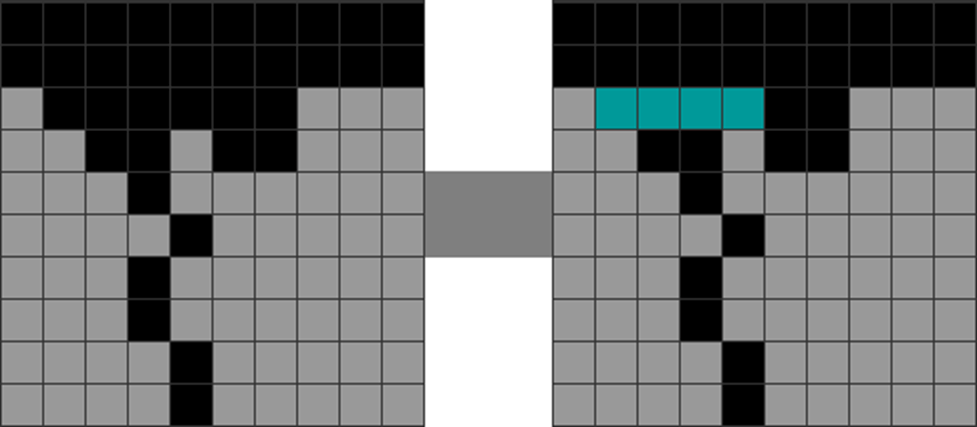
1
2
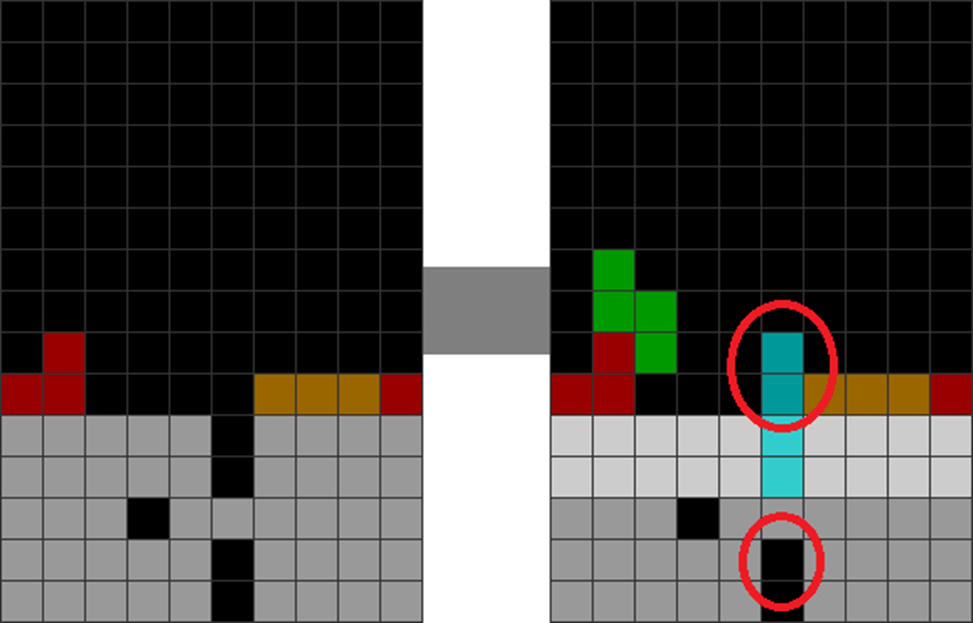
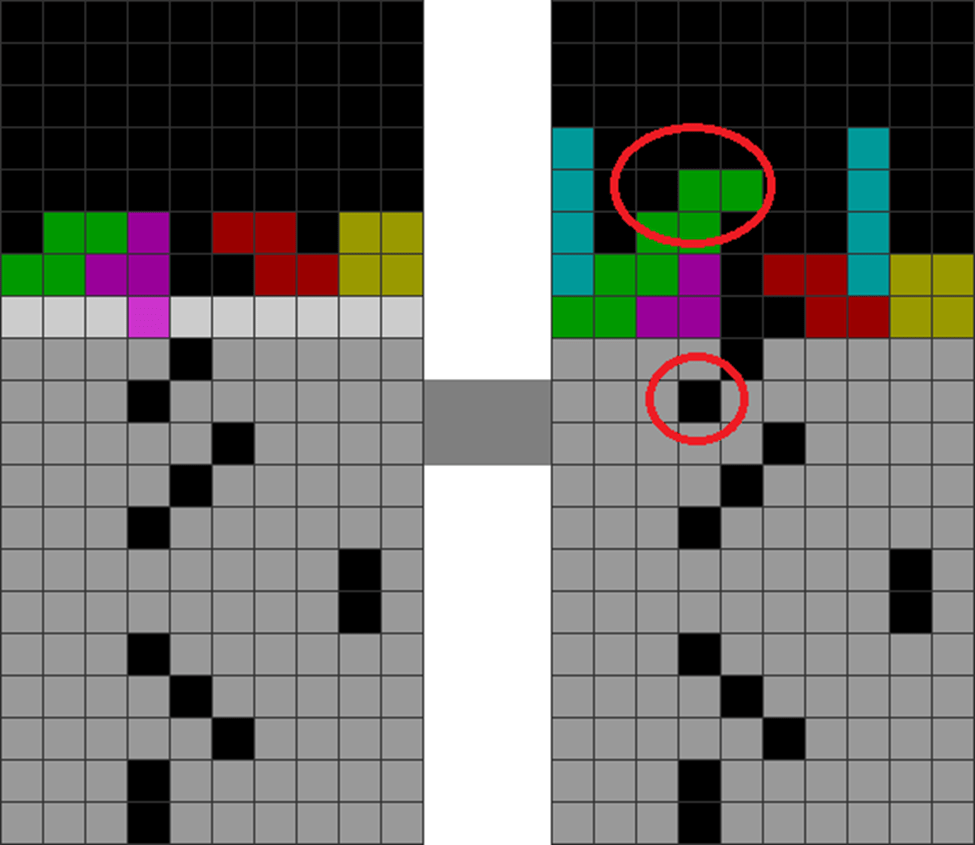
The player makes a prophecy T-spin double. However, it is unclean. The top red-circled teal blocks block the bottom.
Alt. A
The player is better off using an L to perform a double line clear.
The alternative, with a clean triple using a perfectly fitting L piece is cleaner and gets down to the garbage quicker. It also generates 1 or 2 lines of garbage to cancel out incoming attacks to increase survivability.
Increasing your doubles and triples vision supplements your T-spin, Tetris, and downstacking foresight. This vastly improves your survivability in the most downstack-heavy games like Tetris 99 or Puyo Puyo Tetris.
This is the crucial reason Amemiya’s survivability is legendary: he combines doubles and triples foresight with heavy mid-game downstack combos.
2)T-spins or Downstack?
Often, in dirty garbage Tetris games like Tetris Effect: Connected’s third phase in versus, you get situations like these:
Diagram Set 11-24
1
2
The player makes a T-spin double since there is no I piece to downstack cleanly through column 2’s garbage hole.
Diagram Set 11-25
1
2
Same, since there are no L, J, or I pieces to downstack cleanly through column 2’s garbage hole.
In such cases, you may feel tempted to downstack. However, the only piece that allows for a consecutive and smooth downstack is an I, L, or J piece. Therefore, it’s typically better to make a T-spin instead.
You may also get these situations:
Diagram Set 11-26
1
2
Alt. A
This happens when you make an L or S skim to downstack. They are unclean.
Do this instead:
Diagram Set 11-27
1
2
3
4
As an alternative, starting with the same field as the last diagram set, you should instead make a T-spin, then cleanly downstack after that with combos.
Here, if you were to use an L or J piece to downstack in step 1, it would be unclean. The right side of the stack is not stacked up. Therefore, the most logical way to handle this situation is to create a T-spin. You stack up the right side (lavender blocks) to continue downstacking again cleanly with more combo options.
Summary: Make a T-spin if an immediate downstack option is not clean or available.
3) T-spins, Downstacking, or Tetrising?
There are several factors to consider in choosing T-spinning, downstacking, or Tetrising:
i) The Convenience of the Tetris and Playstyle
Sometimes, you will encounter the following situation with the following choices:
Diagram Set 11-28
1
2
The player makes a T-spin double.
3
4
The player continues with a Fractal.
5
6
Step 6’s aftermath may not allow a clean back-to-back Tetris follow-up.
Thus, in the above diagram set’s step 1, you could instead do this:
Diagram Set 11-29
1
2
This is the last diagram set’s step 1.
The player fills in just I, L, and J to make a quick and convenient back-to-back Tetris.
Which one to choose is a preference. However, I would advocate for diagram 11-29 in such cases. This is because diagram 11-28’s step 6 may not guarantee a clean downstack that later sustains the back-to-back bonus.
It is also safer since you are getting down by downstacking more lines with fewer pieces. You also need only three stacked pieces to complete a perfect Tetris. Thus, defensive players may choose this route.
ii) Garbage Dirtiness and Safety
When the garbage is highly or moderately clean, I feel it gives the player more leniency to stack for a greater variety of methods and go more freely for T-spins. This is because a player can simply skim off the top layers and reach free, clean garbage after making T-spins.
However, the tricky part comes when a player meets a heavily clustered and messy garbage pattern. In such cases, my experience says that playing cleanly is more crucial than going for too many T-spins liberally. I’m not saying one shouldn’t go for T-spins. I’m saying that T-spin overhangs can block the next garbage hole.
Extremely dirty garbage gives many downstack combo and T-spin chances. Extremely clean garbage encourages quick downstacking or T-spinning. Moderate garbage encourages more built Tetrises as upgrading two-high garbage lines to Tetrises is easy.
iii) The Cleanliness of the Tetris
Clean Tetrises are those that, after a 4-line clear, leave no residue over the next garbage hole. In thefollowing cases, notice how Tetrises provide a cleaner way of downstacking and sustaining back-to-back bonuses than T-spins.
The below option of using some T-spins can leave a nasty overhang that must be skimmed off:
Diagram Set 11-30
1
2
3
This T-spin double is unclean. After the T-spin line clear, the red-circled part blocks the future garbage holes.
Conversely, you can do:
Diagram Set 11-31
1
2
3
4
It is better to upstack for a Tetris sometimes. The player here then continues with clean prophecy T-spin doubles in step 4. This sequence is cleaner.
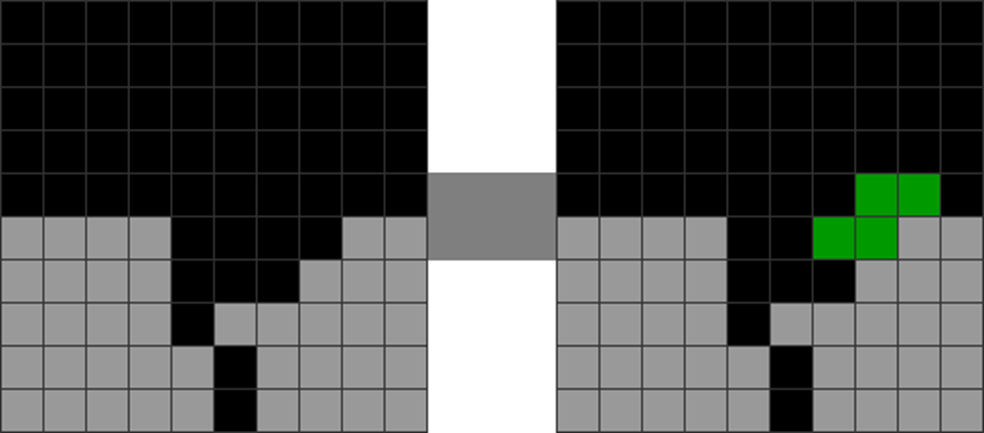
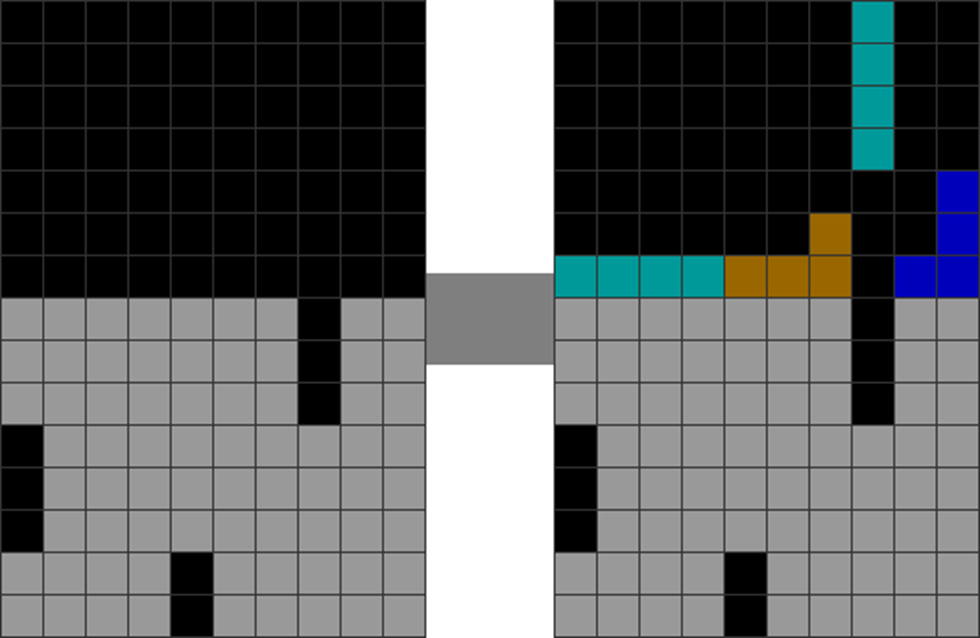
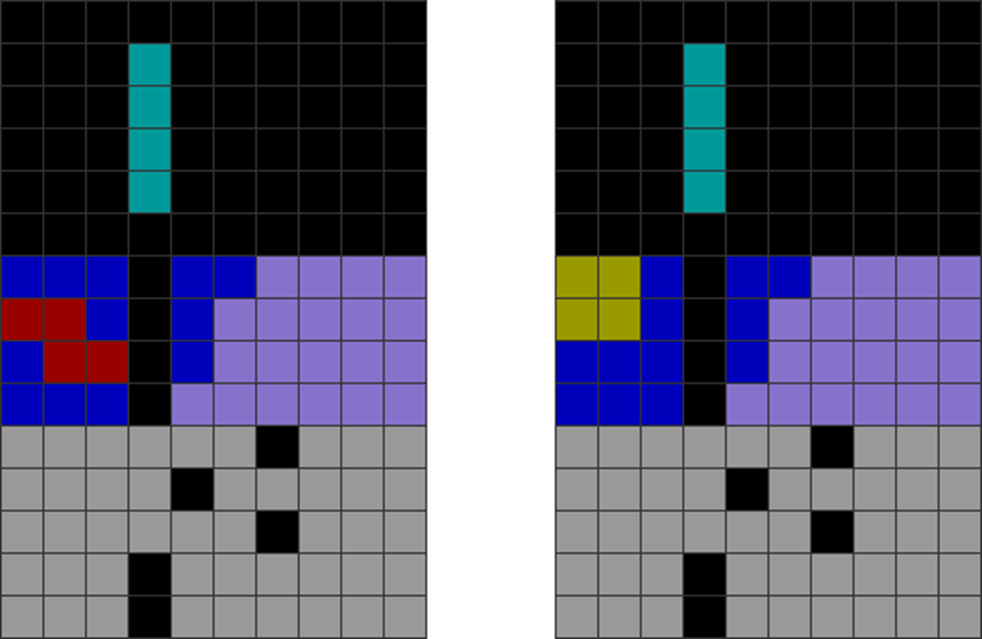
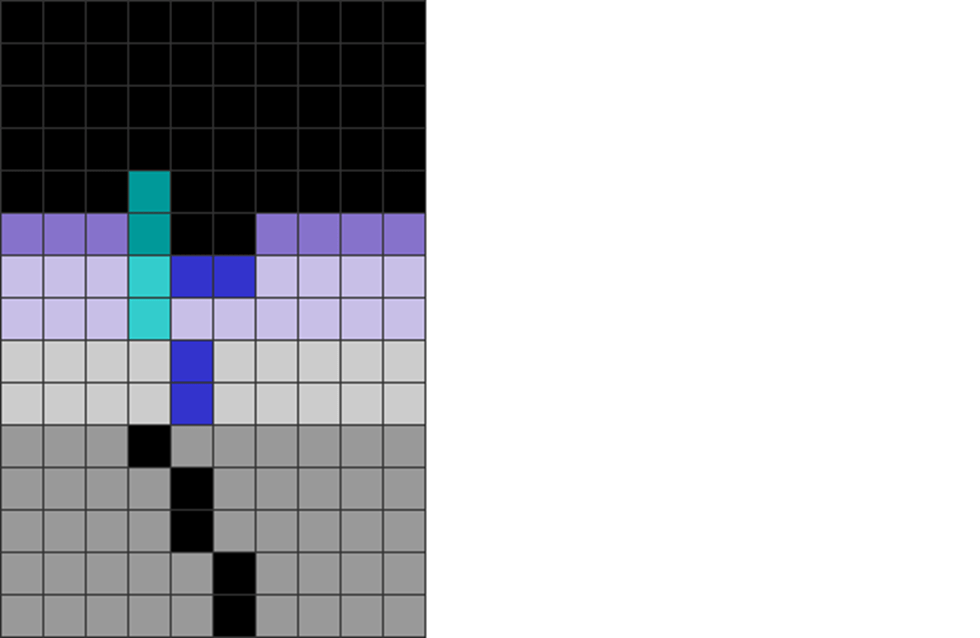
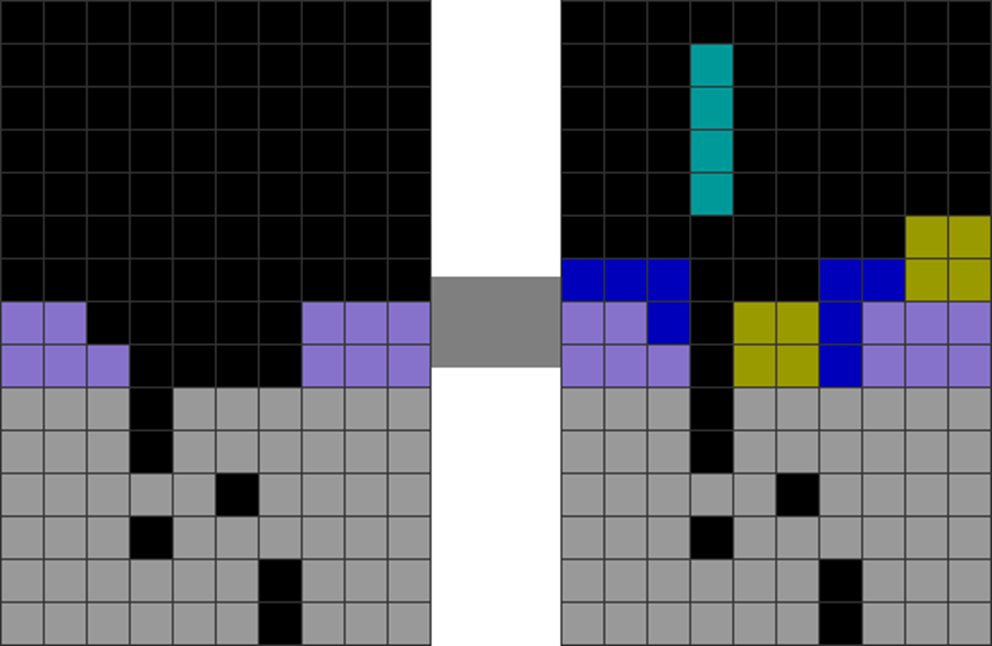
Some patterns can be combined with certain tetrominoes to make perfect rectangles, making it very easy to upstack to clean Tetrises:
Diagram Set 11-32
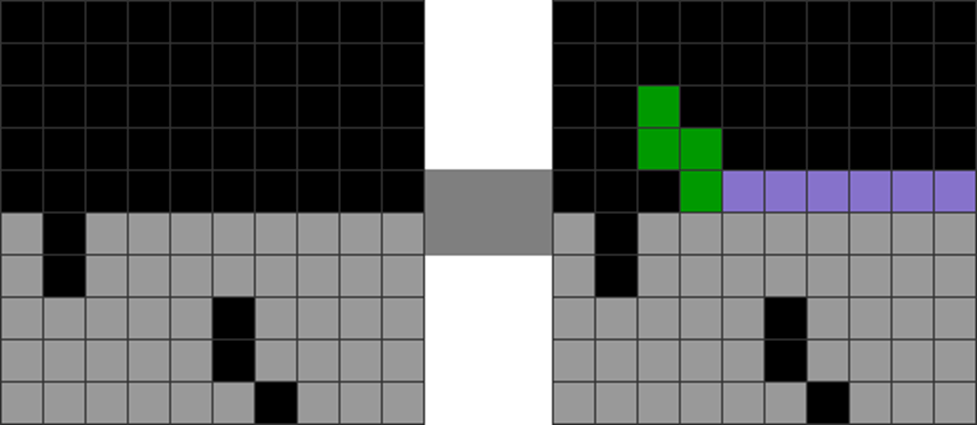
Picture 1 is the starting condition. The other three pictures feature making the J shape on the far right into a perfect 4-high rectangle for a clean Tetris.
The above only needs four pieces to complete a perfect Tetris, making them a better option than T-spins.
Altogether, a player should judge accordingly which is the wiser of the two options.
Summary
My quick heuristic and summary is to lean toward clean Tetrises over T-spins if:
More of the clean Tetris’ lines are made of garbage.
You wish to play more cleanly (to avoid T-spin overhangs that may upstack over the next garbage hole).
You can easily fill in a few pieces to make a perfect Tetris.
You wish to play more defensively.
The garbage is moderately dirty.
The choice is arbitrary and depends on one’s playstyle and circumstance. However, the more the above factors are true, the more one may prioritize Tetrises over T-spins mid-game.
4)Maximizing Mid-game Downstack Combos and Pressure
In Puyo Puyo Tetris and Tetris 99, I regularly get mid-game combos of 10 to 12 vs. other players. How do I do it? See below:
Create a Tapering Well
Very clean garbage situations rarely have good combo chances. To get around this, make a tapering well toward the middle to extend combos:
Diagram Set 11-33
1
2
Extremely clean garbage.
The player upstacks the lavender part into a well in the middle.
Making Prophecy T-spins
Some extremely cluttered and overlapping garbage patterns make it difficult to get combos. However, you can make many prophecy T-spins out of them for more pressure:
Diagram Set 11-34
1
2
Extremely dirty garbage.
The player skims a bit.
3
He transitions into a prophecy T-spin double cleanly.
Know Each Mino’s Orientations
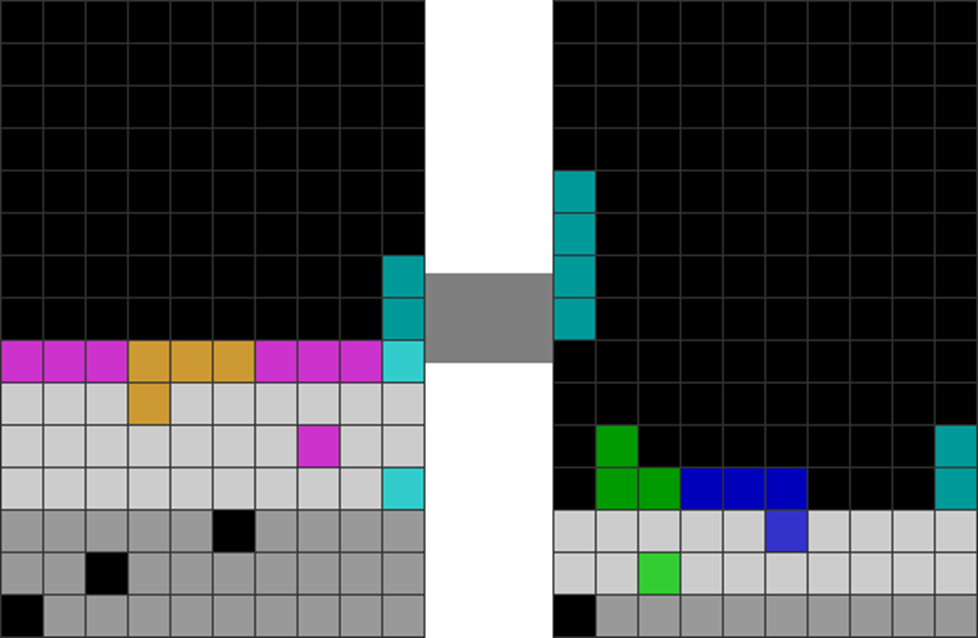
One thing to note is the behavior of the alternative placements of pieces, seen in the diagrams here:
Diagram Set 11-35
Emphasize mastery of horizontal placements of S, Z, L, J, T, and I pieces. When you do this, you can open up more downstack combo continuations.
The other thing to note, which can only be gathered from experience, are common downstacking combination patterns like the ones below:
Diagram Set 11-36
Note the uncommon orientations of pieces to downstack. These open up more downstack combo chances.
You can squeeze out maybe 1 or 2 more combos if you see such patterns.
Use Horizontal Skims
Also, use horizontal skimming patterns like these to extend combos more:
Diagram Set 11-37
1
2
See how the horizontal skims minimize lines cleared? It then continues:
Diagram Set 11-38
3
4
Last 2 sets: The player prioritizes horizontal L, J, and T pieces to cleanly skim off the top lines to create more combo options.
Horizontal placements extend combos as they clear fewer lines, allowing you to squeeze out more firepower from combos. The main reason to give them up for vertical placements is emergency skimming if you need to downstack quickly to escape danger for survival. However, if you master horizontal skimming, your downstack combo chances improve sizably.
Fill Corners with Ts
Another straightforward trick to note to extend the combo is to fill cavities with T pieces to avoid dividing the field like the cases below:
Diagram Set 11-39
A
B
Putting a Z divides the field and may lead to the termination of downstack combos.
Putting a T pushes the parity ‘bump’ to the left corner, which prevents it from dividing the field.
The reason for this is difficult to prove mathematically. However, I speak from experience and empirical observation.
It is likely because doing so creates a well-like taper toward the middle. A’s protruding edge will upstack over a garbage hole eventually while downstacking. When it does, it ends downstack combo options because the bump’s left side must be filled before one can downstack. However, for B’s T placement, there is only the right side to fill. This logically implies more downstack combo chances and smoothness.
Using Mid-game 4-wides
Mid-game 4-wides are an excellent way of making many long, dreadful downstack combos. If you are skilled, you can stack in the below form to cover yourself with a Tetris or T-spin double to upstack more:
Diagram Set 11-40
1
2
The player upstacks the lavender part and makes an S overhang. This creates a T-spin double to protect the 4-wide.
3
4
He can T-spin double and Tetris before starting the 4-wide. The T-spin double concludes.
The Tetris concludes. The green blocks remaining transition into a 3-residue 4-wide pattern.
This T-spin-protected 4-wide lets you protect yourself with a T-spin before downstacking with combos.
You can also protect your 4-wide with advanced T-spin setups like an STSD:
Diagram Set 11-41
1
2
The player makes an STSD on the left and upstacks the lavender parts.
The player does the first T-spin double normally. Then, the second T-spin is spun vertically. This transitions the field into a 4-residue 4-wide.
Also note that to increase continuations via garbage holes, make the top of your 4-wides as flat as possible or as tapered:
Diagram Set 11-42
1
2
The player stacks the lavender parts of the 3-wide tower with a taper toward the middle to increase downstack combo chances and smoothness.
C) Garbage Pattern Situations and Handling Them
Proper mid-game garbage handling involves thousands of hours of experience in recognizing most garbage patterns. This section shows how to handle many specific garbage patterns optimally.
This section also applies to what happens once you have cleared the colored blocks for 4-wide per the Advanced Combos chapter. In such situations, you can continue extending your combos depending on the garbage you receive.
Diagram Set 11-43
1
2
A 4-wide in step 1. In step 2, the lavender parts from the 4-wide are cleared. You get only gray garbage patterns. What do you do next to extend the combo and firepower?
Whether you are continuing to downstack from a 4-wide or non-4-wide situation, you will get the following garbage pattern situations to continue the combo:
1)Extremely Clean Garbage
If the garbage is super clean, you depend excessively on the I piece. Usually, this may stop combo continuations. If it breaks or your combo is only 3 or 4, it is better to upstack over it for back-to-back T-spins and Tetrises to spike the opponents:
Diagram Set 11-44
1
2
You get this pattern after 4-wide finishes. The garbage is extremely clean.
The player seizes this opportunity to make T-spin doubles and Tetrises along a line to spike with back-to-back attacks.
Here’s a general guideline that works most of the time: build up offensively and spike with T-spins and free garbage Tetrises!
Per the Advanced Combos chapter, upstacking a 4-wide well over the clean garbage is also an option, as the Tetris protects the 4-wide.
2) Semi-dirty Garbage
Semi-clean situations enable many downstack combos as they reduce piece dependencies:
Diagram Set 11-45
1
2
The garbage is semi-clean.
There is significant downstack combo continuation.
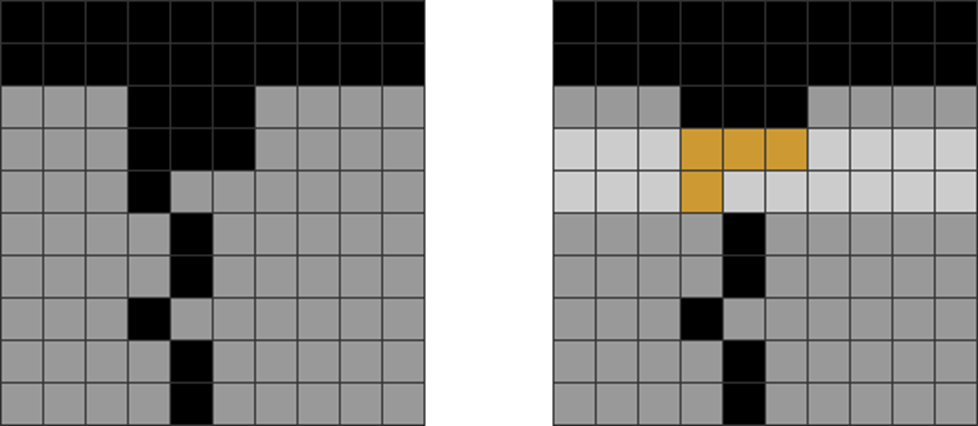
The above semi-clean situation allows many pieces to downstack through garbage holes of varying heights, such as L, J, T, and I. This increases the chances of downstack combos.
The key is to downstack in a way where you join your pieces and make them as flat as possible while watching for piece dependencies.
They are the most common downstack solutions for these patterns.
3)The Most Common Downstack Cavity Patterns
Some cavities happen often mid-game. Memorizing their handling lets you downstack through them easily:
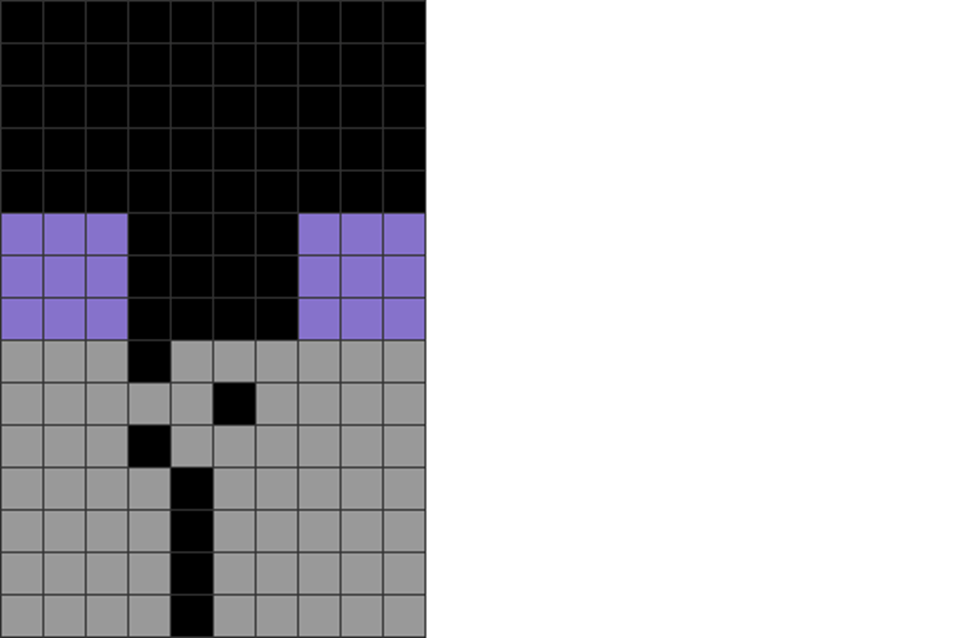
i) Central Jagged Cavity Situation
This pattern is the most common and essential for learning how to downstack through. Knowing how to resolve this pattern improves one’s cleanliness substantially:
Diagram Set 11-46
1
Alt. A
Starting field.
The most straightforward way to downstack this pattern is to use an L skim.
Alt. B
Alt. C
You can also use two Ts to do so.
This J and T skim is more advanced and more challenging to spot.
Dealing with this has three main solutions. Memorizing them lets you resolve this common mid-game situation easily.
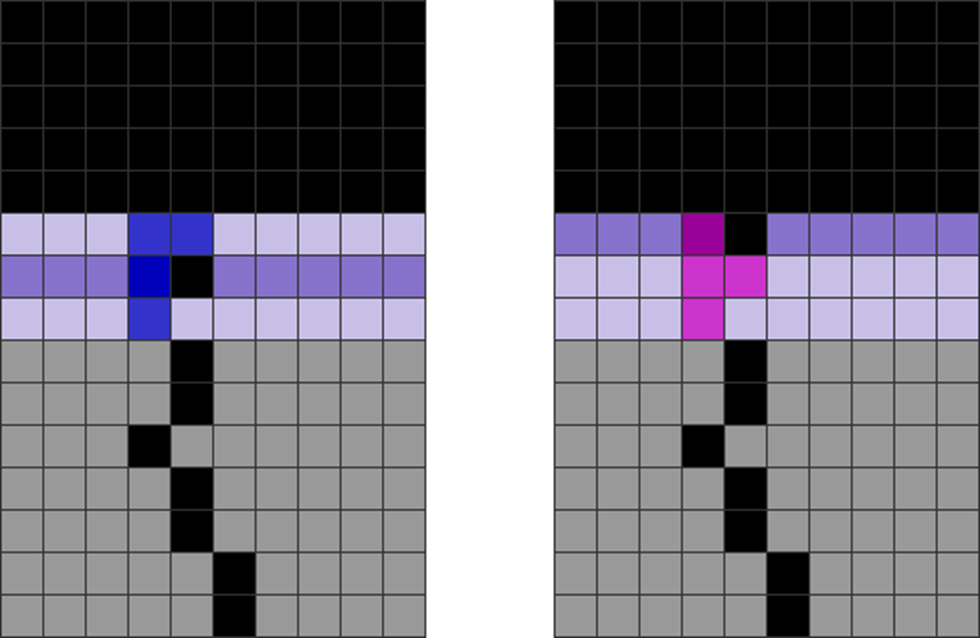
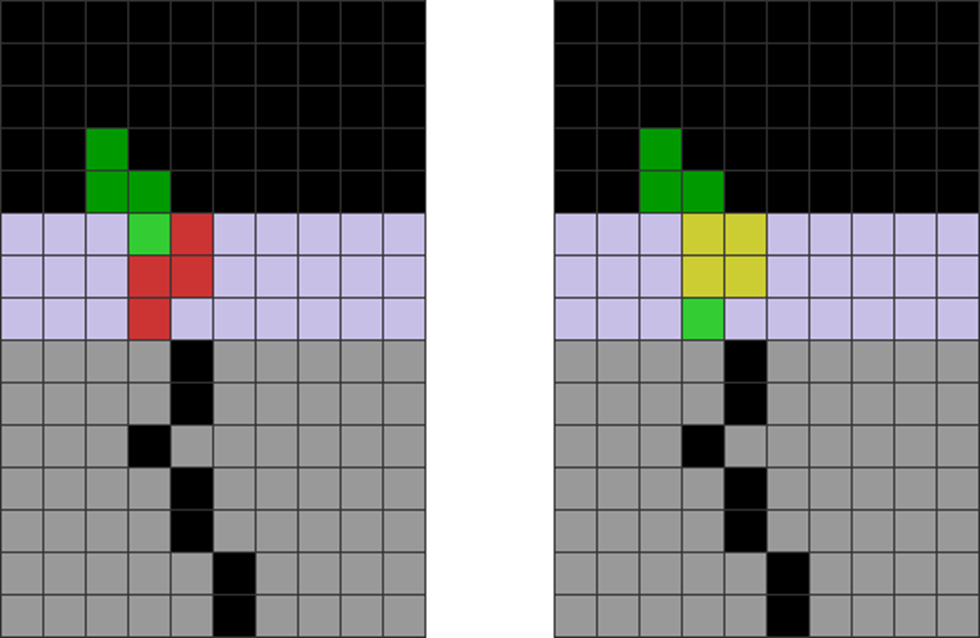
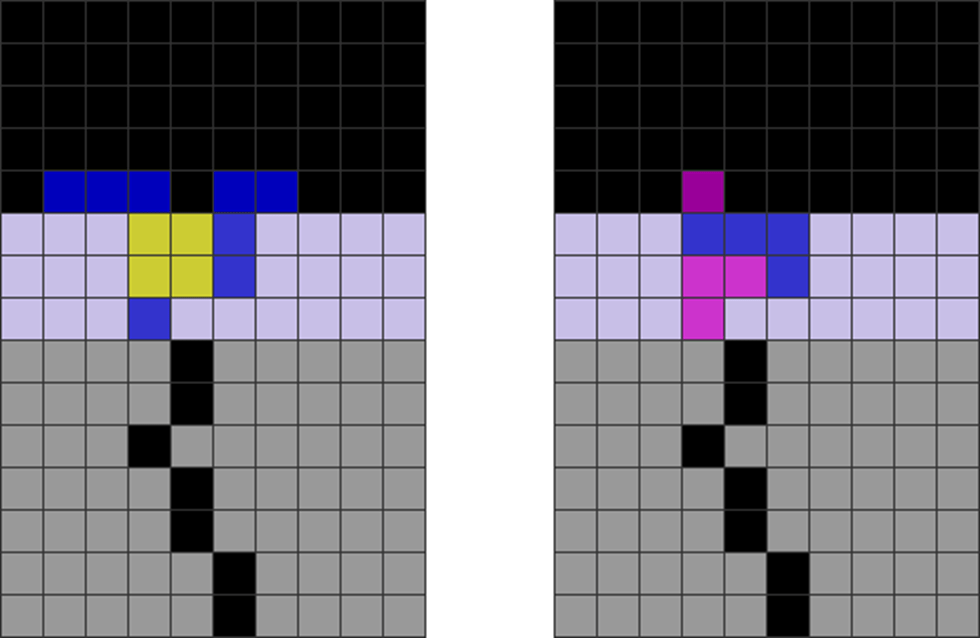
ii) Jagged Corner Situation
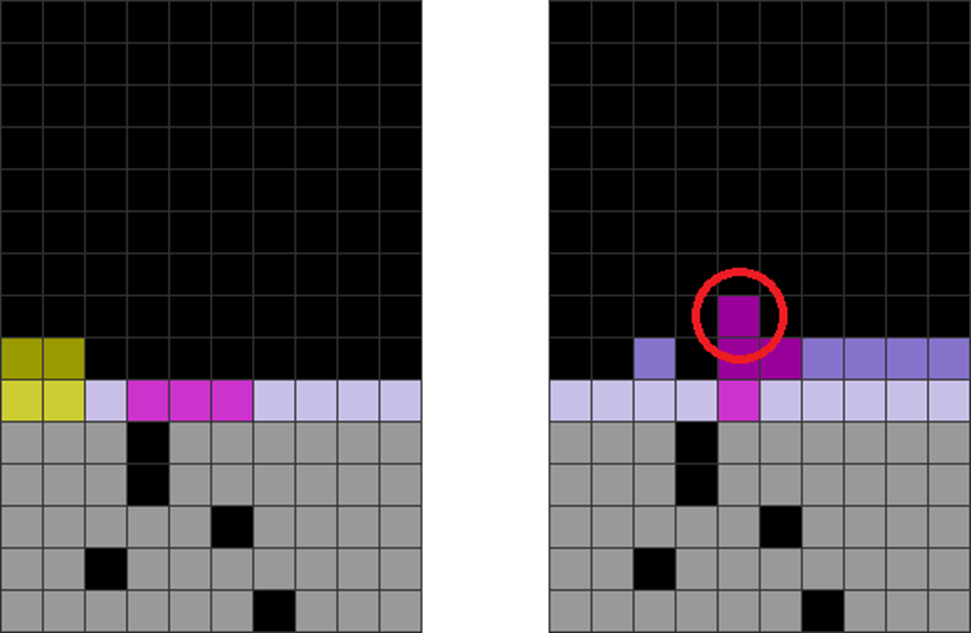
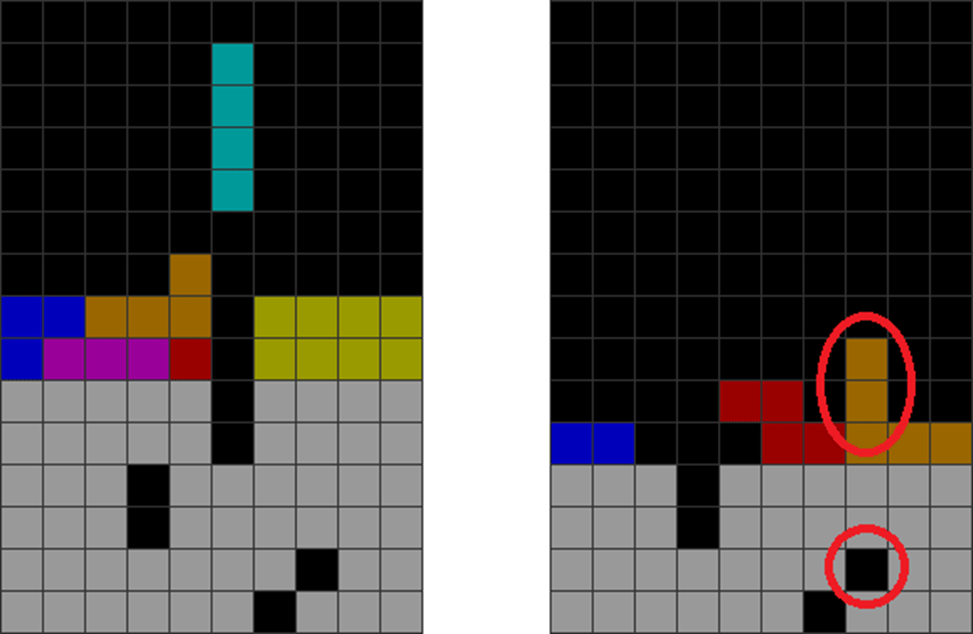
This pattern below is the notorious “jagged corner” (in the red circle). It happens while successively downstacking in an unclean manner, leading to:
Diagram Set 11-47
1
2
The player downstacks with a triple.
The remainder lavender block covers the next garbage hole in column 4. This is the dreaded “jagged corner.”
This typically happens when you start a downstack combo while your field is relatively jagged. However, there are a few ways to resolve this with various line clears:
Diagram Set 11-48
1
Alt. A
The jagged corner happens in this starting field.
A perfectly clean single line clear.
Alt. B
Alt. C
A perfectly clean double line clear.
A perfectly clean triple line clear.
Alt. D
A perfectly clean Tetris quad.
The other method is to avoid the jagged situation by building flatter, which reduces the chances of a jutting, isolated bump blocking incoming garbage holes.
Smart players, however, can turn the jagged situation into T-spin opportunities:
Diagram Set 11-49
1
2
A “jagged corner” situation.
The player cleverly resolves it by spotting a T-spin triple situation.
This simple trick of dealing with jagged corners immediately gives you an enormous advantage over your opponent. This is because the jagged corner occurs frequently in the mid-game.
iii) Corner Downstack Situations
When the most imminent garbage hole is at the extreme columns, there are a few optimizations for better downstacking:
Diagram Set 11-50
1
2
You skim with an L piece. However, this leaves a residue that must be skimmed off, thus incurring a line clear delay.
Diagram Set 11-51
1
2
The alternative above involves spinning L under the Z piece after upstacking a bit.
I upstack the sides a bit and do this sometimes to avoid the issues caused by the former method. It may be prudent to give it up because of the soft drop penalty.
4)Downstacking through Wells
A slight taper in the middle or corner typically significantly improves chances to downstack, as the residual upstack can be used as fuel for the combo:
Diagram Set 11-52
A taper toward the middle, creating a well.
I recommend stacking the top rows flatly like A below before starting a downstack combo:
Diagram Set 11-53
A
B
More downstack combo chances. Flatten the top layers and minimize field divisions.
Less downstack combo chances and smoothness.
A relatively flat field like A above is less divided. If a field is less divided, you will have fewer premature endings of downstack combos. This is because cavities must always be filled before you can downstack. The combo ends if a field has too many divided cavities that cannot be filled.
It is also widespread to get the following well-like garbage patterns:
Diagram Set 11-54
A
B
C
Here are some possibilities on how to downstack through the lavender-colored upstacked blocks above to get to the garbage holes below:
Diagram Set 11-55
This corresponds to diagram 11-54’s A. It mainly involves hole-switching with J (L if mirrored) and T in the first two images.
Diagram Set 11-56
This corresponds to diagram 11-54’s B. Note how several pieces combine to easily downstack through the cavity.
Diagram Set 11-57
1
2
This corresponds to diagram 11-54’s C. It turns the cavity into a 4-wide opportunity.
5) Dirty Garbage Situations
How a player handles dirty garbage shows one’s expertise. Handling dirty garbage is far more challenging than clean garbage.
In dirty garbage Tetris games, two opportunities arise more so than clean garbage games:
More Downstack Combos
Dirty garbage games allow for more consecutive downstack combo options, especially if the garbage is spaced out and not overlapping. Puyo Puyo Tetris’ garbage system, being semi-dirty, creates garbage patterns that allow for a broader range of piece dependencies. This allows for more downstack combo options, too.
Observe:
Diagram Set 11-58
1
2
The garbage is dirty.
There is a sizable downstack combo opportunity.
Therefore, when garbage is very dirty (but the top, stacked layer above the garbage is relatively undivided), you may consider downstack combos.
More Prophecy T-spin Options
Dirty garbage allows for more prophecy T-spins made of garbage, such as the above. This lets you downstack while spotting T-spin opportunities for offensive abilities. Generally, dirty garbage situations entail breaking back-to-back bonuses more often to downstack. This is expected.
Diagram Set 11-59
1
2
The garbage is very dirty.
The player pre-emptively makes T-spin double overhangs.
3
4
The T-spin single and double conclude.
When garbage is dirty in Puyo Puyo Tetris or phase 3 of Tetris Effect: Connected, I suggest stacking low and going for flatter T-spin setups. One also has to prioritize more clean Tetrises. This is because greedy and complex setups leave unpredictable overhangs that can block future garbage holes. When the garbage is dirty, playing cleanly, flatter, and less greedily is recommended to make way for easier downstacks. Thus, the messier the garbage, the more I recommend downstacking for combos.
Assessing the Downstack Smoothness of a Dirty Garbage Situation
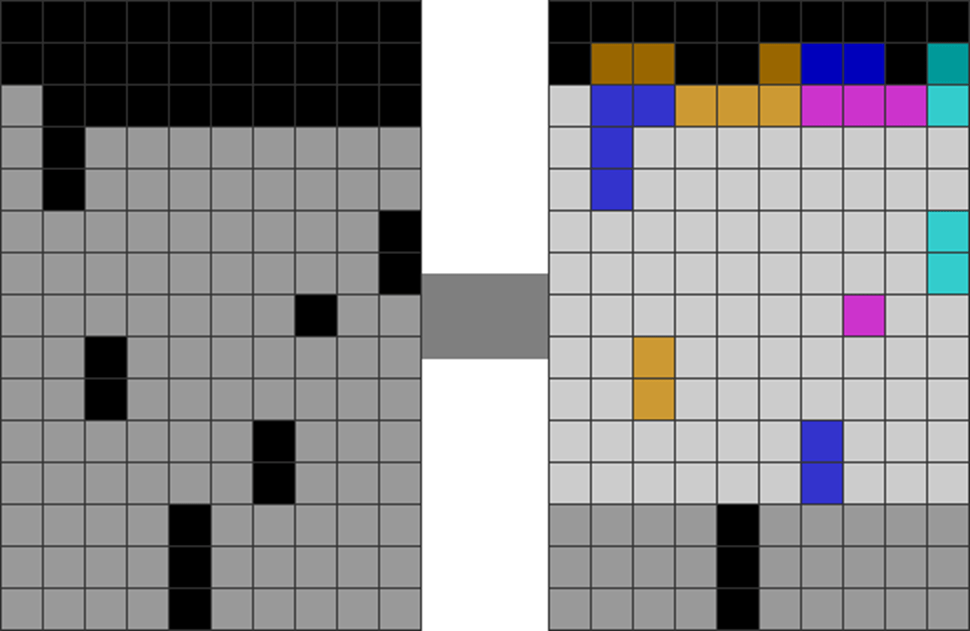
Having extremely clean garbage is not conducive as it relies too much on the I piece for downstacks. However, getting too dirty and overlapping garbage also depends too much on some pieces like S and Z to downstack.
You have fewer piece dependencies if the garbage is a mixture of clean and dirty garbage. If the garbage holes do not overlap, you get more combo chances.
Experienced players have a quick intuition on whether a dirty garbage situation has significant downstack combo chances and smoothness:
Diagram Set 11-60
A
B
Decent downstack combo chances.
Less conducive downstack combo chances.
When you see the above situations, you can roughly predict the length of your downstack combos.
A is a mixture of clean and dirty garbage. B is extremely dirty garbage on top and extremely clean ones at the bottom. There is also a zigzag pattern with too much overlapping garbage. This leads to extreme piece dependencies. Therefore, the former case (A) typically has smoother downstack combo chances.
If a downstack combo option is unlikely, make T-spins, Tetrises, or skim off the top layers fast.
Types of Dirty Garbage Situations
Now, there are many kinds of dirty garbage patterns and the correct manners to handle them:
i) Overlapping, Extremely Focused Garbage
When dealing with garbage patterns where the holes are concentrated in a narrow area, it’s usually best to downstack through them as quickly as possible. Some Japanese Tetris guides refer to such cases as ‘rose’ patterns:
There are several general ways to deal with overlapping garbage:
Upstack to 3 and 4-wide
When faced with such situations, I recommend placing pieces in a well-like formation away from the cavity area like these below. This gives you a smoother downstack and combo continuation.
Diagram Set 11-61
The player stacks the lavender parts away from the overlapping garbage cavities, creating a well.
Here’s another example of using such overlapping garbage for mid-game 4-wide:
Diagram Set 11-62
1
2
Dirty garbage situation.
Upstack two towers on the left and right for a mid-game 4-wide.
3
4
Start the downstack combo.
Extend it for as long as possible.
Upstacking a Bit Before Downstacking a Dirty Garbage Scenario
What some beginner and intermediate players do is get into two kinds of general mistakes:
Diagram Set 11-63
1
2
The player skims with a J, leaving the blue blocks to upstack over the next garbage hole in column 4.
3
4
The player upstacks a bit and skims again.
5
6
After many wasteful skims in steps 1 to 5, he finally reaches the clean garbage line in column 6.
Here, the player skims a bit, then upstacks a little, and repeats this lethal cycle. This is deadly in guideline Tetris games because it incurs many line clear delays while minimizing damage from combos. This renders you vulnerable to being spiked.
I recommend first upstacking the sides around the cavity to a well-like pattern to increase downstack chances and combo continuations.
While I can’t prove mathematically, upstacking too close to the cavity reduces the smoothness of downstacking. This is likely because of conflicting pieces overstacking on top of each other, which ends combos. Here’s a demonstration:
Diagram Set 11-64
1
2
Stack away from the cavity to make downstacking through the 4-wide easy.
Diagram Set 11-65
1
2
The player stacks over the cavity instead of the sides. The downstacking causes overlapping pieces like the I in step 2 to cover the future hole in column 6.
In diagram 11-65, where the garbage overlaps a lot with each other, there are few downstack continuations.
When pieces overlap, they stack over the garbage hole, which blocks it and stops combo continuations.
If you are not getting a high enough combo (only 4 or 5), you may wish to stop comboing and upstack to make T-spins, Tetrises, or 3-wide/4-wide like this:
Make Standard and Prophecy T-spins
Diagram Set 11-66
1
2
You get this pattern in step 1 after 4-wide finishes. The garbage overlaps with semi-clean garbage patterns. In step 2, the player makes a T-spin double.
T-spins are viable, but intermediate players can mess up. T-spin overhangs can block future garbage holes if done incorrectly. Here is what happens if you go for T spins:
Diagram Set 11-67
1
2
The player makes prophecy T-spin overhangs.
3
4
After the T-spin, the player tops the aftermath with an S overhang, which later blocks the bottom red-circled garbage hole.
Alt. A
The player can instead do a Cut-copy, which is cleaner.
Too many T-spins can make you choke, and there is a high chance of upstacking residues over the cavity area, making it hard to downstack. However, expert players can sometimes make many T-spins cleanly. If in doubt, avoid too many T-spin overhangs.
Do Quick Doubles and Triples
One can upstack a bit, then get down with clean doubles and triples. However, if you can make a double, a T-spin double is clean and preferred as it is more powerful:
Diagram Set 11-68
A
B
Use clean doubles and triples to get down.
T-spin doubles are among the best doubles to get down.
Excavating with singles, without upstacking, is the worst thing for this garbage type, as your piece’s leftover blocks will upstack over the following garbage holes:
Diagram Set 11-69
1
2
ii) Garbage Holes Scattered and Sometimes Overlapping
Dirty garbage holes, when scattered, can sometimes stack on and block each other, preventing smooth downstack combos. If the colored blocks cannot be skimmed off and block the future garbage hole, there are limited downstack combo chances.
The best way to continue is to upstack to make Tetrises or T-spins or quickly skim down to safety again:
Diagram Set 11-70
1
2
The garbage field is scattered and blocked randomly from columns 1 to 10. The player upstacks to a Tetris to sustain pressure. After that, he re-evaluates if there are smooth downstacking options.
Such cases are tricky to handle. I suggest sustaining back-to-back T-spins and Tetrises until you get good combo options. Balance between cleanliness and skimming, then re-evaluate to see options. Be versatile.
iii) Garbage Scattered and Not Overlapping
You are in luck if the garbage pattern is scattered and non-overlapping. These kinds of garbage happen during dirty garbage games like Puyo Puyo Tetris and Tetris Effect: Connected’s third phase in versus. They grant plenty of downstack combo chances.
To handle them, downstack by (i) joining your pieces with the colored blocks and (ii) minimizing covering future garbage holes. Here is an example:
Diagram Set 11-71
1
2
The player downstacks with S and T, using the lavender blocks as combo fuel.
3
4
He continues the downstack by not covering future garbage holes. This extends the combo.
When the garbage is clean, most of your downstack combos come from skimming the colored blocks as fuel for combos. However, most of your combo comes from downstacking through the gray garbage holes for dirty, scattered, and non-overlapping garbage.
Summary and Conclusion
The key to good downstacking depends on avoiding piece dependencies and proper planning. Keep the stack flat and joined to maximize downstack combo options.
Combine good downstacking with offensive T-spins and Tetrises to balance defense and offense.
Concept
Summarized Rules-of-Thumb
Flow
All-spins can open smoother downstacking options – but don’t overuse them because of their soft drop penalty. Maximize downstack combos by joining attacks or creating a tapered well. When the garbage is clean, upstack and spike! When the garbage is dirty and scattered, go for downstack combos! When there’s a middle well, downstack combo! Minimize the ‘jagged corner’ as it destroys downstack continuations.
Form
Use unorthodox piece placements and combinations to improve downstacking. Memorize the common mid-game optimal downstack solutions. Fill corner cavities. Learn the most common mid-game garbage situations and optimal downstack solutions.
Balance
Give up downstacking for T-spins or Tetrises if a smooth downstack sequence isn’t available.































 How to Tetris