In layperson language, parity refers to the balance of even and odd blocks in the playfield, influencing the smoothness or jaggedness of a stack of tetrominoes. Parity may be the most essential concept in Tetris. All techniques rely on maintaining parity balance.
Managing parity well means handling its jaggedness, making the field smoother.
A) What is Parity?
The following diagram shows the Tetris play area is a tall rectangle 20 blocks high and 10 blocks wide, the area represented here by a checkerboard pattern.
| Diagram Set 13-1 |
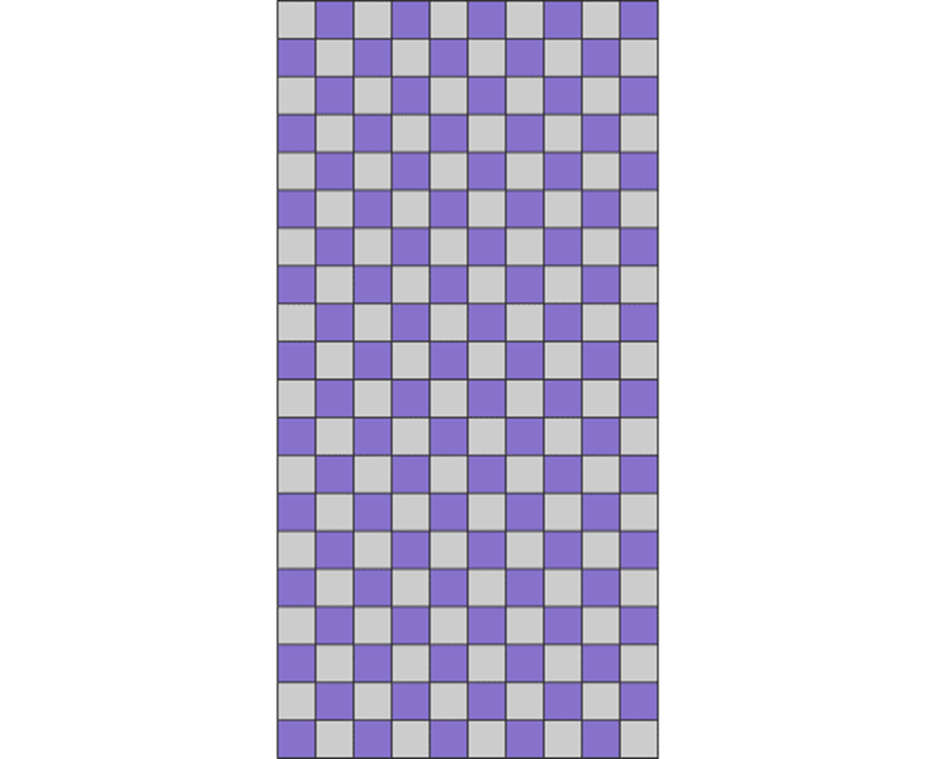
| The Tetris play area is a tall rectangle 20 blocks high and 10 blocks wide. |
The lavender and gray blocks represent the alternation of even and odd blocks. While not seen in the game, we use this checkerboard pattern to visualize the contours of the stack in some diagrams.
Parity is balanced when the number of lavender and gray blocks in the play area is equal. This allows you to place pieces easily without creating holes.
| Diagram Set 13-2 |
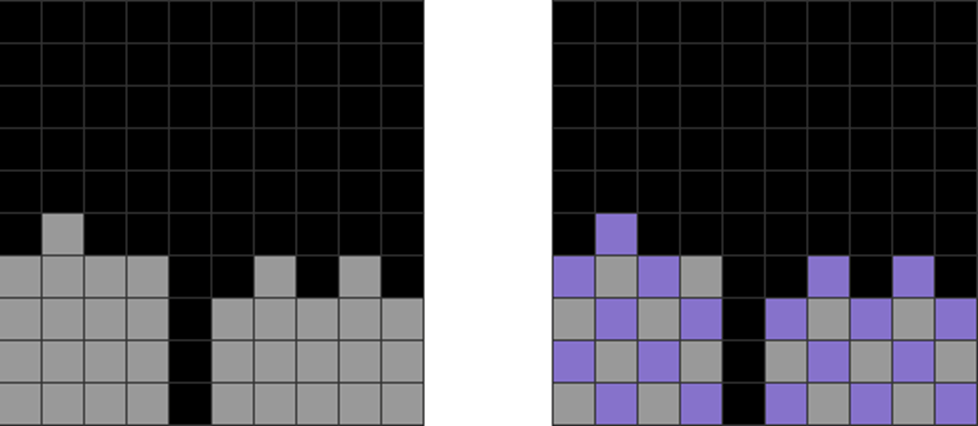
| The left diagram’s parity can be analyzed by highlighting its alternate blocks as lavender and gray. |
Its lavender and gray blocks are unequal. There are more lavender blocks than gray ones. This field is thus parity-imbalanced, which is problematic as it impedes clean stacking.
| Diagram Set 13-3 | |
| 1 | 2 |
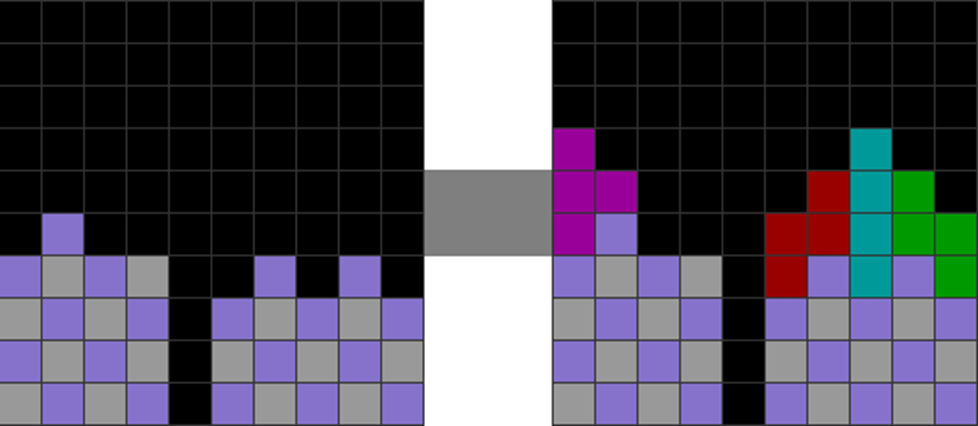
| Only the S, Z, T, and I minoes can be placed vertically and cleanly on the above parity-imbalanced stack. |
The stack’s jaggedness makes it challenging to place the flatter L, J, and O pieces without creating holes.
Here’s a real-life example. A parity-imbalanced stack that forces you to place only S, Z, T, and I pieces vertically may lead to unclean stacking:
| Diagram Set 13-4 | |
| 1 | 2 |
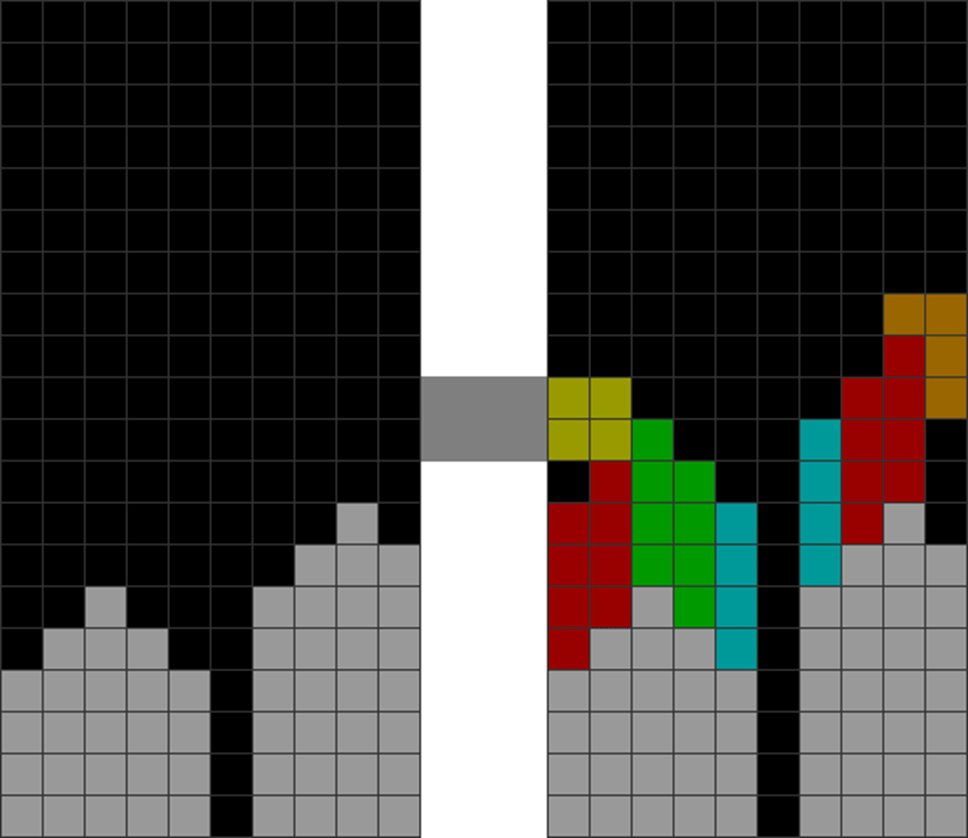
| Parity imbalances can cause unclean stacking over holes, preventing line clears without clearing the lines above the holes. |
Here is how parity balance can ensure flatter, safer stacking:
| Diagram Set 13-5 | |
| 1 | 2 |
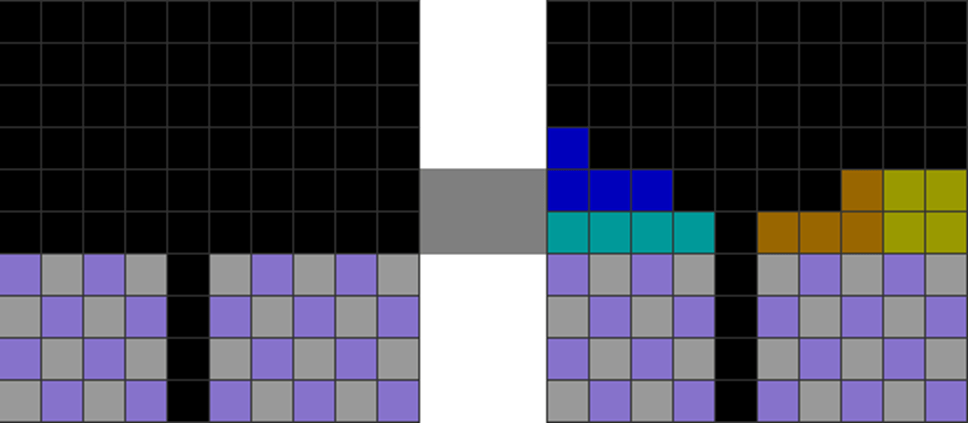
| The field here is parity-balanced, enabling placing flat pieces like L, J, O, and Is horizontally. This further keeps the stacks level, preventing unclean stacking over holes. |
To conclude, parity management ensures better and safer stacking by minimizing stacking over holes. One plays cleaner and safer.
B) The Benefits of Proper Parity Management
Managing parity well is essential. You will get better follow-ups and benefits in all areas if you manage it well, such as less skimming, better downstacking, more T-spins, and easier perfect clears.
1) Fewer Costly Skims
Many beginner players cannot manage parity properly. They often get into parity-imbalanced fields below and cannot resolve them.
| Diagram Set 13-6 | |
| 1 | 2 |

| The field on the left has poor parity management because of lousy stacking. | This forces players to put only vertical S, Z, and T pieces. Here, the player skims with an S. |
| 3 | 4 |
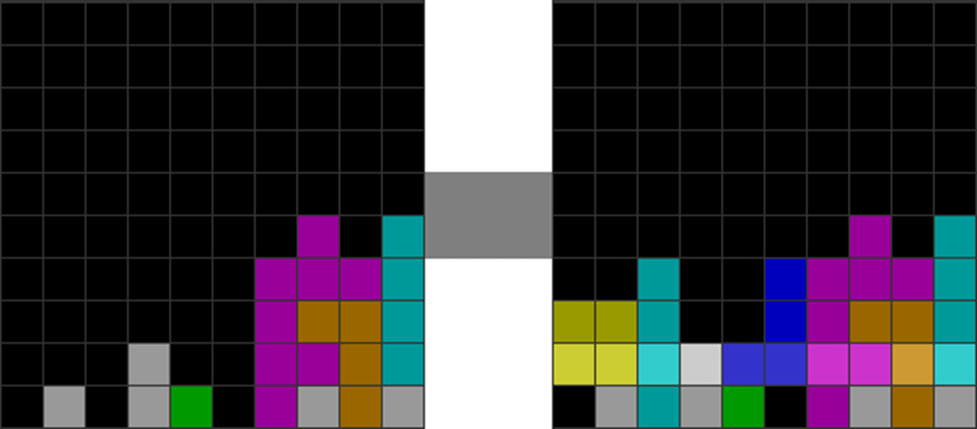
| The player puts I, L, and 2 Ts in the aftermath field. | There is no room to put O and J pieces flatly, forcing a skim. |
This is because when parity is already imbalanced, it is a matter of time before they encounter a string of L, O, and J pieces that must be placed over holes.
When this happens, they must skim off the unclean layers above the holes excessively, incurring costly line clear delay penalties, and this reduces one’s efficiency.
2) Smoother Downstacking and More Combos
Just as proper parity management helps you stack better, it can also make you downstack better.
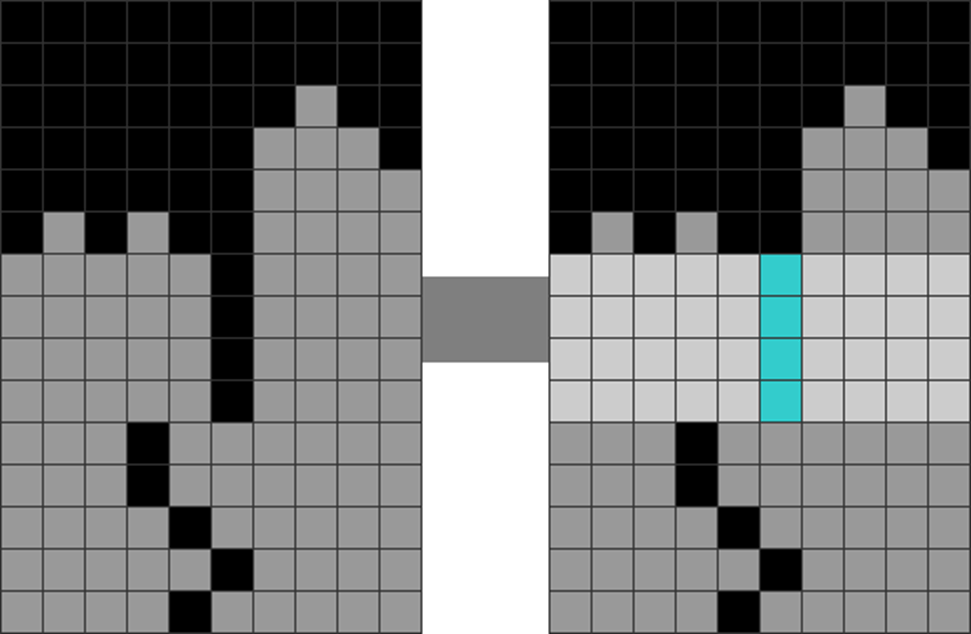
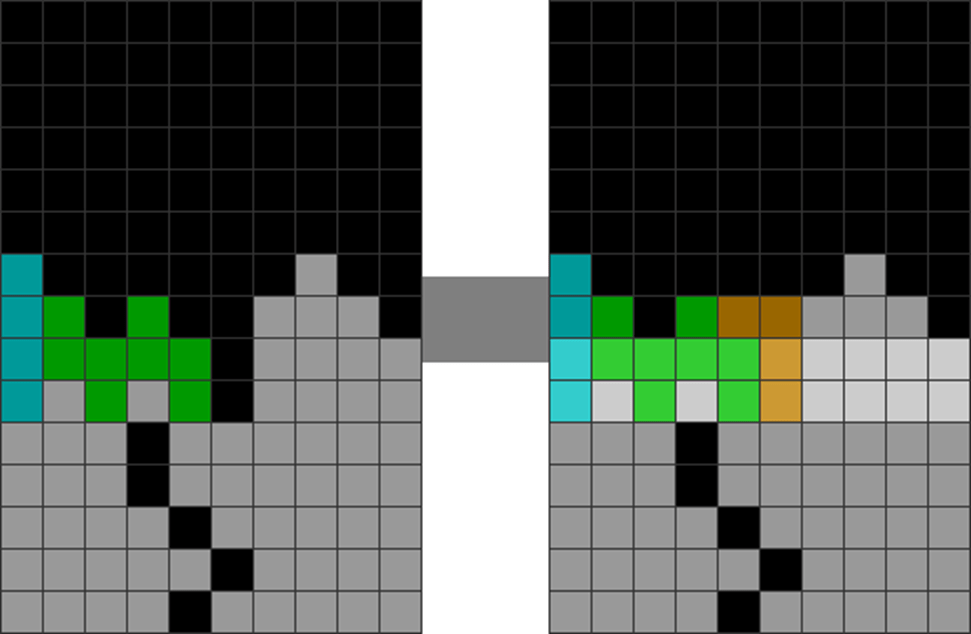
Downstacking is simply the art of getting down to the bottom of the stack through repeated line clears, as covered in the Downstacking chapter. Parity imbalance makes downstacking less efficient, requiring more pieces to skim the top layers. Consider these fields where parity is imbalanced:
| Diagram Set 13-7 | |
| 1 | 2 |
| 3 | 4 |
| 5 | 6 |
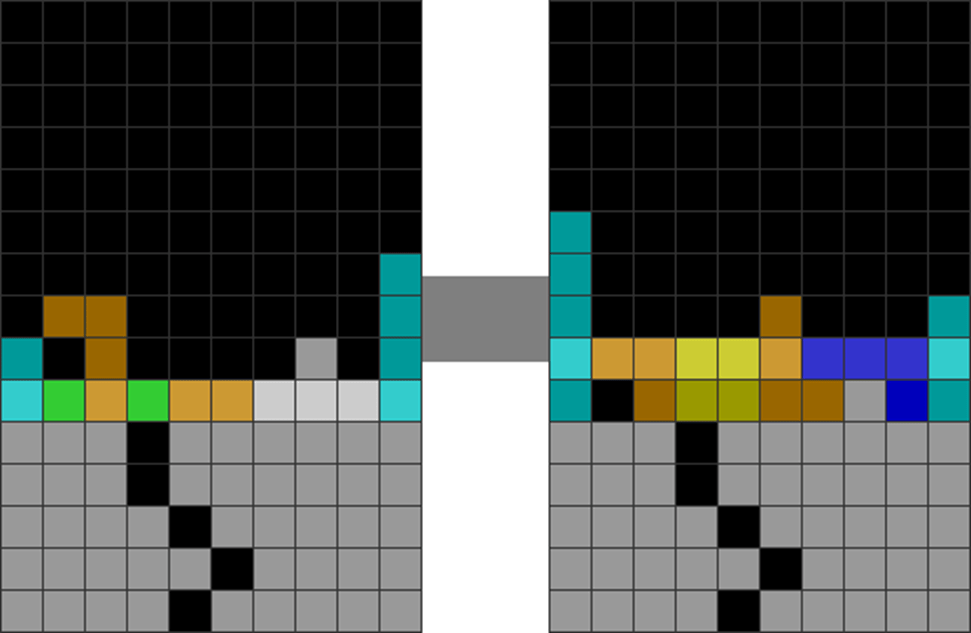
| Because the field is so jagged initially, you must skim, fill up the stack, and repeat this. This wastes a lot of precious seconds from line clear delays and upstacking. |
If your field has a lot of jaggedness caused by imbalanced parity, you divide the field and create many cavities. You overstack with vertical S, Z, and T pieces, thus creating even more cavities that must be filled before downstacking. This reduces downstacking efficiency, as you end up upstacking a lot before getting down.
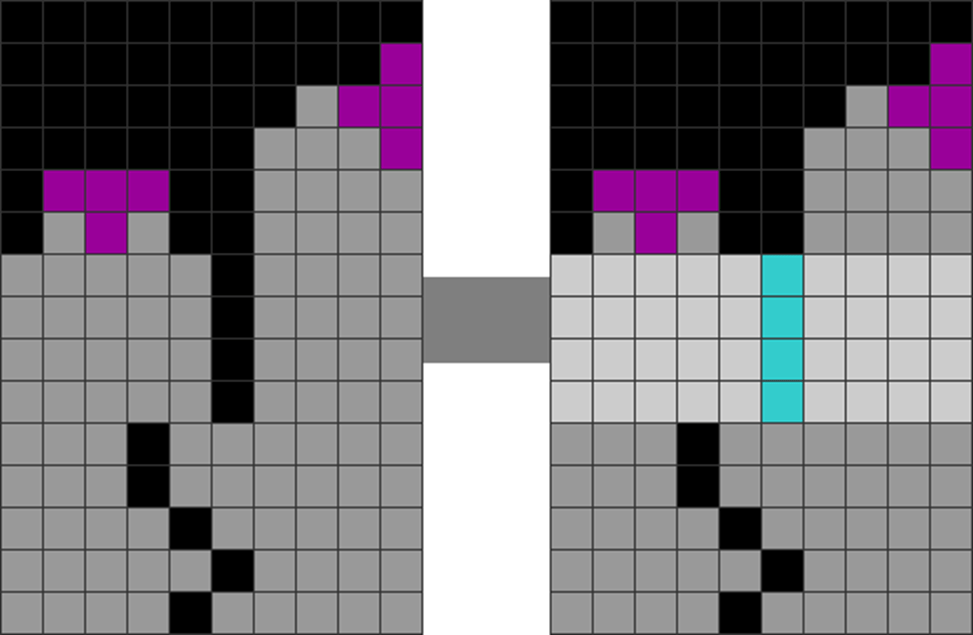
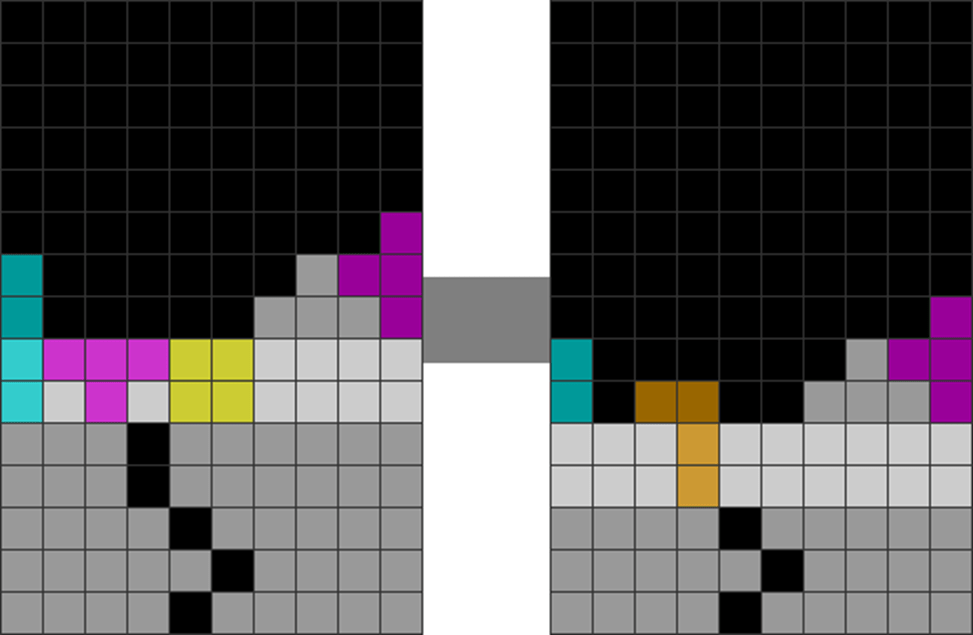
However, smoother downstacking happens if parity is even and well-managed using diagram set 13-7’s starting situation:
| Diagram Set 13-8 | |
| 1 | 2 |
| 3 | 4 |
| 5 | 6 |
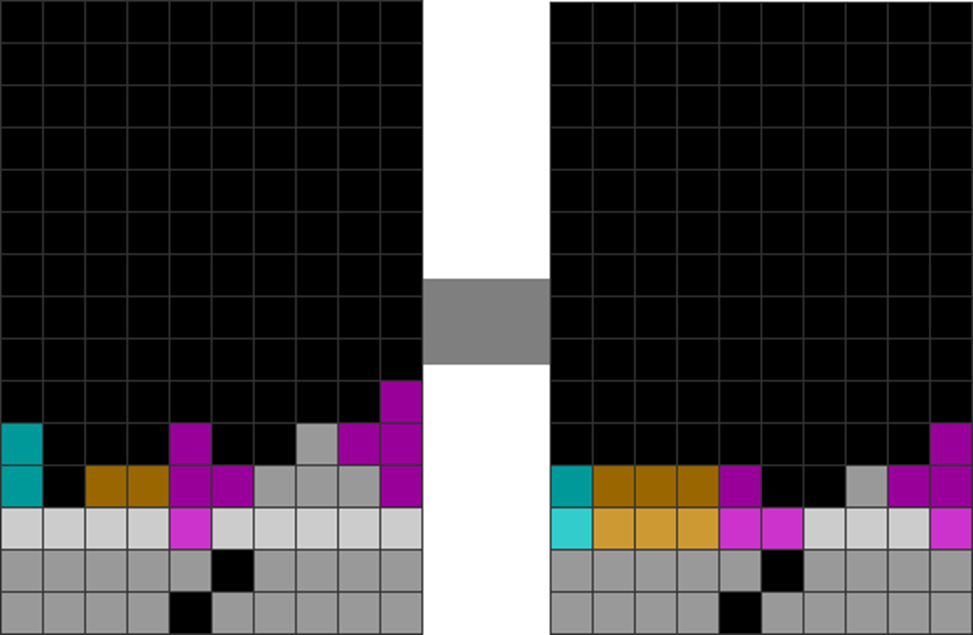
| The starting field is less jagged and more parity-balanced now. Here, the player minimizes skims and gets down with fewer pieces. |
This cleaner sequence, therefore, has more downstack continuations, combos, and less overstacking when getting down.
It also maximizes offensive power through combos and minimizes the number of line clears needed to get down.
3) More T-Spin Opportunities
Many experts use opportunistic parity imbalances to create T-spin opportunities.
When a field is very jagged and parity-imbalanced, like the following, it has many opportunities for such:
| Diagram Set 13-9 | |
| 1 | 2 |
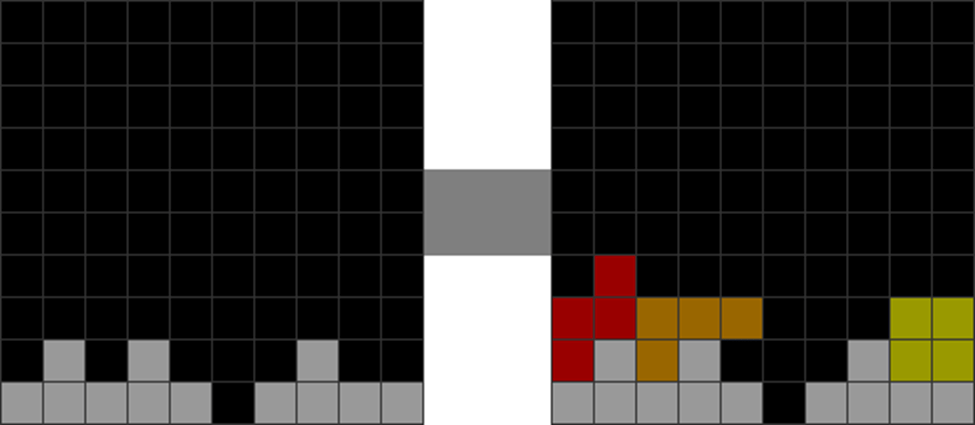
| 3 |
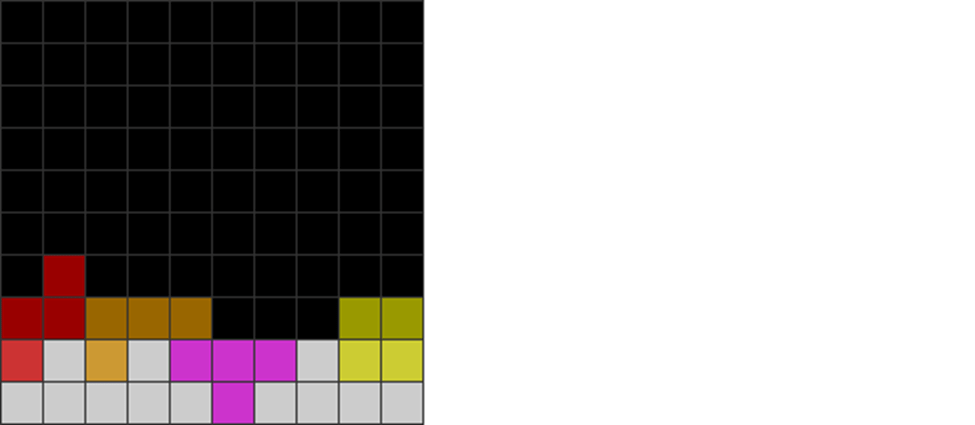
| The jagged patterns form a T shape. With a simple overhang like an L piece here, you create a T-spin. |
Some expert players create parity imbalances on purpose, such as:
| Diagram Set 13-10 | |
| 1 | 2 |

| 3 |
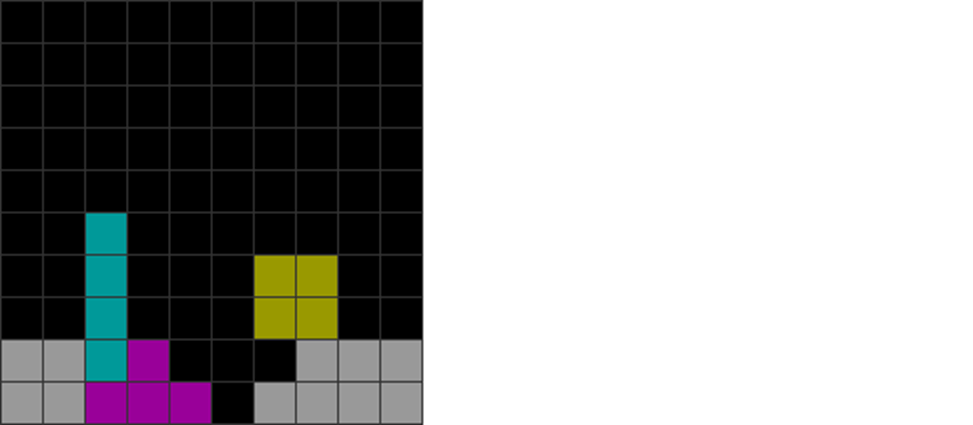
| This sequence involves putting a T to deliberately create parity-imbalances and jaggedness to create a T shape to make a T-spin easily. |
C) Fixing Parity Imbalances
The following sub-sections show how to resolve a parity-imbalanced field for a more skilled level of gameplay.
1) Putting a T in the Stack
Putting a T in the stack can often change parity from a parity-imbalanced field to a balanced one and vice versa.
To understand why, please take the time to understand what each of the 7 tetrominoes does to the field.
| Diagram Set 13-11 |
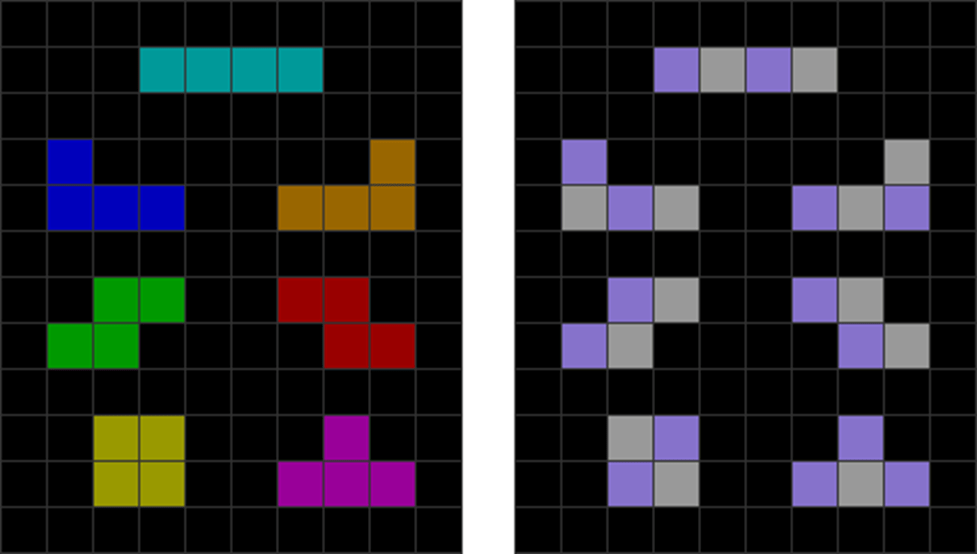
| If one sub-divides each of the 7 tetrominoes into checker boxes, all but the T piece has an even number of lavender versus gray blocks. |
This means placing an L, J, O, I, S, or Z piece in the stack does not alter parity.
Why? Let’s take the L piece as an example, which has 2 lavender and 2 gray blocks. Placing 2 Ls on an empty field causes the latter to have 4 lavender and 4 gray blocks. Thus, it does not alter parity.
How does placing T in a stack alter parity? Here’s an illustration:
| Diagram Set 13-12 | |
| 1 | 2 |
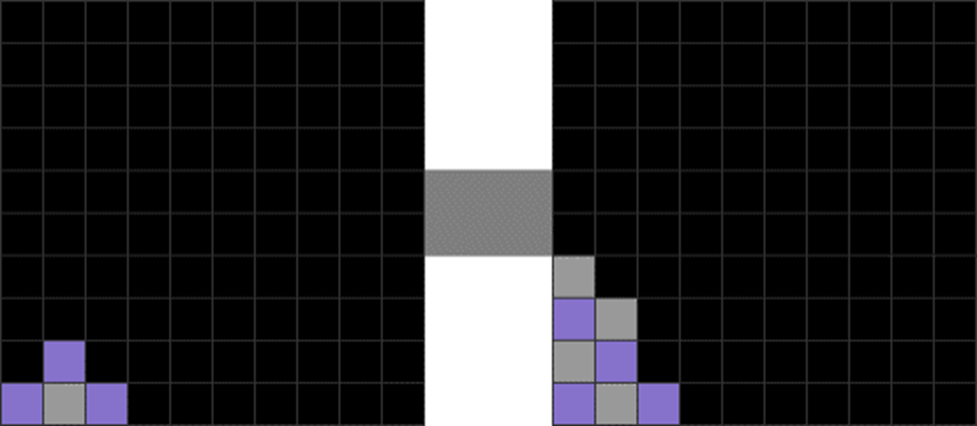
| The difference between lavender and gray blocks is 2. | Putting Ts in the stack next to each other resets the number of lavender and gray blocks to the same. |
Thus, the T piece is the only piece with an uneven number of odd and even pieces. This means that only the T piece can alter parity, depending on where it is placed, if there are no line clears.
Application
Here’s an actual field from an actual game and on how to apply this knowledge:
| Diagram Set 13-13 | |
| 1 | 2 |
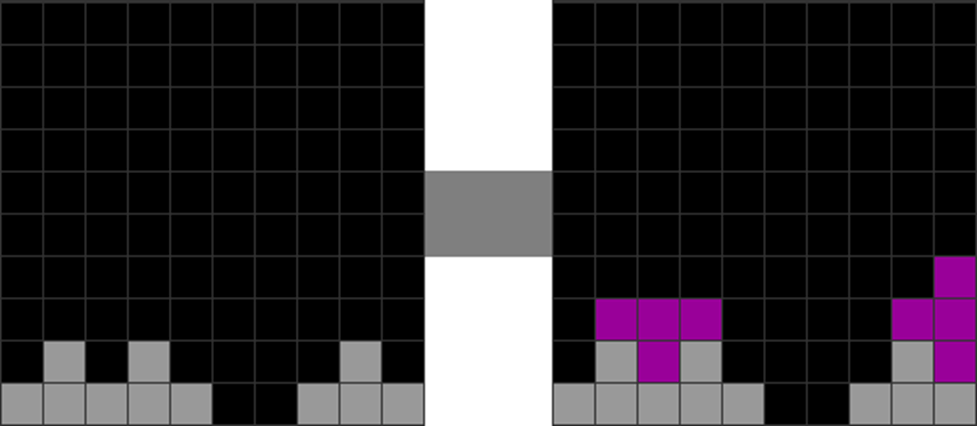
| The field is originally parity-imbalanced on both sides of the field. | Putting 2 Ts makes it less jagged, making stacking easier! |
Here are more exhaustive ways of resolving parity imbalances with T placements. The key is to place Ts next to each other:
| Diagram Set 13-14 | |
| A | B |
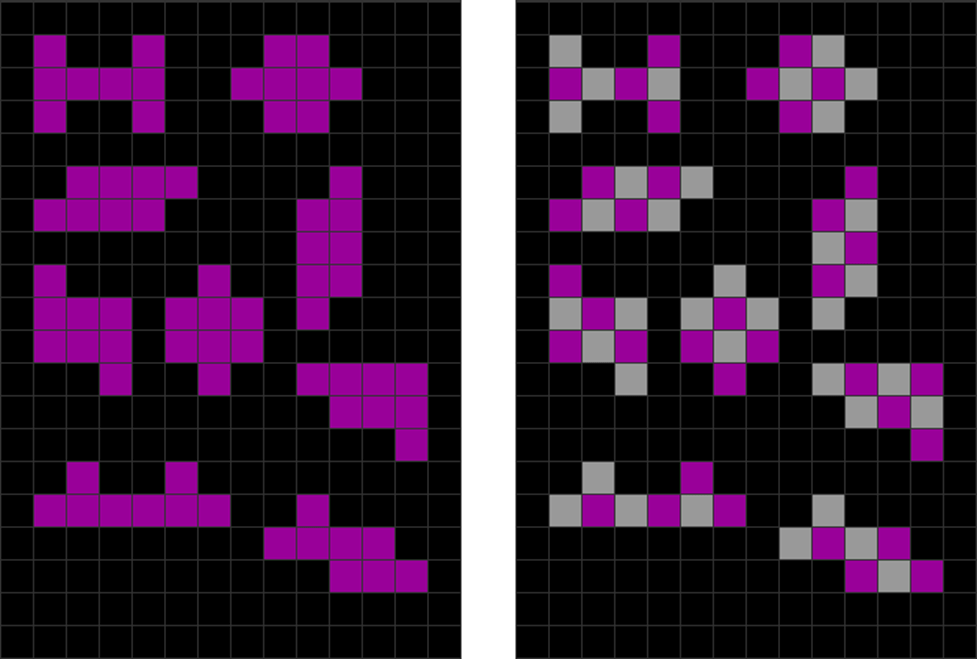
| The key to local parity imbalance resolution is to place pairs of Ts together such that their arms (protruding parts of the T shape) touch each other in the manner above. |
In Set 13-14, if you add checker boxes to calculate the number of odd and even blocks, they are even, as seen above.
Memorizing these patterns enables one to use them during a game.
Doing so makes the field flatter, and you will no longer get a jagged field that leads to poor stacking over holes since you can’t place L, O, J, and horizontal I pieces!
Knowing this alone will give you an unbeatable edge over most beginners.
2) Using Line Clears
You can also fix jaggedness using line clears!
There are two kinds of line clears that alter parity:
- Single line clears (clears one joined line)
- Triple line clears (clears three joined lines)
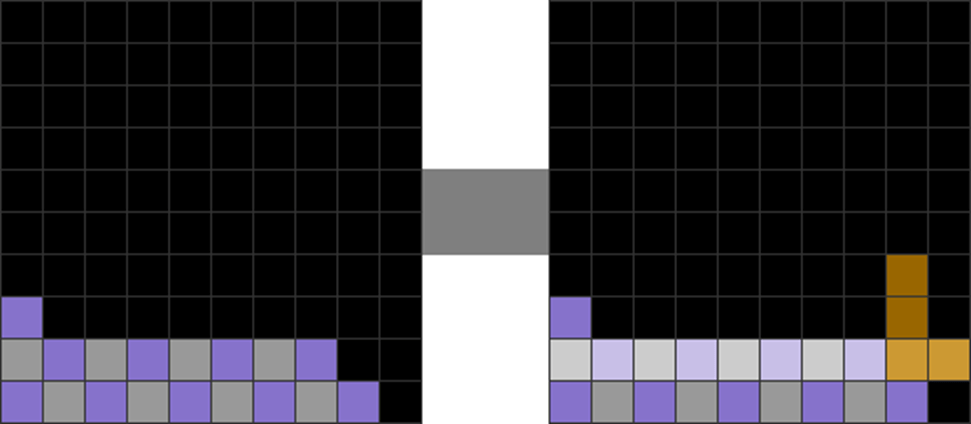
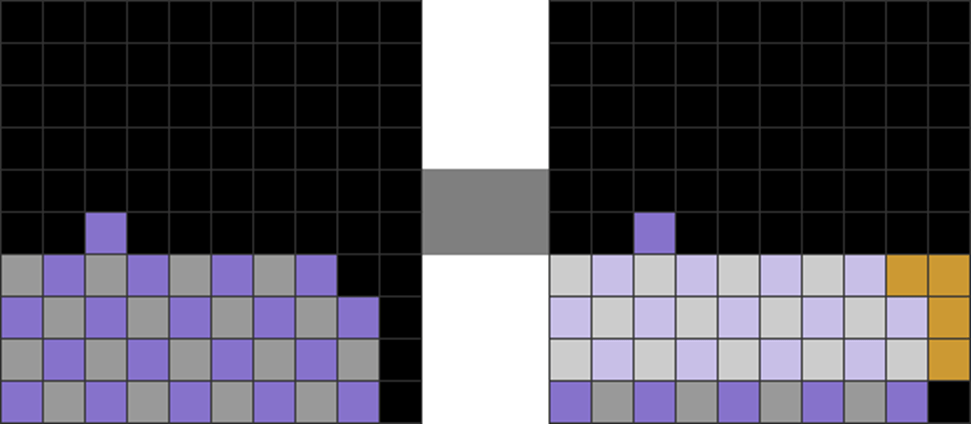
Here’s an illustration of how joined singles and triples may change parity:
| Diagram Set 13-15 | |
| 1 | 2 |
| 3 |
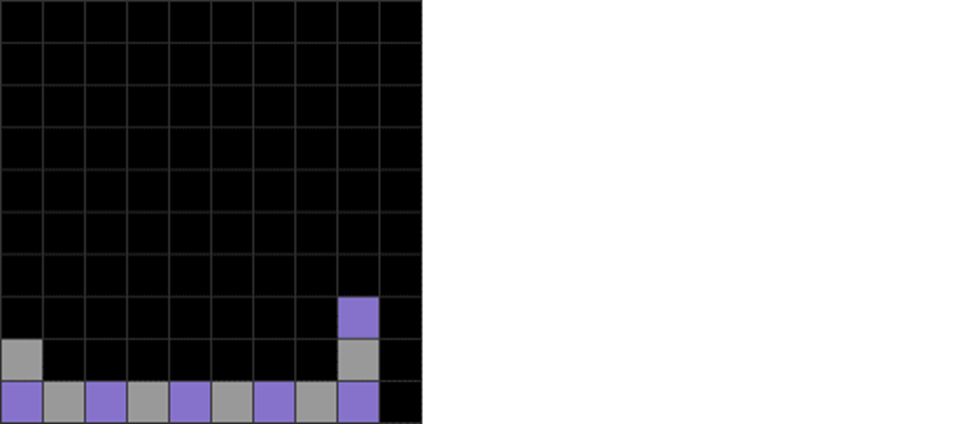
| Some singles can alter parity. At first, the difference between lavender and gray blocks is 2. After the single line clear with the L skim, it resets to 0 difference. |
| Diagram Set 13-16 | |
| 1 | 2 |
| 3 |
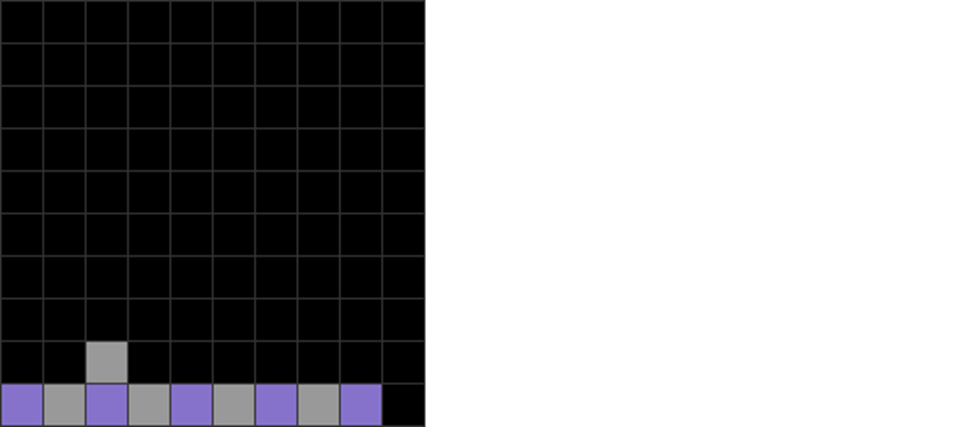
| Some triples also do the same. At first, the lavender and gray blocks have a two difference. After the L skim triple line clear, it resets to 0 difference. |
Using single and triple line clears lets you alter parity if there are no incoming Ts to resolve parity.
Summary and Conclusion
| Summarized Rules-of-Thumb | |
| Flow | Manage parity well for quicker and smoother stacking. Good parity leads to better T-spin continuations and downstacking. Balancing parity on both sides of a stack evens them to make more T-spins. |
| Form | Fix jaggedness by putting a T piece in the stack. Fix jaggedness by using singles and triples. |
| Balance | Ensure not to create more parity imbalances while resolving one. |
 How to Tetris