Have you ever played Chess before (spoiler: I have not)? In Chess, many players begin the game with an opener.
These are conventionally accepted ways of starting the game to maximize your flow and transition into the mid-game.
In Tetris, this is the same; openers also exist!
They help you to start strong, often by creating a quick T-spin opportunity, to kickstart your entry into battle.
In Tetris, this is possible because of the 7-piece randomizer. Simply put, your first 7 pieces in any Tetris match always start with 1 of each of the 7 unique minos.
This lets you memorize patternsto create powerful setups that blast your opponents into oblivion.
If you are too lazy to think, memorizing powerful openers can send 10 to 12 lines of garbage to top out your less-skilled opponents!
The Easiest and Most Practical Openers
There are hundreds of openers, as covered by many free online Tetris Wiki guides. However, most of them are useless and impractical.
I will save you weeks of pointless effort learning them by just introducing 4 vital ones to you.
1. DT Cannon Opener
The DT Cannon opener delivers 2 quick T-spins to smash your opponent. It delivers around 11+ garbage lines.
To use this, your first 7 pieces must typically contain an early L or J. This happens in about 40-50% of all starting bags.
Here is how to make it with the first 7 pieces:
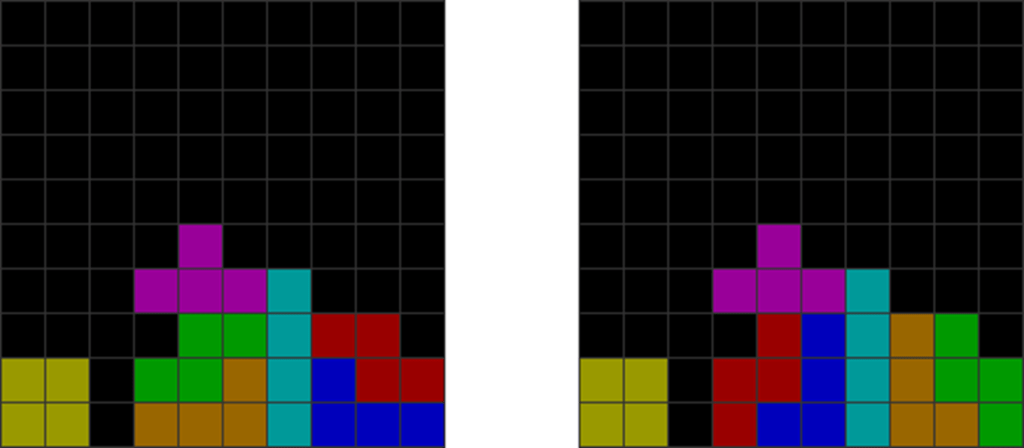
| This is the most common DT Cannon pattern if L and J come first. | This is used when either L or J comes late (or both). You can place S or Z vertically first, then soft drop L or J under them. |
It is still incomplete! Now, you must place the L and J pieces from the second bag of 7 pieces.
To make the first T-spin, do this (this follows from A in the last diagram set):
| Diagram Set 9-2 | |
| 1 | 2 |
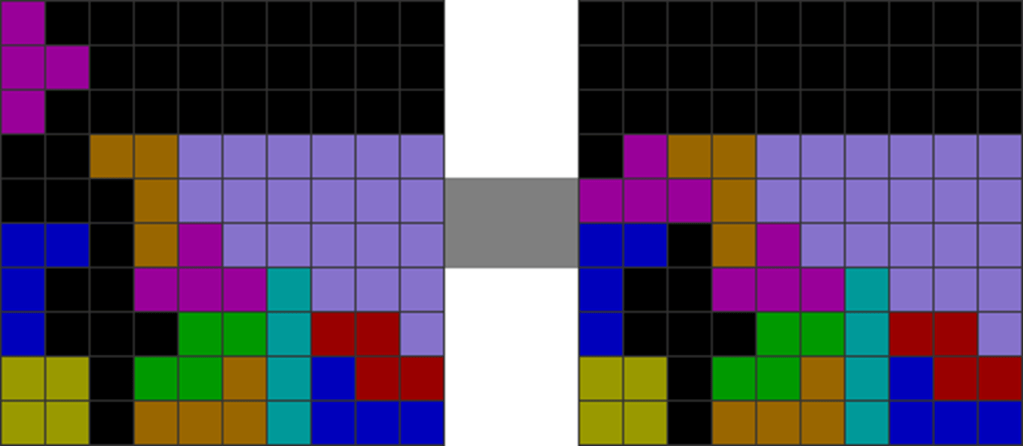
| Put L and J from the second bag like this. Fill up the lavender parts. Then, soft drop the T into the cavity. | Rotate and insert the T under the L overhang. |
| 3 | 4 |
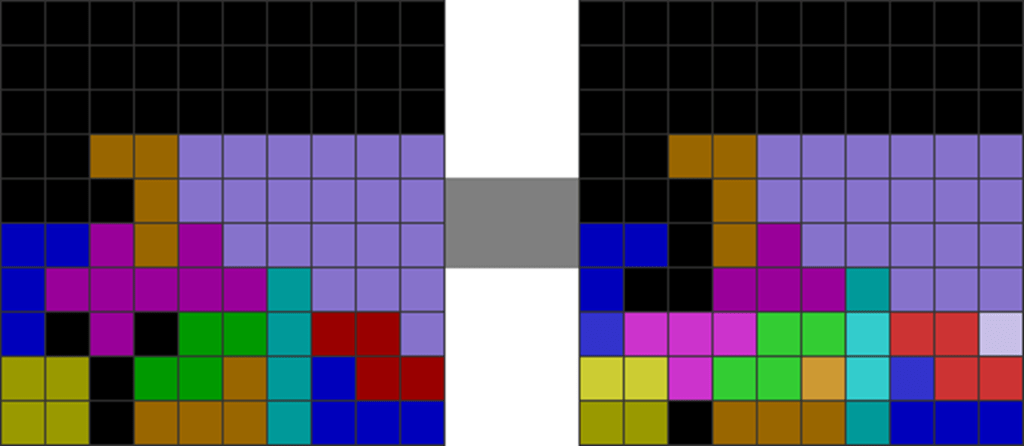
| Rotating again kicks the T piece in. Soft drop T further once it enters the cavity. | Once the T touches the bottom, rotate it for a T-spin line clear. |
This sends 4 lines of garbage.
The second T-spin can then be made like this:
| 5 | 6 |
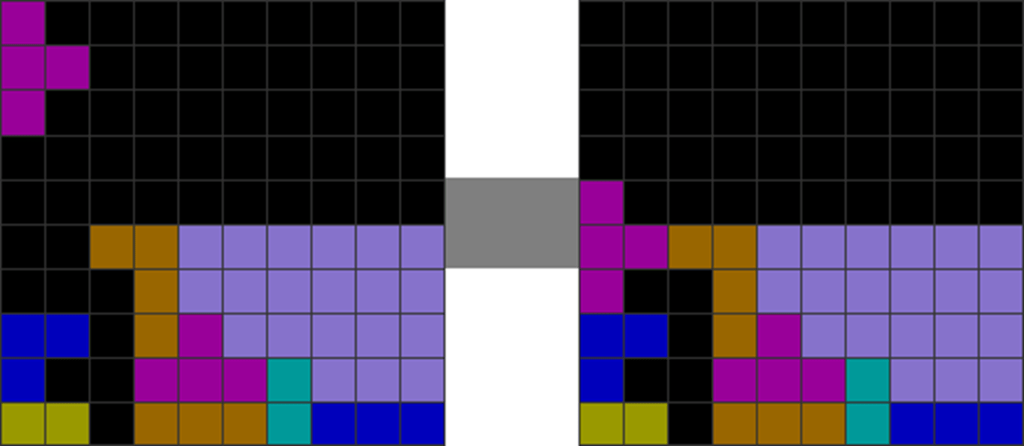
| Soft drop the second T in the aftermath shape’s cavity. | Prepare to rotate the T once it reaches this point. |
| 7 | 8 |
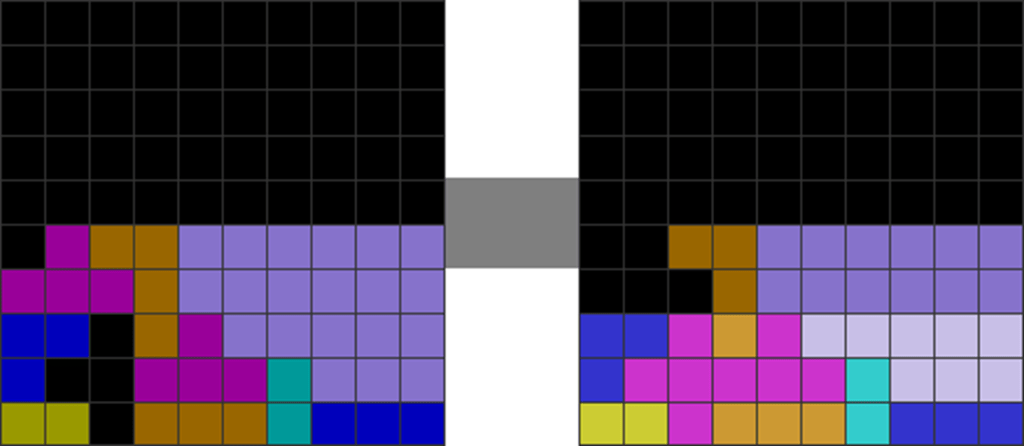
| Rotate the T into this position. | Rotate a final time. You will get your second T-spin. |
This second T-spin sends 6 lines of garbage. It is a T-spin triple, which I will only cover in my more advanced books. An additional 1 garbage line can arise from back-to-backs.
That is it!
If you have a lover or sibling that you need to decimate, then just memorize and use this.
2. TKI Opener
The TKI opener is my favorite opener because it is so safe, clean, and flexible.
It grants 2 quick T-spin doubles.
It typically needs an early I piece to create it. This works for around 50% of all starting sequences.
Here is how to create the first T-spin:
| Diagram Set 9-3 | |
| 1 | 2 |
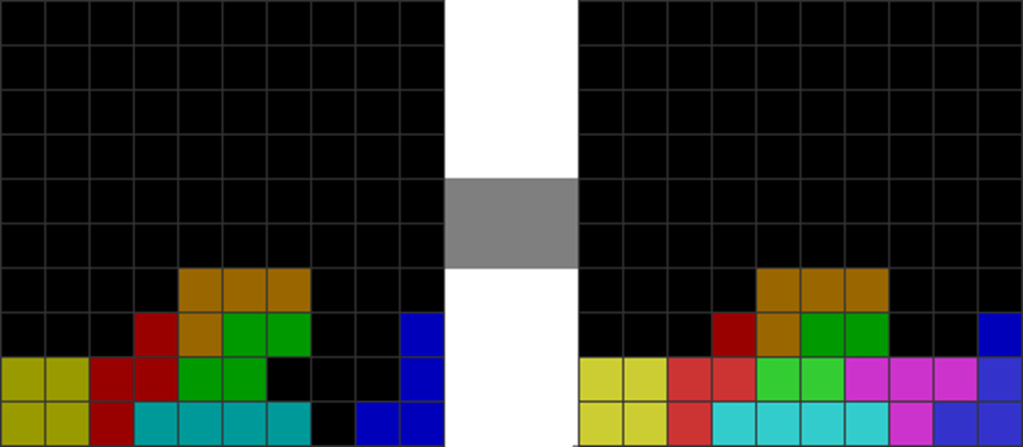
| This is the first bag’s placement. It is the most common TKI pattern. Hold the T piece. | You get your first T-spin double. |
This is an alternate and highly common pattern:
| Diagram Set 9-4 | |
| A | |
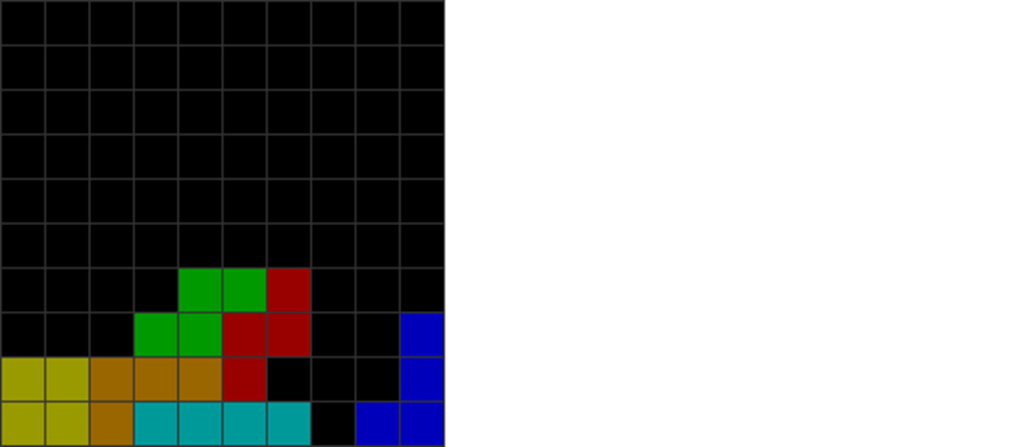
| This alternate pattern is needed sometimes if L comes early. A and set 9-3’s step 1 form the same shape. After the first T-spin, you get the same after-pattern. |
Note that you can soft drop the I piece under the Z piece if the former comes late:
| Diagram Set 9-5 | |
| 1 | 2 |
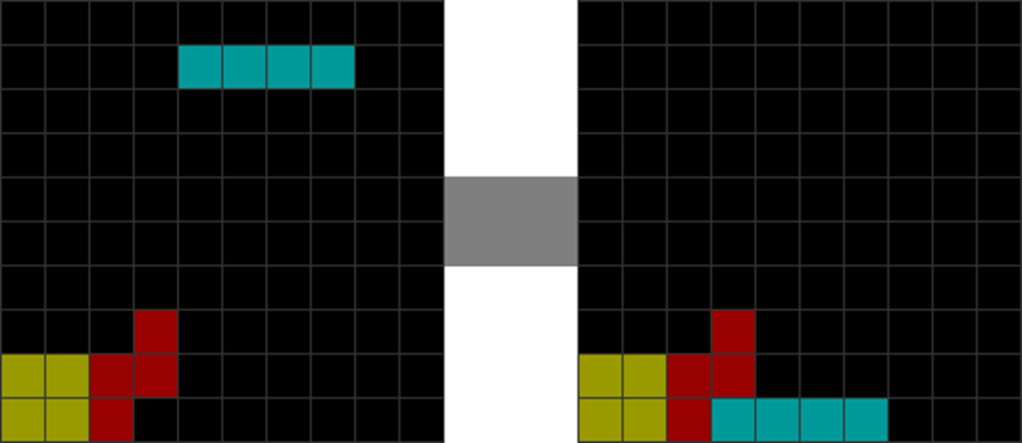
| Place the O and Z pieces like this. | Soft drop the I piece under the Z piece. |
The second T-spin can then be made this way:
| Diagram Set 9-6 | |
| 1 | 2 |
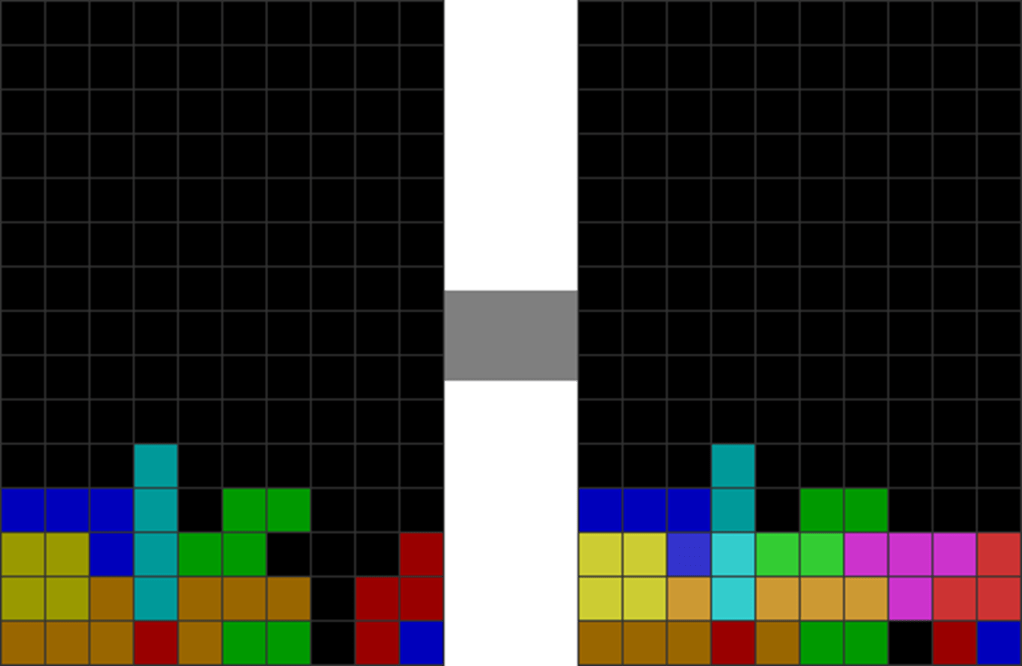
| After step 2 in diagram set 9-3, you can easily get this pattern. The LOJ on the left side can be freestyled with other pieces. | You get another T-spin double. |
| 3 |
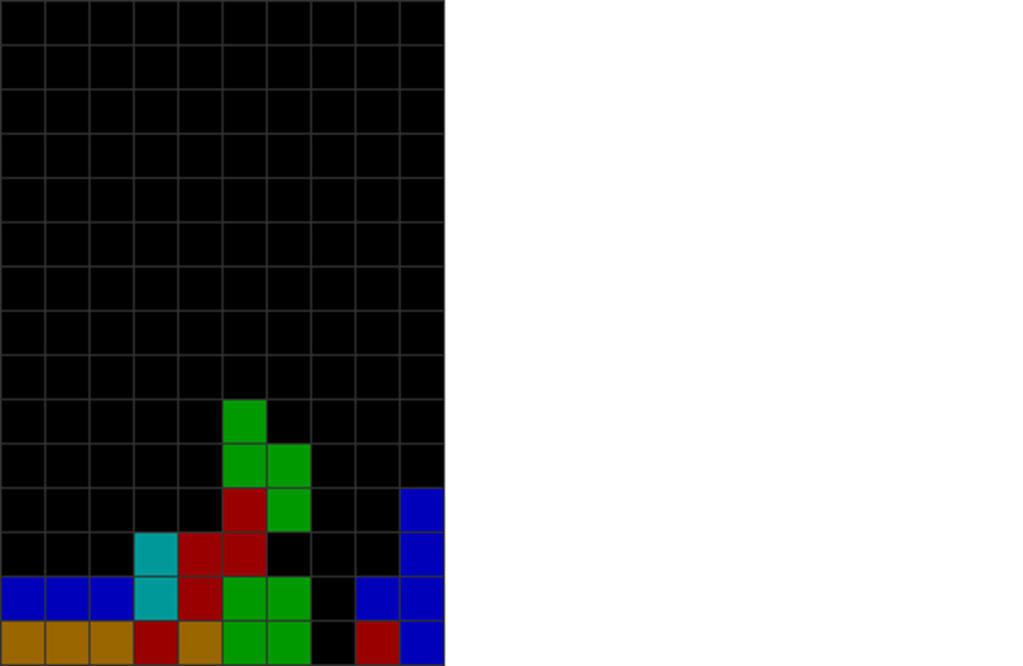
| Then, you transition to the mid-game with another T-spin! |
After that, freestyle the aftermath in any way you want.
3. Hachispin Opener
Finally, you will need an opener that covers early O, S, or Z pieces, if the other 2 openers fail.
Hachispin is a powerful opener that grants 2 T-spins.
Here is how to create the first T-spin:
| Diagram Set 9-7 | |
| 1 | 2 |
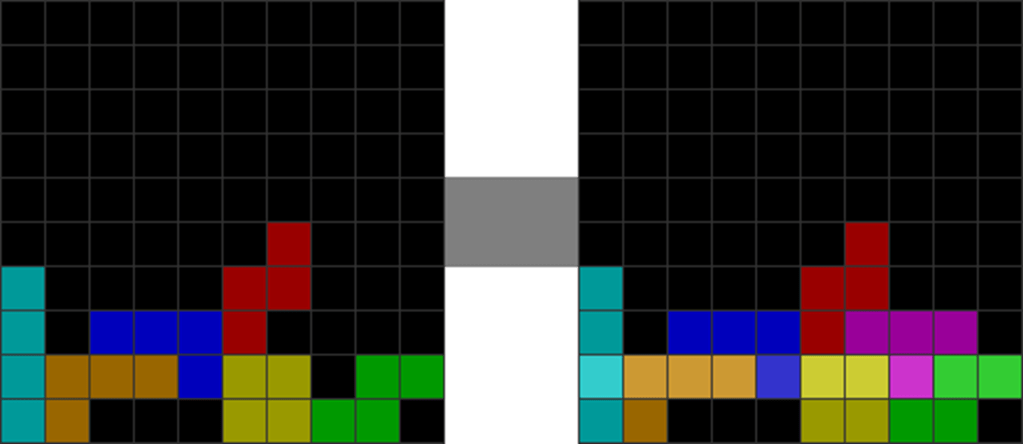
| Place the first bag in the above manner and spin the T piece into the right cavity to perform a T-spin single. |
This is a T-spin single that sends 2 garbage lines.
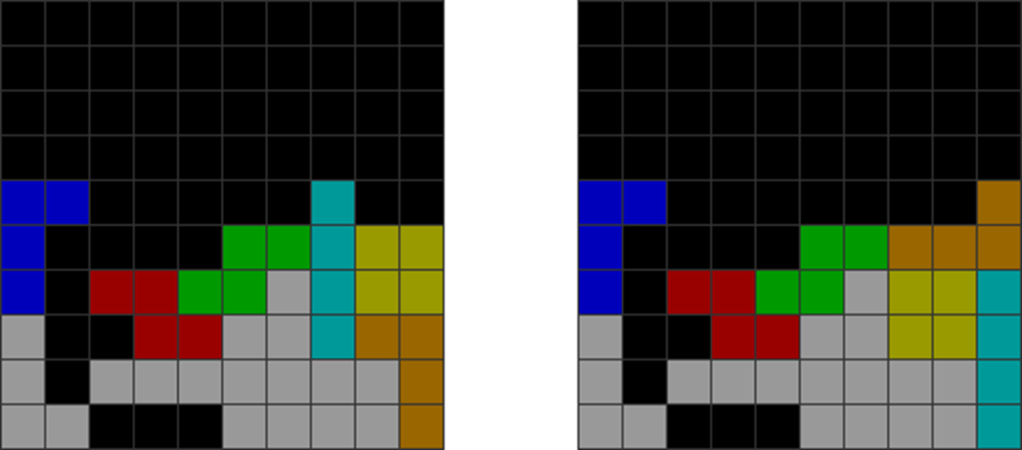
And this is how to make the second T-spin:
| Diagram Set 9-8 | |
| A | B |
| C | D (Second T-spin) |
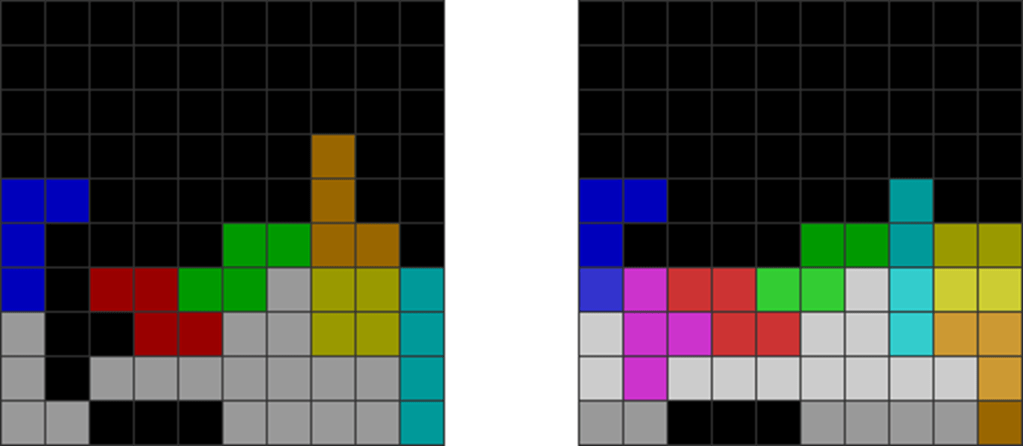
| The gray blocks represent the first bag’s leftovers. Depending on which pieces come first, you can place the following 6 pieces in these 3 ways (A, B, or C). You can then make the second T-spin in image D. |
The second T-spin is a T-spin triple.
After that, you will likely have a relatively clean and flat field. Freestyle and transition to the mid-game in any way you wish.
TKI is my favorite opener because it is so safe, clean, and flexible.
4. Sprint Openers
For other bags, you may use these for 9-0 stacking sprint openers:
| Diagram Set 9-9 | |
| A | B |
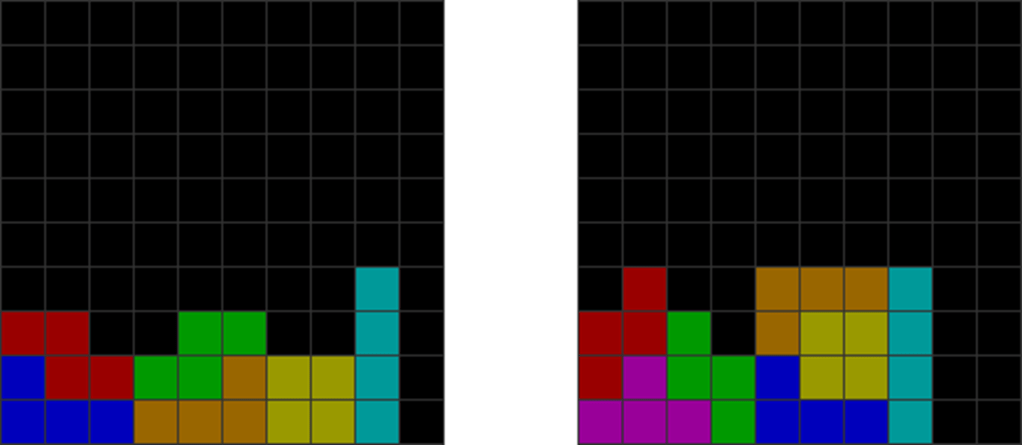
| These 2 openers are common ways of placing the first 6 or 7 pieces. |
After placing these pieces, upstack to Tetrises.
In a Nutshell
These 4 openers cover about 85% of all piece sequences for the first 7 pieces.
In the other 15%, you may freestyle and, if you are too lazy to memorize other openers in my more advanced guides, simply upstack and spam Tetrises.
| Summary |
| Openers let you start the game strong and apply pressure on your opponent. The DT Cannon, TKI, Hachispin, and 9-0 stacking openers cover most opening sequences. |
 How to Tetris