Mistakes often happen mid-game, disrupting the flow of your setups. Hence, instead of freezing when you make a mistake, it is vital to get back up.
Two steps back, three steps forward.
The most common mistake is a misdrop.
A misdrop is an accidental placement of a tetromino. They are annoying as they can disrupt the flow of a well-planned attack sequence. Yet, they are irreversible:
| Diagram Set 10-1 |
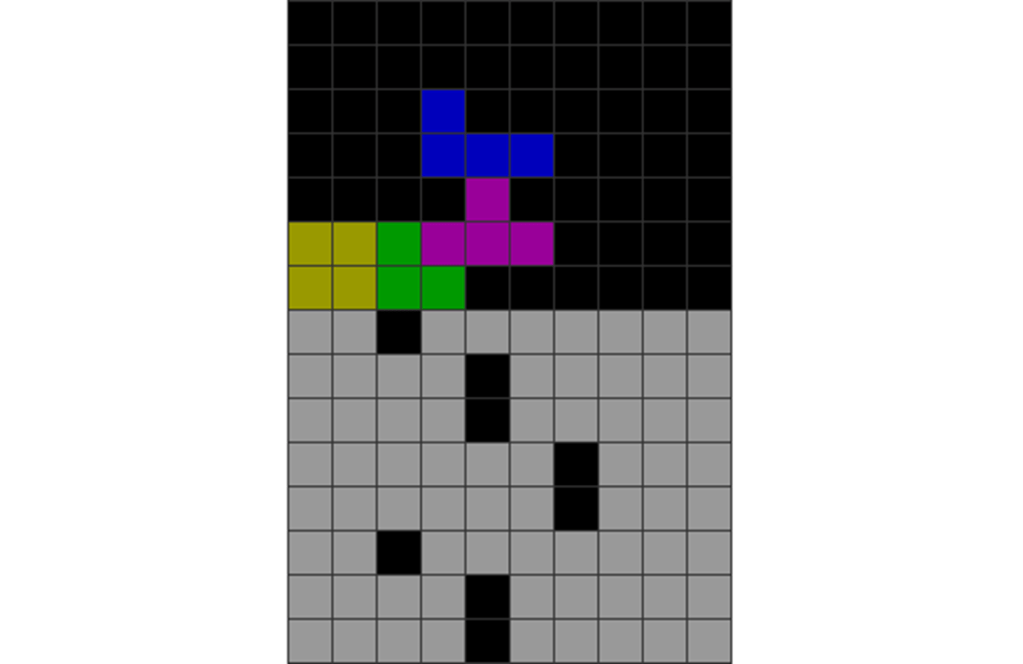
| A misdrop with J and T pieces. |
A No-Surrender Mindset
My role is to help you survive and recover in Tetris. Unfortunately, I will not succeed (Thanks, Avatar, for this epic one-liner).
To recover, you will need a strong mental attitude.
1. No Fear, No Anxiety, No Trouble
The first emotion that one first encounters during a misdrop is fear. The other is anxiety.
What happens to you in Tetris is not your fault. However, how you react to unexpected misfortune can determine whether you win or lose a game.
Hence, many people react with both frustration and surrender. They simply choke and give up.
However, misdrops offer many opportunities that can ironically boost your firepower! You can spot them once you overcome the initial fear.
I will show you how later!
2. The No-Die Grit Mentality
If you want to win in Tetris, you must cultivate the “no-die” mentality.
I have observed high-level Tetris tournaments in which 2 players are close to topping out due to mutual misdrops.
Both players are fervently skimming off the top layers, trying to get down. For most ordinary mortals, they would just give up.
However, imagine the shock I had when some of them survived this near-death experience. They dug down to clean garbage and maintained their pressure, winning the battle.
This is a mindset that cannot be taught. You can only learn it yourself.
Dealing With Misdrops
Here is a list of ways to manage misdrops, and even sometimes turn misfortune into fortune:
1. Covering Your Mistakes
The most common kinds of misdrops involve misplacing pieces in the following manner:
| Diagram Set 10-2 | |
| A | B |
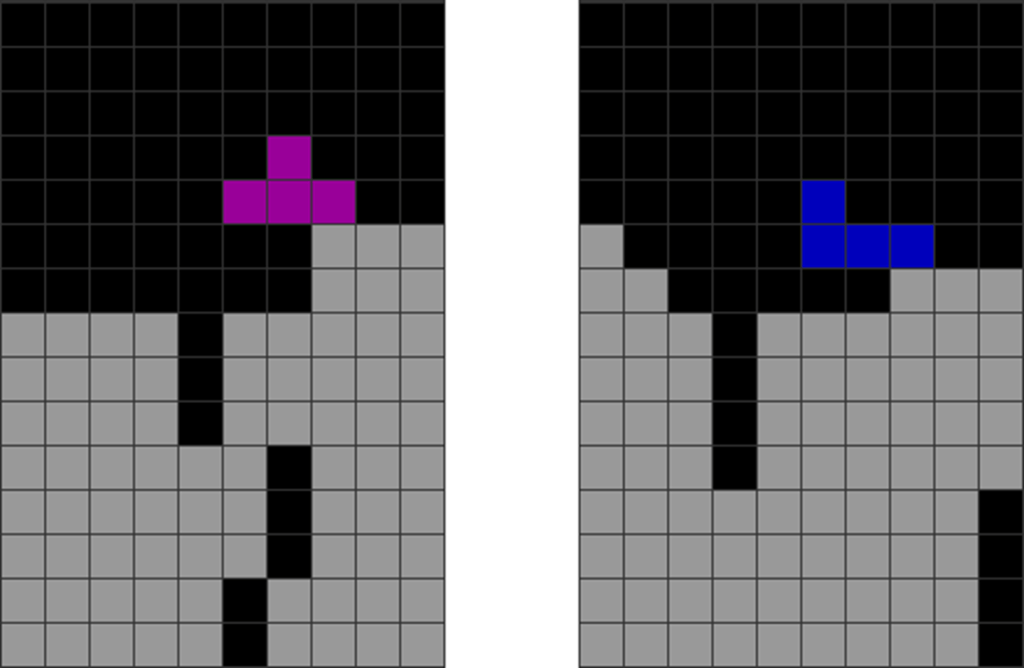
| Misdrops that leave a cavity beneath the T and J pieces, respectively, in A and B. |
Often, a piece suspends over the bottom, creating an ugly cavity beneath it.
These kinds of misdrops are the easiest to fix, as you can simply insert a piece into the cavity to fill it, like this:
| Diagram Set 10-3 | |
| 1 | 2 |
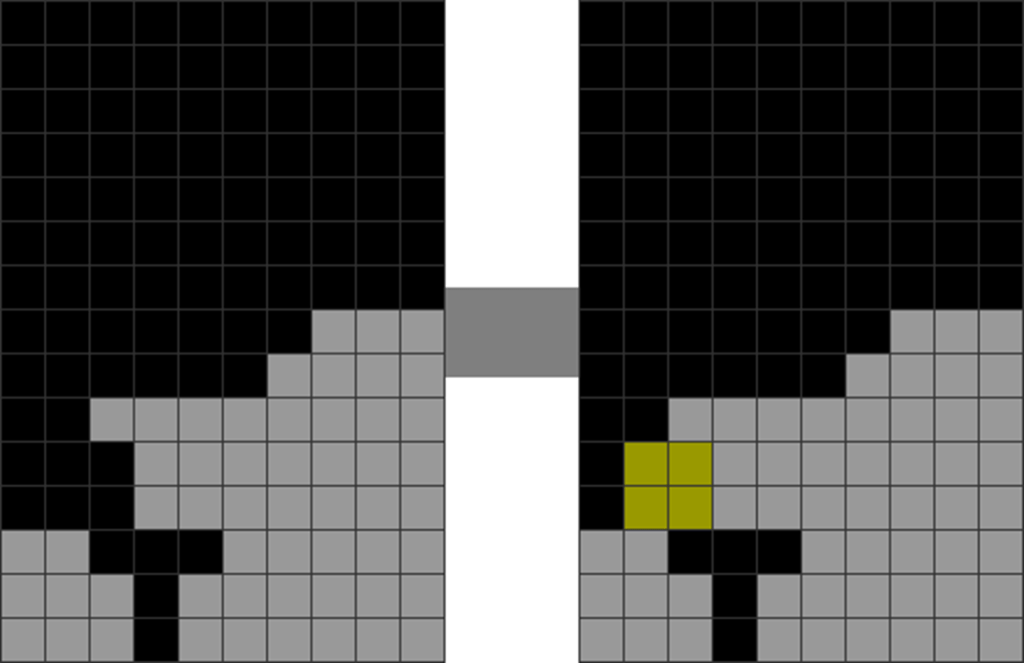
| The player misdropped, resulting in this inconducive shape with a cavity. | To fix it, one can tuck an O under the cavity to fill it. |
After that, you may proceed to upstack normally and sustain firepower with T-spins or Tetrises!
However, sometimes, you get situations like these:
| Diagram Set 10-4 | |
| 1 | 2 |
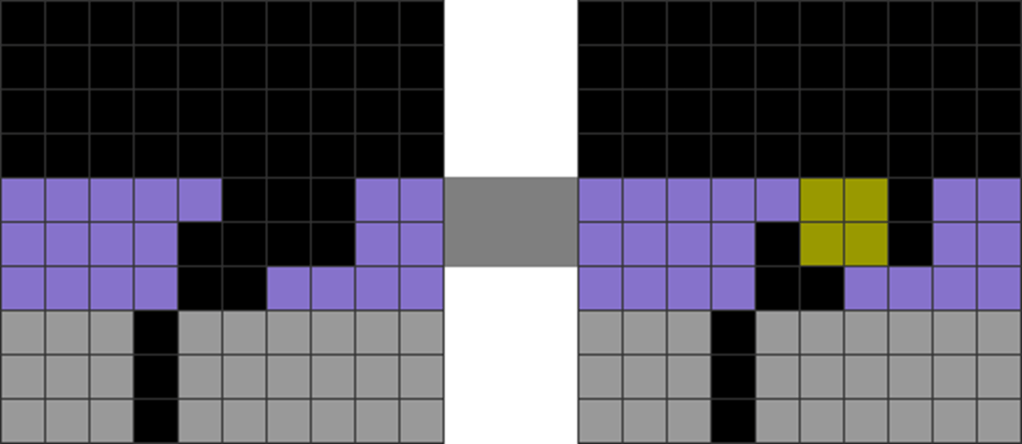
| A terrible misdrop. | The player tries to fit the O piece into the cavity. It fails. |
In such unfortunate cases, no pieces can enter the cavity. Hence, you can only skim off the top players to expose the holes beneath like this:
| Diagram Set 10-5 | |
| 1 | 2 |
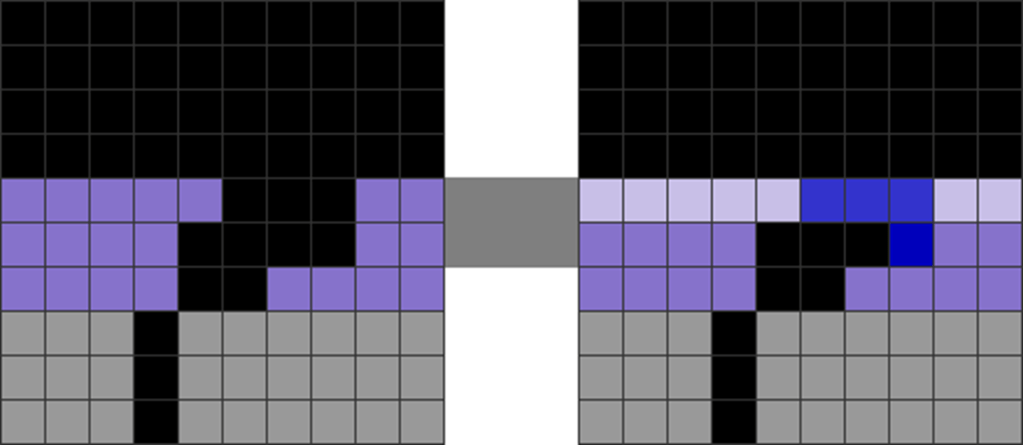
| A misdrop causes this cavity-ridden shape. | One uses a J piece to cleanly skim off the top layer, exposing the lower layers. Stacking can then continue normally. |
2. L, J, and I Pieces Are Your Friends!
If you need to skim to clean up a misdrop, L, J, and I are the best and most versatile pieces to use. Here is how:
| Diagram Set 10-6 | |
| 1 | 2 |
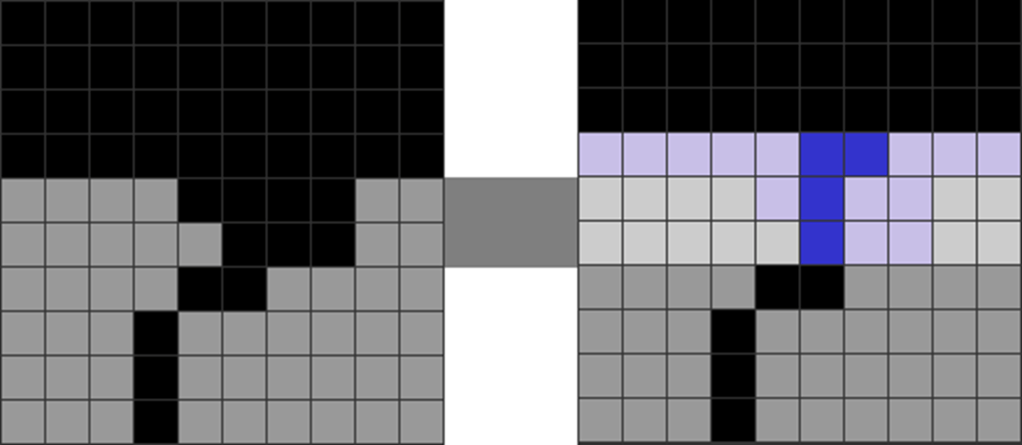
| The player upstacks the lavender area and makes a clean triple with a J skim. |
| Diagram Set 10-7 | |
| 1 | 2 |
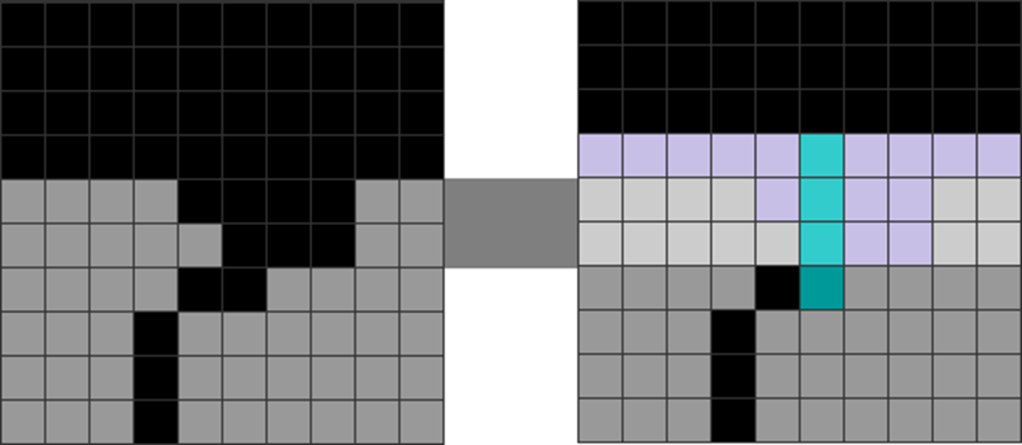
| The player upstacks the lavender areas and makes a clean triple with an I skim. |
Notice how the vertical orientations of L, J, and I can skim multiple lines simultaneously?
This trait lets you eliminate the troublesome, dirty lines that form after a misdrop cleanly!
Even if you cannot use their vertical orientations, the L and J pieces’ horizontal placements can also clean up misdrops in many ways:
| Diagram Set 10-8 | |
| 1 | 2 |
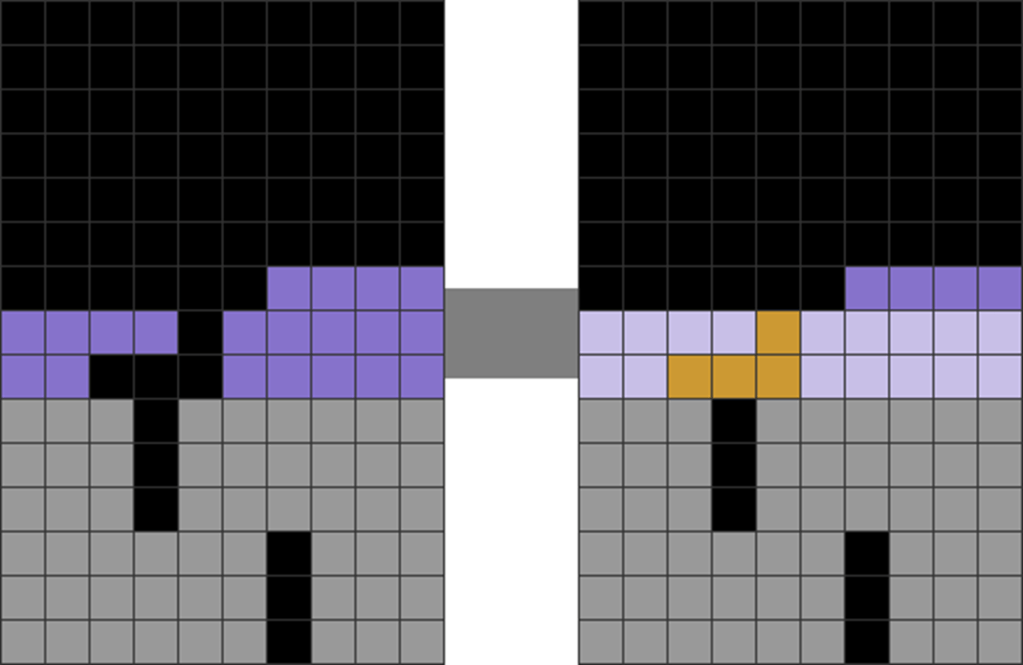
| A tragic misdrop. | The player uses a horizontal L piece to skim. |
Yes, you can spin the L piece into the cavity in step 2!
This is called an L-spin—a teaser for my more advanced content in my other Tetris books!
3. Rebound With Combos
Adversity often allows one to rebound with new opportunities.
Sometimes, your field may seem very cluttered. However, as my downstacking chapter has shown, you can downstack through the shape caused by the misdrop by joining pieces like this:
| Diagram Set 10-9 | |
| 1 | 2 |
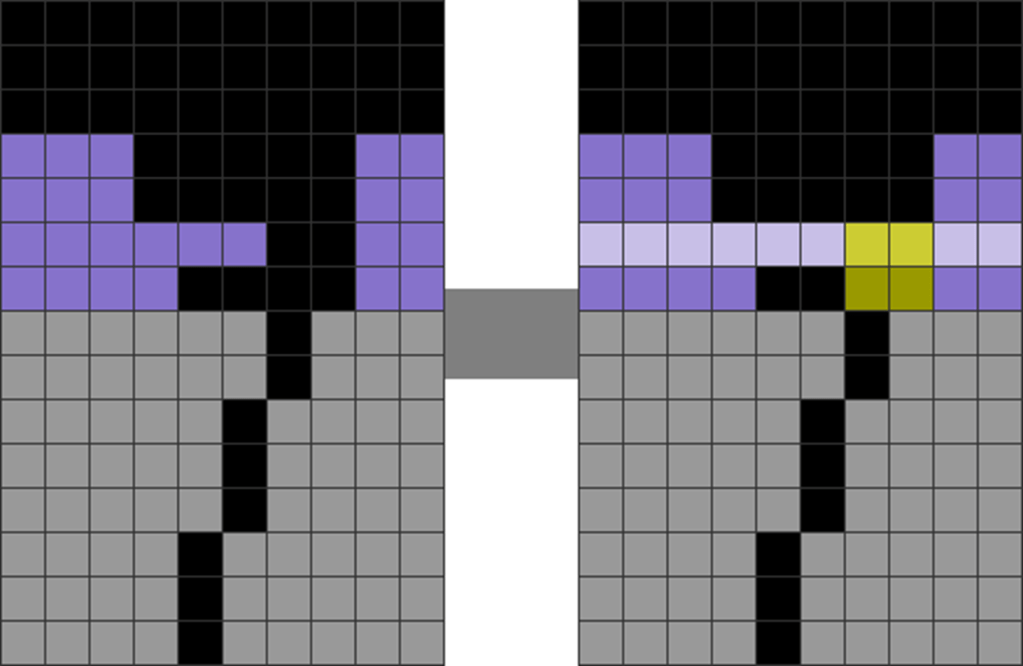
| A tragic misdrop. | The player skims with an O piece. This starts the combo sequence. |
| 3 | 4 |
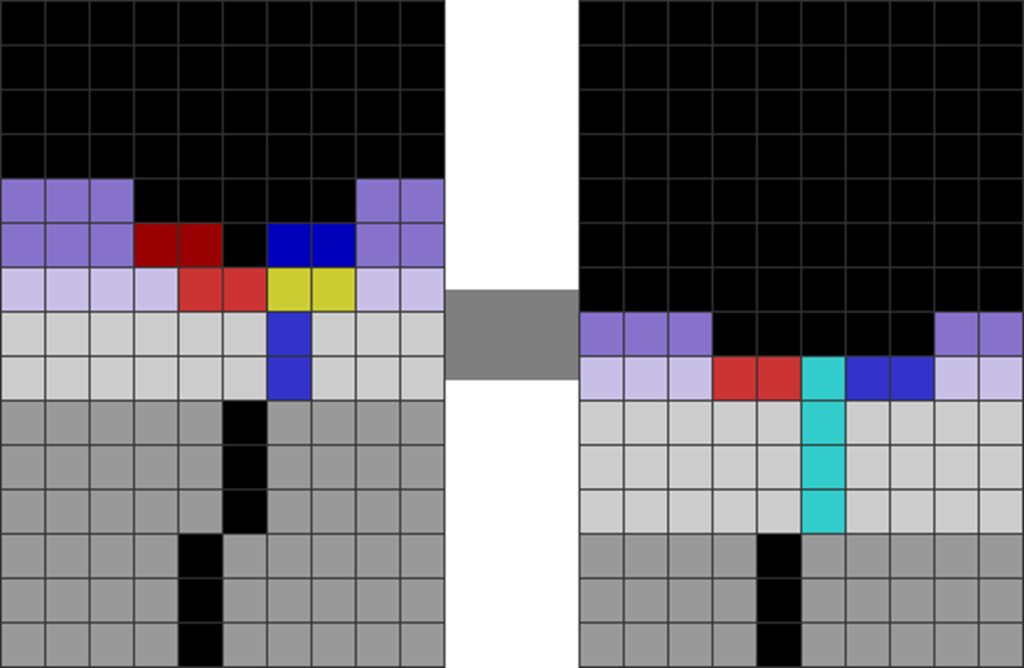
| The player continues the combo with J and Z pieces to skim. | He ends with a Tetris line clear. This combo sends a sizable number of garbage lines to attack the opponent. |
Doing so creates garbage from combo sequences.
I invite you to freestyle downstack whenever you encounter a tragic misdrop.
Please let me know on my @GalactoidTetris YouTube channel’s downstacking tutorial videos how many combos you have gotten from this recovery downstack method!
4. T-Spoon Frenzy
While this is too advanced for a super-casual Tetris guidebook, I will just tease you with the following:
| Diagram Set 10-10 | |
| 1 | 2 |
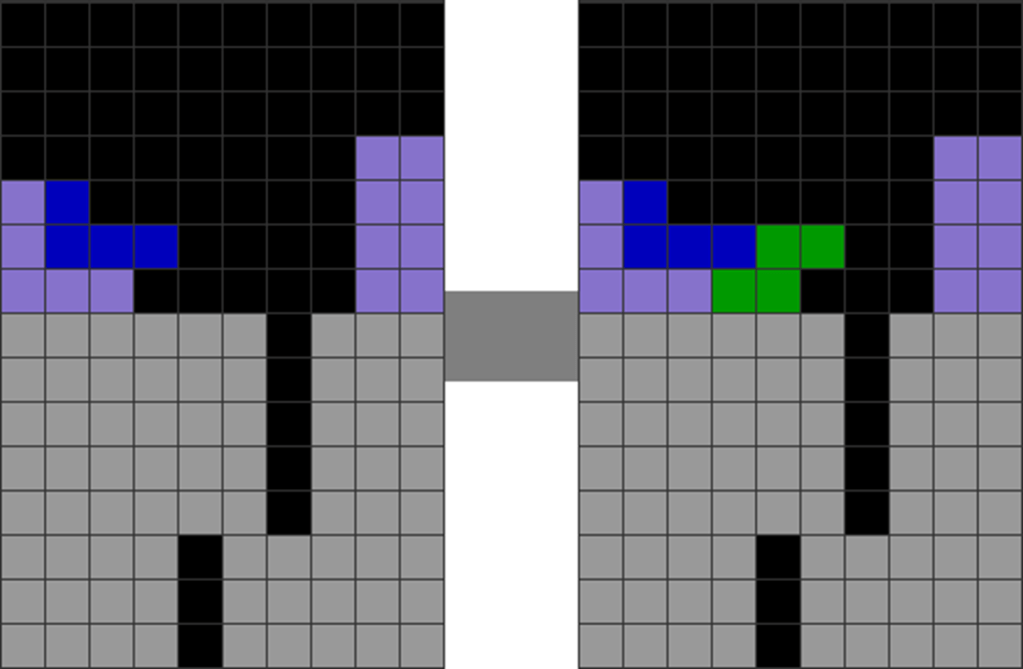
| A tragic misdrop. | The player tucks the S piece under the J piece, making a T-spin double! |
That is right! You can turn misdrop patterns into T-spin opportunities!
In a Nutshell
The difference between 2 players can sometimes boil down to their ability to handle misdrops. By handling them, you recover and keep the pressure on your opponent.
| Summary |
| Cultivate a strong mental attitude and do not give up when you face a misdrop. Fill cavities formed by misdrops with soft-dropped pieces. Skim off the top layers of a misdrop with L, J, and I pieces to expose the field cleanly. Turn misdrops into downstack combo chances! Turn misdrops into T-spin chances! |
 How to Tetris