Most official guideline Tetris games are competitive – they have versus modes where a player fights against one or more players:
- Tetris 99: A player battles against 98 other human players. Team Battles split this player pool into four groups, fighting against each other.
- Puyo Puyo Tetris 1 and 2: A player battles against another player. There are 3 and 4-player modes where players can join up to 4 teams against each other.
- Tetris Effect: Connected: With the expansion, Tetris Effect now has a one-versus-one mode. There’s also a mode where three players combine against a super-buffed player or AI.
- Classic Tetris: In one-versus-one Classic Tetris battles, two players compete for the highest score in a score attack. Tetris Effect: Connected offers this mode. However, many players play the old NES Classic Tetris variant.
A) Optimizing Your Gameplay Style to Each Guideline Tetris Game
Different Tetris games have different optimized gameplay styles. This guide will cover the variation between guideline (official) Tetris games and how to adapt one’s gameplay to them.
I will classify the differences thematically for each game in terms of:
- Stacking
- T-spins
- Tetrises
- Downstacking, 4-wide, and Skimming
- Defense and Timing
1) Stacking
Tetris 99
Tetris 99 players can get away with poor, jagged, parity-imbalanced stacking easily, especially in the first two phases of the game.
Because of the garbage reception delay, players can easily skim off the top-colored layers with as much time as they need. Likewise, garbage is clean, making mistakes more forgivable, and they can skim off the top-colored layers to get down to the free Tetrises (made of garbage) without worrying about proper stacking.
I am not here to encourage risky or messy gameplay, but the reality is that Tetris 99 is highly forgiving in the first two phases. The only exception is a super lobby full of god-tier players.
Here’s an illustration of how easy it is to get away with risky methods:
| Diagram Set 16-1 | |
| 1 | 2 |
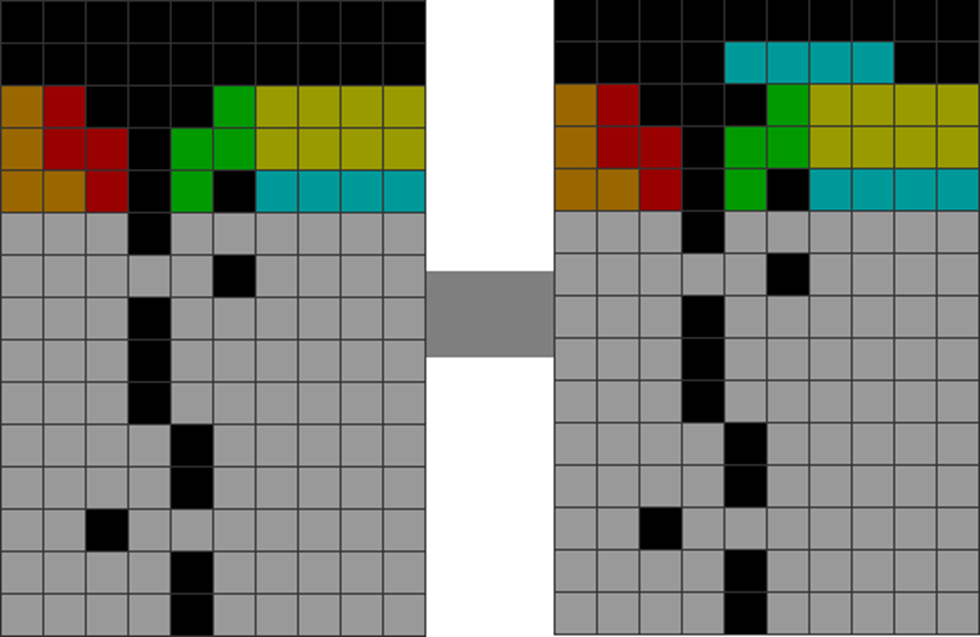
| Here, the player makes a T-spin double. | However, he messes up by putting the I over holes. |
| 3 | 4 |
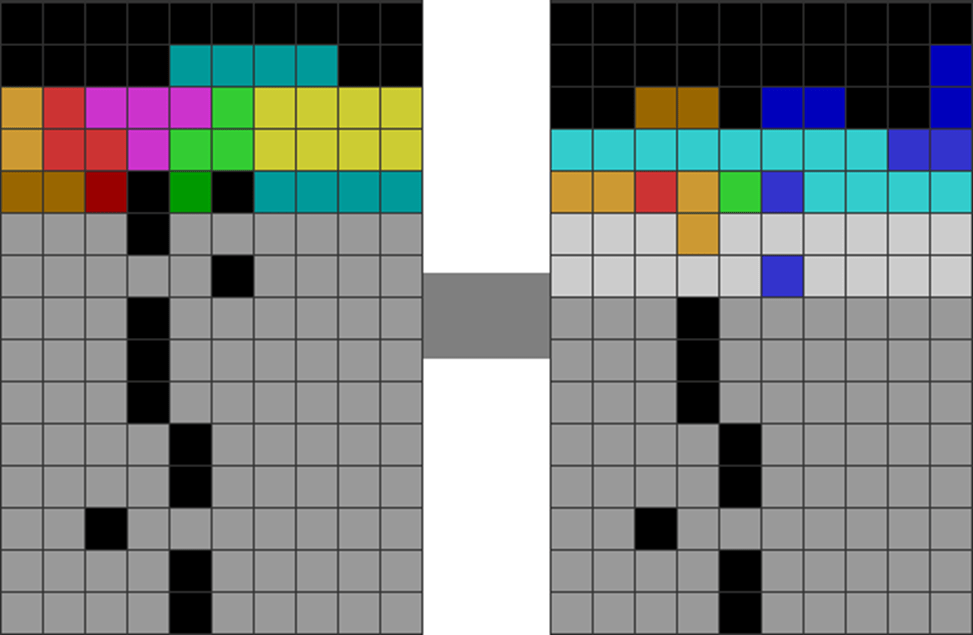
| No issues! Just skim off the top layers and begin a downstack combo to recover! |
Thus, getting away with dangerous, jagged stacking is easy by skimming off the top layers to dig down to the clean garbage later in column 4.
However, players must be cautious in the third phase when stacking.
Here’s the trick: garbage is extremely clean, and with four badges, you can send up to 12 lines of clean garbage at once. Therefore, most players die because of getting so much clean garbage, which leads to an extreme I-piece dependency.
Thus, I suggest upstacking a bit over the clean garbage well, such as by putting a 4-wide setup on top.
| Diagram Set 16-2 | |
| 1 | 2 |
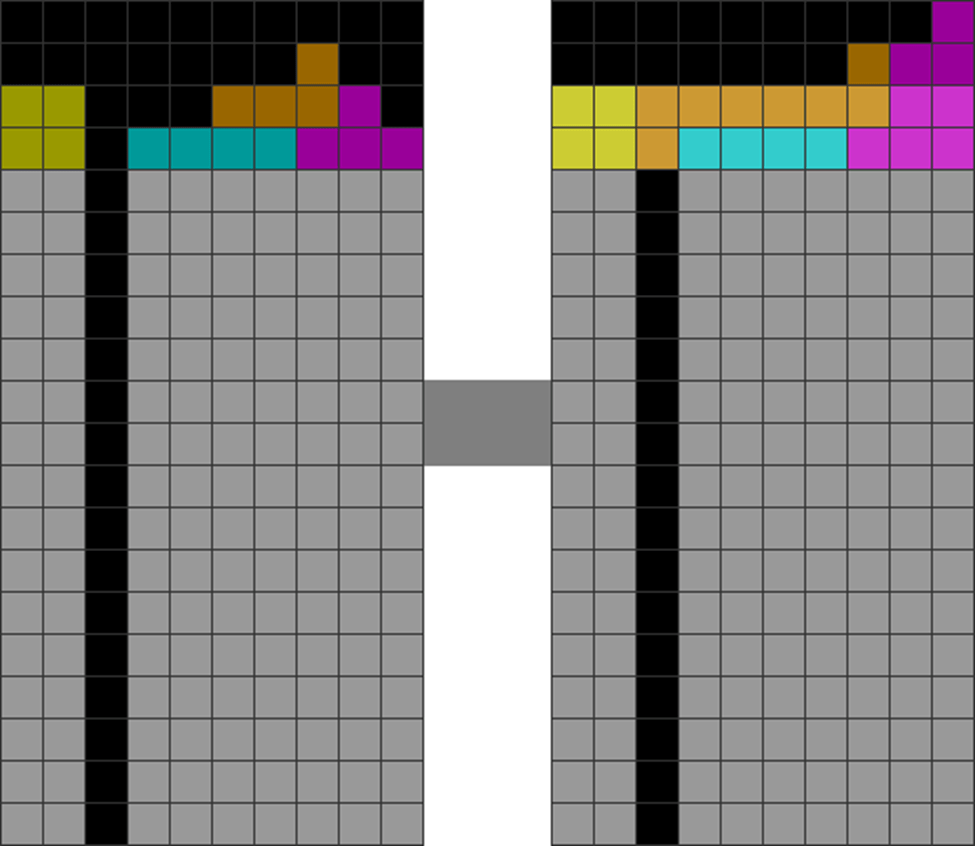
| The player faces extremely clean garbage. He does not have an I to sustain back-to-backs with a Tetris. Thus, he skims with an L piece for a double. |
In the above diagram, the player must be prepared to skim with non-I pieces to wean off I dependencies in Tetris 99 because of the extremely clean garbage.
With this, you can provide some garbage combo cover while you wait for more I pieces to get down.
It would help if you also minimized I-piece dependencies by using all pieces to skim off excess pieces. For instance, you must use L and J pieces to make doubles or triples. It’s not just S and Z pieces but all other non-I pieces, too.
Puyo Puyo Tetris
Puyo Puyo Tetris’ central theme is about consequences. Every placement has severe impacts later on. Therefore, every piece placement counts.
Because Puyo Puyo Tetris 1 and 2 have messy garbage, you must stack them carefully to open up more options for clean downstacking.
One suggestion is to minimize field division, resolve jaggedness, stack low, and stack flatly. Doing so opens your field up to more downstacking access and options.
One should also go for simple, clean T-spins:
| Diagram Set 16-3 | |
| A | B |
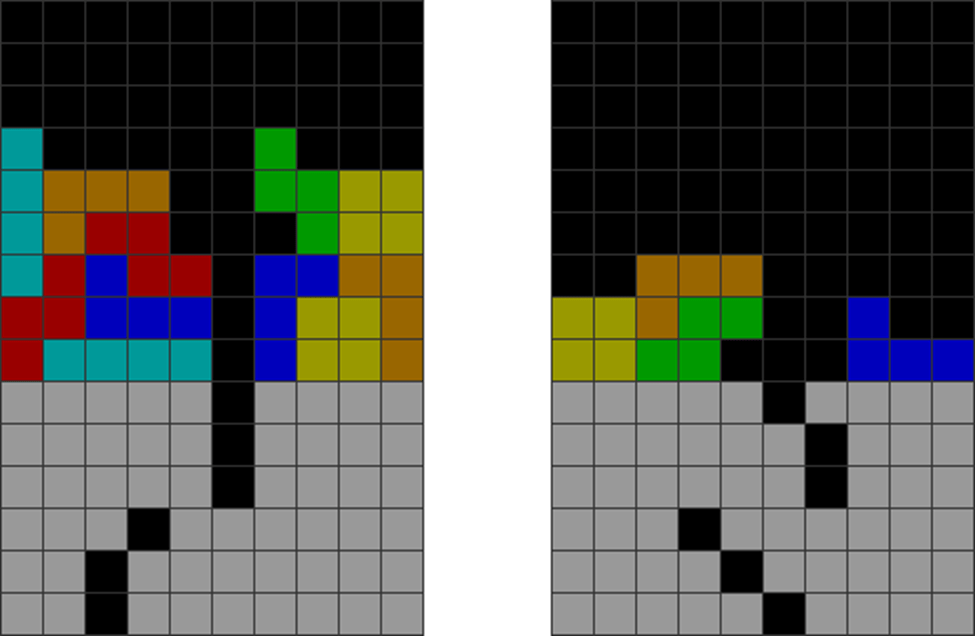
| These two examples show clean, parity-resolved stacking with simple T-spins. They are not overstacked, and the stack is balanced. |
These simple T-spins that do not upset parity (jaggedness) should be the most common methods used in Puyo Puyo Tetris.
In Puyo Puyo Tetris, every bad stacking option, such as over-stacking, extreme jaggedness, or dead-ends, will lead to a tragic effect later, unlike in Tetris 99’s earlier phases. For instance, if you overstack, you may receive dirty garbage under that area, which makes it difficult to skim through to get down:
| Diagram Set 16-4 | |
| A | B |
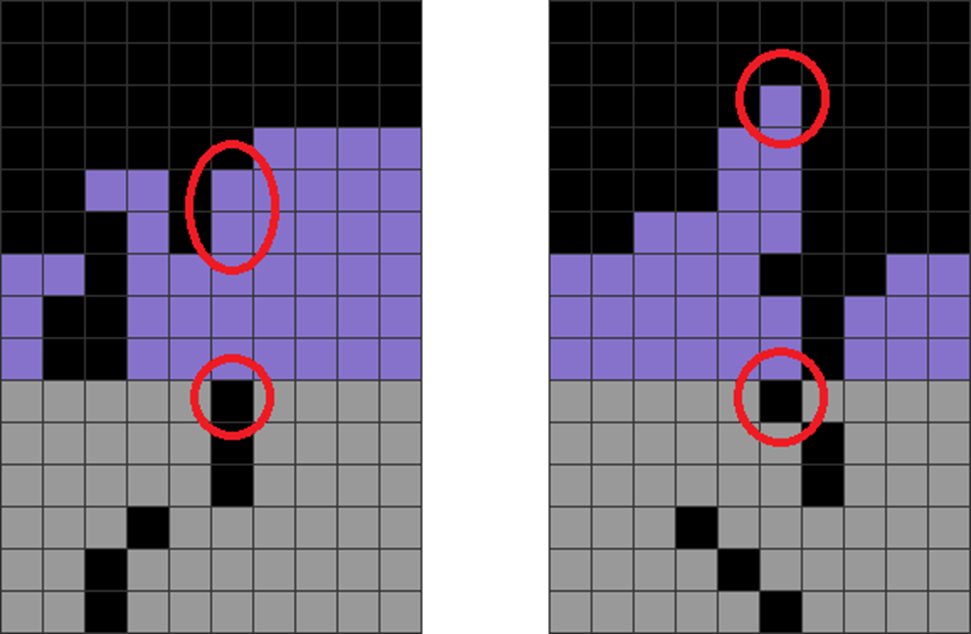
| The player goes for overstacked, greedy T-spins in these two examples. See how the red-circled overhangs stack over the red-circled garbage holes later? |
These greedy setups will lead to difficult downstacking later. That’s why it’s best to go for flatter setups in Puyo Puyo Tetris.
You also have to upstack aggressively to get more colored blocks for T-spins and Tetrises, as you won’t be getting free, clean garbage like in Tetris 99’s or Tetris Effect’s first phase.
Another critical factor is maintaining a low, flat, and balanced stack. Some players overstack one side while making the other side understacked. The overstacked side can upstack over garbage holes, preventing easy downstacking later. It also causes one to take more time to build up the understacked side, which buys the opponent time to attack you.
Tetris Effect: Connected
Tetris Effect: Connected is a hybrid between Tetris 99 and Puyo Puyo Tetris. In the first phase, it’s about the same as Tetris 99. However, because you’re fighting a player directly, you must build safely and not over-stack. There is more room for error. However, in the second and third phases, as in Puyo Puyo Tetris, you must build flatly to avoid too much jaggedness, parity imbalances, and overstacking.
Others
In Classic Tetris, you must minimize field division, jagged patterns, and dead-ends and resolve parity as soon as possible. Build to open up as many stacking continuations and possibilities as possible. This is because of the extreme RNG – you want to ensure you can almost always place every piece without leading to dead-ends.
2) T-spins
Tetris 99
Because of the low risks of the first two phases of Tetris 99, you can get off very experimental T-spins nearly as much as you want.
There are almost no repercussions to using many T-spins in the first two phases. You can use complex T-spin donations, floating T-spins, or props. You don’t even have to care about the aftermath or follow-ups. Some extreme T-spins leave a terrible jagged pattern that is hard to follow up. Some may lead to vertical overstacking that is hard to downstack or skim through:
| Diagram Set 16-5 | |
| A | B |
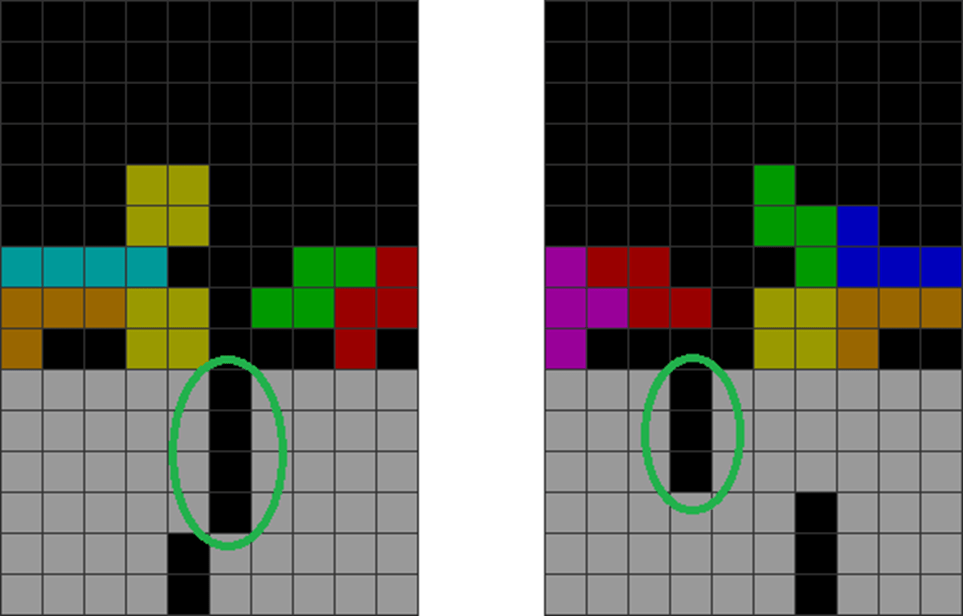
| These two setups are greedy. However, the garbage beneath them is relatively clean (green circles). |
It’s okay to go for greedy T-spins like these in the first phase of Tetris 99. You can use the clean garbage as defense while you build the former. Use the clean garbage for free back-to-back Tetrises.
There are also six previews, more than the 4 and 5 of Tetris Effect and Puyo Puyo Tetris. This lets you plan riskier T-spins. Even if you mess up and make a T-spin with too many piece dependencies, there is more than enough time (since garbage reception is long) to think about and resolve the issue.
In casual Tetris 99, nobody cares about each T-spin’s risk, except in late phase 2 and phase 3. However, you may wish to play safe if many opponents use 4-wide from the battle’s start.
Even if you mess up a T-spin, you just skim it off without repercussion.
Puyo Puyo Tetris
In Puyo Puyo Tetris, you must give up many of the extreme, risky T-spins you do in Tetris 99.
This is because, in Puyo Puyo Tetris, you should go for flat, simple, non-greedy, and direct T-spins, prioritizing T-spin doubles above all else.
Why? Because extremely exotic T-spins that have too many T-spins inside can leave overhangs that overlap over future garbage holes. Garbage is dirty in Puyo Puyo Tetris, so you want simple T-spin doubles with clean overhangs.
Also, as much as possible, you want to attack quickly with a string of T-spin doubles to negate incoming garbage (since garbage is dirty and lethal as such). Minimize the amount of vulnerable time that you can be spiked, especially when making a greedy T-spin.
You also want to be consistent. By not going for extreme T-spins with extreme piece and field dependencies, you increase your success rate.
Therefore, you want to go for simpler T-spins with higher consistency rates. Go for compact ones with minimal piece and field dependencies. T-spins that are shorter and more compact are also better. Their follow-ups are more predictable and less jagged or tall, making it easy to downstack and defend.
Tetris Effect: Connected
Tetris Effect is a hybrid between Tetris 99 and Puyo Puyo Tetris. In the first phase, you can sometimes use exotic setups for the added firepower. Even if you mess up, you can always use Zone to repair it. However, you wish to play more like Puyo Puyo Tetris in the second and third phases by making short, simple, flat, low-risk T-spin doubles. See above (the Puyo Puyo Tetris section) for more information.
Others
T-spins are irrelevant in Classic Tetris except for repairs and tucks.
3) Tetrises
Tetris 99
In Tetris 99, Tetrises are almost free unless you get someone who 4-wides or mid-game downstack combos you and sends lots of dirty garbage. However, most of the time, garbage is really clean.
You can relax and skim through the top-colored blocks, get down to the clean garbage, and send back Tetrises. In the third phase, when people get four badges, pressure is extreme, and you can get many lines of clean garbage, letting you counter-spike easily with your opponents’ garbage.
Talented players in the third phase receive garbage from the opponent, augment with a T-spin, and then send back a bunch of attacks using the opponent’s fuel. Since they have sent a bunch of their attack to you, they will need more time to build up, making them vulnerable. Therefore, many good Tetris 99 players play defensively in the late game.
This diagram illustrates counter-spiking:
| Diagram Set 16-6 | |
| 1 | 2 |

| The player receives incoming garbage. | He counterspikes by returning the opponent’s garbage, starting with a T-spin double and Tetris. He thus uses the colored blocks as fuel. |
| 3 |
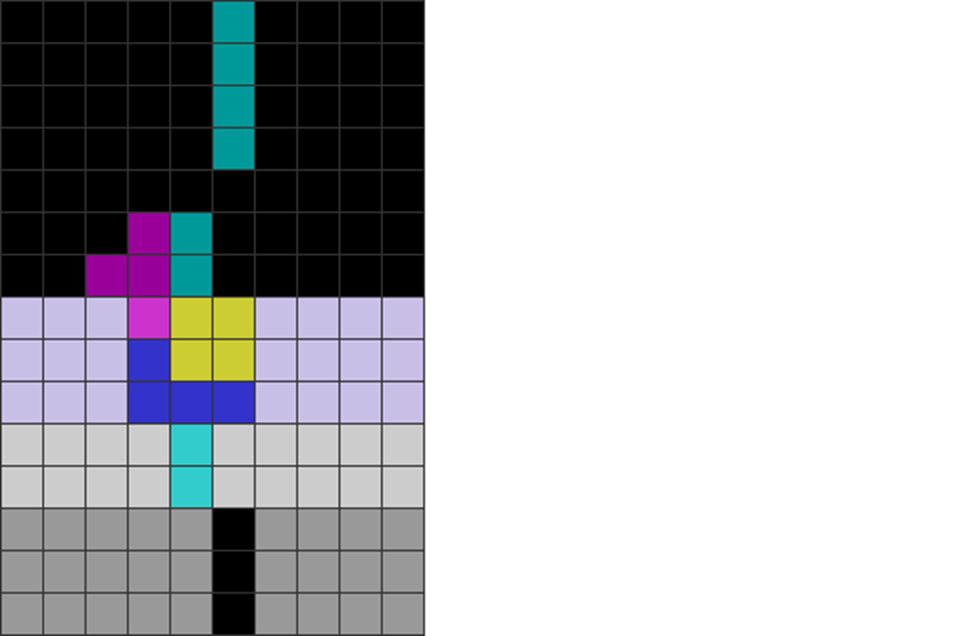
| He continues with downstack combos, digs down to the newly received garbage, and sends it back! |
You should note that because garbage is extremely clean, you shouldn’t build up too many colored, upstacked Tetrises like you can in Puyo Puyo Tetris. This is because it may lead to too many I-piece dependencies. Therefore, you must use other pieces, like S, Z, L, and J, to skim and break back-to-backs.
Another note is that the long garbage delay makes perfect 4-blocks-high Tetrises in Tetris 99 easy. You have all the time (and six previews) to make them. However, in the late game, get prepared to skim extremely generously.
Puyo Puyo Tetris
Many Tetris 99 players who migrate to Puyo Puyo Tetris also face the tragic habit of hoping there are free Tetrises to downstack to. Unfortunately, since garbage is only 70% clean, you won’t get many free Tetrises. You must earn the Tetrises by building them aggressively to sustain back-to-back bonus.
This is how:
| Diagram Set 16-7 |
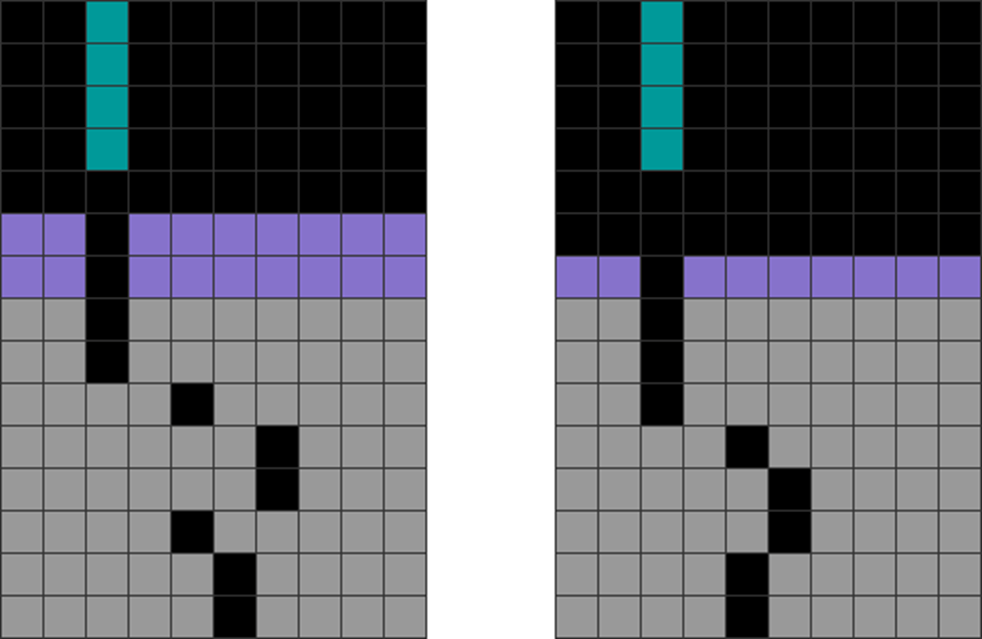

| In these three examples, the player upstacks garbage lines with lavender blocks to make perfect Tetrises. |
This upgrades garbage lines into perfect 4-high rectangles for efficient Tetrises. Tetrises from partial garbage lines are much more efficient than stacked colored ones.
In Puyo Puyo Tetris, you must prioritize built-colored-block Tetrises more than in Tetris 99 or Tetris Effect. This is because of the rationale in the last T-spin section.
Now, I will go further: you sometimes have to give up T-spin, even clean T-spin doubles, for more clean Tetrises. This is because Tetrises don’t leave an overhang (as long as you build it cleanly).
Another note is that you cannot afford to make too many clean, perfect Tetrises like you can in the first two phases of Tetris 99. This is because the lowered five previews give more uncertainty about whether a perfect Tetris can be made. Your opponent will also not give you pause to make them. Therefore, many times, you must skim and break back-to-backs.
Tetris Effect: Connected
Avoid too many I-piece dependencies in the first phase, especially if your opponent sends you a lot of clean garbage. Get prepared to skim with other pieces to get down. Send back your opponent’s clean garbage and counter-spike.
In the mid-phase, play the game as you do in Puyo Puyo Tetris. In the late phase, things are trickier – garbage is dirtier than in phase 2. Therefore, aggressive players try to make clean Tetrises and T-spins from the garbage pattern in phase 3. This strategy is valid, as combo tables are nerfed in Tetris Effect versus Tetris 99 or Puyo Puyo Tetris. The Zone also lets you defend and buy time to make perfect Tetrises. However, please skim and get down with downstack combos if you see a sizable combo sequence.
Others
In Classic Tetris, you can place a maximum number of Is in the stack before you lose efficiency. Prioritize Tetrises for higher scoring. However, because of the RNG, you can get extreme I-piece droughts. Therefore, be prepared to skim, especially at the corners, to get down to avoid a top-out.
4) Downstacking, Skimming, and 4-wides
Tetris 99
Here’s a general rule of downstacking: when the garbage is clean, upstack and spike. When dirty, you have more downstacking optionsand can (and sometimes must) rely on more downstack combos.
Tetris 99’s first two phases give you few chances to practice good downstacking. Because of the exceptionally clean garbage in Tetris 99 in the first two phases, much of the downstack combos come from your upstacked, colored blocks. Thus, when you downstack to make combos, try to connect the pieces and field to maximize downstack combos. Then, get down to the clean garbage and send back clean Tetrises.
This is how:
| Diagram Set 16-8 | |
| 1 | 2 |
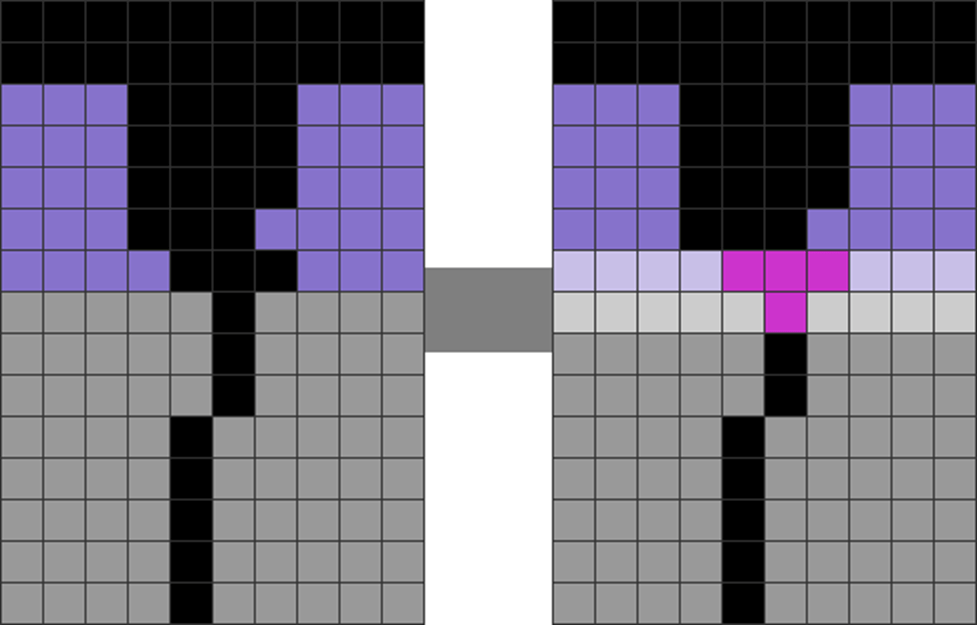
| The player makes a T-spin double. Next to it, he upstacks two towers on the left and right sides. | The player starts his T-spin double to start garbage countering. |
| 3 | 4 |

| The player uses colored blocks as fuel while skimming off with combos to the clean garbage beneath. | He digs to the bottom, free clean garbage to send a Tetris. |
What if garbage is dirty? I will cover that in the Puyo Puyo Tetris section below.
Many players resort to 4-wide, which is the meta, in Tetris 99. 4-wides are pretty safe in Tetris 99 because of garbage blocking – you can upstack a lot, then start a single line clear to invoke garbage blocking, if needed, for defense.
You have to stall when you 4-wide in the later phases of Tetris 99. The reason is that there’s a 12-garbage cap in Tetris 99. Therefore, you want to create as much damage as possible by bypassing this garbage cap by slowly sending garbage instead of all at once.
In Tetris 99’s Invictus and Team Battles mode, I recommend prioritizing heavy downstacking when gravity gets high. The logic is this: garbage is often extremely clean, worsened by badges amplifying clean garbage lines. Therefore, it’s better to downstack to the free garbage to counter-spike instead of making too many Tetrises. This is to minimize I-piece dependencies.
Puyo Puyo Tetris
In Puyo Puyo Tetris, I am one of those players who play more defensively and win with downstack combos.
So, unlike in Tetris 99, where your downstack combos primarily come from colored blocks, in Puyo Puyo Tetris, your downstack combos primarily come from garbage blocks.
Why? Because garbage in Puyo Puyo Tetris is semi-dirty. This leads to garbage patterns with a considerably spread-out configuration. From my experience, this gives an extremely high chance to make downstack combos from the garbage.
You do this by joining the field and minimizing coverage over garbage blocks while downstacking like this:
| Diagram Set 16-9 | |
| 1 | 2 |
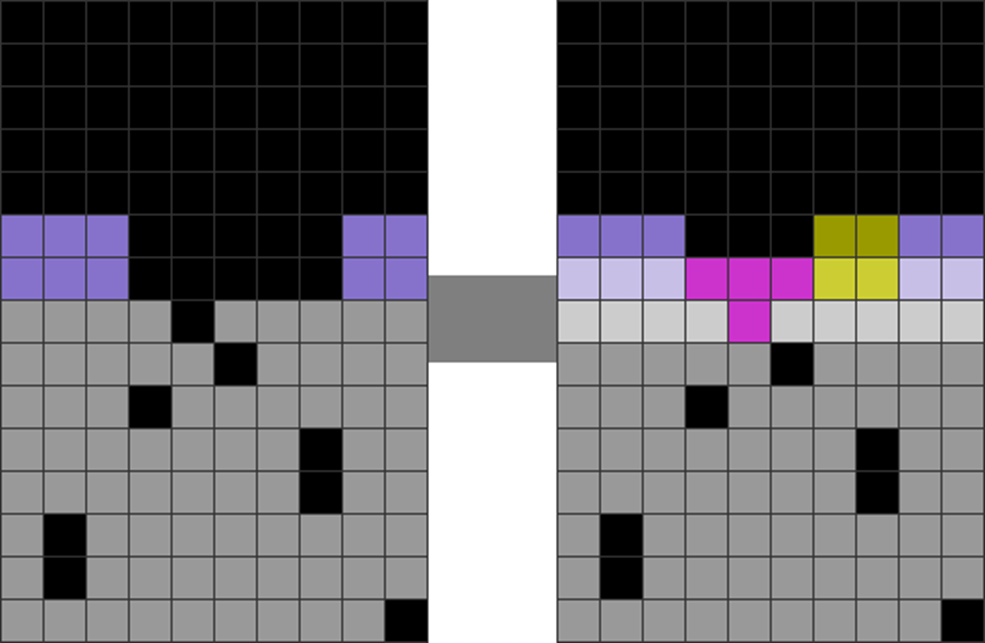
| In Puyo Puyo Tetris, you will likely get this overlapping, dirty garbage. | One can make downstack combos out of the garbage blocks. |
| 3 | 4 |
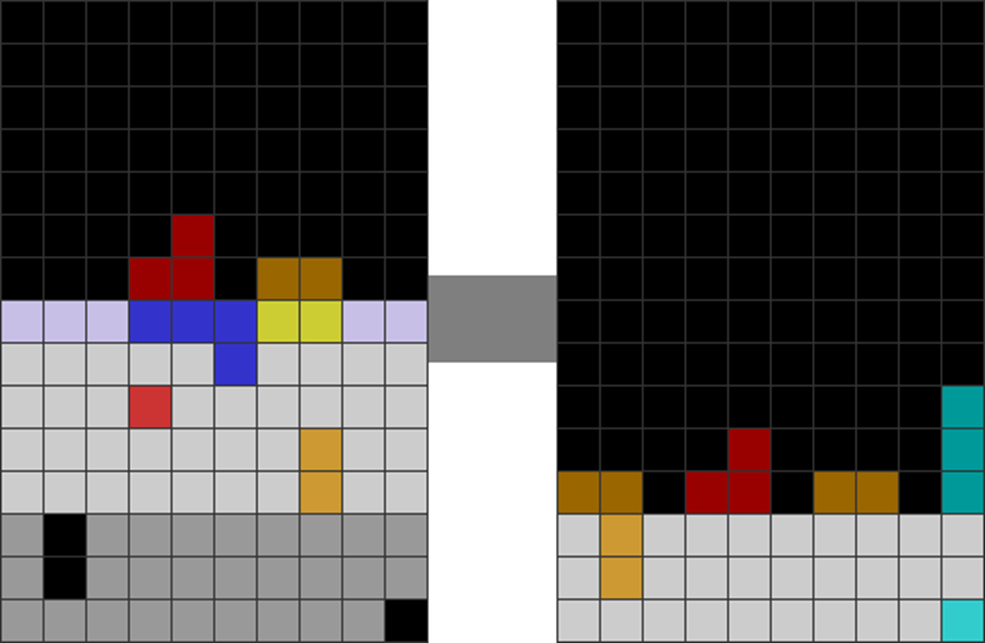
| Most downstack combo offensive power comes from the garbage blocks instead of the upstacked color blocks. | By now, the player digs down to the bottom, creating a respectable five combo. |
In Puyo Puyo Tetris, you will likely make downstack combos out of garbage blocks instead of upstacked, colored blocks because of dirty garbage in the game.
In Puyo Puyo Tetris, you also must skim with clean doubles and triples (often with S, Z, O, L, and J) pieces, especially when you are close to the top. This is less so in Tetris 99, but in Puyo Puyo Tetris, because of the garbage cancellation, you must quickly get down with doubles and triples as they protect you from incoming garbage. This is how:
| Diagram Set 16-10 | |
| A | B |

| It’s vital to make quick doubles and triples like these with the O and L pieces to get down quickly. They create garbage to cancel incoming attacks. |
When two players 4-wide each other at the start, they often stall, like you do in Tetris 99. You want to receive more garbage beneath the colored blocks so that you can continue the lethal downstack combos.
Also, mid-game 4-wides are best protected with Tetrises or T-spins, as there is no garbage blocking!
Tetris Effect: Connected
In the first phase of Tetris Effect, if you must downstack, the playstyle is almost identical to Tetris 99. Phases 2 and 3 are nearly the same as in Puyo Puyo Tetris. However, garbage combos are considerably nerfed in Tetris Effect, making them far less effective (but still very potent when zoned because of zero line clear delays). Therefore, the prioritization should include slightly more standard T-spins, back-to-backs, and Tetrises.
5) Defense and Timing
Tetris 99
In Tetris 99, there is garbage blocking. Suppose you are surviving close to the top. In that case, you can start a single line clear to get a combo and get down, delaying the garbage reception.
This is the same for everything else – if you need to survive, start a line clear, leading to combos to survive better.
In Tetris 99, baiting means building a high, weak-looking stack to lure attackers, then countering with Tetrises or T-spins to send multiplied garbage and earn badges/K.O.s. This is a viable strategy.
Counter-spiking is viable in the third phase against an opponent. However, because of the garbage reception delay, timings are less important in Tetris 99 – unless you are talking about stalling or baiting, which some good Tetris 99 players do. I wouldn’t say I like both methods.
Still, outstanding players sometimes stall to exploit the 12-line maximal garbage reception and the late-game margin times when a single line clear can send 12 garbage lines. They just play defensive in the third phase like this:
| Diagram Set 16-11 | |
| 1 | 2 |
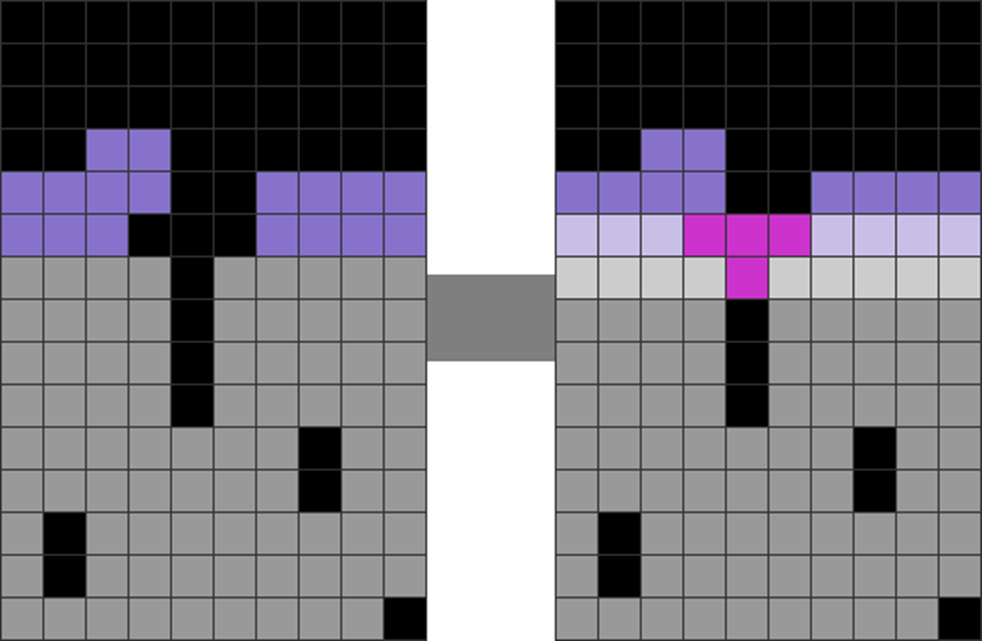
| The player stalls. | The player delays the T-spin double line clear as long as possible by constantly rotating the T in the cavity before it locks. |
| 3 | 4 |
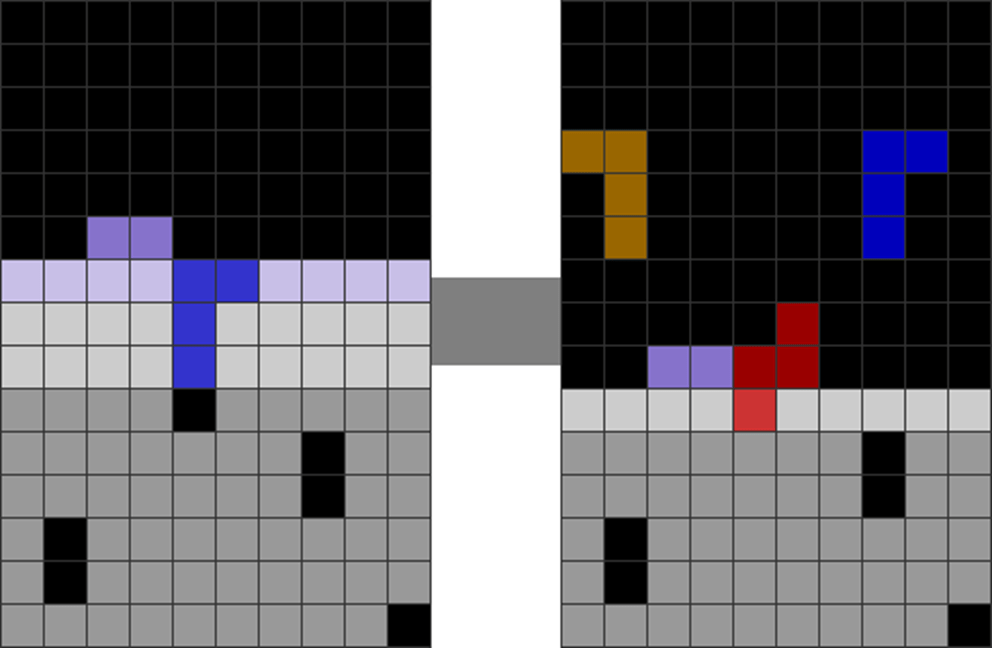
| Before putting the J for the triple line clear, the player wiggles the J or slides it left and right of the cavity to delay locking. | The player constantly stalls while getting clean downstacking combos. |
Doing so minimizes the amount of garbage received from opponents because of the maximum lines sent per attack in Tetris 99.
Regarding targeting, most serious players set to target attackers first and upstack. Once upstacked and ready for a sizable attack (like a 4-wide or Fractal to Tetris burst), they switch to target K.O.s and sometimes badges. The logic is that the former act will defend against incoming lines. At the same time, the latter sends your attack to the most vulnerable players to get badges or eliminate high-threat opponents.
Setting targeting to random is mainly to offset incoming 4-wide attackers or baiters. Switch to random if you feel you are being baited or attacked by 4-widers!
Puyo Puyo Tetris
In Puyo Puyo Tetris, survival is tight because of a lack of garbage blocking. You can’t start a single line for a combo sometimes, as it won’t have enough time to get high enough of a combo (like a 7 combo) to counter garbage and survive.
Therefore, many top players try to make T-spins or Tetrises at the top, then wait until they receive garbage before sending it off to cancel it out. This buys one time to get down.
Because you can see your opponent’s field, you can sometimes time to send garbage when they are close to death to end it faster.
When you can’t make a T-spin or Tetris, you must make quick and clean doubles and triples when you are close to the top. Time them to cancel out garbage while getting down fast before mounting another attack.
Tetris Effect: Connected
Because of Zone and garbage blocking, matches between two similar-skilled players can last very long. Some players use Zone to defend when they are in a pinch. However, note that this invokes an opportunity cost, as you can’t use Zone optimally for offense.
B) Winning Single-Player and Miscellaneous Multiplayer Tetris Modes
Modern Tetris has many classic single-player modes: 40-line sprints, Ultra, and Marathon. These classic modes exist throughout most official Tetris games. However, individual Tetris games may have unique modes like Puyo Puyo Tetris’ Endurance and Tetris Effect’s Journey Mode and Purify. Tetris 99 also offers Team Battles and Invictus modes.
1) Marathon
Marathon is a mostly test of perseverance, not technique. The goal is to maximize your score and last as long as possible. Your score increases the longer you play and the higher your gravity is. This score is boosted from line clear types. This is the primary mode of Tetris The Grandmaster 4.
While some players can get an initial boost by chaining T-spins and back-to-backs when gravity is low, this effect diminishes in the long run. You won’t have many chances to make T-spins when gravity gets high. Thus, my suggested gameplay tips are:
- Aim for Clean Stacking: The key to consistent stacking is to achieve cleanliness and flatness. You minimize stacking over holes or getting into dead-ends. It also makes skimming and downstacking easier and cleaner when gravity causes you to misdrop, thus increasing your survivability.
- Wiggling: When gravity is high, prevent the instant locking of pieces by repeatedly wiggling your pieces (pressing the movement and rotation keys) to buy time to think and stack.
- Downstack and Skim more: The goal is to last as long as possible. Therefore, I suggest not making too many T-spins or Tetrises when gravity is too high. Downstack and skim, staying low to survive easily.
- Use the Sliding Method: High gravity finesse is covered in Improving Speed and Finesse. You wish to make mound-like patterns in the middle to partly overcome gravity and slide your pieces around without instant locking.
2) Endurance
Puyo Puyo Tetris 1 and 2 offers an Endurance mode. This infinite mode involves taking down as many consecutive AI opponents as long as possible.
Your AI opponent may play as Puyo Puyo or Tetris. Thus, the goal is to maximize offensive pressure. However, gravity increases vastly past a few dozen opponents, forcing you to prioritize defense and downstacking. Here are some tips:
- Prioritize heavy T-spinning, Tetris, back-to-back, and downstack combo pressure!
- You may resort to spamming side 4-wide as far as you can.
- Take down Puyo opponents quickly by striking them before they can launch a massive 5 or 6-chain attack.
- When gravity maximizes, be prepared to skim and downstack, and play like a typical game of Tetris 99.
3) Purify Mode
In Tetris Effect: Connected’s Purify Mode, the goal is to clear gray garbage and purple “infected” blocks within 3 minutes. Players earn points by clearing infected blocks; new ones periodically spawn at the bottom. An endless mode allows continuous play.
Here are some core tips, already covered in the Downstacking chapter.
- Stack flat and resolve jaggedness to maximize downstack combo chances and smoothness.
- Don’t block the incoming garbage holes as far as possible.
- Fill cavities as far as you can before commencing downstacking.
- Plan ahead and minimize piece dependencies!
4) Journey Mode
Journey Mode is a mode in Tetris Effect: Connected.
This mode, like Ultra, involves maximizing one’s score over many maps. It’s an ultra-long game of Ultra that incorporates the Zone mechanic. Back-to-backs provide bonus scores. Thus, it is vital to maximize T-spins and back-to-backs. Likewise, it’s essential to upstack a bit before activating Zone to maximize one’s score.
Here are some tips:
- Go Slow: Journey Mode doesn’t penalize you for being slow (except for higher difficulties, where higher gravity forces you to make swifter placements). Therefore, going slower to minimize misdrops and plan more efficient placements goes a long way in maximizing one’s score.
- Charge Zone with Back-to-backs: Back-to-back attacks charge Zone much faster. Therefore, back-to-backs should be sustained with more Tetrises and T-spins.
- Upstack a bit before Zoning: Upstack a bit to make your activated Zones more effective by maximizing damage throughout the Zone. This is vital, as not doing so will cause you to waste time by upstacking during Zone, which ultimately reduces your long-term score from Zone. Maximize combos for more score bonuses during Zone.
- Wiggle: When gravity is higher, wiggle your pieces to prevent an instant lock.
- Maximize Zoning Power before Map Transitions: If you have one more line to clear to get to the following map, activating Zone can buy you extra time to stack way beyond the one more line clear to get an even higher zone! Doing this before each map ends gives you a higher score in the long run.
5) Invictus Mode
Invictus is an unlocked mode when one wins a single round of regular Tetris 99 matches (that is, get top 1).
It is the same as Tetris 99 regulars, except that gravity is substantially higher, and you will fight against much more skilled opponents. When gravity is maxed out when ten players are left, it is nearly instant – pieces fall to the field’s bottom instantly and almost instantly lock!
Thus, here are several tips:
- Make high offensive pressure with T-spins, back-to-backs, Tetrises, or 4-wide in the beginning phases of the game when gravity is low. When you upstack, set targeting to attackers or random players. When you attack, set it to target K.Os. You can switch to target badges later in the game when other players have badges for you to steal.
- Wiggle! Press the movement and rotate keys constantly to prevent your pieces from instant locking, buying you time to think and stack.
- Downstack and skim! When gravity is maxed out, it’s better to apply the strategy of Improving Speed and Finesse. You wish to make mound-like patterns in the middle to partly overcome gravity and slide your pieces around without instant locking. Also, prioritize downstacking and skimming. Minimize risky T-spin setups.
6) Team Battles Mode
Team Battles is a mode in Tetris 99 where 99 players are split into four colored groups to battle each other.
It’s the same as Tetris 99 regulars, except that you will fight against more seasoned players. Here are some tips:
- Make Safer Setups: Because garbage output from opponents is far greater, you wish to play more safely and defensively. You can get spiked easily and ruin complex T-spin setups.
- 4-wide: The meta-strategy in Team Battles is to spam side 4-wide.
- Stall: Good Team Battles players stall by continuously wiggling their pieces to consecutively downstack (preferably with combos) to exploit the fact that you will only receive a maximal number of garbage lines per attack. Many players combine this with 4-wide – upstacking and stalling to ensure not all of their attacks are eaten up by opponents who stall. In late Team Battles combat, the game regresses to mostly stalling between players.
Summary and Conclusion
Every official Tetris game has unique strategies for winning. There isn’t a universal method that applies consistently to all games. Therefore, per Bruce Lee’s words, be like water.
Instead of forcing a single strategy rigidly across all games, the player should adapt and, most importantly, practice hard!
| Concept | Summarized Rules-of-Thumb |
| Flow | Every official Tetris game has unique playstyles – adapt until they are optimal for you! |
| Form | Classic Tetris needs the most careful stacking because of the lack of hold, extreme randomness, and only one preview. Puyo Puyo Tetris 1 and 2, and Tetris Effect: Connected’s third phase needs the most careful stacking because of their severe consequences. Tetris 99’s first two phases have the lowest risk. |
| Balance | In Puyo Puyo Tetris 1 and 2, you must play aggressively and upstack more for more T-spins and Tetrises. In Tetris Effect’s and Tetris 99’s first phase, you can play more defensively by downstacking to free Tetrises. In Tetris the Grandmaster 4’s marathon mode, aim for flatness, balanced stacking, and balanced parity to survive better. |
 How to Tetris