In my years of playing Tetris, I have found a technique that is the most consistent, cleanest, easiest, fastest, and safest to create T-spins. This is the method that Kazu and many other high-level Tetris players use.
This method secures you for about 75% of your T-spins. This technique can be mastered in just a week. It’s so deceptively simple, safe, streamlined, and practical.
This method simply involves the following:
- Stacking along a line to make mostly back-to-back T-spin doubles and Tetrises.
- Making periodic skims to balance both sides of the field.
- Inserting periodic and simple donations in between.
- Occasionally inserting a C-spin in between.
- Minimal T-spin singles and minis.
- Inserting occasional STSDs.
Here’s the visual summary:
| Diagram Set 14-1 | |
| A | B |
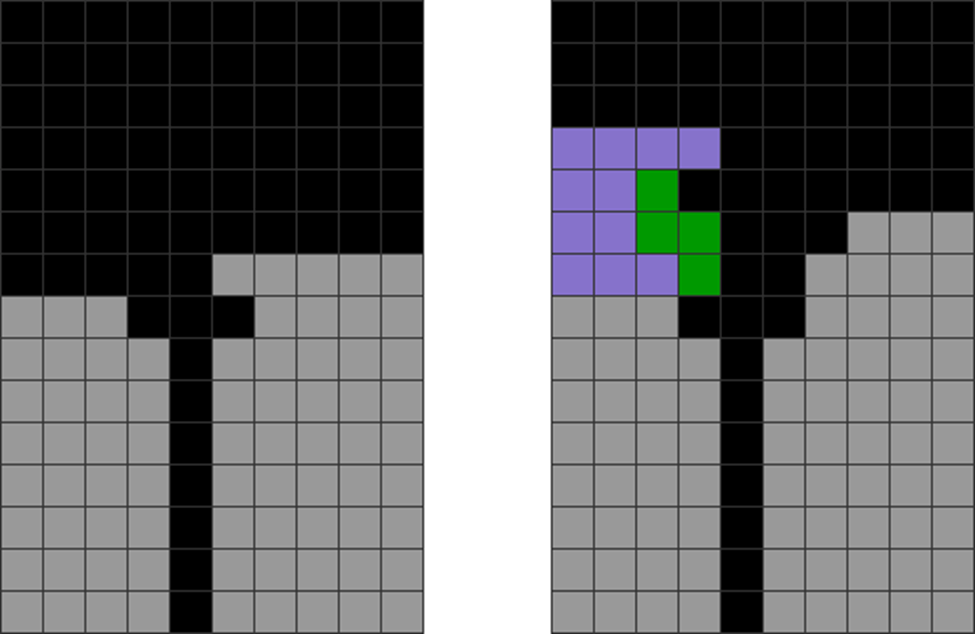
| Normal stacking along a line for T-spin doubles and Tetrises. | Balance both sides of the stack. |
| C | D |
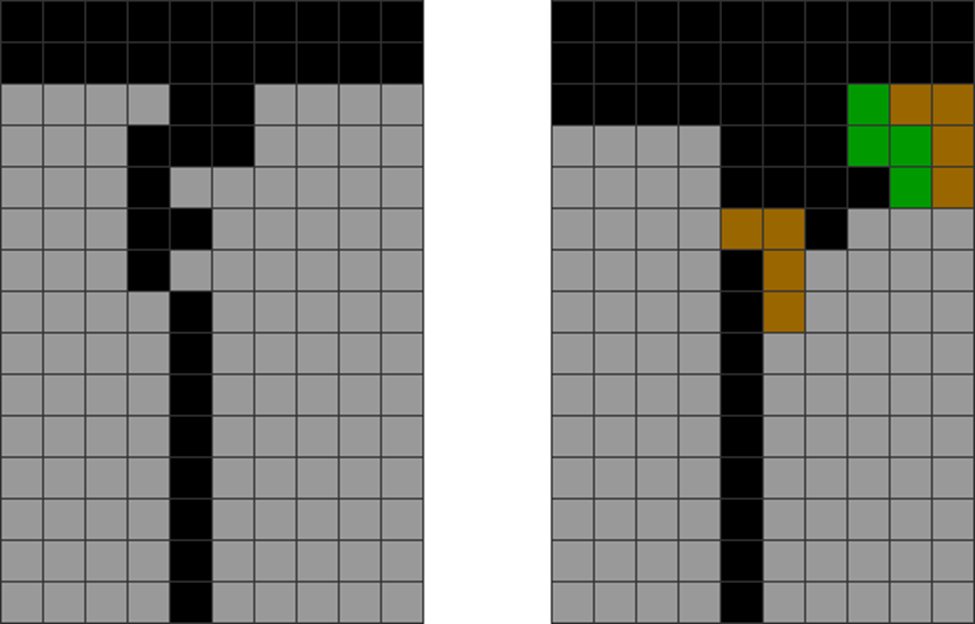
| Occasionally insert C-spins. | Use occasional simple donations. |
| E | F |
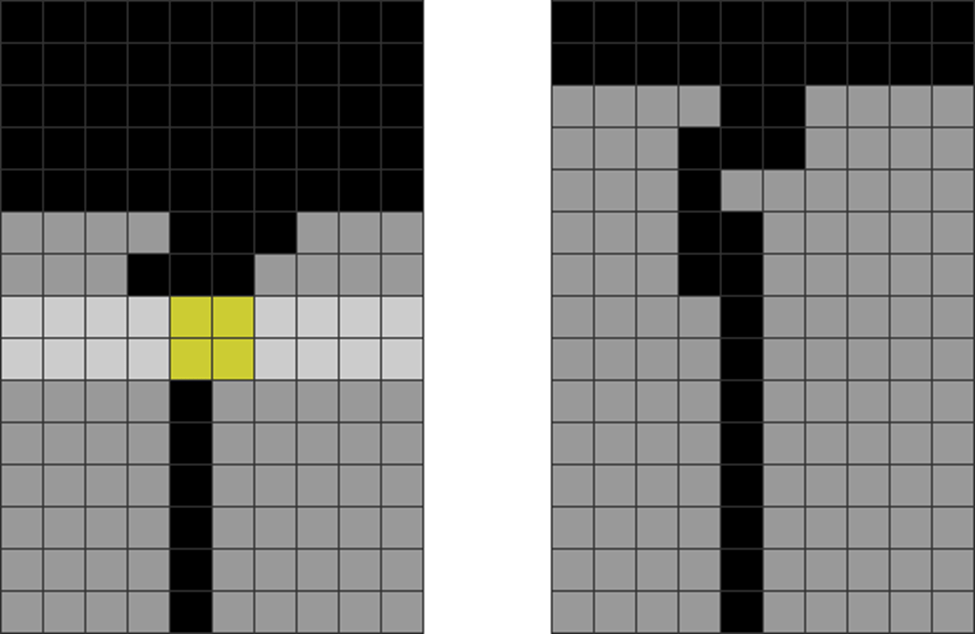
| Use occasional skims. | Insert occasional STSDs. |
How to Use the Technique
There are only several factors to consider when using this technique successfully. Many beginner and intermediate players do not understand the core principles of getting this method to be successful. Here’s a list of what is often not told in other Tetris guides:
1) Jaggedness Management
| Diagram Set 14-2 | |
| 1 | |
| Diagram Set 14-3 | |
| Alt. A | Alt. B |
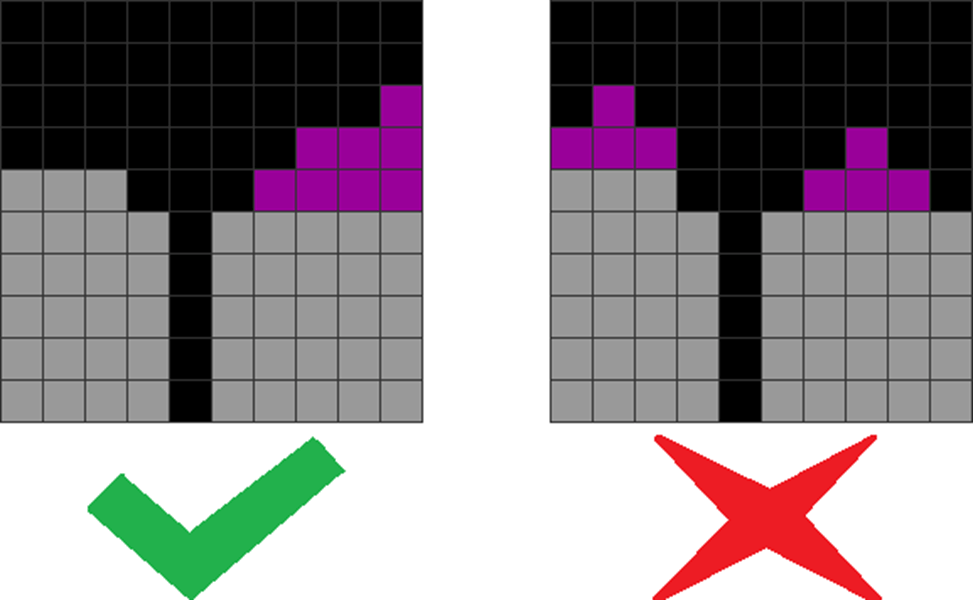
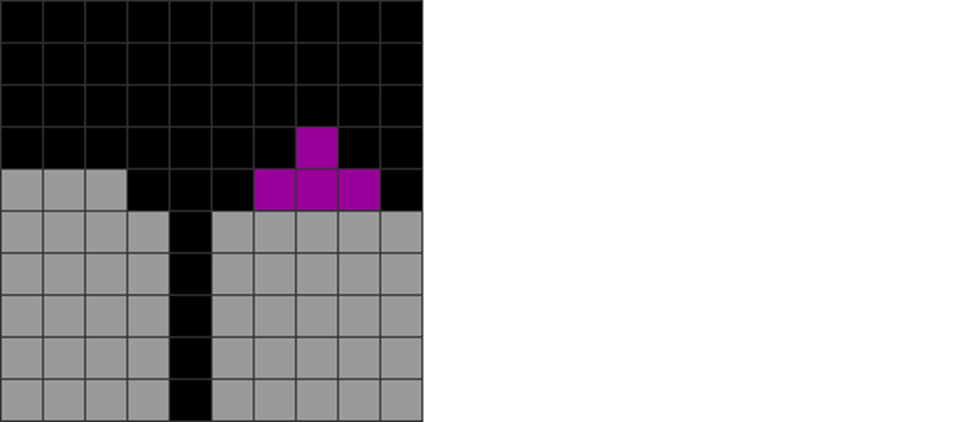
| Even out jaggedness on the side with imbalanced jaggedness. | Don’t add more jaggedness on both sides. |
As seen above, field division happens when the field becomes jagged.
If one’s field is jagged, as seen in step 1, you would want to place another T to even out its protrusion. This makes it flatter.
The mistake that most beginners and intermediate players make is to make Alt. B’s choice. This creates a jagged area on the left and right sides when the second T should be used to urgently fix the jagged issue on the right stack.
By ensuring a flatter field, you can stack more reliably and boost the success rate of this method.
2) Balancing Both Sides of the Stack
| Diagram Set 14-4 | |
| A | B |
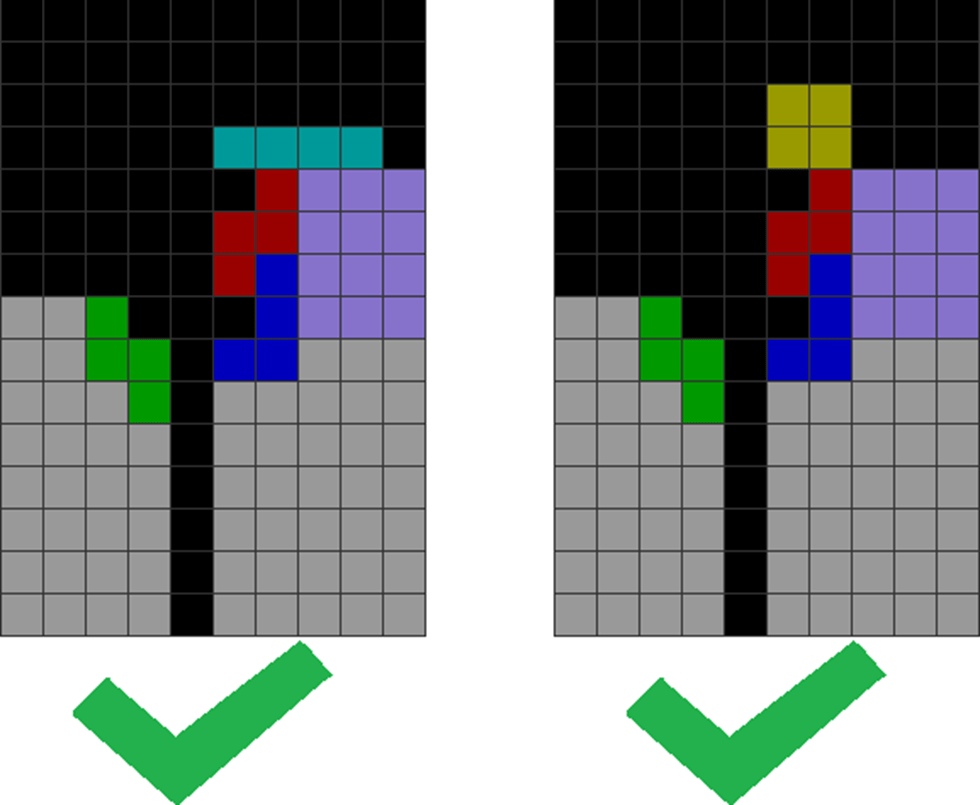
| Normal stacking along a line for T-spin doubles and Tetrises. | Balance both sides of the stack. |
| C | D |
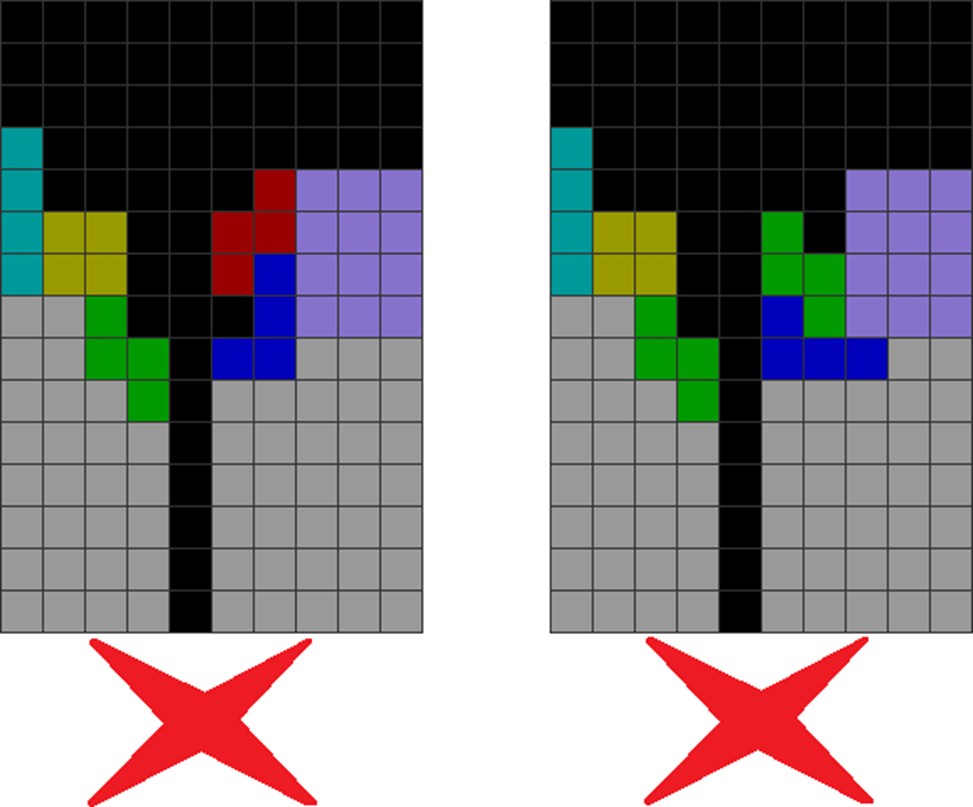
| Both break T-spin double continuation. |
As seen above, you would want to prioritize mid-game simple T-spin doubles by balancing both sides of the stack.
In my more advanced Tetris books, A and B lead to LST and ST stacking, respectively. They are predictable and reliable ways to spam T-spin doubles. These will be covered in my next book.
This often means that A and B with the green ticks stack in a way where the overhang enables more quick T-spin doubles by making a flat base. Typically, this roughly means making overhang heights of 1 or 2 in the above manner.
The mistake is to imbalance the two sides in the red-crossed C and D until you can’t make quick T-spin doubles. Typically, this is easily alleviated by stacking the pieces away, to the left and right side of the middle, away from the central T-spin cavity so that you can make the T-spin base and overhangs like this:
| Diagram Set 14-5 | |
| A | |
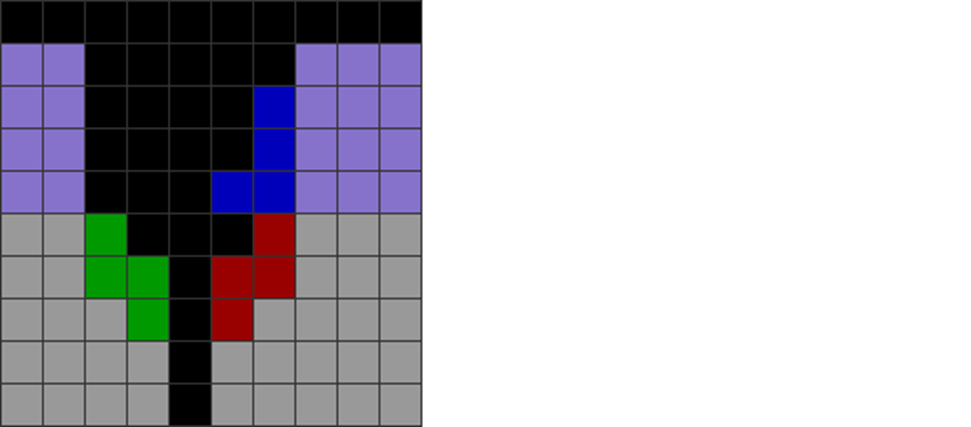
| Stack away from the central T-spin cavity. |
Stack the lavender parts away from the central cavity. This increases T-spin double chance and success rate.
| Diagram Set 14-6 | |
| A | B |
| C | D |
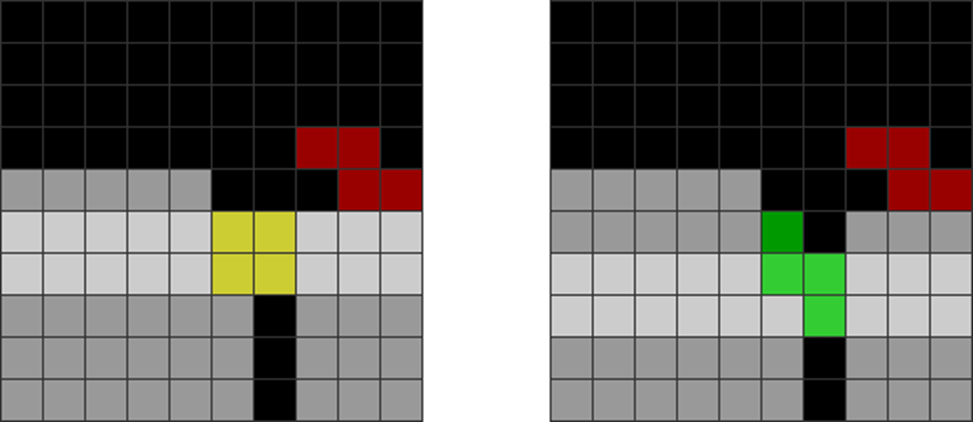
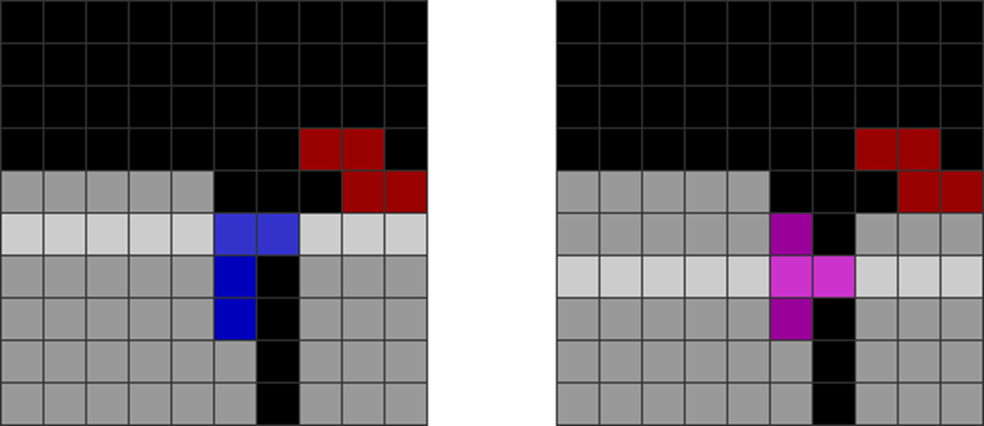
As seen above, you can sometimes skim to balance both sides of the stack to ensure that you can make the T-spin double. This breaks back-to-back bonuses, but it opens up more and safer options to squeeze out T-spins in a pinch.
Be careful when inserting too many freestyle spliced T-spins, like DT Cannons or STSDs, into this stacking method. They block the garbage hole, can occasionally be dangerous, and have less predictable follow-ups.
3) Forecasting Overhangs
These below lead to ST and LST stacking. I will explain this in my other Tetris books.
| Diagram Set 14-7 | |
| A | B |
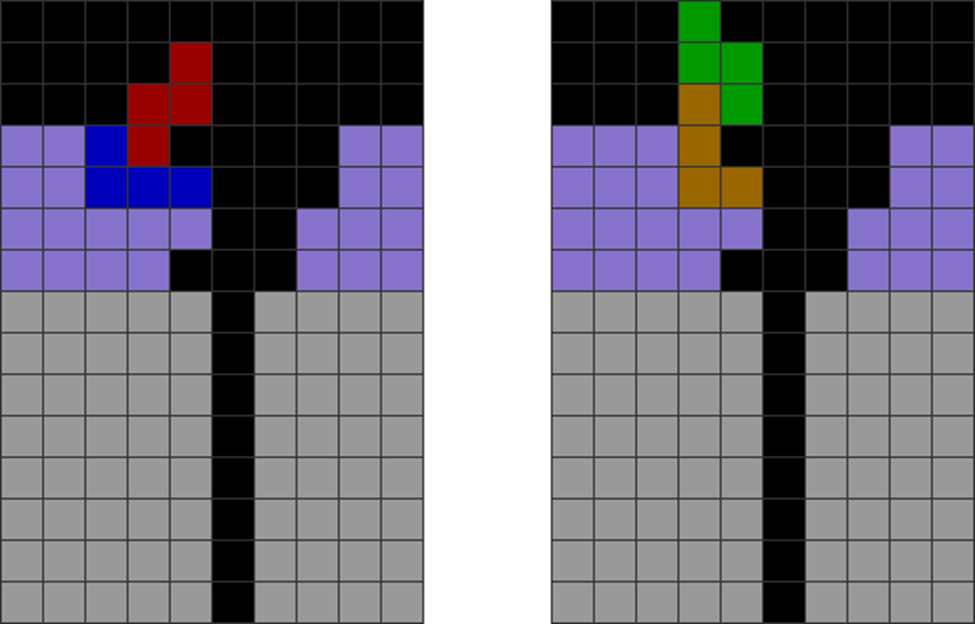
| Both lead to quick T-spin doubles along a line. |
| C |
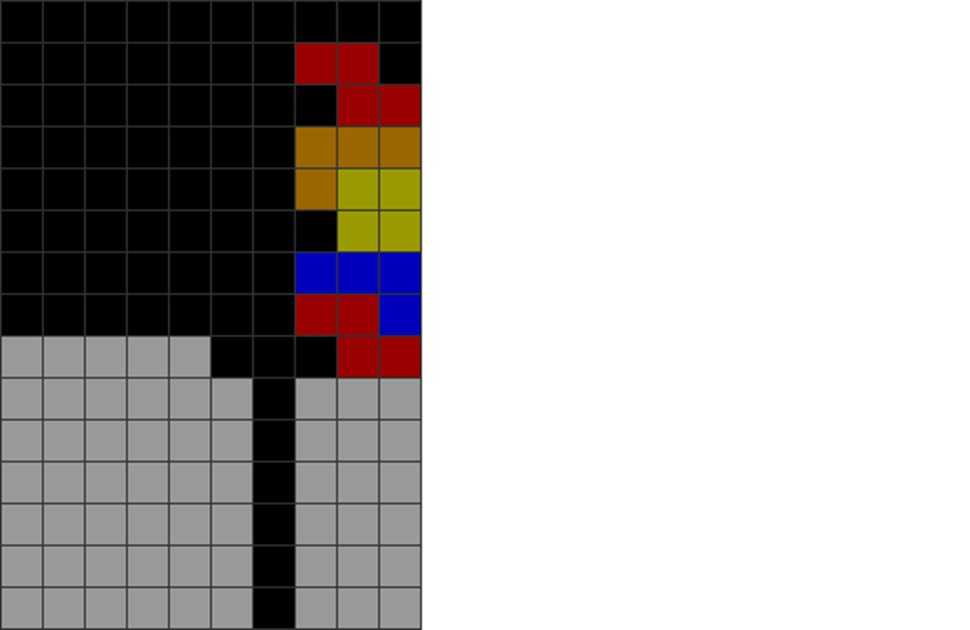
| This leads to quick T-spin doubles along a line. |
As seen above, the next thing is to forecast the T-spin overhangs pre-emptively to increase your T-spin success rate.
The above three examples show how you can build the overhangs first for mid-game quick T-spin doubles stacking. The third example, C, shows how chaining T-spin doubles is commonly employed when the garbage hole is in column 7.
4) Inserting Simple T-spin Donations and Props In Between
Now, here comes the tricky part: T-spin donations and props.
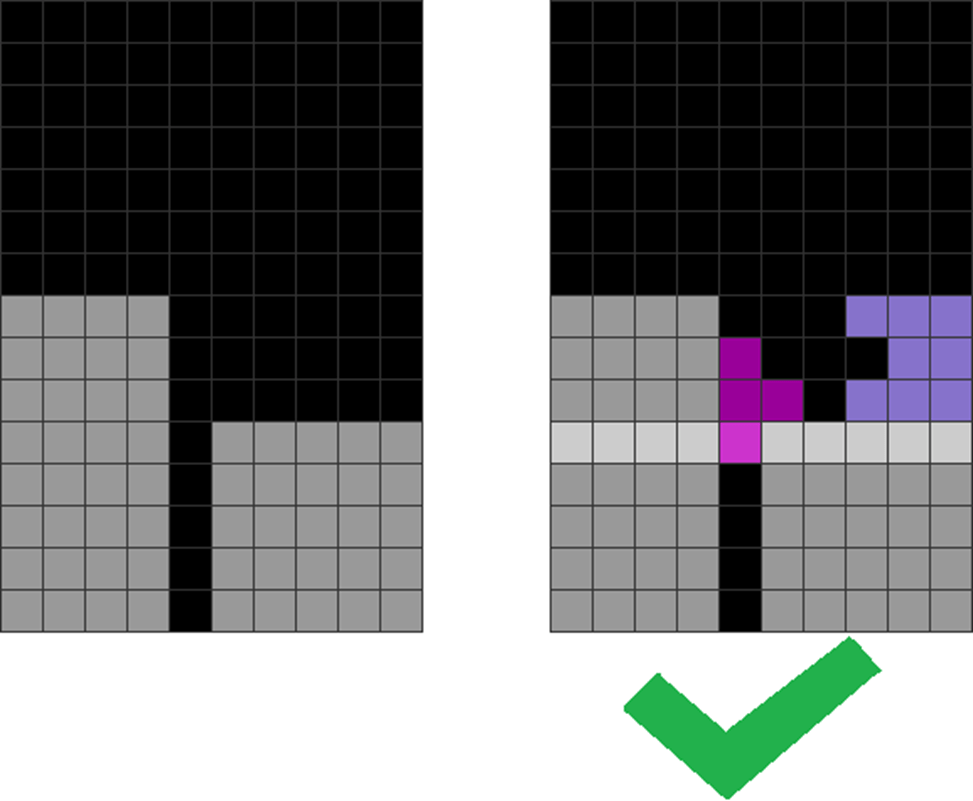
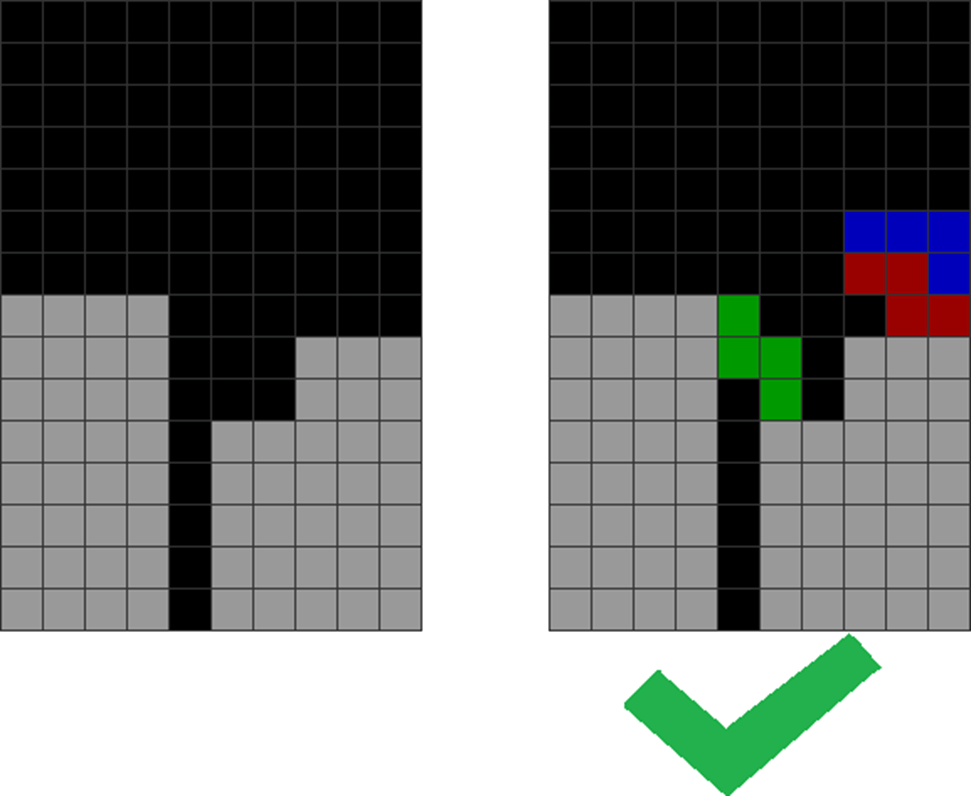
T-spin donations should be as direct as possible. They should also be clean and not mess up the follow-ups after they are used:
| Diagram Set 14-8 | |
| A | Alt. A |
| Alt. B | Alt. C |
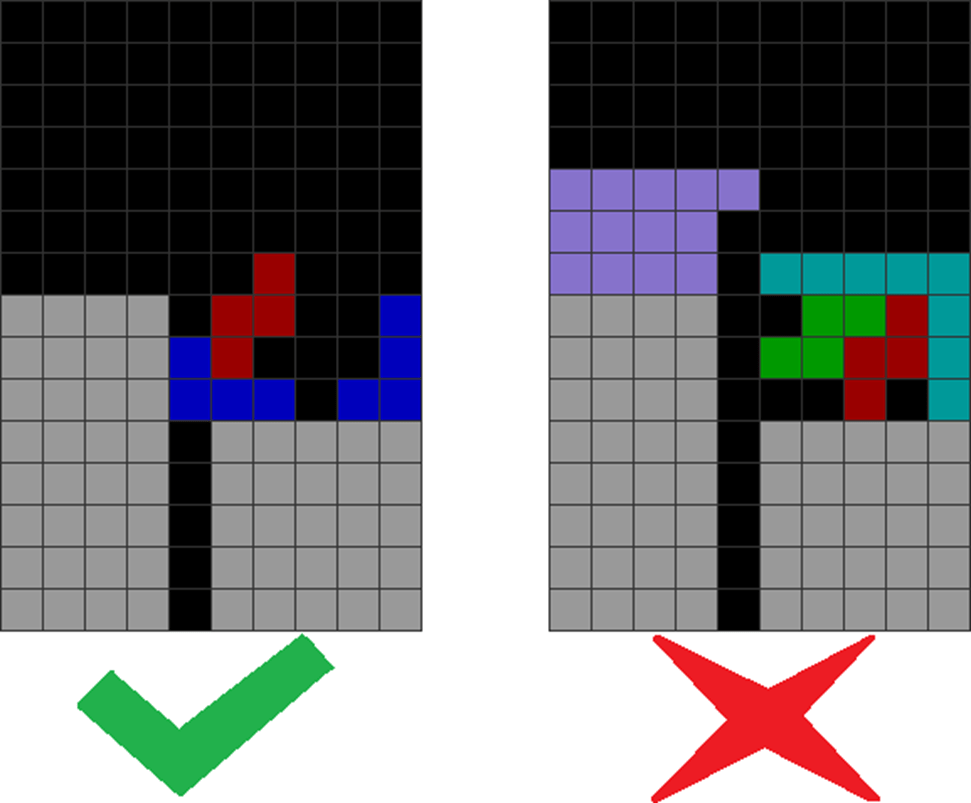
| Alt. C is dirty and chaotic to follow up cleanly. It breaks the stack balance between the two sides for more quick T-spin doubles. |
| Diagram Set 14-9 | |
| A | Alt. A |
| Alt. B |
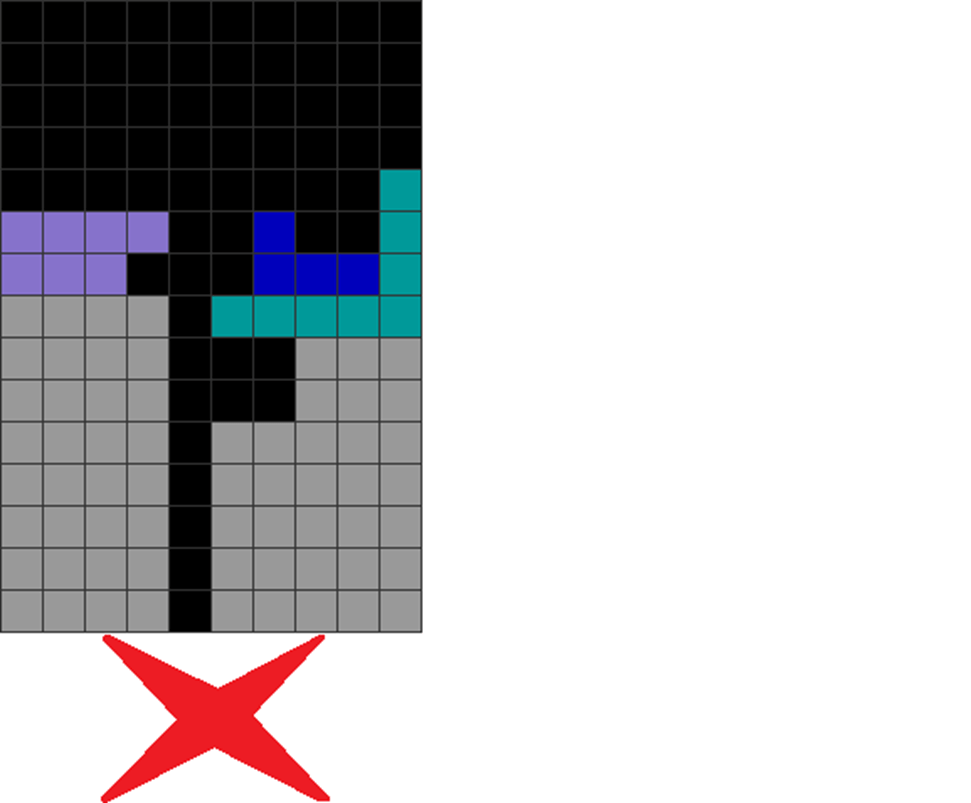
| Alt. B is dirty to follow up cleanly. It breaks the stack balance between the two sides for more easy T-spin doubles. |
As seen above, the green-ticked Alt. A is a simple donation and prop you can use between stacking along a line for T-spin doubles and Tetrises. Adding more T-spin donations can sizably increase your efficiency and firepower. These examples are clean and do not imbalance both sides of the stack or make the field jagged after they are cleared.
However, the red-crossed Alt. B should be avoided if no other option exists. These are complex T-spin props or suspensions as examples. Their aftermath destroys T-spinning continuations and is sometimes unclean.
Generally, the more complex a donation, the more one should minimize it. Complex donations have difficult follow-ups that are chaotic and unreliably difficult to predict and follow up. By minimizing them, you can increase T-spin efficiency and success rate.
More importantly, extremely difficult donations have high piece dependencies, and too many donations block the garbage hole, making it dangerous. A single misdrop can compromise some of these donations as they have very dangerous shapes.
5) Choosing Stable Patterns
Now, for the most challenging part for beginners and intermediate players. This is the most crucial of the five factors:
| Diagram Set 14-10 | |
| A | B |
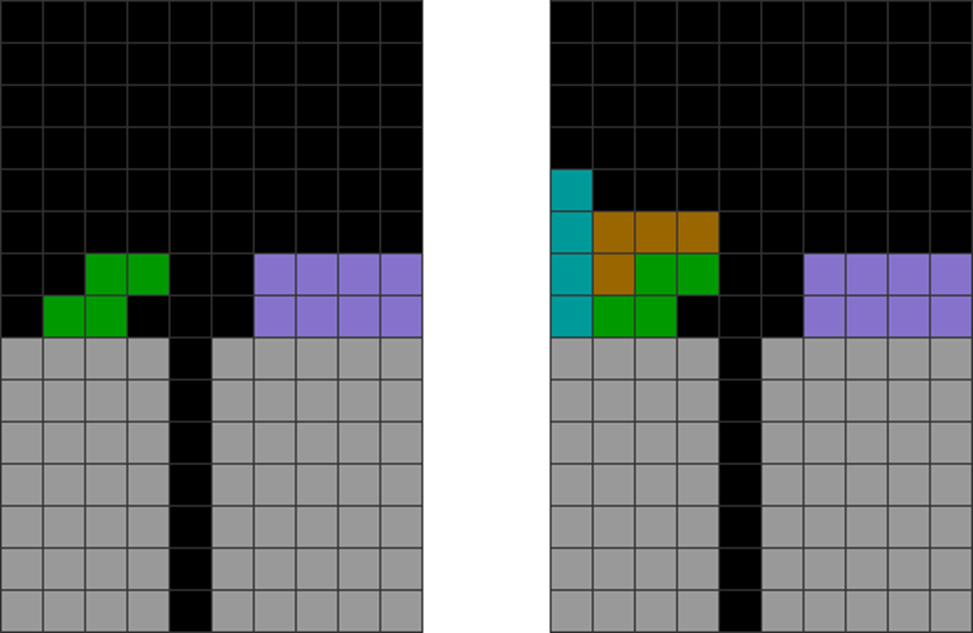
| Minimize making overhangs with isolated pieces that lead to jagged patterns. | Better. |
| C | D |
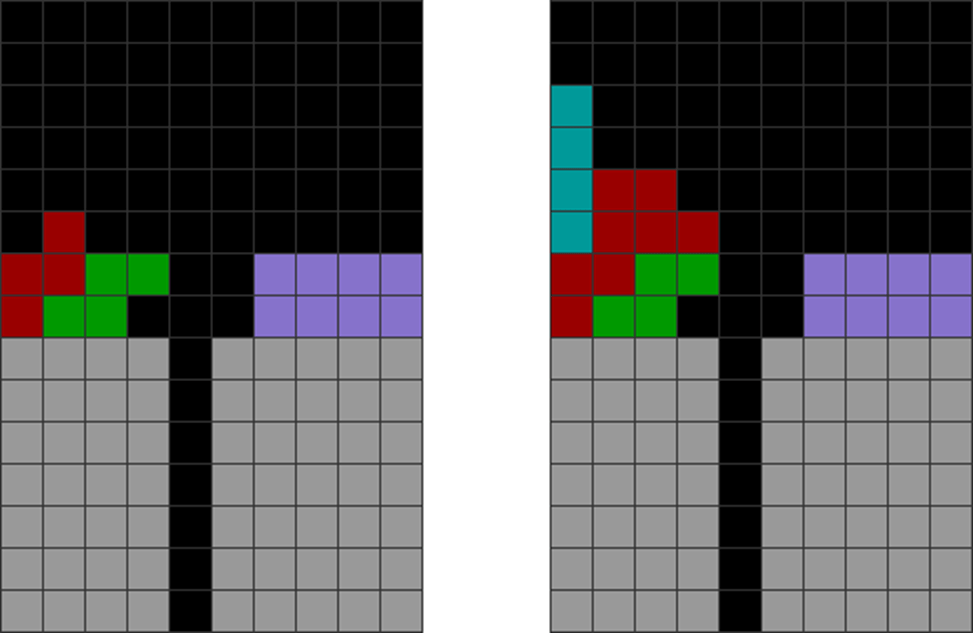
| Less stable with fewer stacking follow-ups as it’s jagged. | Good if you can get this. |
| E |
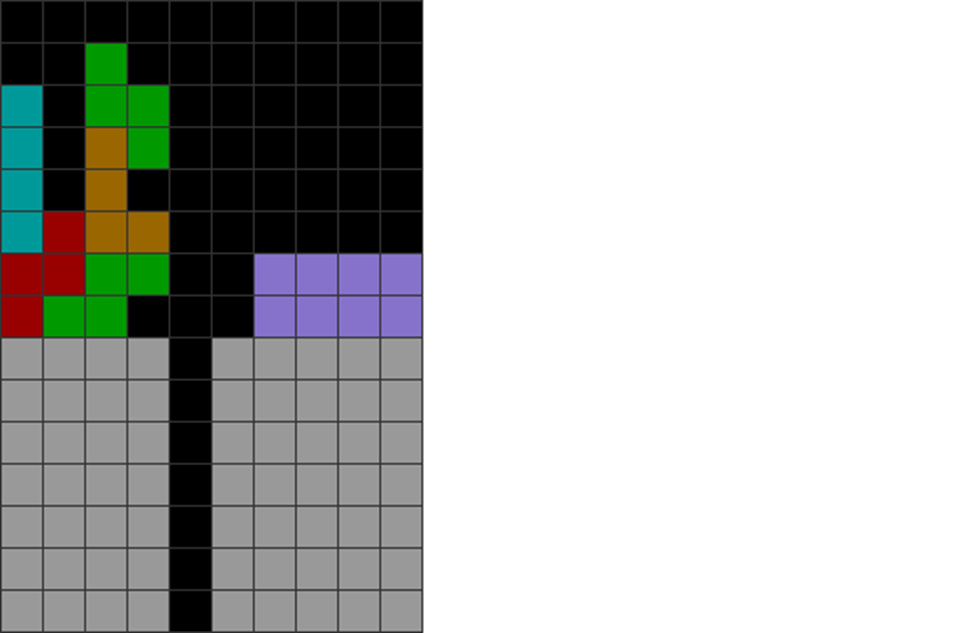
| Extreme tall and jagged stacking leads to less decent follow-ups. |
As seen above, one should choose overhangs combined with other pieces for maximal stability.
The isolated S overhang in A is unstable, as it has a jagged part on the left.
However, you can combine them with other pieces, like L in B, to make it flatter and smoother. Other combinations exist in C to E. However, E is ill-advised as it is overly jagged, overstacked, tall, and divides the field.
Therefore, choose overhang combinations that minimize dividing the field and are flatter, safer, and shorter.
Here are some T-spin overhang and base patterns to minimize as they are sub-par (but can be used if there is no other choice):
| Diagram Set 14-11 | |
| A | B |
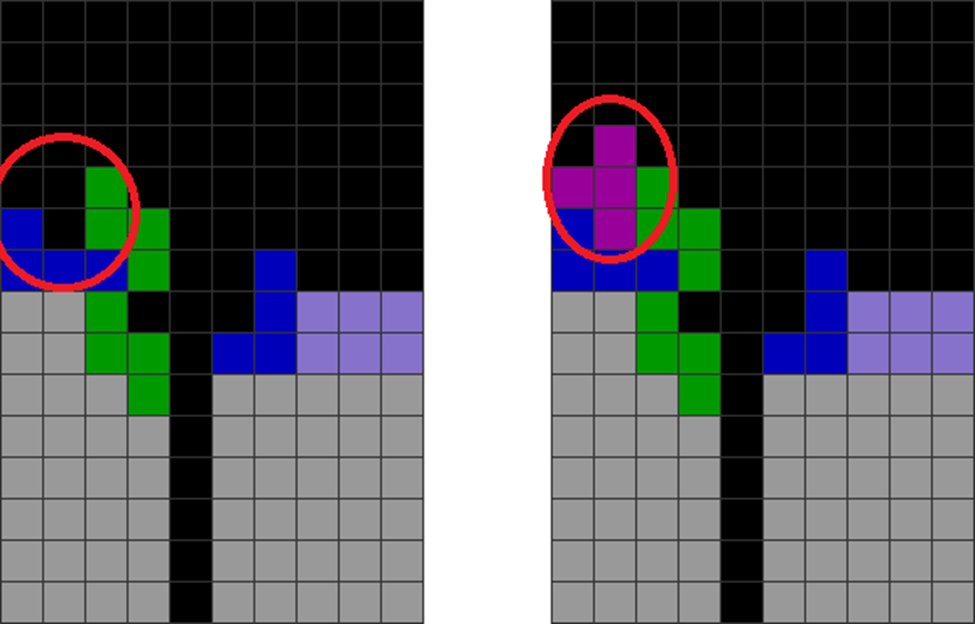
| Without another S in the red circle, this pattern is unstable. | Jagged and unstable area. |
| C | D |
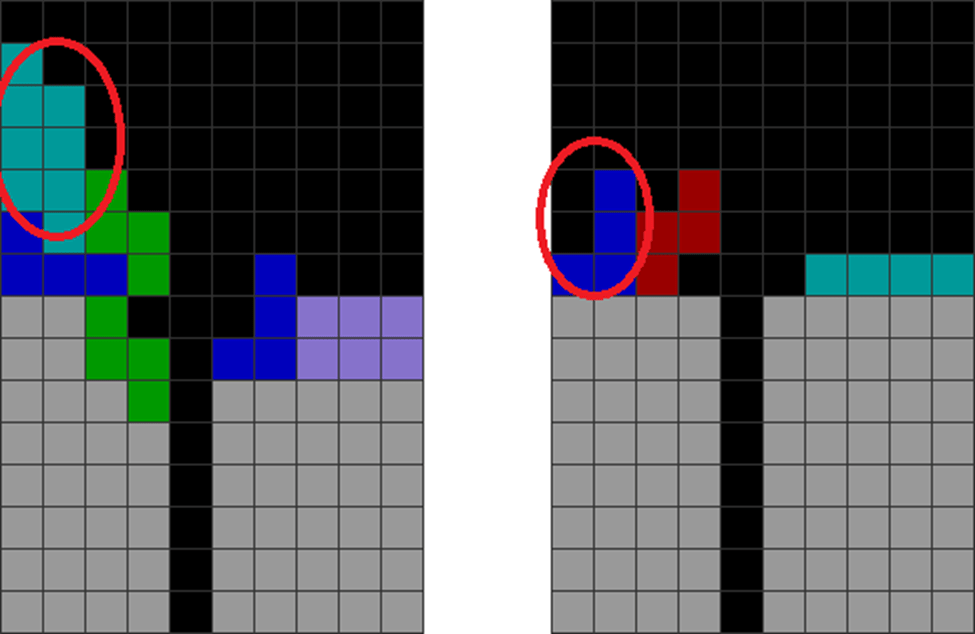
| Too many vertical Is lead to overstacking. | Jagged. |
| E | F |
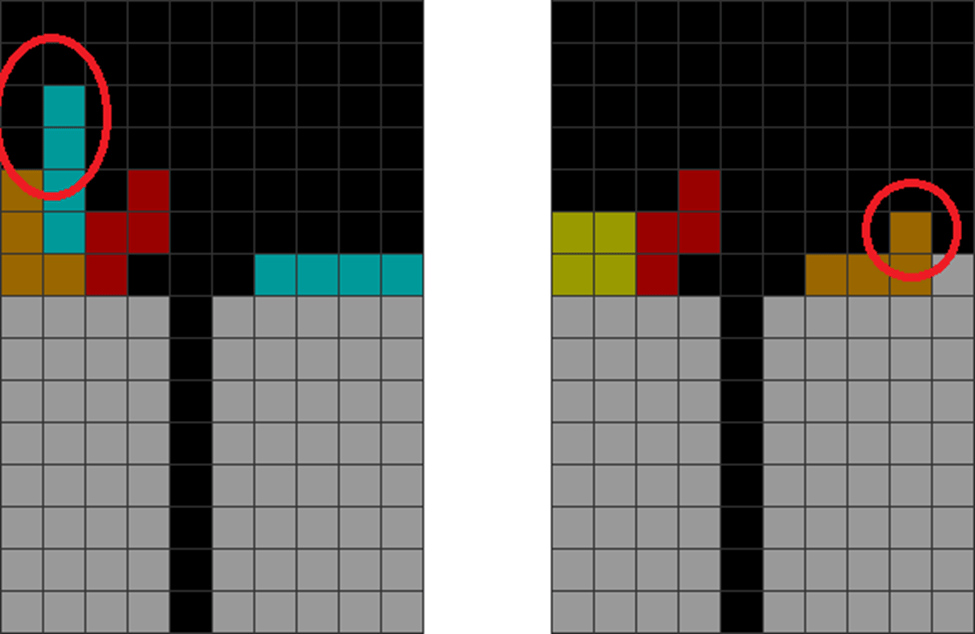
| Unstable, jagged, and too tall. | Jagged. |
The above patterns are self-explanatory. You would want to minimize placements that are jagged, unstable, too tall, use too many vertical Is, or lead to poor stacking follow-ups.
Here are more examples:
| Diagram Set 14-12 | |
| A | B |
| C |
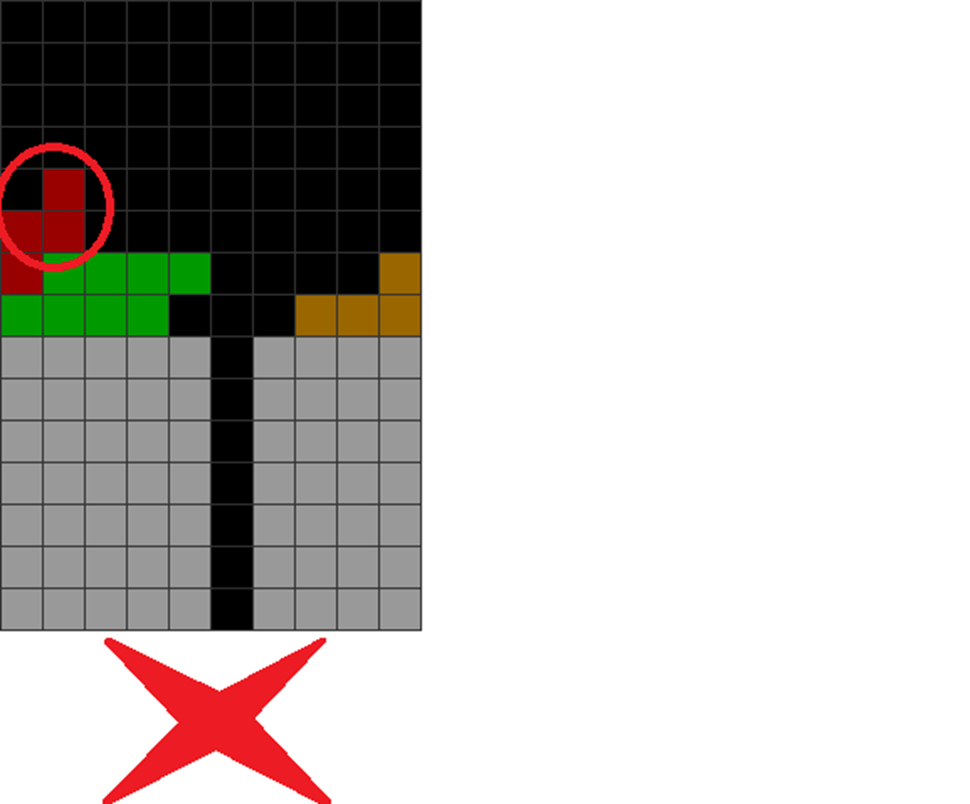
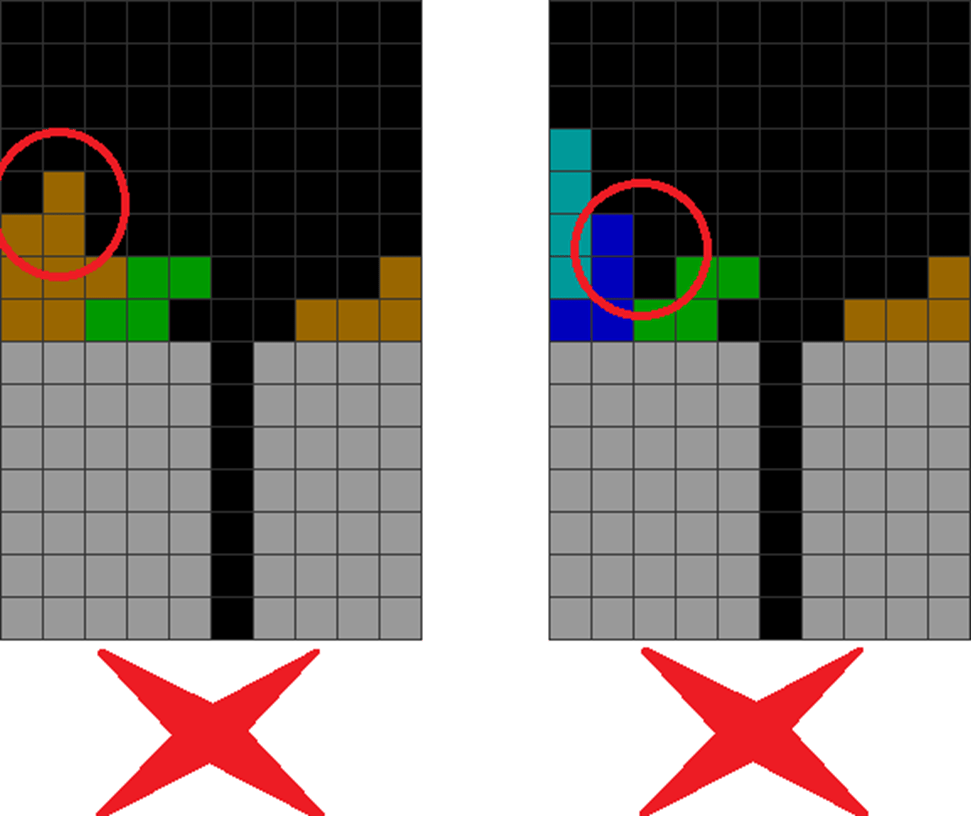
The above are horribly divided and unstable. From my experience, there are few ways to follow up the red-circled parts properly.
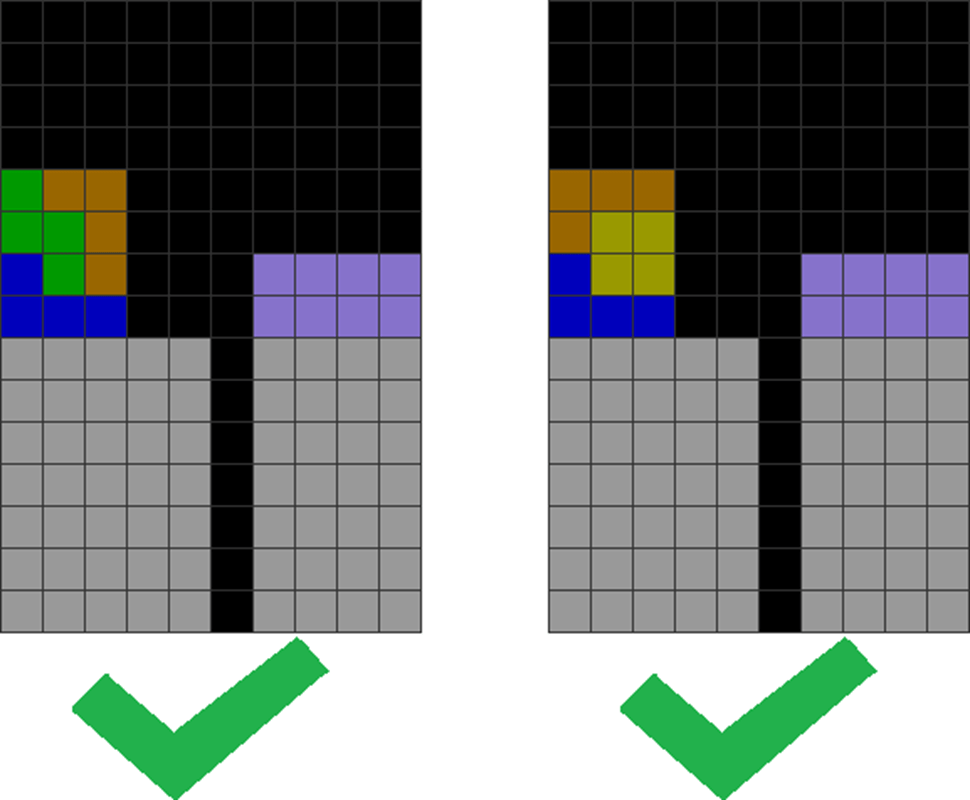
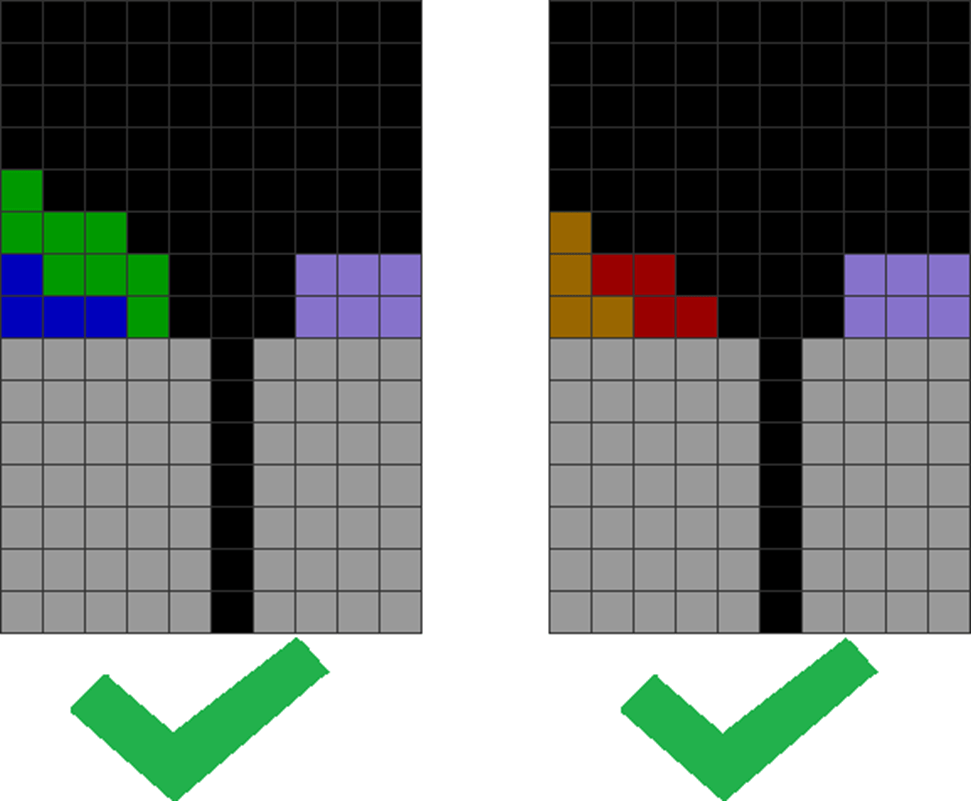
So, how can one stack better? You can do these:
| Diagram Set 14-13 | |
| A | B |
| C | D |
| E | F |
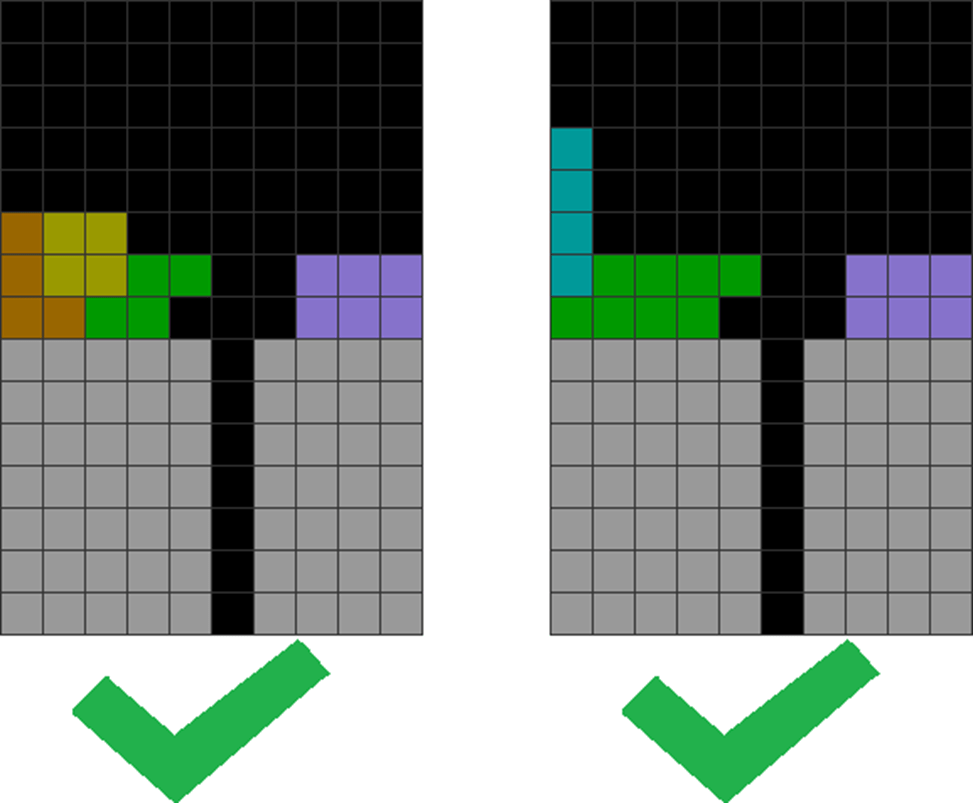
The above shows several keys to improving stacking:
- You combine several pieces, like LJS or LOJ, to make rectangular patterns. Doing this mid-game improves their flatness easily.
- You push pieces to the left and right and fill cavities on the extreme left and right corners (to avoid I dependencies). Create a slight taper into the middle. This improves stacking ease.
- Manage jaggedness well.
- Stack in a way where you can almost always accommodate O pieces, as they are the most inflexible.
- Most importantly, join your stacks; jagged and undivided stacks are the most important reason that destroys T-spin continuations and slows down one’s speed.
If you can apply the five above practices, your T-spin chances using this method increase vastly.
The Perks of This Method
Here are the perks of this simple method:
1) One can be faster and use less brainpower
Because this method is so easy to make and takes far less planning than freestyling T-spins, you can be very fast once you master it, making it viable for competitive games.
2) One can defend with T-spins and Tetrises
Since the garbage hole is mostly exposed between donations (which should take up only around 20% of your T-spins), you can T-spin and Tetris simultaneously, giving you two ways to counter garbage.
Thus, this is splendid for defenses and spiking by combining T-spins and Tetrises simultaneously.
3) Easier to downstack and recover
Because you will use simple donations more often, misdrops are more forgiving. More complex donations have strange shapes that can be fatal if you misdrop a piece over them. This is because they are harder to clean up.
Also, by leaving a central cavity in the middle, you can power stack by creating an emergency well to combo through it and defend (such as a 2, 3, or 4-wide).
4) More consistent stacking and follow-ups
T-spin singles and minis add more leftover residues after the line clear. This adds more chaos and unpredictability to the stack.
However, Tetrises and T-spin doubles do not do this (mostly). Therefore, they ensure your field is stable and more predictable, letting you maximize stacking consistency. This makes you less likely to stack over holes, which improves cleanliness.
Summary and Conclusion
About 20% of your T-spins using this method should be simple donations. The rest should be straightforward T-spin doubles and Tetrises.
By learning this method, you are set for about 75% of all T-spins and Tetrises. The other 25% involves freestyling, which can be picked up over time.
To summarize, be simple when playing seriously.
| Summarized Rules-of-Thumb | |
| Flow | Prioritize simple, quick, and clean T-spin doubles and Tetrises. |
| Form | Use skims occasionally to shape the field to make more T-spins. Prioritize balancing both sides of the stack to make quick T-spin doubles. Forecast T-spin overhangs pre-emptively. Choose stable, flatter patterns. |
| Balance | Minimize complex T-spin donations and props. Manage jaggedness. |
 How to Tetris