Tetrises are very important in guideline Tetris games such as Tetris 99,Tetris Effect: Connected, and Puyo Puyo Tetris. This is because:
Unlike T-spins, they do not require a soft drop to make a line clear.
They also need only one line clear delay per four lines instead of two for two T-spin doubles.
They are cleaner versus T-spins,even T-spin doubles, as they don’t leave any overhangs.
Good Tetris gameplay has a proper balance between T-spins, combos, and Tetrises.
Likewise, you can attack with both the T and I pieces, which increases your defense and offense.
What are Clean Tetrises and Tetris Donations?
It’s crucial to make Tetrises clean. Let’s illustrate what it means to make them clean.
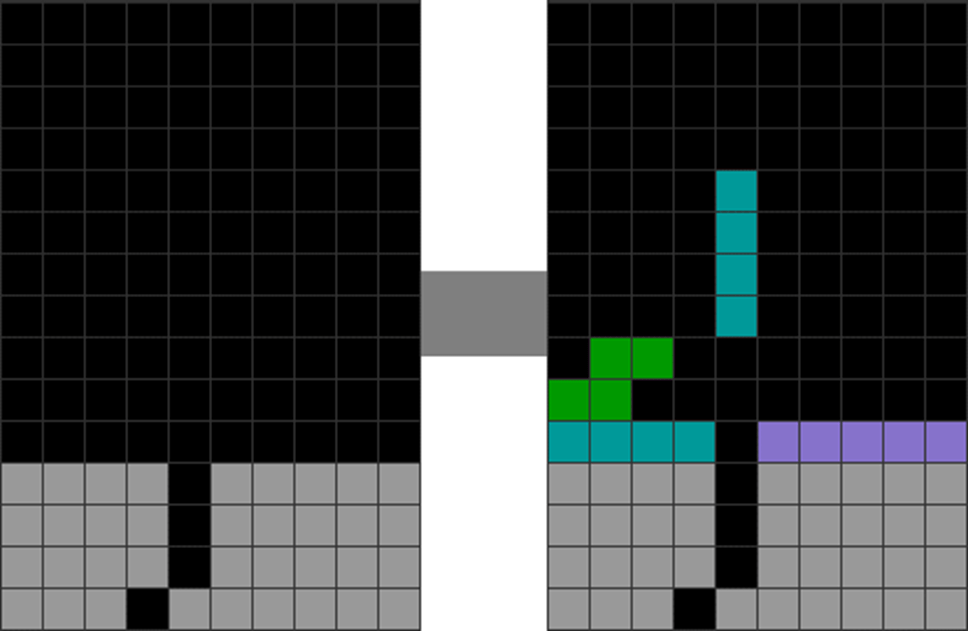
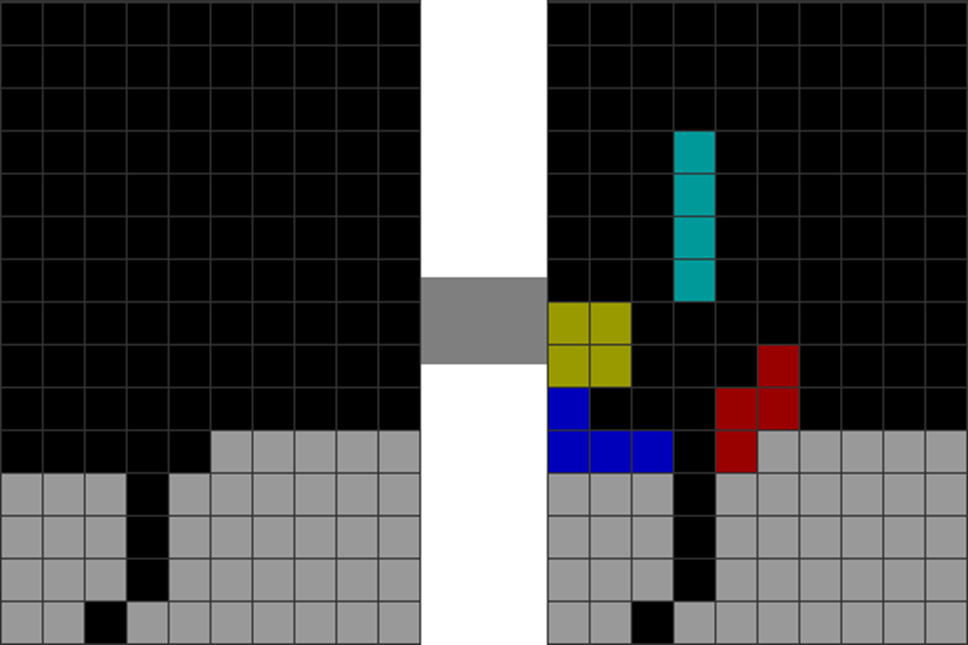
A clean case:
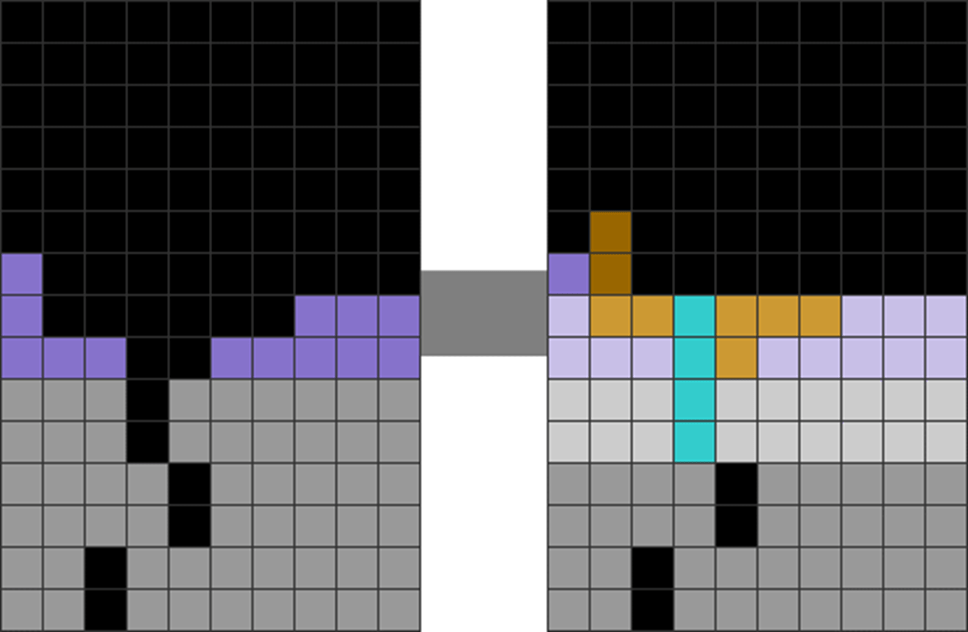
Diagram Set 9-1
1
2
3
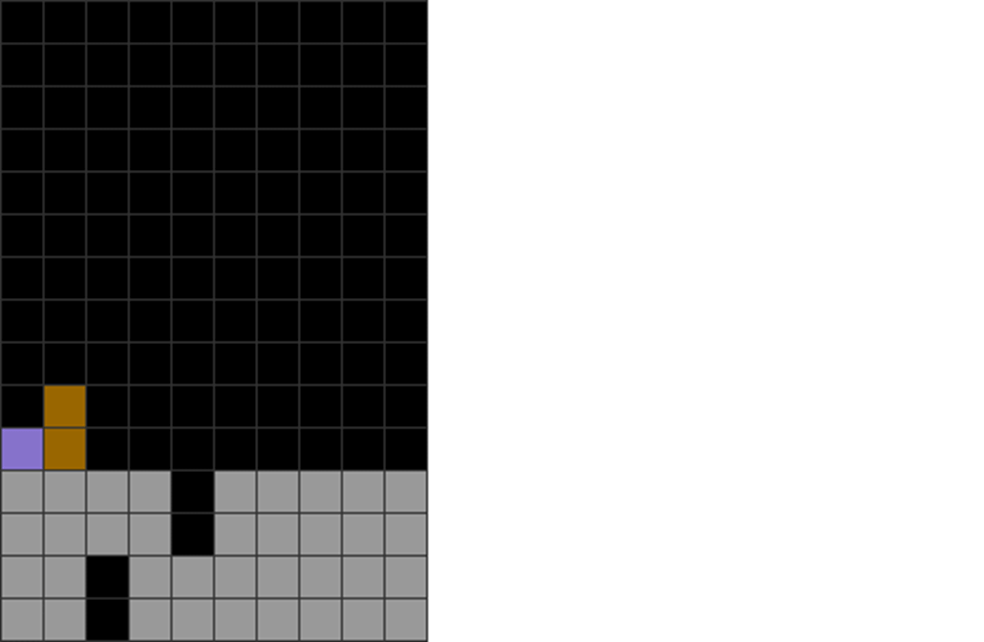
This Tetris is clean because, after the quad Tetris line clear in step 2, the most immediate garbage hole is exposed in step 3.
No residues are upstacked to block the next garbage hole, enabling easy downstacking. It also keeps the stack relatively flat and free of jagged bumps.
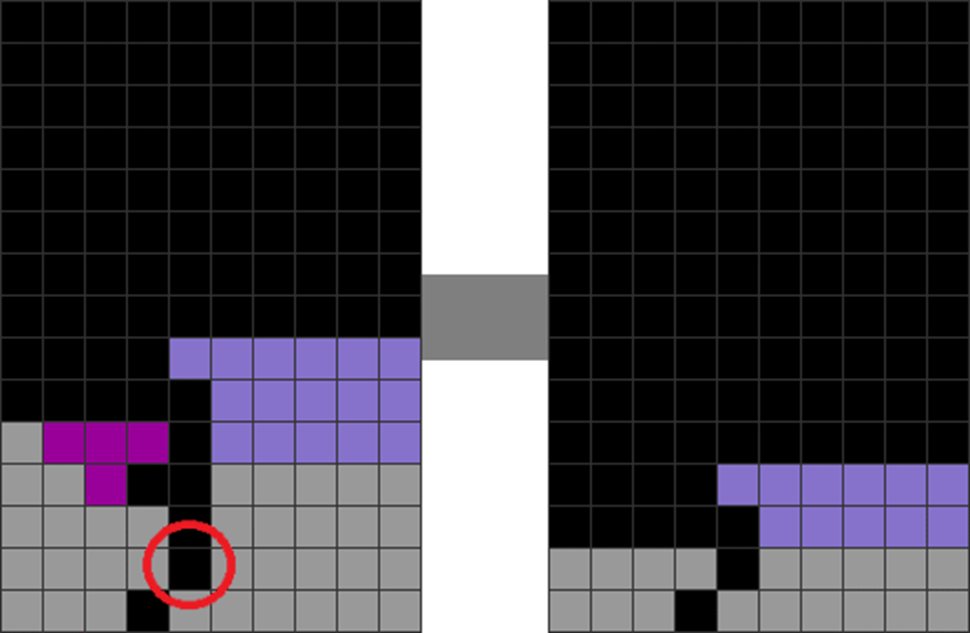
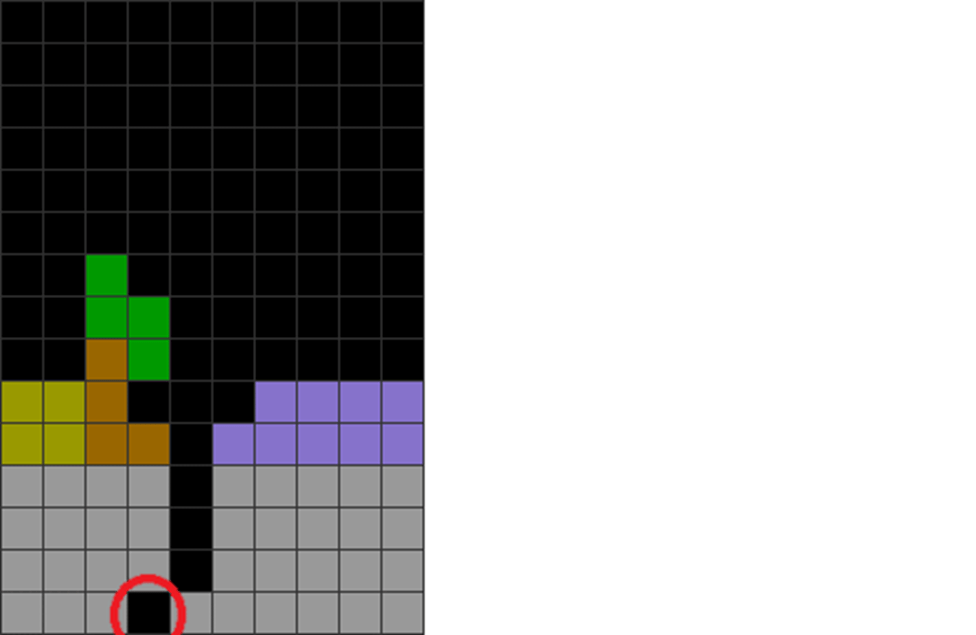
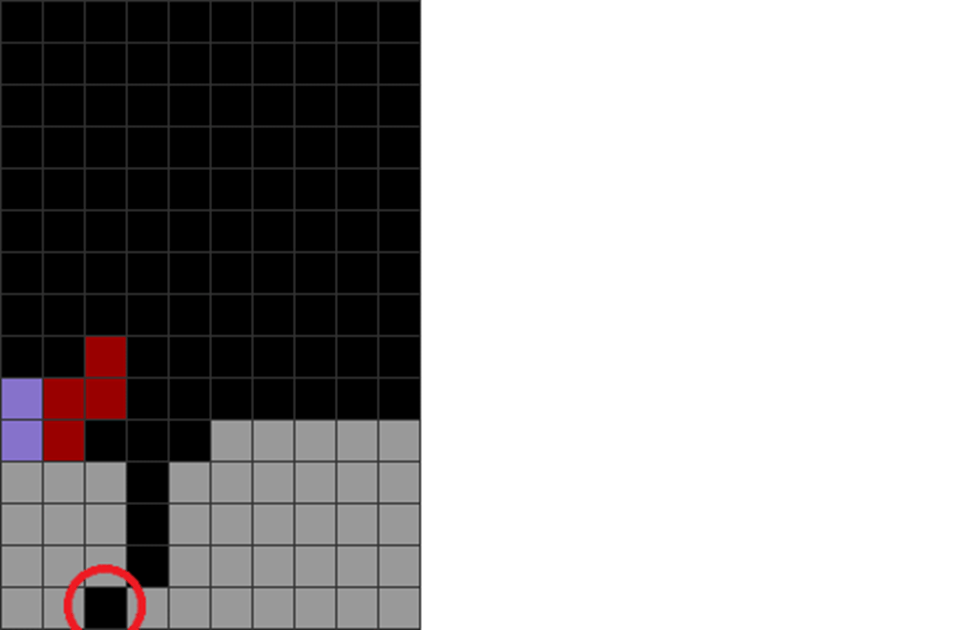
An unclean case:
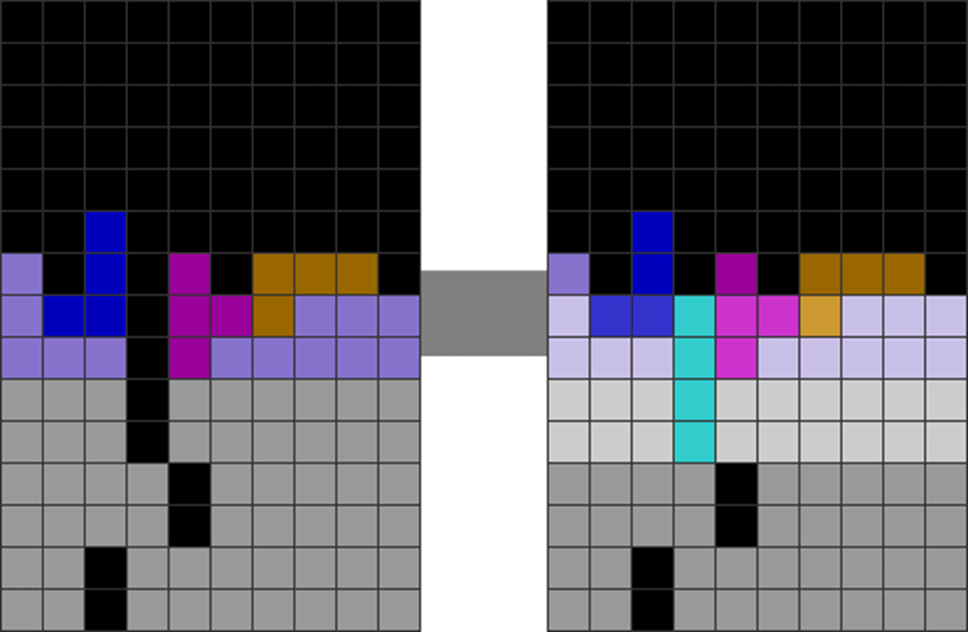
Diagram Set 9-2
1
2
3
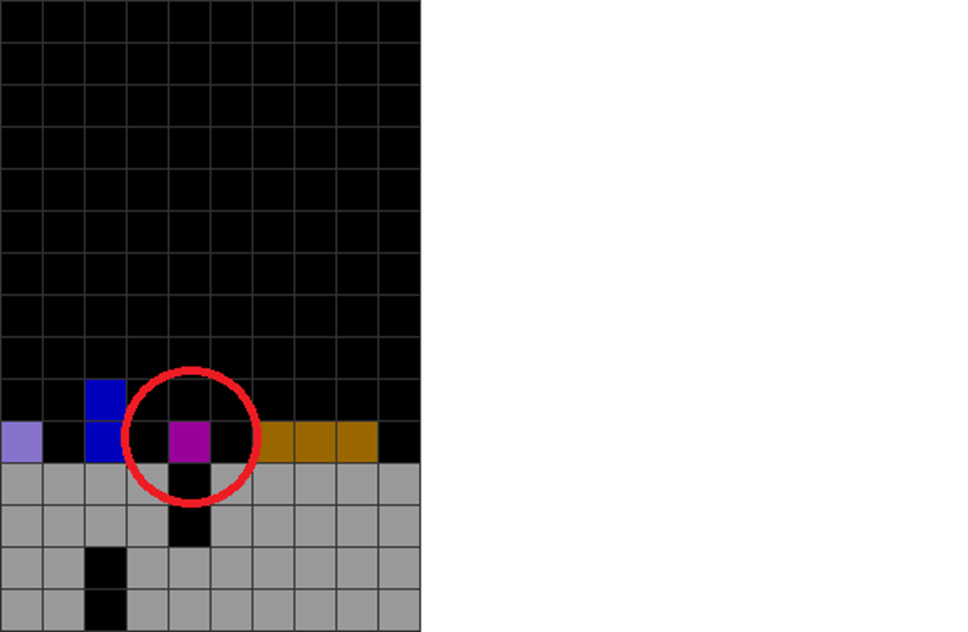
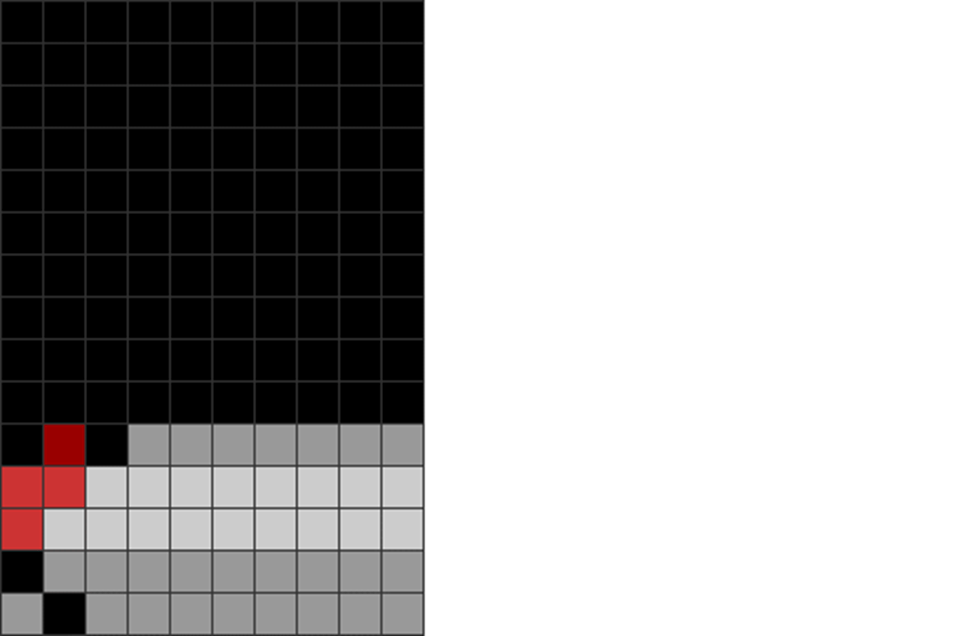
After the first 2 steps, the Tetris line clear is dirty as the quad line clear leaves a residue (red-circled area) that blocks the next garbage hole in step 3.
These dirty Tetrises are best avoided unless there is no better option.
A) Simple Guidelines for Making Perfect Tetrises
There are several main things to note in making perfect Tetrises consistently:
1)Making Tetrises Clean
Make Tetrises not cover the next garbage or Tetris hole as far as possible. Doing so lets you sustain back-to-backs easily and limits line clear delays from subsequent line skims.
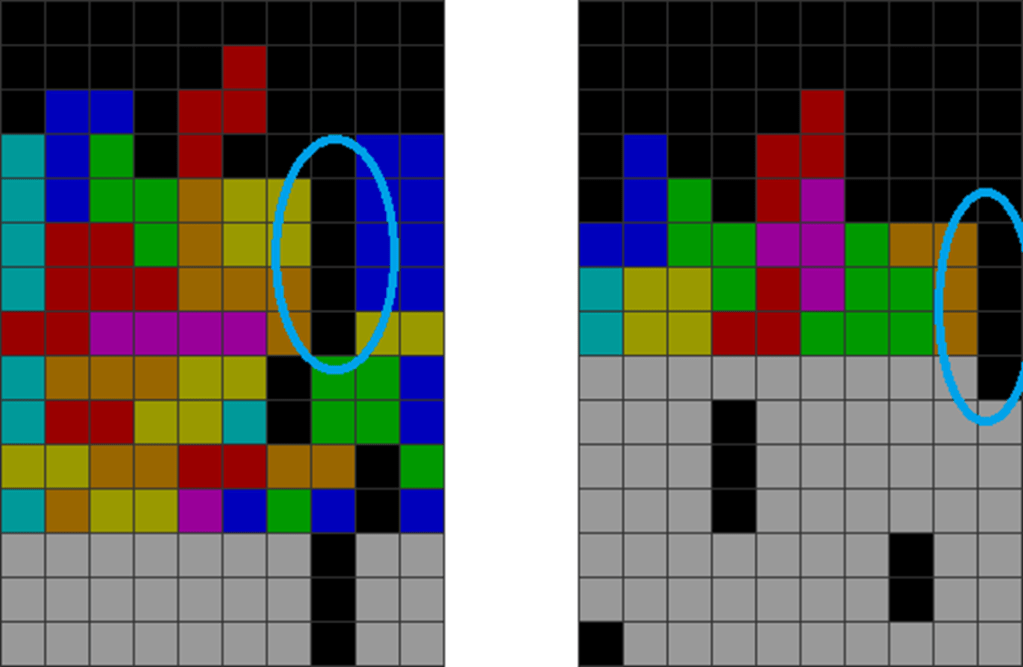
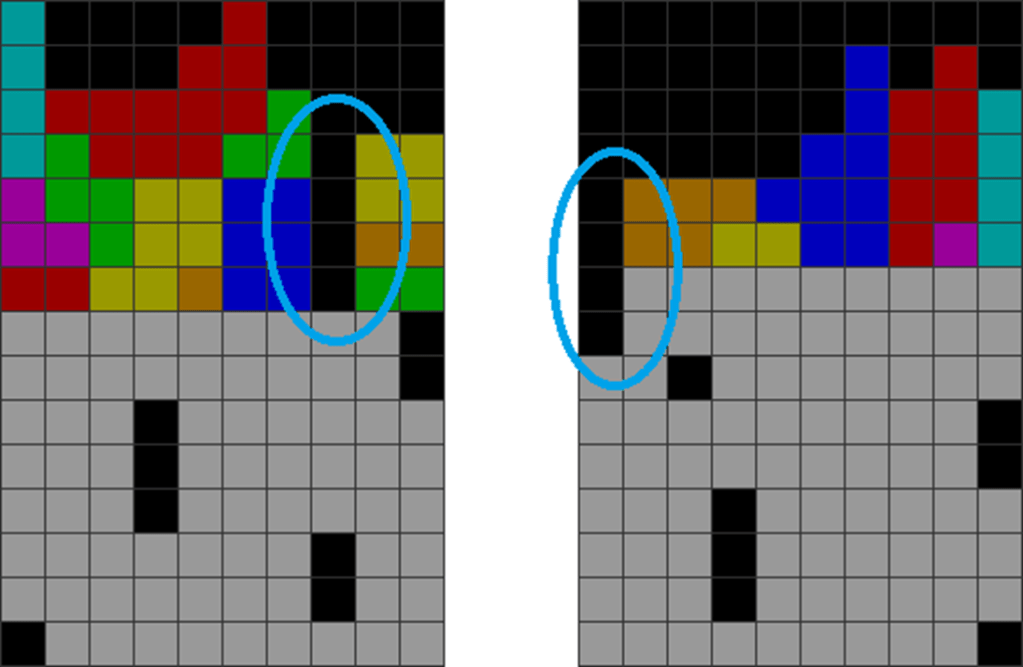
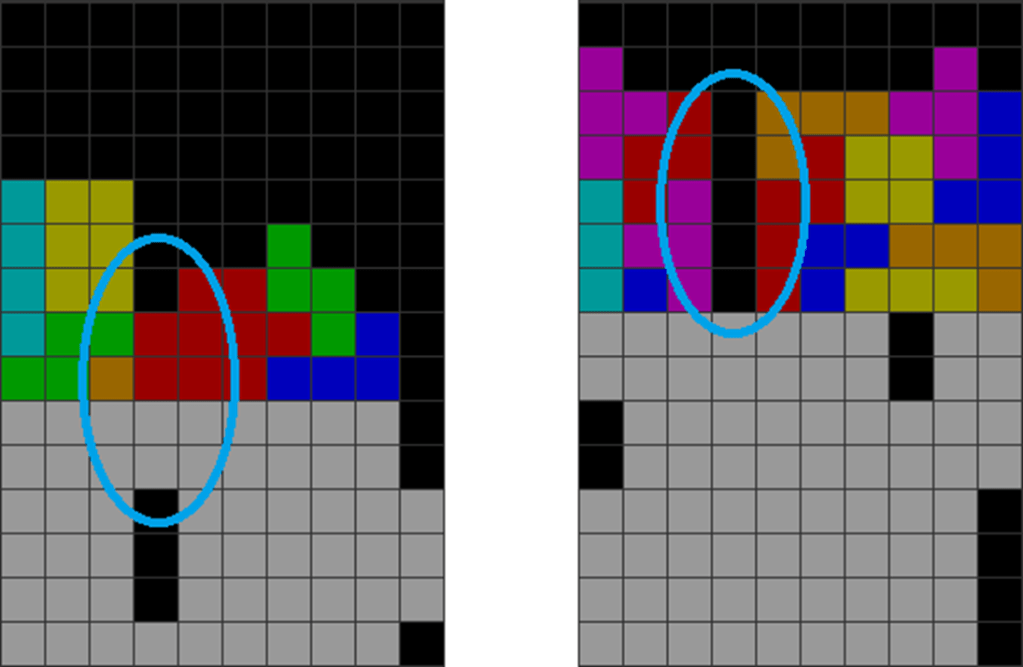
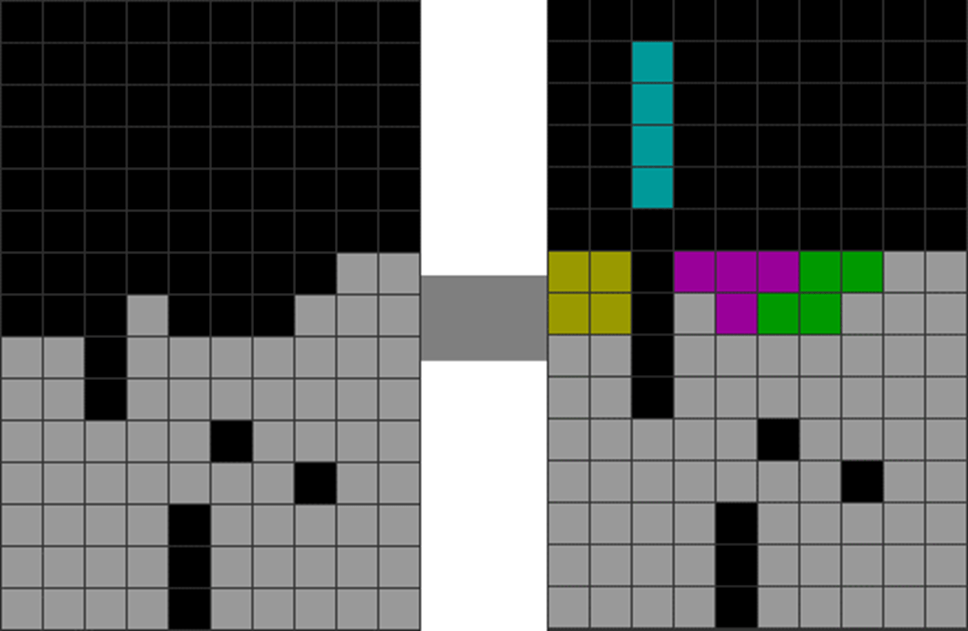
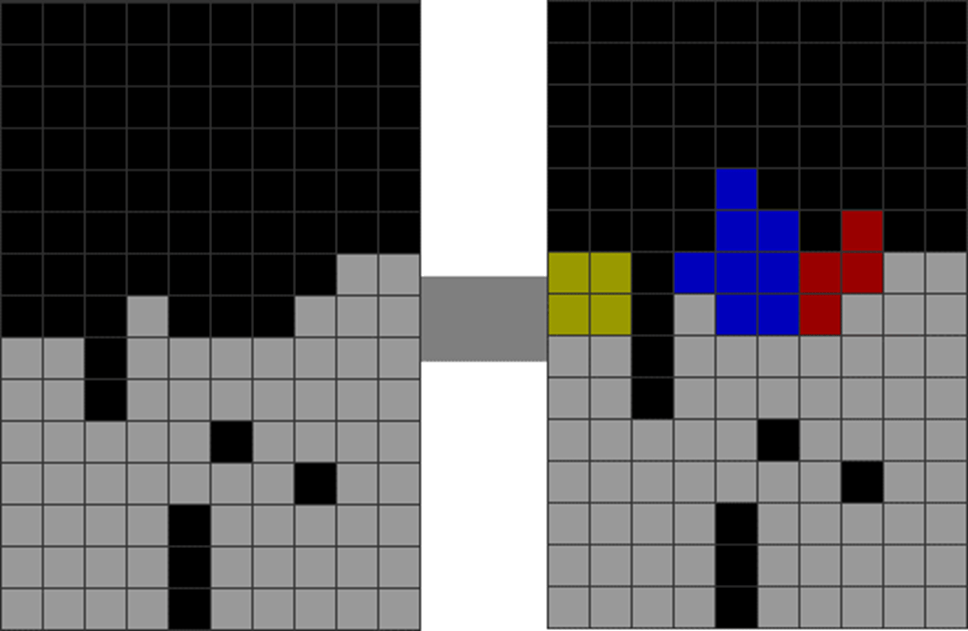
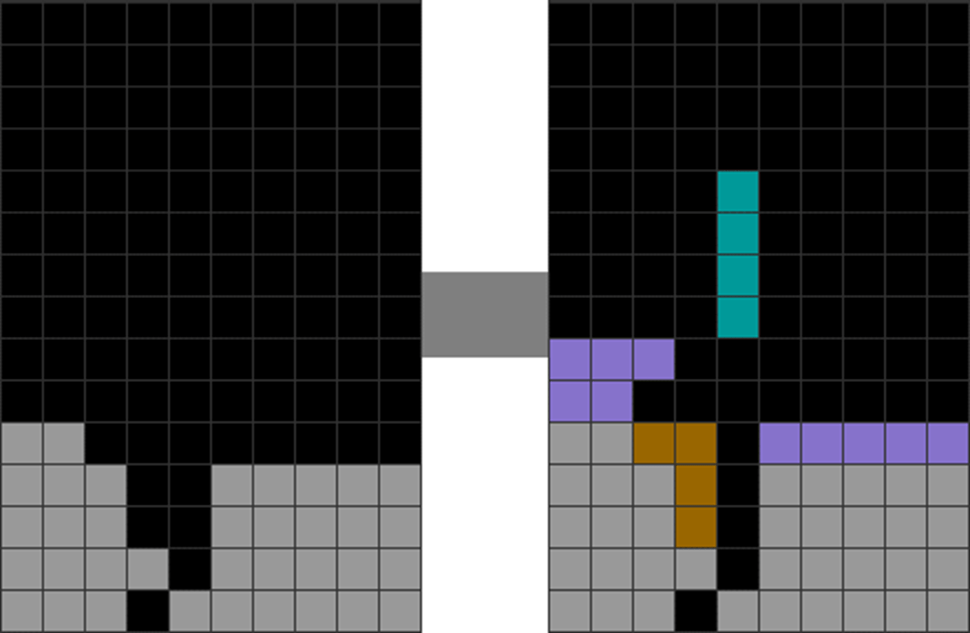
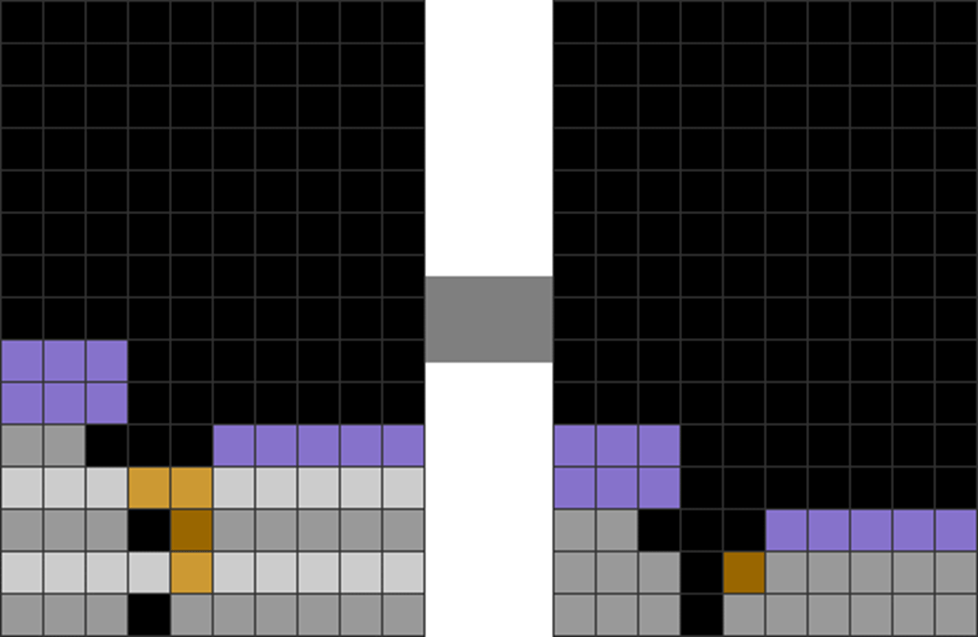
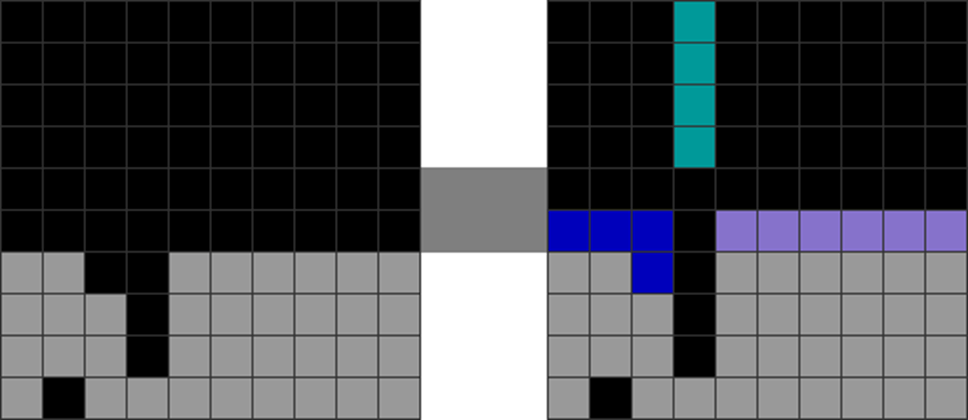
Here are examples from my actual Tetris gameplay in Tetris 99. I have converted them into custom, self-illustrated images for clarity:
Diagram Set 9-3
After each Tetris line clear of 4 lines (blue-circled parts), the stack is clean and does not cover the next hole.
Therefore, one should make clean Tetrises, enabling easier downstacking, defenses, and subsequent stacking.
2) Managing Jaggedness
Managing jaggedness is a tricky component of making perfect Tetrises. It’s easier to make perfect Tetrises if your stack is relatively flat.
This is because you can make perfect rectangles using piece combinations better than a jagged stack:
Diagram Set 9-4
1
2
In this sequence, the stacking leads to a clean Tetris because the player knows how to manage jaggedness to ensure the stack isn’t bumpy.
Diagram Set 9-5
1
2
However, this second sequence is bumpy and leads to jaggedness, which will cause only vertical S, Z, and I pieces to be placed over them.
This increases the chance of unnecessary residues upstacking over the next garbage hole, making the Tetris unclean.
I now reveal my time-tested secret to making clean Tetrises easily that isn’t on any other guide: managing jaggedness on both sides.
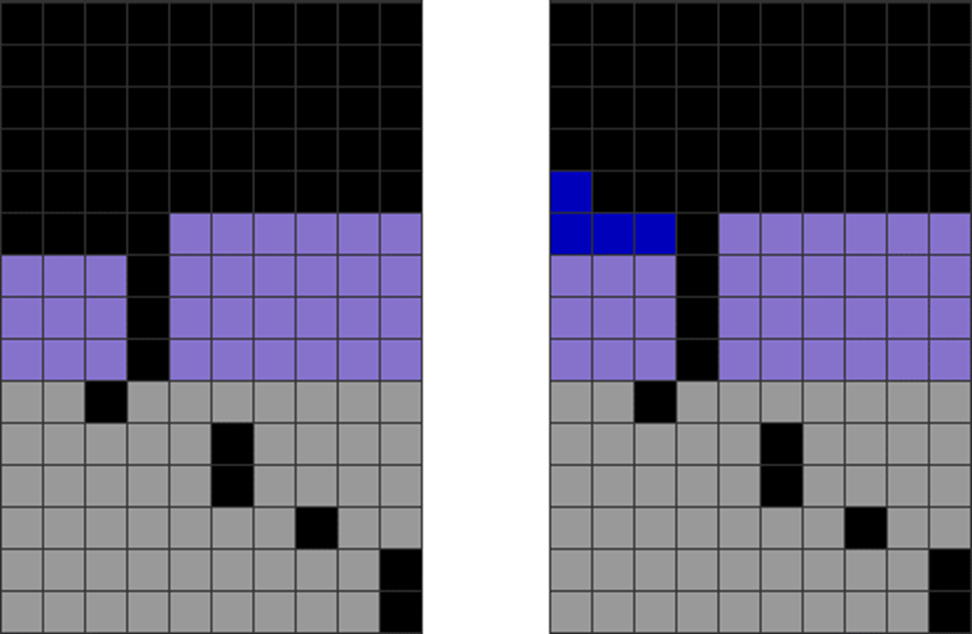
First, look at your field. If it has two stacks (one on each side) with a central column, assess the jaggedness of both fields — the left and right sides:
Diagram Set 9-6
1
2
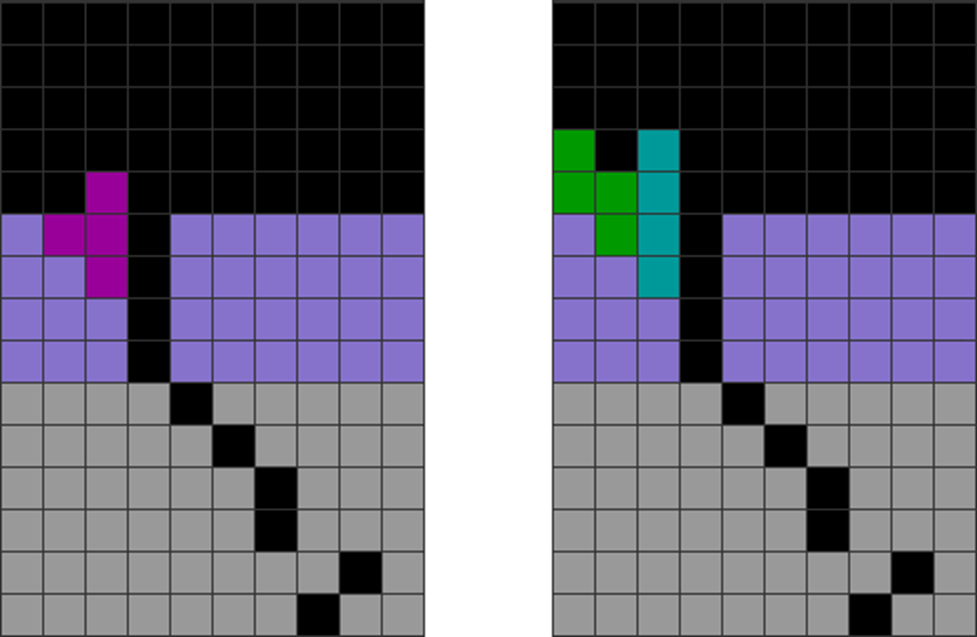
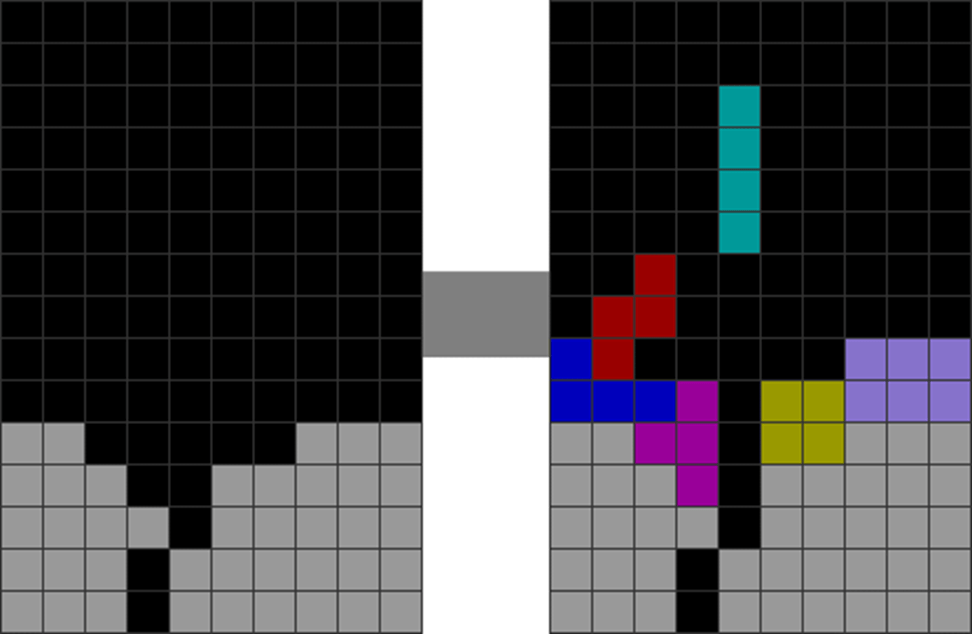
Step 1 is jagged, and step 2 puts a T on the field’s right side to resolve it.
If the left side is not jagged, you do not have to worry about putting a T in the stack. If the right side is jagged, put a T in the stack.
See how clean and flat it results in and creates a perfect Tetris? Resolve jaggedness first on your stacks to make flatter stacking follow-ups that are more likely to become perfect, clean Tetrises.
3) Apply Common Stacking Patterns
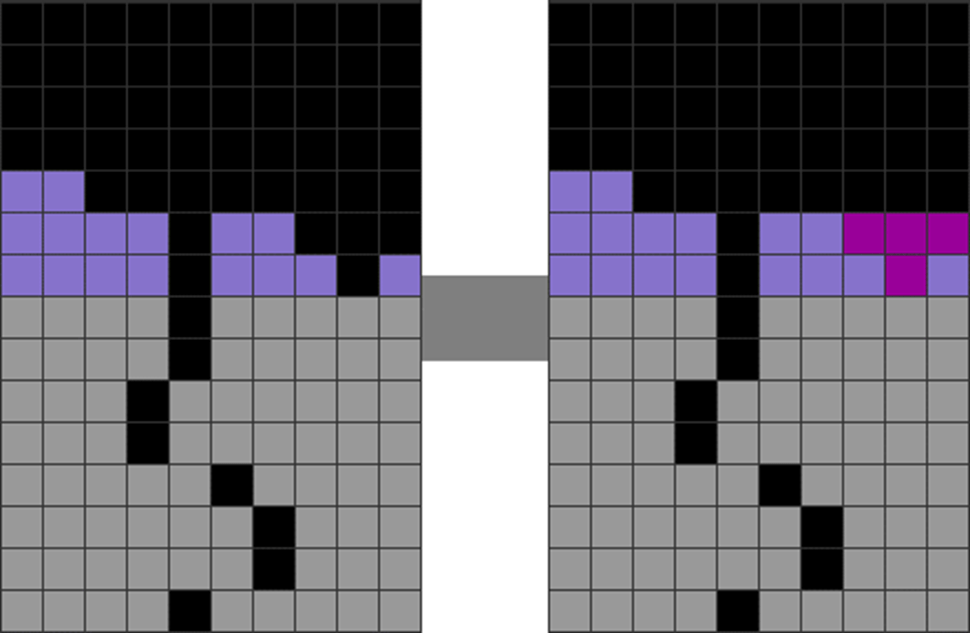
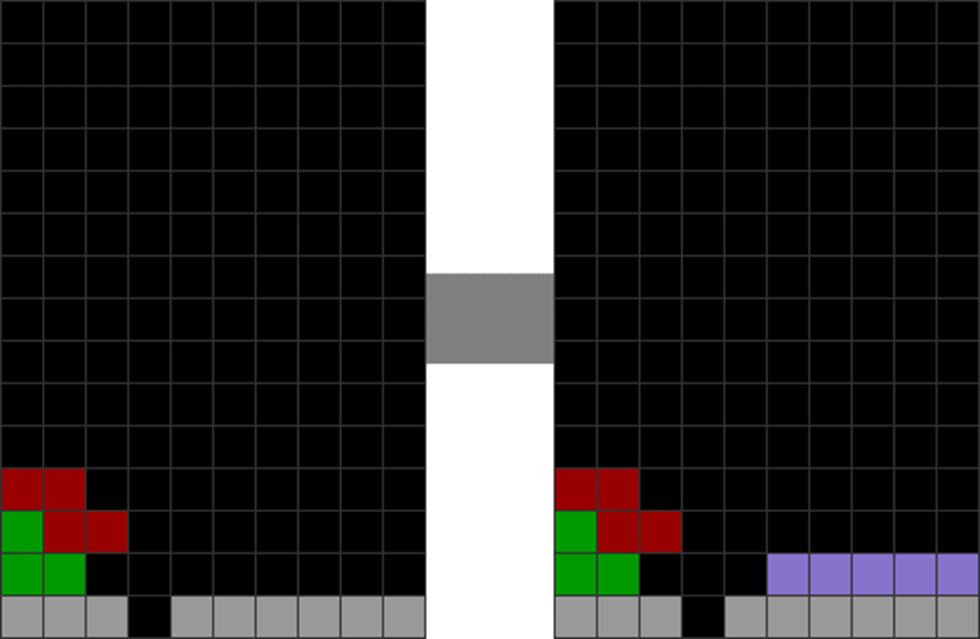
Here’s a secret to making clean Tetrises easily: make rectangles with common piece combinations, such as LOJ or JZJ:
Diagram Set 9-7
The above fields show how some pieces, like LOJ, LJS, JJO, and JJZ, fit perfectly to make ideal flat rectangles.
They do not guarantee a perfect Tetris; however, they increase the chances of such by creating more opportunities for them. This is easy to learn as there is only a limited number of combinations for all pieces to make 4-high patterns, leading to a clean Tetris.
B)Making Freestyle Clean, Perfect Tetrises
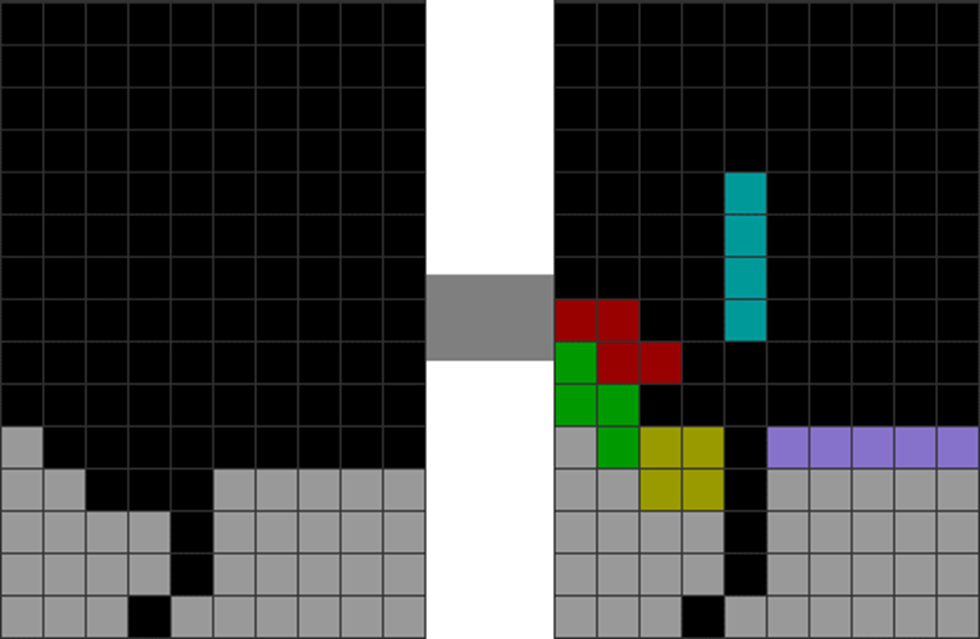
To clarify, I define “freestyle” clean, perfect Tetrises as those where you can’t memorize a fixed form. Non-freestyle ones include assembling LOJ to make a rectangle as part of the Tetris construction (diagram 9-7 picture 2). As such, the former must be improvised on the spot.
Perfect freestyle Tetrises are challenging to make because of the limited number of previews and the higher field dependency. However, here are a few ways:
1)Simple One-, Two-, and Three- Piece Placements
This section shows scenarios where you only have to put 1 or 2 minos in a specific area to upgrade an upstacked part to a perfectly clean Tetris with a 4-blocks-high rectangle.
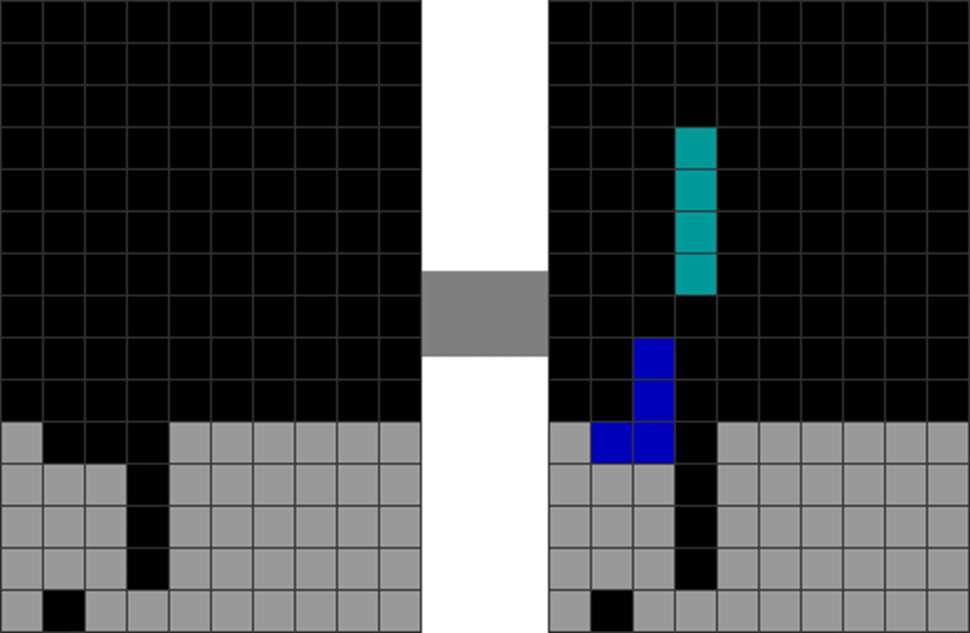
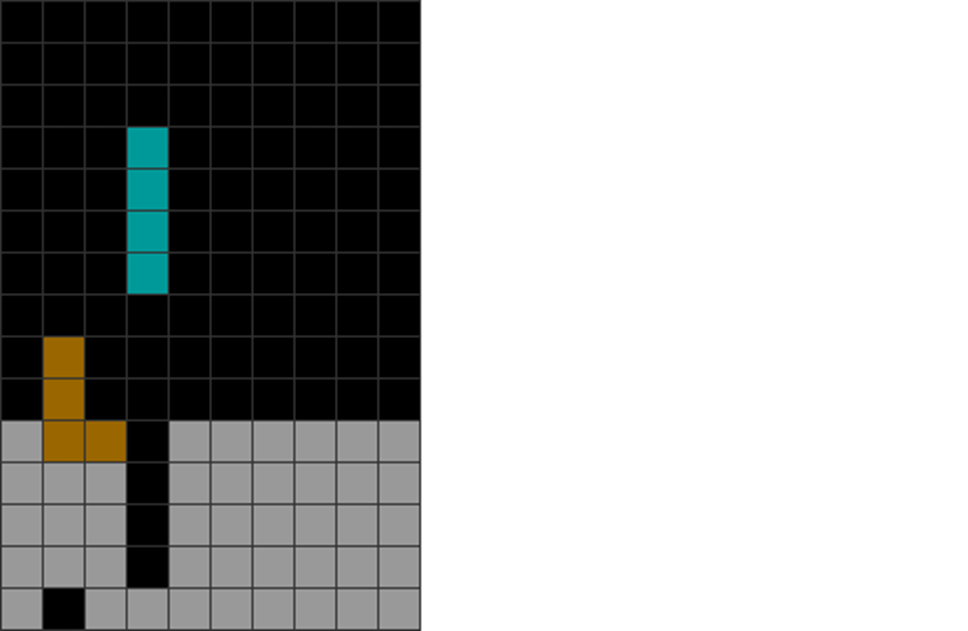
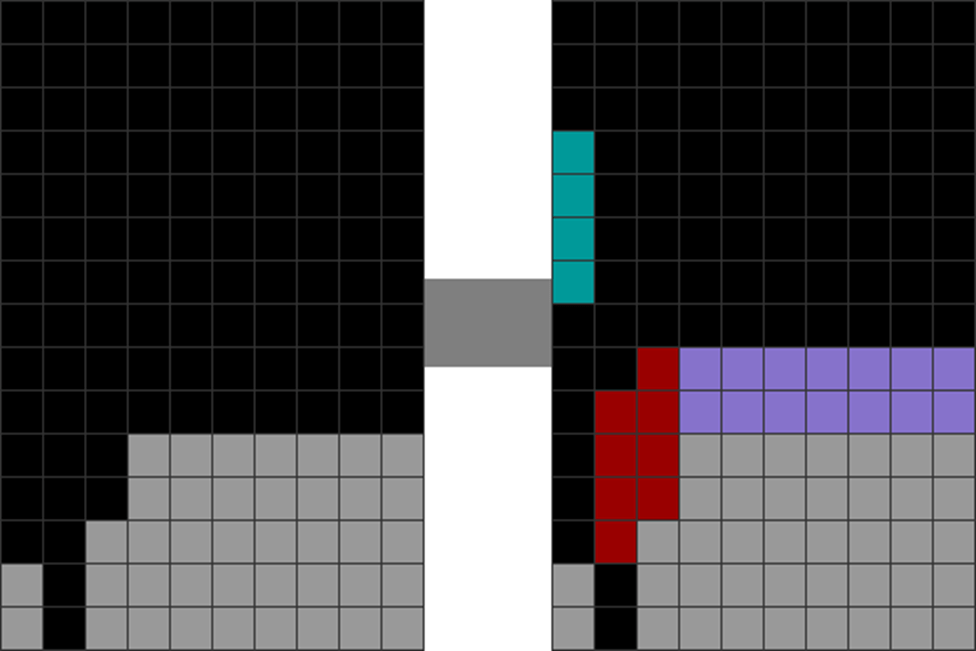
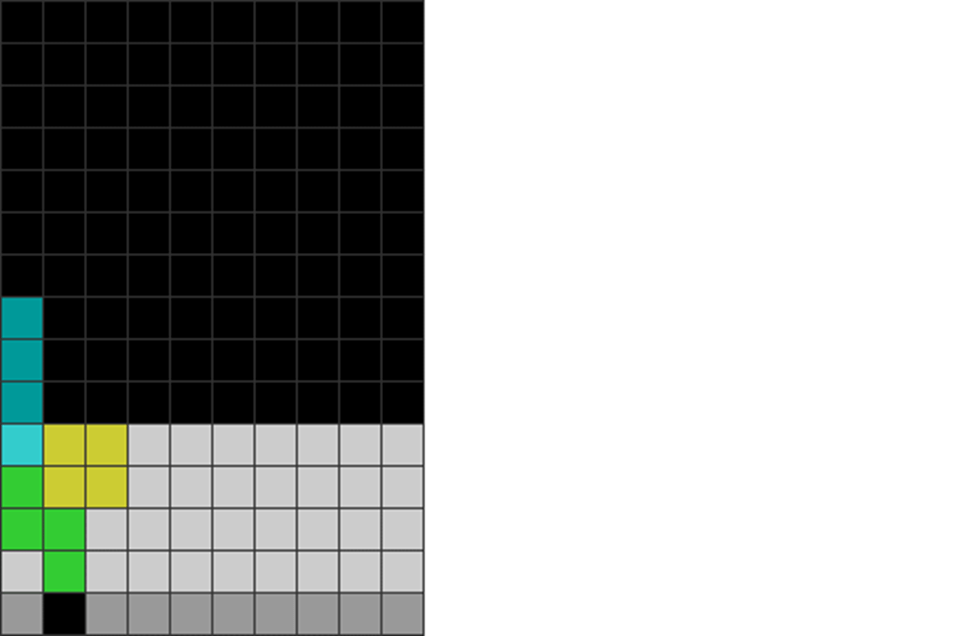
Diagram Set 9-8
1
Alt. A
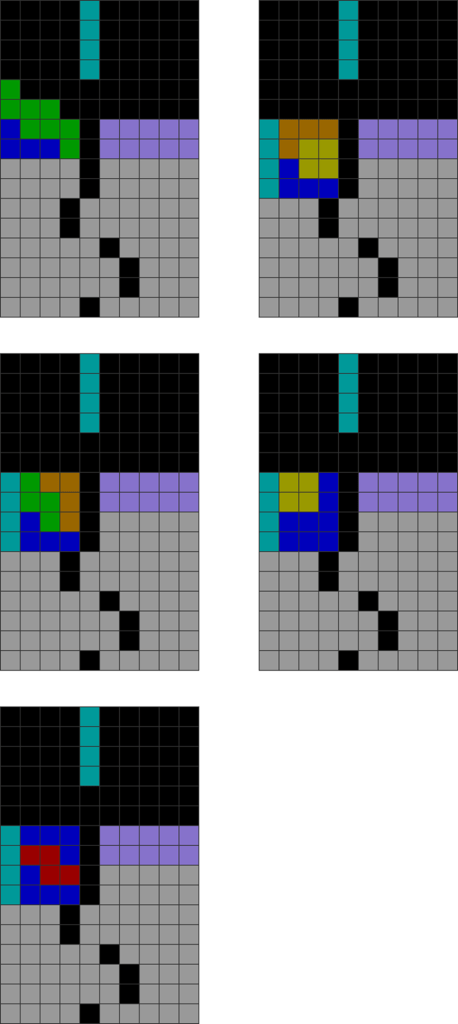
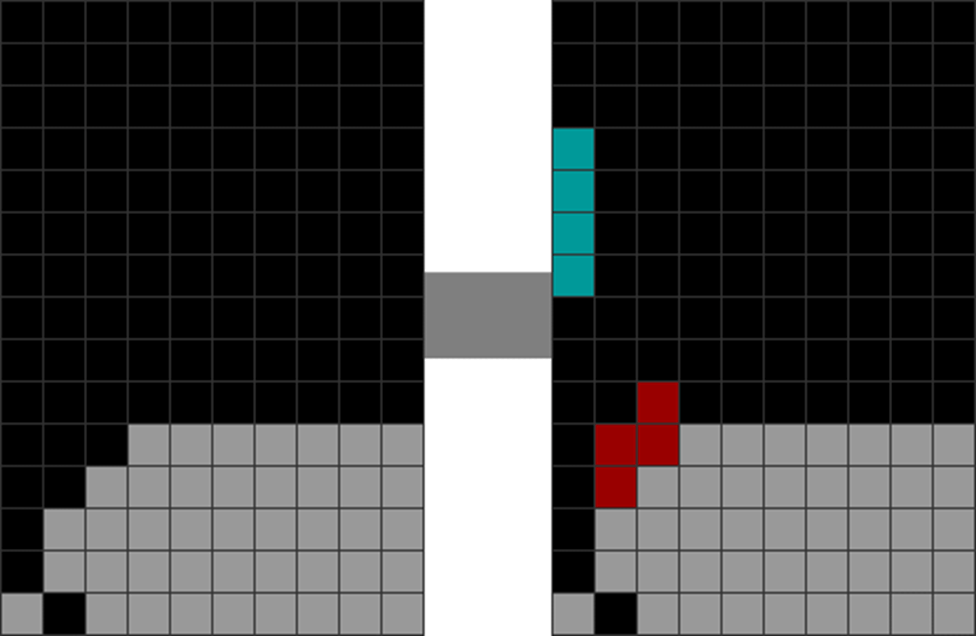
The first diagram is the starting image, with the other three diagrams being three choices.
Alt. B
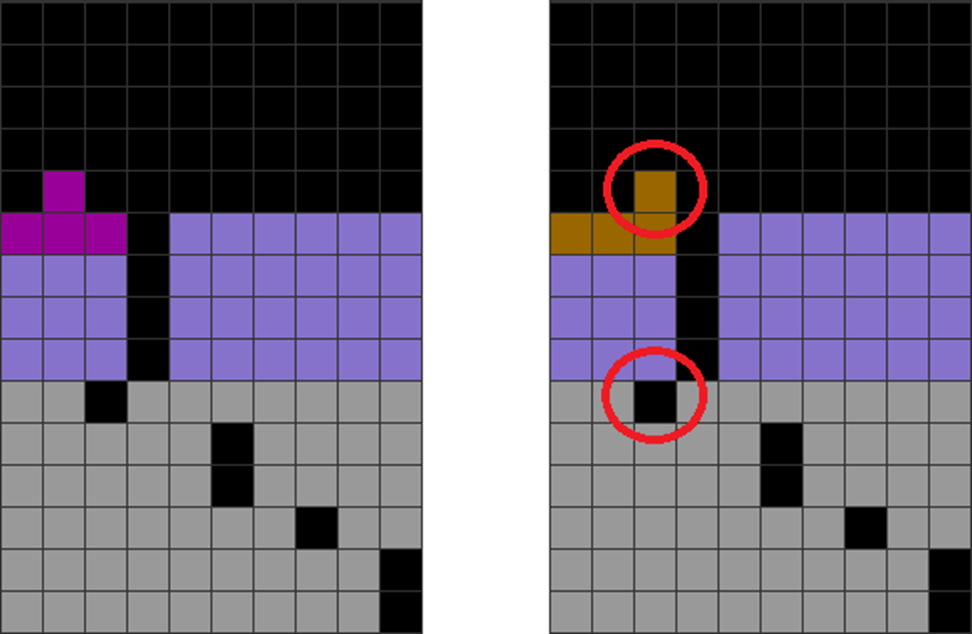
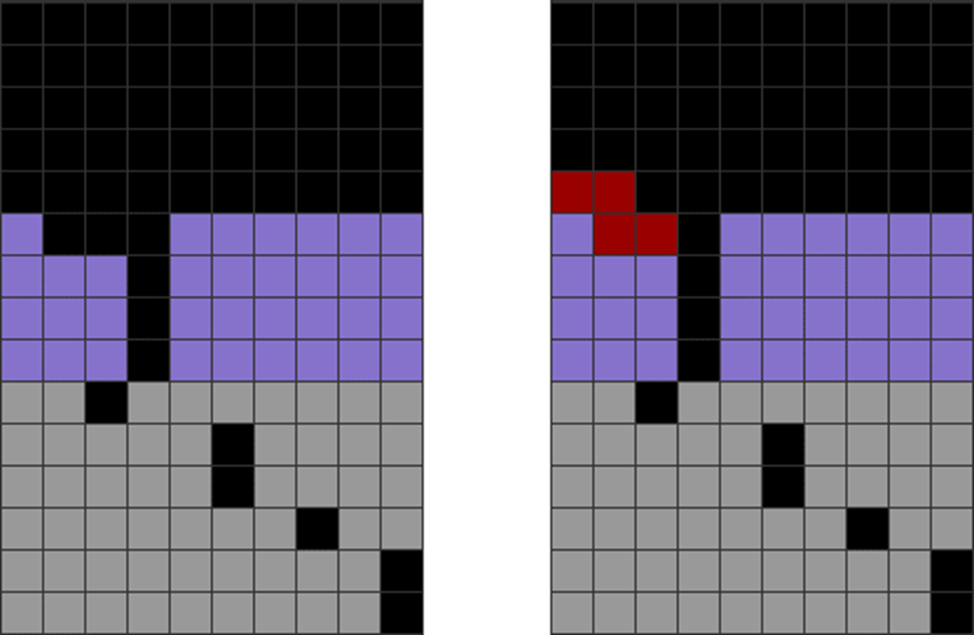
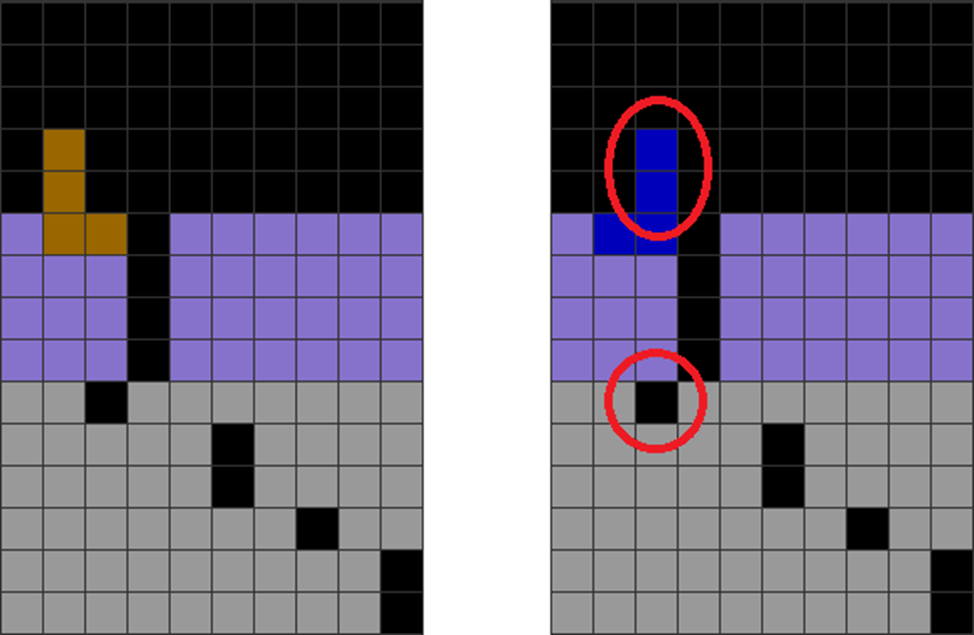
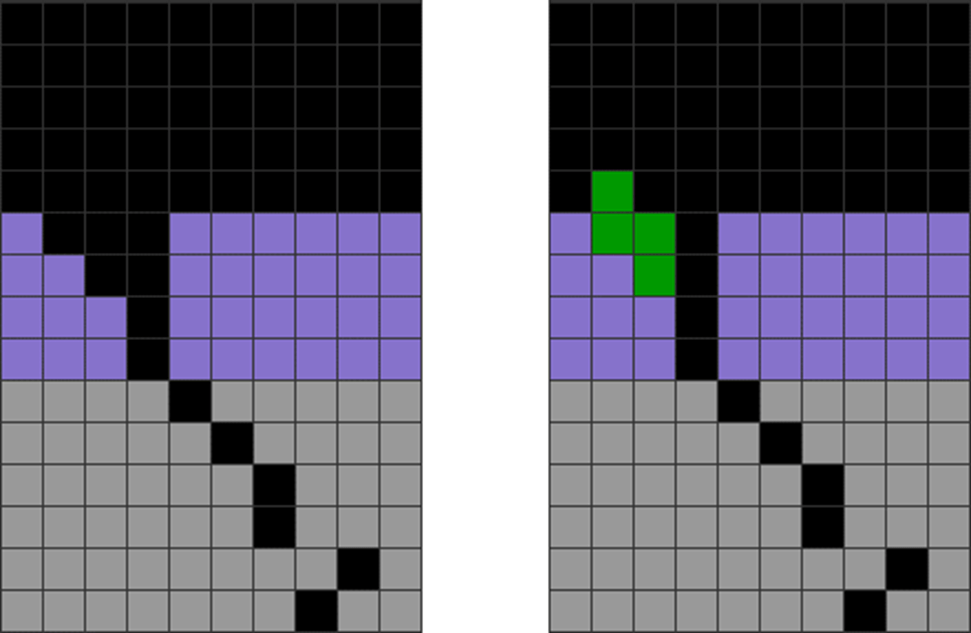
Alt. C
In Alt. A and B, placing a horizontal J and T makes a perfect Tetris opportunity as the rectangle is clean and four blocks high. Alt. C is unclean as the L piece’s top block (red circle) blocks the next garbage hole after the Tetris (bottom red circle).
Thus, I suggest choosing clean Tetrises. The one-piece placement should not cover the next garbage hole after a line clear unless there is no other choice.
Here are more examples:
Diagram Set 9-9
1
Alt. A
Alt. B
Alt. C
Alt. A and B are clean. Alt. C is unclean, as seen from the red circles.
The jutting J part impedes easy downstacking to the garbage hole beneath.
Diagram Set 9-10
1
Alt. A
Alt. B
Alt. C
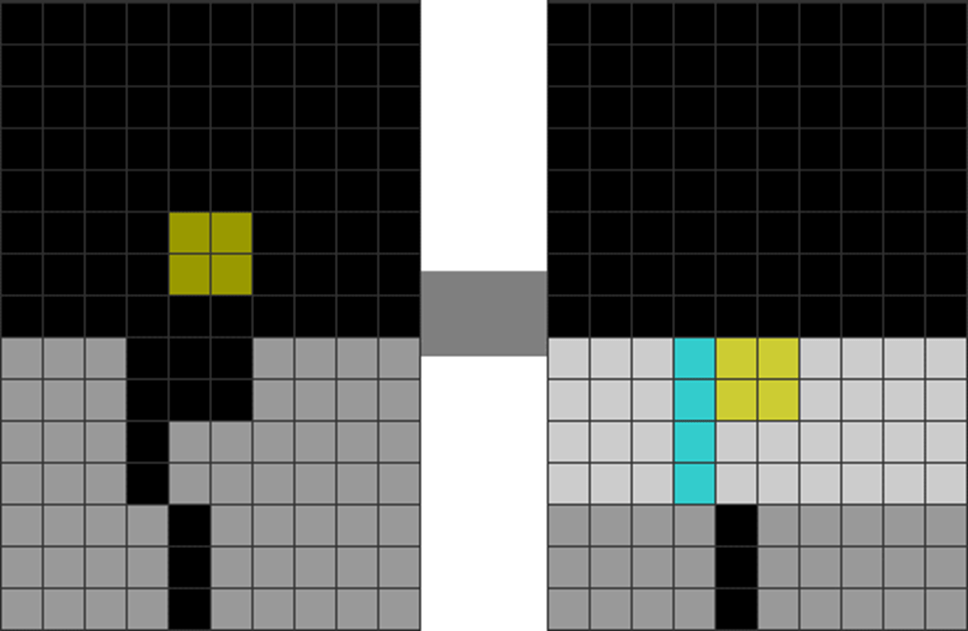
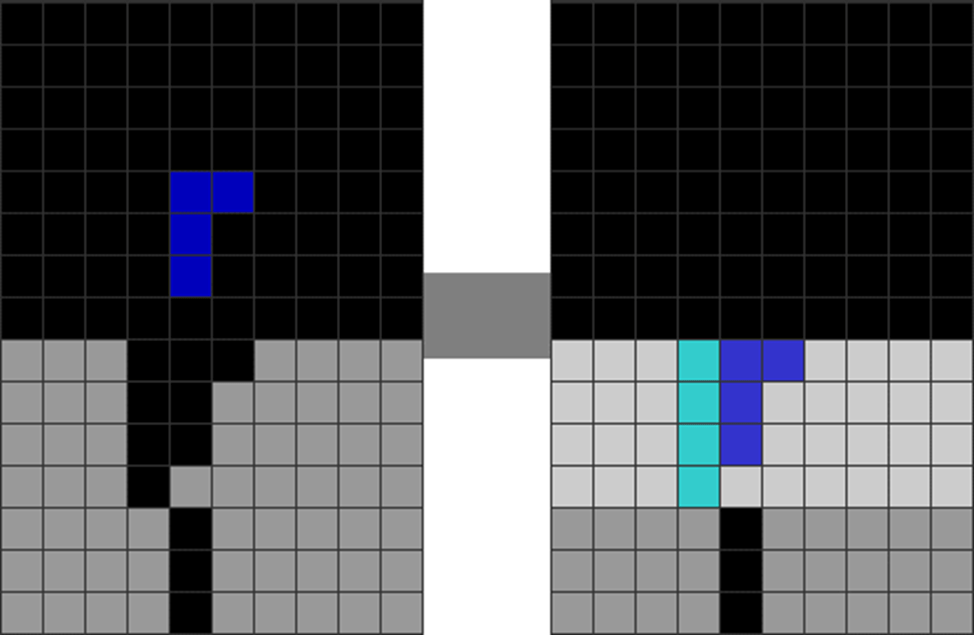
All three choices are clean. Alt. C shows how you can place two pieces to make a clean Tetris.
Alt. C shows you can freestyle with over 1-piece placements to make a perfect Tetris.
After the Tetris quad line clears, the next garbage hole is exposed, and no residues need to be skimmed off.
Recognizing such one-piece and two-piece placements helps you sustain back-to-back Tetrises between clean T-spins, allowing you to play more like top players.
2)Common Mid-game Situations and Pieces to Fit Them for Perfect, Clean Tetrises
Many times, one doesn’t have to freestyle clean Tetrises. You only need an exact mino to fill an area to make a clean Tetris. The scenarios below happen often in the mid-game.
It is relatively easy to intuitively know which piece to fill which cavity to make perfect and clean Tetrises. The basic idea is to create a 4-high clean rectangle or square. Here’s an example:
Diagram Set 9-11
1
2
The O piece fits perfectly to make a 4-high clean rectangle.
Some cavities have a perfect piece that fits into it to make a perfect 4-high shape that can be Tetrised cleanly and leaves no residue over the garbage below. The below diagram shows this:
Diagram Set 9-12
1
2
The J piece fits perfectly to make a 4-high clean rectangle.
Here are the situations that I have mapped out to make clean Tetrises for other ideal pieces to fit into select cavities:
OPiece
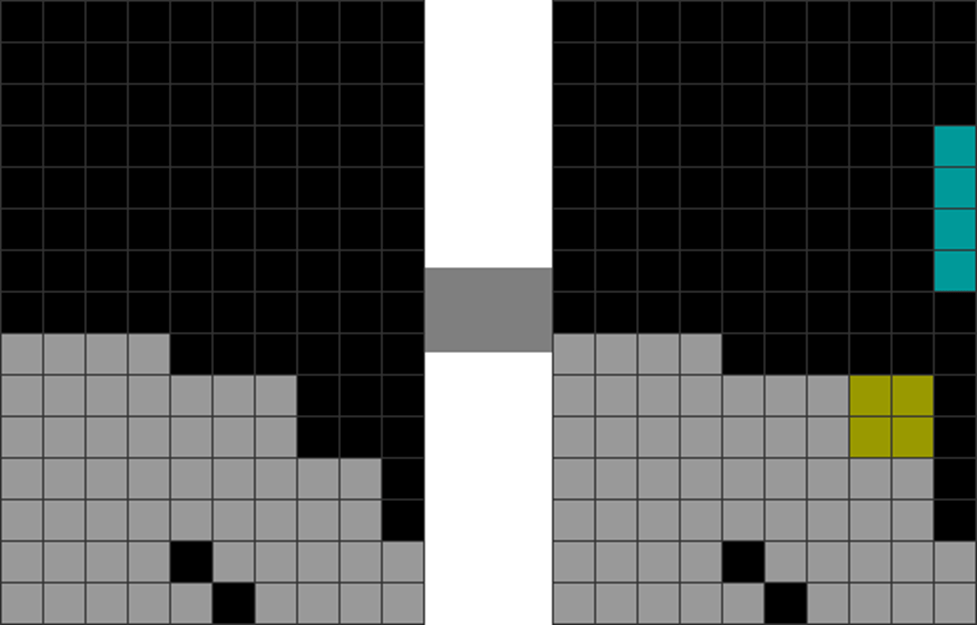
The O piece is the most common and easiest way to make clean Tetrises. If you see a 2×2 cavity in the below’s step 1, fitting it cleanly like this can make an easy clean Tetris:
Diagram Set 9-13
1
2
In this sequence, putting an O makes a perfect Tetris.
Alt. A
Not recommended
This skims with the J and I pieces.
The former sequence is better than Alt. A, which is inefficient due to too much skimming and back-to-back breaking.
Diagram Set 9-14
1
2
Here, a simple O (with help from an S) forms a perfect Tetris in step 2.
It doesn’t end there — step 2 puts a Z overhang over S. After the Tetris line clear, you get a T-spin double ready:
3
4
After the Tetris, you get a T-shaped cavity. In step 4, you fill the right side to upgrade it to a T-spin double.
This is better than the alternative:
Alt. A1
Alt. A2
Not recommended
This alternate placement is not ideal, as the T-spin triple is unclean. After the T-spin triple clears, the overhang blocks the next garbage hole (red circle).
This thus shows how a perfect Tetris is sometimes better than an immediate T-spin, especially when the latter is dirty.
I piece
Using I pieces to make perfect Tetrises is rare, but they can happen:
Diagram Set 9-15
1
2
Step 2 leads to a Tetris to a clean T-spin combo.
Alt. A
Not recommended
In Alt. A, the left side will cause the S piece to stack over a future garbage hole (red circle) after the T-spin double, and it is less advised.
Step 2 is thus cleaner and more optimized.
L and J Pieces
L and J pieces are superb for upgrading to Tetrises if you recognize the common patterns on the right side of the following diagrams, as seen below.
Diagram Set 9-16
1
2
The L placement is topped with an overhang, leading to a Tetris to a T-spin combo that sustains back-to-backs.
Alt. A1
Alt. A2
Not recommended
The method in Alt. A involves using an L to skim and make a T-spin double.
The alternate placement is not advised sometimes as it breaks back-to-back bonuses and incurs a hefty line clear delay. However, it may be optimal if you need to get down fast or if an I piece is unavailable to make a perfect Tetris.
Let’s consider the following:
Diagram Set 9-17
1
2
Note how putting a J piece in step 2 will create a clean Tetris and another back-to-back T-spin double!
Alt. A
Not recommended
Alt. A is dirty and has excessive overstacked residues over the future garbage hole (red circle).
Diagram Set 9-18
1
2
This is very clean, as the Tetris completely skims off the 3×4 blocks on the left with no residues over the next garbage hole.
Alt. A
Not recommended
Alt. A’s triple breaks back-to-backs and creates less garbage than T-spins or Tetrises.
Diagram Set 9-19
1
2
The J is placed to make a clean, 4-blocks-high rectangle for a Tetris line clear.
You do not have to memorize the method above as it represents less determinate cases. Just freestyle and make sure the placement is clean, like step 2, instead of the alternative diagram below.
Alt. A
Not recommended
L will cover the garbage hole later.
S and Z Pieces
S and Z pieces are also perfect for upgrading to clean Tetrises, as shown below:
Diagram Set 9-20
1
2
Alt. A
Not recommended
There are excessive skims in Alt. A, which sends less garbage compared to T-spins or Tetrises.
Diagram Set 9-21
1
2
The player puts a vertical Z to upgrade the field to a 4-blocks-high rectangle for a Tetris.
Using S and Z placements to make perfect Tetrises like these is more advanced, as the shape left behind is sometimes jagged and less predictable.
Alt. A
Not recommended
Excessive skims in Alt. A leave a jagged shape.
T Piece
Sometimes, using a T is ideal when you get a jagged shape on one side. The T piece makes it a perfect 4-high Tetris:
Diagram Set 9-22
1
2
In step 1, the left 4 columns are jagged. In step 2, he places a T to resolve jaggedness. This makes filling a 4-high clean rectangle easy.
The player simultaneously resolves jaggedness with a T, which maximizes pressure while keeping the field clean.
Summary and Conclusion
Tetrises are highly important in this game. Because of line clear delays, dirty garbage, and slower soft drops, Tetrises are relatively efficient in guideline games.
You can provide high offensive power by alternating between T-spins and Tetrises while downstacking cleanly with the latter.
Outstanding Tetris players balance T-spins and Tetrises to sustain back-to-backs and clean up.
Summarized Rules-of-Thumb
Flow
Make the most crucial placement (typically at the corners) to make a 4-high edge first to make a Tetris donation.
Form
Make Tetrises clean. Memorize common composite stacking forms that lead to clean Tetrises. Learn all common ways to fill cavities and edges to make clean Tetrises, such as each mino’s height-altering traits.
Balance
Choose clean Tetrises over less clean setups. Watch for piece and field dependencies before making them by giving them up if impossible to make.
 How to Tetris