This chapter is written in deep, abstract, and post-graduate-level academic prose. Casual readers may wish to skip this section, as it explores philosophical themes that transcend the practical scope of Tetris gameplay.
“The cosmos is not a reflection to be studied. We must experience it. We must become one with its eternal flow and rhythm.”
— A quote from my 8-book spiritual and philosophical dark fantasy novel series.
Introduction
Tetris is not a game where I compete to win, even in games like Tetris 99. I view it as an exercise in experience, paying homage to the perennial understanding that the basis of existence is experience, not study.
Like Zen meditation, I see Tetris as a conduit to harmonize my existence with this noble appreciation of the cosmos. In a more metaphysical interpretation, Tetris serves as a metaphor that parallels my Eastern and spiritual philosophical beliefs, aligning with Taoism, Hinduism, Zen, Buddhism, Sufism, and Christian mysticism. To fully appreciate Tetris, one must flow like water, bend into the crevices that reality has carved for us, and force nothing.
Tetris, to me, is a puzzle game foremost, instead of a visually appealing video game. Therefore, even in visually immersive games like Tetris Effect: Connected, I would set all graphical settings to the near minimum to focus entirely on the gameplay. The game becomes an exercise of one’s finest intellectual judgments. Whenever I receive garbage, I would evaluate the nature (cleanliness) of the garbage, the current field, and my incoming previews. Then, I would subconsciously or consciously calculate the most efficient methods to resolve the current situation.
Universal Spiritual and Philosophical Themes in Tetris
The eternal question of whether Tetris is a narratological or ludological game has been the subject of debate by many scholars.
To clarify matters, a narratological game is one where over-arching stories, tales, leitmotifs, narratives, or epics are interwoven into the game itself. For instance, in Puyo Puyo Tetris 1 and 2, Tetris is intertwined into an enriching tale of trials, jam-packed with action, thrill, and suspense, leading to an inevitable clash with popular villains, such as Satan, with Arle as the core antagonist. Tetris becomes relegated to a secondary role in such games: the story is the game’s central focus. However, ludological games are non-narratological: the game is played for its own sake. Classic NES Tetris and Tetris Effect: Connected are notable games that do not have a narrative. They are simply played from one level to the other for winning.
However, I present an alternative framework to encapsulate the essence of Tetris: it is a meta-thematic reflection of both objective and subjective reality, encompassing both inner and social aspects.
Have you ever read Jean Baudrillard’s, de Saussure’s, or Charles Peirce’s notion of symbols? Symbols are abstractions that refer to a wide range of things, including specific objects, theoretical concepts, or metaphysical themes. They are also arbitrary, meaning that the referent does not contain any vraisemblance to the symbol in terms of meaning. Some, like pictograms or hieroglyphs, may be similar in terms of the pictorial layout of the referent, in the case of Chinese characters.
Symbols comprise words, numbers, and concepts that we use in everyday language, which combine at an even more abstract level to form epic poetry, novels, narratives, and theses that paint an abstract representation of reality. They combine to form broader meta-thematical paradigms, such as ideological, spiritual, religious, or cultural concepts, such as oneness, the experiential nature of reality, and the scientific method, which I will elaborate on later.
Over time, these broader “stocks of knowledge” (Berger and Luckmann) permeate the world’s cultural consciousness, like Carl Jung’s or Jordan Peterson’s concept of the superconscious.
Think of it this way: using the Christian bible as an example. I am not a professed Christian, but a free thinker, if it matters. Christian theologians refer to the idea of anagoge — spiritual interpretation that translates the religious and scriptural texts into something beyond the literal, such as its metaphysical, philosophical, and spiritual implications, like loving others, expressing altruism, and manifesting hope and positivity.
This is my view toward Tetris: it is neither merely narratological nor ludological. Instead, it envelops and manifests from an ongoing dialectic between the individual and broader social reality, many core spiritual and philosophical meta-thematic themes, and leitmotifs that express the human psyche.
So now, let us begin by exploring some of these themes:
1) Experience as the Basis of Reality
Tetris reflects the Zen-like experiential nature of reality, whereby the cosmos cannot be reduced to mere quantitative numbers, theses, or equations. Due to the chaotic and indeterminate nature of the universe, we are sometimes compelled to retreat, with deep humility, to the central focus of humanity: consciousness.
Many philosophers, mathematicians, and scientists have sought to bridge the gap between the inner, phenomenological world of conscious experiences, thoughts, and feelings (qualia) and the objective world. However, this has fallen astray of the intentions and intellectual ability of the most brilliant minds. Western analytical philosophers, such as Bertrand Russell, David Hilbert, and Alfred North Whitehead, have attempted to formalize all of reality in terms of logical, propositional statements, a goal similar to that of the logical atomists. Others, such as A.C. Ayer, have tried to reconcile the two by cutting off the horn of one of them, which, in his case, is consciousness. He avers that consciousness cannot be quantized into any propositional or existential statement. Therefore, he concludes that consciousness must be a fictitious construct with little basis in reality.
However, phenomenologists and existentialists, such as Berger and Luckmann, Edmund Husserl, Martin Heidegger, Jean-Paul Sartre, and Merleau-Ponty, have developed a different perspective, suggesting that consciousness is central to the cosmos. Because of the latter’s indeterminate nature and the immediacy of consciousness, we are forced to admit that qualia may not be reducible to the world of mere matter. Neither is it possible for one to create a machine powerful enough to predict the decisions and thoughts of every single individual.
Therefore, my explorations of Tetris’ philosophy are a testament to the irreducible and central nature of consciousness in our spiritual reality. What we cannot understand in this vastly convoluted infinite reality, we may, therefore, only be silent and experience it.
2) Human Lessons in Tetris
Tetris confers many intriguing human lessons that span the entire spectrum of our race’s wisdom. This includes philosophical tenets, gems, or platitudes from various schools of thought.
Of the many ways to play Tetris (Versus, Marathon, etc.), I have chosen Tetris 99 as the ideal medium. Through this, I exercise the philosophical tenets of stoicism and Taoism in my gameplay. For instance, both doctrines share the idea that one should flow like water, never forcing events should they go against the flow of nature. For example, if I am posed with a precarious situation where my field is jagged, and I am about to top out, going against the flow is to make dirty T-spins or sustain back-to-backs aggressively. In going with the flow, one should instead skim or downstack, even if it means a less-than-ideal situation that breaks back-to-back garbage bonus. Just as in life, one must now go with the flow of what has been established for us; otherwise, it would be counterproductive.
A second example is the idea of perseverance, epitomized in the Japanese proverb “Two steps back, three steps forward.” In Tetris 99, because of the randomness of garbage, one can receive up to 12 lines of garbage at once from 5 or 6 simultaneous players, no matter how skilled one is. In such cases, one may be forced to make awkward placements that are not intended, ideal, or planned. Like the messiness and chaos of life, one is forced in Tetris 99 to make sub-optimal skims to survive as long as possible. Thus, this is a testament and metaphor for coping with life’s vicissitudes.
Another example is the concept of Sunyata, or emptiness, in Buddhism. In this esoteric idea, all concepts exist only in the mind, with names assigned to arbitrarily defined categories. If one strips aside all concepts, we are left with a transcendental reality made of a unitary continuum with no boundaries.
In Tetris, there are methods such as DT Cannon, Imperial Crosses, or Cut-Copies that many people aptly refer to. However, these are just specific examples of general splicing setups, which involve inserting a T-spin or Tetris into another setup. Therefore, all these methods are just splicing methods, like nearly all other Tetris methods, even prophecy T-spins, Tetrises, or triples. Hence, Tetris is a metaphor that highlights an immortal and timeless continuum, dispelling the duality between self and non-self, subject and object, or between objects and subjects.
Fourth, Tetris reminds me of how the cosmos is an undying and ongoing reflection. It is the idea that all consciousness and matter in the cosmos form a duality. This duality is defined by a continuing dialectic and evolutionary interaction whereby the consequences of the former are realized in the latter and are reflected back into the former. This coheres with the self-volitional and self-reflective nature of reality. Consciousness and matter form a non-dual reality. As a concrete example in Tetris, for instance, if one keeps losing games, one can step back and reflect on what is causing the losses. Is one downstacking too little or too much? Is one being too jagged in his stacking? Is one too aggressive or defensive? Is one playing safe or timing right? By learning from the consequences of improper gameplay, one can do the opposite and refine their gameplay to achieve a higher win rate. This ongoing reflection is eternal and is, therefore, an integral part of the cosmos’ self-reflexive nature.
3) The Humanistic Ethos of Tetris
Tetris was never a game to be competed or won, with my primary Tetris platform being Tetris 99. Like in life, I do not consider Tetris or life an arena or a capitalistic rat race, with this lobster mentality of alpha and beta males striving for power in the world (as Jordan Peterson aptly describes in Principles for Living).
Life, to me, is a garden where every kind of plant or flower serves a certain function, even its weed. This is because everything has its innate value, as opposed to its use value, as defined by capitalism. Human minds impose everything about the latter onto the world; nothing is natural or latent/innate about them. They are strictly arbitrary and inauthentic. Therefore, to ascribe to such culturally conditioned social preferences does not do justice to the nature of existence. Everything has its purpose for being and should not be defined by one or two strict, imposed measures.
Therefore, Tetris becomes a metaphor that pays homage to this reality. Tetris can be played in many ways — such as normal Versus, Marathon, or the artistic secret modes. They all lead to a different goal or purpose, paralleling life’s infinite potential. There is no single way to ‘win’ other than the one which one first defines. Therefore, my philosophy of Tetris is humanism, where purpose is predicated based on individual preferences and volition and never imposed or stipulated by anything else. In a possibly objectively nihilistic universe, humanity takes center stage to define knowledge, meaning, and purpose.
4) Oneness
Oneness is the core, underlying concept of many spiritual, religious, and philosophical traditions. In Neo-Vedanta, Advaita, Zen Buddhism, Tibetan Buddhism, Shaktism, Taoism, and Mohism, the cosmos is unitary. There is little distinction between cause and effect because the two, like the perennial concepts of Yin and Yang, are always interchangeable and morphing into each other.
A simple concept can show this notion: imagine a zelkova tree. Zelkova trees are never separated from the environment. It draws nutrients, replenishments, water, and sustenance from the soil. It inhales the air, takes in carbon dioxide through its many stomata, and uses photosynthesis to convert them into sugars to sustain itself. It likewise absorbs energy from the sun for the process above. Whenever it perishes, its trunk, branches, twigs, leaves, roots, and cambium are recycled into the broader ecosystem, which uses its essence to support the growth of other plants or sustain other animals.
The rationale is, therefore, obvious: that everything is a cause and effect by itself, bound by an eternal cycle of repetition, in which all is one, and one is all. The idea of separating the zelkova from the surroundings is an impossibility. Everything is bound in a cycle of unceasing cyclicity and unity. This concept is rooted in the idea of emptiness in many Eastern traditions.
In Tetris, one may be tempted to view the various types of T-spins as distinct entities. For instance, from the humble and straightforward T-spin double to the robust Fractal, the all-potent DT Cannon, and the exotic advanced spliced T-spin setups (like inserting two or three T-spins between another T-spin). These may include a spliced Trinity or an Altair, as documented in Advanced Spliced T-spin Methods. Yet, despite its myriad and uncountable diversity, all T-spin structures are spliced systems: any setup with more than one T-spin or an all-spin (non-T-spin) inserted into them is a spliced or cut system.
However, this fictitious construct, such as the idea of atoms, could not be further replicated in nature. In quantum physics, reality cannot be merely defined as discrete structures. According to the Aufbau principle’s derivation of the s, p, d, and f orbitals of atoms’ electron clouds, the position of every electron is distributed over a probabilistic function that blends the distinction between what is and what is not. One can, therefore, only perceive the cosmos as a unitary entity with no separation between the whole and its parts.
Everything is still bound in a system of cause-and-effect, where all is unitary, whole, and interconnected. Perhaps the song “We Are Connected” from Tetris Effect: Connected epitomizes this unique reality. Therefore, since all T-spin structures are manifestations of the same atomistic T-spin or basic setup, the conclusion could not be more straightforward: that everything is one.
The greatest corollary of this axiom is that because everything is one, divisions that arise from concepts of race, gender, nationality, ideology, separation, politics, religion, or other distinctions are therefore neutered. It is inane and purposeless to perpetuate separations that culminate in caste-like inequalities or oppression of specific peoples or groups. Hence, another derivation from the axiom of oneness is the principle of universal love: one should care for others in the same manner that one hopes to be treated. Immanuel Kant’s golden rule, as evident in his philosophical treatises such as the Critique of Pure Reason, comes full circle hundreds of years after his death to this pivotal conclusion.
5) Cause and Effect (Karma)
The term “karma” contains many negative connotations in various religious and mythological traditions. In works like the Rig Veda or Mahabharata, the individual is said to be the culmination of their past sins, transgressions, and moral deeds.
Therefore, if one has committed vast acts of atrocity in past lives, then one’s current life would be replete with justified suffering. If one’s past life has seen the amelioration of humanity through magnanimous deeds, this cornucopia of altruism bears fruit in the current one: one is entitled to a life of luxury and freedom from pain. However, this idea has been used to justify oppressive structures like a caste system in many countries like India. The concept is also used to explain how some individuals suffer more than others due to past misdeeds resulting from reincarnation.
I use “karma” more non-religiously, alluding instead to the principle of cause and effect. Because of the former derivations on oneness, we are compelled to realize that everything is bound in an eternal process of causation and effectuation. Therefore, while I do not wish to tarnish the term with religious concepts of reincarnation, the similarity is still conspicuous: we are the sum of our many past moral deeds and experiences.
It is not entirely true that our past deeds solely determine our current lives, as the inherent absurdity of human life creates vicissitudes that we have no control over (such as a random, abusive, and unfortunate event like a car crash). However, the lessons of the individual who gambles, engages in salacious events, becomes intoxicated, or revels in despair and helplessness are easy to fathom: the person is likely doomed to repeat their state of affairs until the cycle of negativity is broken. Likewise, the individual who has spent their entire life deciphering the intricate nature of reality through scientific inquiry and method is easy to predict: this person’s intellect would be significantly augmented, and they would develop a propensity for rationality, which can positively affect their lives.
In Tetris, the law of cause-and-effect manifests in a simple postulate: any bad habits you have learned and failed to break in the game are carried forth to all future games until you have broken and replaced them with salubrious habits.
For instance, many beginner and intermediate players stack extremely quickly, but often at the cost of inefficiency or poor stacking over holes. The player also struggles to grasp fundamental concepts, such as parity or how certain pieces combine more effectively than others to avoid dead-ends. The result is catastrophe: the player is doomed to repeat this incessant cycle of committing mistakes until they are broken out of it through meditative self-reflection, a Tetris guide, or a mentor. Likewise, positive habits, such as proper stacking and knowing when to downstack over upstacking, manifest as higher win rates and smoother gameplay. The law of karma, therefore, acts as a cold, observant, and fair arbiter that passes judgment on the individual in proportion to their Tetris misdeeds and ignorance.
Until one breaks the cycle of past traumas, afflictions, self-limiting, and self-destructive beliefs, one will rarely transcend beyond the continued and perpetual suffering that one has inflicted on oneself. This is the law of “karma,” where everything that has an effect has a cause. We will be doomed to repeat the cycle until we break free from the prior causes that lead to many downtrodden or limiting personal conditions.
6) Free Will
Because of the axioms in the prior sections, we are forced to conclude the latent nature of volition within us.
Per Chris Langan’s, John Wheeler’s, and Spinoza’s concept of the self-seeing and self-mirroring universe, reality is one whereby the cause (of human or other sentient forms of consciousness) and their effect (such as humanity’s self-destructive and self-imposed ecological crisis from climate change, arising from over-industrialization) are both one and interchangeable.
Traditional philosophical paradigms on free will are bifurcated into two opposing schools of thought: determinism and libertarianism. The determinist believes the cosmos is structurally and functionally similar to a table of billiard balls. If a computer is sufficiently potent enough, it can, through the equations of kinematics, calculate everything and predict the future. However, libertarians believe the cosmos is free, and we are all responsible for our moral acts.
However, both systems are mired by internal contradictions and issues. For the determinist, mathematical chaos and catastrophe theory, combined with the inherent indeterminacy of quantum reality as outlined by the Heisenberg uncertainty principle, suggest that the cosmos can never be easily predicted. This is the basis of the Three-Body Problem novel series by Cixin Liu. He talks of an advanced race many light-years away, the Trisolarans, who are forever immured within a triple-star system. Therefore, the race is doomed to a cycle of destruction, whereby unpredictabilities in the solar system lead to sporadic periods of blazing warmth and chilling frost that would end civilization. For the libertarian, the fundamental nature of volition cannot be explained within a deterministic framework. The ancient Greek atomists, such as Democritus, proposed the concept of the clinamen, or swerve, suggesting that atoms possess the ability to alter their trajectories mid-flight, thereby imbuing them with volition and moral accountability.
To resolve their inconsistencies, I adopt a more compatibilist model that bridges the two. In John Wheeler’s self-mirroring cosmos, consciousness and physical reality form an inseparable dyad. Whenever conscious beings deliberate, for instance, on Earth, we may harbor convictions that reflect our ideology or culture.
Suppose the world views itself as a zero-sum game, where some countries must be suppressed for others to grow (as seen in Western colonialism in the 18th century and modern-day financial neocolonialism toward the Global South through certain reserve currencies). In that case, it will manifest as actions on physical reality through the implementation of policies and institutions that suppress and exploit other nations, seeking to contain them militarily. These then come full circle to shape and reinforce the dominant cultural narrative until it is broken through a shift in perspective toward love and non-zero-sum reasoning.
As such, the cosmos forms an eternal and ongoing reflection and dialectic between the conscious and the unconscious, through which the individual is the recipient of their past acts and beliefs. This system leads to a self-causative notion of the cosmos, where we determine our moral acts, which affect the external world, and vice versa. Therefore, we are all morally accountable for our actions, which aligns with existential works such as The Myth of Sisyphus, Being and Time, and Being and Nothingness.
In Tetris, this manifests as a sophisticated interplay between the Tetris game per se and the broader social reality. For instance, you may play and improve your consecutive perfect clears in Tetris or your overall sprint score. Then, you join Discord groups to showcase your achievements to others. This may lead the player to feel uneasy about their inadequacy compared to others when they draw comparisons with top players. For some, this may lead to bitterness and diminished capacity in one’s Tetris gameplay.
However, some others may see through the limitations of a monolithic approach to playing Tetris, which is solely focused on winning. They may instead view Tetris as having an uncountable spectrum of ways to play, and it is not entirely based on achieving a global record on one’s 40-line sprint or back-to-back perfect clear sprint.
They may then take Tetris more casually and see how these monolithic and traditional ways of playing are entirely socially and psychologically constructed. Therefore, they play Tetris in their unique ways, such as creating fancy T-spins or utilizing secret mode to build elaborate and artistic structures, despite the pressures from others to conform to normality. This is the more cavalier and laidback perspective that I adorn toward Tetris. As such, one can manifest such and affect others positively, showing them that Tetris is not merely constricted by a monochrome way of simply “winning.” Instead, it spans the entire gamut, and there are not just many paths to the same mountains but also different sierras.
Therefore, this infinite variability of free will in Tetris highlights how volition is central to the game. We can always adhere to normality and “win it normally.” Alternatively, we can transcend this limited framework and embrace the infinite diversity of ways to play Tetris.
This applies to life as well.
Tetris is a game that allows me to reclaim some autonomy from a corporate and capitalist-dominated paradigm and world.
In Tetris, one has the means to choose any playstyle one covets. In the real world, YouTube and other social media platforms employ programmed, deterministic algorithms to dictate what we should think rather than teaching us how to think critically. Advertising, for instance, is malicious in this regard. Tetris has few paid DLCs; maybe it is one sanctuary where one can take refuge from a capitalist world focused on profit. Therefore, Tetris is a site of rebellion, perhaps in line with Henri Lefebre’s idea of Third Space, where one can escape the confines of the aforesaid capitalism to strive for authenticity instead.
Ultimately, Tetris is like a game from Herman Hesse’s Glass Bead Game: it cannot be beaten except through what one defines as a goal in the first place, which is subjective to all. Tetris becomes a metaphor played according to one’s subjective worldview. To some highly competitive players, Tetris is an arena where one should win at all costs. To me, it is Zen and nothing more — an exercise and celebration of the gift of experience and spiritual consciousness until the cosmos has turned cold and void, and again into the coldness do we reunite with.
Therefore, the fundamental essence of Tetris is experience, exalting the most essential aspect of our spiritual existence to the highest regard: free will.
7) Life’s Absurdity
I was recently reading several experimental and literary novels that employ stream-of-consciousness writing prose. This is akin to the works of authors such as Marcel Proust, Faulkner, Virginia Woolf, David Foster Wallace, David Mitchell, and Thomas Pynchon.
What was most salient about one of them was its complex exploration of life’s various imbroglios, such as its inherent vicissitudes and helpless absurdity. Absurdity is a concept explored by many proto-existentialists, such as Søren Kierkegaard and Franz Kafka, to explain the contradiction between the mind’s desires and the external world’s uncaring nihilism.
For instance, one may be born into an affluent family with all life’s pleasures: caviar, foie gras, first-class air flights, and a life without financial hurdles. However, life can strike this person unexpectedly, perhaps with a fire that devastates their home. This, in turn, affects one’s future prospects. This is absurdity — how we have no control over the vast expanse of the cosmos, whereby a nearby supernova, or perhaps Eta Carinae, may irradiate our atmosphere and bring woe to all. This is brought to a near-solipsistic quality in the works of cosmicism or extreme nihilism, such as those of Lovecraft and Emil Coran. Cosmic terrors, like the fabled Yogsothoth god in Lovecraftian mythology, may herald doom to all as we are all powerless beings in a dreamscape woven by the god’s melancholy, whims, and throes.
In Tetris, this is the same. We sometimes face conflicts beyond our control: we may misdrop, suddenly receive an unexpected spike of 12 garbage lines when we are near the top, we may not have the right pieces to downstack, or we just get poor previews, such as three consecutive S or Z pieces that jumble our stacking.
However, just as we have no control over the cards life gives us, it is vital to realize that we have control over ourselves. This is the Stoic view, as espoused by philosophers such as Diogenes, Marcus Aurelius, and Epictetus. While we have no control over life, we can react to life with grit and resolve. Therefore, if one misdrops a bunch, fret not — the key is to skim through it cleanly or make opportunities out of it, such as by spotting a clean T-spin while recovering. If one tops out from a 12-garbage spike, move on to the next game and accept life’s inherent absurdity.
While life is absurd, how we react to it is of our volition. After all, we all have volition and are responsible for our lives.
8) Tetris as Socialist Ethos
Last, Tetris symbolizes the socialist ethos of the world. I have always been an ardent socialist and a left-wing individual who prefers an equal, just, and fair distribution of resources worldwide.
As Gandhi has said, the world has enough resources for everyone’s needs, but not everyone’s greed.
We currently live in a world driven by power politics. Some Western countries (not naming any specifics) have lost their democratic roots, becoming de facto plutocratic states where the rich and powerful oligarchs intrude into every facet of politics and society. Using gerrymandering and lobbying, they manipulate the political system to benefit themselves, such as by securing tax breaks. These acts further strengthen their collective power at the expense of the working and middle classes. The result is a country where only a few people own half the entire nation’s wealth.
This is not the case in Tetris. Tetris is egalitarian: everyone, from the lowest rungs to the highest echelons, can play the game because it doesn’t require high system specifications. When two Tetris players lock eyes, they do not have each other’s social status or condition in mind. The two are on a level and equal plane based on their skill level, not because of inheritances or birth privileges. Power is distributed equally between the two, based on each other’s skill sets.
Perhaps this is no surprise, given that Tetris originated in the Soviet Union. Maybe Karl Marx’s soul is having the last laugh now, seeing the unsustainable and antithetical nature of late-stage capitalism in various countries.
The Quintessence of Tetris
I regard these explored metathematic themes of Tetris as quintessential concepts. They stand as the purest, most idealized spiritual abstractions: philosophical jewels of universal applicability whose wisdom illuminates nearly all situations.
Tetris embodies metathematic qualities that affirm my fundamental tenet: consciousness sits at the heart of the cosmos’ eternal dance of cause and effect. Its deceptively simple, ludological form reveals life’s vicissitudes and ephemeral nature while elevating free will to its most exalted state. The game depicts us as creatures of both immanence and transcendence, where every moral act manifests consequences that may bind us or, through perspectival alchemy, become stepping stones to ascend beyond limitation.
This game stands as an eternal mirror of the human spirit, ceaselessly reflecting our inner landscape of thought and action in its endless cycle. Its reverberations echo through the collective superconsciousness of human culture, whispering truths we’re only beginning to articulate.
Tetris transcends mere gamehood. It is the Glass Bead Game of our modern age — a multifaceted prism refracting the deepest truths of existence: the primacy of consciousness, the fundamental unity beneath apparent multiplicity, the iron law of causality, the beautiful paradox of volition, and life’s sublime absurdity. It manifests as a rebellion against capitalist alienation and a Zen meditation on the nature of reality.
To play Tetris comprises nothing less than a philosophical sacrament and spiritual practice — definitive proof of humanity’s unique capacity to extract meaning, purpose, and even transcendence from the simplest interactions with our world. Each cleared line becomes a meditation; every T-spin a prayer; every game a lesson in impermanence.
A fitting and relevant quote from my novel series to end this chapter:

Illustrated by Alejandro Colucci
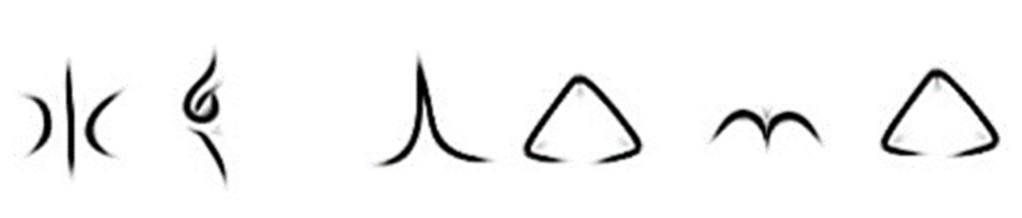
Ei’lara
Ei’lara.
Ei denotes unity. Lara denotes threads.
The entire cosmos is made of threads that ultimately return to the same point. That is why everything is a unity.
And that is why it is a reflection. Our actions and thoughts all go back to us.
We are.
Ending Notes
I wrote a published spiritual and philosophical dark fantasy novel series. I am authoring the ninth book now. The books cover many of these themes far more deeply.
Of relevance, my post-graduate thesis in a global, top 12 university specialized into existentialism. I blended existential philosophy, sociology, and psychology, which reflects this chapter’s many themes. My earlier specialization into mathematical sociology also reflects certain physics and mathematical concepts.
 How to Tetris