Problems related to opener setups. Openers are setups at the start of a match that create powerful T-spin attacks.
Questions
Why are some openers “better” than others?
To judge the effectiveness of an opener, look at these factors:
- What is its KPP?
KPP refers to Key Presses per Piece.
Openers such as DT cannon require fewer key presses per piece, allowing them to be placed more quickly than others.
DT Cannon is hence highly efficient as an opener.
ii. How often can it be used?
Some openers can be used in 50-60% of a starting bag’s sequences, such as TKI and DT Cannon.
DT Cannon opener:
| Diagram Set 8-1 | |
| 1 | 2 |
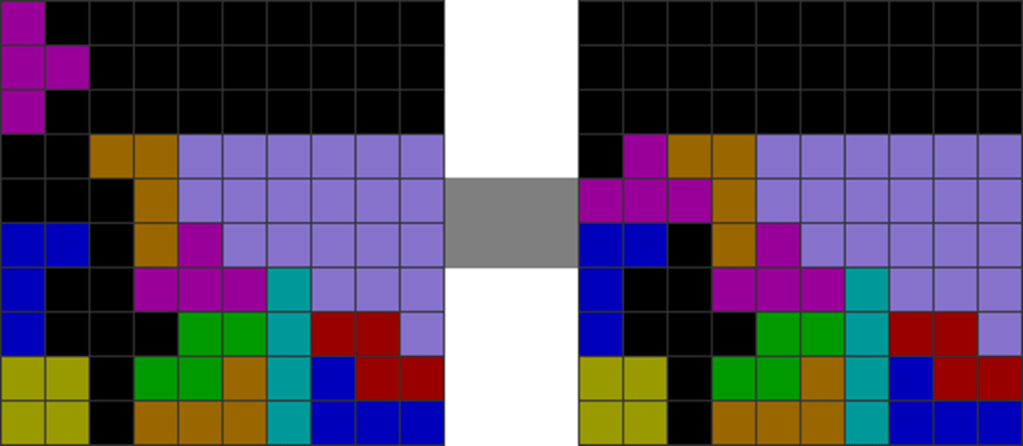
| A DT Cannon opener is ready. Soft drop the T into the cavity. | Rotate and insert the T under the L overhang. |
| 3 | 4 |
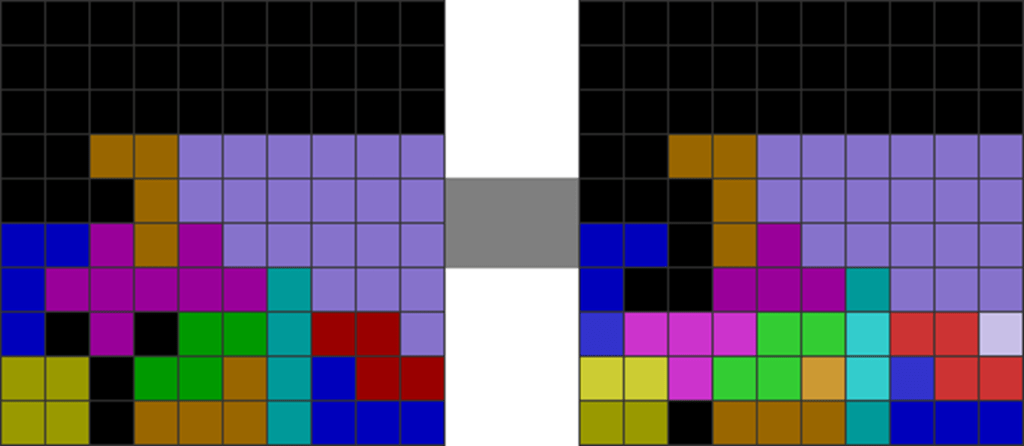
| Rotating again kicks the T piece in. Soft drop T further once it enters the cavity. | Once the T touches the bottom, rotate it for a T-spin line clear. |
TKI opener:
| Diagram Set 8-2 | |
| 1 | 2 |
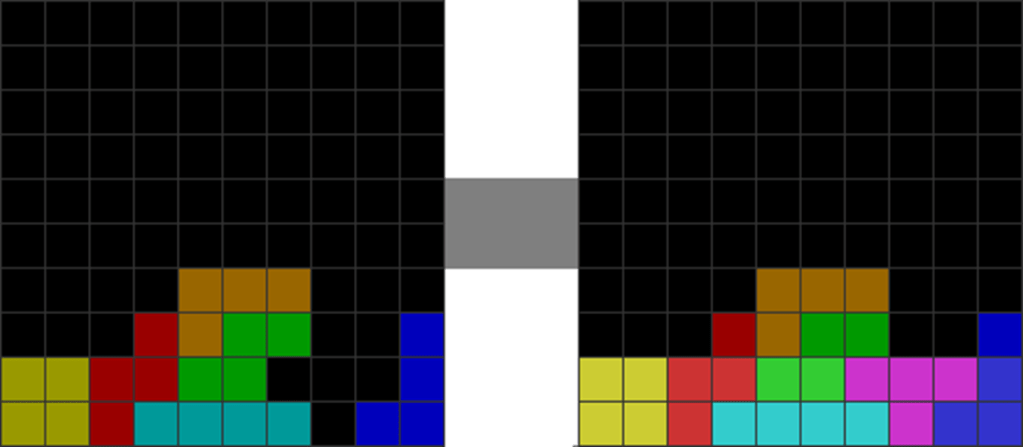
| This is the first bag’s placement. Hold the T piece. | You get your first T-spin double. |
In my experience, TKI can be used around 50% of the time. You typically use it with an early I, although you can soft-drop the I under the Z if it comes late, like this:
| Diagram Set 8-3 | |
| 1 | 2 |
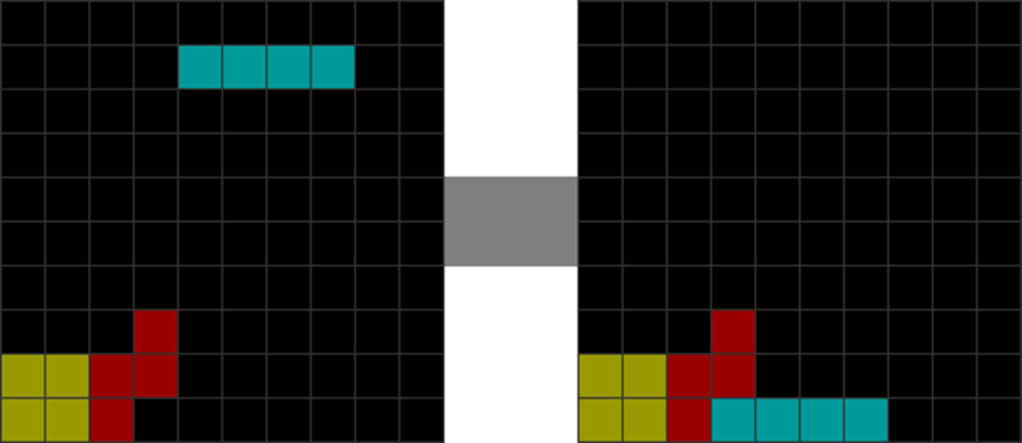
| Place the O and Z pieces like this. | Soft drop the I piece under the Z piece. |
DT Cannon can be used around 50% of the time, especially with early L and J pieces. If they come late, you can soft drop S and Z under them like this:
| Diagram Set 8-4 | |
| A | B |
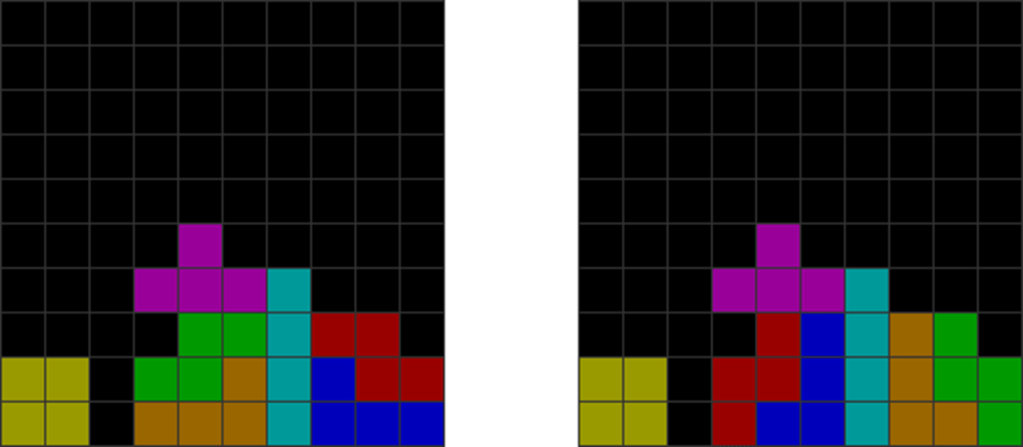
| This is the most common DT Cannon pattern if L and J come first. | This is used when either L or J comes late (or both). You can place S or Z vertically first, then soft drop L or J under them. |
This makes them ideal, as it means less memorization. You also need fewer openers, which avoids the information overload of choosing from too many. This lets you transition easily to the mid-game.
iii. How good are their follow-ups?
Many openers offer decent follow-ups. After their initial T-spin barrage, they transition to the mid-game easily.
For instance:
| Diagram Set 8-5 | |
| 1 | 2 |
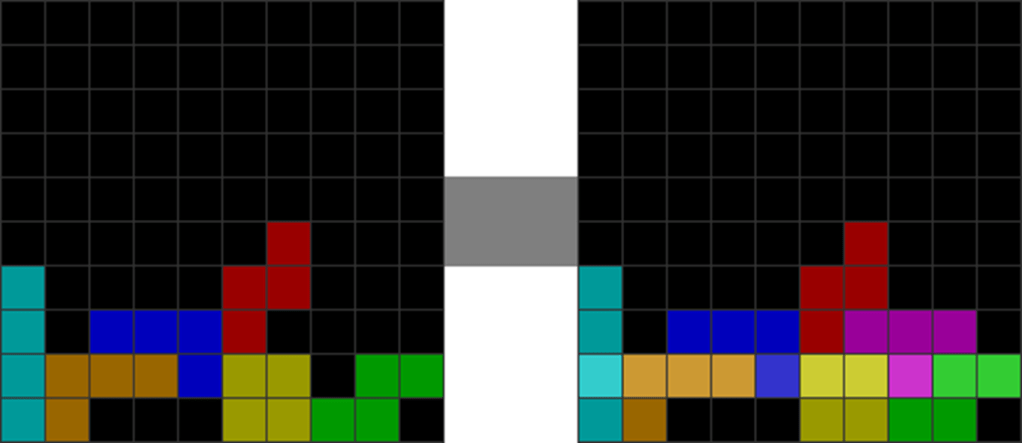
| Place the first bag in the manner above, then spin the T piece into the right cavity to perform a T-spin single. |
| 3 | 4 |
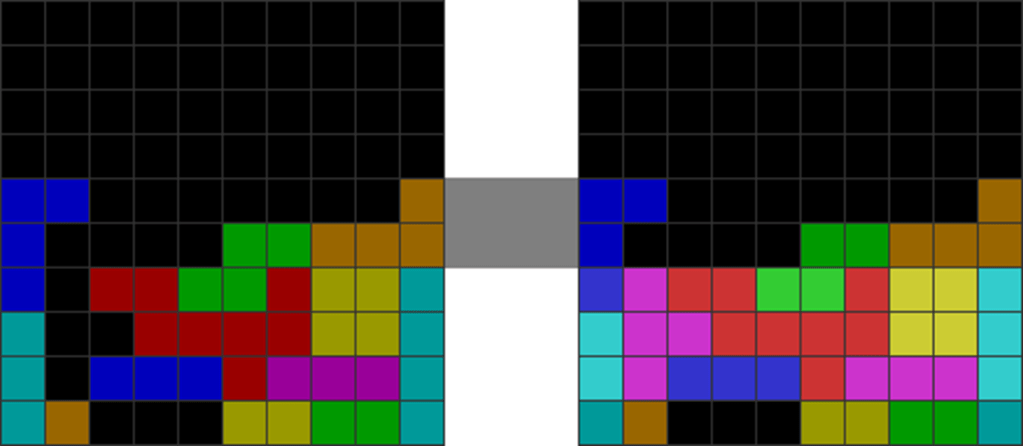
| Make the T-spin triple that follows. |
| 5 | 6 |
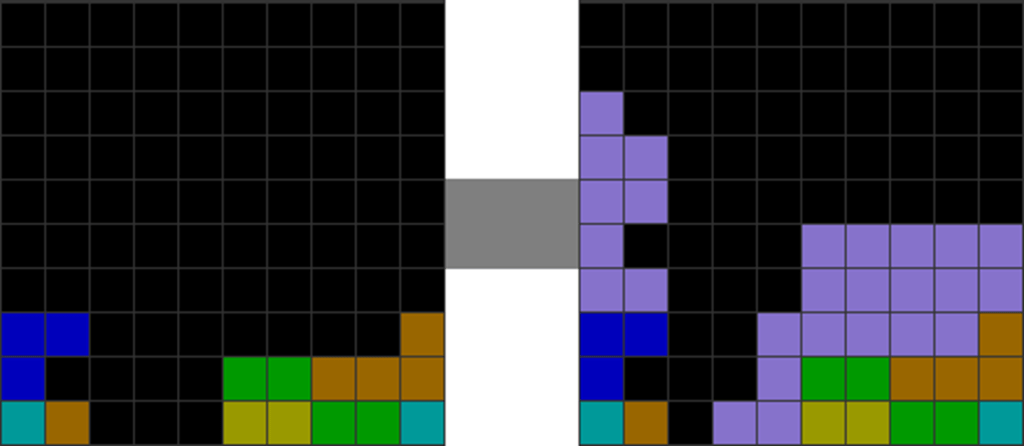
| This follows up into mid-game LST stacking. |
Here, Hachispin can transition into mid-game LST stacking, which gives up to 5 to 10 T-spin doubles if you are proficient at this stacking style.
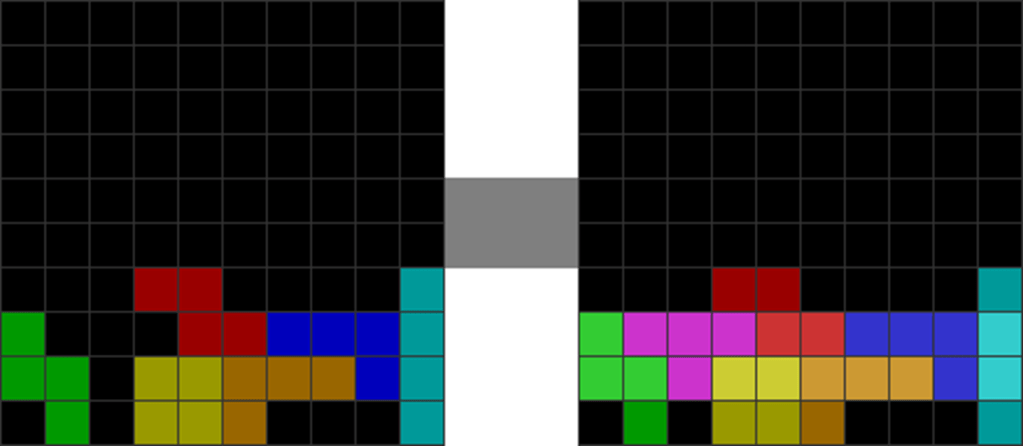
Some can even provide a powerful burst from a perfect clear follow-up like this:
| Diagram Set 8-6 | |
| 1 | 2 |
| 3 | 4 |
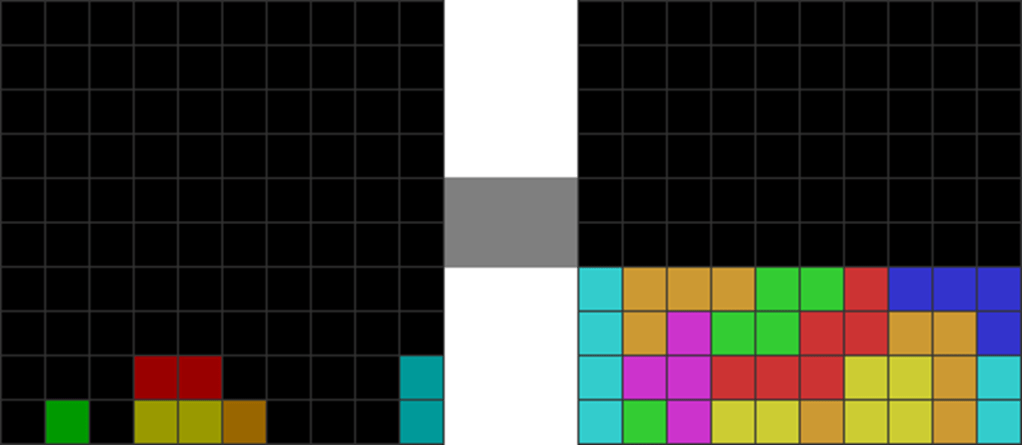
| Make a 4-block-high perfect clear from step 3. |
The more consistent their follow-ups, the better the opener.
Why are the openers on some Tetris Wiki websites so massively redundant?
Some Tetris Wiki sites list way too many openers. If you go to the Hard Drop Wiki website’s T-spin section, you may at first be blown away by seeing 100 to 120 entries on T-spins.
However, when you look through them, it soon becomes clear that around 80-85% are openers rather than mid-game methods.
To make matters worse, many of them, such as God-spin, are entirely impractical mid-game:
| Diagram Set 8-7 | |
| God-spin | |
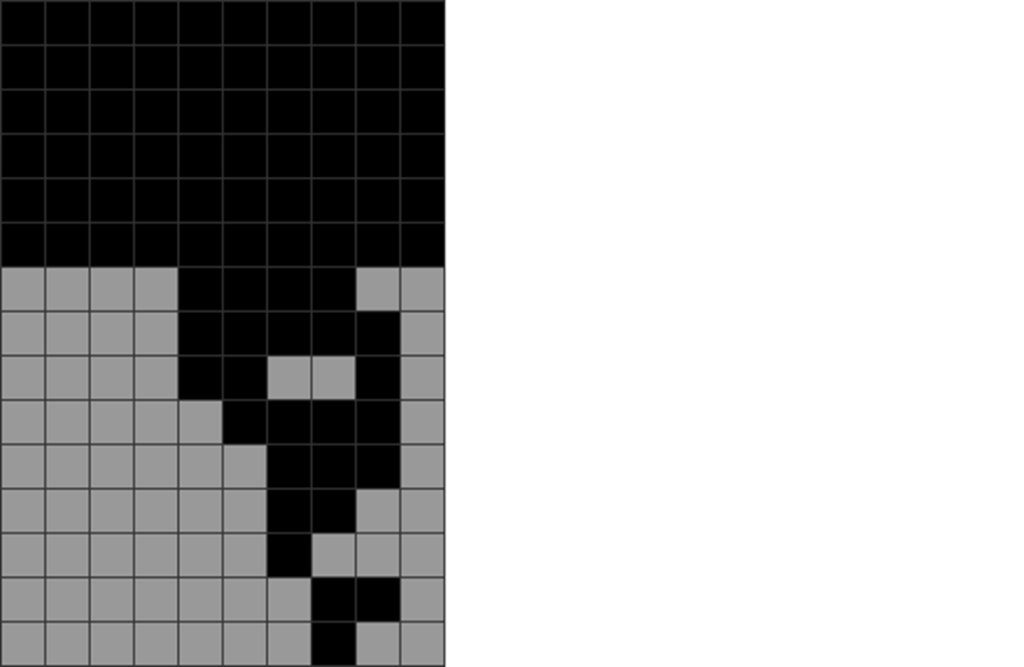
| This is a double polymer T-spin double to T-spin triple setup. |
When I first started playing Tetris, I memorized around 50 openers within the first 2 weeks. I thought that high-level Tetris was just rote memorization.
I was wrong.
In fact, I, along with many players, became so dependent on openers back then that we neglected the mid-game.
Furthermore, when one has to gaze at the previews of a starting field and choose 50 openers, one could be paralyzed by information overload and cognitive limits.
Ideally, just 5 to 8 practical, quick openers are enough. Any more will flood the brain and overload it.
The focus of Tetris is in the mid-game and not the opener phase.
Why should one not be too reliant on looping openers?
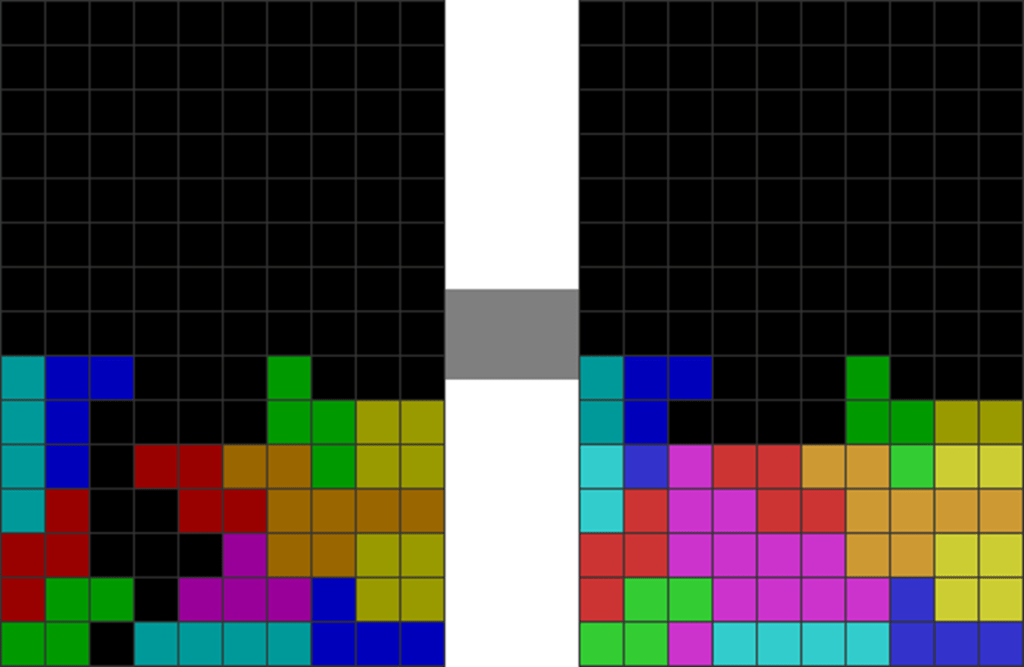
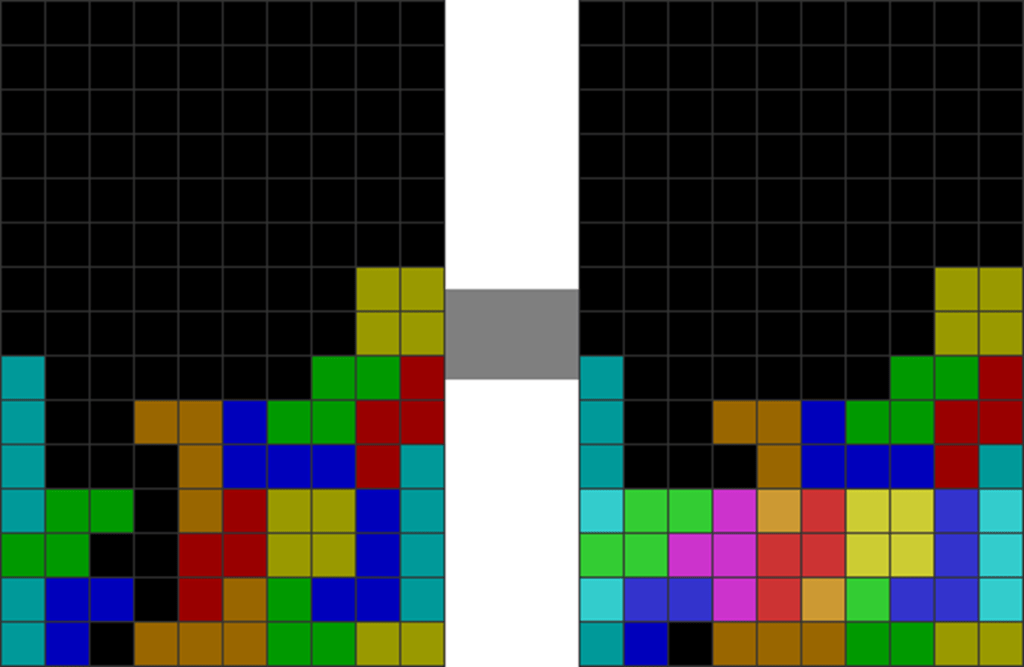
The following features the BT Cannon opener:
| Diagram Set 8-8 | |
| 1 | 2 |
| 3 | 4 |
| 5 | 6 |
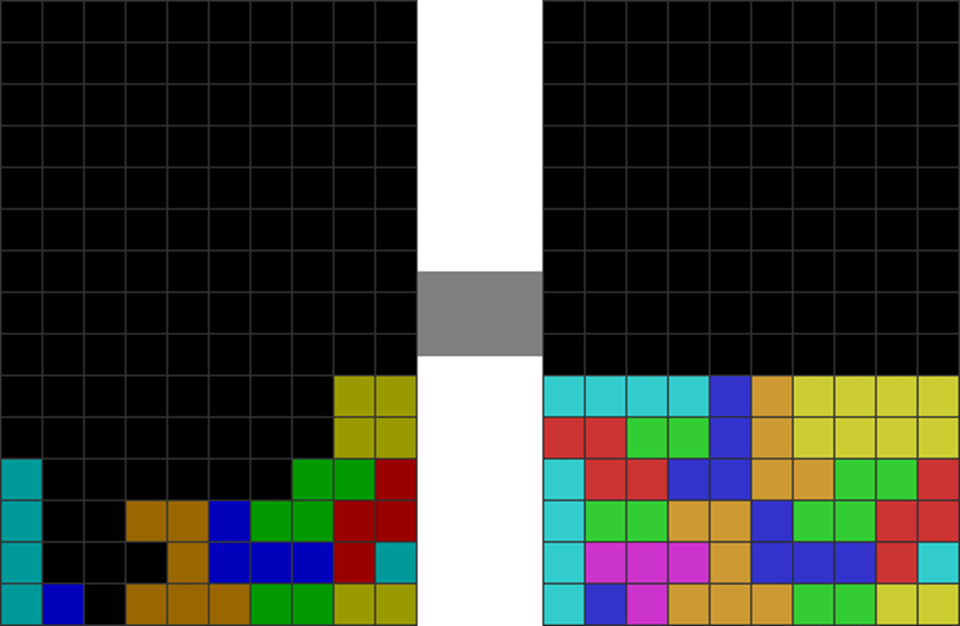
| This is a BT Cannon opener sequence. It leads to several T-spins and a perfect clear. |
With proper memorization and stacking, one can loop this opener after it sends off a barrage of T-spins and a perfect clear.
By repeating this in games like Tetris 99, one can generate massive amounts of garbage to take down many opponents.
However, depending too much on such crutches can render one unable to transition to the mid-game.
I know of several players who were way too dependent on openers. One of them depended too much on the BT Cannon loop. The other was too dependent (and still is!) on the ST stacking opener loop.
Both started off every game with these openers. Once they reached the mid-game, they “forgot” what to do because they had no practice in this area.
Therefore, let this be a warning to those who wish to rely excessively on openers without mid-game proficiency.
Why are perfect clears better in some competitive Tetris versions?
Some competitive games have garbage blocking instead of garbage cancellation.
In games like Puyo Puyo Tetris 1, 2, and 2S, garbage cancellation is present. You will receive interrupting garbage lines that can disrupt your perfect clears.
In games like Tetris 99 and Tetris Effect: Connected, there is garbage blocking. This means that, as long as you continuously line clear without stopping, you will not receive your opponent’s garbage.
This means there is a higher chance of getting out a perfect clear setup, such as a standard perfect clear opener (PCO), without being disrupted.
Are back-to-back perfect clears viable in competitive Tetris?
By this, I mean the following:
The 1st PC bag leading to the 2nd PC bag after solving the former:
| Diagram Set 8-9 | |
| 1 | 2 |

| The 1st PC bag starts from the very beginning of the match’s perfect clear opener. It is solved. | The pattern for the 2nd PC bag is placed. |
The 2nd PC bag being solved:
| Diagram Set 8-10 | |
| 1 | 2 |

| The 2nd PC bag is ready to be solved. | It is solved. |
The 3rd PC bag being solved:
| Diagram Set 8-11 | |
| 1 | 2 |

| The 3rd PC bag pattern is placed. | You solve it. |
As my Book 3 has covered, one can loop 4×10 perfect clears 7 times, then repeat (after doing 7 4×10 PCs, the 8th bag is typically the same as the 1st PC bag, meaning you can reuse the standard perfect clear opener every 7 bags).
Is this method viable for competitive use?
It depends on which game.
In Tetris 99, where you do not get hit by much garbage at the start of games, it is viable to do as many as you can. However, the only problem is that perfect clears are heavily nerfed in Tetris 99, which sends very little garbage. You are better off doing T-spins and Tetrises.
In Puyo Puyo Tetris, they can be viable for Tetris versus Puyo Puyo matchups, as Puyo Puyo players take a while to build up a huge chain to attack you. I have spammed up to 5 before.
In games with garbage blocking, such as TETR.IO or Tetris Effect: Connected, you might spam up to 3.
However, typically 2 back-to-back perfect clears are the most practical.
Why are the L, J, and T pieces the best pieces to successfully complete a perfect clear?
After placing the initial pieces to make a perfect clear pattern, you will often have 3 to 5 pieces left to fill the cavity to solve the perfect clear:
| Diagram Set 8-12 | |
| 1 | 2 |

| At the start of an empty 4th PC bag, you place the last remaining 5 pieces of the 7-bag-randomized bag. | Then, you use the next 7-bag-randomized bag to solve the remaining area. |
For the cavity, if you hold an L, J, or T piece, your chances of perfect clearing are significantly higher.
I can affirm this based on my years of research into perfect clears using the KnewJade Perfect Clear Solution Finder.
This fact does not apply to every pattern, but it generally holds true for most cases.
Why is it so?
To perfectly fill and clear a rectangular cavity at the end of a sequence, the combined number of L pieces, J pieces, and vertically placed T pieces used in that region must typically be even:
| Diagram Set 8-13 | |
| 1 | 2 |

| A T is placed vertically at the corner. | Another J is placed, touching the corner. |
| 3 |

| I, O, and Z are placed to finish the perfect clear. Note that the number of Js and vertical Ts is even. |
Hence, by strategically placing L, J, and Ts at the corners to fulfill this equation, you boost your chances of solving the perfect clear vastly.
However, there are some exceptions, such as:
| Diagram Set 8-14 | |
| A | B |

| Exceptions to the rule. |
Regardless, it is enough of a generalization that our conclusion remains unaltered.
Why is the first perfect clear bag the stumbling block for back-to-back perfect clear sprints?
In Jstris and the King of Stackers, there is a back-to-back perfect clear mode where one must make as many back-to-back 4×10 (and some 2×10) perfect clears as possible.
Some players have gotten up to 50 or more. I have gotten 42 myself.
Players do this by memorizing the perfect clear bag placements and solutions for the first to seventh ones (they repeat themselves every 7 normal perfect clears, which are 4×10-sized).
Here are some patterns:
3rd bag:
| Diagram Set 8-15 | |
| A | B |

| 3rd PC bag patterns. |
4th bag:
| Diagram Set 8-16 | |
| A | B |

| 4th PC bag patterns. |
7th bag:
| Diagram Set 8-17 | |
| A | B |

| 7th PC bag patterns. |
Some bags, like the 5th and 7th, have near-100% chance patterns to solve a perfect clear. Others have far lower.
The 1st perfect clear bag is the least consistent among all the 7 bags. This ranges from a 61% to 88% chance of perfect clearing.
Sometimes, you are forced to place A’s pattern below, which only has a 61% chance to perfect clear:
| Diagram Set 8-18 | |
| A | B |

| Perfect clear opener: 61% | Perfect clear opener with I not placed: 85% |
| C |

| Grace pattern: 88% |
Therefore, the 1st perfect clear bag is so terrible; it has a low chance of being perfect cleared.
Hence, the solution to get around this is to use the advanced 1st perfect clear patterns that I have covered in my Book 4, such as:
| Diagram Set 8-19 |

| 100% | 99.52% |

| 99.21% | 99.17% |

| 98.57% | 98.10% |

| 96.91% | 96.51% |
However, these patterns are difficult to use, and it may not be easy to get them out.
However, if a player masters these advanced patterns, their 1st perfect clear bag’s chances of achieving a perfect clear are significantly increased, overcoming this stumbling block.
Why are 6×10 perfect clear setups practical?
By this, I mean the following:
| Diagram Set 8-20 | |
| 1 | 2 |
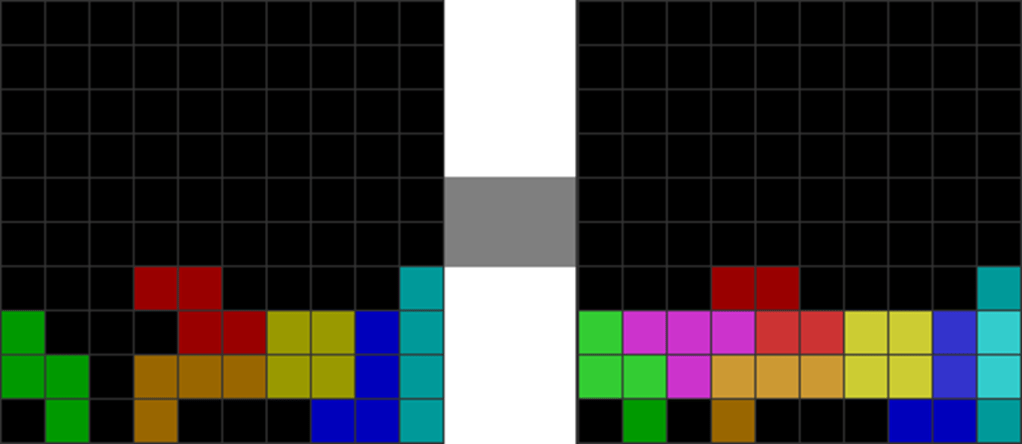
| Complete the first T-spin double. |
| 3 | 4 |
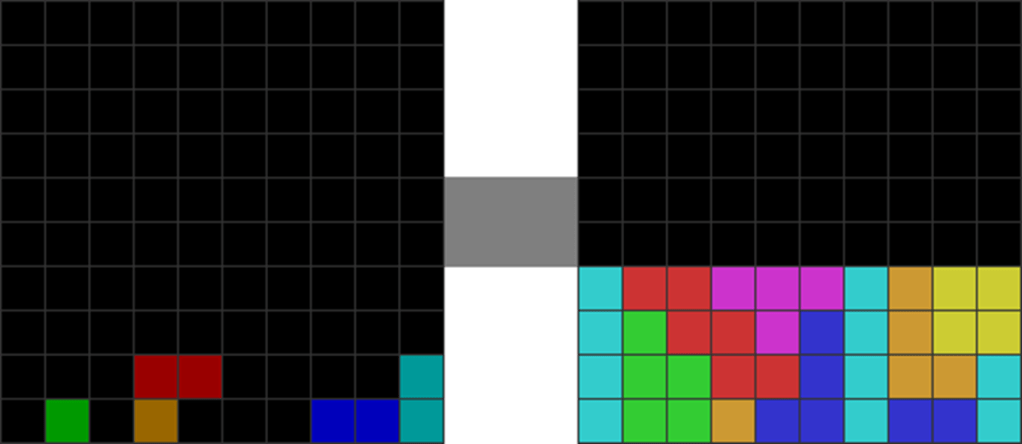
| Make the 4-block-high perfect clear. |
I have covered these techniques in my Book 4. They involve a starting T-spin double, which results in a quick, perfect clear. Altogether, they need 6 cleared lines to complete (and hence, a 6×10 perfect clear).
These methods are practical for competitive matches because the starting T-spin double serves as a protective buffer against your opponent’s first T-spin attack. Most of the time, your opponent will send a T-spin single or double first, which your first T-spin double should defend against.
The only exception is if their first attack is a T-spin triple.
Once you have negated your opponent’s attack, you should have enough time (if you are fast) to upstack and solve the perfect clear.
As long as you have memorized the solutions, you stand a very high chance of getting the perfect clear follow-up.
These openers are deadly in competitive play if you have practiced sufficiently.
 How to Tetris