Questions about ways to input keys and psychological factors to boost one’s speed.
Questions
Why is a proper keyboard or controller necessary for Tetris?
Your keyboard or controller is your weapon in Tetris.
If you use a mushy, cheap rubber dome keyboard, not only will you wear it out within months, but its lower responsiveness can also slow you down.
| Diagram Set 2-1 |
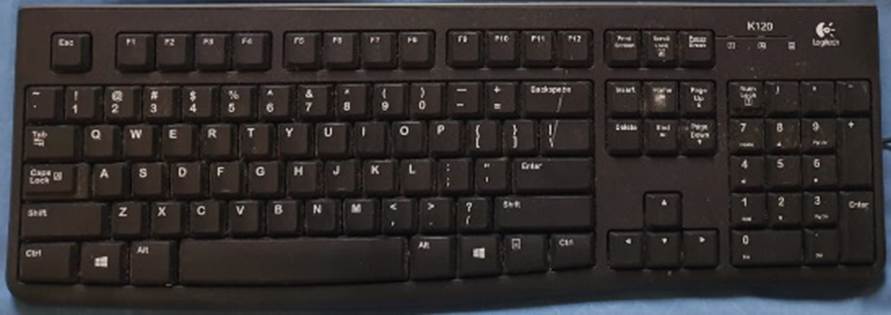
| A K120 rubber dome membrane keyboard. Not recommended for Tetris! |
Cheaper keyboards may not have N-key rollover, which means you cannot press multiple keys at once. This affects your accuracy.
If you are using a mechanical keyboard, choosing the wrong key switch can be harmful. For instance, if you have small fingers, choosing Cherry MX Greens, which are heavier keys, can cause finger fatigue quickly and reduce your endurance.
Some controllers require different thumb positions. In my experience, those that are symmetric, such as the PlayStation controllers, are more comfortable.
Why should one not triple-tap?
While moving your pieces around, some beginner players triple-tap. This means pressing the “move left” or “move right” keys 3 times each.
Here is an illustration:
| Diagram Set 2-2 | |
| 1 | 2 |
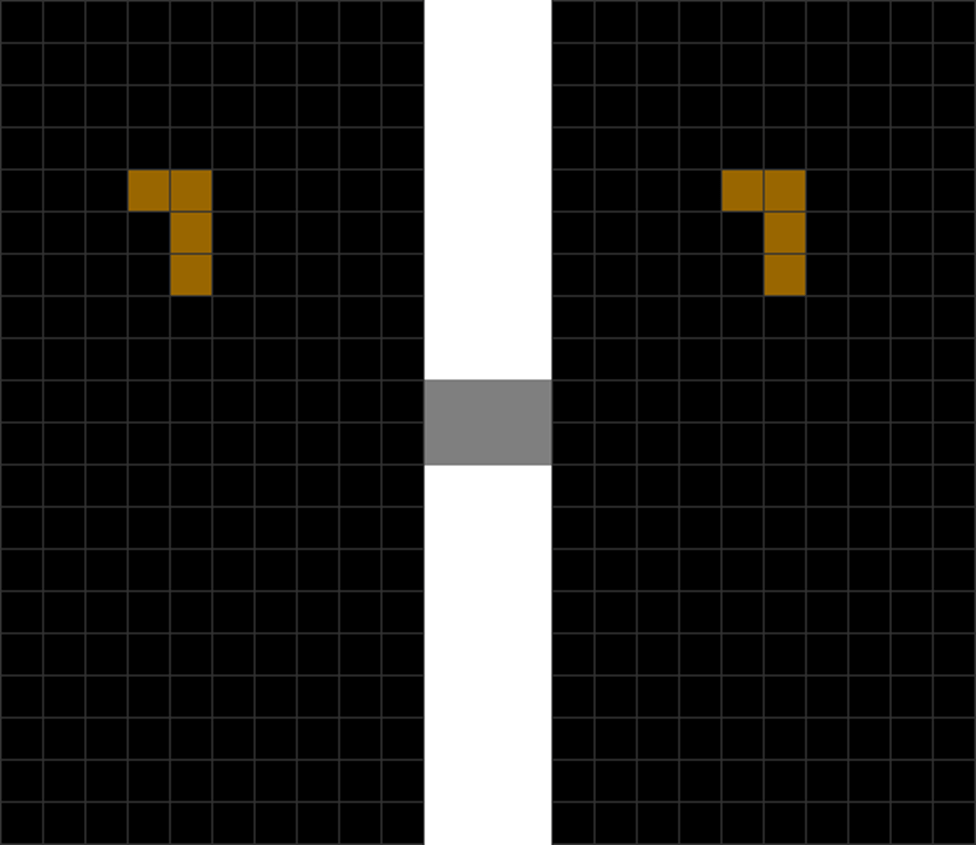
| Rotate the L piece anti-clockwise after it spawns. | You tap “move right” once. |
| 3 |
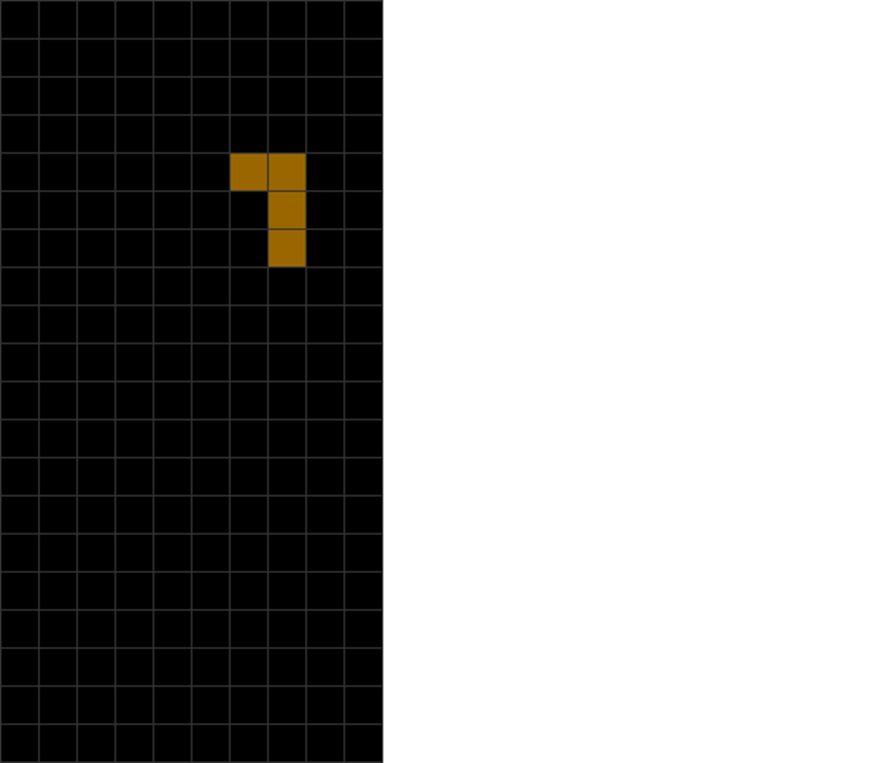
| You tap “move right” 2 more times. This gets it to the right position. |
Here, the player presses “move right” 3 times to get the piece to the right position before hard dropping.
Instead of doing this, a player can do this:
| Diagram Set 2-3 | |
| 1 | 2 |
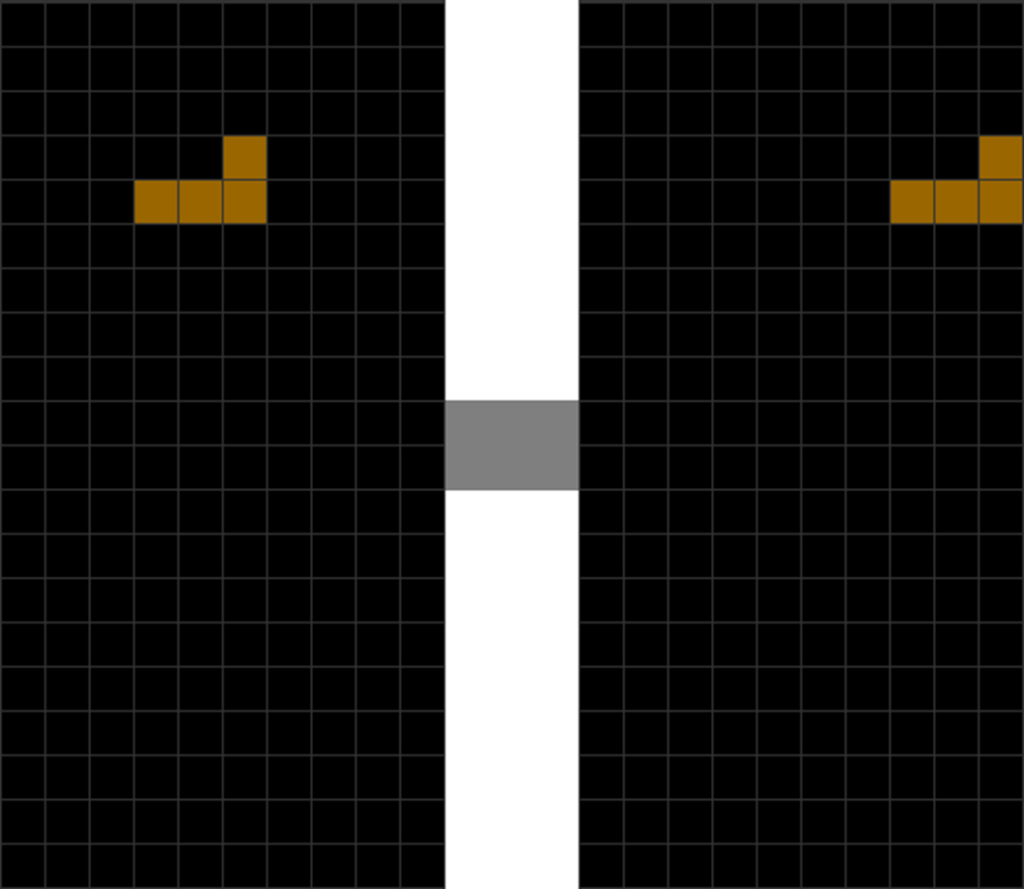
| The L piece spawns. | The player holds “move right” to activate DAS, causing L to rush to the right. |
| 3 | 4 |
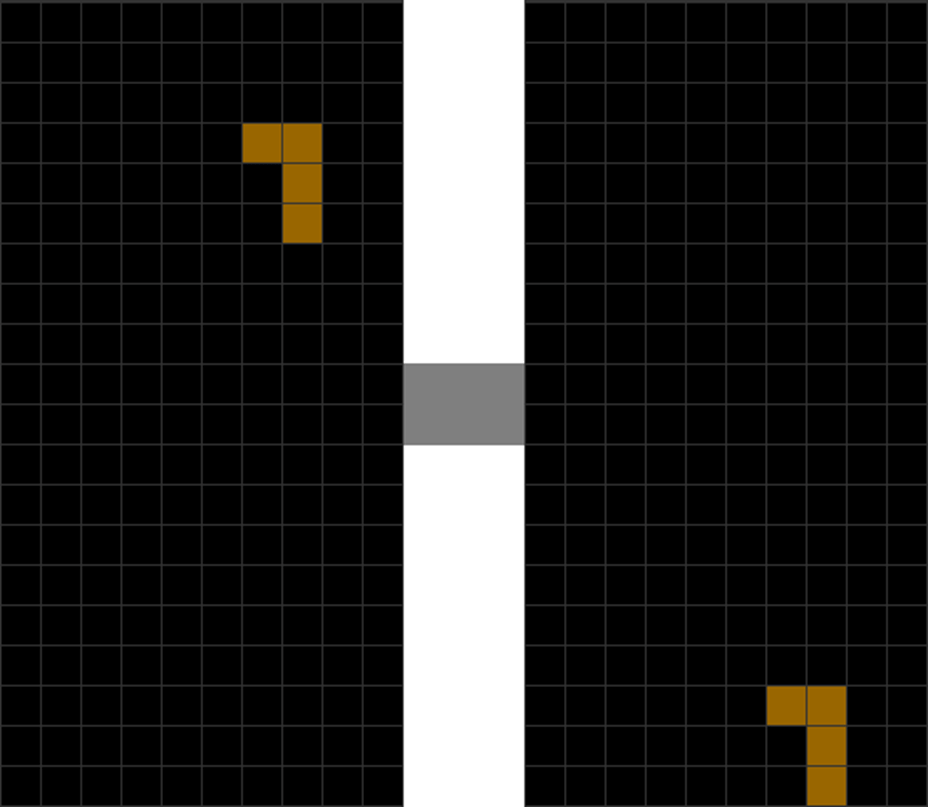
| The player rotates counterclockwise and simultaneously taps “move left.” | He hard drops the L piece. |
Here, a player uses DAS to move a piece quickly to the right side. He then presses “move left” and “rotate” to kick off a piece from the wall into place before hard dropping.
This saves a single movement key. Since the “rotate” and “move left” wall-kick can be pressed simultaneously, it functionally counts like a single movement. Hence, this requires only 2 movement presses instead of 3.
This saves time and therefore avoids the penalty of triple-tapping, which adds an additional movement press.
Why should one not triple-rotate?
Some beginner players use only one rotation direction. Hence, they may press “rotate counterclockwise” 3 times like this:
| Diagram Set 2-4 | |
| 1 | 2 |
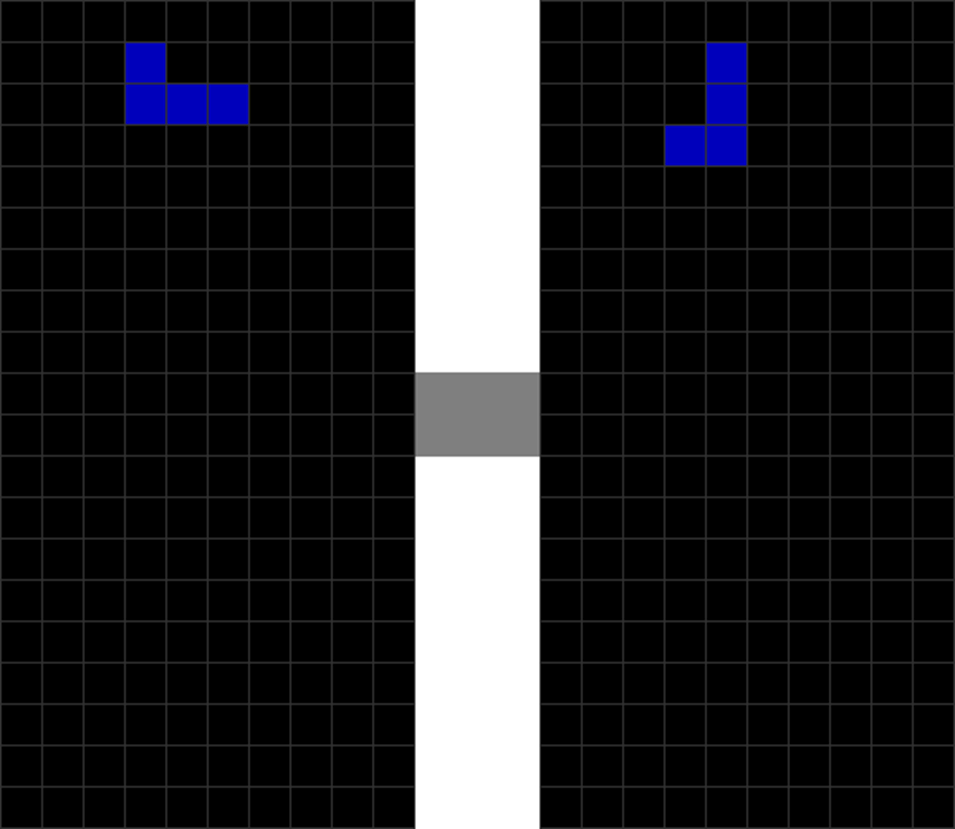
| The J piece spawns. | The player presses “counterclockwise” once. |
| 3 | 4 |
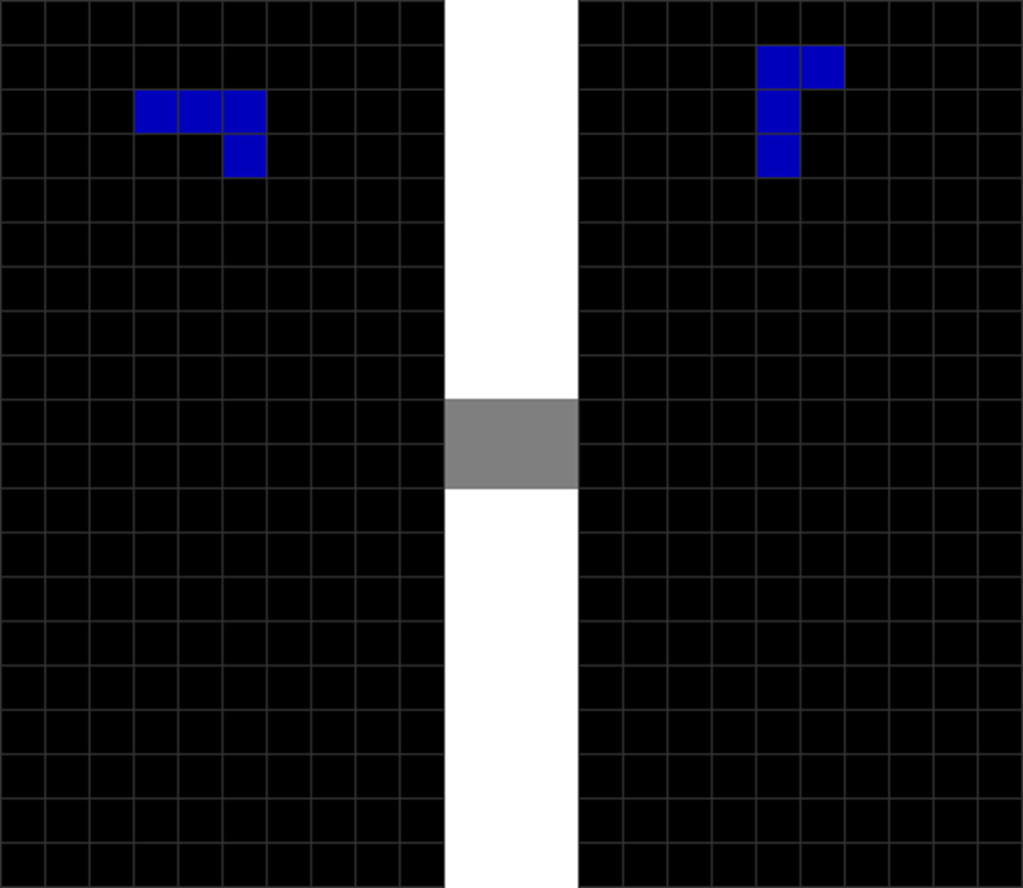
| He rotates in the same direction another time. | And rotates a third time! |
Instead, a player could have done this:
| Diagram Set 2-5 | |
| 1 | 2 |
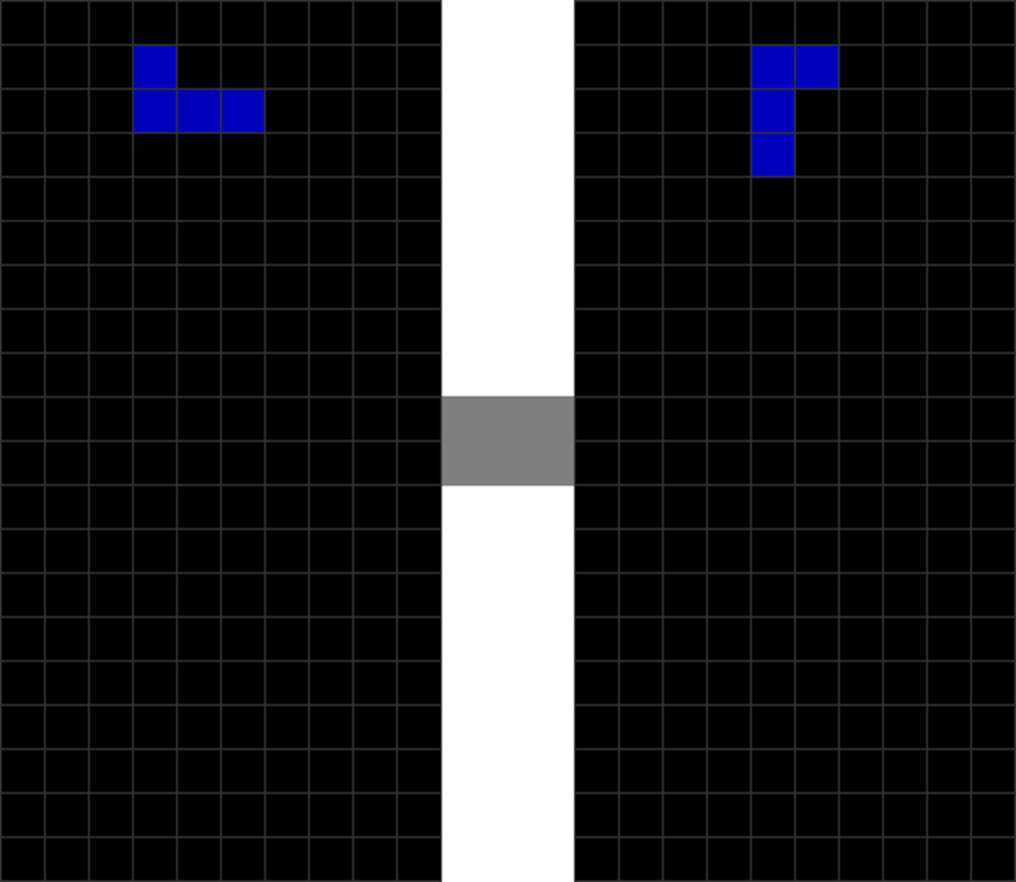
| The J piece spawns. | The player presses “clockwise” once. |
Here, instead of pressing “rotate counterclockwise” 3 times, the player presses “rotate clockwise” just once. This saves 2 extra key presses. This directly increases a player’s speed.
Why should one have proper bindings?
By proper bindings, I mean symmetric bindings, where creating a mirrored setup versus a non-mirrored setup does not result in inconsistent key presses. Here is what I mean:
| Diagram Set 2-6 |
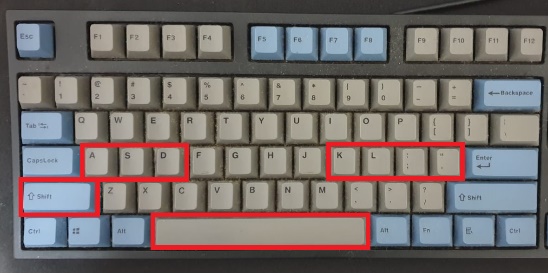
| My trusty Leopold keyboard. The red rectangles show where my main key binds are for Tetris. |
My key binds are:
| Key | Function |
| Left Shift | Soft drop |
| A | Move left |
| S | Hard drop |
| D | Move right |
| K | Rotate counterclockwise |
| L | Hold |
| ; | Rotate clockwise |
| ‘ | 180-degree rotates or zone in Tetris Effect |
| Spacebar | Miscellaneous functions |
My keybinds are symmetric. However, here is an asymmetric one:
| Key | Function |
| P | Soft drop |
| A | Rotate counterclockwise |
| S | Hard drop |
| D | Move right |
| K | Move left |
| L | Hold |
| ; | Rotate clockwise |
| ‘ | 180-degree rotates or zone in Tetris Effect |
| Spacebar | Miscellaneous functions |
Here, a player has asymmetric keybinds. As such, when he carries out a non-mirrored DT Cannon, he can get it off easily.
For a mirrored DT Cannon, because he has to press “soft drop” and “rotate” to get the T piece into the cavity to perform the T-spin, the asymmetric bindings prevent him from pressing both simultaneously.
I have known of a top Tetris player, Microblizz, who, according to my sources, has an asymmetric keybind. I am not sure why he does this.
However, if you have this issue, it is vital to ensure that your key binds are symmetric first.
If not, you may spend 3 to 5 years getting used to your settings. By then, it would be too late to reverse the habit.
Why is it ideal to learn 2-step finesse earlier?
2-step finesse refers to the optimized sequence of keypresses that moves every piece to the right place with minimal presses.
When you have an unoptimized set of keypresses that involve too many triple-taps or extra presses, you will waste finger movement.
If you do not learn 2-step finesse early, you could spend years habituated to an inefficient set of keypresses.
When this happens, it would be difficult to reverse the habit.
By learning 2-step finesse early, you gain the benefits of higher accuracy and speed, which are reinforced earlier, preventing the predicament.
Why should one train efficiency before speed first?
I have seen some intermediate players on their Twitch streams who just mindlessly go for speed.
One such player does the following moves constantly (you know who you are if you are reading this!):
| Diagram Set 2-7 | |
| 1 | Alt. A |
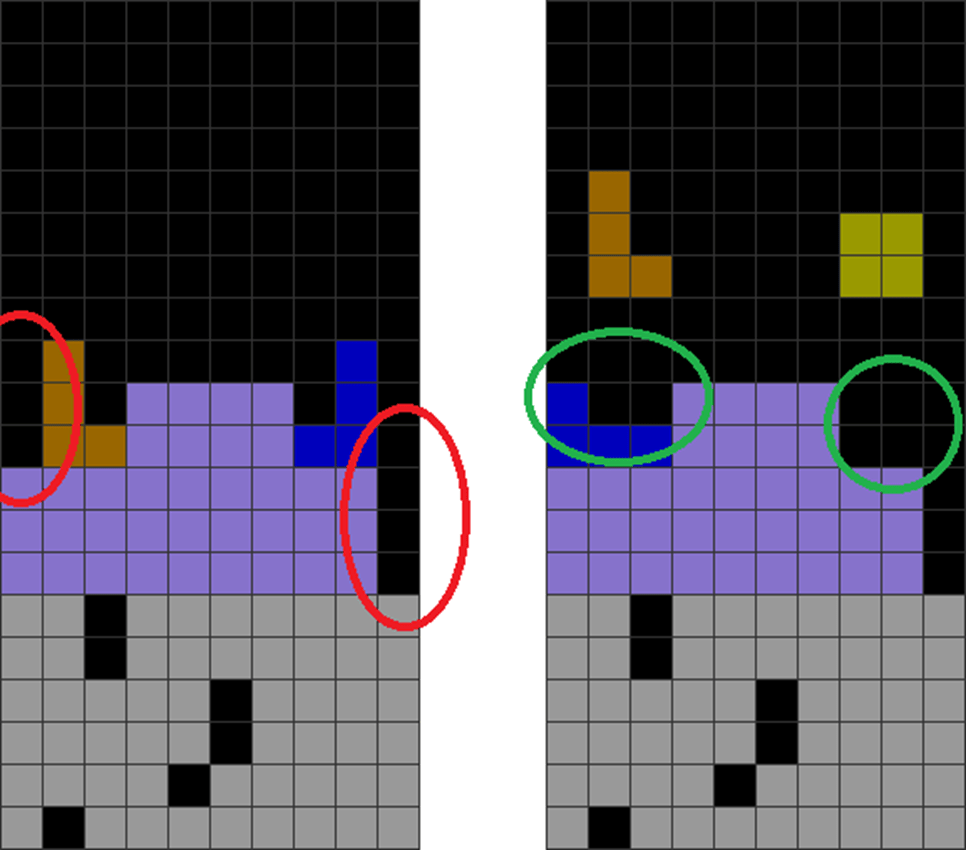
| The player stacks to create 2 I-piece dependencies, each in the red-circled corners. | This offers a better alternative, which allows L, J, and O pieces to be placed. |
Here, in step 1, she stacks in a manner with multiple piece dependencies on the left and right sides of the stack. The pieces to fill those dependencies arrive late, causing her to place all pieces in between, leading to overstacking.
She also does the following:
| Diagram Set 2-8 | |
| 1 | 2 |
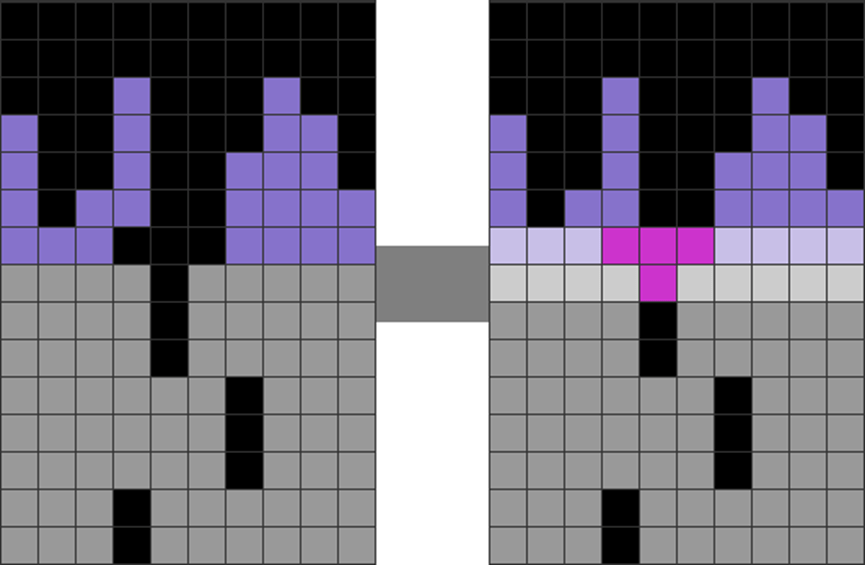
| A terribly imbalanced field. | She does the T-spin line clear. |
| 3 | 4 |
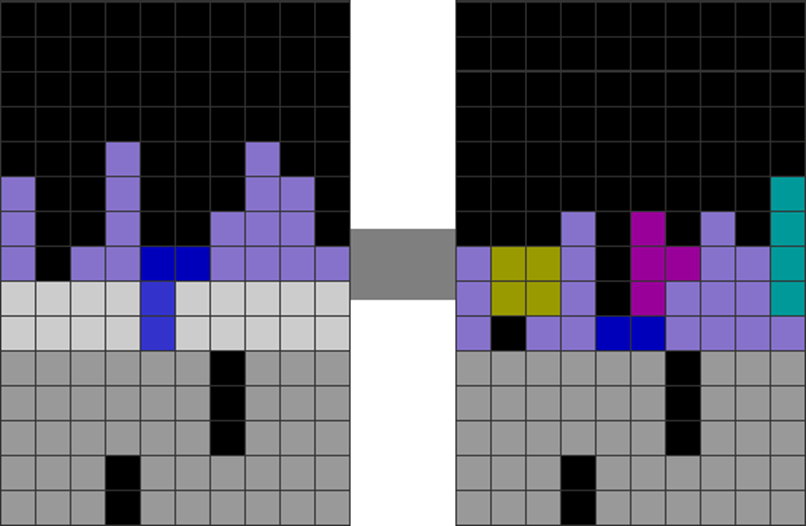
| She skims, as there is nowhere to place the J piece cleanly. | The entire field is messed up with poor aftermath stacking. |
Here, she spends so much time making a T-spin that she messes up her stacking just to do so. She then has to skim off her upstacked lines to clean up the field, only to repeat the same mistake.
Interestingly, she plays at 2.2 pieces per second on TETR.IO, which is fast for an intermediate player.
This is an example of a player who goes strictly for speed at the price of severe inefficiencies.
By doing so, one speeds up the rate of making mistakes since speed has a multiplier effect.
Therefore, it is important to cultivate efficiency and sound decision-making before pursuing speed.
This is because when you make proper decisions, your rate of making mistakes will not increase as much when you multiply it by speed.
Speed should hence be trained only after efficiency training.
Why should one spend more time playing slowly first?
Some players, like me, take the path of playing slowly first before training their speed.
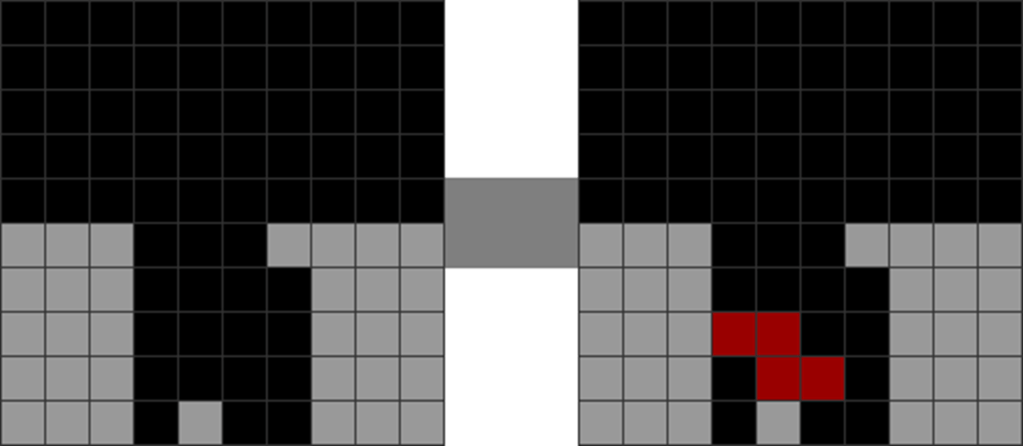
I know of one Japanese player who does this. He may be slow, but he can create extremely elaborate setups such as these:
| Diagram Set 2-9 | |
| 1 | 2 |
| 3 |
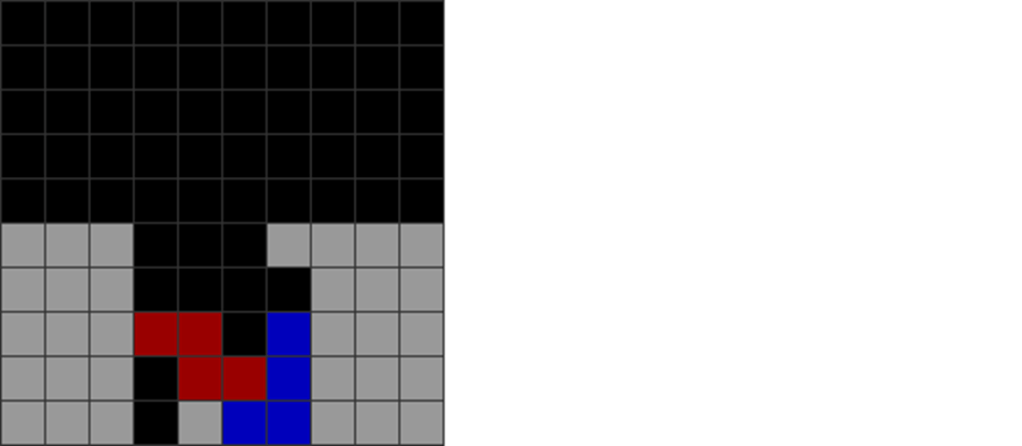
| A variant of the One-piece Wonder. The J piece spins under the Z to create a T-spin single setup. |
I encourage this slow exploration of as many techniques as possible during this phase.
By doing so, one will be exposed to a wide range of methods. One will then learn the follow-ups, pros, cons, risks, and situations to use each method with greater versatility.
The longer one stays in this exploration phase, which lasted about 2 to 3 years for me, the greater one’s versatility will be.
Once a player has explored enough, they can prune less efficient or unsafe methods to focus on the most practical ones, such as LST stacking.
A player’s speed can then rise exponentially, allowing them to take advantage of their broader range of methods and gain an edge over other players.
Why are you slow in Tetris, no matter what?
While a more mature age or slow processing speed can hinder one’s progress in Tetris, I was actually a slow player during the first 2 years of playing the game.
However, much of this slowness came from making too many big-brained T-spin setups that required too much time and mental energy to think like these:
| Diagram Set 2-10 | |
| 1 | 2 |
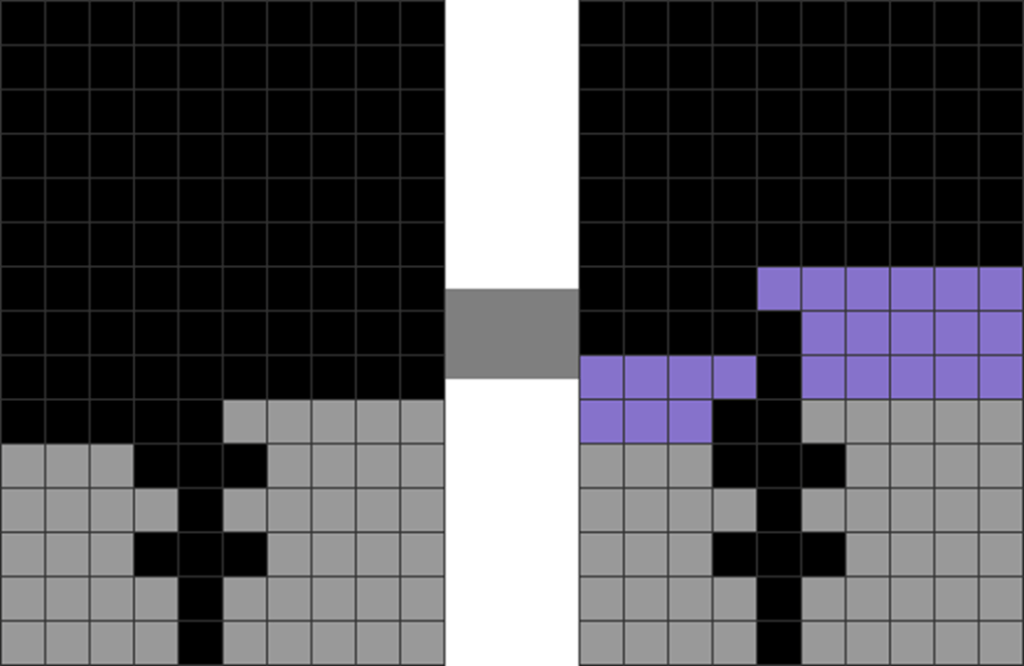
| The player upgrades a Fractal by stacking the lavender parts to a Magellan. |
Once I pruned the less efficient and impractical methods, I could train and reinforce the remaining quick, practical, and simple methods.
Over time, my speed increased significantly.
The rest is merely familiarization with existing methods.
 How to Tetris