Questions relevant to cultivating certain Tetris gameplay habits that boost your mid-game efficacy.
Questions
Why is greed bad in Tetris?
Greed refers to forcing certain powerful setups in Tetris when the pieces and situation may not allow for such:
| Diagram Set 3-1 | |
| 1 | 2 |
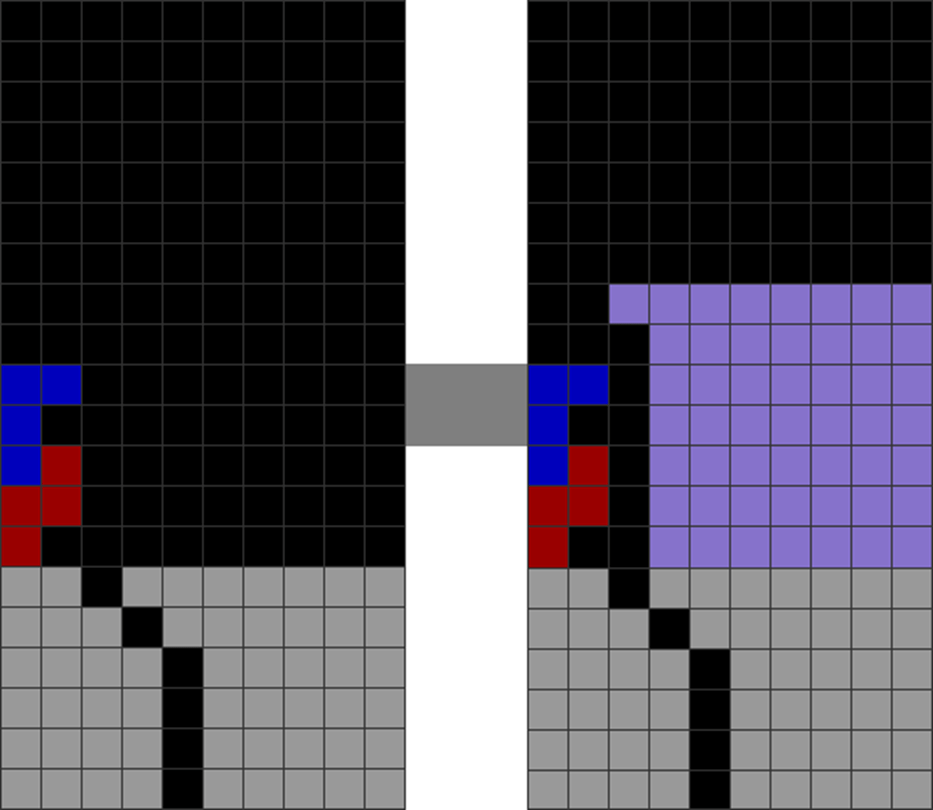
| The player places a vertical J and Z to form the foundation for a back-to-back T-spin triple tower that grants 2 T-spin triples. | To complete the setup, the player must upstack everything (lavender blocks) on the right. |
Here, a player “forces” the creation of a setup that is fully upstacked from the bottom (because one must manually build up the entire lavender part). This is hence not an opportunistic setup.
During upstacking, you are vulnerable and can be spiked by an incoming enemy attack, with no way to offset it. Hence, you can get topped out.
Furthermore, because of excessive upstacking, you could waste many Ts in the stack. Every T wasted and not used for a T-spin reduces your long-term efficiency.
Finally, the setup, not being opportunistic, is wasteful, as you must upstack most of it.
Instead, to deal with this, make powerful setups largely when it is opportunistic:
| Diagram Set 3-2 | |
| 1 | 2 |
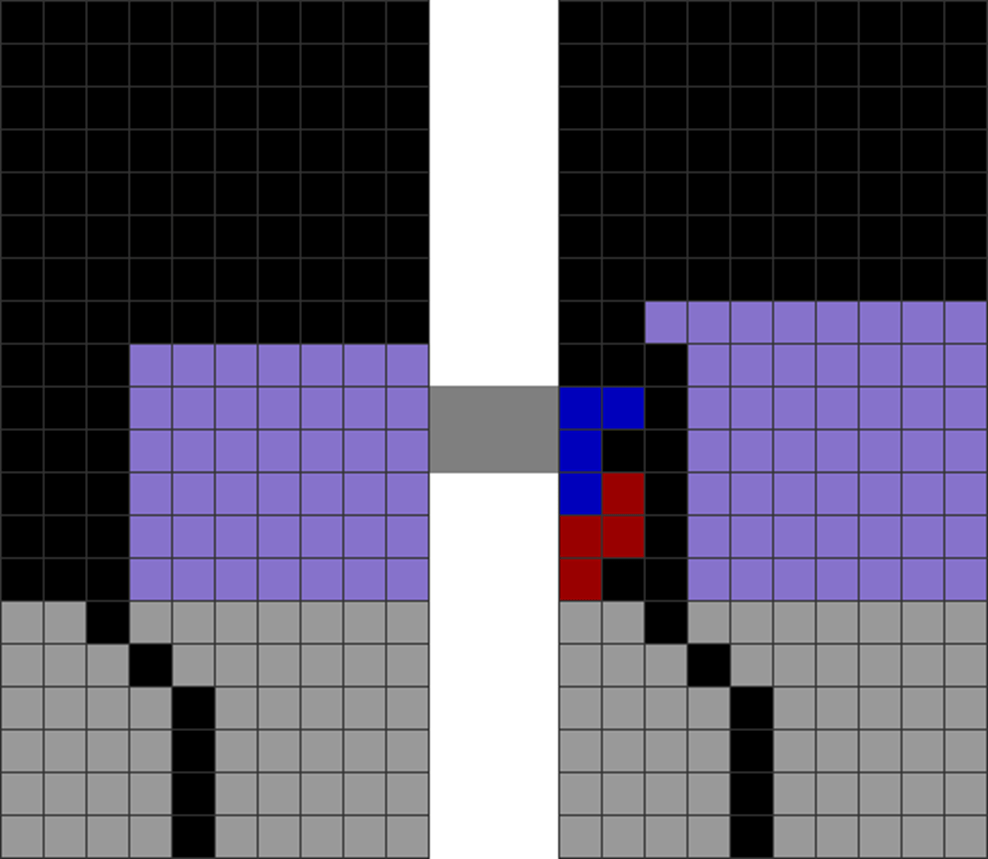
| One side of the stack has already been pre-stacked. | To create the double T-spin triple setup, the player only needs to put 2 pieces, a J and a Z. |
Here, most of the stack is already created mid-game. The player only needs to put 2 pieces to make the setup.
This is hence safe, non-greedy, and quick to create.
Why are easy meta methods like center 4-wide or stalling so frowned upon?
Super-easy meta-methods that require very little thinking and time to train, yet have massive benefits, are often loathed by high-level players.
These include the following:
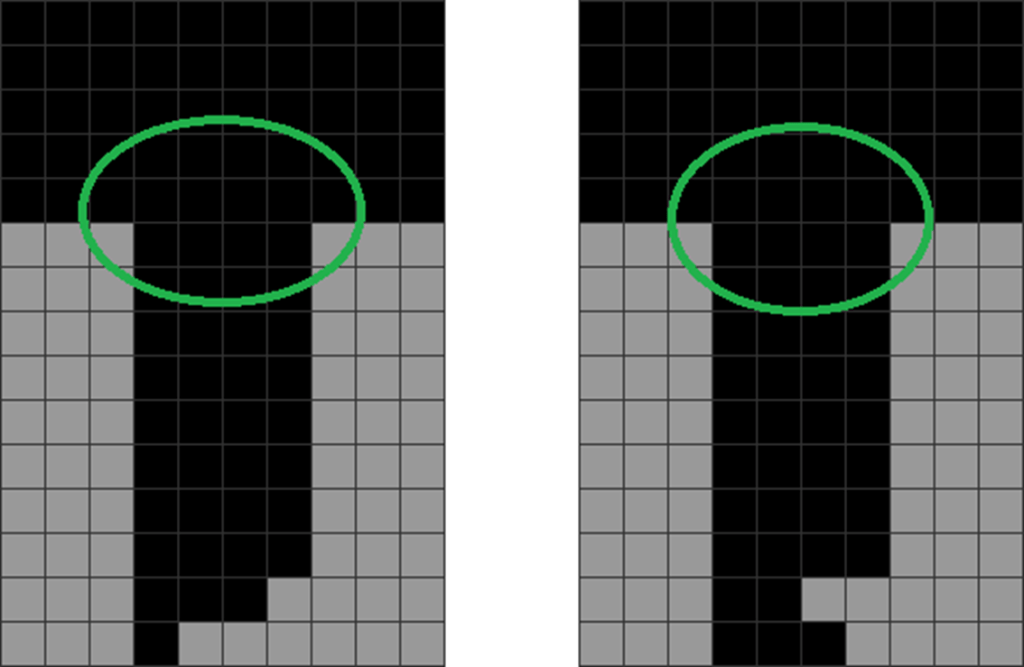
| To make center 4-wide, make the 4-wide residue pattern precisely in the center. Stack the 2 adjacent sides until they become tall towers. The green circled columns 4 to 7 should be empty, except for the residue pattern below. |
Center 4-wide is an easy-to-set-up method that can be used from an opener at the start of the game. They soak up massive damage while sending lots of dirty garbage to the opponent.
Stalling is a super-easy meta-method in Tetris 99 that involves delaying line clears to offset an opponent’s garbage. Because you can, at most, get 12 lines of garbage in your garbage meter in Tetris 99, players who stall can counteract hundreds of lines of garbage if they do it right.
These methods require minimal thought and training, yet give an immense advantage over players who go for higher-skilled methods, such as back-to-back T-spins, that meta-methods imbalance the game.
When far less-skilled players using such meta-methods can beat far more skilled players who have spent years using other methods, the imbalance causes people to loathe super-easy meta-methods.
Why is it that less is more in Tetris (i.e., simple setups are better)?
Many beginner to intermediate players often believe that high-level Tetris equates to being able to make complex and fancy setups like these:
| Diagram Set 3-4 |
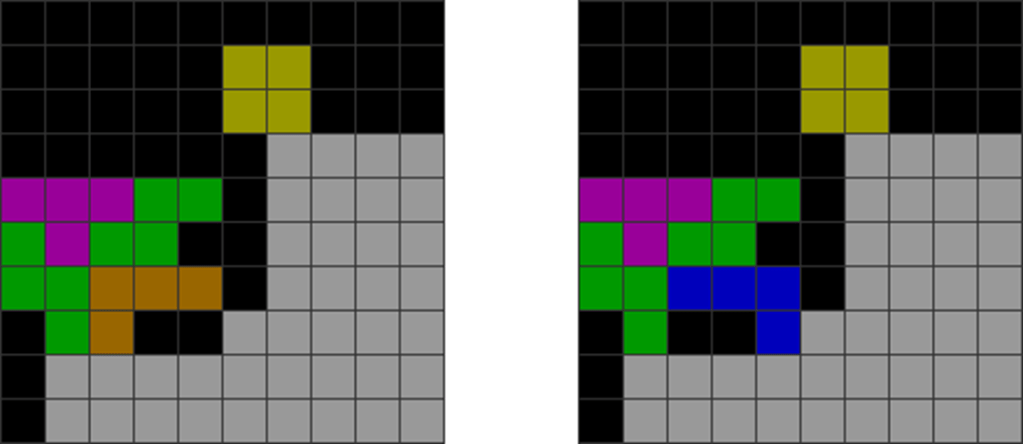
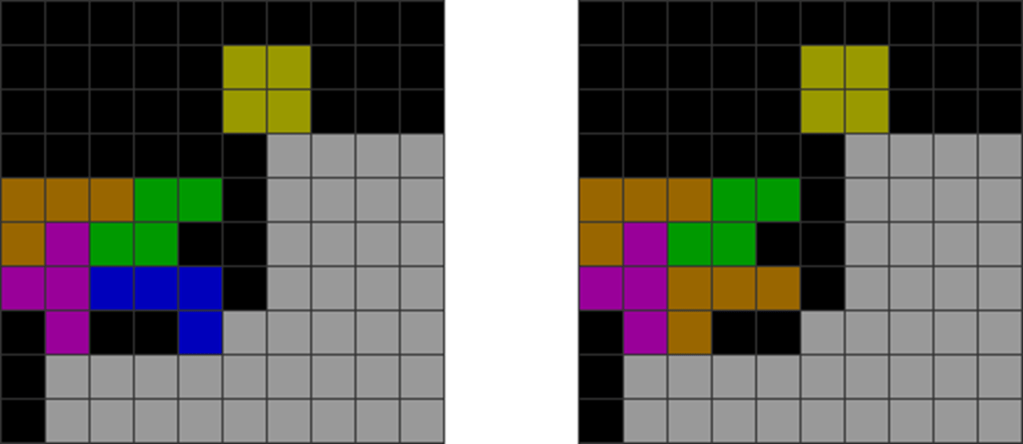
| Advanced T-spin triple props made of 4 pieces each. |
These are setups that are extremely challenging to create mid-game. They are fancy and have many piece and field dependencies to make.
However, as one gets more proficient, one eventually uses simpler and quicker methods as the bulk of their attacks, such as:
| Diagram Set 3-5 | |
| A | B |
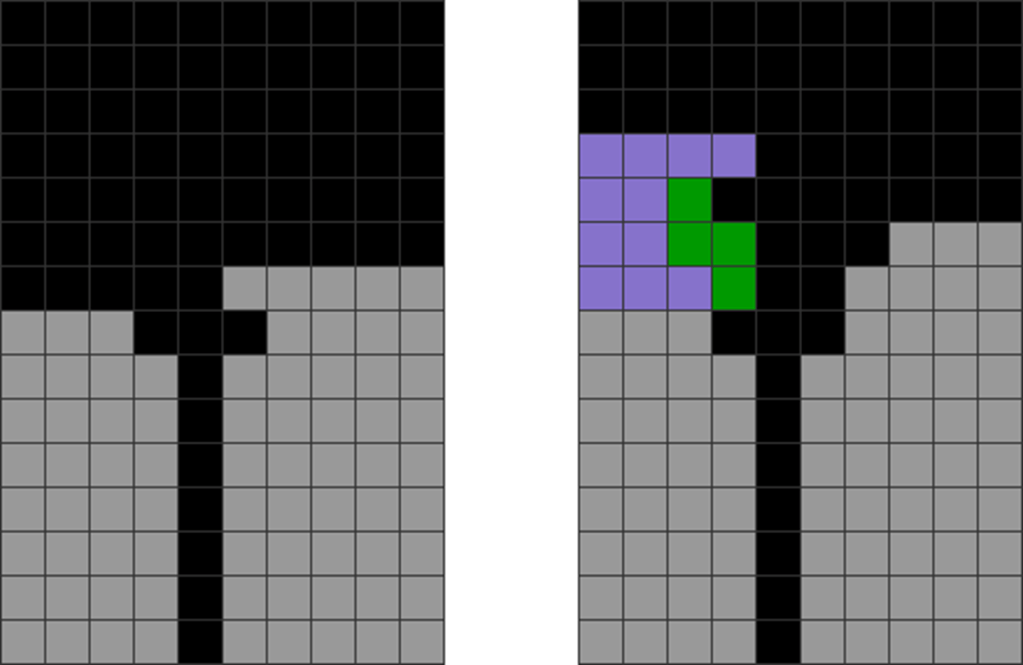
| Normal stacking along a line for T-spin doubles and Tetrises. | Balance both sides of the stack for quick T-spins. |
| C | D |
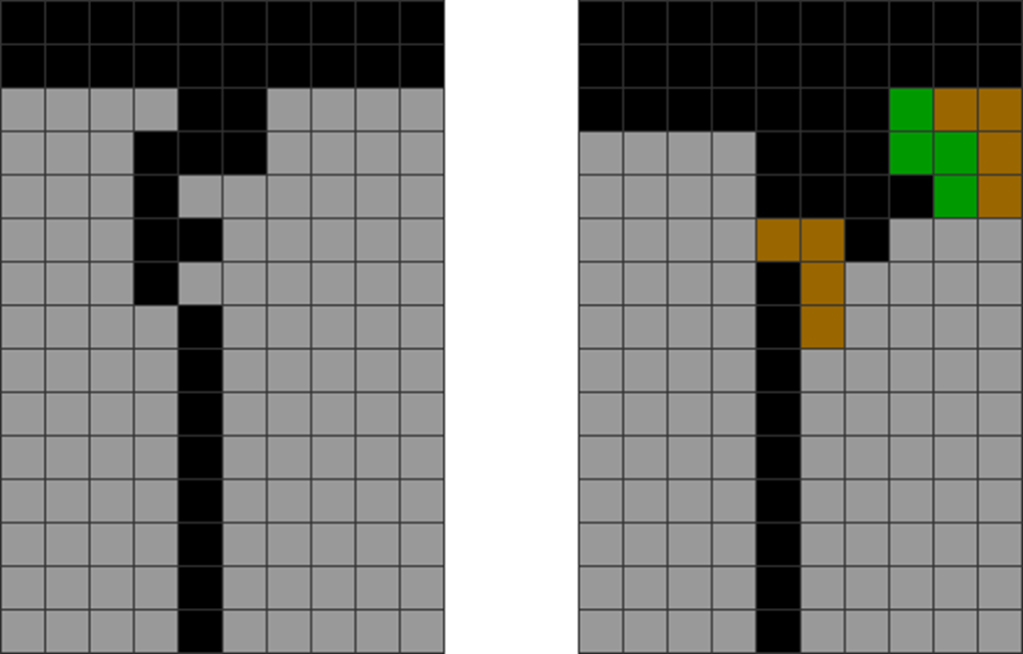
| Occasionally insert C-spins. | Use occasional simple donations. |
| E | F |
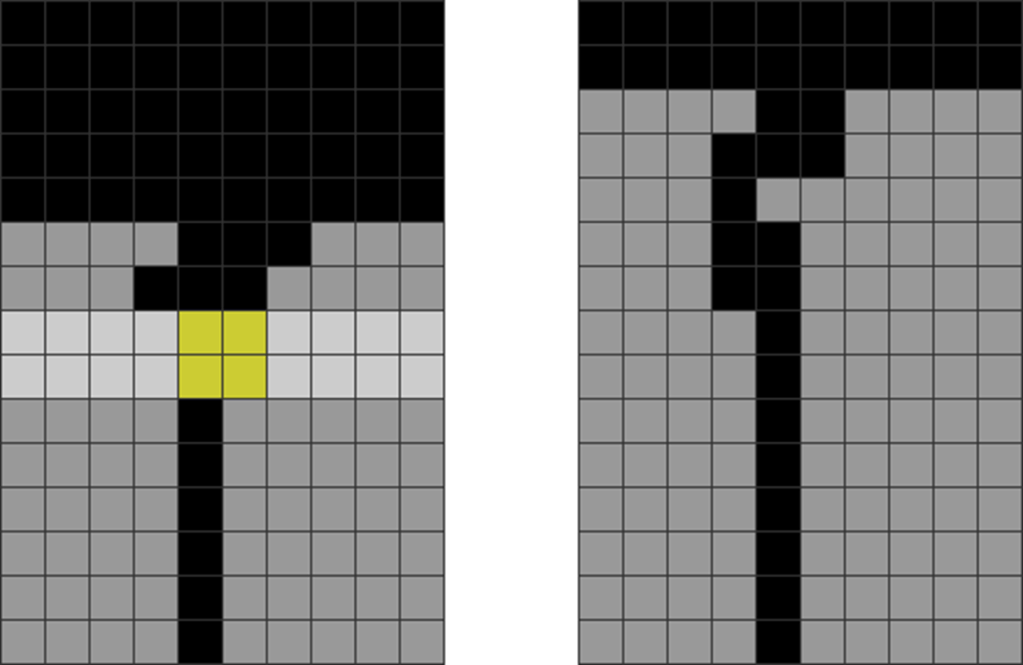
| Use occasional skims. | Insert occasional STSDs. |
Here, the player uses only simple, clean, safe, and quick setups. They require minimal time to think, do not jumble the field, and do not overstack.
This means that if one prioritizes such methods, their speed can increase significantly, boosting their attack power.
However, extremely complex setups not only take a lot of time to plan, but they can be risky as well, such as:
| Diagram Set 3-6 |
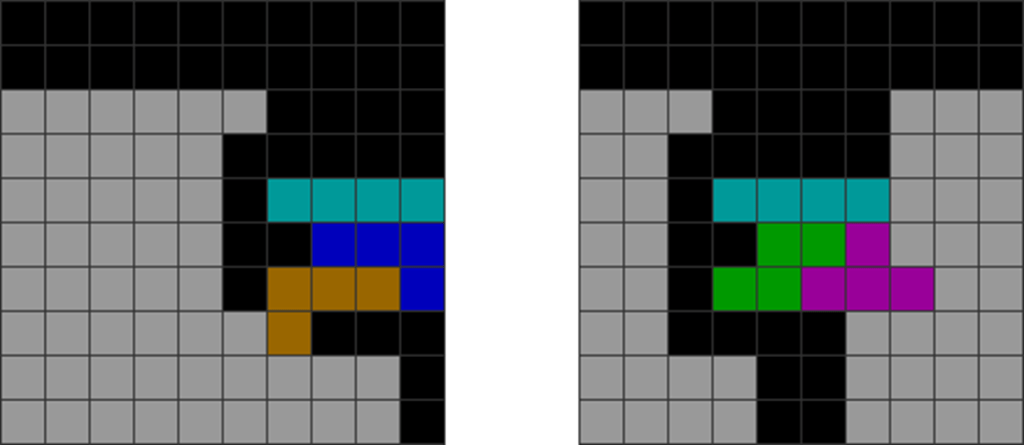
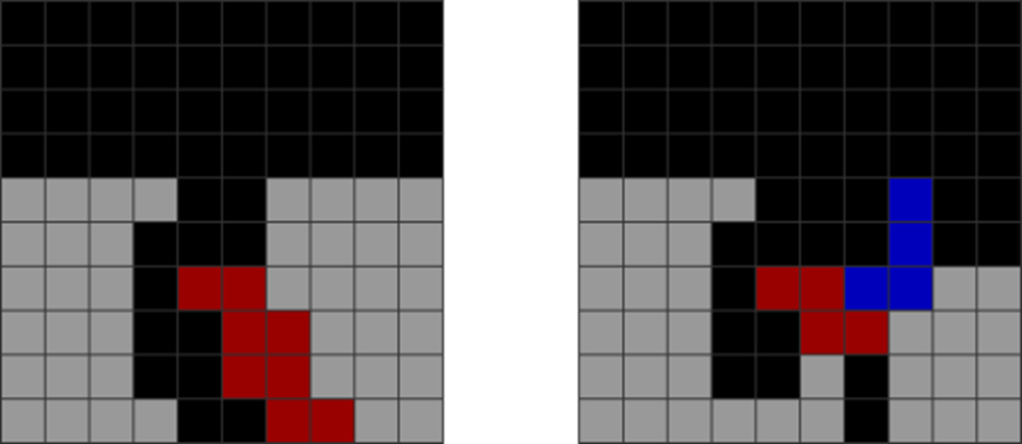
| Some advanced T-spin setups. |
Here, the player makes extremely complex setups with many holes under some of them. If the T pieces never arrive, the player might upstack other pieces over cavities.
They are also susceptible to being spiked while upstacking to make such big setups.
It does not mean that these complex setups are useless. In the hands of an expert who can spot them instantly at the right time and situation, they can still be deadly.
The mantra “less is more” in Tetris simply means prioritizing simpler methods for most of your attacks.
Why should one play cleanly in Tetris?
Playing cleanly can be illustrated with the following:
| Diagram Set 3-7 | |
| 1 | 2 |
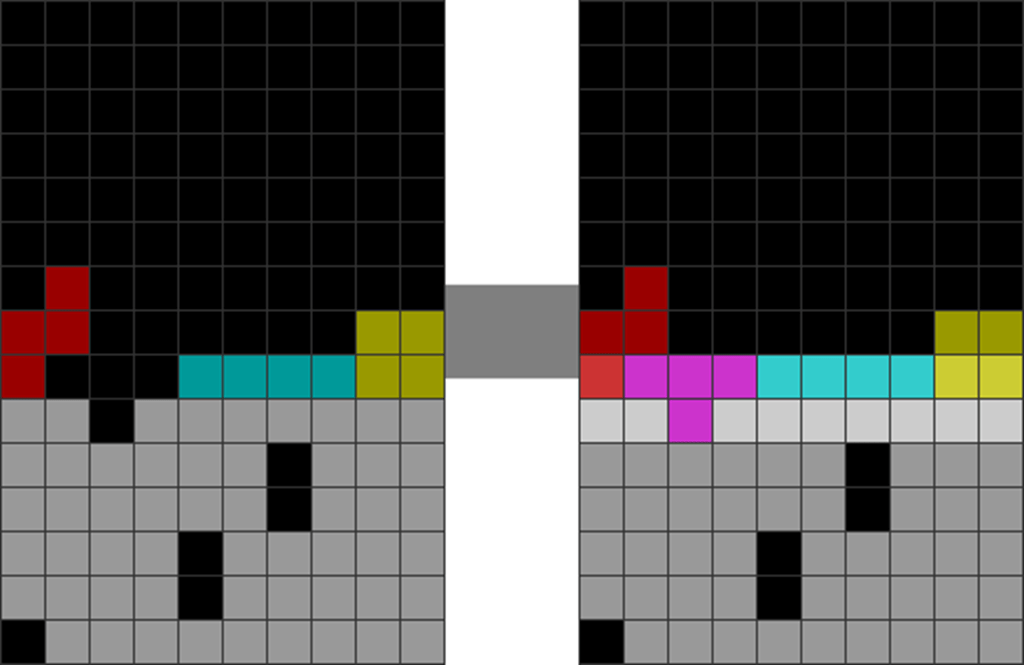
| Just make a simple T-spin double, trying nothing fancy. | The T-spin double line clears, exposing the next garbage hole cleanly. |
Here, the player makes setups where, after the line clear (often caused by a T-spin or Tetris), the next garbage hole is easily exposed.
The player can then do these below. A and B follow from the last diagram set’s step 2:
| Diagram Set 3-8 | |
| A | B |
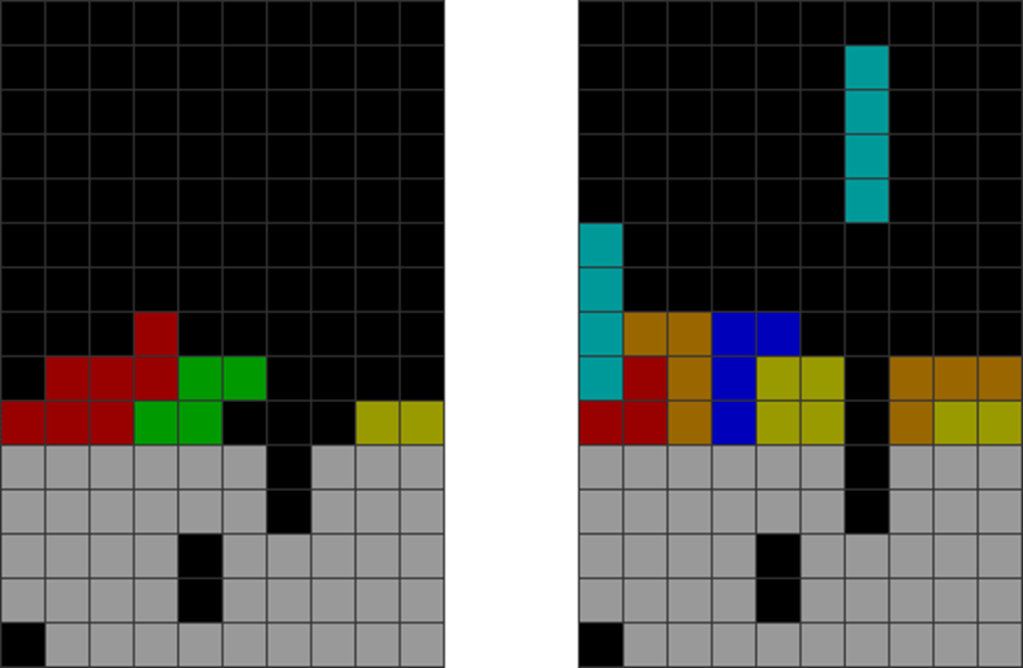
| A T-spin double follow-up. | A Tetris follow-up. |
The player can easily make more clean T-spins over the next garbage hole, or upstack to a clean Tetris.
If they choose to break back-to-back bonuses, they can downstack combo with fewer pieces to get down to future, bottom garbage holes.
Conversely, the following shows dirty gameplay:
| Diagram Set 3-9 | |
| A | B1 |
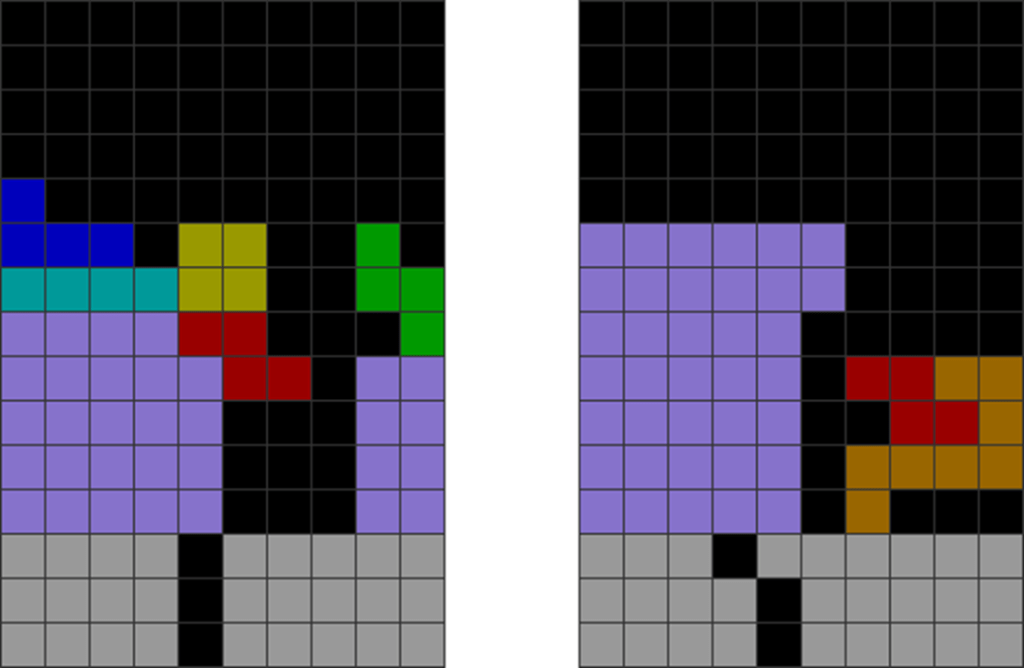
| A dirty STMB Cave. The player mistakenly puts the O in the wrong place, making it dirty. | An LLZ T-spin triple donation prop. |
| B2 | B3 |
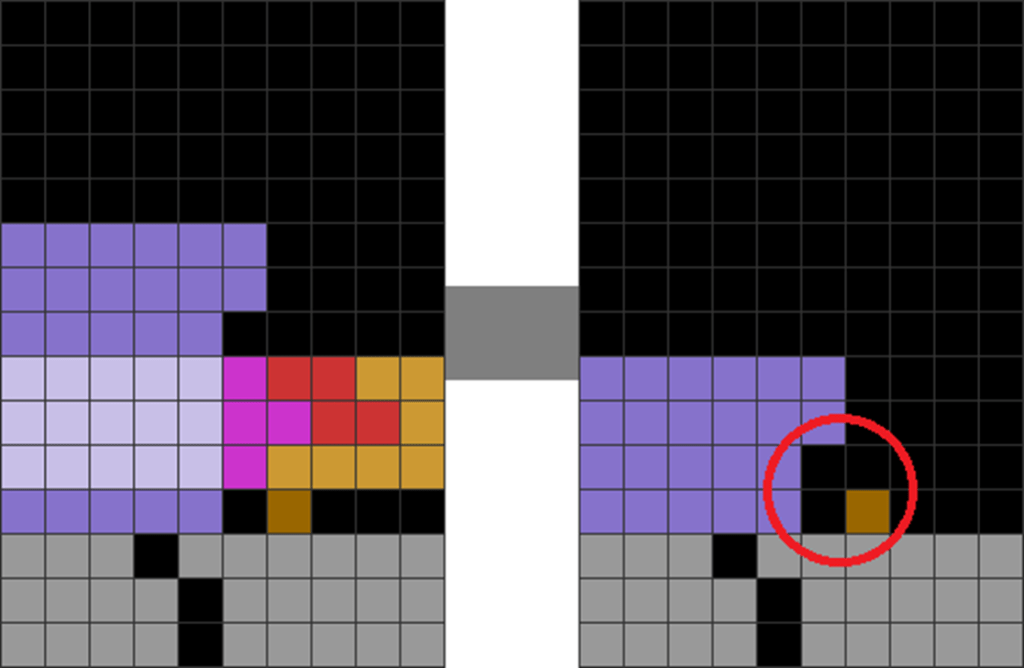
| The T-spin triple finishes. | This leaves a terrible shape that cannot be easily resolved. |
Here, the player makes dirty setups, where after a line clear, some remaining residues will block the next garbage hole.
This is very apparent when one overuses T-spins: their overhangs can sometimes block the next garbage hole.
This happens, following dirty setups:
| Diagram Set 3-10 | |
| 1 | 2 |
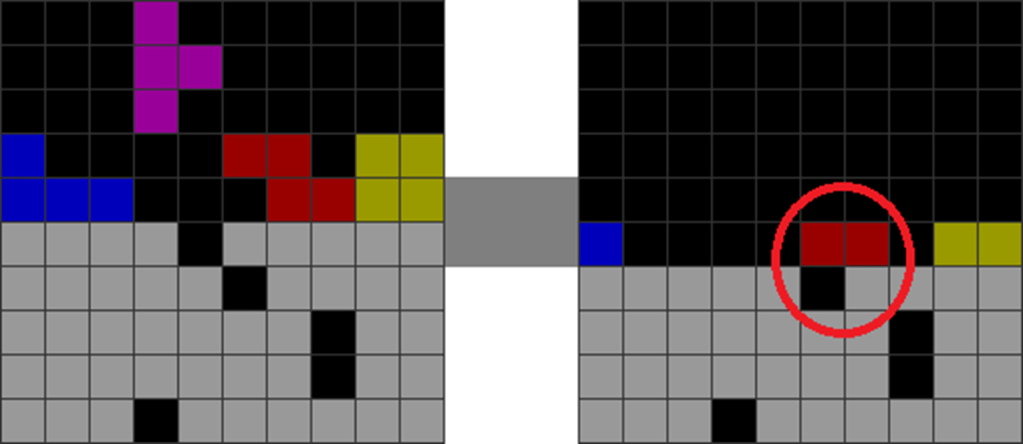
| The player makes a T-spin double. | After the T-spin line clear, the red-circled blocks will obstruct the next garbage hole. |
The player must waste many line clear delays or upstacks to cleanse the dirty residues before exposing the subsequent garbage holes.
By playing cleanly, a player minimizes line clear delays, wasted upstacked lines that must be cleansed off inefficiently, has higher survivability, and can sustain back-to-backs more.
They also get the perks of getting more prophecy T-spins and T-spin continuations:
| Diagram Set 3-11 | |
| 1 | 2 |
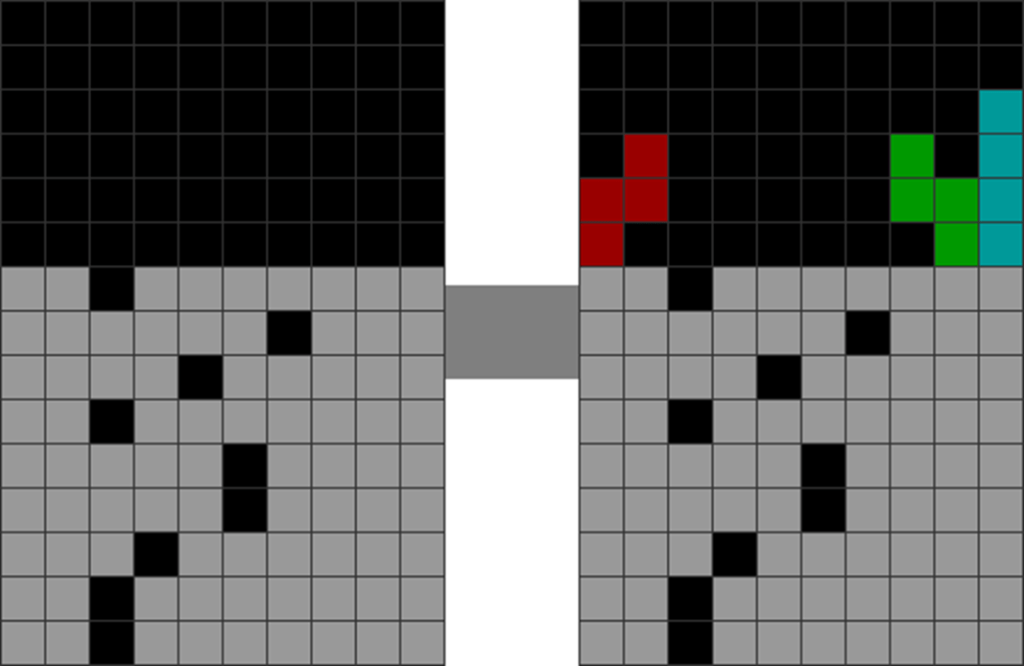
| The garbage field has many overlapping holes. | The player puts S and Z this way to make T-spin overhangs. |
| 3 | 4 |
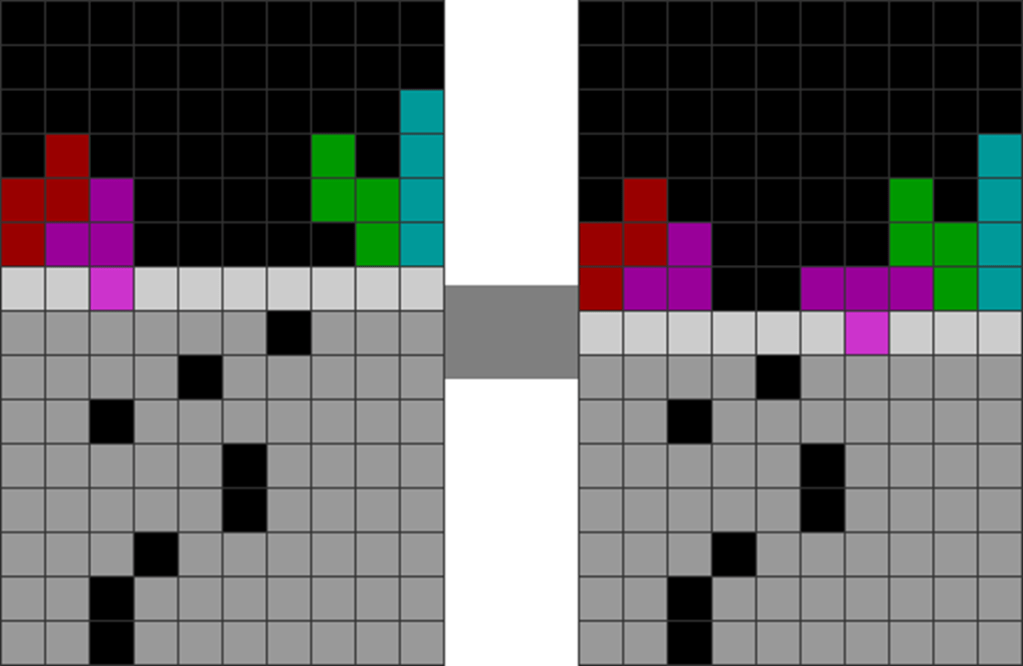
| The first T-spin is a single. The player spins it vertically so the remaining purple blocks would not cover the hole in column 5 later. | After the line clear, the S connects with the garbage hole in column 6, making a T-spin single. |
Why downstack or skim versus upstack in some situations?
The choice to downstack or upstack to sustain back-to-backs boils down to player speed and aggression.
A player who is terrifyingly aggressive, like Kazu, typically upstacks a lot more to sustain back-to-backs for firepower.
A faster player can stack more pieces per line clear duration. This makes it more rational to upstack further to avoid incurring too much opportunity cost.
However, there are situations where one should downstack or skim, such as:
| Diagram Set 3-12 | |
| 1 | 2 |
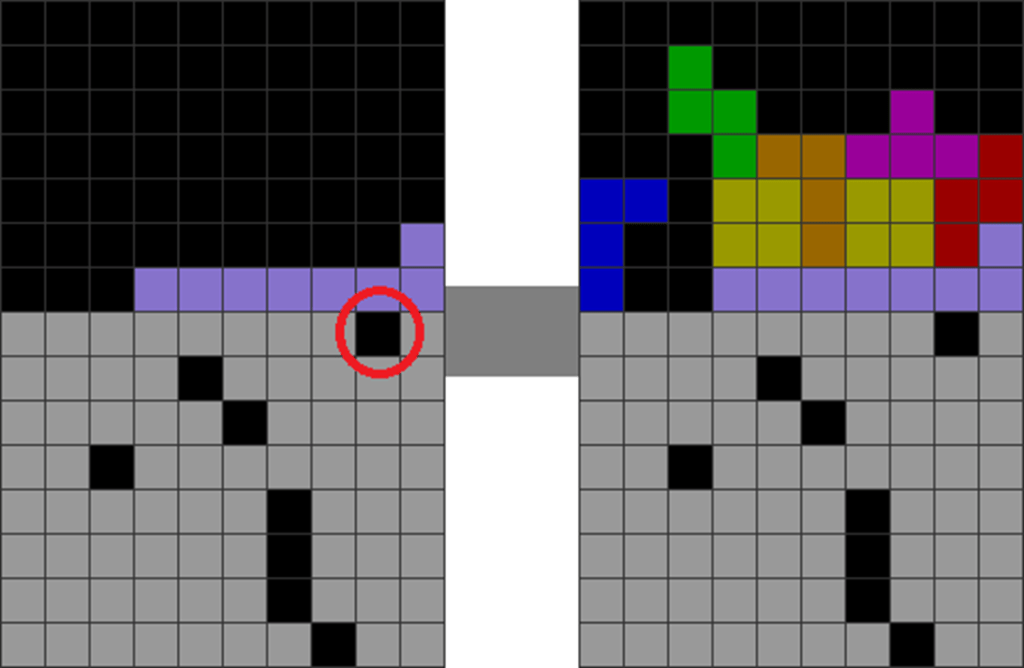
| Few residues (lavender blocks) exist above the next garbage hole (red circle). | To make an STSD setup, you must upstack around 4 lines, here with S, O, O, L, T, J, and Z. This takes too much time. |
| Alt. A |
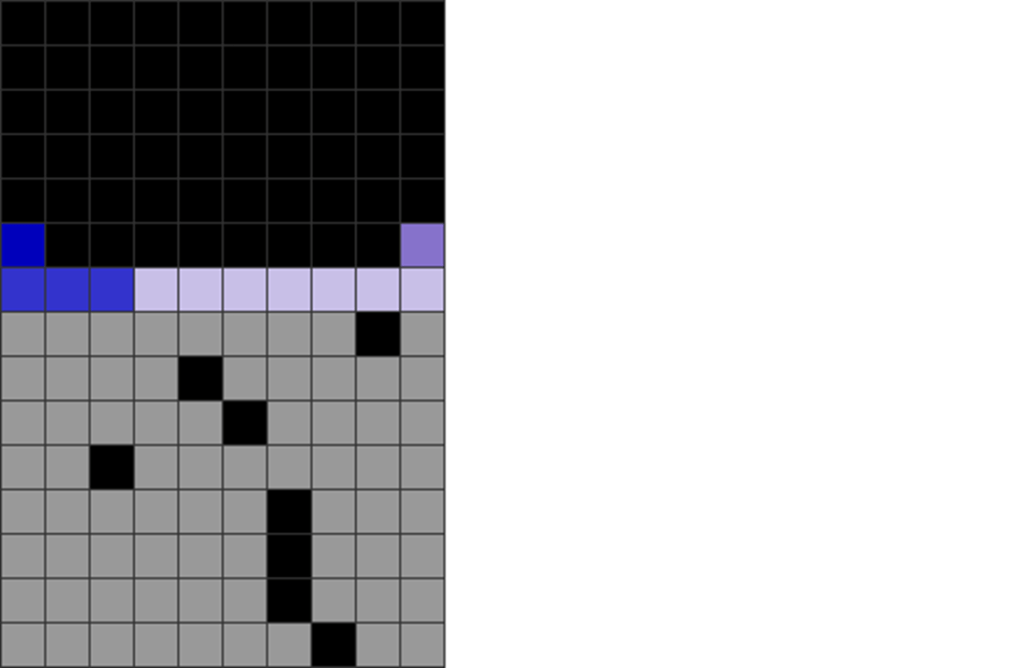
| Thus, it is better to skim because the opportunity cost of stacking is higher. |
Here, a player’s field has very few residues (represented by the lavender blocks). Upstacking to make a setup, such as a full Tetris, takes too many pieces. Hence, it is safer and quicker to just skim off the top layers to reach the next garbage hole and make safer setups.
However, sometimes a player should upstack:
| Diagram Set 3-13 | |
| 1 | 2 |
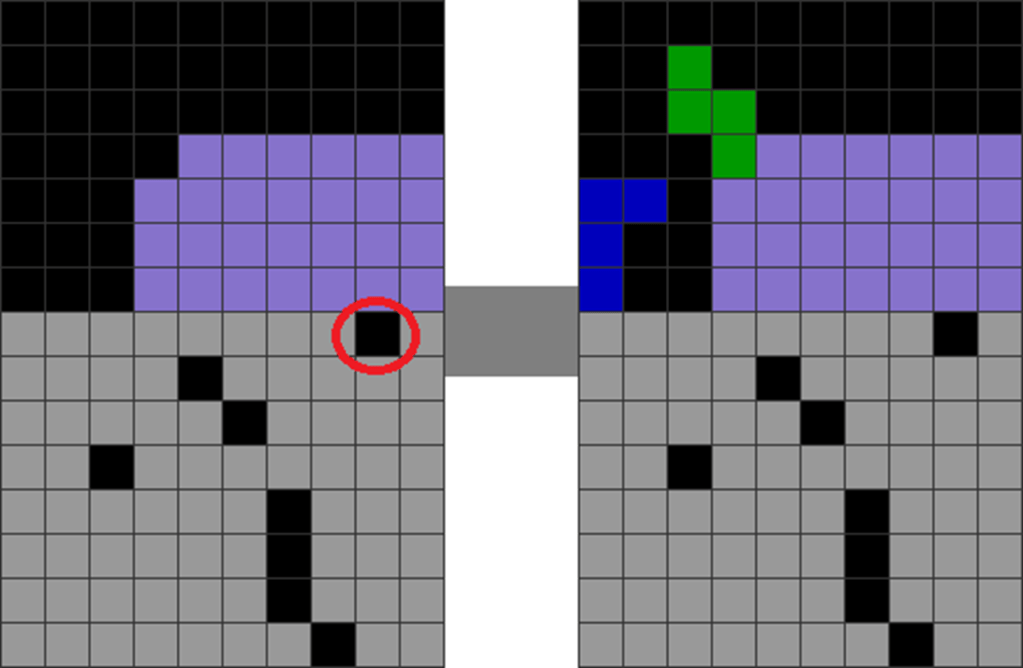
| There is some upstack residue over the next garbage hole (red circle). | The player can make an STSD by adding just 2 pieces. |
Here, it only takes a few added pieces of upstack to complete a setup. The setup is hence opportunistic.
In such cases, upstacking is ideal.
Why screenwatch an opponent’s field?
There exists a reason why, in many Tetris games, there are 2 fields: your field and your opponent’s field.
Many players focus excessively on their field, but it helps to sometimes have a quick glance at your opponent’s field using your peripheral vision.
For instance, while screenwatching your opponent, you may see these:
| Diagram Set 3-14 | |
| You | Opponent |
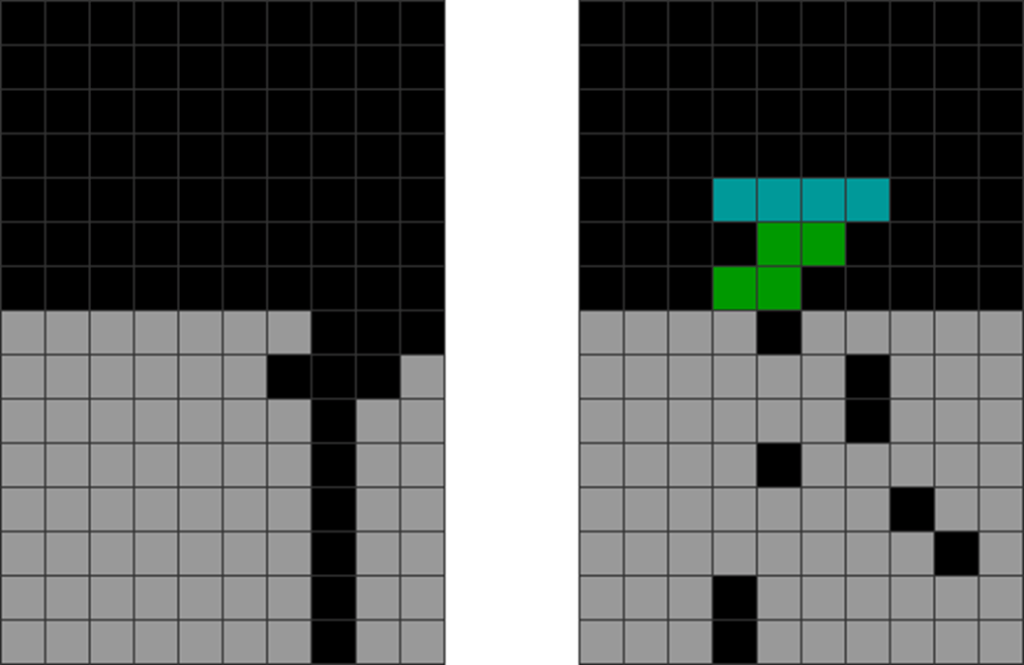
| Your field. | Your opponent’s field: he misdrops a bunch and messes up his stack. |
Here, the opponent is about to top out because of a terrible series of misdrops. This is when you should attack as soon as possible to pressure him and top him out.
Sometimes, you may see this instead:
| Diagram Set 3-15 | |
| You | Opponent |
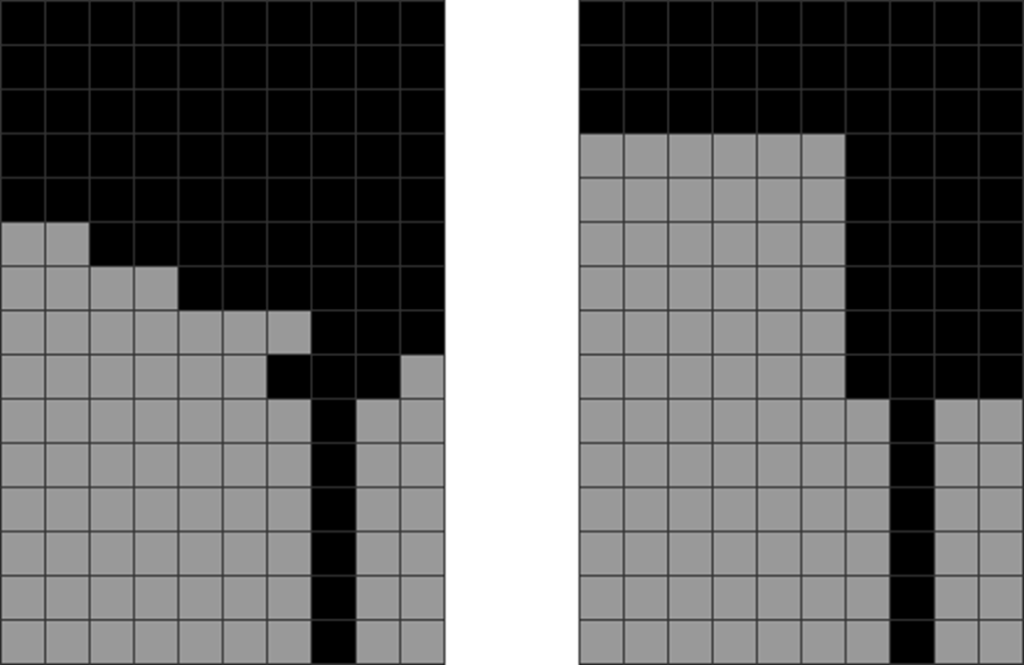
| Your field. | Your opponent’s field: he prepares to side 4-wide you. |
Here, your opponent is about to 4-wide you. Hence, build in a flat, open manner, with some T-spins to protect yourself from his initial 4-wide combo like this:
| Diagram Set 3-16 | |
| You | Opponent |
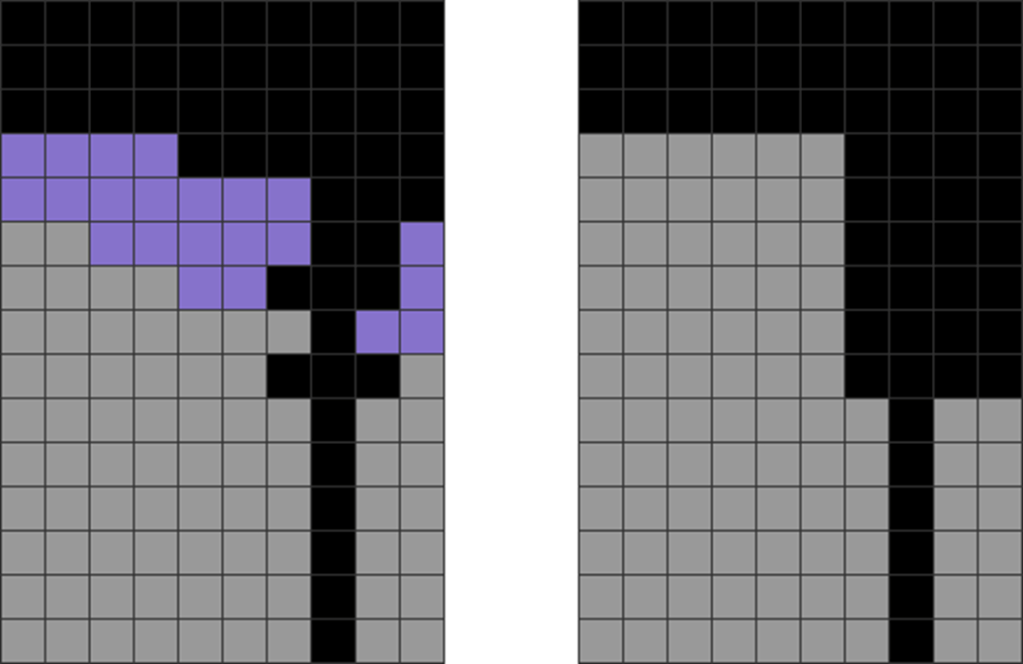
| Your field: you upstack to defend with T-spins and build in an open manner to soak up damage (because it is easier to downstack this way). | Your opponent’s field: he prepares to side 4-wide you. |
Then you play defensively by downstacking through your garbage to offset his attack.
By knowing what your opponent is doing, you can adapt dynamically to attack or defend at the right time.
Why are counter-spikes so effective in clean garbage Tetris games?
In some Tetris games like Tetris 99, TETR.IO, or Tetris Effect: Connected’s first phase, garbage is clean. This means that they almost always align as a single clean column:
| Diagram Set 3-17 | |
| 1 | 2 |
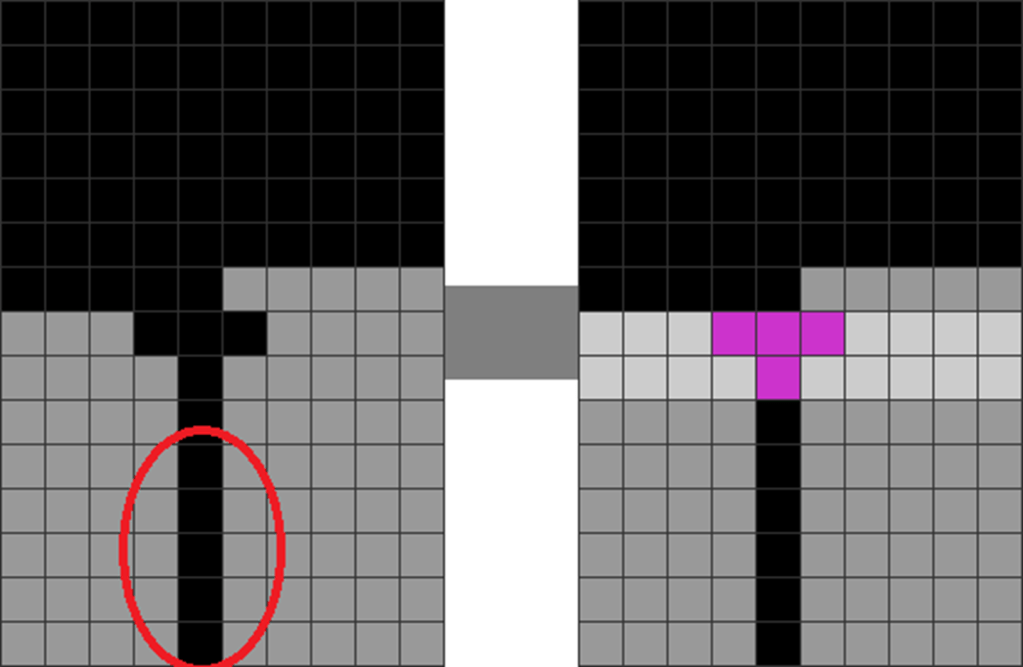
| The player receives the red-circled 5 new clean lines of garbage. A T-spin double and Tetris are ready. He attacks with a T-spin double. |
| 3 |
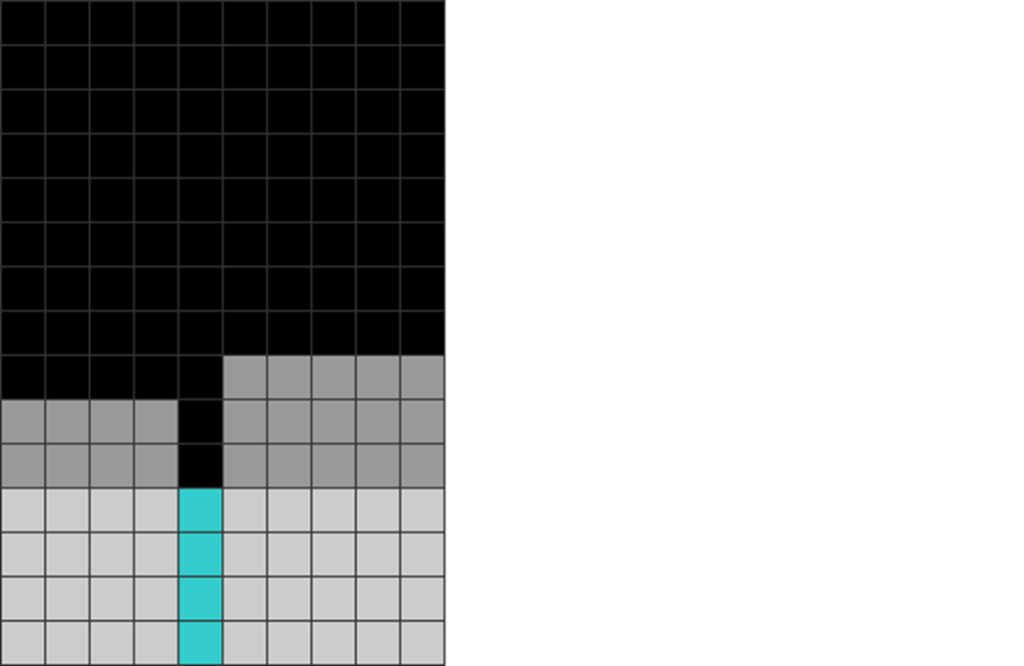
| And sends back 4 out of 5 lines of the newly received garbage with a Tetris! |
This makes it easy to dig down to them and use vertical I pieces to clear them with Tetris quads. Doing this sends back garbage to the opponent.
More importantly, the clean garbage lines are purely garbage lines and are “free.” This means that you do not have to upstack 10 pieces to make a Tetris like this (with colored, upstacked blocks):
| Diagram Set 3-18 | |
| A | B |
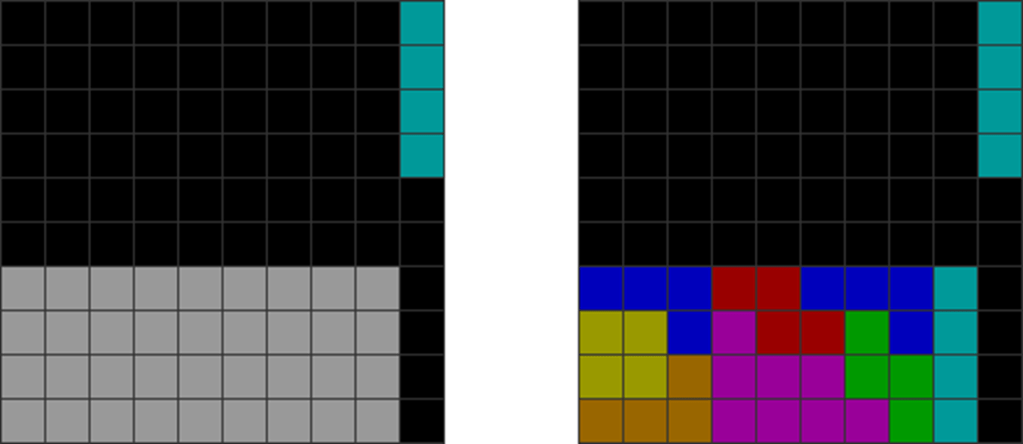
| A Tetris made of 4 lines of free garbage lines. | An entirely upstacked Tetris. This takes time. |
This means you are saved from having to construct an entire Tetris from nothing.
Tetrises made of 4 garbage lines are the most efficient attacks in the game.
One core measure of efficiency is the number of garbage lines sent per piece used in that attack.
Hence, your efficiency is 4.0 (5.0 with back-to-backs) for a Tetris created entirely by garbage and 0.4 for one upstacked manually.
Hence, downstacking and sending back free Tetris lines is very practical and efficient. You boost your efficiency using your opponent’s clean garbage. This is how some TETR.IO players are so efficient.
To boost your efficiency further, skim off the top, colored blocks with combos and T-spins to boost your efficiency further:
| Diagram Set 3-19 | |
| 1 | 2 |
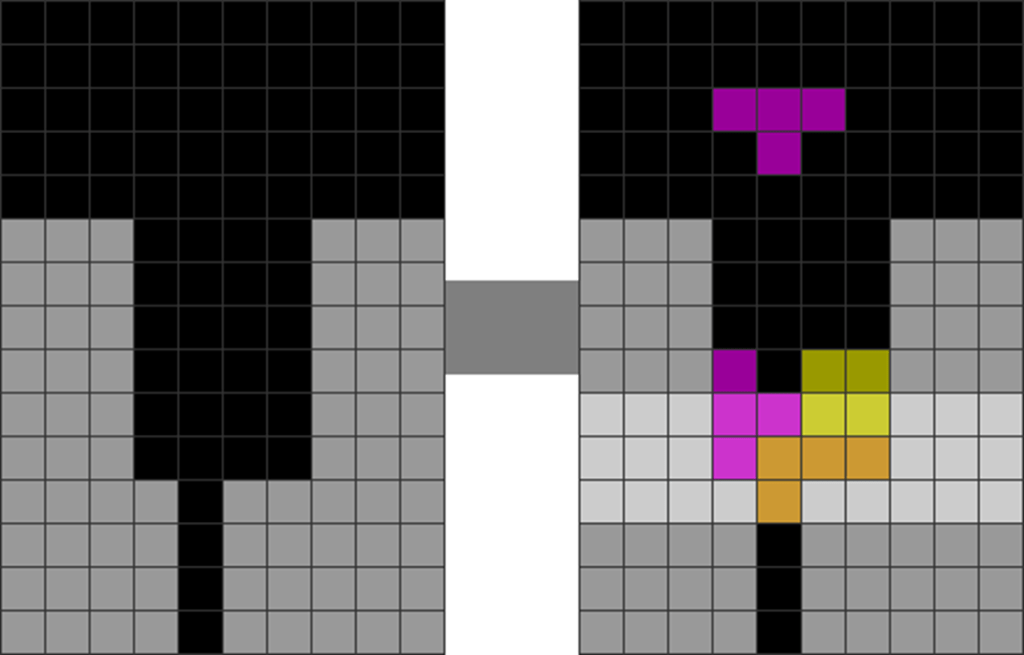
| You get clean garbage (the bottom 4 lines) and 2 side-stacked towers. | You start a 4-wide downstack combo. |
| 3 | 4 |
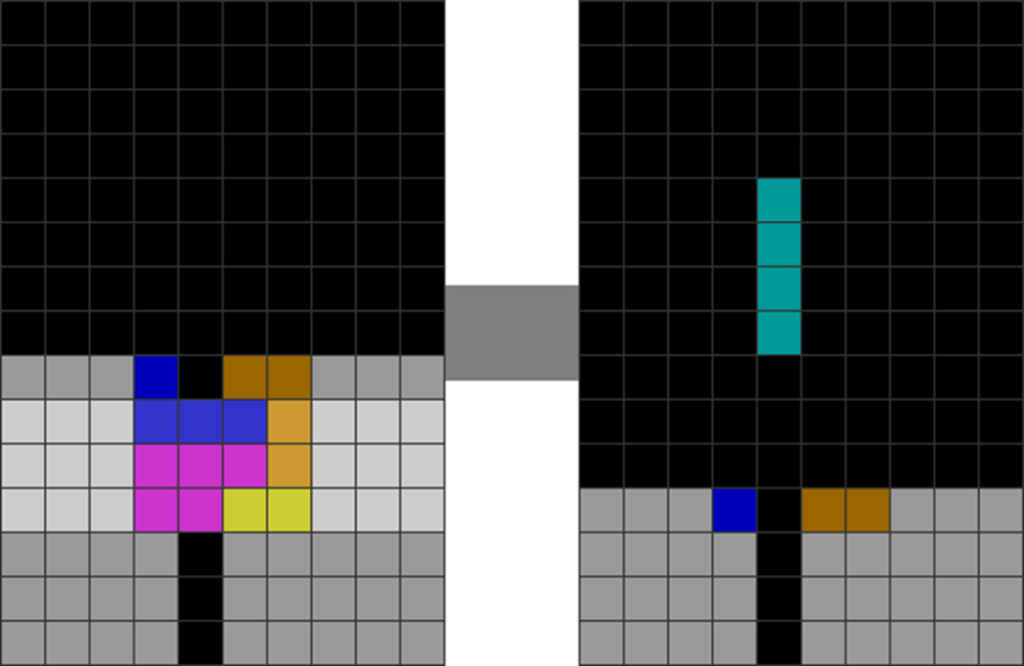
| After the 4-wide, you return the bottom 4 lines with a Tetris, augmenting your lethal downstack combo. |
When you do this, your opponent might have made 10 lines of manual upstack to send you an X amount of garbage. However, with far fewer manual upstacks, you can send back close to X lines of garbage.
After this, you can continue to upstack, while your opponent has to handle your spikes.
This means your opponent has wasted his time attacking you when you simply turned his garbage into your attack!
Therefore, counterspiking is so effective in clean garbage Tetris games, which is why many top players time it to top out their opponents.
 How to Tetris